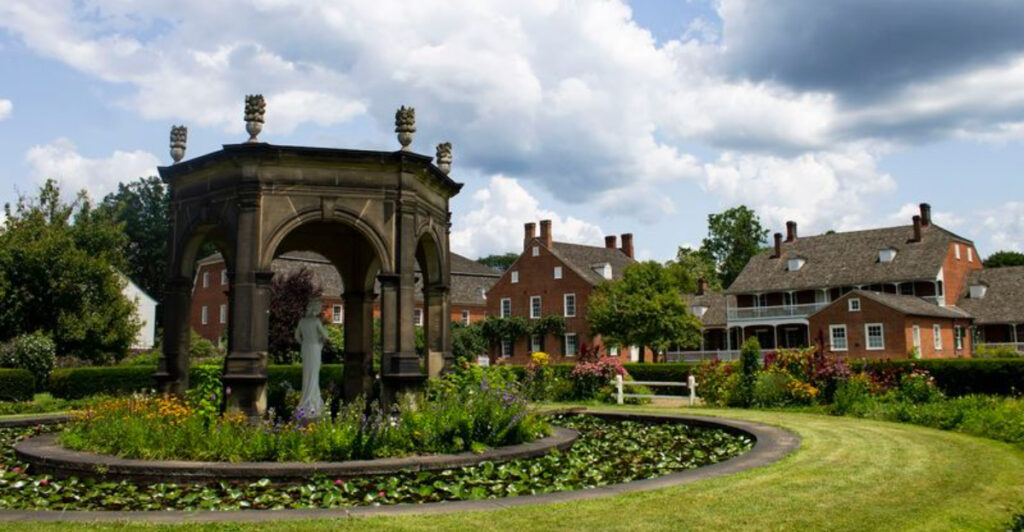
Pennsylvania has a rare way of making history feel less like a chapter you once rushed through and more like a place you can step into with your own two feet, where battlefields still carry a hush, colonial homes seem ready for candlelight, and old industrial villages hold onto the rhythms of another century. If you are the kind of traveler who wants more than a scenic walk, this state delivers the kind of parks and historic sites that let you imagine smoke rising from iron furnaces, soldiers marching through hard winters, ferries crossing icy rivers, and reformers, craftsmen, and settlers shaping the future in real time.
What makes these places unforgettable is not just their age or their famous names, but the way Pennsylvania preserves texture, atmosphere, and story so well that a visit can feel strangely immediate, as if the distance between now and then briefly disappears. From the Philadelphia region to the Laurel Highlands and the western edge of the state, these eleven Pennsylvania parks and historic landscapes offer the quickest route I know to feeling completely transported.
1. Independence National Historical Park
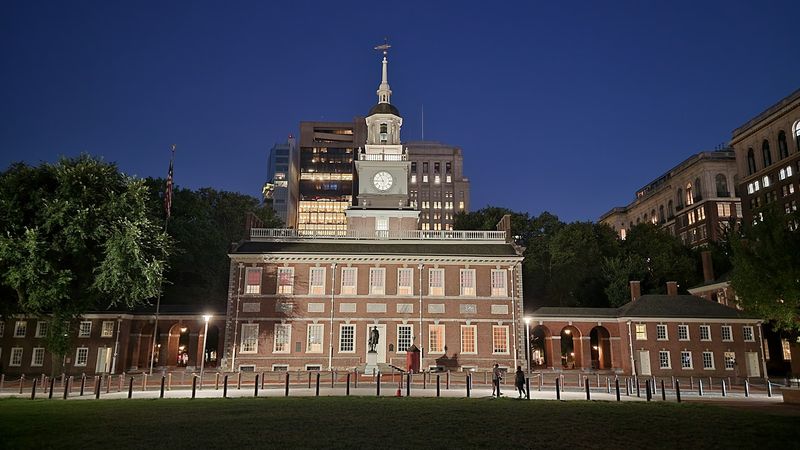
Walking through this part of Philadelphia, you do not have to work very hard to imagine the eighteenth century pressing close around you.
Brick facades, old meeting places, and broad public spaces create a setting where the story of Pennsylvania and the nation feels immediate instead of distant.
If you love places where ideas changed the world, this one speaks in a voice that is calm, confident, and impossible to ignore.
The heart of the experience is the extraordinary concentration of landmarks gathered within a walkable district.
Independence Hall naturally draws attention, but the surrounding streets, interpretive exhibits, and preserved structures deepen the feeling that you are moving through a living stage set from the revolutionary era.
Pennsylvania’s role as a political center comes into focus here, showing how debate, compromise, and courage were not abstract virtues but daily realities shaped inside very real rooms.
What makes this park memorable is the contrast between the speed of modern Philadelphia and the stillness preserved within these blocks.
One moment you are in a busy city, and the next you are studying architecture, assembly spaces, and public squares that helped define liberty in practical terms.
That shift feels almost theatrical, yet the setting never becomes artificial because the buildings and stories carry genuine weight.
I would recommend slowing your pace and letting the smaller details do their work.
Courtyards, churchyards, period houses, and museum displays turn a famous destination into a layered Pennsylvania experience that rewards curiosity.
By the time you leave, the past no longer feels sealed behind glass, because this park has a way of making foundational history feel startlingly present and deeply human.
2. Hopewell Furnace National Historic Site
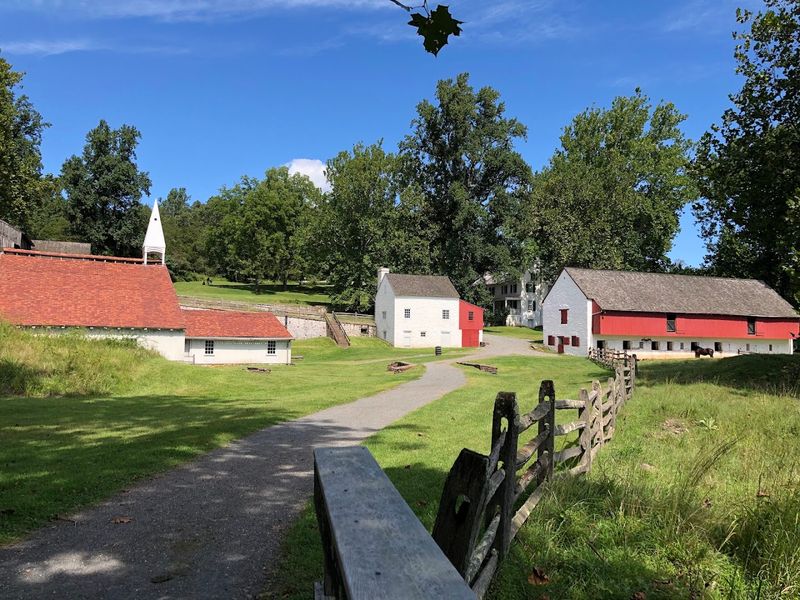
Set among wooded hills and open grounds, this site reveals a side of Pennsylvania history that feels both rugged and unexpectedly intimate.
Instead of grand political speeches or famous battle lines, you step into the everyday world of an ironmaking community that powered early industry through labor, skill, and stubborn persistence.
The atmosphere makes it easy to picture wagons arriving, furnaces blazing, and families building their lives around demanding work.
The restored complex gives you more than a single monument to admire.
You can trace how the furnace, worker housing, agricultural spaces, and support buildings formed a connected system, showing how industrial success depended on an entire community functioning together.
That makes Hopewell Furnace feel less like a frozen relic and more like a complete Pennsylvania landscape, where production, domestic life, and natural resources were tightly linked.
One of the most compelling parts of a visit is the way the setting balances beauty and hardship.
The surrounding forest and fields are peaceful now, but they also remind you how much timber, ore, water, and human energy were required to keep operations going.
Pennsylvania’s industrial roots often get summarized too quickly, and this place slows the story down enough for you to appreciate the scale of effort involved.
If you enjoy history that feels tactile and grounded, this site delivers that almost instantly.
The furnace itself commands attention, yet the barns, houses, roads, and landscape are what truly carry you back in time.
By the end, you are not just thinking about iron, but about the people who made Pennsylvania’s early economy possible through discipline, adaptation, and exhausting daily work.
3. Valley Forge National Historical Park
Few places in Pennsylvania communicate endurance as powerfully as this broad historic landscape.
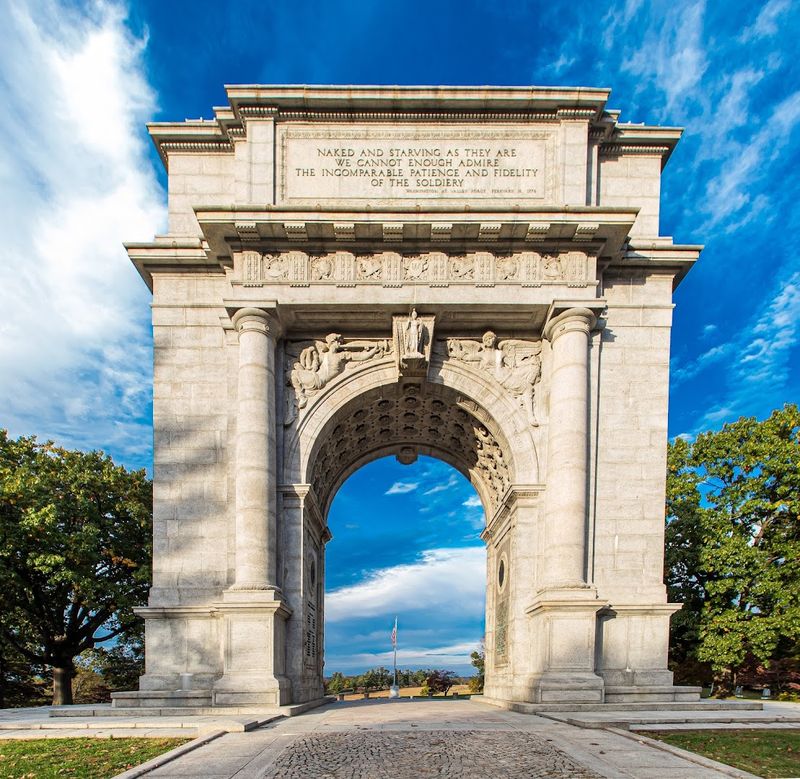
Open fields, wooded ridges, monuments, and reconstructed huts create a setting where the famous winter encampment becomes easier to grasp on a human level.
You are not just reading about sacrifice here, because the scale of the terrain helps you sense how exposed, disciplined, and determined the Continental Army had to be.
What stays with many visitors is the balance between grandeur and hardship.
The park is beautiful, especially when light moves across the rolling ground, yet that beauty sharpens your awareness of what soldiers lacked during a brutal season of uncertainty.
Valley Forge becomes more than a patriotic symbol in that moment, because Pennsylvania preserves the physical environment well enough to let discomfort, distance, and resilience enter your imagination.
The site also rewards anyone who wants context rather than just commemoration.
Trails, interpretive stops, memorials, and surviving features show how military organization, training, and morale developed in a place that was as much a proving ground as a refuge.
Pennsylvania’s revolutionary landscape feels complex here, shaped not only by suffering but by transformation into a more capable force.
I think this park works best when you give yourself time to move between the large views and the smaller details.
A sweeping field can suggest strategy and encampment scale, while a hut reconstruction or marker suddenly brings one person’s winter into focus.
That movement between public history and private struggle is what makes Valley Forge feel immediate, and it is why this Pennsylvania landmark continues to pull visitors backward through time so effectively.
4. Bushy Run Battlefield
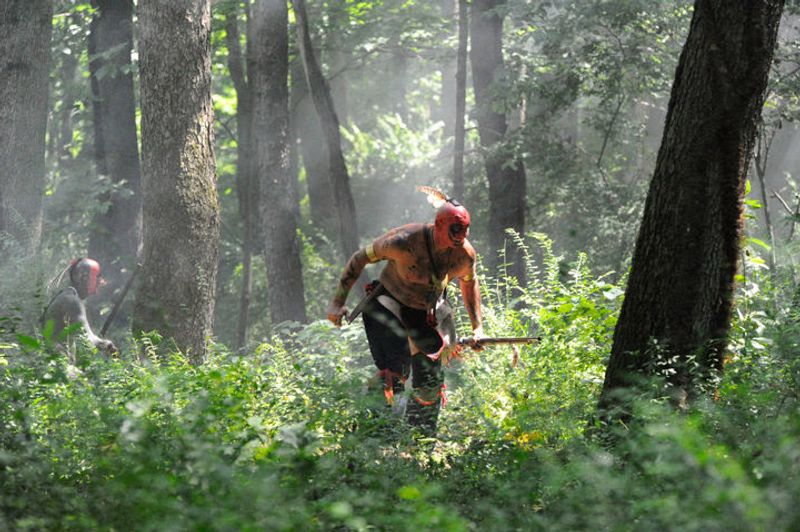
Deep in western Pennsylvania, this battlefield delivers a very different kind of time travel.
The setting feels quieter, more wooded, and more frontier-shaped than many better-known historic parks, which helps the conflict that unfolded here feel raw and immediate.
Instead of polished urban history, you get a landscape where tension, uncertainty, and survival once defined every movement.
The battle connected to the violent struggles of the colonial frontier, and that context matters when you walk the grounds.
Trees, uneven terrain, and open stretches encourage you to think about visibility, ambush, and the split-second decisions soldiers faced in an environment that offered little comfort.
Pennsylvania’s past was not only built in assembly rooms and formal towns, and Bushy Run reminds you that the state’s history also grew out of dangerous, contested spaces.
Because the site is less crowded and less monumental than some famous destinations, it can feel especially personal.
You are able to focus on the land itself and imagine how sound, distance, and fear shaped the encounter in ways no textbook can fully capture.
That intimacy is part of what makes the experience powerful, since the battlefield does not overwhelm you with spectacle.
If you appreciate underappreciated places, this one belongs high on your Pennsylvania list.
The museum and interpretation help frame the event, but the real impact comes from standing where landscape and memory still work together.
By the time you leave, the frontier no longer feels like a vague historical label, because Bushy Run turns it into a physical reality marked by risk, conflict, and the fragile effort to hold ground.
5. Gettysburg National Military Park
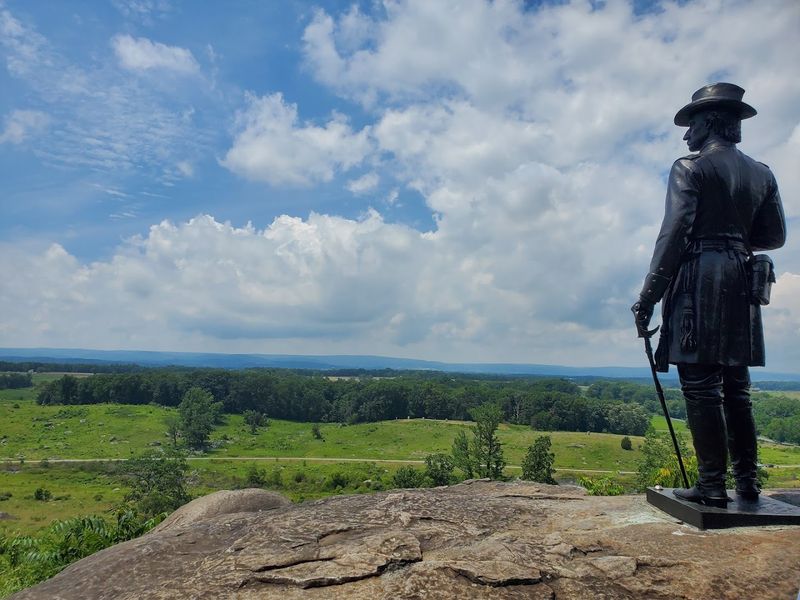
There are historic places that impress you, and then there are places that seem to alter the air around you.
This battlefield belongs to the second category, with ridges, fields, fences, roads, and monuments spread across a landscape so extensive that the Civil War’s scale becomes impossible to shrink into a simple summary.
In Pennsylvania, few places match the emotional force that comes from seeing how ordinary farmland became the site of extraordinary loss and consequence.
The power of a visit comes from the way terrain explains history.
High ground, open approaches, farm lanes, and stone walls reveal why so many decisions made here carried devastating weight, and why movement across this landscape could change everything in a matter of minutes.
Gettysburg never feels abstract because Pennsylvania has preserved enough of the field for strategy, confusion, courage, and catastrophe to remain visible.
It also helps that the park invites many different rhythms of exploration.
You can stop at key markers, study the larger battle flow, or linger in quieter corners where the silence feels heavier than any speech.
That flexibility allows the site to reach you whether you arrive deeply informed or simply curious about why this Pennsylvania place continues to matter so profoundly.
I would not rush it.
The scale deserves patience, and the emotional effect grows as individual locations begin connecting into one larger story about division, sacrifice, and memory.
By the end of the day, Gettysburg feels less like a preserved battlefield and more like a vast historical presence, one that pulls you backward in time while also asking what Pennsylvania and the nation chose to remember afterward.
6. Point State Park
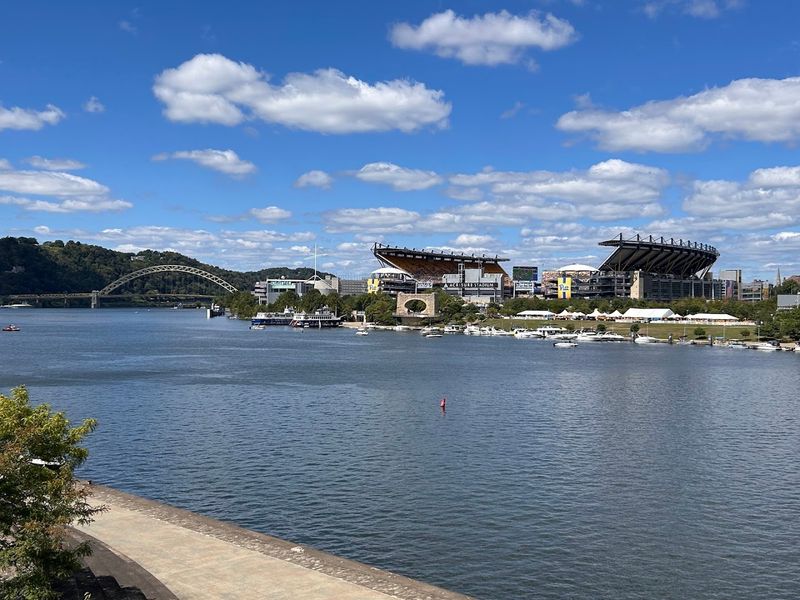
At the meeting point of three rivers, this Pittsburgh park connects natural geography with centuries of Pennsylvania history in a way that feels immediate the moment you arrive.
The views are dramatic, but the deeper pull comes from knowing this strategic point shaped military conflict, trade, expansion, and urban growth.
It is a place where the landscape itself explains why people kept fighting to control what stood here.
Even with the modern skyline nearby, the park has a strong historical presence.
Fort outlines, museum interpretation, and the sheer importance of the river junction help you imagine the era when this location was less about leisure and more about empire, defense, and access to the interior.
Pennsylvania’s western story takes on real dimension here, because the setting shows how power often begins with geography.
What I like most is the contrast between recreation and remembrance.
You can walk paths, enjoy the waterfront, and admire the city’s energy, yet just beneath that pleasant surface lies a much older narrative involving contested land and shifting alliances.
That tension makes Point State Park more than a scenic stop, because it lets you feel how Pennsylvania history layers itself without fully disappearing.
If you are drawn to places where one view can summarize an entire region’s story, this park does that beautifully.
The rivers, the fort history, and the urban backdrop combine into a single Pennsylvania experience that stretches from colonial struggle to industrial rise and present-day renewal.
Standing at the point, you sense that time never fully moved on here, but simply stacked one era on top of another.
7. Washington Crossing Historic Park
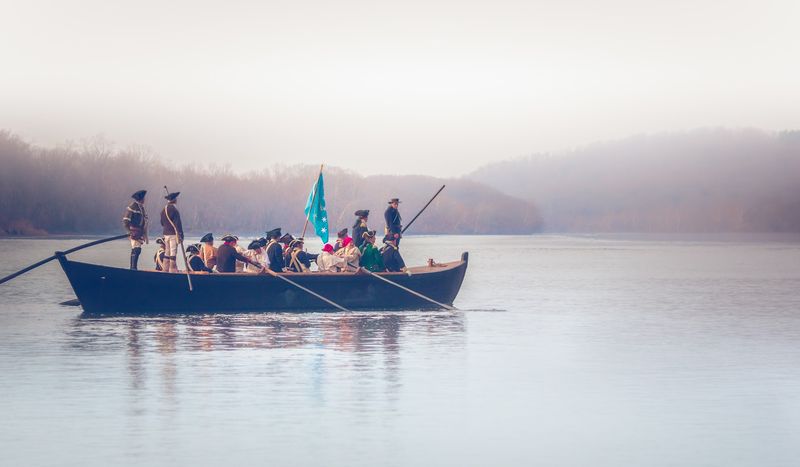
Some historic sites feel famous before you even reach them, yet this riverside setting still manages to surprise with how personal it feels.
The Delaware River, the ferry landing, and the preserved village atmosphere create a quiet stage for one of the most iconic moments associated with Pennsylvania’s revolutionary landscape.
Instead of pure legend, you encounter a place where weather, water, and uncertainty suddenly seem very real.
The appeal here lies in that mix of symbolism and physical reality.
You can picture men, boats, equipment, and nerves pressed against the conditions of a winter operation that looked anything but guaranteed.
Pennsylvania history often becomes more vivid when geography enters the story, and this site proves how a riverbank can carry just as much meaning as a formal battlefield or government hall.
The surrounding historic buildings help anchor the event within ordinary community life.
They remind you that dramatic national turning points often unfolded in places where people also cooked meals, ran businesses, and watched seasons change.
That domestic frame gives Washington Crossing a warmth many military sites lack, making the past feel closer and more inhabited.
If you want a Pennsylvania stop that combines scenic calm with revolutionary drama, this one is especially rewarding.
The interpretation explains the crossing clearly, but the strongest impression comes from simply standing near the water and letting the landscape do its work.
By the time you leave, the famous story feels less like a painting or textbook image and more like a difficult, risky act carried out in a very tangible place.
8. Pennsbury Manor
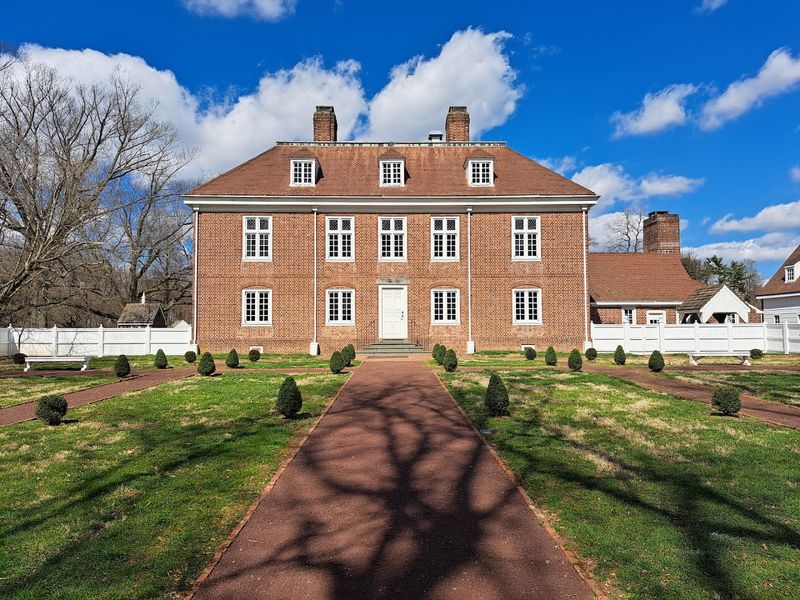
Along the Delaware River, this reconstructed estate opens a window onto the colony’s early leadership and the ambitions that shaped Pennsylvania from the start.
The house, grounds, and riverside setting create an experience that feels refined without losing its historical depth.
You are invited to think not only about architecture and status, but about how ideas of governance, land use, trade, and identity took form in a young colony.
The estate works so well because it presents history as both elegant and practical.
Furnished interiors, service spaces, outbuildings, and landscaped grounds suggest a world where appearance mattered, yet daily operations still depended on labor, logistics, and careful management.
That balance makes Pennsbury Manor more than a beautiful reconstruction, because it reveals how Pennsylvania’s colonial vision had to function in material terms.
There is also something especially compelling about the river setting.
Water connected people, goods, and authority, and standing near it helps you understand why this location mattered beyond its domestic appeal.
Pennsylvania’s early development was never isolated from movement and exchange, and the landscape here underscores that reality with quiet clarity.
I think visitors who enjoy a more intimate form of time travel will appreciate this place.
Instead of vast fields or major battle markers, you get the texture of rooms, routines, and social expectations that shaped colonial life from the inside.
Pennsbury Manor leaves you with a fuller sense of Pennsylvania’s beginnings, showing that the state’s past was written not only in conflict and politics, but also in homes designed to express order, aspiration, and authority.
9. Ephrata Cloister
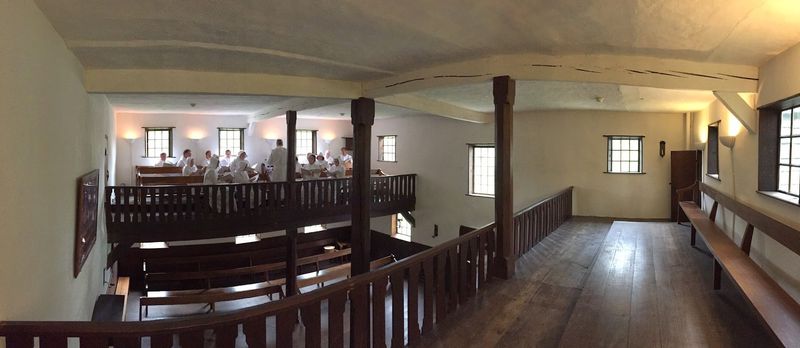
Tucked into Lancaster County, this site offers one of the most unusual historical experiences in Pennsylvania.
The buildings, grounds, and atmosphere suggest a world shaped by discipline, faith, and communal experiment rather than military power or industrial production.
Almost immediately, you sense that you are entering a place where time was organized around belief, ritual, and a deliberately separate way of living.
The architecture is part of the magic.
Distinctive structures and preserved interiors convey simplicity, purpose, and a kind of creative austerity that sets Ephrata Cloister apart from more conventional colonial sites.
Pennsylvania’s long tradition of religious diversity becomes tangible here, showing how the colony attracted groups willing to build entire communities around spiritual convictions that many outsiders would have found demanding or strange.
What makes the visit memorable is the stillness.
Even when other people are nearby, the site often carries a reflective mood that encourages you to slow down and consider how daily life might have felt under such strict patterns of worship, work, and separation.
That quiet gives the history unusual force, because it allows you to imagine not just what happened here, but how it may have felt to belong to this community.
If you are looking for a Pennsylvania destination that feels genuinely different, this one delivers.
The interpretation provides context, but the greater effect comes from walking among buildings that seem to hold onto both devotion and mystery.
Ephrata Cloister does more than preserve old walls, because it lets you step into a chapter of Pennsylvania history shaped by conviction, discipline, creativity, and the search for sacred order.
10. Fort Necessity National Battlefield
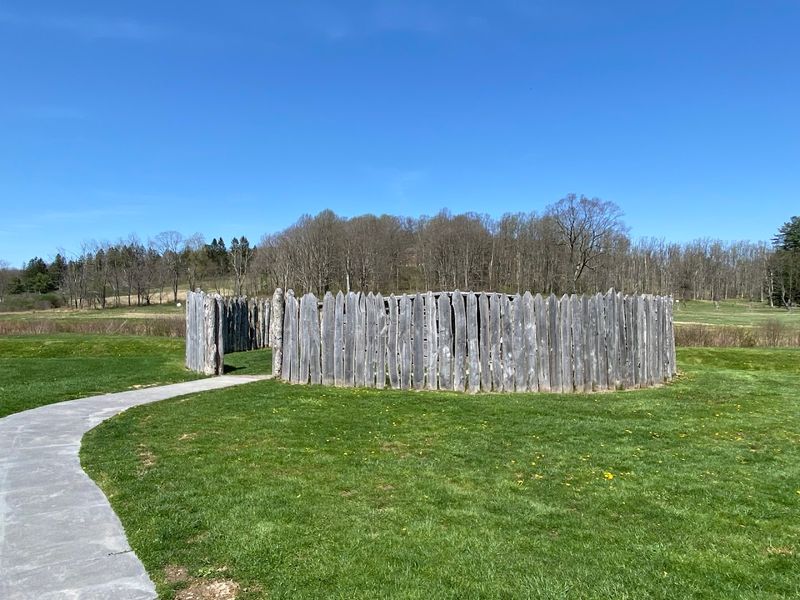
In the Laurel Highlands, this battlefield captures an early and uneasy chapter of Pennsylvania history that still feels charged with consequence.
The meadow, surrounding woods, and reconstructed fort place you inside a frontier world where ambition, inexperience, and international rivalry collided.
It is the kind of site that makes large geopolitical conflict suddenly feel local, vulnerable, and very close to the ground.
The landscape matters enormously here.
A low stockade in an open clearing tells you almost at once that this was not a position of great comfort or strength, and that realization helps the historical story land harder.
Pennsylvania’s role in the struggle between empires becomes easier to understand when you can actually see the terrain that shaped choices and exposed weaknesses.
What stays with many visitors is how modest the setting appears compared with the importance of the event.
That modesty is part of its power, because it reminds you that history often turns in places that would look ordinary without explanation.
Fort Necessity strips away any illusion that the colonial frontier was orderly or secure, replacing it with a clearer sense of fragility, pressure, and improvisation.
If you want a Pennsylvania site that sharpens your understanding of how conflict here connected to wider North American history, this is an excellent stop.
The interpretation helps frame the battle and its aftermath, but the strongest impression comes from standing in the clearing and noticing how exposed everything feels.
By the end, the frontier is no longer an abstract edge on a map, but a contested environment where decisions carried immediate and lasting consequences.
11. Old Economy Village
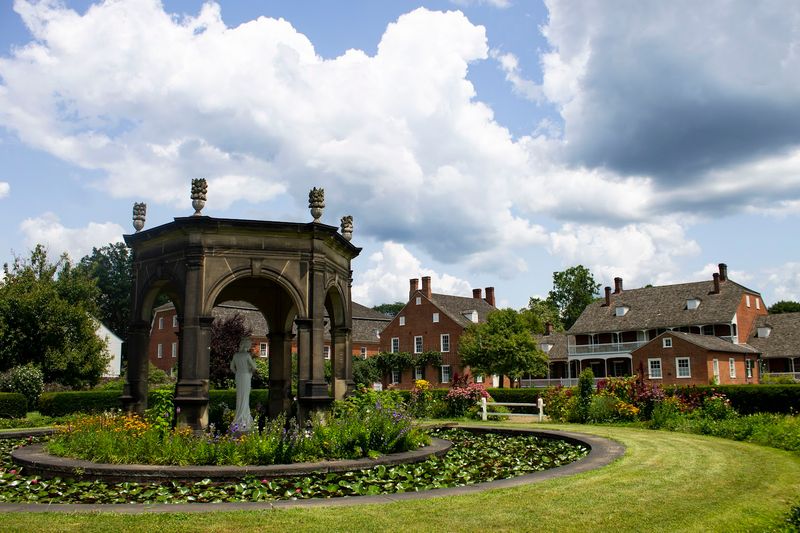
Northwest of Pittsburgh, this preserved village offers a fascinating route into a very different Pennsylvania past.
Here, communal living, craftsmanship, industry, and religious purpose came together in ways that still feel distinctive as you move through streets, workshops, and domestic spaces.
Rather than presenting one dramatic event, the site immerses you in an entire social experiment that once aimed to organize life with remarkable order and intention.
The appeal comes from how complete the setting feels.
Houses, working areas, decorative landscapes, and institutional spaces reveal a community that tried to balance spiritual ideals with economic success and practical daily routines.
Pennsylvania’s history of welcoming unusual groups and ambitious visions becomes especially vivid here, because Old Economy Village shows how those visions could reshape everything from architecture to labor patterns.
It is also a site that rewards close observation.
Tools, furnishings, gardens, and building layouts hint at values like efficiency, discipline, beauty, and collective purpose without needing constant explanation.
That subtlety makes the visit engaging, because you begin piecing together how residents understood prosperity, devotion, and community in their own Pennsylvania context.
I would recommend this place to anyone who likes history that feels immersive rather than ceremonial.
The village does not rely on a single famous moment, yet it pulls you back in time with remarkable strength because the physical environment still communicates a whole way of life.
By the time you leave, Old Economy Village has expanded your sense of Pennsylvania’s past, proving that the state’s most memorable historic places are not only battlefields and halls, but communities built around bold beliefs about how people should live.
Share this story