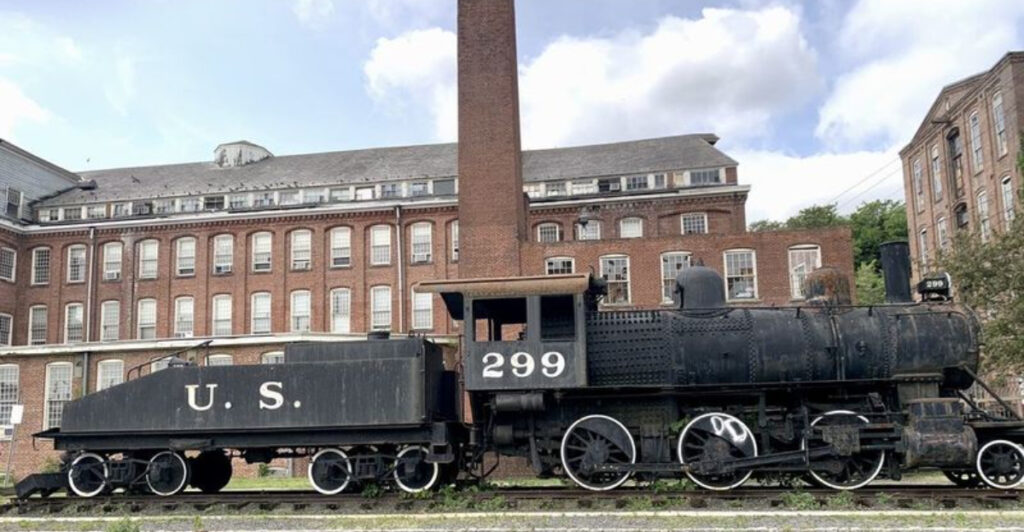
A hulking old locomotive shop is not where you expect to find silk looms, submarine prototypes, rare Colt firearms, local baseball history, and enough rocks to make a geology kid lose their mind. Yet that is exactly the fun of the Paterson Museum.
It does not ease you in with polished museum quiet. It drops you straight into the kind of New Jersey history that clanks, spins, fires, weaves, roars, and occasionally looks like it belongs in a Jules Verne sketchbook.
Set at 2 Market Street, steps from the Paterson Great Falls, this is a museum with built-in drama before you even reach the first display. The building has seen real industry.
The city around it helped shape American manufacturing. And inside, Paterson’s story gets told through machines, materials, inventors, workers, athletes, comedians, and odd little surprises that make the whole place feel much bigger than its footprint.
A Museum Inside A Former Locomotive Shop Already Has A Head Start
Before the exhibits say a word, the building does half the storytelling. The Paterson Museum sits inside the former Erecting Shop of the Rogers Locomotive Works, which gives the place a built-in sense of muscle.
This was not some decorative civic building that later got repurposed into gallery space. It was part of the machinery of Paterson itself, the kind of place where heavy things were built, moved, assembled, and sent out into a country that was changing fast.
That matters the second you walk in, because the museum’s industrial collection does not feel stranded in a neutral white room. It feels like it came home.
The location is just as important. The museum stands at the corner of Market and Spruce Streets, right in the heart of the Great Falls district, where brick mills, old raceways, and the Passaic River all still help explain why Paterson became Paterson.
There is something satisfying about seeing machines in a building that understands machines. Even a casual visit has that layered feeling, where the floor, walls, neighborhood, and exhibits are all working together.
The museum was founded in 1925, but its move into this restored locomotive-era space gave it the kind of setting most history museums would happily brag about forever. It is not flashy in the theme-park sense, and that is part of the appeal.
The cool factor comes from authenticity. You are standing in a place tied directly to the city’s old industrial power, looking at the objects that explain how a Passaic County city became a national name in silk, locomotives, firearms, submarines, cables, engines, and more.
That is a pretty strong opening act for any museum, especially one too many New Jerseyans still manage to overlook.
Paterson’s Silk City Story Comes Alive Through Machines And Textiles
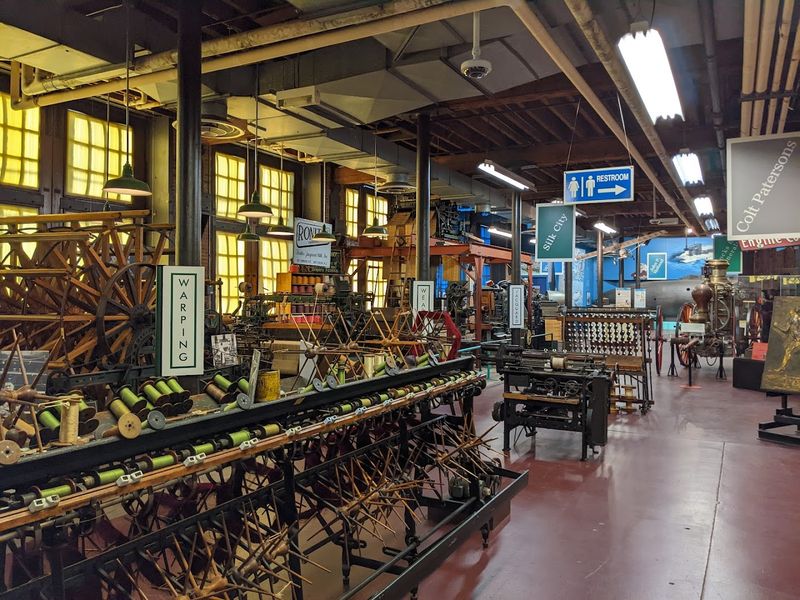
Paterson did not get the nickname “Silk City” because somebody in a meeting thought it sounded cute. The city earned it.
Silk was first woven onto bobbins in Paterson in 1839, and by the 1880s, the city had become the greatest producer of silk in the United States. That is a big claim, but inside the museum, it becomes easier to understand because the story is not told only through dates on a wall.
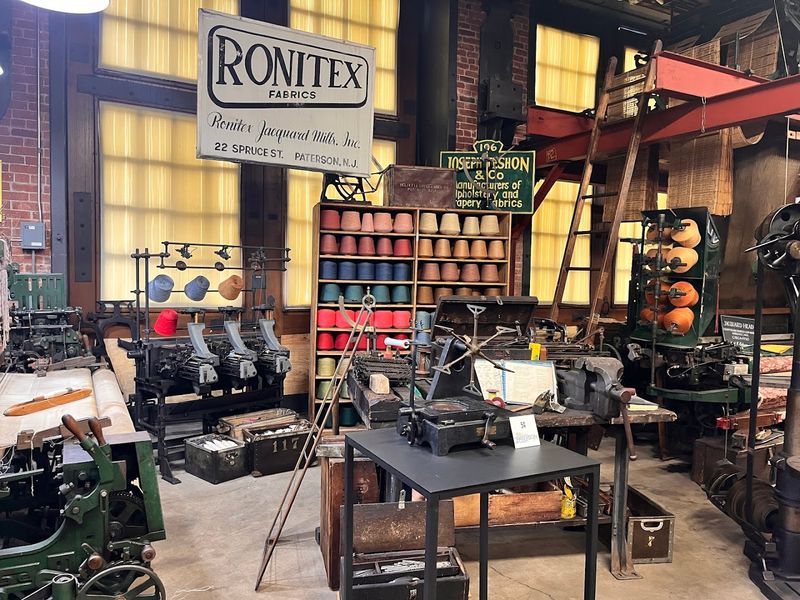
It is told through the tools of the trade. You see the machinery and materials that turned something as delicate as silk into a full-blown industry.
Dyeing, winding, warping, weaving, and Jacquard loom work all become part of the larger picture, and suddenly the nickname feels less like trivia and more like a whole citywide identity. What makes this section land is the contrast.
Silk sounds soft, elegant, almost dainty. The process behind it was anything but.
It took machines, waterpower, skilled workers, factory floors, long hours, and generations of know-how. Many of the machines on display were made in Paterson, which adds a nice local punch.
This was not a city simply using imported technology to make pretty fabric. It was building the means of production, refining the process, and exporting its reputation.
The exhibit also nudges you to think about the people behind the output: the workers who understood the machines, the families tied to mill schedules, the immigrants who helped shape the city’s neighborhoods, and the labor struggles that came with factory life.
You can admire the textiles, absolutely, but the better part is seeing how much motion, noise, and human effort sat behind every finished piece.
It makes Paterson’s Silk City title feel less like a label and more like a living machine.
The Locomotives Make New Jersey’s Industrial Past Feel Huge
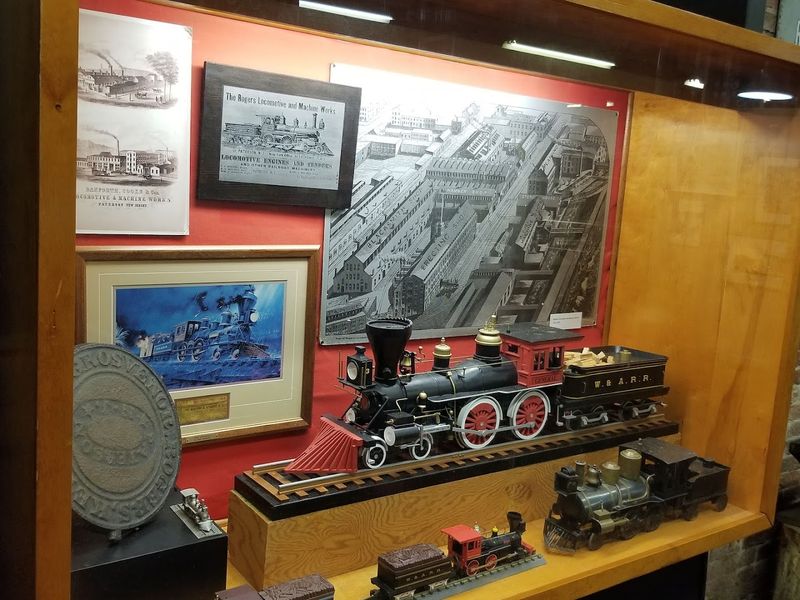
Thomas Rogers produced the Sandusky in 1837, and that one locomotive helps explain why Paterson’s story stretches far beyond Passaic County.
The Sandusky was one of the earliest locomotives built in the United States, and Rogers Locomotive and Machine Works went on to become the country’s leading locomotive manufacturer from 1850 to 1860.
That is the kind of fact that can sound a little dusty until you are standing in a former locomotive shop and realizing what those engines represented. These were not quaint antiques.
They were the machines that helped shrink distances, connect markets, move goods, and change how people imagined the size of the country. Paterson was not watching that transformation from the sidelines.
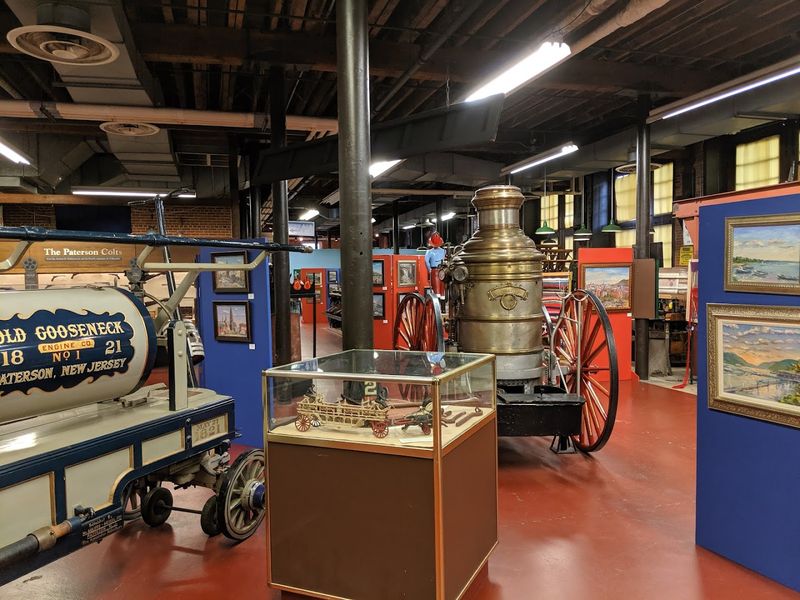
It was building part of it. At its height, the city was home to three locomotive manufacturers, which is wild to think about now when most people associate Paterson with the Great Falls, historic mills, or maybe a quick drive through downtown.
The locomotive exhibits give the museum some of its best “wait, this happened here?” energy. They connect New Jersey to rail lines reaching across the United States and even to transportation history abroad, including Central and South America and New Zealand.
That kind of reach gives the room a larger scale. You are not just looking at old metal.
You are looking at evidence of a city that helped power movement across continents. The former Rogers setting makes it even better because the building carries the right kind of weight.
It is easy to imagine the noise, the labor, the smell of oil, the enormous parts being moved around by people who knew exactly what they were doing. In a state packed with Revolutionary War sites and Victorian houses, this museum gives you another kind of New Jersey history: heavier, louder, and built with rivets.
Submarines, Colt Firearms, And Local Legends Keep The Visit Surprising
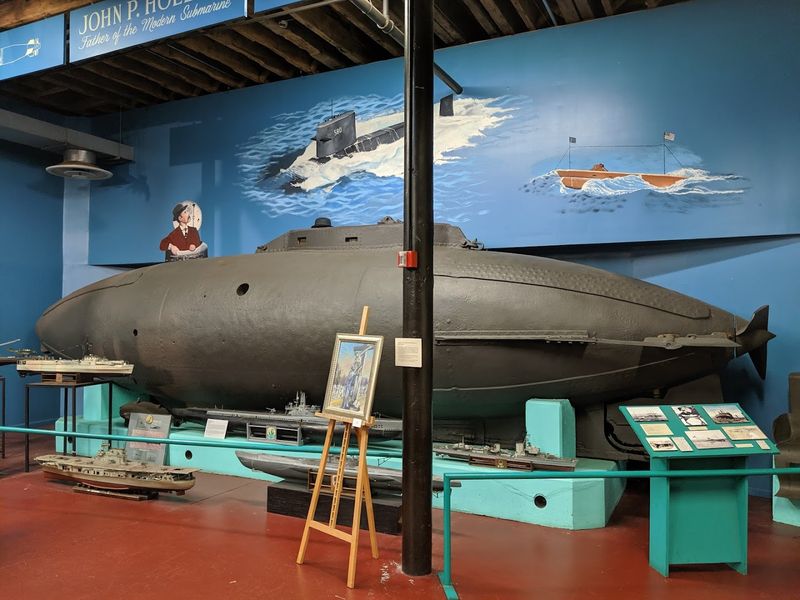
Just when you think you have the museum figured out, Paterson starts throwing curveballs. The submarine exhibit is one of the best examples.
John P. Holland, the inventor whose work helped lead to the modern submarine, is represented through the first two prototype submarines he created.
That is not the kind of thing most visitors expect to find in an old locomotive shop in North Jersey, but there it is, quietly making the case that Paterson’s inventive streak went well beyond silk and trains.
Holland’s designs were early steps toward submarines later adopted by navies around the world, so the exhibit has that delightful local-to-global twist this museum does so well.
Then the story jumps again to Samuel Colt. The Patent Arms Manufacturing Company was founded in Paterson in 1836 and went bankrupt by 1842, which is a reminder that not every famous industrial name began with instant success.
The museum’s Colt Patersons collection shows one of the largest collections of these firearms on the East Coast, and it adds a different kind of drama to the city’s manufacturing history. From there, the surprises keep coming.
Lou Costello, born Louis Francis Cristillo, gets his due as one of Paterson’s most famous sons, with memorabilia tied to the comedian’s life and career.
Larry Doby, who broke the color barrier in the American League in 1947 with the Cleveland Indians, brings in another powerful local connection, from his Paterson roots to the Negro Leagues and Major League Baseball.
Even Hinchliffe Stadium’s motor-racing past shows up through the Gasoline Alley story, complete with midget car racing and the garage culture around it. The museum’s charm is that it does not move in one straight line.
It wanders the way a good local conversation does, from submarines to firearms to comedy to baseball, and somehow it all still feels like Paterson.
The Rocks And Minerals Add An Unexpected Sparkle To The Collection
A geology exhibit could feel like a strange detour in a museum full of locomotives, looms, submarines, and firearms, but at the Paterson Museum, it makes perfect sense. The city’s industrial story begins with the land itself, and the rocks and minerals section brings that deeper timeline into the room.
Paterson is considered one of the world’s important mineralized basalt areas, thanks to the same geological forces tied to the Watchung Mountains, Garrett Mountain, and the Great Falls.
That basalt provided the matrix where minerals formed, and the Paterson area has produced 45 different minerals dating back roughly 250 million years.
In other words, before Hamilton, before factories, before silk mills, before Rogers locomotives, the ground was already busy making something worth studying. This exhibit gives the museum a nice change of pace.
After all that industrial heft, the mineral cases slow everything down. You start noticing color, texture, shine, and shape.
Specimens from Paterson and elsewhere in New Jersey sit alongside examples from around the world, which lets you compare the local landscape with a much wider geological story. It is a good reminder that the Great Falls are not only scenic or historic.
They are geological. The same landscape that later powered mills also tells a much older story about lava flows, basalt ridges, erosion, and mineral formation.
For families, this is often the section that catches kids by surprise, because rocks are one of those subjects that become instantly more interesting when they sparkle, glow, or look like they were pulled from a treasure chest. For adults, it adds another layer to Paterson’s identity.
The city was shaped by inventors and workers, yes, but also by stone, water, pressure, and time. That is a lot to pack into one underrated museum room.
Why This Great Falls Neighbor Belongs On Your New Jersey Bucket List
The best way to understand the Paterson Museum is to stop treating it like a standalone stop and start seeing it as part of the Great Falls neighborhood around it.
The museum sits beside one of New Jersey’s most important historic landscapes, where the 77-foot Great Falls of the Passaic River helped inspire the creation of America’s first planned industrial city in 1792.
That proximity changes the whole visit. You can see exhibits about waterpower, silk, locomotives, and manufacturing, then step outside and understand exactly why this spot mattered.
The falls were not just pretty scenery. They were the engine.
Alexander Hamilton and the Society for Establishing Useful Manufactures saw industrial potential in that rushing water, and Paterson grew around the idea that a young country could build, produce, and compete. The museum gives that big national story a local face.
It shows the machines, products, people, failures, breakthroughs, and oddball side stories that came out of the city. Practical details help, too.
The museum is currently listed as free, with donations accepted, and its visitor hours are posted as Monday through Friday from 9:30 a.m. to 4:30 p.m., with weekends closed. That weekday schedule means it takes a little planning, but the payoff is a visit that feels different from the usual New Jersey museum circuit.
It is not polished into blandness. It still has edges, weight, and the sense that history here was made by people doing loud, difficult, precise work.
Pair it with a walk near the falls, and the whole area starts to click: the water, the mills, the old brick buildings, the machines, the inventions, the local legends. Paterson has a way of making big history feel close enough to touch, and this museum is one of the best places to feel it still humming.