Creativity does not have to come with a hefty price tag, and Good Job Creative Reuse in Indianapolis proves it every day. This nonprofit creative reuse store gives artists, teachers, students, and hobbyists access to an ever-changing selection of affordable art supplies, craft materials, fabric, paper, yarn, beads, office supplies, and other rescued treasures that might otherwise end up in landfills.
Every visit feels like a scavenger hunt, with new discoveries waiting around every corner. Whether you’re starting a new hobby or stocking up for your next project, this Indiana gem makes creativity more accessible while giving reusable materials a second life.
A Tiny Storefront With Big Treasure-Hunt Energy
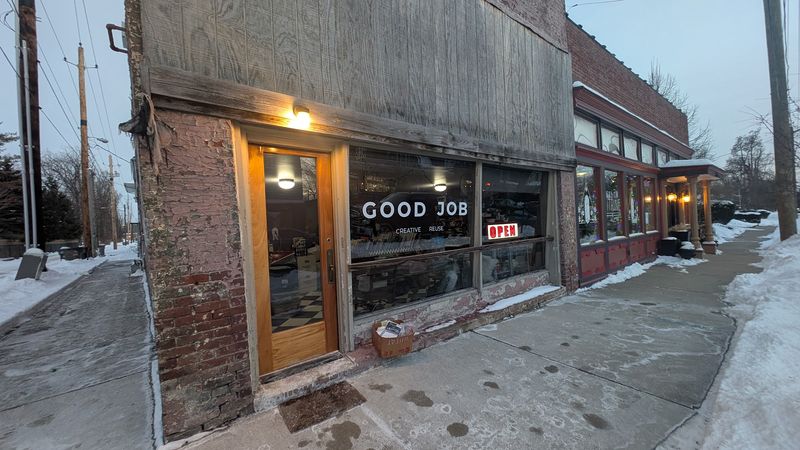
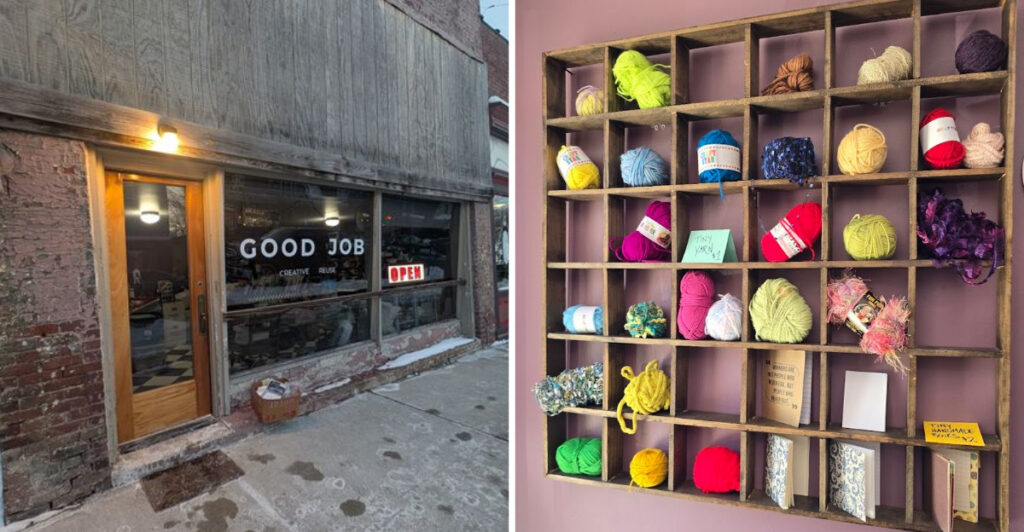
At street level, Good Job Creative Reuse does not announce itself with giant scale. The surprise starts when you realize how much material can fit inside one compact Indianapolis storefront without tipping into chaos.
Shelves, bins, and little pockets of inventory pull your attention in several directions at once, so browsing becomes less like ordinary shopping and more like scanning a studio after a dozen artists emptied their supply closets in the best possible way.
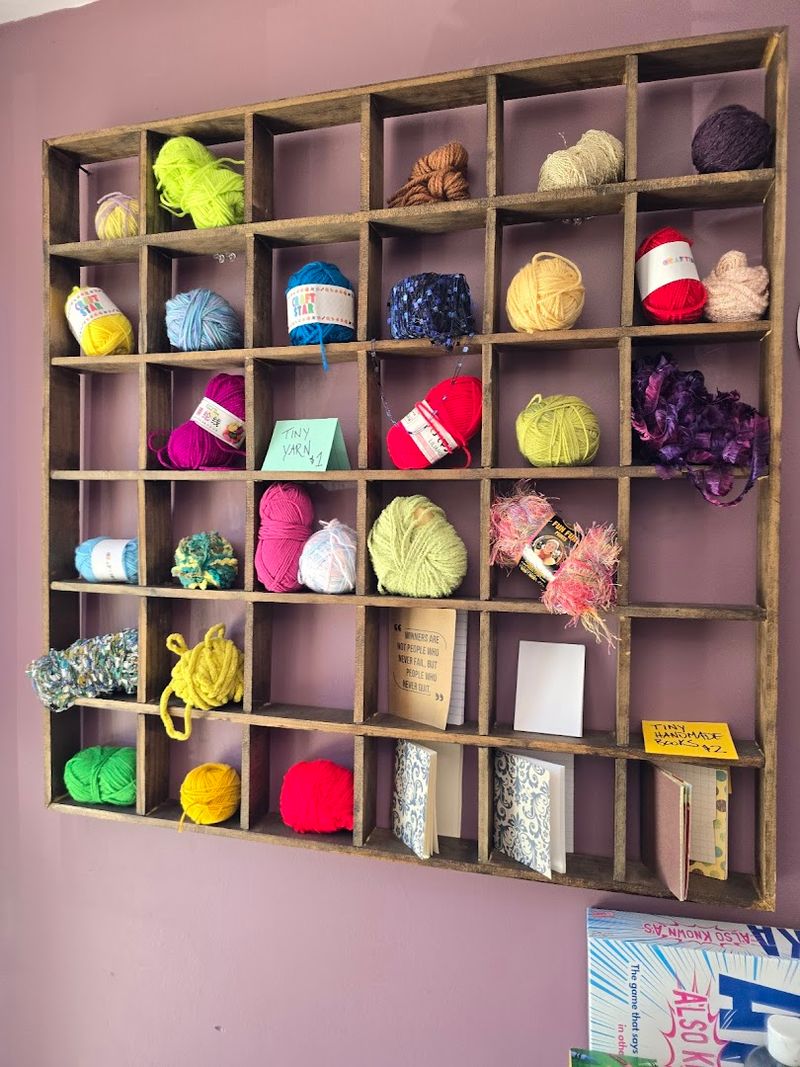
The visual rhythm is half organization, half discovery. A row of yarn may sit near baskets of trim, stacks of magazines, loose notions, paint, markers, brooches, and the sort of oddball doohickeys that can suddenly solve a project you have not even started yet.
That density matters because creative reuse stores live on surprise, and here the surprise is not one dramatic centerpiece but the steady realization that every few inches hold another useful thing.
Even the scale of the shop shapes the mood. You are not wandering endless aisles under fluorescent sameness, trying to justify buying a factory fresh bundle when you only need two pieces and a little nerve.
Instead, the smaller footprint sharpens your eye, encourages slower looking, and makes each bin feel active. Good Job Creative Reuse comes across as a place where experimentation is normal, thrift is stylish, and practical materials regain their spark the second they land in front of someone with an idea.
That is a powerful first impression for a craft store, especially one built around secondhand supply rather than polished retail theater.
Why the Prices Change the Way You Make Things
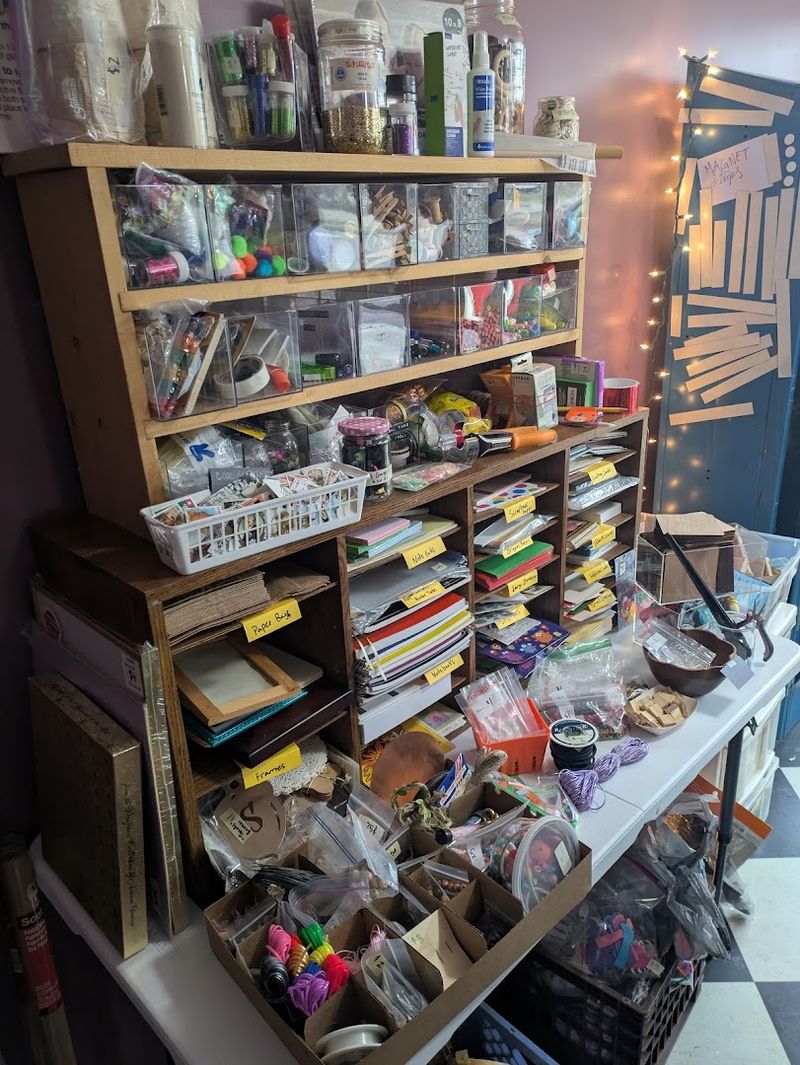
The clearest appeal at Good Job Creative Reuse is practical, almost immediate. Supplies that would normally ask for a bigger commitment in a chain craft store appear here as approachable little chances to try, test, patch, decorate, or finally begin.
That changes your decision making in real time, because a new hobby no longer needs a dramatic spending spree before you can figure out whether you actually enjoy it.
This is especially useful for the half-finished project crowd, the classroom supply crowd, and anyone whose craft brain moves faster than a budget.
In one visit, you might spot inexpensive yarn for a crochet learner, markers or paint for prop work, thread for mending, or a random assortment of embellishments that can turn plain materials into something personal.
The point is not that every item matches perfectly. The point is that the store makes partial quantities, leftovers, and one-off finds economically sensible again.
There is also a freedom that comes from not paying premium prices for every experiment. You can pick up a few intriguing materials, take them home, and see where your skills actually lead instead of buying an aspirational mountain of supplies first.
In that sense, the low-cost model does more than save money. It lowers the emotional risk of making something imperfect, trying a new medium, or changing direction halfway through a project.
Good Job Creative Reuse turns affordability into creative momentum, which is a much bigger service than simple discount shopping. It gives you room to play without feeling reckless, and that is exactly the kind of permission many artists, teachers, parents, and hobby hoppers need.
The Odd Little Finds That Make the Best Projects
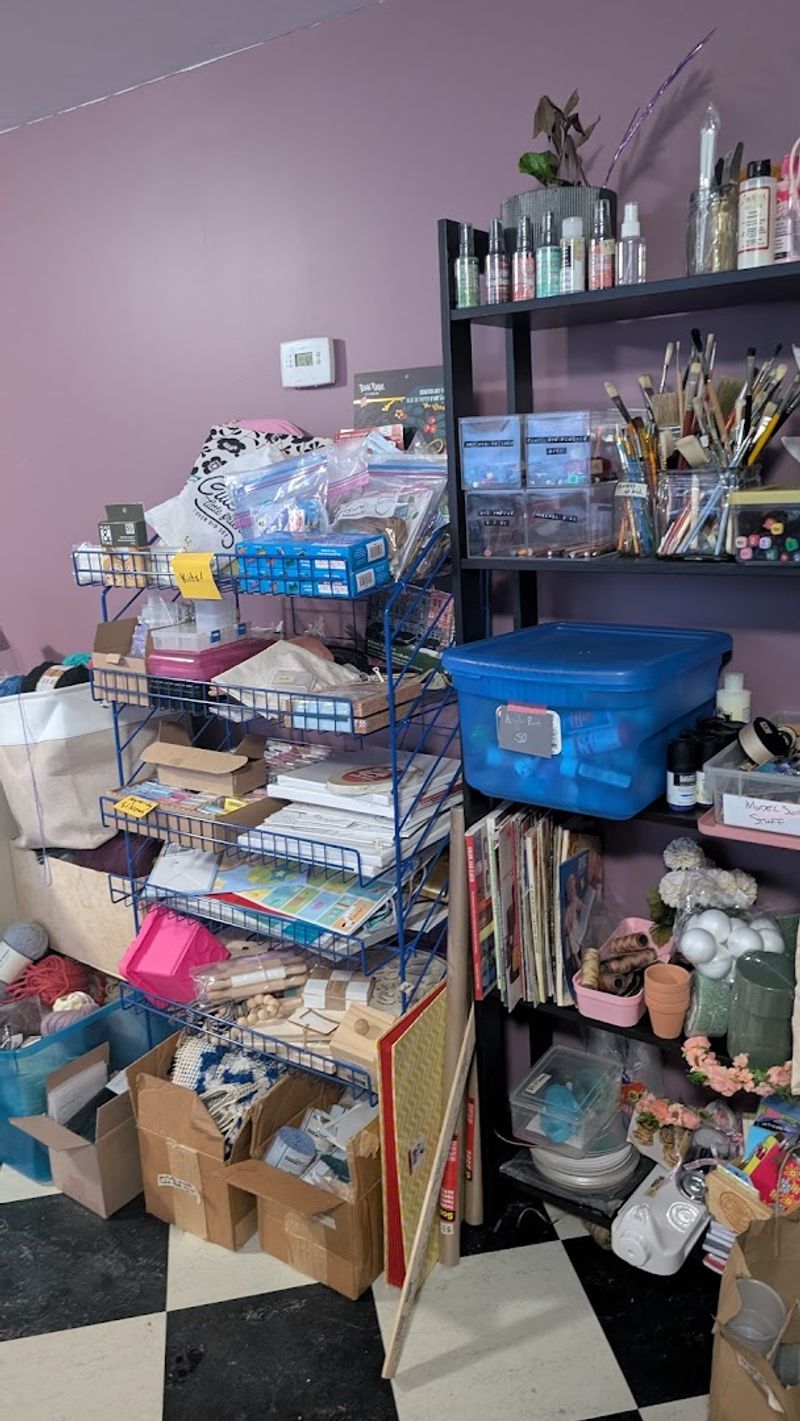
Some stores are built around predictability. Good Job Creative Reuse thrives on the opposite, and that is where the fun really kicks in.
Beyond staple materials, the inventory has the kind of delightfully irregular mix that can redirect your project on the spot, whether that means a forgotten trim, a stack of magazines for collage, a brooch that deserves a second life, or a handful of notions that would be nearly impossible to buy conveniently in a standard retail setup.
That unpredictability works because the shop serves more than one kind of maker at once. A serious sewer, a classroom art teacher, a weekend scrapbooker, a costume tinkerer, and a parent trying to fill a rainy afternoon can all scan the same shelves and walk away with completely different plans.
Good creative reuse is not only about recycled inventory. It is about putting unrelated materials close enough together that your brain starts making connections faster than a shopping list ever could.
There is also a nice shift in perspective when the most exciting purchase is not a major tool but a small, weird, useful detail. Instead of building an outing around one expensive item, you start noticing texture, color, shape, and possibility at a much finer scale.
That is why places like this inspire people who are undecided, restless, or between hobbies. Good Job Creative Reuse rewards curiosity more than expertise. You do not need a fixed plan to browse well here.
In fact, browsing works best when you stay open to the accidental combination that solves a costume problem, upgrades a gift wrap idea, starts a mixed-media piece, or gives a kid the exact spark needed to keep making. The store turns overlooked bits into creative accelerants, and that shift is harder to find than it sounds.
An Indianapolis Loop Built Around Reuse and Community
Good Job Creative Reuse lands in Indianapolis with a mission that reaches beyond retail. The store gives unused craft materials a second chance, yes, but it also gives local makers a more sustainable rhythm for how supplies move through a community.
Instead of shoving abandoned hobbies into closets or trash bags, the model encourages circulation: donate what you no longer need, pick up what fits your current season, and keep useful materials in play.
That loop matters in a city where many people want alternatives to buying everything new, especially for hobbies that can shift quickly. A creative reuse shop answers a very specific modern problem: too many partially used supplies, too little space, and not enough affordable places to re-enter a craft without starting from zero.
At Good Job, the donation-friendly setup is part of the appeal, especially since bringing in materials can translate into a discount. That is a practical incentive, but it also reinforces the store’s neighborhood logic.
The local energy comes through in another way too. This is not presented like a sleek sustainability concept designed for branding first and craft second.
It reads as hands-on, friendly, and rooted in actual maker habits, where leftover yarn, spare fabric, loose markers, vintage odds and ends, and abandoned project pieces still have value because someone nearby can use them next.
That perspective turns waste reduction into a direct creative resource rather than an abstract virtue. Good Job Creative Reuse stands out because it treats the life cycle of supplies as part of the art process itself.
You can declutter with less guilt, try things with less pressure, and participate in a small but meaningful neighborhood exchange built on use rather than excess. In a craft ecosystem, that kind of circulation is not just smart. It is energizing.
Classes, Crowds, and the Best Time to Browse
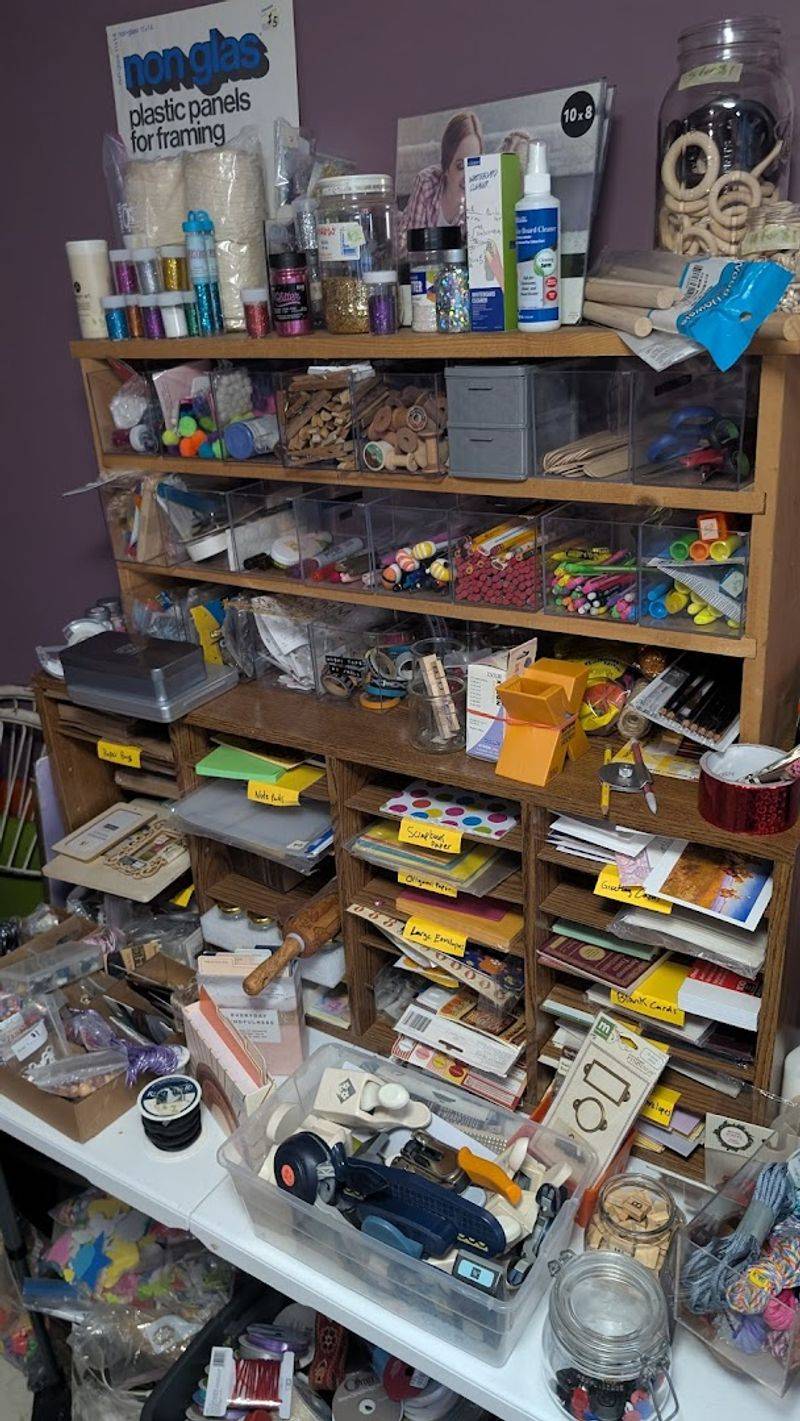
If your ideal shopping trip involves calm browsing and room to inspect bins carefully, timing matters at Good Job Creative Reuse. The store is small, and that intimacy is part of its charm, but it also means a busy class or drop-in event can change the experience quickly.
On quieter days, the compact layout reads as cozy and efficient. During a packed workshop, the same layout can become harder to navigate, especially if you prefer extra personal space or need a more accessible shopping environment.
That does not cancel the appeal of the programming. In fact, classes and workshops are one of the reasons the place matters.
They give beginners a lower-stakes entry point into sewing and other creative skills, and they reinforce the shop’s role as an active making space rather than a passive supply depot.
Still, the best strategy is simple: if you want maximum browsing freedom, go with a little flexibility and an awareness that event traffic can shape the floor.
The weekly hours are useful here. Good Job Creative Reuse opens at noon on Monday, Wednesday, Thursday, Friday, and Saturday, with later evening hours on Monday, Thursday, and Friday, and it is closed Tuesday and Sunday.
For some shoppers, those longer evening windows may offer a more convenient chance to stop in after work. For others, a non-event afternoon may be the better call, especially if you want time to look closely at details instead of squeezing around a crowd.
The practical takeaway is not dramatic, just helpful: this is the kind of store that rewards an intentional visit. Match your timing to your browsing style, and the experience is likely to be far more comfortable, focused, and productive.
Who Gets the Most Out of This Indiana Craft Stop
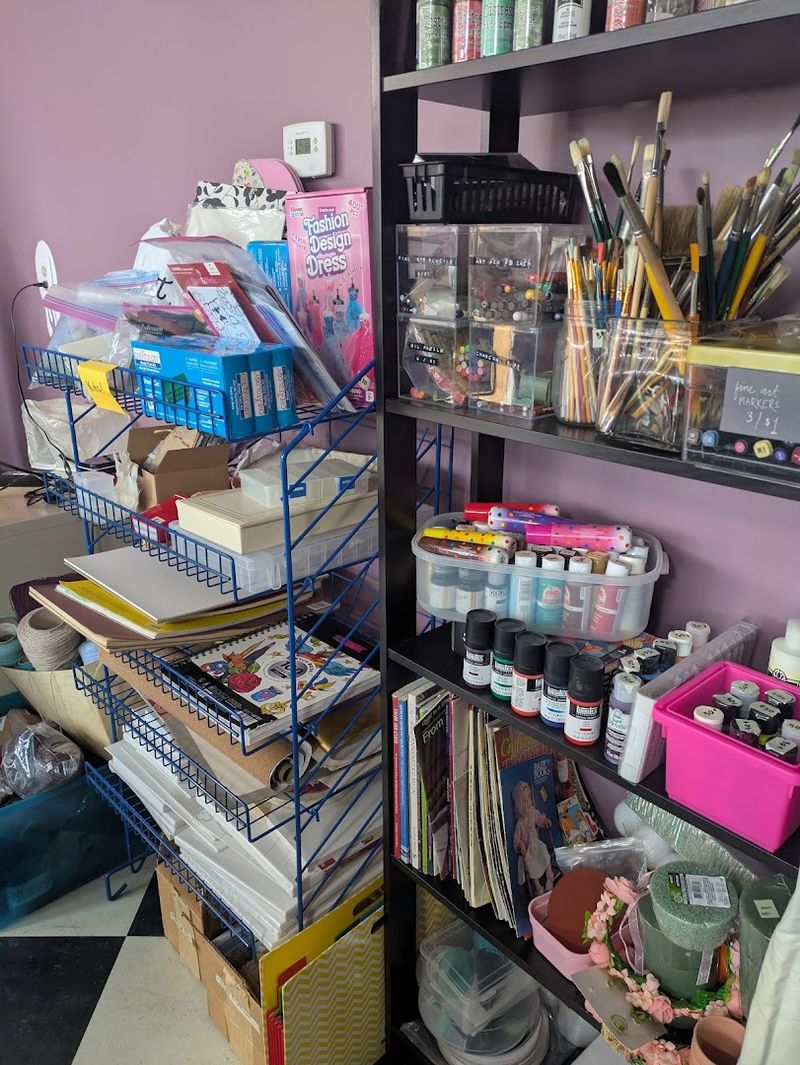
Not every craft store serves every type of maker equally, but Good Job Creative Reuse covers an unusually wide range because of how flexible the inventory is. If you teach, parent, sew, collage, crochet, costume-build, scrapbook, journal, repair clothing, or simply bounce from hobby to hobby, the store meets you where you are.
It is especially good for people who need enough material to start, test, or finish an idea without buying a lifetime supply of it.
That makes the shop particularly smart for beginners. Learning a craft is much easier when your first step is a low-cost bundle of materials instead of a cart full of expensive optimism.
The same logic applies to kids, casual makers, and adults who have a running list of things they want to try but rarely want to fund at full retail prices. In a place like this, trying crochet, experimenting with paper arts, or picking up tools for visible mending becomes far more approachable because the entry point is lighter.
More experienced artists can get plenty out of it too, just in a different way. For them, the value may come from texture, oddity, scarcity, or the chance to source supplies that do not look pre-packaged and obvious.
A reused brooch, unusual trim, old magazines, partial skeins, or mystery bins can add variation that polished craft chains rarely deliver. Good Job Creative Reuse works best for makers who like possibility more than precision shopping.
If you need ten identical pieces in a sealed set, this may not be your first stop. If you like adaptable materials, happy detours, and the thrill of finding exactly the thing you did not know your project needed, the store fits beautifully into your creative routine.
Why This Place Lands Differently Than a Regular Craft Run
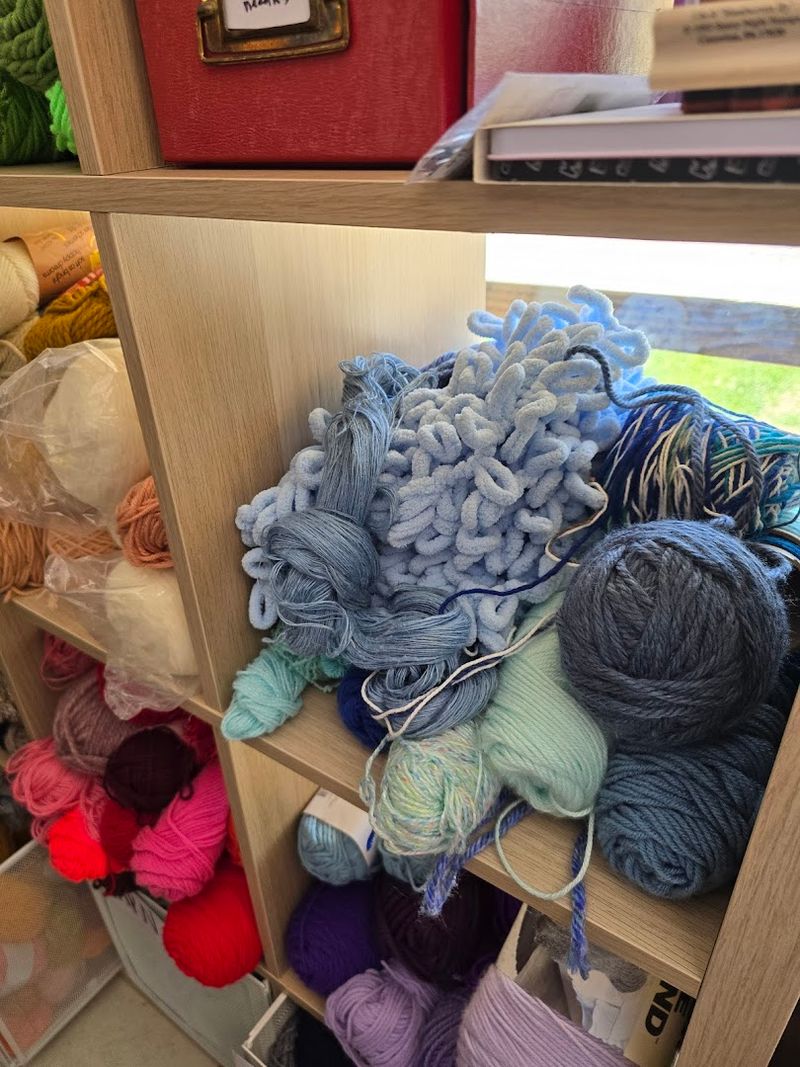
A trip to Good Job Creative Reuse does not carry the same mood as a standard errand for glue sticks or paintbrushes. The store asks you to browse with imagination first, list second.
That subtle shift changes the whole experience because you are not simply replacing supplies. You are scanning for potential, collecting fragments, and letting the next project reveal itself through materials that already have a history of being useful to somebody.
There is also a satisfying directness to the concept. Affordable prices, reusable inventory, donation incentives, and occasional classes all point toward a craft culture that is less wasteful and less intimidating.
Instead of making creativity look like an expensive lifestyle upgrade, the shop frames it as something practical and available right now. That is a meaningful distinction in a city where plenty of people want to make things but do not want to overbuy, overspend, or overcommit every time curiosity strikes.
In the end, the strongest argument for Good Job Creative Reuse is not novelty alone. It is how effectively the place matches real creative behavior.
Hobbies pause. Projects change. Kids outgrow phases. Artists pivot. Closets fill with leftovers that are too good to toss and too specific to keep forever.
This store gives those supplies another route, then turns that circulation into an affordable resource for the next person through the door.
Seen up close, that is the magic of the place, even without flashy scale or polished spectacle. At 201 South Audubon Road, Good Job Creative Reuse offers Indianapolis something sharper than a cute craft stop.
It offers a working model for how local creativity can stay accessible, sustainable, and a lot more fun when the materials are allowed to move.
Share this story