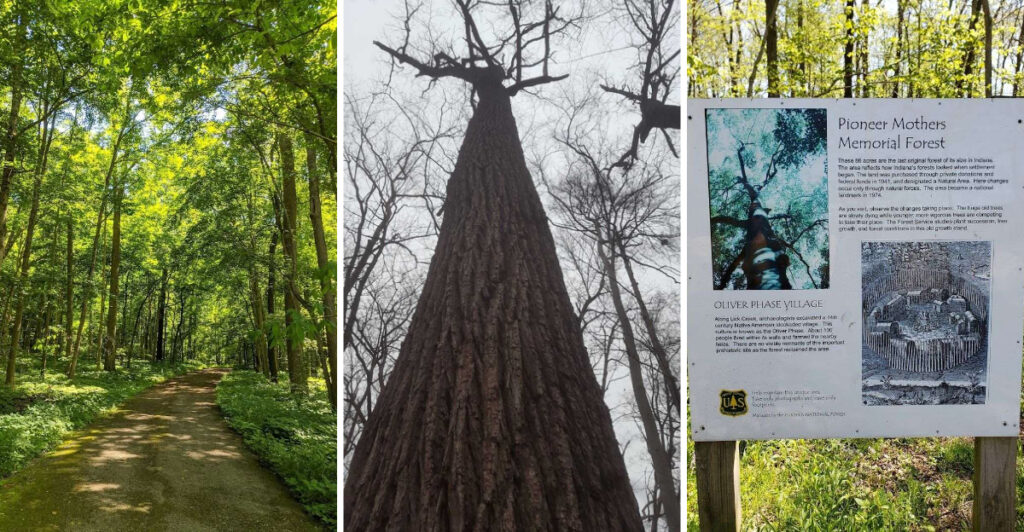
Indiana is home to many beautiful forests, but few are as historically significant as Pioneer Mothers Memorial Forest near Paoli. This rare 88-acre old-growth woodland preserves towering native trees that have stood for centuries while also protecting the archaeological remains of a fortified Native American village dating to around A.D. 1380.
Peaceful hiking trails wind through the untouched forest, offering visitors the chance to experience one of Indiana’s last surviving virgin woodlands while exploring a landscape rich in natural beauty and human history. If you’re looking for an unforgettable destination that blends ancient forests with remarkable archaeological heritage, this hidden Indiana gem deserves a place on your itinerary.
A Small Entrance to a Much Older World
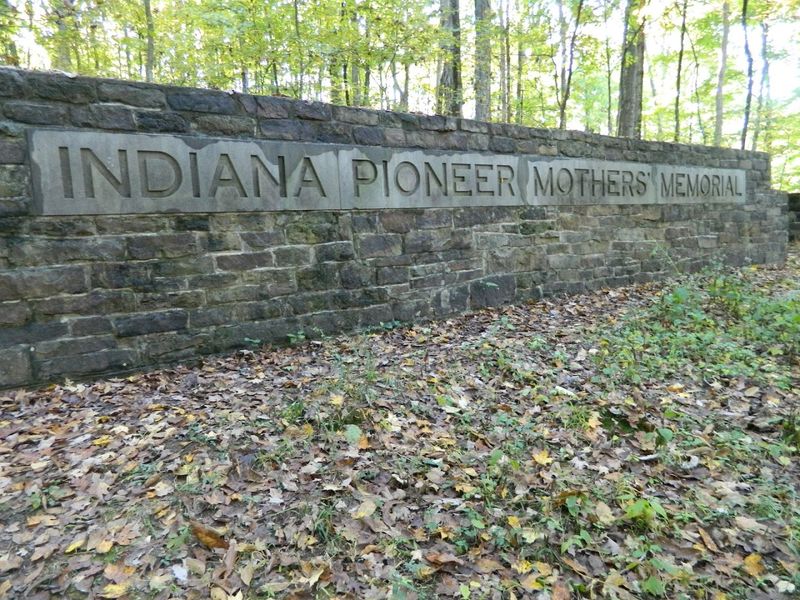
The first surprise at Pioneer Mothers Memorial Forest is how understated it looks from the road. There is no grand gateway, no oversized trailhead plaza, and no theatrical reveal, just a small parking area and a simple beginning that can make the place seem almost too quiet to be important.
That low-key entrance is part of the experience, because the forest does not advertise itself with spectacle. You start by moving away from traffic and into a corridor where the sound changes quickly.
Pavement gives way to a softer rhythm underfoot, the air cools under heavier shade, and the wooded edges begin pulling your attention upward toward trunks and branches instead of outward toward open views.
Even before the main trail settles in, the setting starts separating itself from ordinary roadside woods. This is where expectations matter. Anyone arriving for dramatic cliffs or wide overlooks may initially miss the point, but this forest works on scale, continuity, and age rather than instant wow-factor.
It asks you to notice how densely the canopy gathers, how the terrain folds around the path, and how little visual clutter interrupts the scene once you are inside.
That gradual transition gives the place its character. Instead of delivering one big postcard moment, Pioneer Mothers Memorial Forest unfolds through texture, shade, and the sense that this patch of land has avoided the reset button that changed so much of Indiana.
By the time the trail fully draws you in, the modest approach makes more sense. A site this old does not need a flashy entrance. It just needs enough room for you to step out of the present and pay attention.
Why the Trees Matter More Than Their Height
Old growth can sound like a promise of giant tree trunks so enormous they stop you in your tracks. At Pioneer Mothers Memorial Forest, the story is more nuanced, and that is exactly why the place deserves a closer look.
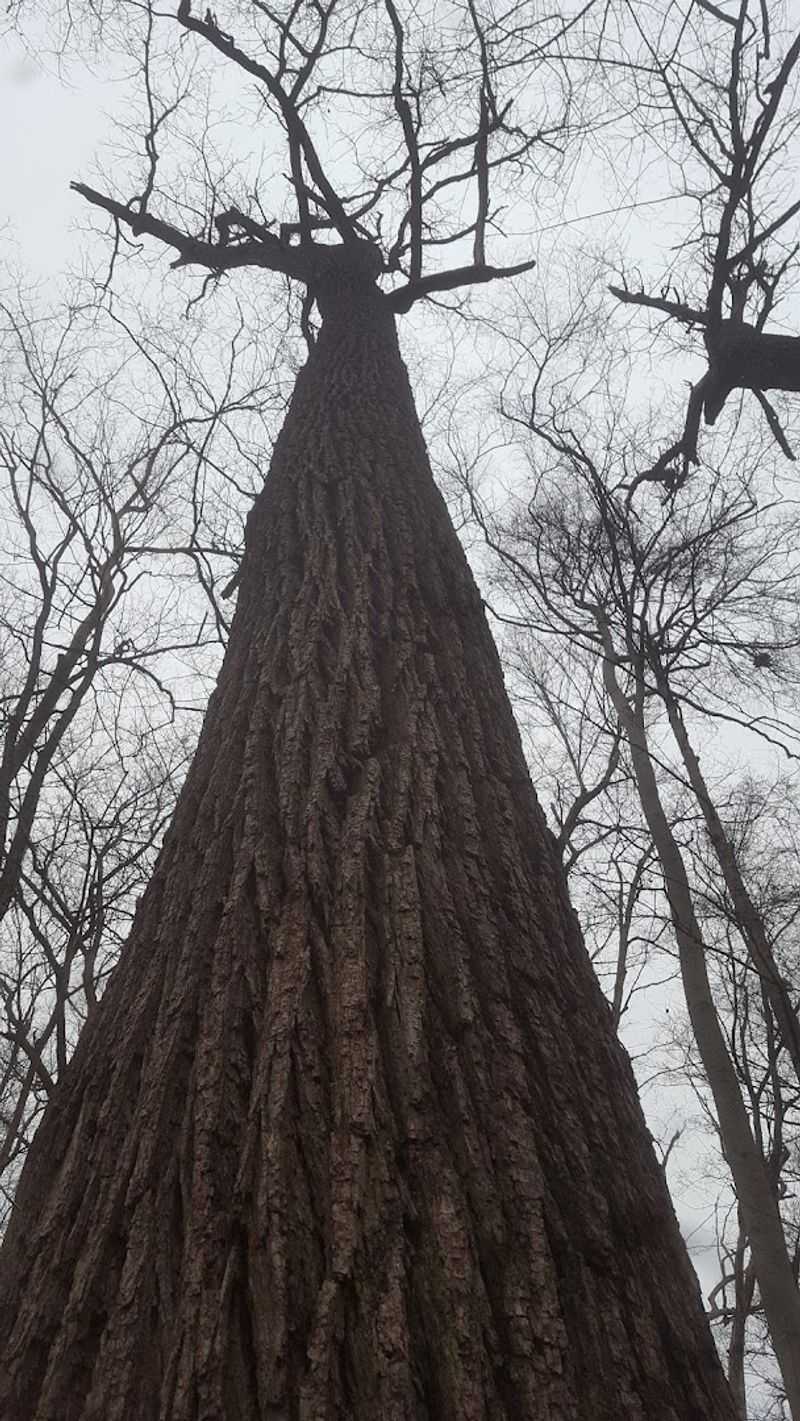
The importance of these woods is not just in individual size, but in the fact that this stand preserves a rare remnant of southern Indiana forest that escaped the widespread cutting that transformed much of the region.
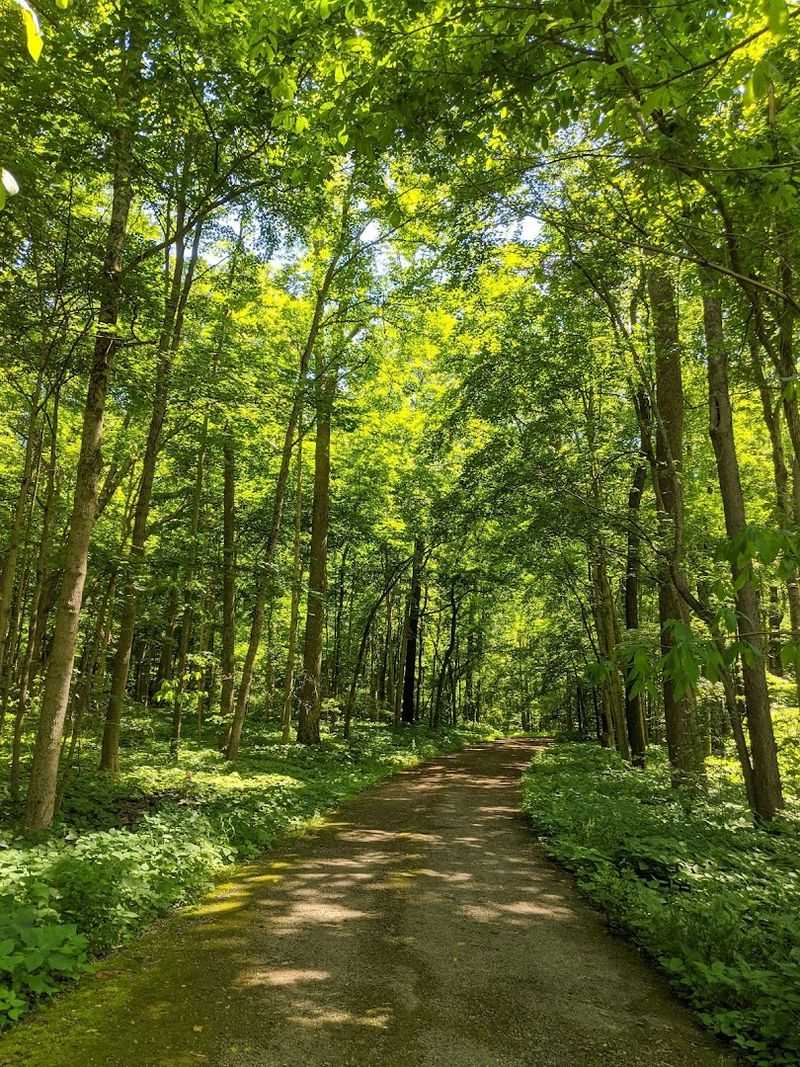
Once you settle into that idea, the scene opens differently. The trees read less like isolated attractions and more like a living structure, with mature hardwoods, layered understory, fallen wood, changing light, and a canopy that creates a continuous ceiling over much of the trail.
The forest floor has the irregular look of a place shaped by time rather than landscaping, which gives every bend a more natural, less managed character.
That distinction matters if you want to understand what makes the walk special. A preserved tract like this offers a reference point for what large parts of Indiana once looked like before clearing and development simplified the landscape.
You are not just looking at trees that happen to be old. You are moving through an ecosystem pattern that has become increasingly uncommon.
Because of that, the walk rewards patience better than speed. Look at bark texture, branch spread, root flare, and the way different species occupy space around one another, and the forest becomes richer with every minute.
Pioneer Mothers Memorial Forest is not trying to compete with the biggest trees in the country. Its value comes from continuity, rarity, and the chance to experience a surviving piece of Indiana woodland history on its own terms.
Lick Creek Adds Motion, Sound, and a Cooler Edge
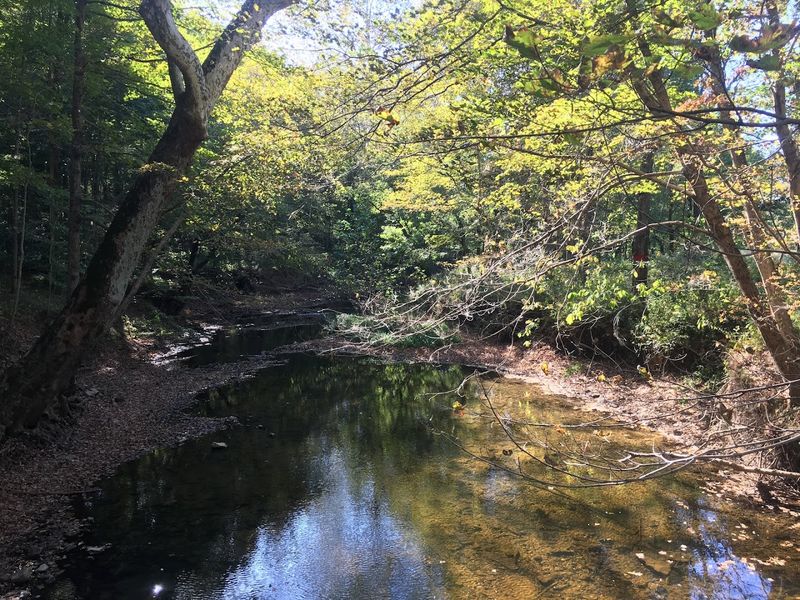
For a forest with such a quiet reputation, Pioneer Mothers Memorial Forest has a feature that changes the mood in a very physical way. Lick Creek threads through the property, adding movement, reflection, and a steady soundtrack that breaks up the stillness of the woods.
It is the detail that keeps the hike from becoming visually uniform, especially when light catches the water through the trees.
Creekside sections bring a cooler, fresher feeling to the route. The terrain subtly shifts, the vegetation thickens in pockets, and the path gains a stronger sense of place because the water gives your eyes something to track beyond trunks and leaf litter.
After rain, the sound of water and dripping leaves can turn the trail into one of those simple settings where every small natural noise becomes clearer.
This also helps explain why photographers and slow walkers tend to get more out of the forest than anyone rushing for mileage.
A bend in the creek, a patch of exposed roots near the bank, or a reflection under a heavy canopy can create the best scenes of the day without any formal overlook. The beauty here is close-range, not panoramic.
Lick Creek also deepens the sense that this land holds multiple stories at once. It is habitat, visual anchor, and natural guide through the old woods, shaping how the forest looks and how it is experienced season to season.
In warmer months it brings welcome relief to the walk, and in wet weather it gives the whole site a richer soundscape. When people describe this place as peaceful, the creek is a major reason why that feeling arrives so quickly and stays with the trail.
The 1380 Walled Village Story Beneath the Trees
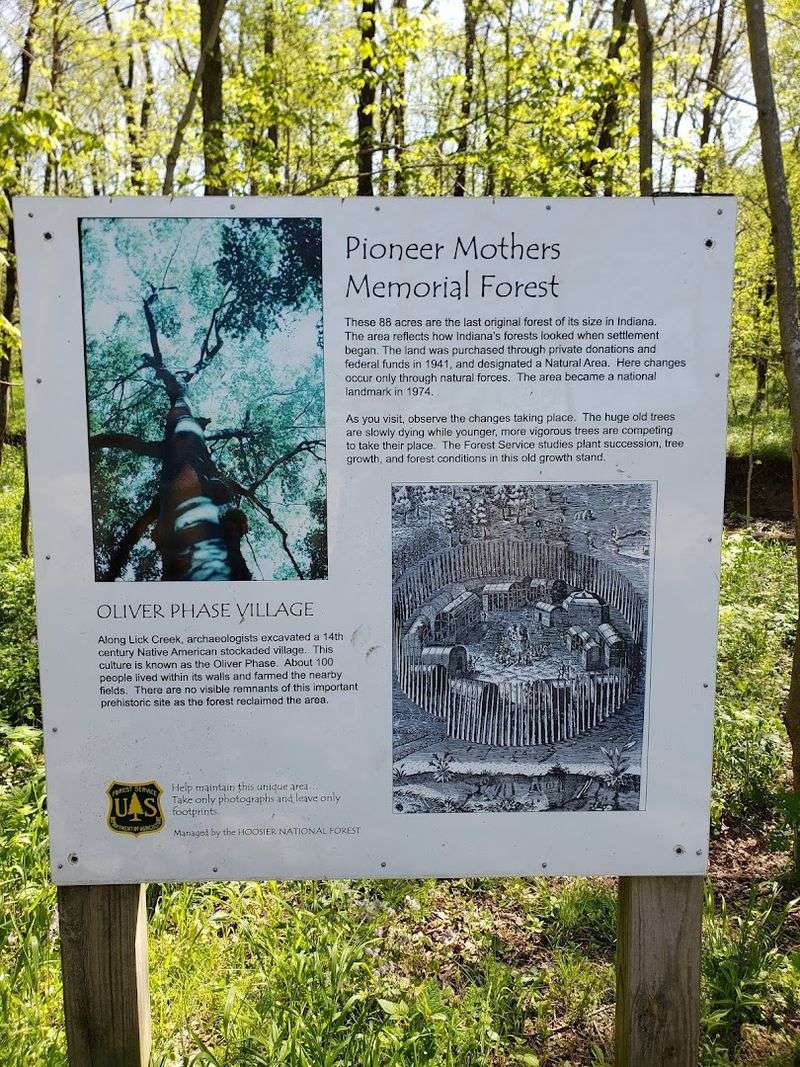
The most unexpected layer at Pioneer Mothers Memorial Forest is not botanical at all. This site is also associated with an important archaeological story tied to a Native American village area, often described in relation to a walled settlement dating to around 1380.
That history changes the way the forest reads, because the ground stops being just scenery and becomes part of a much older human landscape.
It is important to approach that story with respect and precision. This is not a theme-park history stop, and anyone arriving expecting dramatic reconstructed ruins will almost certainly misunderstand the site.
The significance lies in the documented past of the area and in the knowledge that these woods protect land connected to people who lived, organized space, and built community here centuries before modern roads and trailheads existed.
That context adds depth to every step. The quiet of the forest starts carrying a second kind of weight, not eerie or theatrical, but historical in a grounded way that makes the place feel more layered than a standard hike.
Instead of chasing visible relics, the experience becomes about understanding that preservation can include both natural systems and cultural memory on the same acreage.
In practical terms, that means walking with attention and leaving the site undisturbed. The value of Pioneer Mothers Memorial Forest is not only in what can be immediately seen, but also in what careful stewardship has allowed to remain protected.
Southern Indiana has plenty of pleasant woods, but very few places combine old growth forest and archaeological importance so directly. That combination is the article-worthy detail here, and it is the reason the forest carries far more significance than its quiet appearance first suggests.
How to Hike It Without Missing the Point
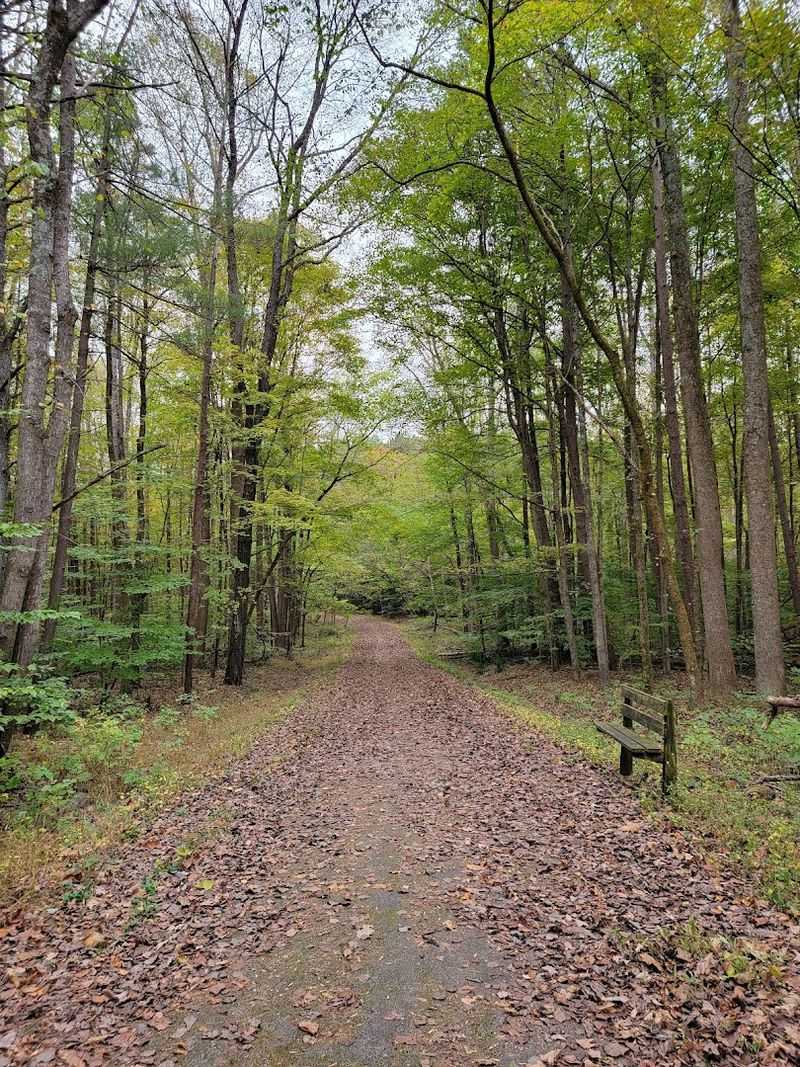
Pioneer Mothers Memorial Forest is best treated as a deliberate walk, not a speed lap. The route is approachable for a wide range of hikers, and part of its appeal is that you do not need technical skill or a full-day commitment to experience the site.
What you do need is the right mindset, because this trail reveals more when you slow your pace and let the details accumulate.
The layout is straightforward enough that most people can focus on the setting instead of constant navigation. There are parking areas at either end, and some walkers approach from the north or south depending on timing and convenience.
One common entry includes a short walk along an older paved road before the trail experience fully settles into the forest, which can be useful to know if you are expecting immediate deep-woods immersion.
Footing is generally manageable, making this a good choice for an easy hike, light run, or low-pressure nature outing. That said, it still pays to watch the ground, especially in wet conditions or around creekside sections where the landscape naturally gets a little slicker and more uneven.
Wildlife is part of the mix too, so the usual awareness around snakes and seasonal conditions belongs here.
The smartest way to do this trail is to leave room for pauses. Stop at the creek, scan the canopy, listen after a rainfall, and notice where the path shifts from open edge to heavier shade.
If you frame the hike as a box to check, Pioneer Mothers Memorial Forest may seem simple. If you treat it as a compact piece of preserved Indiana landscape and history, the walk becomes much richer without demanding anything dramatic from the terrain.
Best Time to Visit This Corner of Indiana
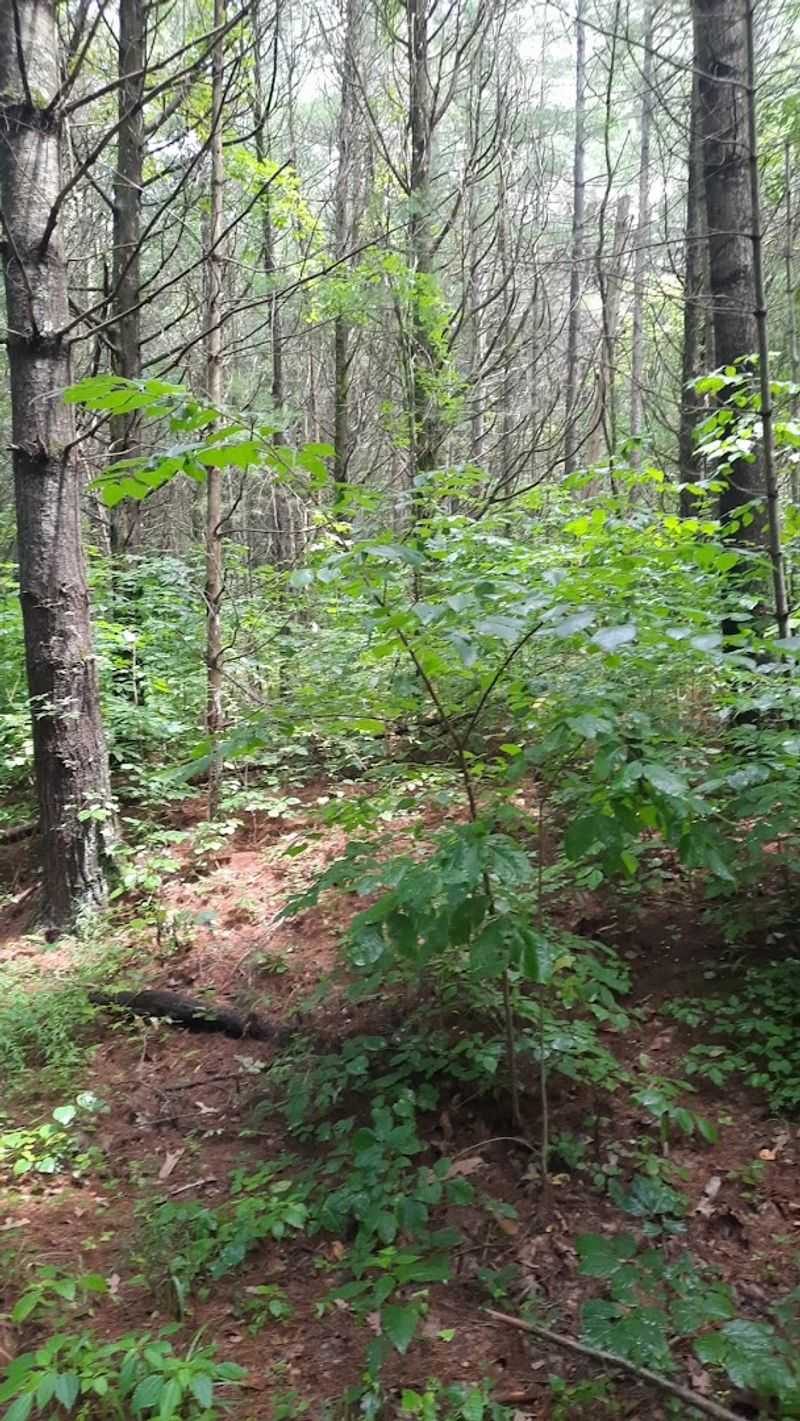
Timing changes Pioneer Mothers Memorial Forest more than you might expect from a relatively short trail. Because the experience depends on canopy cover, creek conditions, sound, and visibility through the woods, season and weather can completely shift how the forest presents itself.
Choosing the right day is one of the easiest ways to get more out of the visit. Spring and early summer bring the richest green and the strongest sense of enclosure.
Fresh leaves tighten the canopy, the understory looks lively, and Lick Creek often has enough presence to add extra sound and shine to the route.
This is a great window if you want the forest at its most lush, though wet ground and active wildlife mean a little more attention underfoot.
Rainy weather can actually improve the atmosphere here if you are prepared for it. The patter on leaves, darker bark, and cooler air give the woods a deeper, more immersive quality that suits the site especially well.
In contrast, fall opens up longer sightlines through the trees and adds color variation, while winter can make the trail feel more architectural, with trunks, branches, and terrain standing out cleanly.
Practical timing matters too. Parking can be limited at some access points, so an earlier arrival is the easiest move if you want a smoother start.
Midday sun is less important here than at open scenic parks, since much of the appeal comes from shade and texture rather than broad views.
If you want Pioneer Mothers Memorial Forest at its strongest, aim for a quieter part of the day, comfortable walking weather, and enough time to let the forest unfold gradually instead of rushing through it.
Why Pioneer Mothers Memorial Forest Stands Out Near Paoli
Pioneer Mothers Memorial Forest stands out because it refuses to rely on a single selling point. It is not Indiana’s biggest hike, its flashiest destination, or the kind of place packed with built attractions, yet it manages to deliver a rarer mix than many larger parks.
Old growth woods, a creek corridor, manageable trails, and archaeological importance all meet here in a footprint small enough to explore without turning the day into a production.
That combination gives the forest unusual editorial value. You can write about ecology here without ignoring history, and you can discuss history without reducing the place to a marker beside a path.
The land holds both stories at once, which is exactly why the experience feels more substantial than the trail mileage alone might suggest.
Near Paoli, that matters. Southern Indiana has no shortage of scenic drives and wooded routes, but preserved remnants like this help explain the region rather than simply decorate it.
They show how the landscape once functioned, how conservation can protect more than scenery, and how even a modest trail can connect present-day walkers with layers of time that usually disappear under development or intensive recreation planning.
If your ideal outing involves nonstop spectacle, this forest may read as restrained. If you appreciate places that reveal themselves through texture, context, and careful preservation, Pioneer Mothers Memorial Forest earns attention very quickly.
The entrance is small, the walk is approachable, and the setting stays quiet, but the substance runs deep. In an era of overbuilt outdoor experiences, that kind of understatement is not a weakness. It is exactly what gives this Indiana forest its lasting relevance and its sharp, unusual appeal.
Share this story