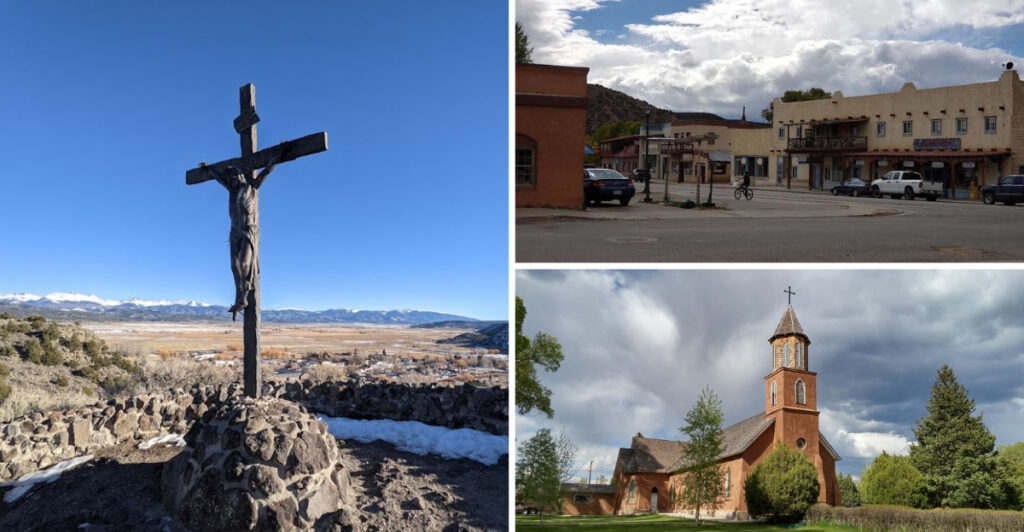
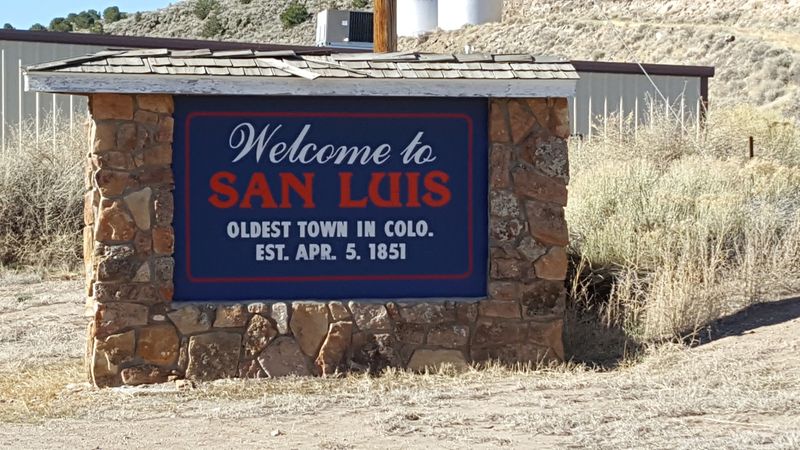
Colorado is filled with famous mountain towns, but one of its most fascinating destinations remains surprisingly overlooked. Founded in 1851, San Luis is the oldest continuously occupied town in Colorado, offering visitors a rare blend of history, culture, and striking high-desert scenery.
Adobe buildings, centuries-old traditions, sweeping views of the Sangre de Cristo Mountains, and a slower pace give the town an authenticity that is increasingly difficult to find. Rather than competing with Colorado’s better-known tourist destinations, San Luis quietly tells the story of the state’s earliest settlement. If you’re looking for a hidden gem with genuine character and deep historical roots, this remarkable town deserves a place on your itinerary.
A Town Square Framed by Sky and Adobe
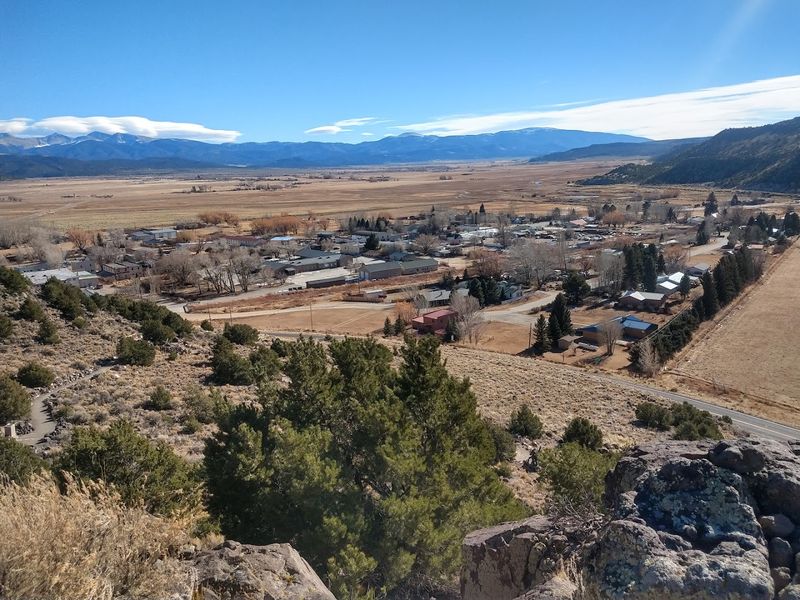
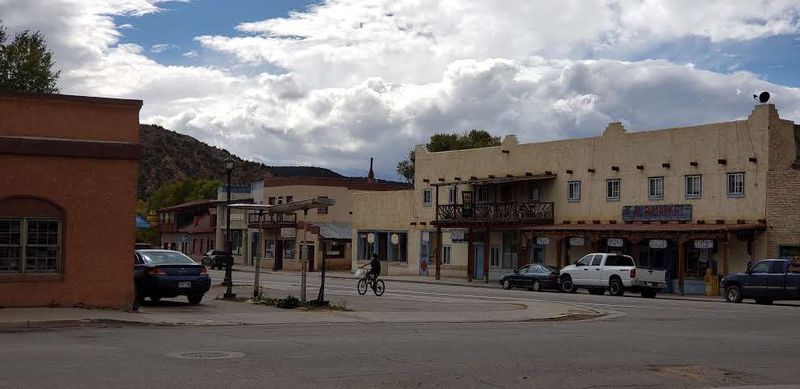
San Luis does not announce itself with dramatic storefronts or polished tourist signage. The first striking thing is scale: a very small town set inside a very big landscape, where low buildings sit beneath an enormous southern Colorado sky.
That contrast gives the center of town an immediate clarity, with earth-toned walls, modest facades, and mountain views doing more visual work than any flashy attraction could.
Walking around the core, the details are subtle but telling. Adobe construction, simple lines, and weathered textures connect the place to older building traditions that suit the climate and the valley.
Streets feel open rather than crowded, and the quiet has structure to it, not emptiness, because the town still operates as a county seat and a lived-in community rather than a preserved set piece.
That visual restraint is part of the appeal. San Luis does not try to repackage itself into a generic weekend destination, so you notice practical things that reveal continuity: public buildings, local gathering spaces, and a layout that still makes sense at a human pace.
Even small transitions between blocks carry a sense of age, not in a dusty museum way, but in the ordinary rhythm of a place that has remained occupied for generations.
For travelers used to Colorado towns built around recreation first, this setting lands differently. The valley light is sharper, the color palette is more muted, and the architecture is tied to local history rather than trend.
Before you have even reached a major landmark, San Luis has already established its strongest quality: it looks like a town with roots, not a town performing heritage for the camera.
Colorado’s Oldest Continuously Occupied Town
San Luis holds a distinction that instantly changes how you read the place. It is recognized as the oldest continuously occupied town in Colorado, a fact that shifts every wall, plaza edge, and modest street corner into a longer timeline than most visitors expect from the state.
Colorado is often marketed through mining towns, rail stories, and alpine adventure, but San Luis points to an older chapter shaped by Hispano settlement in the valley.
The town was formerly known as San Luis de la Culebra, and that earlier name alone suggests a deeper regional history than the typical Colorado road-trip stop. Here, the story is not about boom-and-bust spectacle.
It is about persistence, land, community, and a settlement pattern that endured in a high valley where seasons, distance, and geography always mattered.
That history is most powerful when it is encountered in ordinary surroundings rather than isolated inside one building. San Luis still functions as a real town, so its significance is woven through daily life instead of neatly cordoned off.
You are not looking at a reconstruction of the past. You are moving through a place where continuity itself is the point.
That matters for how you visit. Instead of chasing a checklist, it makes more sense to pay attention to context: the valley setting, the age of the settlement, the cultural inheritance visible in architecture and place names, and the way civic life still centers this small community.
San Luis rewards curiosity more than speed. Once you understand where it sits in Colorado history, the town stops reading as obscure and starts reading as foundational.
The Shrine Trail Above Town
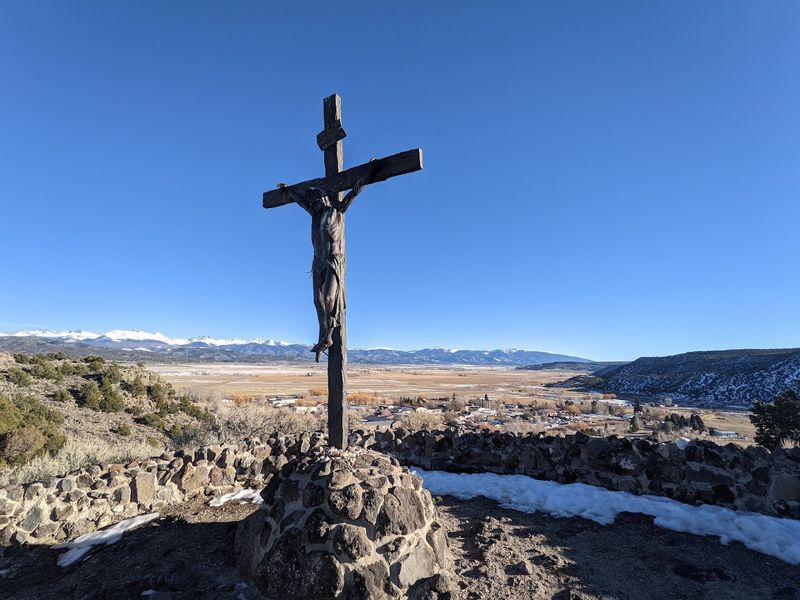
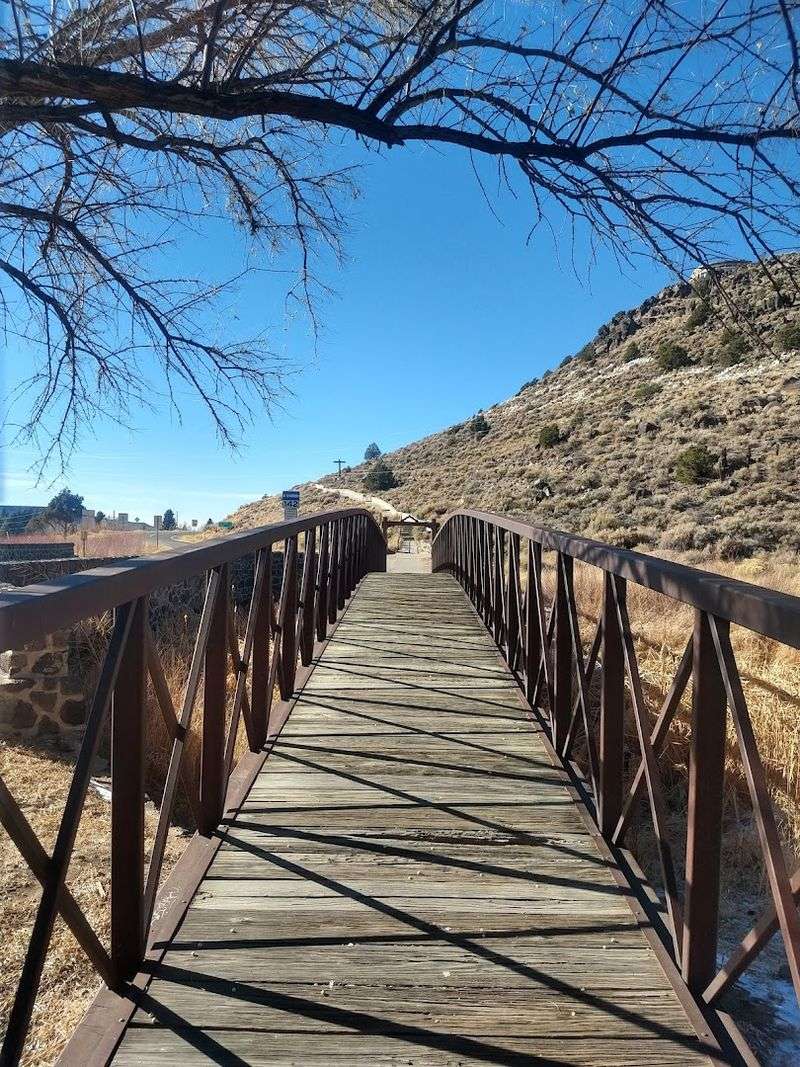
Just beyond the town center, San Luis has one of its most visually arresting landmarks: the Stations of the Cross shrine and trail rising above the valley. The setting changes the experience immediately.
Instead of staying at street level among civic buildings and adobe structures, you move upward into open space where the land itself becomes part of the composition.
The route is known for devotional art and a dramatic hillside layout, but even travelers approaching it from a purely cultural or scenic angle can appreciate how strongly it is tied to place.
The spare vegetation, expansive views, and sculptural forms give the site a quiet intensity. Nothing about it reads ornamental or overdesigned, which suits San Luis perfectly.
Because the shrine sits in conversation with the surrounding terrain, the view back toward town becomes part of the experience. You start to understand how small San Luis is within the wider San Luis Valley, and how much of its identity comes from that relationship between settlement and open land.
The climb also shifts your sense of pace. This is not a stop that works best through quick snapshots from the parking area.
Good footwear, water, and realistic expectations help, especially because elevation and dry air can sneak up on people. Early or late daylight often brings the strongest shadows and the clearest definition across the valley floor.
For many visitors, this is the place where San Luis stops being an abstract historic dot on the map and becomes fully dimensional: spiritual, geographic, artistic, and unmistakably rooted in southern Colorado.
A Borderlands Culture, Not a Theme
One of the most important things to understand about San Luis is that its character comes from living regional culture, not staged nostalgia.
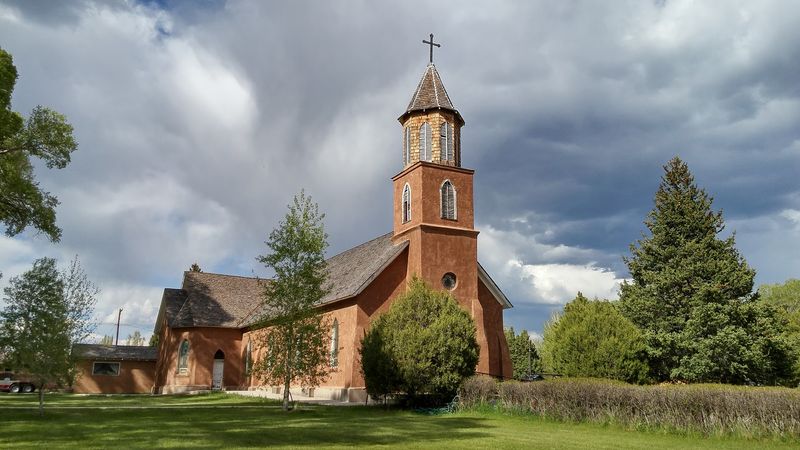
The town sits within a borderlands history shaped by Hispano traditions, land grants, Catholic heritage, and generations of families connected to the San Luis Valley.
That background gives the place a depth that can be sensed in names, architecture, religious landmarks, and the practical way the town occupies the landscape.
It is easy for travelers to flatten historic places into a single adjective and move on. San Luis resists that. Its identity is not decorative, and it does not need to be translated into a polished entertainment district to become legible.
The modest scale of buildings, the use of adobe, and the rhythm of the streets all point toward continuity instead of reinvention.
This makes observation more rewarding than consumption. Rather than searching for a curated storyline on every corner, you notice how old settlement patterns still shape the town’s layout and civic life.
The result is a place that asks for attention to context, including the valley environment, the long local timeline, and the cultural traditions that remain central to how San Luis is understood.
For visitors, that means showing up with patience and respect. Read the markers you find, spend time at the public spaces, and notice what the town does not exaggerate about itself.
San Luis is strongest when approached on its own terms. It offers a version of Colorado that is older, quieter, and more culturally layered than the state’s mainstream image, and that difference is exactly why the town stands apart.
How to Experience San Luis Without Rushing It
San Luis is best approached as a slow sequence rather than a single attraction. Start in town and let the street grid introduce the scale of the place before heading anywhere elevated or symbolic.
That order helps because the town center establishes the human story first, then the surrounding landscape expands it.
A good visit usually begins with a walk around the historic core, where you can notice public buildings, older construction styles, and the calm spacing between structures.
After that, the shrine area above town adds a different kind of perspective, both literal and cultural. Seen together, those two experiences explain San Luis better than any rushed pass-through ever could.
There is also real value in building time for stillness. This is not a destination improved by overpacking the schedule or turning every stop into a photo sprint.
Sit for a while, look at the valley light as it shifts, and pay attention to how the mountains frame the horizon without dominating every sightline. The town reveals itself through pacing.
If you are driving through the San Luis Valley, San Luis works especially well as a deliberate detour rather than an afterthought squeezed between bigger names. Pair it with a broader day of scenic driving, but protect enough time to explore on foot.
Comfortable shoes, sun protection, and water are practical basics in this high, dry environment. Visit with curiosity instead of urgency, and San Luis offers something many road-trip stops never manage: a sense of place that becomes clearer the slower you move through it.
When the Valley Light Does the Heavy Lifting
Timing matters in San Luis because light changes the town more than crowds or seasonal programming do. Midday reveals the clearest architectural lines and the open geography of the valley, but early morning and late afternoon bring a softer, more dimensional version of the place.
Adobe surfaces pick up warmth, shadows stretch across the street edges, and the mountains start to frame the scene with more definition.
This is a high valley environment, so weather and exposure shape the experience in practical ways. Sun can feel intense, wind can arrive quickly, and temperatures may shift harder than first-time visitors expect.
Those conditions are not drawbacks, but they do reward basic planning. Layers, water, and a willingness to walk at a measured pace will make the town more enjoyable.
Photographically, San Luis benefits from restraint. Wide shots help show how tiny the settlement is against the surrounding landscape, while close details capture adobe textures, chapel forms, and the wear that comes from long use rather than artificial aging.
The town is not trying to dazzle every second, which is exactly why it becomes visually compelling when the light is right.
For travelers deciding when to stop, shoulder hours usually offer the most atmosphere with the least glare. The valley can feel almost austere under a bright noon sky, then suddenly layered and lyrical as the sun drops.
In a place this small, those visual shifts are not minor. They shape how the history reads, how the shrine landscape lands, and how San Luis moves from interesting to unforgettable.
Why San Luis Stands Out in Southern Colorado
Plenty of small Colorado towns are charming, scenic, or old by regional standards. San Luis stands apart because it combines all three in a form that still feels grounded in everyday life.
It is historically significant without becoming overinterpreted, visually distinctive without trying to brand every corner, and small enough that the surrounding valley remains part of every experience.
That combination gives the town unusual editorial power. You are not just looking at one more mountain gateway or repackaged main street.
San Luis offers a different Colorado narrative, one centered on long settlement history, Hispano cultural roots, adobe building traditions, and the vast geography of the San Luis Valley. Those elements make the town important well beyond its population size.
It also benefits from not being overexposed. There is room here for observation, for quiet, and for noticing details that would be drowned out in a busier destination.
The town asks more from the visitor in one sense – attention, patience, and context – but gives back a clearer identity in return. You leave with a stronger understanding of place rather than a stack of interchangeable travel moments.
If your Colorado map is mostly filled with ski bases, mining streets, and postcard overlooks, San Luis is the corrective. It shows a deeper timeline and a different cultural landscape, one that broadens the state beyond its most marketed image.
For travelers who care about history that still lives in the built environment, scenery that does not need embellishment, and towns that remain themselves, San Luis is not a minor stop. It is one of the most quietly important places in Colorado.