Tennessee’s waterfalls don’t just pour over cliffs—they tell stories written in stone. From towering sandstone amphitheaters to moss-covered gorges and ancient limestone layers, the rocks surrounding these cascades create scenes that feel almost sculptural.
Whether you’re chasing swimming holes, challenging hikes, or just a good excuse to stand in awe of nature, these ten waterfalls prove that sometimes the setting steals the show just as much as the water itself.
1. Burgess Falls — Sparta
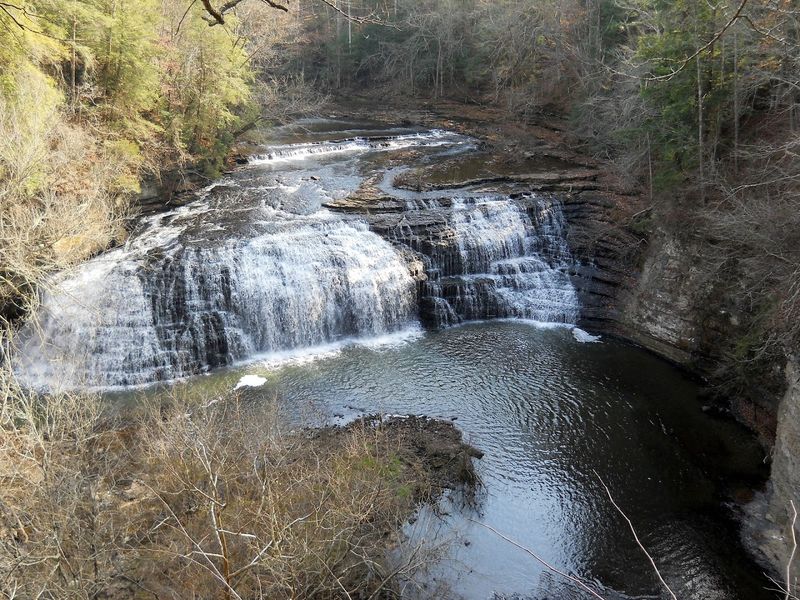
Burgess Falls doesn’t ease you into the experience. From the moment you start the trail, the gorge announces itself with steep drops, layered stone walls, and the distant roar of moving water. The park’s trail system takes you past three smaller cascades before delivering the grand finale—a 136-foot plunge that feels massive because of the rocky theater around it.
The final waterfall spills into a deep pool surrounded by cliffs that rise sharply on all sides. The rock layers are visible in bands of tan, gray, and rust, stacked like pages in a geology textbook. Overlooks let you take in the full scene from above, where the scale of the gorge becomes clear.
What makes Burgess Falls special isn’t just the height of the drop. It’s the way the water interacts with the stone—crashing, splitting, foaming—before settling into the pool below. The cliffs frame everything perfectly, giving the falls a sense of drama that’s hard to find elsewhere.
The hike is moderate and family-friendly, though the final descent involves stairs and can be slippery after rain. If you’re visiting during spring or after heavy storms, the falls run with extra power, and the mist rising from the base adds another layer to the scene.
Burgess Falls State Park is located between Cookeville and Sparta, making it an easy day trip from Middle Tennessee. The park also offers picnic areas and river access upstream, but most visitors come for the main event. Pack your camera and take your time at the overlooks—this is one waterfall where the rocks demand just as much attention as the water pouring over them.
2. Cummins Falls — Cookeville
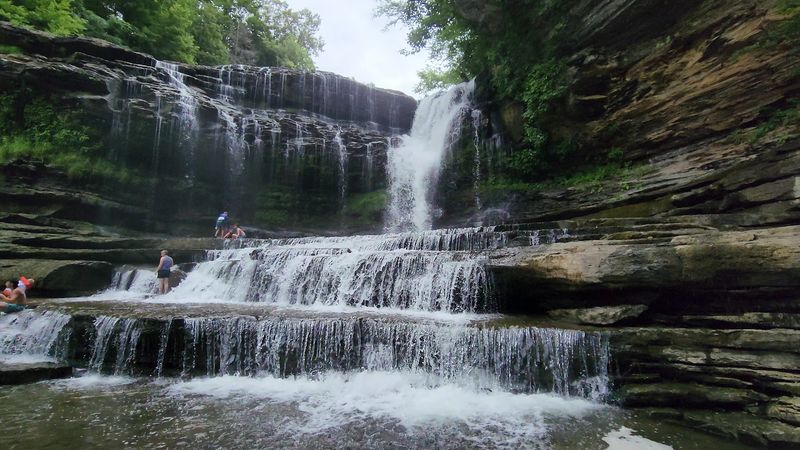
Most people know Cummins Falls for its swimming hole, and for good reason—it’s one of the best natural pools in Tennessee. But the real story here is the journey to get there and the massive rock bowl that cradles the falls. The hike involves wading through the creek, hopping across slick stones, and navigating a gorge lined with layered cliffs that feel ancient and alive.
The waterfall itself is about 75 feet tall, but it’s the surrounding geology that makes the scene unforgettable. Water spills over shelves of limestone and sandstone, carving smooth channels and shallow pools along the way. The main plunge pool is wide and deep, framed by boulders and stone slabs that serve as natural sunbathing spots.
Cummins Falls is part of a Tennessee State Natural Area, and the park takes visitor management seriously. During peak season, reservations are required to control crowds and protect the fragile ecosystem. It’s worth planning ahead—this isn’t a waterfall you want to miss because you didn’t check the calendar.
The hike is moderate but involves creek crossings, so wear shoes with good traction and expect to get wet. The gorge can feel narrow in places, with rock walls rising on both sides and the creek flowing beneath your feet. It’s an immersive experience that makes you feel like you’re part of the landscape rather than just passing through.
Cummins Falls is located just outside Cookeville, making it accessible for day trips from Nashville or Knoxville. The combination of adventure, geology, and a refreshing swim makes it a standout destination. Just remember to respect the rules, pack out your trash, and leave the rocks as you found them.
3. Foster Falls — Sequatchie
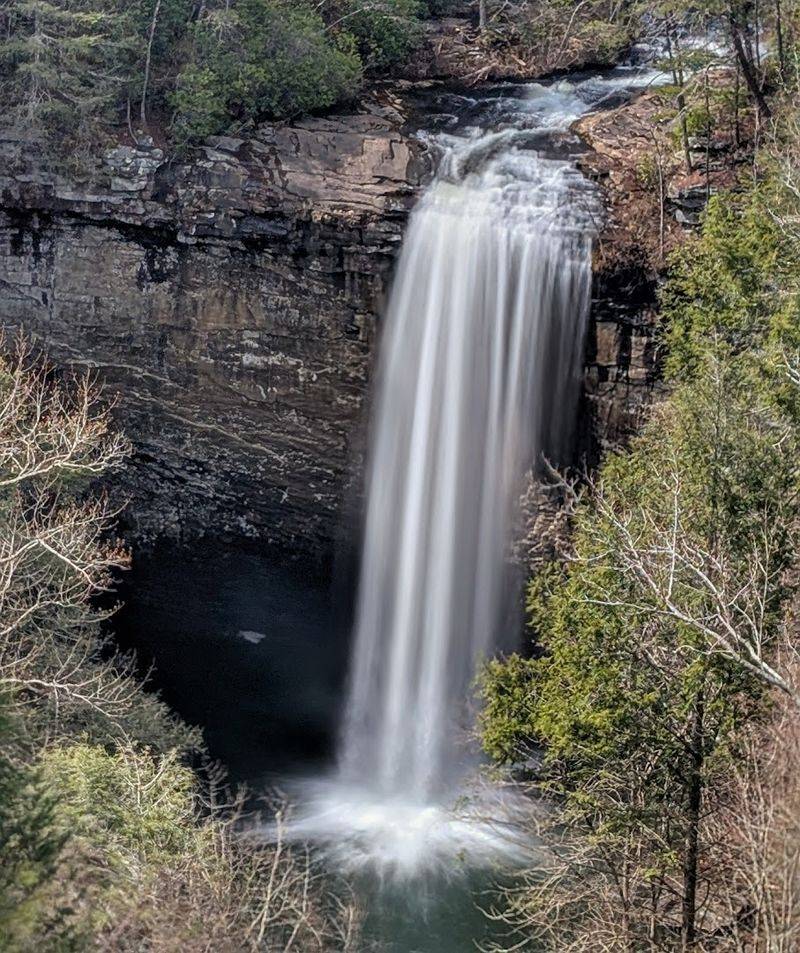
Foster Falls drops 60 feet into a pool so clear you can see the rocky bottom from the overlook above. But what really grabs your attention are the towering sandstone cliffs that wrap around the falls like a natural coliseum. These walls rise over 200 feet in places, creating a dramatic backdrop that’s become a magnet for rock climbers and photographers alike.
The trail to the base is steep and involves wooden stairs, but the payoff is immediate. You’ll find yourself standing at the edge of the plunge pool, surrounded by sheer stone walls covered in moss, ferns, and streaks of mineral staining. The rock faces show layers of sediment laid down over millions of years, each band telling a different chapter of the region’s geologic past.
Foster Falls is part of the South Cumberland State Park system, and it’s one of the most popular climbing destinations in Tennessee. On any given weekend, you’ll see climbers scaling the cliffs, their colorful gear standing out against the gray and tan stone. Even if you’re not climbing, watching others navigate the vertical terrain adds another dimension to the experience.
The waterfall itself is beautiful year-round, but the rocks steal the show. In winter, ice formations cling to the cliff faces, creating frozen curtains that shimmer in the sunlight. In summer, the pool is cool and inviting, though swimming isn’t officially allowed due to safety concerns.
Foster Falls is located near Tracy City in the Sequatchie Valley, about an hour and a half from Chattanooga. The area is remote and peaceful, with minimal development and plenty of natural beauty. It’s the kind of place where you can spend hours just sitting on the rocks, listening to the water, and soaking in the view.
4. Greeter Falls — Altamont
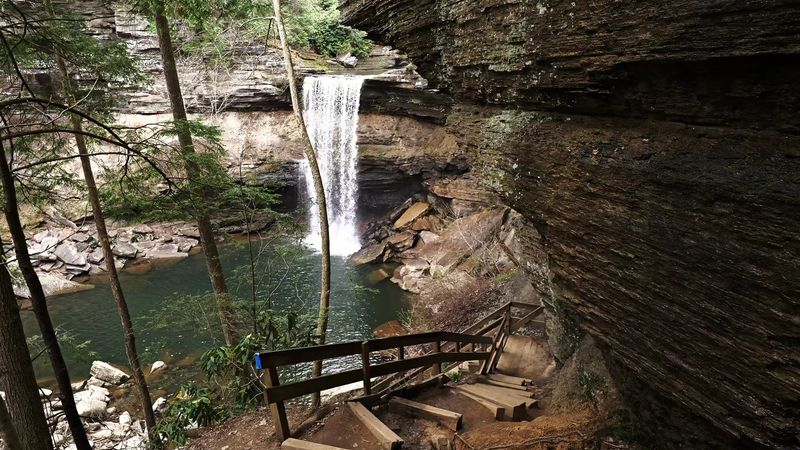
Greeter Falls has that hidden-gem quality that makes you feel like you’ve stumbled onto something secret. The trail winds through the woods before dropping into a canyon where the waterfall spills beside rugged stone walls and ledges. A spiral staircase takes you down to the lower falls, and the descent alone makes the rocks feel like the main attraction.
The upper falls are smaller and more delicate, with water sliding over smooth rock shelves into a shallow pool. But the lower falls are where the drama kicks in. The canyon walls close in, creating a tucked-away amphitheater where the waterfall pours over a 50-foot drop.
The rocks here are layered and textured, with moss, ferns, and small caves adding to the wild, untamed feel.
What sets Greeter Falls apart is the way the trail interacts with the geology. You’re not just looking at the rocks—you’re walking beside them, under them, and around them. The spiral staircase adds a sense of adventure, making the whole experience feel more immersive than a typical waterfall hike.
The trail is part of the Savage Gulf State Natural Area, which is known for its rugged terrain and remote beauty. Greeter Falls is one of the more accessible spots in the area, but it still requires a moderate hike and some careful footing, especially on the stairs and around the lower falls.
Visiting in spring or fall gives you the best combination of water flow and comfortable temperatures. The canyon can feel cool and shaded even in summer, making it a nice escape from the heat. Winter visits are possible but require extra caution due to ice on the stairs and rocks.
Greeter Falls is located near Altamont, about an hour from Chattanooga or two hours from Nashville. It’s a quieter alternative to some of Tennessee’s busier waterfalls, and the rocky canyon setting makes it well worth the trip.
5. Machine Falls — Tullahoma
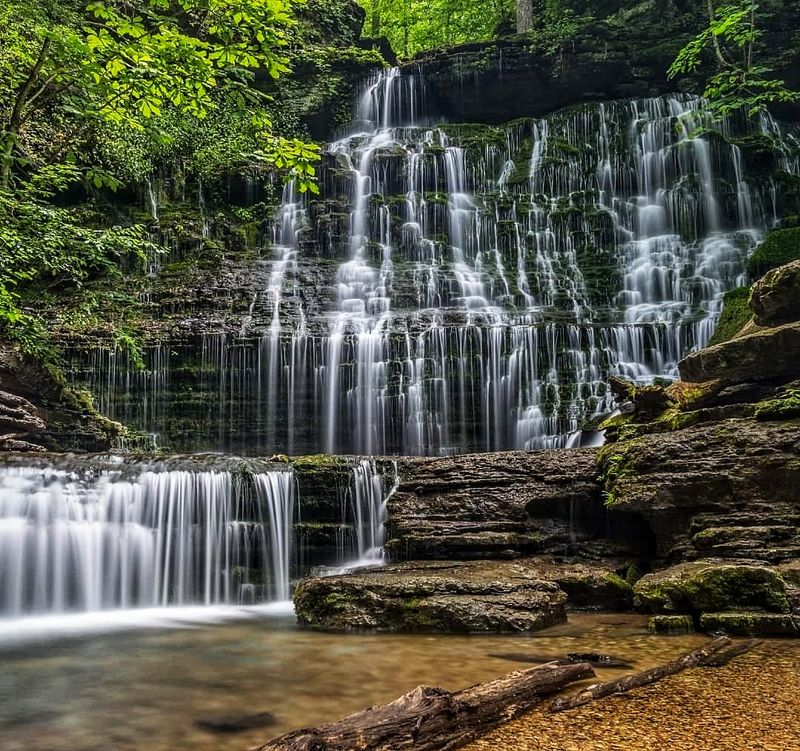
Machine Falls feels like the kind of place you’d stumble upon by accident and then never want to leave. The waterfall itself is modest—maybe 15 feet—but the setting is rich with detail. Mossy rocks, shallow cascades, and a lush little gorge create a scene that feels layered and alive, like nature’s version of a secret garden.
The creekbed leading to the falls is just as interesting as the waterfall. Flat rock shelves create natural steps and pools, and the texture of the stone—smooth in some places, rough and cracked in others—tells the story of water slowly shaping the landscape over time. Ferns and wildflowers grow in the crevices, softening the edges and adding pops of green.
Machine Falls is located in Short Springs Natural Area, a lesser-known gem near Tullahoma. The area is managed by the state and offers a network of trails that wind through sinkholes, caves, and creek valleys. The waterfall is just one stop on a longer loop, but it’s the kind of spot where you’ll want to linger.
The hike to Machine Falls is easy and family-friendly, with minimal elevation change and a well-marked trail. The gorge can feel cool and damp, even in summer, and the sound of water trickling over rocks creates a peaceful soundtrack for the walk. It’s the kind of place that invites you to slow down and pay attention to the details.
What makes Machine Falls special is the sense of intimacy. The gorge is narrow, the waterfall is tucked into the rocks, and the whole scene feels contained and sheltered. It’s not a grand spectacle—it’s a quiet, beautiful moment in the woods.
Short Springs is located just outside Tullahoma, making it an easy day trip from Nashville or Chattanooga. The area sees fewer visitors than some of Tennessee’s more famous waterfalls, so you’re more likely to have the place to yourself. Bring a camera, take your time, and enjoy the small wonders.
6. Fall Creek Falls — Spencer
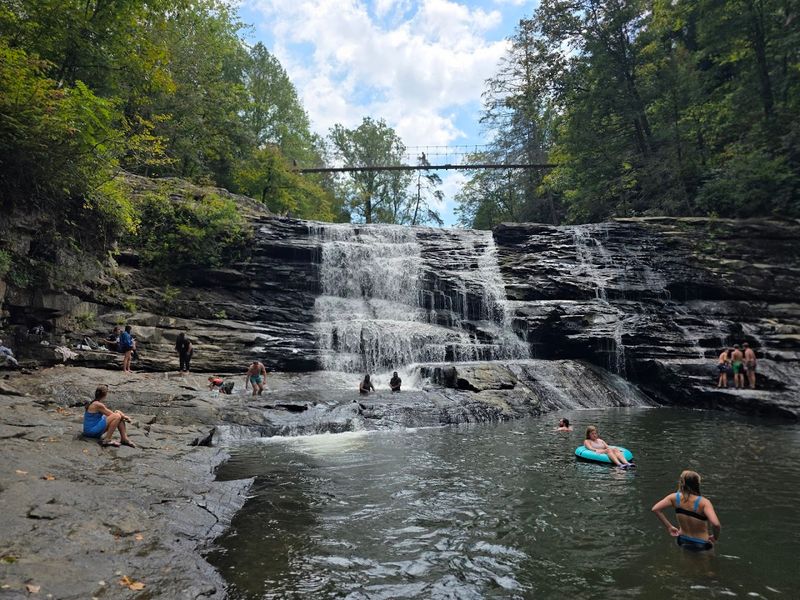
Fall Creek Falls is the kind of waterfall that makes you stop and stare. At 256 feet, it’s one of the tallest waterfalls east of the Mississippi, and the sheer rock walls surrounding it give the drop a sense of scale that’s hard to grasp until you’re standing at the overlook. The gorge is deep, the cliffs are vertical, and the waterfall seems to hang in the air before crashing into the pool below.
The geology here is impressive. The cliffs are made of sandstone and limestone, layered in bands that show millions of years of sediment deposition. The rock faces are streaked with mineral stains, and in places, you can see where water has carved channels and grooves into the stone.
The overlooks in Fall Creek Falls State Park give you multiple angles to appreciate the scene, from above and from the side.
Fall Creek Falls State Park is one of Tennessee’s largest and most popular state parks, and it’s easy to see why. The waterfall is the star attraction, but the park also offers miles of trails, additional waterfalls, and plenty of opportunities to explore the gorge and surrounding forest. It’s a destination that rewards repeat visits.
The main overlook is accessible by car, making it easy for anyone to experience the falls. For a more immersive experience, the trail to the base involves a steep descent and a series of stairs, but the view from below is worth the effort. You’ll be standing in the gorge, surrounded by towering cliffs, with the waterfall thundering above you.
Fall Creek Falls is located near Spencer, about two hours from Nashville or Chattanooga. The park can get crowded on weekends and holidays, so visiting on a weekday or in the off-season gives you a better chance to enjoy the falls without the crowds. The combination of height, geology, and accessibility makes this one of Tennessee’s must-see waterfalls.
7. Cane Creek Falls — Spencer
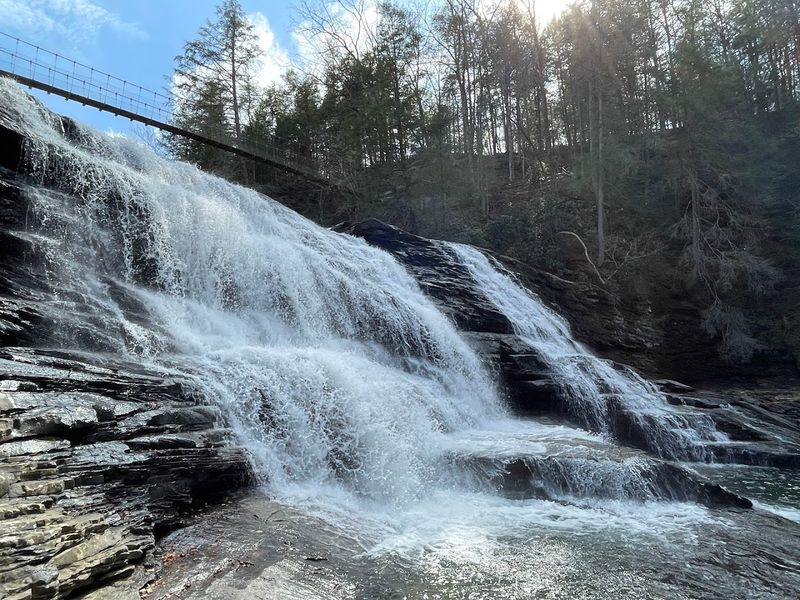
Cane Creek Falls is actually two waterfalls in one spot, and the pairing makes the geology even more interesting. Cane Creek Falls drops 85 feet into a plunge pool, and just a short distance away, Rockhouse Falls adds its own cascade to the same basin. The gorge walls surrounding both falls are tall, rugged, and covered in layers of sedimentary rock that give the scene an ancient, timeless feel.
The hike to Cane Creek Falls is one of the more challenging trails in Fall Creek Falls State Park, involving a steep descent and plenty of stairs. But the payoff is a close-up view of both waterfalls and the chance to stand in the gorge, surrounded by rock walls that rise hundreds of feet on all sides. The stone here is textured and weathered, with moss, ferns, and small caves adding to the wild atmosphere.
Rockhouse Falls gets its name from the rock shelter that forms behind the waterfall, creating a shallow cave where you can walk behind the falling water. It’s one of those rare spots where you can experience a waterfall from multiple angles—from the front, from the side, and even from behind. The rock shelter itself is a geologic feature worth exploring, with smooth walls and a natural arch that frames the falls.
The plunge pool shared by both waterfalls is deep and clear, and the surrounding boulders make for great spots to sit and take in the scene. The gorge can feel quiet and secluded, even on busy days, because the hike filters out most casual visitors. It’s the kind of place where you can spend an hour or more just exploring the rocks and watching the water.
Cane Creek Falls is located within Fall Creek Falls State Park, near Spencer. It’s a bit more off the beaten path than the park’s main waterfall, but that’s part of the appeal. The combination of two waterfalls, a rock shelter, and a dramatic gorge makes this one of the best stops in the park for geology lovers.
8. Ozone Falls — Ozone
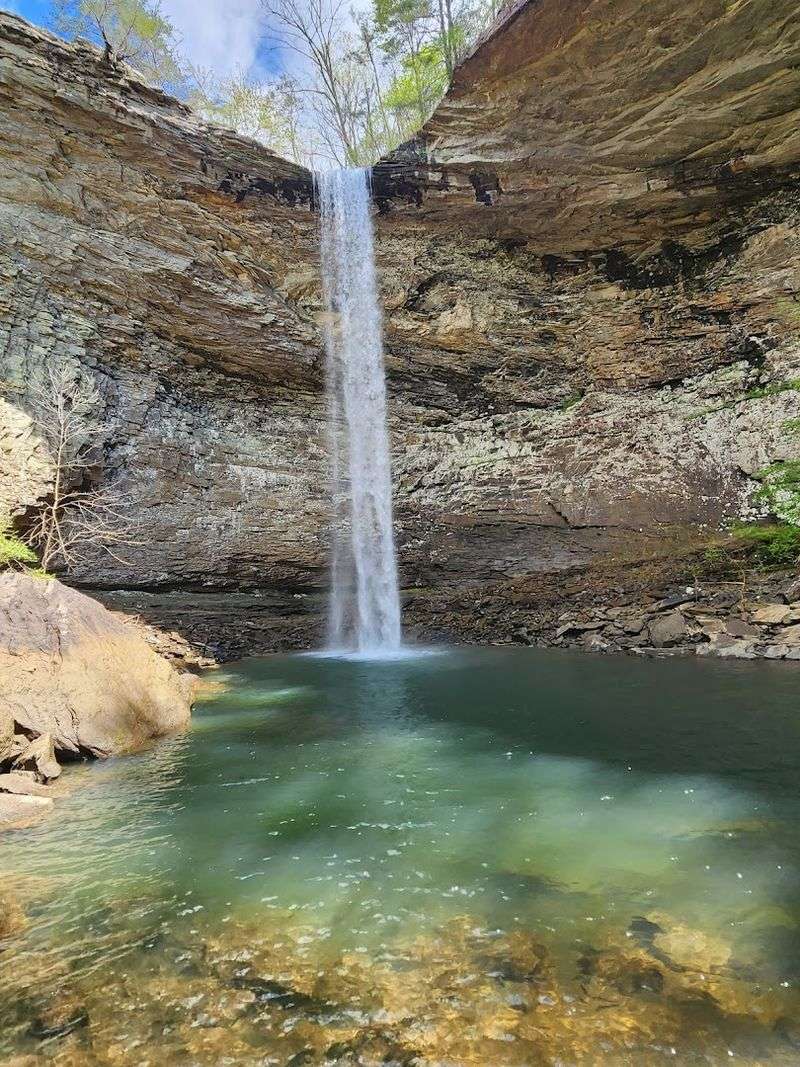
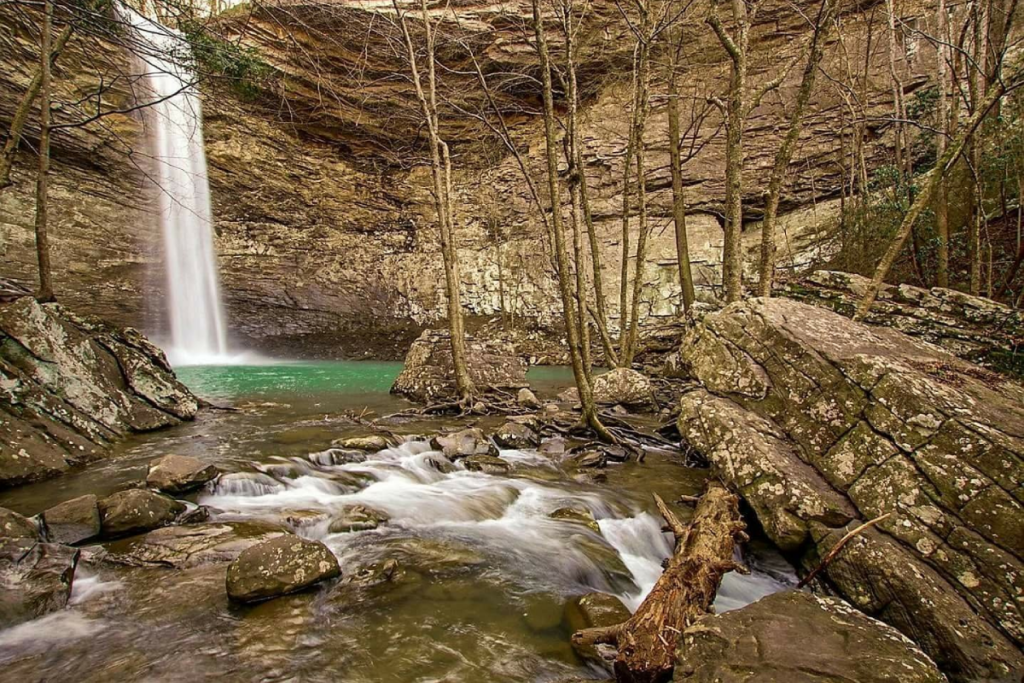
Ozone Falls looks like it was designed for a movie set. The waterfall drops 110 feet into a natural amphitheater carved out of rock, with cliffs rising on all sides and boulders scattered around the plunge pool. The scene is so perfectly framed that it’s become one of Tennessee’s most photographed waterfalls, and for good reason—the rocks here are as much a part of the attraction as the water itself.
The amphitheater is what makes Ozone Falls special. The cliffs form a semicircle around the falls, creating a natural theater where the waterfall is center stage. The rock walls are layered and textured, with streaks of rust, gray, and green from mineral deposits and plant growth.
The plunge pool is wide and deep, surrounded by flat rock slabs that make perfect viewing platforms.
There are two main ways to experience Ozone Falls. The upper overlook gives you a bird’s-eye view of the amphitheater and the waterfall, with the full scope of the geology on display. The trail to the base is short but steep, involving a scramble over rocks and roots, but the view from below is worth the effort.
You’ll be standing in the amphitheater, looking up at the cliffs and the waterfall, with the sound of crashing water echoing off the stone.
Ozone Falls is a Tennessee State Natural Area, and it’s located just off Highway 70 near the town of Ozone. The site is small and undeveloped, with minimal facilities, but that’s part of the charm. It’s a quick stop that delivers a big visual impact, making it a favorite for road trippers and photographers.
The falls flow year-round, but the best time to visit is after rain when the water is at its fullest. The amphitheater can feel cool and shaded even in summer, and the mist from the falls adds a refreshing element to the experience. Ozone Falls is proof that sometimes the best waterfalls are the ones where nature did all the work.
9. Virgin Falls — Sparta
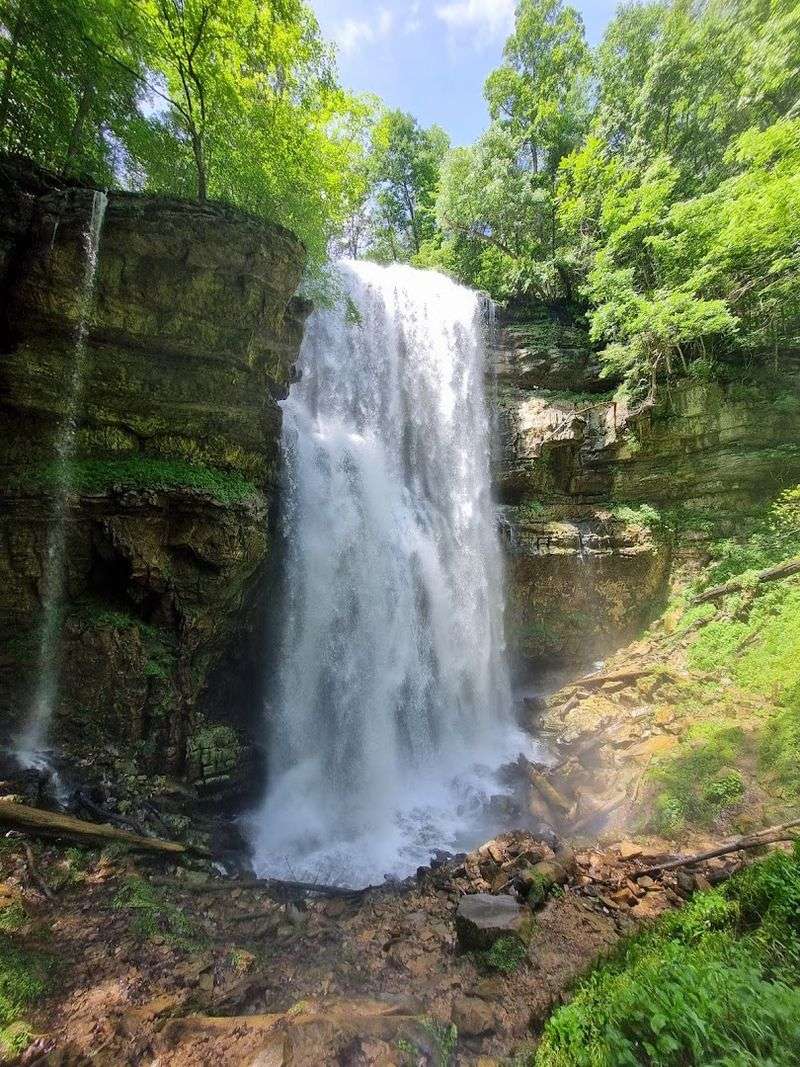
Virgin Falls is one of the strangest and most fascinating waterfalls in Tennessee. The water doesn’t come from a creek or river—it emerges from a cave, drops 110 feet over a cliff, and then disappears back underground into a sinkhole. The whole scene feels like a geologic magic trick, and the rocks are the key to understanding how it all works.
The waterfall is part of a karst landscape, where limestone bedrock has been dissolved and shaped by water over millions of years. The result is a network of caves, sinkholes, and underground streams that create features like Virgin Falls. The rock shelves around the falls are layered and fractured, with visible cracks and crevices where water seeps in and out.
It’s a living example of how water shapes stone over time.
The hike to Virgin Falls is challenging—8 miles round trip with significant elevation change—but the trail takes you through some of the most rugged and geologically interesting terrain in Tennessee. You’ll pass other waterfalls, rock shelters, and sinkholes along the way, each one adding to the story of how water moves through the landscape.
When you finally reach Virgin Falls, the scene is surreal. The waterfall spills out of a dark cave opening, arcs through the air, and crashes into a pool before draining into a sinkhole at the base. The surrounding rocks are covered in moss and ferns, and the whole area feels wild and untouched.
It’s the kind of place that makes you think about geologic time and the slow, patient work of water on stone.
Virgin Falls is located in the Virgin Falls Pocket Wilderness near Sparta, and it’s managed by the Bowater Company as a public recreation area. The trail is remote and requires preparation—bring plenty of water, snacks, and a map. It’s not an easy hike, but the geology and the waterfall make it one of Tennessee’s most rewarding outdoor adventures.
10. Northrup Falls — Jamestown
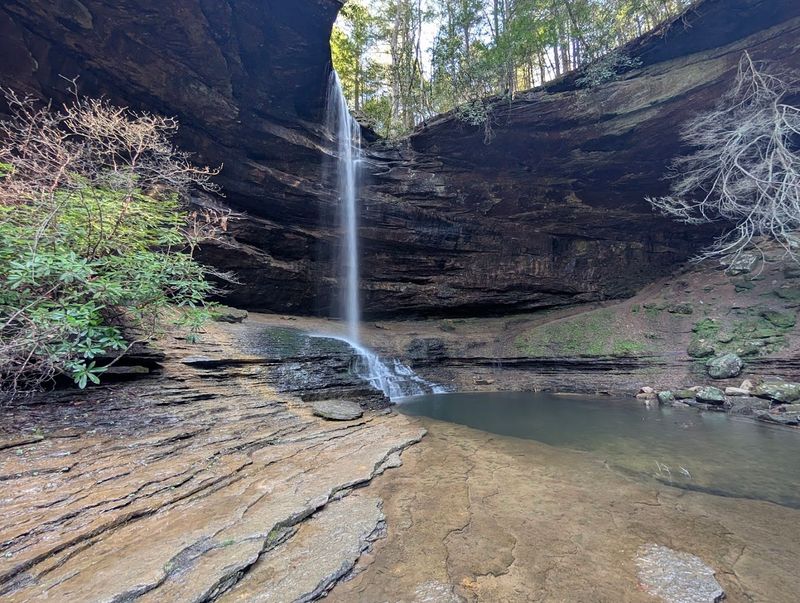
Northrup Falls isn’t the tallest or the most powerful waterfall in Tennessee, but it might be one of the most interesting from a geologic perspective. The waterfall spills over a broad sandstone overhang, creating a natural rock shelter where you can walk behind the falling water. It’s a rock-house setting, and the shelter itself feels like stepping into a natural stone room with water pouring over the doorway.
The overhang is what makes Northrup Falls special. The sandstone layer above the falls is harder and more resistant to erosion than the softer rock below, so over time, the softer rock has been worn away, leaving the overhang intact. The result is a wide, shallow cave with a flat floor and smooth walls.
Water drips from the ceiling, ferns grow in the cracks, and the whole space feels cool and sheltered.
The trail to Northrup Falls is easy and well-maintained, making it accessible for families and casual hikers. The path leads through the woods and ends at the rock shelter, where you can walk behind the falls and explore the overhang from multiple angles.
Northrup Falls is located in the Big South Fork National River and Recreation Area, near Jamestown. The area is known for its sandstone cliffs, arches, and rock shelters, and Northrup Falls is one of the best examples of how water and stone interact to create unique landforms. The park offers dozens of miles of trails, but Northrup Falls is one of the highlights.
Visiting in spring or fall gives you the best combination of water flow and comfortable temperatures. The rock shelter stays cool even in summer, making it a nice escape from the heat. Winter visits can be beautiful, especially if ice forms on the overhang, but the trail can be slippery, so use caution.
Northrup Falls is a quiet, understated gem that rewards those who take the time to explore.
Share this story