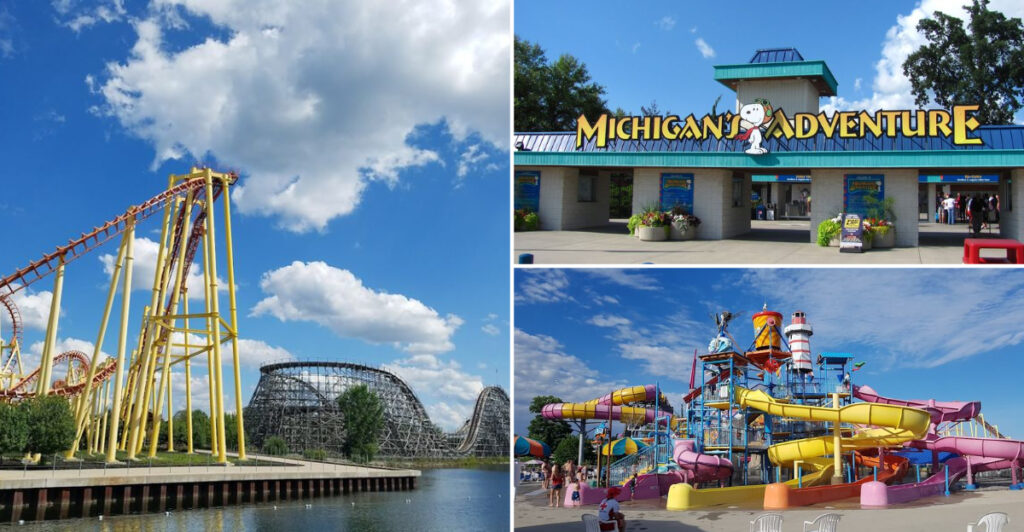
Just off Whitehall Road in Muskegon, one Michigan favorite manages to feel like two summer getaways in a single stop. Michigan’s Adventure combines the state’s largest amusement park with a full water park, giving families plenty to do without the chaos of a massive mega-park.
Visitors can start the day with wooden roller coasters, classic rides, and midway fun, then switch gears completely with wave pools, lazy rivers, and water slides. That easy back-and-forth is what makes the place so appealing.
One wristband, one property, and somehow it feels like two different trips packed into one day.
Shivering Timbers: The Wooden Coaster That Earns Its Reputation
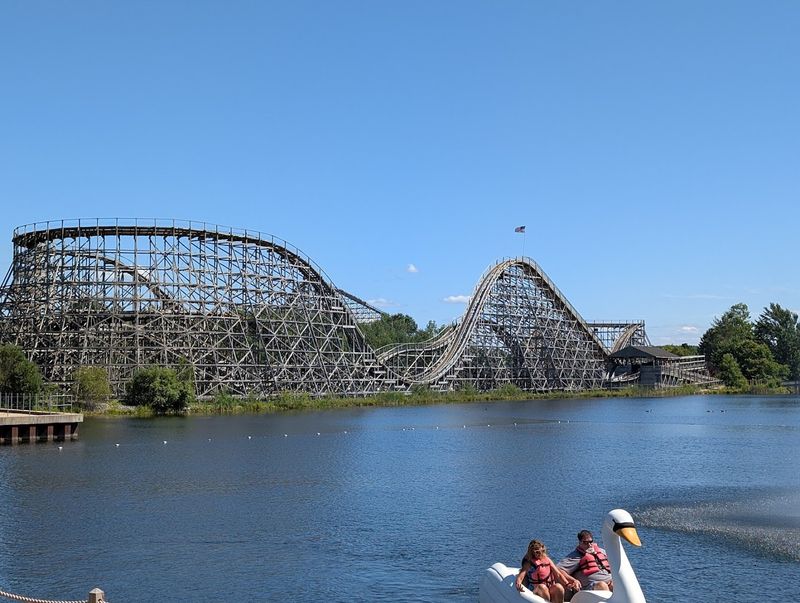
You can see it from the parking lot. That first glimpse of Shivering Timbers rising above the treeline near the entrance sets the tone for everything that follows.
It is a classic wooden coaster, the kind that rattles your bones just enough to remind you that you are alive, without crossing into genuinely unpleasant territory.
Riders consistently describe it as smoother than expected. There are a few rough patches, sure, but the overall ride has a rhythm to it that feels earned rather than accidental.
The hills come fast, and the airtime on the bigger drops is real. No CGI, no launch system, just gravity doing exactly what it is supposed to do.
For coaster fans traveling through Michigan, this one tends to be the main reason to stop. It has a reputation that stretches well beyond Muskegon, and the coaster community has a genuine affection for it.
You can spot enthusiasts in line who have ridden it dozens of times and still get that same look of anticipation before the first drop.
First-timers sometimes underestimate it based on its regional park location. That tends to change somewhere around the third or fourth hill.
The structure itself is visually striking up close, all that pale timber framing against a summer sky, and the sound of the train climbing that first lift hill carries across a good portion of the park.
A front-row ride and a back-row ride feel almost like two different coasters. Both are worth doing if the line allows.
It is the kind of attraction that anchors a park, the thing people talk about on the drive home.
Wildwater Adventure: The Water Park Side of the Equation
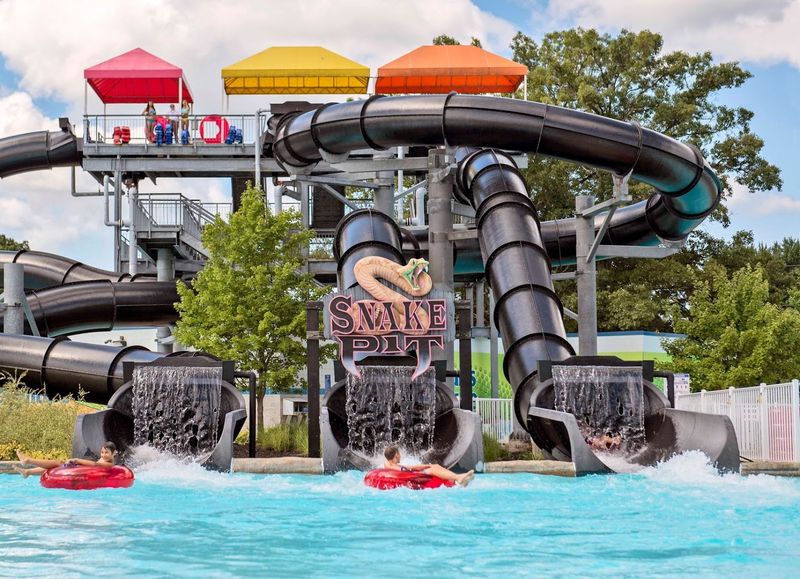
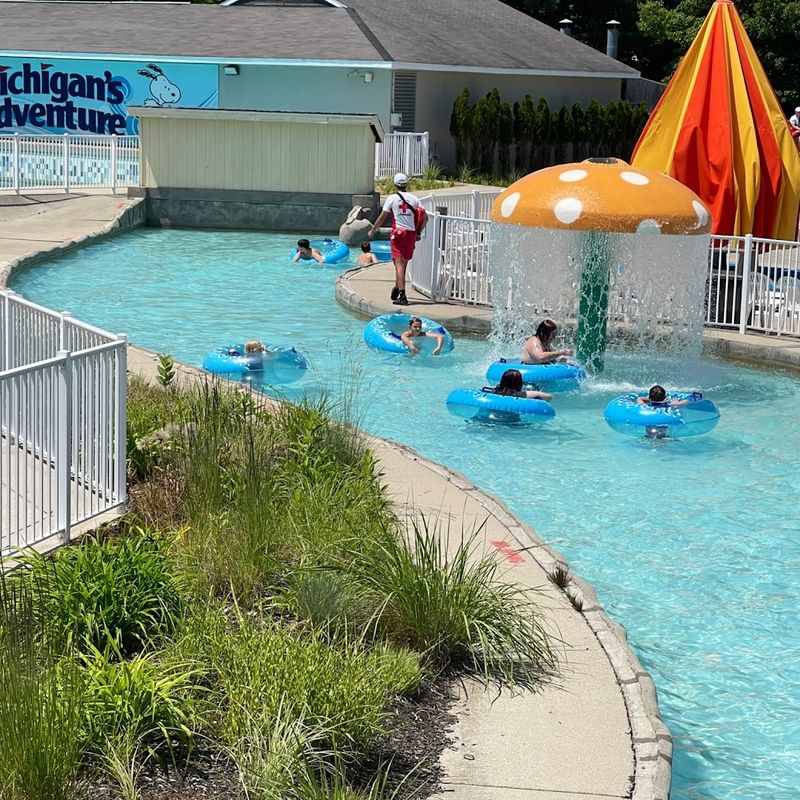
Walk through the amusement park side and follow the sound of splashing water, and eventually the whole feel of the day shifts. Wildwater Adventure is the water park portion of Michigan’s Adventure, and it operates as its own self-contained world once you step inside.
The admission covers both parks, which matters when you realize how much is actually in there.
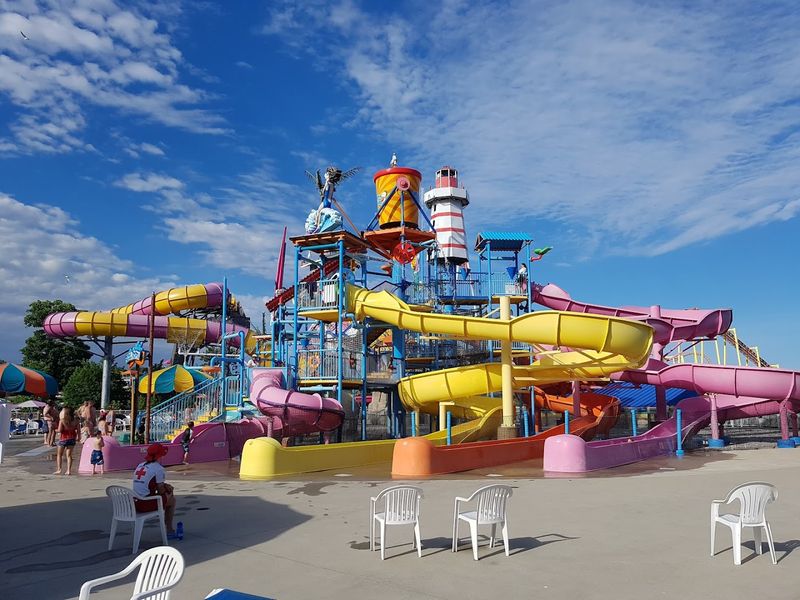
There are over eight water slides ranging from calm family floats to steep drop slides that require a moment of genuine commitment at the top. The variety means that a nervous eight-year-old and a thrill-chasing teenager can both find something that fits.
That range is harder to pull off than it sounds, and this park manages it without the slide selection feeling random.
The wave pool draws a crowd, especially on peak summer afternoons. Families plant themselves near the edges with younger kids while older ones wade out toward the deeper swells.
It has that lazy, sun-soaked energy that makes time move differently. You lose track of how long you have been standing in chest-deep water watching waves roll in.
One honest note from visitors: hauling your own raft up the stairs on the tube slides gets tiring after a few runs. The rafts are heavy, and there is no attendant at the bottom handing them back.
After the third trip up, most people start factoring that climb into whether they want another go.
Still, the water park feels genuinely well-maintained. The deck areas are clean, the slides are in solid shape, and the staff rotates through efficiently.
On a hot July afternoon in Muskegon, stepping into this section of the park feels like a completely different kind of relief from the dry-ride side.
Camp Snoopy: Where the Youngest Visitors Actually Have a Great Day
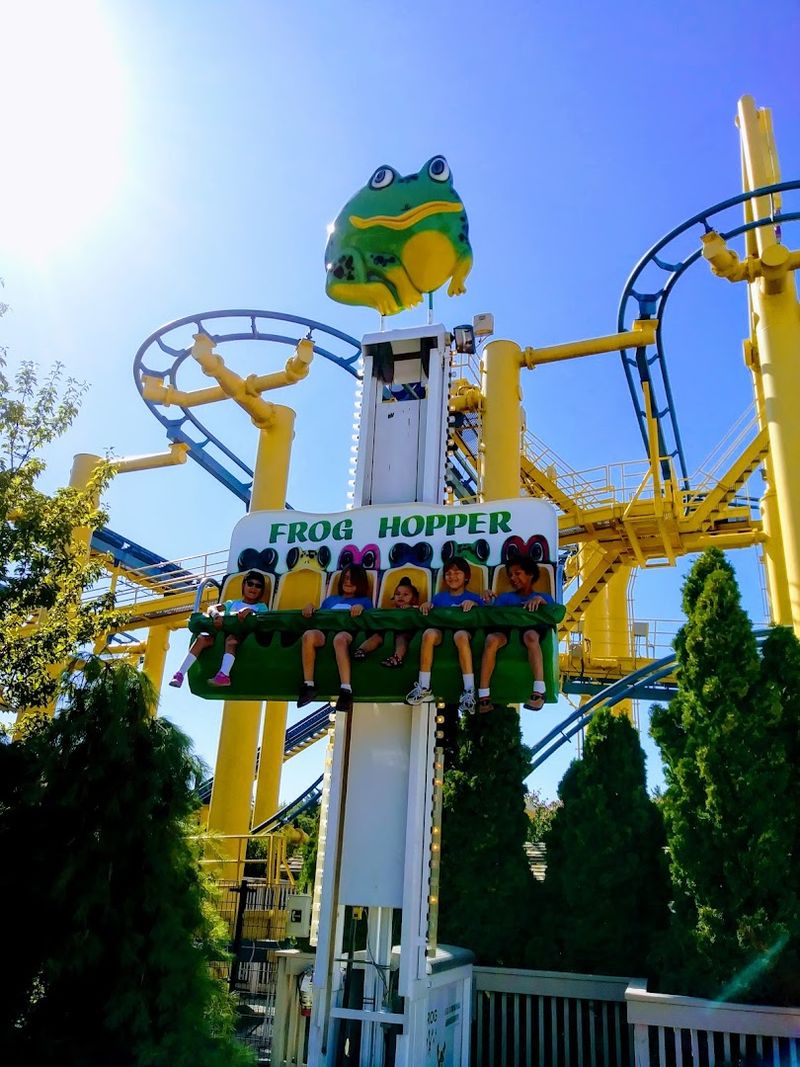
There is a specific kind of parental relief that comes from finding a section of an amusement park that was actually designed with small children in mind rather than just tolerated by the rest of the park. Camp Snoopy at Michigan’s Adventure is that section.
It has its own footprint, its own energy, and rides scaled to kids who are nowhere near the 48-inch height requirement on the bigger attractions.
Peanuts characters anchor the theming throughout, which gives younger kids something familiar to latch onto. The rides themselves are classic carnival-style fare, spinning teacups, gentle coasters, kiddie swings, the kind of stuff that feels enormous and thrilling when you are four feet tall and experiencing it for the first time.
Parents who have watched a toddler ride a small roller coaster with a completely serious face know exactly what this section delivers.
Multiple reviewers mention that the dedicated kids area made the whole trip work logistically. Families with a wide age range can split up, with older kids heading toward Shivering Timbers while parents rotate through Camp Snoopy with the littles, then regroup for lunch.
The park’s walkability makes that kind of flexible planning actually functional rather than theoretical.
Most of the big rides at Michigan’s Adventure require a minimum height of around 48 inches, which means a five or six-year-old has a real ceiling on what they can access in the main park. Camp Snoopy removes that ceiling entirely for the younger set.
They get their own version of a full day, which is not a compromise so much as its own complete thing.
The section does not feel like an afterthought tucked into a corner. It feels like someone actually thought about what a small kid’s best day at a park would look like.
Thunderhawk and the Classic Coaster Lineup
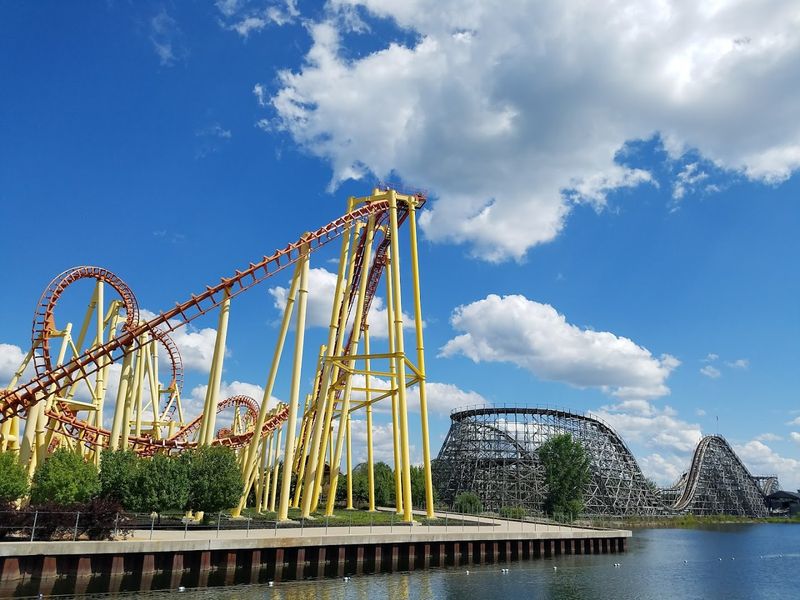
Michigan’s Adventure runs a coaster lineup that leans heavily on character over quantity. Thunderhawk is a steel suspended looping coaster with a history that coaster enthusiasts recognize immediately.
It spent years at a different park before landing in Muskegon, and that backstory gives it a certain appeal for people who follow the coaster circuit. Seeing a ride with a past at a smaller regional park has a nostalgic pull that is hard to explain if you have never felt it.
Thunderhawk does have a reputation for going down during operating hours, and a handful of visitors have mentioned arriving specifically for it only to find it closed for the day. That is a real frustration, and worth knowing before you build your whole visit around it.
When it is running, though, it delivers a different kind of ride than the wooden coasters on the property.
Wolverine Wildcat is another wooden coaster worth noting. It is smaller than Shivering Timbers but has its own following among visitors who appreciate a tighter, more compact ride.
The two wooden coasters together give the park a genuine identity in the coaster world, which is a harder thing to maintain than it looks from the outside.
The park has reportedly preserved these rides with care rather than letting them age into roughness. That level of maintenance on older coasters is something that coaster-focused visitors notice and appreciate.
A well-kept older ride often delivers more than a flashy newer one at a bigger park that sees far heavier daily traffic.
Six coasters total is not a massive collection, but each one has a reason to exist. None of them feel like filler, which keeps the lineup feeling intentional rather than assembled by accident over the decades.
The Cashless Park Experience and What to Know Before You Go
Michigan’s Adventure operates as a cashless park, and this catches a surprising number of visitors off guard. Several reviews mention arriving at the gates and discovering the policy for the first time, which creates an unnecessary scramble.
Knowing this before you leave the house eliminates a stressful moment right at the start of what should be a straightforward day.
All payments inside the park run through card or mobile payment. Food, merchandise, lockers, everything goes through a card reader.
If you rely on cash for amusement park spending, build in a stop at an ATM before arrival or come prepared with a debit card. The park does have ways to help guests convert, but it is a smoother visit when you already know what to expect.
Parking runs around $25, and general admission pricing has climbed over recent years. Fast Lane passes are available for an additional cost if shorter wait times matter to your group.
The honest reality is that lines at Michigan’s Adventure tend to be shorter than at bigger regional parks, so the Fast Lane upgrade is less critical here than it would be at a place like Cedar Point on a peak summer weekend.
Re-entry is allowed, which opens up a genuinely useful strategy. Pack a cooler in the car, spend the morning riding, exit for lunch at your vehicle, then re-enter for the afternoon water park session.
No coolers are permitted inside the gates, but that re-entry policy makes the food cost situation manageable. The drink wristband upgrade gets mentioned repeatedly by visitors as one of the better value purchases available at the park.
The mobile app also helps with navigation, showing which rides are currently operational and mapping the fastest route between attractions. It is a small thing that makes a real difference on a full day.
Staff, Cleanliness, and the Feel of the Park Under New Ownership
Something shifted at Michigan’s Adventure in recent seasons that visitors keep bringing up unprompted. The cleanliness of the park is one of the first things people mention in their reviews, not as a minor detail but as something that genuinely stood out.
Walkways are tidy, the grounds look maintained, and the general upkeep has a cared-for quality that not every regional park manages to project.
Staff interactions come up almost as often. Reviewers describe ride operators who actually engage with guests, maintenance crews who look like they take the work seriously, and a general energy among the employees that reads as positive rather than checked-out.
One visitor mentioned a staff member letting them charge a phone near closing time, a small gesture that stuck with them enough to write about it. Those moments are not in any operations manual.
They just happen when people like where they work.
The music volume inside the park gets a specific compliment from one reviewer: comfortable rather than overwhelming. It sounds like a minor thing until you have been to a park where the soundtrack is cranked to the point that you cannot have a conversation in line.
Getting that calibration right contributes to a visit that feels relaxed rather than overstimulating.
Under new ownership, there are visible signs of investment. Fresh landscaping, staff planting flowers during operating hours, a general sense that someone is paying attention to the details.
It does not yet have the infrastructure of a major national park, and visitors who come expecting that will miss the point. What it does have is a quality of maintenance and care that makes the scale feel right rather than limiting.
The park’s 4.2-star average across nearly nine thousand reviews reflects something real about what people find when they show up.
Planning the Full Day: Making Both Parks Work Before 8 PM
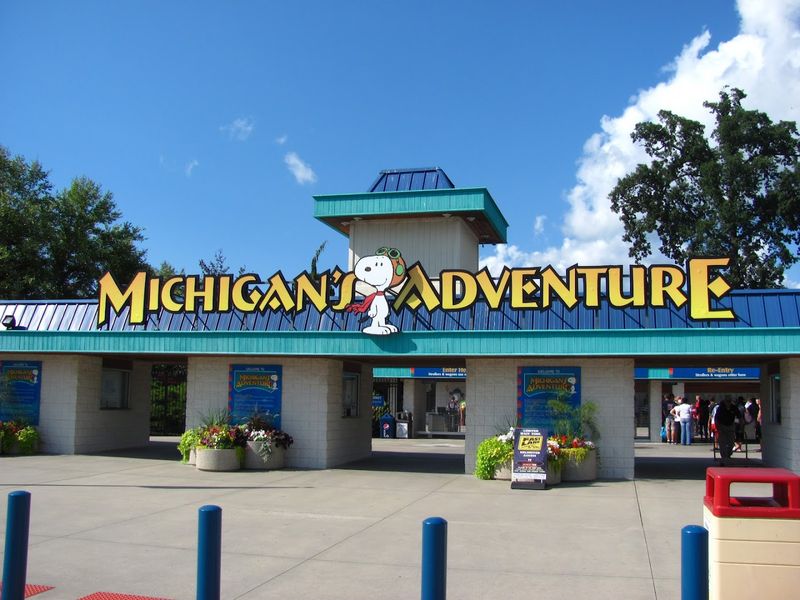
The park opens at 11 AM and runs until 8 PM most days of the week. That nine-hour window sounds like plenty of time, but fitting both the amusement park and Wildwater Adventure into one visit requires a loose plan rather than a completely spontaneous approach.
Most families who do it well front-load the dry rides in the morning when crowds are thinner, then shift to the water park in the afternoon when the heat peaks.
Midweek visits consistently get better reviews for crowd levels than weekend days. One reviewer walked onto the first few rides of the morning without any wait at all, and even by midday the longest line they encountered was around fifteen minutes.
That kind of access changes the math on how much you can realistically do in a single visit. On a busy Saturday, those same rides might run twenty or thirty minutes deep.
Strollers, wheelchairs, and lockers are available for rent near the entrance, which matters for families managing younger kids or securing belongings before the water park. Knowing those rentals exist before you arrive means you can plan around them rather than improvising at the gate with a tired toddler on your hip.
Food inside the park skews expensive and mixed in quality. The burger reviews are not great.
The pizza gets better marks, and the Smashburger option has fans. Portions are reported as large and shareable, which helps with the pricing.
The re-entry policy remains the most practical solution for families who want to eat well without paying park prices for every meal.
Buying tickets online in advance typically comes with a discount over gate pricing. Pairing that with a drink wristband and a mid-day exit for lunch from the car turns a potentially expensive day into something much more reasonable for a family of four or five.
Share this story