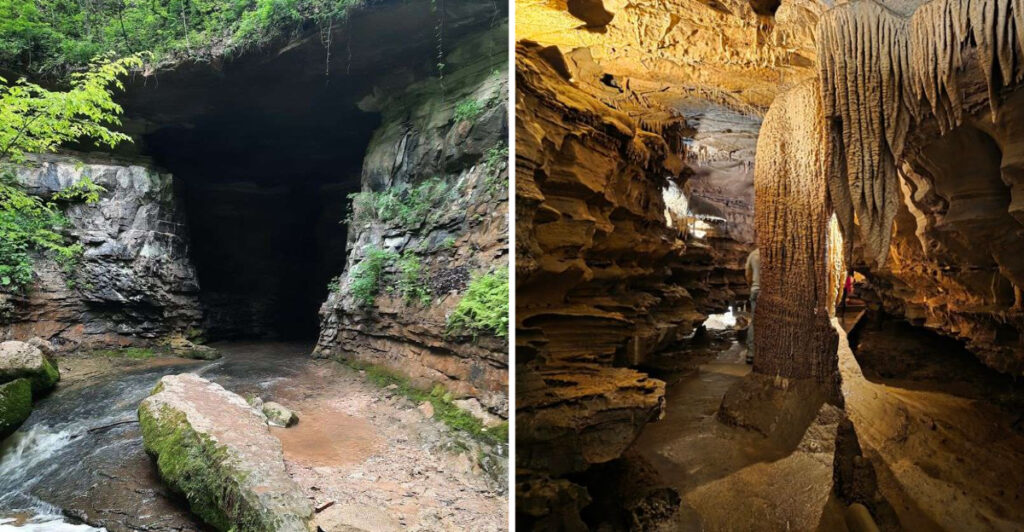
Indiana’s underground landscapes are far more impressive than many travelers realize. Scattered across the southern part of the state, these remarkable caves showcase everything from vast chambers and underground rivers to fascinating rock formations, guided boat tours, and rich geological history.
While a few have earned national recognition, others remain overlooked despite offering unforgettable experiences beneath the surface. Whether you’re an avid spelunker, a family looking for a unique day trip, or simply curious about Indiana’s hidden natural wonders, these 7 caves prove the Hoosier State has an underground world that’s well worth exploring.
1. Marengo Cave U.S. National Landmark
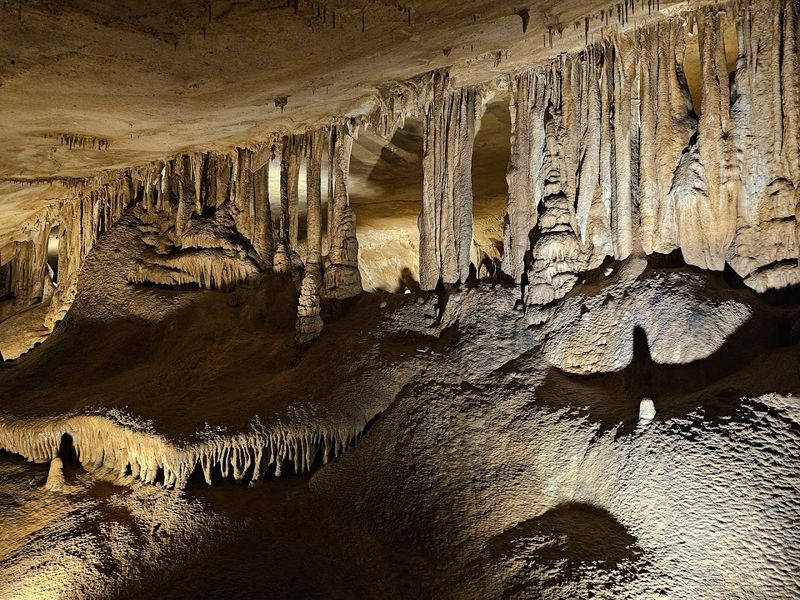
Marengo Cave is the Indiana cave people tend to recognize first, and for once, the popular pick earns its reputation. This National Natural Landmark delivers the classic cave visuals you hope for – stalactites overhead, stout stalagmites below, and glossy flowstone that looks sculpted by a patient hand.
Even before the tour starts, you can tell this place knows how to welcome first-timers without watering down the underground drama.
Inside, the route is built for easy viewing, which means you spend less energy navigating and more time staring at details in the rock. Guided walking tours move through chambers with plenty of texture and shape changes, so the cave never settles into one repeating look.
Some passages lean delicate and intricate, while others open wider and put the spotlight on bigger formations that steal attention immediately.
That variety is a major reason Marengo works so well for families, mixed-age groups, and anyone testing whether cave touring is their thing. Open year-round, it can slot into a summer road trip or a colder-weather weekend when outdoor plans look less appealing.
Above ground, the extra attractions help round out the stop, with gemstone mining, mini golf, and camping adding a playful layer that keeps the day from ending too quickly.
Plenty of caves offer formations. Marengo adds polish, accessibility, and enough visual payoff to satisfy both curious kids and adults who want more than a quick walk underground.
If you are building an Indiana cave itinerary, this is the reliable anchor stop – the one that sets the tone and proves the state has far more going on below the surface than many travelers expect. It is polished without feeling generic, and that balance is harder to find than it sounds.
2. Indiana Caverns
Indiana Caverns comes in with a bigger, bolder energy than many cave stops, and that starts with scale. It is associated with Indiana’s longest known cave system, so the place naturally carries a sense of depth and reach before you even head below ground.
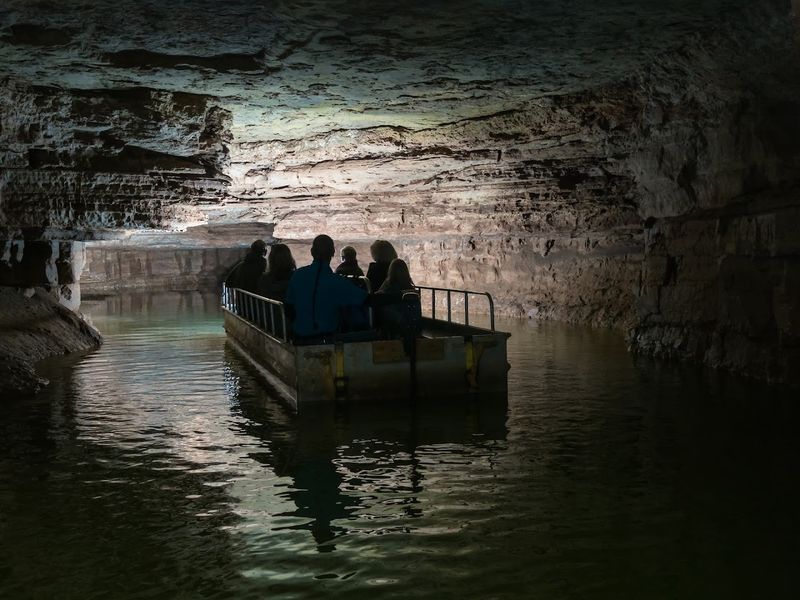
Once you do, the standout feature is obvious: an underground boat ride that turns the visit into more than a standard walk past formations.
Gliding along a subterranean river changes the rhythm of the experience in the best way. Instead of moving from platform to platform, you drift through dark passageways where the ceiling, water, and stone walls team up for a much more cinematic scene.
Add in towering chambers, a dramatic underground waterfall, and references to Ice Age fossils, and the cave develops a stronger sense of story than many attractions manage.
The appeal here is not just visual. There is a fun contrast between still water, echoing spaces, and the occasional reminder that this cave system has been shaped over enormous stretches of time.
That contrast keeps the tour engaging, especially for visitors who want a mix of geology, adventure, and something a little unusual to talk about after the trip is over.
Above ground, Indiana Caverns leans fully into the adventure-day concept with added activities such as zip lines and animal exhibits. That makes it especially easy to recommend for families or groups where not everyone is equally obsessed with caves.
You can build a full outing around one stop, then leave feeling like you did more than a single tour. For travelers who want Indiana cave scenery with a stronger sense of motion, scale, and variety, this one lands near the top very quickly.
It brings spectacle without losing the natural wonder that makes cave touring appealing in the first place. You notice that balance immediately once the boat starts moving.
3. Bluespring Caverns Park
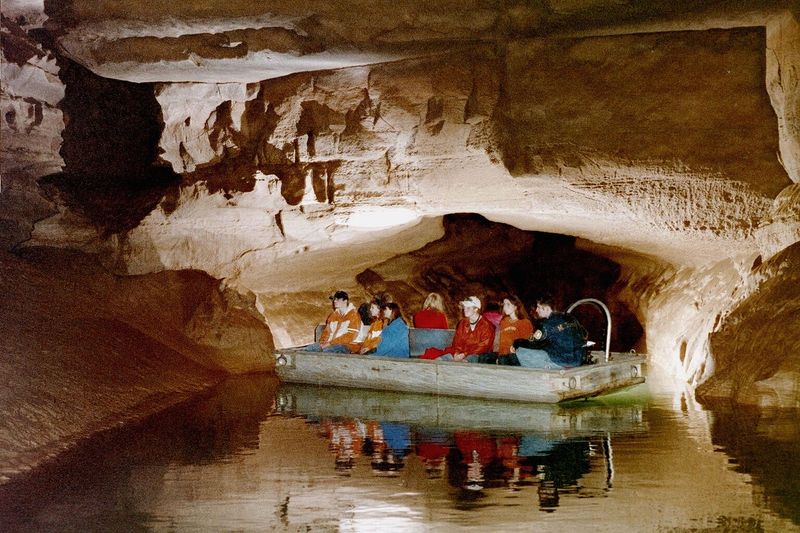
Bluespring Caverns Park offers one of the most distinctive cave experiences in Indiana because the tour is built around water from the start.
The headline feature is the longest navigable underground river in the United States, and that alone sets a different expectation than a typical show cave. You are not simply entering a cave here – you are floating into it, which gives the whole visit a quieter, stranger edge.
The boat ride carries you through a dark, cool environment where crystal-clear water reflects the cave ceiling in soft, shifting patterns. Formations appear along the route, but the river itself is the star, shaping the mood and making every bend feel slightly mysterious.
It is an easy kind of adventure, yet it still has enough novelty to impress people who think they have already seen plenty of caves.
Bluespring also stands out because of the cave life associated with the river system. Mentions of blind cavefish and other specialized wildlife add a layer that goes beyond scenery and into the peculiar biology of underground places.
That ecological angle gives the cave extra personality and makes the experience memorable in a very specific, Indiana-only way.
There is a calm confidence to this attraction. It does not need oversized theatrics when the dark water, enclosed passages, and rare wildlife already create a setting that feels unusual from minute to minute.
For travelers comparing options, Bluespring is the pick for anyone who wants a cave tour with steady motion, clean visuals, and a stronger connection to the living side of the underground world. It is especially good for visitors who prefer being carried through the landscape rather than covering every foot on their own.
By the time the boat turns back, the river has already done the job of making the cave stick in your memory. Few Indiana attractions combine tranquility and curiosity quite this neatly, and that mix gives Bluespring its own lane.
4. Squire Boone Caverns
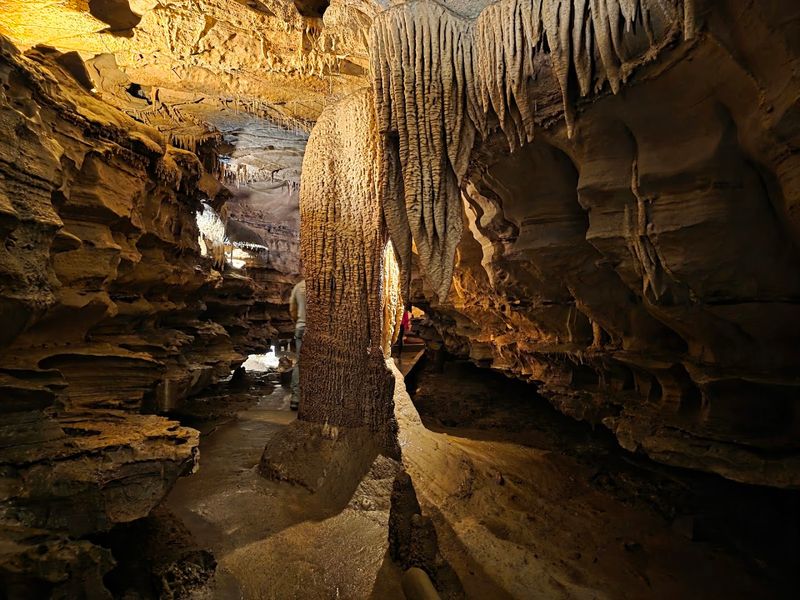
Squire Boone Caverns brings together two Indiana travel pleasures in one stop: underground scenery and frontier history. That mix gives the place a different personality right away, especially if you enjoy attractions that connect natural features with local stories.
The cave tour leads past waterfalls, rimstone dams, and sturdy limestone formations that provide plenty to look at even before the historical angle enters the picture.
Once history does enter, the visit takes on more texture. The burial site of frontiersman Squire Boone adds a human thread that separates this cave from others focused only on geology.
Rather than treating the underground space as a backdrop, the tour ties it to the region’s past in a way that can make the chambers feel more layered and less interchangeable.
Visually, the cave has enough variety to keep attention sharp. Water features always help, and here they pair well with the rougher, more grounded look of the limestone passages.
The result is a tour that balances natural beauty with a slightly older, more storied mood instead of chasing pure spectacle.
Outside the cave, the reconstructed pioneer village and working grist mill extend that mood and turn the stop into more than an hour underground. You can shift from cave formations to historical buildings without needing to drive anywhere else, which is a smart setup for families and road trippers.
Squire Boone Caverns works especially well for visitors who like their destinations to have a clear identity rather than a grab bag of random features. The cave itself has enough substance to stand alone, but the historical context gives it extra shape and staying power.
In a state with several good underground tours, this is the one that leans most comfortably into the overlap between natural wonder and early Indiana history. That blend makes the whole experience easier to remember and much more distinctive than the average cave stop.
5. Twin Caves
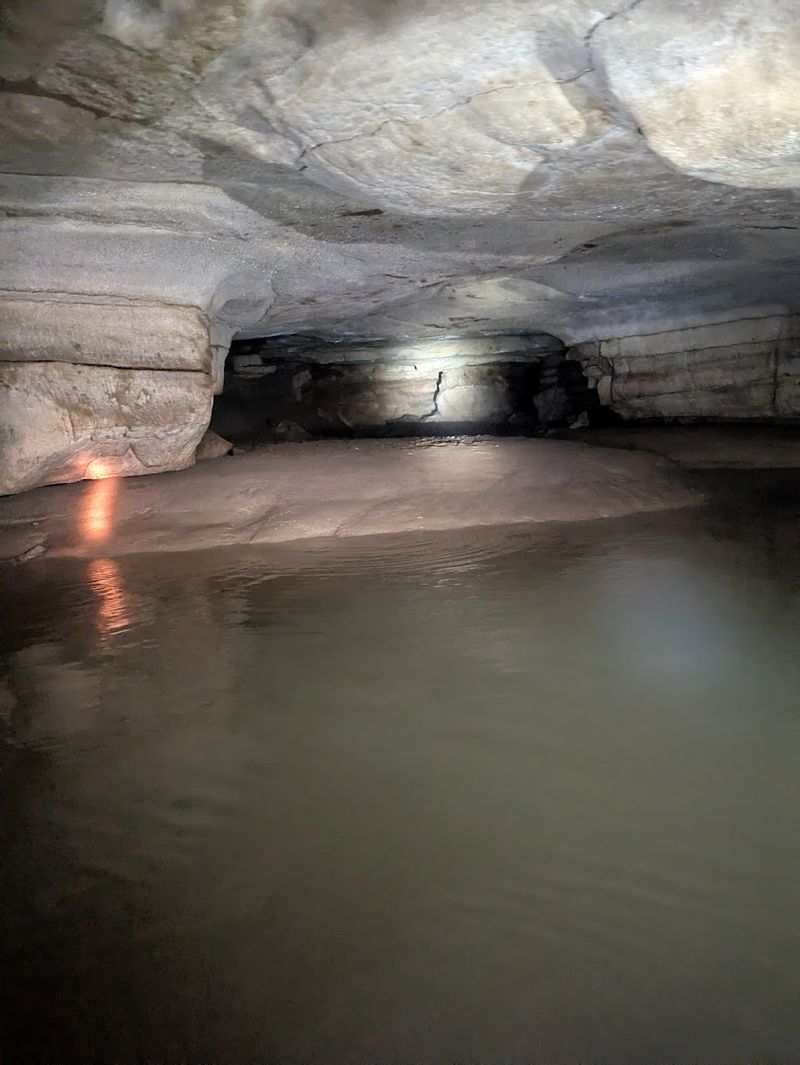
Twin Caves is one of the easiest Indiana cave experiences to recommend because it combines drama and simplicity so well. Located within Spring Mill State Park, it gives you a scenic state park setting before the underground portion even begins.
Then the boat heads into a large river cave, and the transition from daylight to cool darkness does most of the talking. This is a relaxing tour, which is a real strength rather than a compromise.
You glide through broad passageways while learning about karst terrain, underground waterways, and the geologic systems that shape this part of southern Indiana.
The educational side stays more engaging because the landscape around you keeps changing, even in subtle ways, as the cave swallows the outside world.
Twin Caves works especially well for visitors who want cave scenery without committing to a tougher or more intense outing.
The boat format makes it accessible for a wide range of ages, and the setting inside Spring Mill State Park means it pairs easily with hiking, historic sites, or a slower day outdoors. That flexibility gives it a strong advantage on weekend trips when you want several good options in one place.
There is also a nice sense of proportion here. The cave is large enough to feel impressive, but the experience remains calm, organized, and easy to follow.
Instead of trying to overwhelm you with nonstop spectacle, Twin Caves lets the darkness, the water, and the size of the river passage create a steady sense of immersion. For many travelers, that quieter style ends up being more memorable than a louder attraction with extra gimmicks.
If your ideal cave stop includes clear interpretation, a comfortable pace, and one of Indiana’s most accessible underground rides, Twin Caves deserves a spot high on the list. It offers the kind of low-stress adventure that can win over cautious first-timers while still giving dedicated cave fans plenty to appreciate during the ride.
6. Donaldson Cave
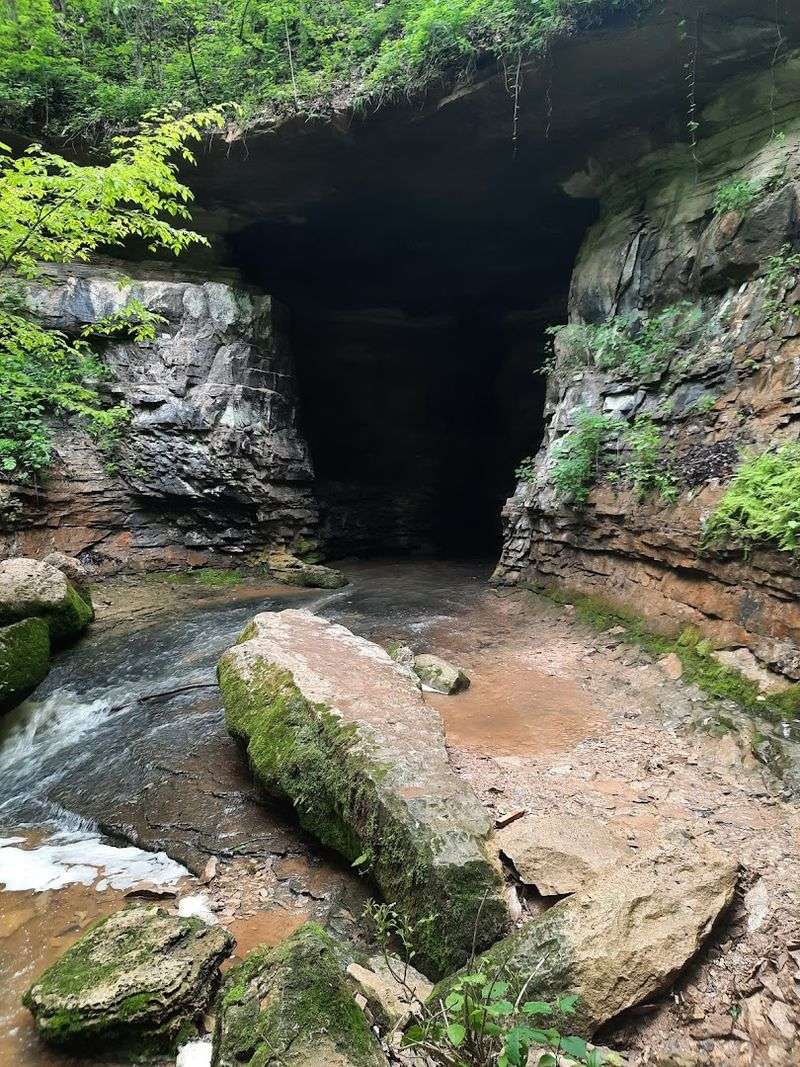
Donaldson Cave earns its place on this list for a reason that is a little different from the others: you are not coming for a standard recreational cave tour.
Instead, the draw is the cave’s significance, its enormous entrance, and the impressive spring setting around it inside Spring Mill State Park. That makes the visit more about observation, scale, and landscape than guided underground exploration.
In some ways, that difference works in its favor. Seeing a major cave opening from the outside can sharpen your appreciation for how powerful Indiana’s karst country really is.
The mouth of the cave, the moving water, and the surrounding stone create a scene with a lot of visual impact, especially for photographers or anyone who likes natural landmarks that do not need much staging.
The approach through park trails adds to the experience. Rather than arriving at a visitor center and heading straight underground, you encounter Donaldson Cave as part of the broader state park environment, which gives the stop a more organic rhythm.
It fits well into a day of hiking and sightseeing, and it rewards people who enjoy noticing the connection between surface landscapes and what lies beneath them.
This is not the choice for visitors who want a long cave itinerary packed with chambers and formal interpretation. It is the choice for nature lovers who appreciate a dramatic entrance, a strong sense of place, and the chance to see one of Indiana’s most notable cave systems from an accessible vantage point.
Donaldson Cave proves that cave travel does not always need railings, lighting, or a scheduled tour to leave an impression. Sometimes the simple combination of a huge opening, flowing spring water, and a wooded state park setting delivers more than enough.
As a stop within Spring Mill, it broadens the cave conversation and gives you a different angle on the underground world that shapes this region. That perspective alone makes it easy to remember.
7. Wyandotte Caves
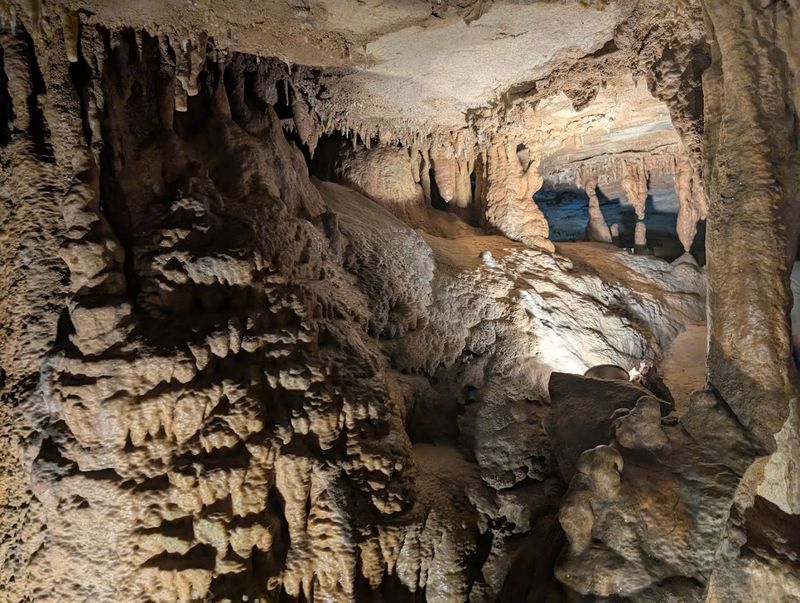
Wyandotte Caves has the kind of setup that immediately catches attention because it offers two different cave experiences in one destination.
Tucked inside O’Bannon Woods State Park, it includes Little Wyandotte Cave for a more family-friendly outing and Big Wyandotte Cave for visitors ready for a stronger sense of adventure.
That split gives the site unusual range and makes it easier to match the day to your energy level. Inside, the draw is scale and detail working together. Enormous chambers create the first impression, but the rarer helictite formations add the finer points that cave fans tend to remember.
Then there is Monument Mountain, a name dramatic enough to spark curiosity before you even see it, and memorable enough to anchor the whole experience once you do.
Wyandotte also carries extra weight because of its historical importance among Indiana cave systems. Even without leaning too heavily on dates or technical details, you can sense that this is one of the state’s landmark underground places.
That context gives the tour more depth and makes the cave feel like part natural wonder, part long-running Indiana attraction with its own legacy.
Compared with some more polished cave stops, Wyandotte can appeal to visitors who want a bit more edge in the experience. The combination of large spaces, unusual formations, and two distinct cave options helps it avoid feeling repetitive.
It also benefits from its state park location, which makes the visit easier to pair with hiking, scenic drives, or a full day exploring southern Indiana.
If you want one destination that can serve both casual sightseers and travelers looking for something a little more adventurous, Wyandotte Caves makes a strong case.
It has the scale to impress, the features to keep your attention, and enough historical presence to stand apart from other underground tours across the state. Indiana has several excellent caves, but Wyandotte brings one of the broadest mixes of adventure, geology, and legacy.
Share this story