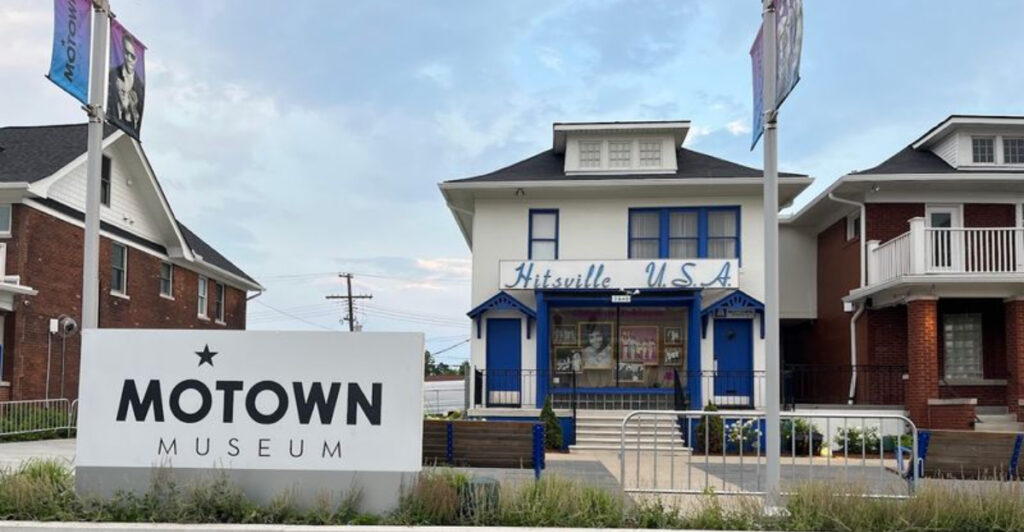
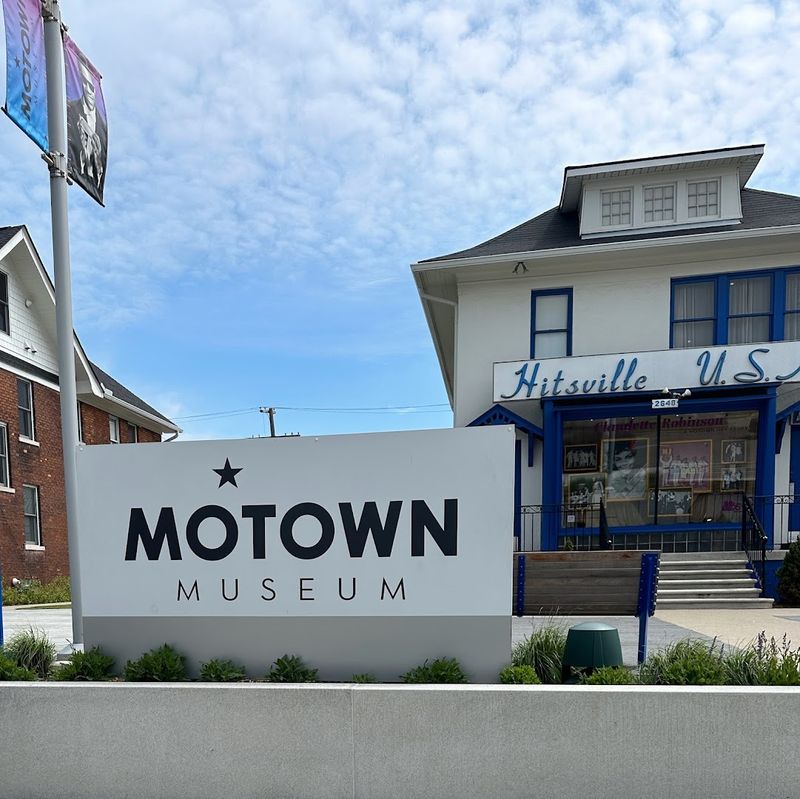
On a quiet stretch of West Grand Boulevard in Detroit, Michigan, a modest blue-and-white house holds a sound that changed America. From the outside, Hitsville U.S.A. looks almost humble, but inside, Berry Gordy transformed an $800 loan into Motown Records, one of the most powerful and influential labels in music history.
These walls once echoed with the voices of Stevie Wonder, Diana Ross, Marvin Gaye, The Temptations, and countless others whose songs became part of the country’s soundtrack. Today, the house lives on as the Motown Museum, where stepping through the front door feels less like entering a building and more like walking straight into the heartbeat of Detroit.
The House That Stopped Traffic on West Grand Boulevard
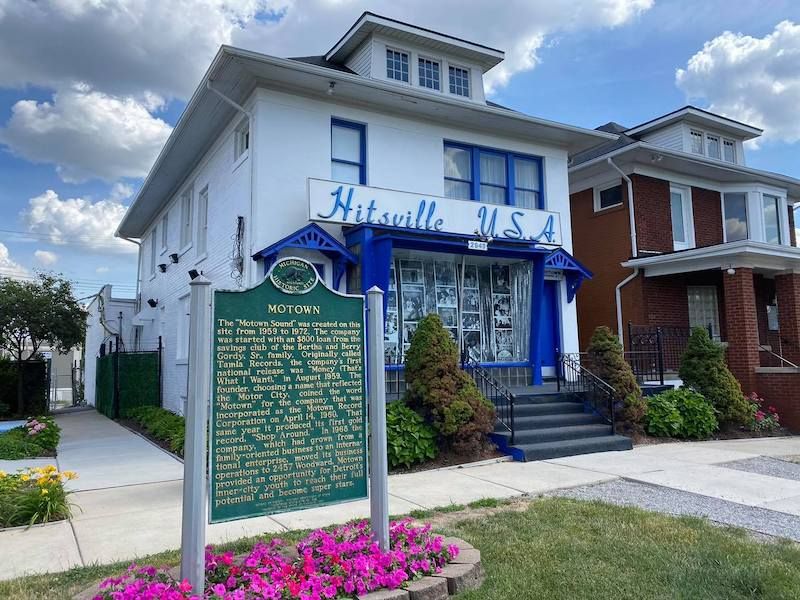
Pull up to 2648 West Grand Boulevard and your first reaction might be mild surprise. The building is genuinely small — a modest two-story house painted in blue and white, sitting right on a residential Detroit street like it belongs to any ordinary neighborhood.
But the bold “Hitsville U.S.A.” sign mounted above the front entrance makes clear this is no ordinary address.
Berry Gordy purchased this property in 1959 and immediately converted it into a working music studio and business headquarters. The ground floor became Studio A, the recording space where hit after hit was tracked in real time.
The upper floors housed offices, and Gordy himself lived on the premises for a period, sleeping above the very studio where history was being made every single day.
What makes the exterior so striking is how ordinary it looks next to how extraordinary its legacy is. There are no grand columns or towering facades.
No elaborate architecture announces the importance of what happened inside. Just a house on a boulevard that somehow launched a global sound.
Visitors often pause on the sidewalk before entering, taking photos with the sign, because the contrast between the building’s modest scale and its enormous cultural footprint hits you immediately. Detroit’s music scene grew outward from this specific spot, and standing in front of it makes that history feel close and real rather than distant or textbook.
The neighborhood around it has changed considerably over the decades, but the building itself has been carefully preserved, maintaining the look and feel of its Motown-era appearance. Street parking is the only option available, and spots can be limited, so arriving early or using a parking app to scout nearby streets is a practical move before your visit.
Studio A: The Room Where the Motown Sound Was Born
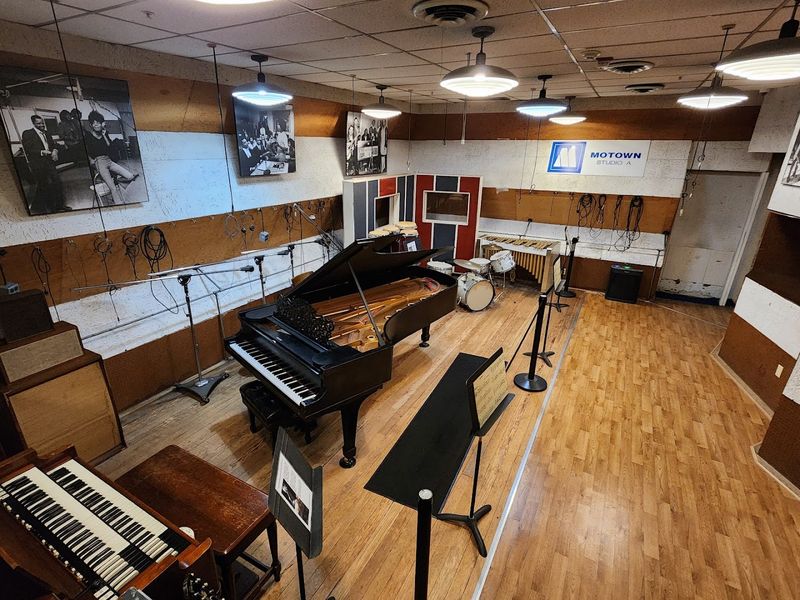
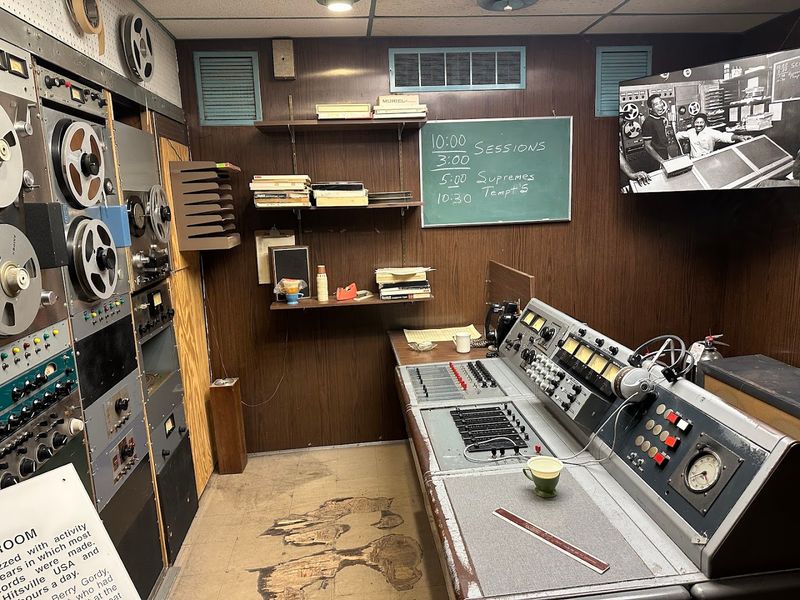
Studio A is the heartbeat of the entire Motown Museum experience, and nothing quite prepares you for how compact it actually is. The room is small — almost shockingly so — with original sound baffles still lining the walls, vintage instruments positioned as they were during the label’s peak years, and a ceiling low enough to feel intimate rather than grand.
Standing inside it, you realize that “small” and “powerful” are not opposites.
Between 1959 and the early 1970s, this room produced some of the most recognizable recordings in pop and soul history. The Supremes tracked their chart-topping singles here.
Marvin Gaye laid down vocal takes in this very space. The Miracles, The Four Tops, Stevie Wonder as a teenager — all of them stood on this same floor, in front of microphones that are still on display today.
The studio operated nearly around the clock during Motown’s Detroit years, with sessions sometimes running from morning straight through to the following night.
Tour guides walk visitors through the room in detail, explaining the specific acoustic tricks Gordy and his engineers used to achieve that distinctive Motown sound — the bright, punchy quality that made the label’s records jump out of AM radio speakers. The original recording console is visible through the glass of the control booth, and the whole setup looks remarkably intact for a space that is now more than six decades old.
People consistently say that standing in Studio A is the moment the tour shifts from interesting to genuinely moving. No amount of reading about Motown fully captures what it feels like to stand in the exact physical space where so much of it actually happened.
It is the undeniable centerpiece of the visit.
Memorabilia Walls That Tell the Full Motown Story
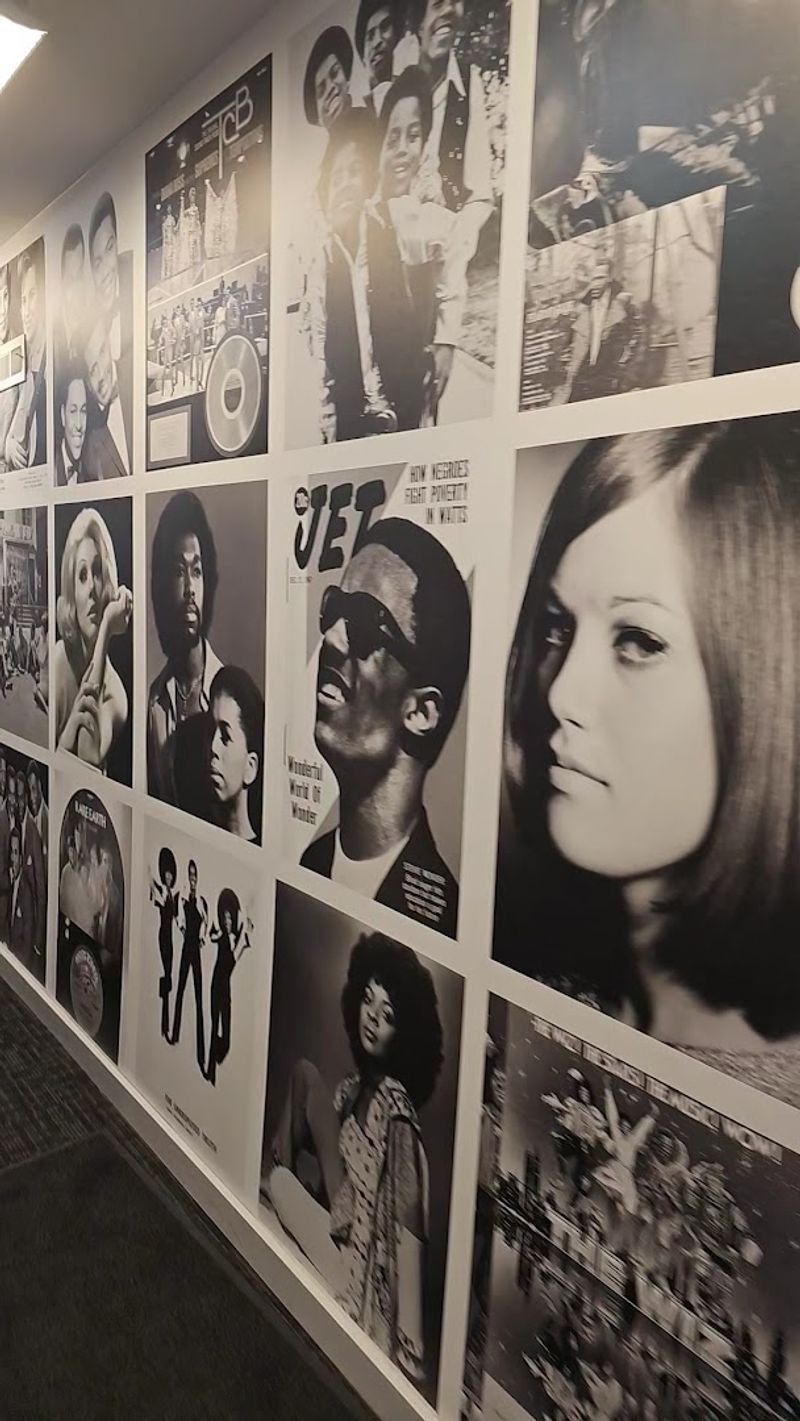
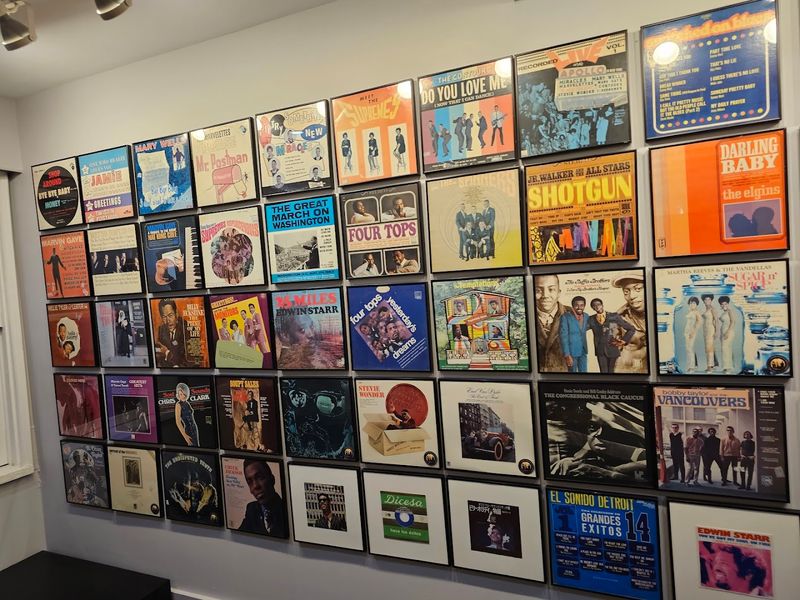
Beyond Studio A, the museum’s walls function almost like a giant scrapbook of one of music’s most prolific eras. Framed album covers line entire corridors — and people who grew up with Motown records often stop cold when they spot titles they still own.
Photographs of artists in recording sessions, performance shots from the Ed Sullivan Show, candid backstage moments — all of it is displayed with enough context to make the images feel like stories rather than decorations.
Among the standout artifacts on display is the black fedora hat and sparkly glove that Michael Jackson donated to the museum — objects that carry enormous weight for anyone familiar with his history with Motown as a child performer with The Jackson 5. Costumes worn by The Supremes are also part of the collection, glittering and elegant even decades after they last graced a stage.
The sheer variety of items on display keeps every corner of the museum worth examining closely.
Tour guides are essential to getting the most from these exhibits. The walls are so densely packed with pictures, artifacts, and instruments that without someone explaining the backstories, it would be easy to miss the significance of individual items.
Guides connect the dots between what visitors are seeing and the larger narrative of how Motown shaped not just music but American culture during the civil rights era. The label’s commitment to presenting Black artists with full professional production, sharp choreography, and polished presentation was itself a cultural statement.
That context transforms the memorabilia from interesting objects into evidence of something much bigger. Plan to spend real time in these rooms — the details reward slow looking, and the stories attached to individual pieces are consistently surprising even for visitors who already consider themselves Motown fans.
Berry Gordy’s Vision: From $800 Loan to American Music Legend
Berry Gordy was 29 years old and working on a Ford assembly line when he borrowed $800 from his family’s savings club and used it to start Motown Records in 1959. That fact alone stops most visitors in their tracks.
The assembly line logic Gordy applied to music production — quality control, division of labor, consistent output — became the backbone of a system that turned Detroit into the capital of American popular music within just a few years.
The museum walks visitors through Gordy’s background and the specific thinking behind his approach to the music business. He didn’t just sign talented artists and hope for the best.
He built an entire infrastructure around them: in-house songwriters, a dedicated choreography coach, an etiquette and presentation program called Artist Development, and a quality control committee that voted on which songs were good enough to release. Every part of the Motown machine was designed to give its artists the best possible chance at mainstream success during an era when that success was far from guaranteed for Black performers.
Gordy’s personal story is woven throughout the museum’s narrative, and it adds genuine depth to everything else on display. His early struggles, his instincts about what radio audiences wanted, and his relationships with the artists he signed — all of it gets covered during the guided tour in ways that feel human and specific rather than like a Wikipedia summary.
Learning how it all began makes the platinum records on the walls hit differently. The scale of what Gordy built from that initial $800 — not just a record label but a cultural institution — is one of those stories that sounds almost fictional until you are standing inside the actual building where it started.
Guided Tours in Michigan’s Most Musical Museum: What to Expect
Every visit to the Motown Museum is a guided experience, and that structure turns out to be one of its biggest strengths. Groups move together through the exhibits with a single guide leading the way, which keeps the visit focused and ensures no one misses the context behind what they are looking at.
Tours typically run about one hour from start to finish, beginning with a short video that covers Motown’s history before the live portion begins.
The guides are a genuine highlight. People who have visited consistently describe them as knowledgeable, energetic, and deeply engaged with the material — several are accomplished singers themselves, and it is not unusual for a guide to break into an a cappella Motown verse to illustrate a point about a recording technique or an artist’s style.
That kind of spontaneous moment is something no exhibit placard can replicate, and it gives the tour an energy that keeps even younger visitors locked in throughout. Tour guide Aaron, Tyra, and others have been called out by name by visitors who were genuinely moved by their performances and storytelling.
Tickets should be purchased in advance — this is strongly recommended and not just a casual suggestion. Tours sell out regularly, and walk-in availability is not reliable, particularly on weekends.
The museum is open Wednesday through Sunday from 10 AM to 6 PM and is closed on Mondays and Tuesdays. Admission is approximately $20 per person, which people consistently describe as excellent value for the depth of the experience.
Photography is allowed throughout the tour, but video recording is not permitted inside the museum. There is a gift shop on-site, an elevator for accessibility needs, and restrooms available.
Street parking is the only option, so arriving with extra time to find a spot is a smart move.
The Artists Who Walked These Halls: Icons at Every Turn
The roster of artists who recorded at Hitsville USA reads like a greatest-hits list of American music. Smokey Robinson and The Miracles were among the first to record here.
Diana Ross and The Supremes became the most charted female group in history, with many of those chart-toppers tracked in Studio A. Marvin Gaye pushed the label toward socially conscious music that changed what soul records could say and mean.
Stevie Wonder signed with Motown at age 11 and spent his formative years recording in this building.
The Jackson 5 arrived in 1969 and brought a new generation into the Motown fold, with a young Michael Jackson recording vocals in the same studio space that had already produced a decade’s worth of classics. The museum honors all of these artists through photographs, costumes, instruments, and detailed storytelling during the guided tour.
Each artist’s story connects back to the physical space of the building in ways that make the exhibits feel grounded rather than abstract.
One of the most talked-about display items is the wall of album covers, which stretches across a significant portion of one room. For visitors who grew up with Motown music, seeing those covers in person — many of them recognizable from childhood record collections — produces a kind of joyful recognition that is hard to describe without experiencing it.
The costumes worn by The Supremes are also a consistent crowd favorite, their craftsmanship and sparkle still impressive after all these years. What the museum captures well is that these were real people working in a real place, not myths or abstractions — and seeing their actual belongings up close makes that human dimension of Motown’s story land with unexpected force.
Planning Your Visit Around the Motown Museum’s 2027 Reopening
Right now, visiting the Motown Museum requires a little extra planning — and honestly, that makes the anticipation even more exciting. Starting January 20, 2026, guided tours inside Hitsville U.S.A. are paused while the museum undergoes a major construction phase and prepares for its planned reopening in Spring 2027.
The expansion is expected to bring more space, more artifacts, and a bigger platform for telling the story of Motown’s enormous cultural impact. When the museum reopens, it will mark a new chapter for one of Detroit’s most beloved landmarks.
That upcoming return is what makes Spring 2027 such a meaningful time to plan a visit. Guests will be able to experience Hitsville U.S.A. with fresh context, expanded storytelling, and the same historic heartbeat that has always made the original house so powerful.
This is still the place Berry Gordy bought in 1959, the place where Studio A became legendary, and the place where songs were recorded that changed American music forever. The expanded museum will likely make that legacy feel even larger while keeping visitors connected to the original rooms and the intimate scale that made Motown’s rise so extraordinary.
Even while traditional guided tours of Hitsville U.S.A. are paused, the museum campus is not simply sitting still. Visitors can still look for special exhibits and activations at the Esther Gordy Edwards Centre for Excellence, located on the museum campus.
For the latest updates, alternate viewing opportunities, construction progress, and reopening details, the official Motown Museum website is the best place to check before making plans.
Once full tours resume, getting there should remain straightforward from most parts of Detroit. The museum sits on West Grand Boulevard, just a few miles from downtown.
Street parking can be limited, so arriving early and checking nearby parking options ahead of time is smart. The experience will likely remain an easy half-morning or early afternoon Detroit stop, pairing beautifully with other cultural destinations around the city.
When tickets become available again, booking online in advance will be essential — this reopening is almost guaranteed to draw serious attention.
Share this story