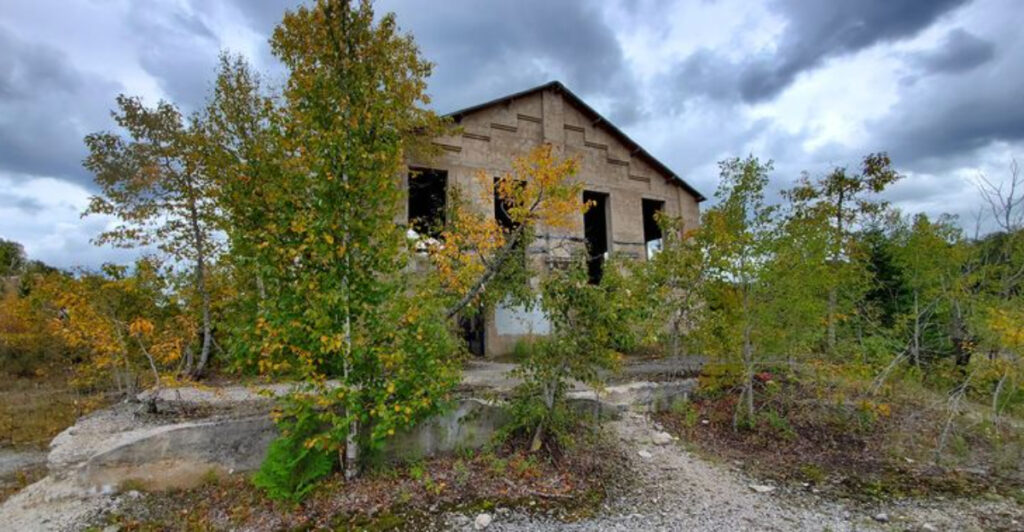
Tucked along a quiet road in the Upper Peninsula, Fiborn Karst Preserve sits above a network of caves and geological formations that most Michiganders have never heard of. The town of Naubinway barely registers on most maps, yet beneath its limestone bedrock lies one of the most fascinating underground systems in the entire state.
Old quarry buildings crumble quietly into the forest, and cave entrances peek out from the hillside like secrets the land kept to itself. If you like places that feel genuinely overlooked, this one has been waiting.
What a Karst Actually Is (And Why It Matters Here)
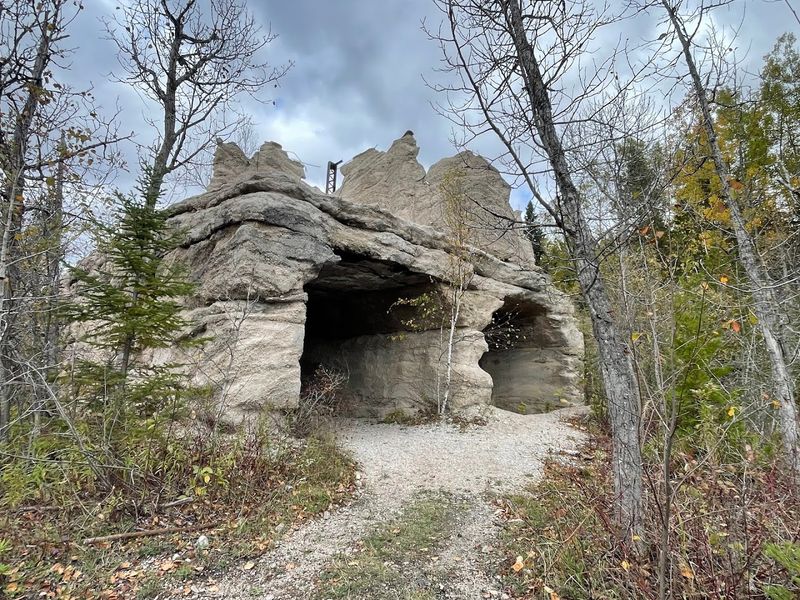
Most people arrive at Fiborn not entirely sure what a karst is. That is honestly part of the appeal.
A karst is a landscape shaped by dissolving bedrock, usually limestone, where water slowly carves out sinkholes, caves, and underground drainage systems over thousands of years. The ground here is riddled with that kind of geology, which makes every step feel a little more interesting once you understand what is happening beneath your boots.
The Upper Peninsula sits on some of the oldest limestone deposits in the Great Lakes region, and Fiborn is one of the clearest places to see what that actually looks like. You will notice the terrain shifts in ways that flat Michigan land usually does not.
Small depressions dot the ground. Rock outcroppings jut up unexpectedly.
The forest floor has an uneven, almost restless quality that is easy to feel but hard to describe until you have been there.
One reviewer mentioned they had never heard the word karst before visiting, and left completely fascinated. That reaction is pretty common.
The preserve has interpretive signage near the north entrance that gives a basic explanation, and it is genuinely useful for first-timers. Reading it before you head deeper into the site helps everything click into place.
Karst landscapes are also ecologically distinct. The unique drainage patterns and rock chemistry create microhabitats that support plants and animals you would not find in typical Michigan woodland.
Standing in the middle of it, surrounded by crumbling stone and dense canopy, you get the sense that this place operates by slightly different rules than the forest around it. That geological personality is what gives Fiborn its strange, quiet pull.
The Old Quarry That Started Everything
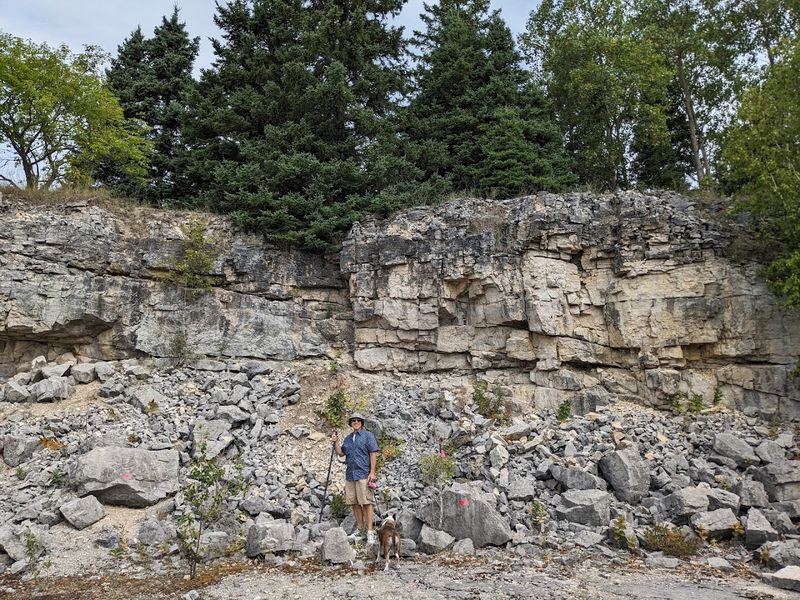
Before Fiborn became a preserve, it was a working limestone quarry. The operation dates to the late 1800s, when demand for limestone was high and the Upper Peninsula was still being carved up for its natural resources.
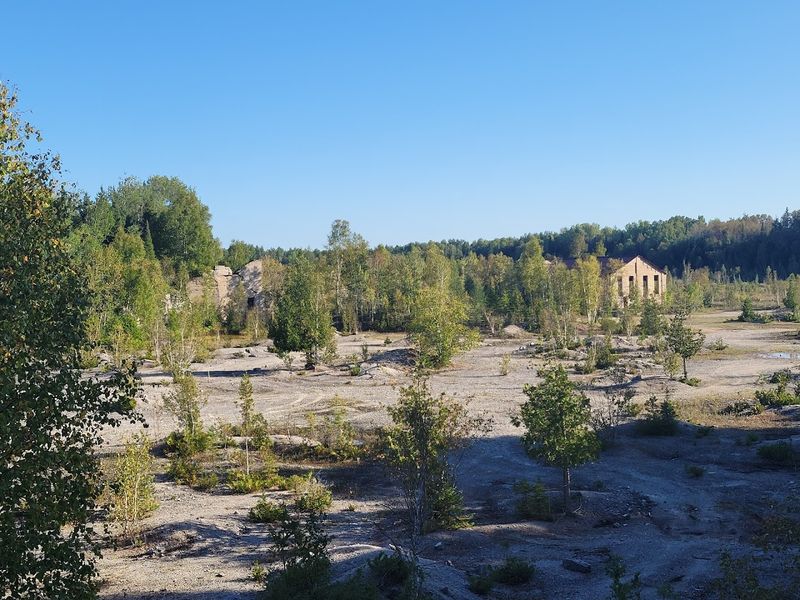
Workers cut into the rock, hauled stone, and left behind a physical record of that labor that the forest has been slowly absorbing ever since. The quarry pit itself is one of the first things you reach after walking in from the gate.
Standing at the quarry edge is one of those quiet moments where industrial history and natural reclamation collide. The walls of cut limestone drop sharply, and vegetation has started to soften the hard geometry of the original excavation.
Birch trees lean over the rim. Water sometimes pools at the bottom depending on the season.
It looks less like a wound in the earth now and more like something the land has decided to keep.
The trail that circles the quarry rim is one of the better routes in the preserve. It gives you a full view of the pit from different angles and connects to the paths that lead toward the old building ruins.
Hikers who rush through the quarry section miss a lot. The rock walls show distinct horizontal layers of limestone that read almost like pages in a book if you slow down enough to look.
Some visitors have noted the quarry trail can be uneven and rocky underfoot, which is accurate. Solid footwear makes a real difference here.
The terrain rewards careful movement rather than speed, and the details you catch by going slowly, a fossilized shell in the rock face, a crack that drops into darkness, make the slower pace feel like the right choice anyway.
The Crumbling Stone Buildings Nobody Maintains
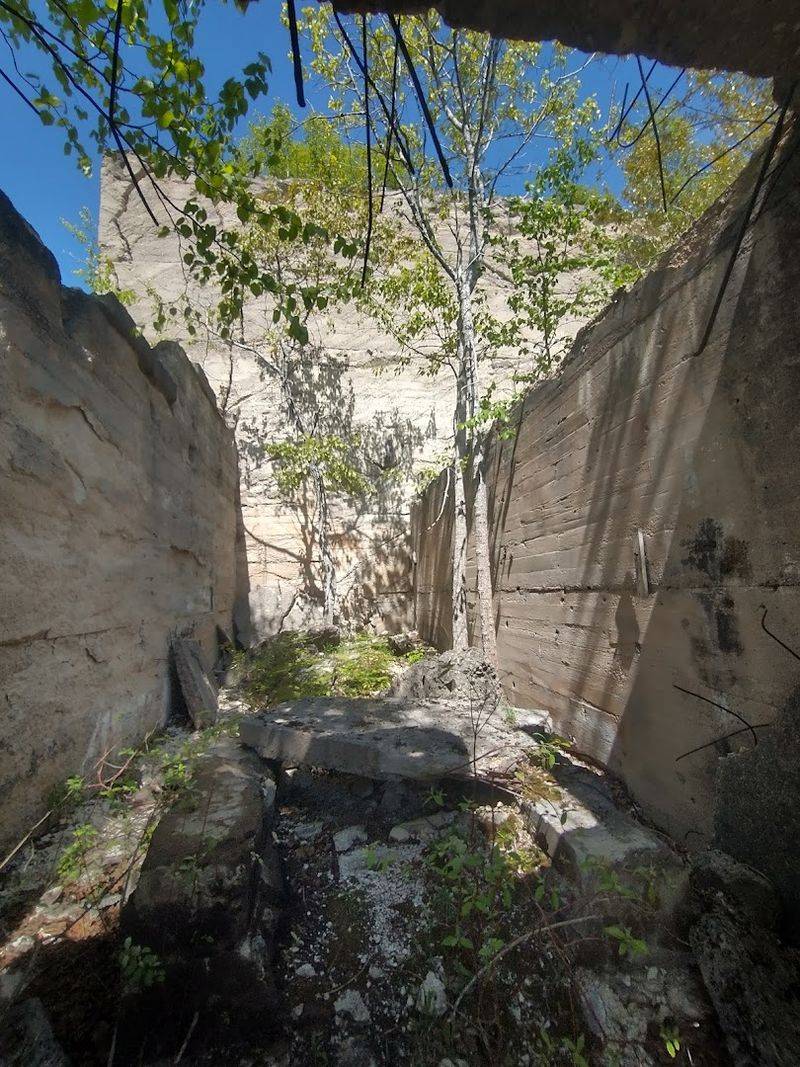
Few things at Fiborn hit harder than the buildings. They are made from the same limestone that was quarried here, which gives them a strange circularity, structures built from the very material extracted at the site, now dissolving back into the landscape on their own schedule.
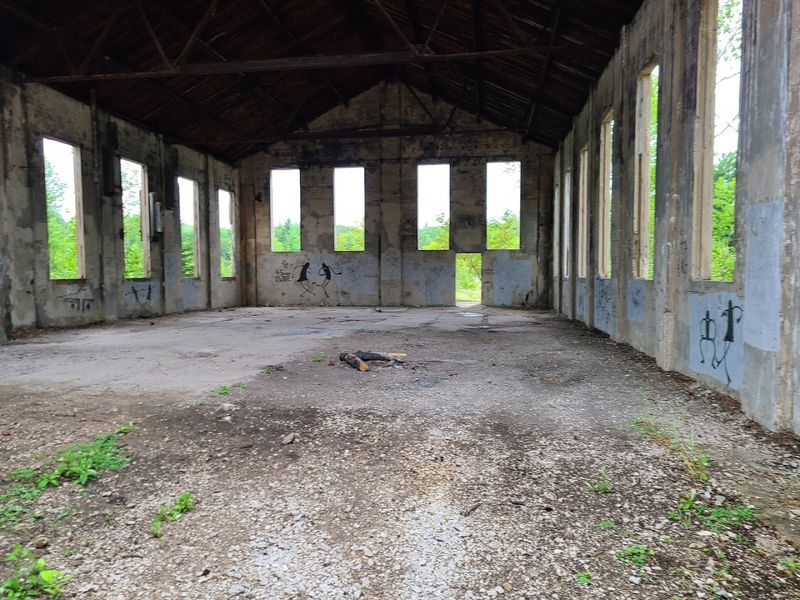
The walls still stand in places, thick and rough-cut, with openings where windows and doors used to be. Some sections have collapsed entirely into rubble piles that wildflowers grow through in summer.
Nobody is maintaining these structures, and that is both obvious and oddly appropriate. There are no roped-off sections or interpretive plaques bolted to the walls.
You walk up to them, look through the gaps, and piece together what you can from the architecture. A few reviewers have pointed out that the lack of upkeep creates real safety concerns, and that is fair.
Loose stone, unstable floors, and low overhead clearance mean you need to stay alert rather than wander in carelessly.
The graffiti inside some of the structures has become its own layer of history at this point. Names, dates, and various artwork have accumulated over decades.
Some of it is genuinely old. Walking through and reading the marks left by previous visitors adds an unplanned human dimension to a place that could otherwise feel purely geological and industrial.
What makes the buildings so compelling is how completely the forest has moved in around them. Trees grow through former floors.
Vines trace the mortar lines between stones. In certain light, especially late afternoon when shadows get long, the ruins look less like something abandoned and more like something the land quietly reclaimed without asking permission.
That image stays with you after you leave.
Finding the Cave Entrances on Foot
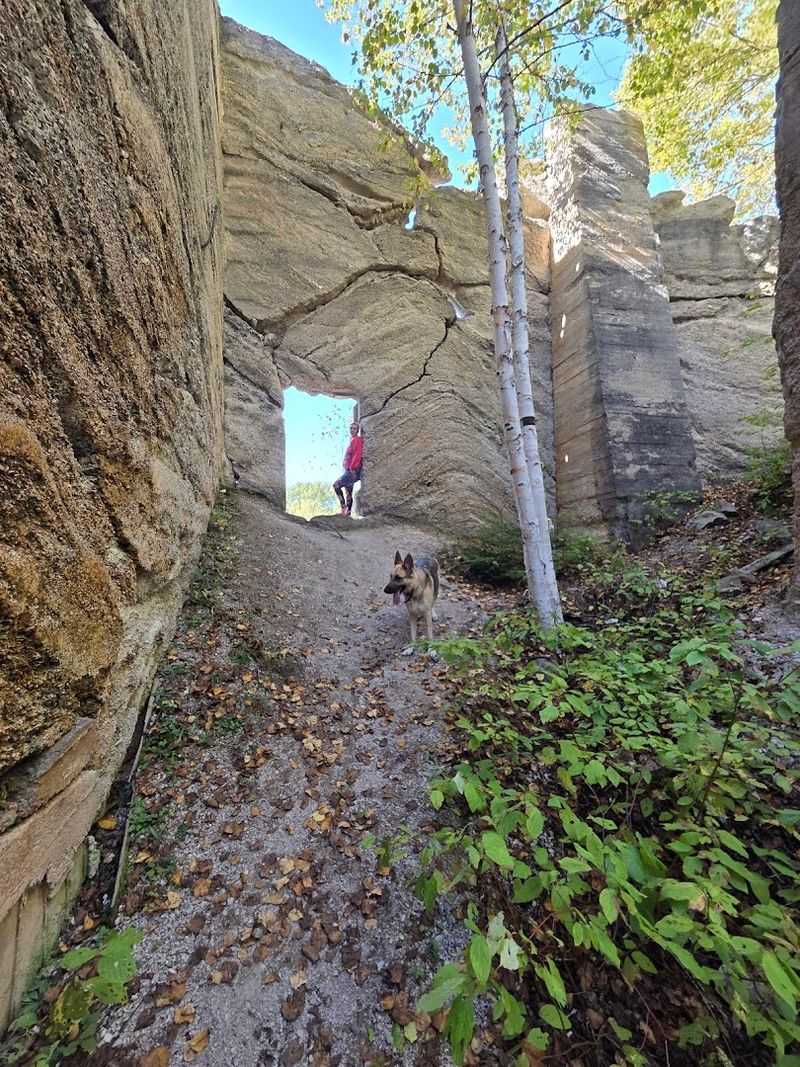
At least one recent visitor mentioned finding cave entrances during their hike, and described planning a return trip specifically to explore them further. That detail captures something essential about Fiborn: the place rewards multiple visits because there is always something you did not get to the first time.
The cave openings are not marked with signs or highlighted on any official map you will find at the trailhead. You come across them by moving slowly and paying attention to the terrain.
The karst geology creates natural voids in the limestone, and some of those voids are large enough to enter. The network beneath the surface is what gives the preserve its underground reputation.
Michigan’s longest cave system is associated with this area, though the full extent of it is not accessible to casual visitors without proper caving equipment and knowledge. What you can find on a regular hike are the smaller openings, dark gaps in the rock that hint at what lies below.
Approaching one of these openings is a specific kind of moment. The air temperature drops noticeably near the entrance.
There is a faint mineral smell, cool and slightly damp. If you crouch and look in, the darkness goes further than you expect.
The sounds from the forest fade. It is the kind of place that makes you genuinely curious about the underground world that most people never think about when they are walking through a Michigan forest.
Responsible visitors do not enter cave systems without proper gear and experience. The openings are worth finding and observing, and they add a completely different dimension to the hike.
Knowing they are there changes how you look at the ground under your feet for the rest of the walk.
Naubinway: The Town That Time Treated Gently
Naubinway does not announce itself. You pass through it rather than arrive at it, and the distinction matters.
The town sits along the northern shore of Lake Michigan in the eastern Upper Peninsula, surrounded by forest on three sides and open water on the fourth. There is no downtown in any recognizable sense.
A few businesses, some houses set back from the road, and a quiet that feels less like emptiness and more like the place has simply chosen a slower pace.
The name itself has Ojibwe origins, connecting the area to Indigenous history that predates the quarry operations by centuries. That layering of histories, Indigenous presence, industrial extraction, natural preservation, is part of what makes the Fiborn site feel meaningful rather than just scenic.
The preserve does not exist in isolation from the community around it, even if the connection is quiet and easy to overlook on a quick visit.
Getting to Naubinway from anywhere feels like a deliberate choice. The drive up through the U.P. on Highway 2 is long and largely unpopulated.
Cell service gets unreliable. One reviewer specifically recommended downloading offline maps before heading out, which is practical advice.
The distance filters out casual visitors and leaves the kind of people who actually want to be somewhere specific.
The surrounding area has its own character worth noticing. Lake Michigan visible through the tree line on the way in.
The smell of water mixing with pine. Small roadside markers that hint at older stories.
Naubinway is the kind of place that does not try to make an impression, which somehow makes it easier to remember. Fiborn fits that quality perfectly, a place that holds its history quietly and lets you find it yourself.
What the Terrain Actually Feels Like Underfoot
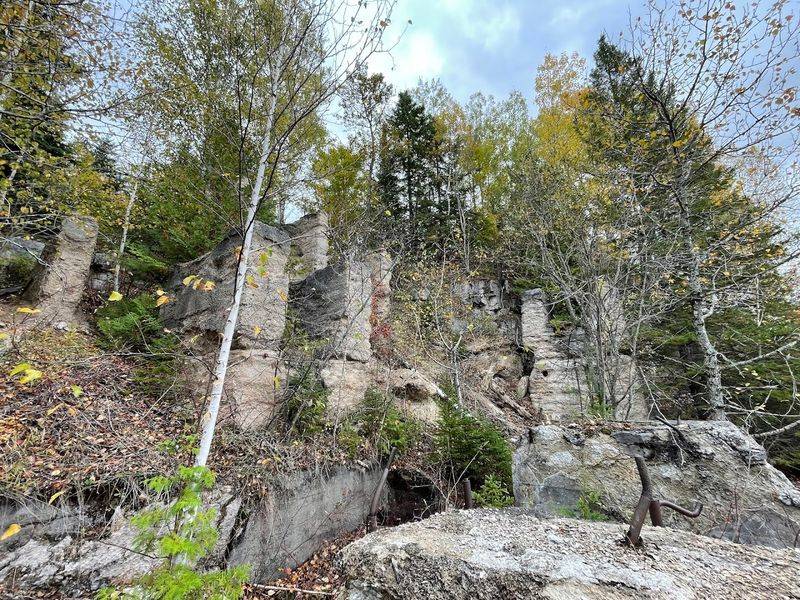
Multiple reviewers have made the same point in different ways: this is not a smooth trail. The ground at Fiborn is rocky, uneven, and occasionally unpredictable in ways that a standard park path simply is not.
Chunks of limestone jut up through the soil. Old quarry debris sits in unexpected places.
Tree roots cross the trail in patterns that demand attention. The overall effect is that you have to stay present and watch where you are stepping, which actually makes the hike feel more engaging than a groomed nature walk.
Good footwear is not optional here. Reviewers who mentioned hiking boots were not being overly cautious.
Sneakers or sandals on this terrain create real problems, especially near the quarry rim and around the old building ruins where loose stone is common. The footing near cave openings can be particularly unpredictable, with soft soil and hidden rock edges that are easy to misjudge.
The physical challenge is moderate rather than extreme. Most reasonably fit people can handle the terrain without significant difficulty.
The trail distance for a full loop of the main areas runs several miles, so it is not a short stroll. Plan for more time than you think you need, partly because the ground slows you down and partly because there is genuinely a lot to look at once you are moving through the site.
After rain, the limestone gets slick in ways that catch you off guard. The rock surface looks rough but behaves differently when wet.
Visiting on a dry day is noticeably easier. The preserve is open year-round, and a few reviewers have hiked it in winter snow, which adds a completely different visual quality to the ruins and rock formations.
Cold-weather visits require extra care but the quiet is apparently something else entirely.
Parking, Logistics, and What Nobody Tells You Before You Go
The parking situation at Fiborn is genuinely limited, and knowing this before you arrive saves frustration. The north entrance has a small pull-off area that works fine for regular cars and trucks.
RVs and vehicles towing trailers will struggle significantly, as one reviewer noted in detail. Turning around in the available space is tight enough that large vehicles can end up in a difficult spot.
Arriving in the smallest vehicle you have access to is simply the smarter move.
There are no tickets, no entry fees, and no attendant checking anything. One reviewer mentioned ignoring a prompt about waiting to enter, because there is no queue system.
You drive up, park, and walk in. The gate marks the transition from road to preserve, and foot traffic is required beyond that point.
Some visitors have ignored the foot-traffic signs and driven vehicles into the site, which has damaged the terrain and disrupted wildlife. The preserve asks for basic respect, and most visitors deliver it.
Signage inside the preserve is described as inconsistent. The trails are generally followable but not always clearly marked at every junction.
Having a downloaded map on your phone before you lose cell service is the single most useful preparation you can make. Google Maps does locate the site accurately, which is helpful for the initial navigation through the rural roads leading in.
Bug spray and water matter more than they seem like they should for a short hike. The site is surrounded by dense forest and the terrain extends further than the quick entry suggests.
Spending two to four hours here is easy if you are exploring thoroughly. The preserve does not have restroom facilities, so plan accordingly before you leave the last town on the way in. Practical preparation turns a potentially frustrating visit into a smooth one.