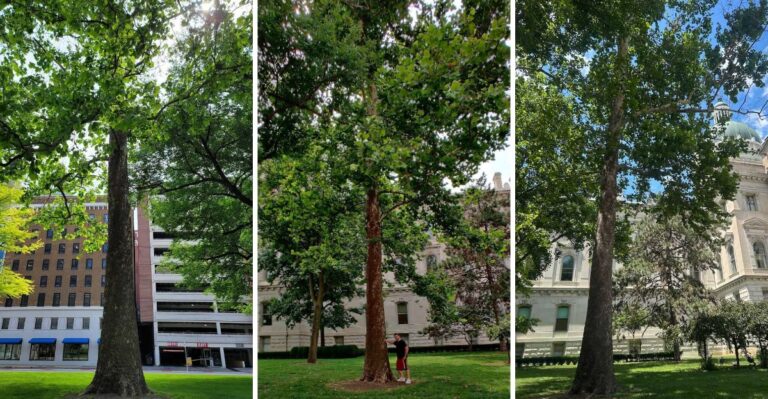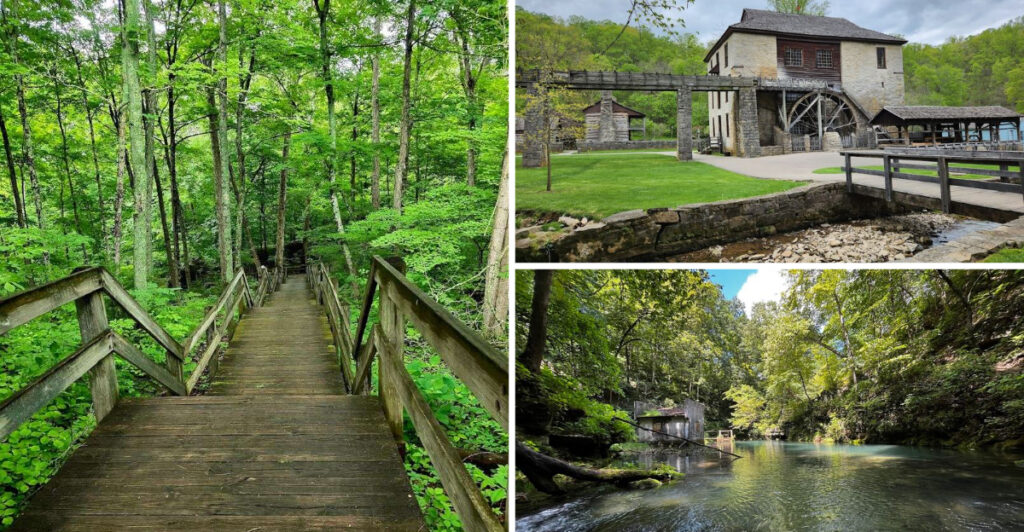
The first surprise at Spring Mill State Park is how quickly the landscape changes. One trail winds beneath towering trees, another follows crystal-clear spring water, and before long you’re standing beside a restored pioneer village that feels untouched by time.
Near Mitchell, this remarkable Indiana destination blends natural beauty with living history, creating an experience that is far more varied than a typical state park visit. Between scenic hiking trails, limestone features, historic buildings, caves, and peaceful woodlands, every corner offers something different. If you’re looking for an Indiana adventure that feels both immersive and unforgettable, Spring Mill State Park belongs at the top of your list.
Where the Woods Suddenly Open Into Stone and Water
The approach to Spring Mill State Park does not build with flashy overlooks or oversized signs. Instead, the setting eases you in with thick tree cover, curving roads, and pockets of shade that make the whole property feel cooler and older than the highway outside.
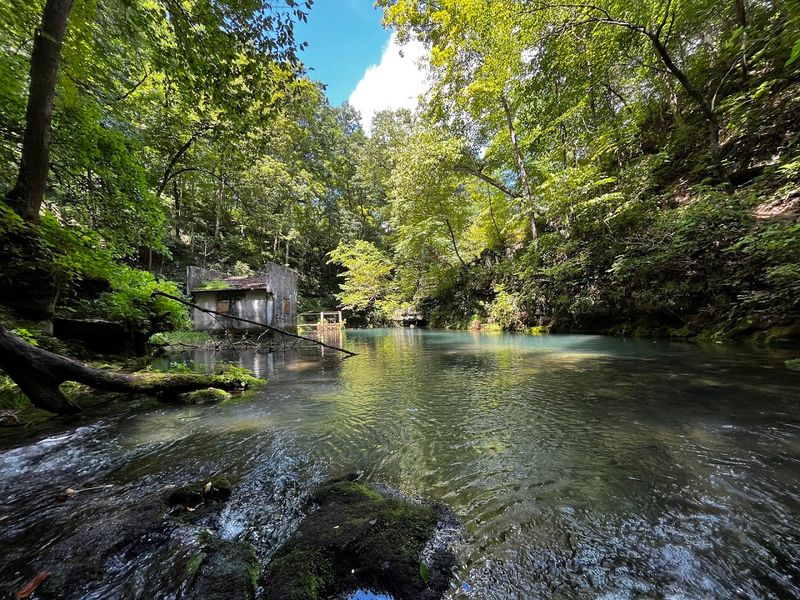
Then the landscape starts revealing its real personality through limestone, spring-fed water, and sudden openings that look carefully staged even though they are entirely natural.
The transition happens so gradually that you almost miss the moment when an ordinary forest drive becomes something much more memorable.
That contrast is the park’s opening move. One minute you are in ordinary southern Indiana woodland, and the next you are looking at karst features, stone edges, and water that seems to gather from hidden places underground.
It creates a sense of separation from the everyday without needing dramatic elevation or huge distances, which is part of why the park can feel so transportive so quickly. The springs, limestone, and dense canopy work together to give the landscape a noticeably different character from many other parks in the state.
The visual rhythm here matters. Spring Mill is not a single grand vista destination where everything is handed over in one panoramic reveal.
It works through sequence, pulling you from forest to village, from trail to cave area, from open lawn to enclosed ravine, and each shift changes the mood of the day without ever making the park feel disjointed. Every turn introduces another layer instead of repeating the last.
That layered design is a big reason the place stands out. The scenery is not just pretty in a general sense; it has texture, depth, and surprising variety packed into one manageable property.
By the time you have crossed a few shaded paths, followed the sound of spring water, and paused beside the limestone formations, the park has already made its case with pure setting alone.
The Pioneer Village Is the Park’s Real Plot Twist
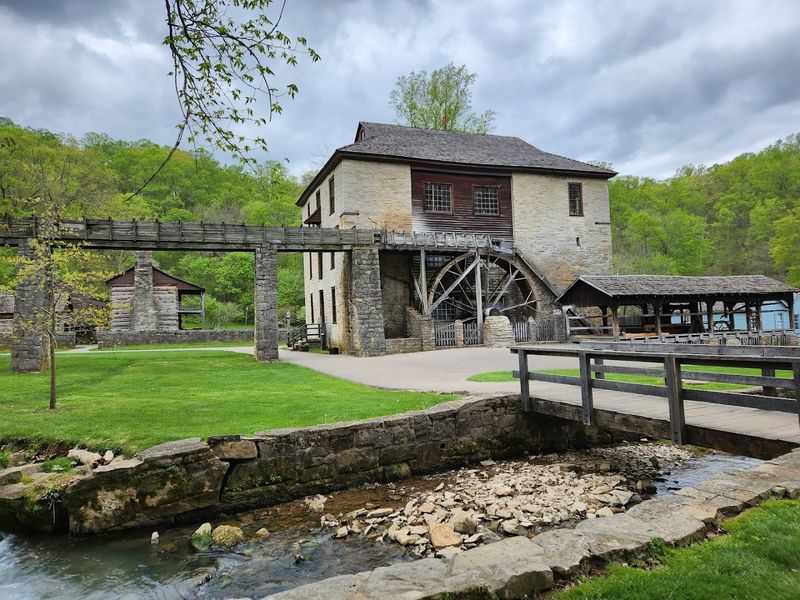
The restored village is where Spring Mill stops being a standard nature outing and becomes something much more unusual. Set within the park rather than in a separate museum complex, the village folds history directly into the landscape.
Cabins, shops, fences, gardens, and the iconic mill shift the pace from hiking to slow, detail-filled exploration. It feels less like an exhibit and more like wandering into a community that has simply been waiting for you to arrive.
This is not a quick pass-through area best appreciated from a distance. The buildings invite slow movement because each doorway, workbench, worn wooden surface, and split-rail fence adds another layer to the story.
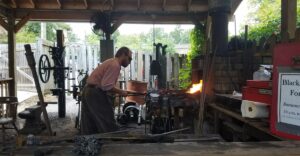
When interpreters are present, the village becomes even more engaging, but even on quieter days the layout speaks for itself through the blacksmith shop, schoolhouse, mercantile, gardens, and family homes. Every structure contributes something different, making it easy to spend longer here than you planned.
The grist mill is the visual anchor, and for good reason. Limestone, flowing spring water, and historic machinery come together in a way that feels rooted in the region rather than staged for effect.
It is the kind of landmark that immediately catches your attention, but it also explains how the surrounding settlement once functioned. The steady flow of water keeps the entire scene feeling alive.
What gives this section of the park its power is the setting around it. The village is surrounded by forests instead of parking lots and commercial clutter, making the transition into the past feel remarkably natural.
Rather than placing history behind glass, Spring Mill lets it exist in the open, surrounded by the same springs, woods, and limestone that shaped it from the beginning.
Twin Caves Is the Park’s Most Unexpected Adventure
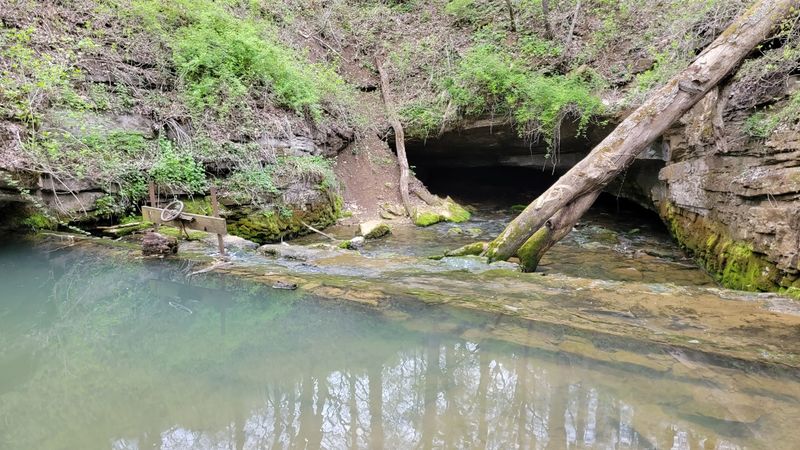
If the village provides the historical hook, Twin Caves delivers the sharpest jolt of adventure. The boat tour is one of those experiences that instantly changes how you think about the park because it takes a landscape that already looks fascinating from the trail and carries you directly into it.
Water, darkness, towering limestone, and the quiet echo of the cave do most of the work, creating an atmosphere that feels completely different from the sunlit woods above. There is a practical side to the excitement here.
Tour spots often fill early, so this is the kind of attraction that rewards planning instead of a casual late-afternoon stroll. That demand makes perfect sense once you see how distinctive the experience is within an Indiana state park, especially for families and day-trippers looking for something beyond another scenic hike.
Few parks in the state offer anything quite like it. The cave environment shifts the senses in ways open trails simply cannot.
Sound changes first, becoming quieter and more focused, then the light fades until the limestone walls become the main feature around you. The temperature drops noticeably, the water grows still, and the park suddenly feels less expansive and more enclosed.
It is an immersive experience that relies on geology rather than manufactured thrills, making it memorable for visitors of nearly every age. Even if cave boating is unavailable because of weather or water conditions, the cave area still gives Spring Mill an unmistakable identity.
It reminds you that the park is shaped just as much by what happens beneath the surface as by what grows above it. That hidden landscape adds another layer to every trail, and Twin Caves remains the clearest and most memorable way to understand what makes Spring Mill unlike almost any other park in Indiana.
Trails, Sinkholes, and the Park’s Quieter Side
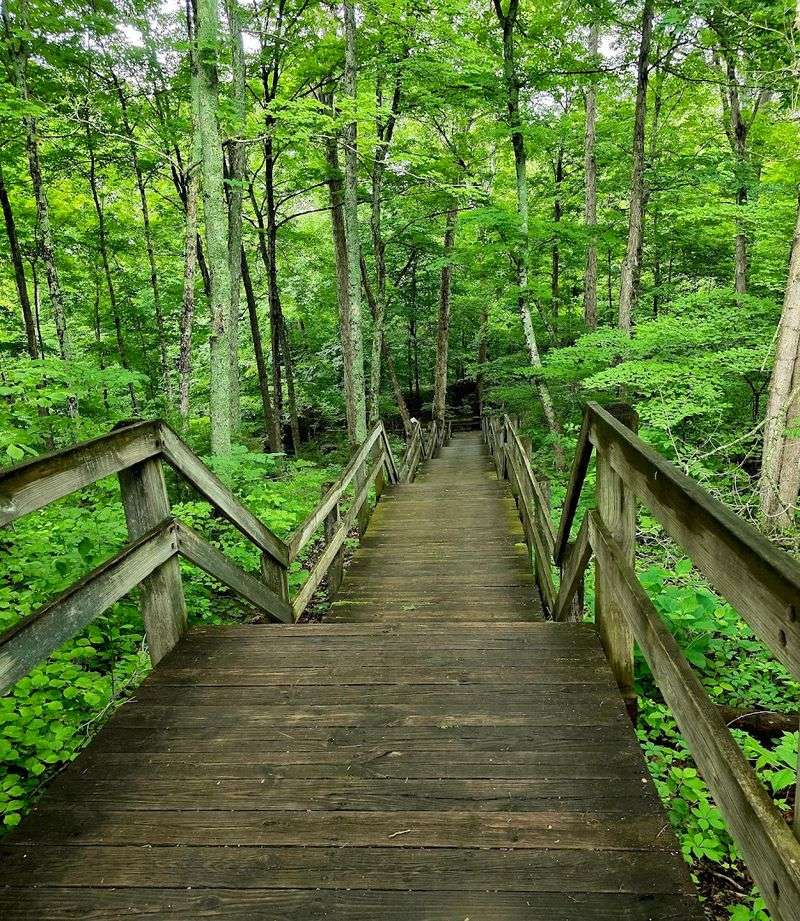
Beyond the headline attractions, Spring Mill has a quieter side that reveals itself on the trails. This is where the park’s geology starts showing up in subtler ways through sinkholes, uneven ground, damp hollows, and tree-lined paths that keep shifting between open and enclosed.
The hiking experience is not about conquering huge mileage; it is about staying alert to constant small changes in terrain. Every bend seems to reveal another layer of the landscape without demanding a long or difficult trek.
That makes the trails especially satisfying for people who like variety without needing backcountry intensity. Some routes are approachable and well maintained, while others include stairs, cave-adjacent sections, creek crossings, or muddier stretches that demand slower footing.
The park seems designed for curiosity rather than speed, which is exactly why a simple walk here rarely feels repetitive. Even shorter trails manage to pack in enough scenery to reward taking your time.
Donaldson Cave often comes up in conversations about the park because it adds a more rugged note to the trail network. Reaching cave areas can involve steps and slippery conditions, so footwear matters more here than it might at a flatter, picnic-centered park.
Those rougher edges are part of the appeal, giving Spring Mill a little grit beneath all that family-friendly accessibility. It is a reminder that this landscape is shaped by water and limestone as much as by forests.
The woods also help balance the busier sections of the property. After the village, cave tours, or parking areas, a shaded trail can reset the pace almost immediately.
You get birdsong, filtered light, and the kind of low, steady quiet that makes the park feel expansive even when you are never very far from the next point of interest. It is in these quieter stretches that Spring Mill often feels at its most peaceful.
A Southern Indiana Park With Space-Age Contrast
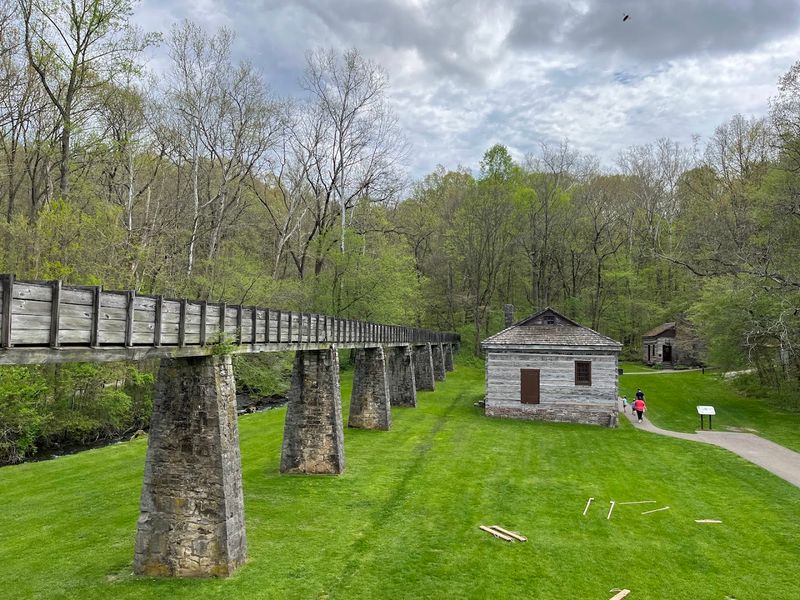
One of the most unexpected turns at Spring Mill is that the story here does not stop in the nineteenth century. Alongside pioneer structures and grist mill imagery, the park area also connects to Gus Grissom, creating a contrast that is hard to forget once you notice it.
Few destinations can move from frontier craftsmanship to space-age legacy without feeling scattered, yet this one manages the transition surprisingly well. It is the kind of pairing that catches first-time visitors by surprise and gives the park a much broader identity.
That contrast gives the park a wider cultural range than its first impression suggests. Instead of presenting the past as one fixed era, Spring Mill opens up a longer conversation about Indiana lives, work, ambition, and invention.
The result is a place where history is not confined to one costume or one building style, but stretched across very different chapters. It reminds visitors that the state’s story extends far beyond pioneer settlements and into achievements that reached well beyond Earth.
For travelers, this matters because it changes how you plan your time. A visit here can easily become more than a scenic walk or a village stop, especially if you enjoy destinations that combine landscape with history.
The day gains more shape when natural features, restored buildings, and the nearby Gus Grissom Memorial all contribute different pieces to the experience. You leave feeling like you’ve explored more than just another state park.
It also keeps Spring Mill from becoming predictable. Just when the limestone scenery and pioneer village settle you into one frame of mind, the Grissom connection introduces an entirely different perspective.
That shift never feels forced. Instead, it broadens the park’s story, giving Spring Mill a richer identity than destinations built around only one attraction or one chapter of history.
How to Time Your Day So Spring Mill Actually Flows
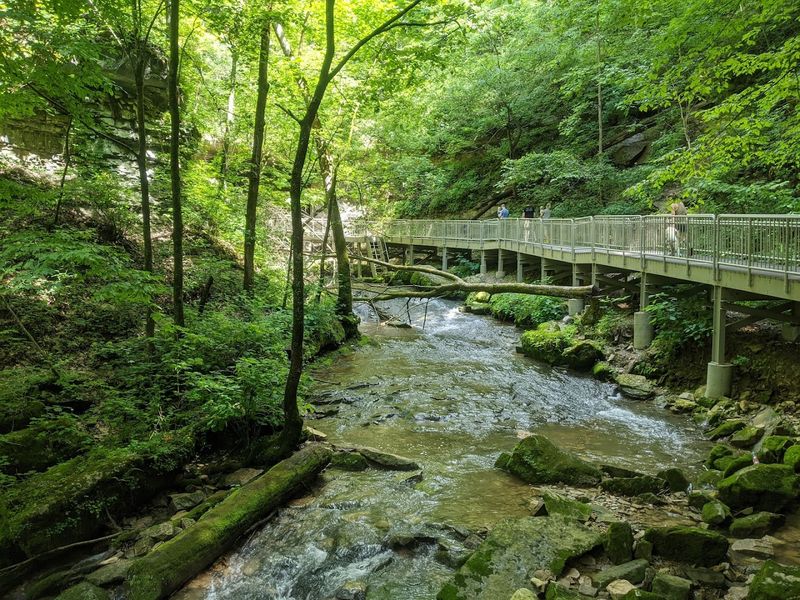
Spring Mill rewards a little strategy. Because the park includes caves, trails, a historic village, picnic areas, lodging, and seasonal extras, the experience can either feel smooth and layered or oddly rushed depending on when you do what.
The smartest move is usually starting with the most time-sensitive attraction, especially the Twin Caves boat tour when it is operating. Taking care of the scheduled experience first leaves the rest of the day much more flexible.
After that, the village makes sense as a slower mid-morning or early afternoon stop. It invites browsing rather than clock-watching, and it is easier to appreciate the details when you are not mentally saving time for a reservation window.
From there, a trail segment fits naturally, giving the day a change in pace and helping separate the built historic environment from the park’s wilder sections. The shift from restored buildings back into the woods keeps the visit feeling fresh.
Weather also plays a bigger role here than at some state parks. Rain can affect cave experiences, while heat can make stairs and longer walks feel much more demanding than they looked on a map.
Cooler months and shoulder seasons often bring a calmer rhythm, especially if you prefer shaded hikes, easier parking, and less pressure around the most popular stops. Comfortable shoes and a little flexibility can make a noticeable difference.
The park’s long daily hours are useful, but not every feature keeps the same schedule, so it helps to think in layers rather than one continuous loop. Plan the cave early, absorb the village when you can slow down, and leave room for wandering.
Spring Mill is at its best when the day unfolds in chapters instead of one hurried sweep. A little planning lets every part of the park feel connected rather than squeezed into a rushed itinerary.
Why This Park Lands Differently Than a Typical Day Trip
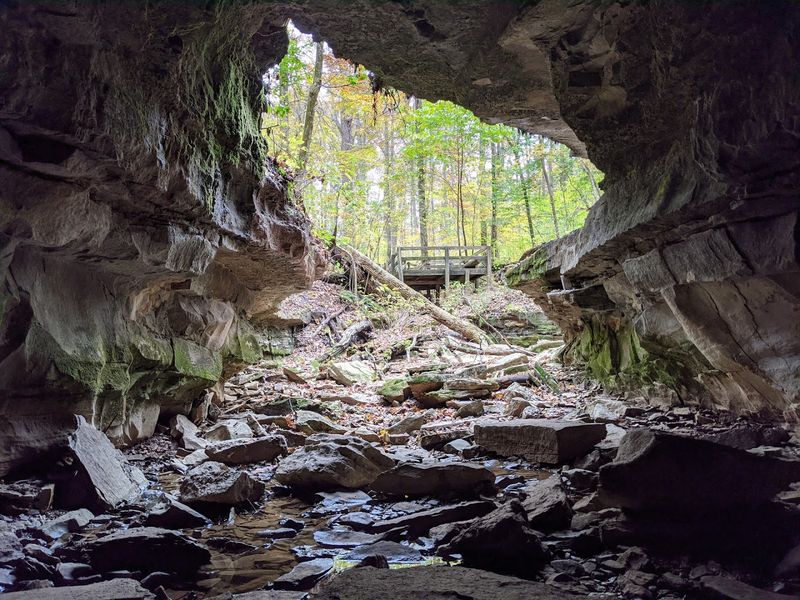
Some parks are best understood in one sentence: nice lake, solid trails, maybe a picnic shelter or campground. Spring Mill resists that kind of shorthand because its appeal comes from the way different pieces keep colliding in interesting ways.
Limestone geology, cave systems, a restored village, wooded hikes, and cultural interpretation all share the same address, and that combination gives the park unusual range. Every part of the property feels connected to the next instead of existing as a separate attraction.
The key is that none of those elements feels pasted on. The historic village makes sense because mills and settlements belonged near reliable water and workable terrain.
The caves matter because the underground landscape is not a side attraction here; it is part of the park’s structure. Even the broader historical connections deepen the experience instead of distracting from the scenery.
The result is a destination where the natural and human stories constantly reinforce one another. That cohesion is what lifts Spring Mill above an ordinary stop.
You are not choosing between history or nature, indoors or outdoors, active exploration or easier family pacing. The park allows those experiences to overlap naturally, so one group can follow the trails while another explores the village or boards the cave tour, then meet back with the sense that everyone experienced the same place through different perspectives.
In practical terms, that makes the park remarkably versatile. In sensory terms, it makes the place difficult to reduce to a single image, which is exactly why it stands out. Spring Mill is not trying to overwhelm with dramatic scale or famous landmarks.
Instead, it succeeds by offering one memorable transition after another, until a simple state park visit starts feeling richer, more immersive, and far more cinematic than you expected. That lasting variety is what keeps people coming back long after the first visit.
Share this story