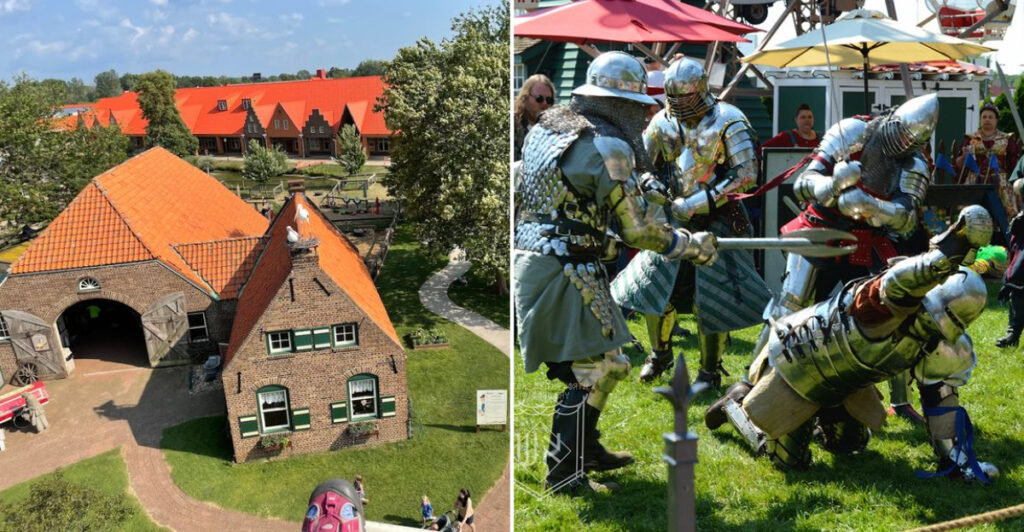
Every summer, a quiet Dutch-themed village in Holland, Michigan trades its tulip gardens and wooden shoe demos for knights, jousting, and full-on medieval mayhem. This year, Nelis’ Dutch Village will host Knights of the Realm VIII on July 11 and 12, 2026, turning the charming grounds into a surprisingly action-packed battleground that draws families from across the state.
It is one of the most unexpected seasonal events you will find at a theme park in the Midwest, and it works in ways that are hard to explain until you are standing there watching armored competitors clash along cobblestone paths lined with windmills.
When Dutch Windmills Meet Medieval Chaos
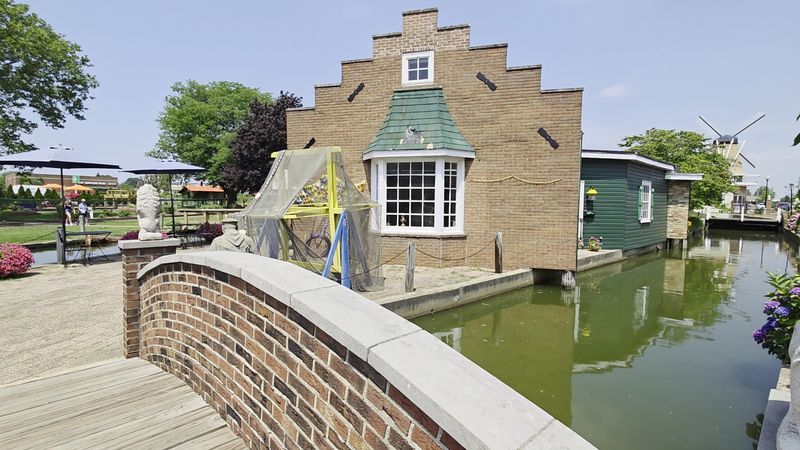
Picture this: you’re walking past a replica Dutch canal house, tulips still blooming in the beds beside you, and suddenly a knight in full armor charges past. That’s the specific, slightly surreal energy of Medieval Days at Nelis’ Dutch Village in Holland, Michigan.
The park’s European roots make it a surprisingly natural fit for the event, since both Dutch and medieval aesthetics share that old-world, handcrafted charm.
Medieval Days typically runs across a weekend in July, and the park’s layout transforms in ways that feel deliberate and theatrical. Performers in period costumes move through the grounds, demonstrations pop up near the historic buildings, and combat shows draw crowds to open areas that normally host Dutch folk dancing.
The contrast between the two eras shouldn’t work as well as it does, but somehow the setting pulls it off.
Part of the appeal is how the existing architecture frames everything. The gabled rooftops, brick pathways, and hand-painted signs create a backdrop that could pass for a European village from nearly any century.
Organizers lean into that ambiguity, letting the medieval programming feel like a natural extension of the space rather than a jarring overlay.
For families who visit Dutch Village regularly throughout the season, Medieval Days offers a completely different reason to return. Kids who have already tried wooden shoe making and stroopwafel baking suddenly have knights and siege demonstrations to chase around.
The park’s compact, walkable layout means nothing feels too far from anything else, so the energy stays concentrated and easy to follow throughout the day.
Holland, Michigan doesn’t have a shortage of summer events, but few manage to blend two distinct historical worlds under one admission price the way this one does.
The Combat Demonstrations That Stop You Cold
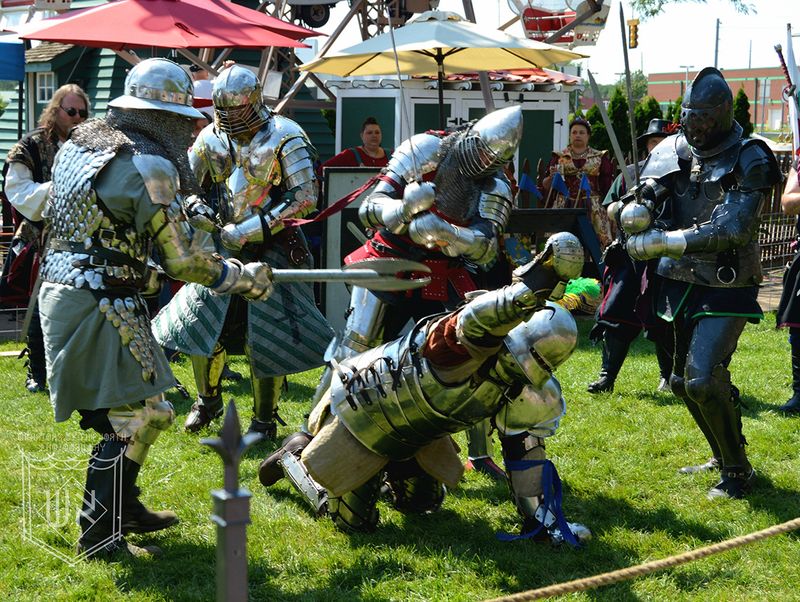
There’s a specific moment during the combat demonstrations at Medieval Days when the crowd goes completely quiet. Two performers in full plate armor square off, and even though everyone knows it’s choreographed, the sound of steel meeting steel carries across the park in a way that grabs attention instantly.
It’s loud, physical, and surprisingly technical to watch.
The fighters performing these shows typically have backgrounds in historical European martial arts or stage combat, and the difference shows in the details. Footwork, guard positions, and weapon transitions are executed with enough precision that adults who know nothing about medieval combat still recognize they’re watching skilled performers.
Children, meanwhile, are simply locked in from the first clash.
Demonstrations are staged in open areas throughout the park, and the schedule is designed so visitors don’t have to choose between shows and other activities. Multiple performances run across the event weekend, giving families flexibility to catch a combat show, wander through the shops, grab a stroopwafel, and still circle back for a second round of sword fighting before the day ends.
Beyond the main combat shows, smaller interactive moments happen organically throughout the grounds. Performers in costume stop for conversations, answer questions about armor and weapons, and occasionally invite younger visitors to try on helmets or hold prop shields.
Those unscripted interactions tend to be the ones kids talk about on the drive home.
The demonstrations also fit naturally into Dutch Village’s existing commitment to live programming. The park runs wooden shoe carving demos, cheese-making shows, and Dutch dancing throughout its regular season, so adding medieval combat to the rotation feels consistent with the park’s hands-on, performance-driven approach to entertainment.
It’s a smart programmatic extension that adds genuine spectacle.
A Theme Park Built on Real Dutch Heritage
Long before Medieval Days became part of the calendar, Nelis’ Dutch Village was already doing something genuinely unusual for a Midwestern theme park. The Nelis family began growing tulips in Holland, Michigan in the early twentieth century, eventually building a destination that celebrates Dutch culture through hands-on experiences rather than passive displays.
The village that exists today reflects decades of careful development rooted in actual heritage rather than manufactured theming.
Walking the grounds, that distinction becomes clear quickly. Wooden shoe demonstrations aren’t just a show to watch from behind a rope.
Visitors get close enough to see the carving tools, hear the explanation of how different wood types affect the final product, and understand why Dutch farmers originally wore klompen for protection in wet fields. The same depth applies to the cheese-making demonstration, the hot chocolate show, and the stroopwafel baking station at De Koekjeshoek.
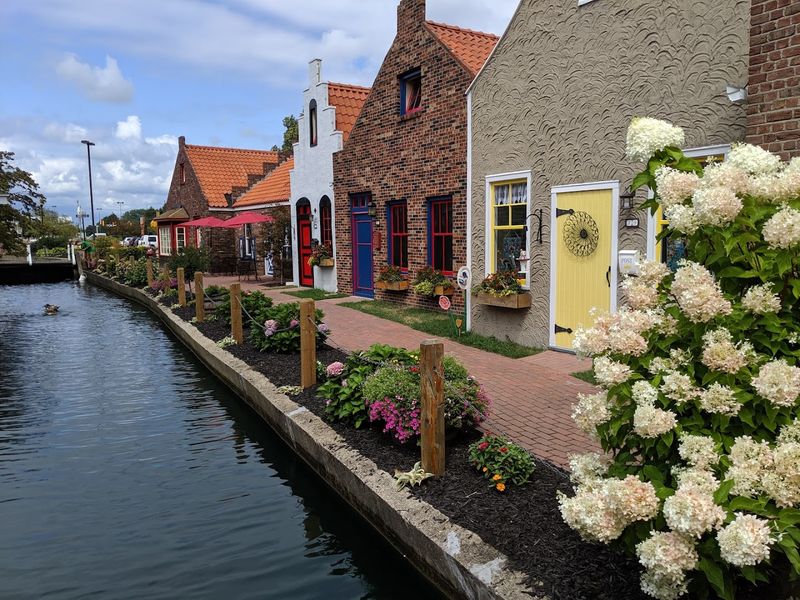
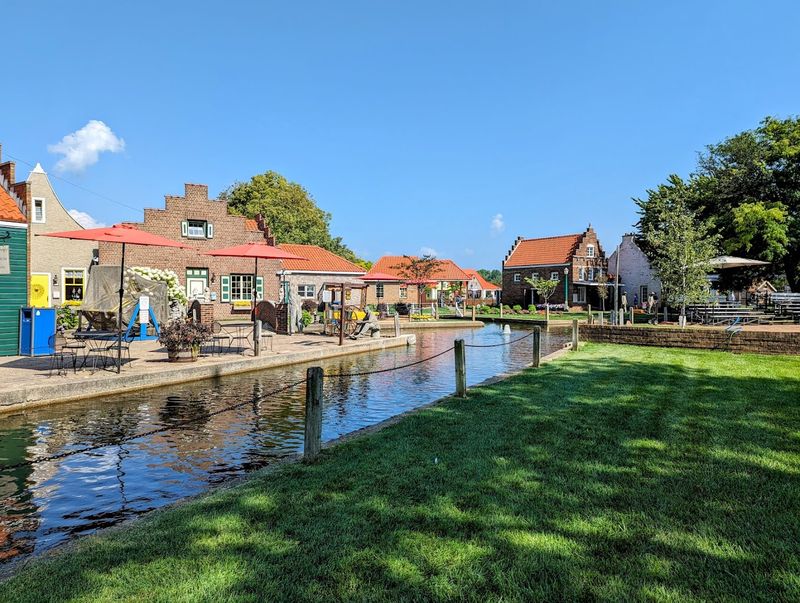
The architecture reinforces the educational layer without feeling like a classroom. Gabled facades, hand-painted Delftware patterns, and canal-side landscaping create an environment that looks like a compressed Dutch town, and the historic buildings house exhibits and demonstrations rather than sitting as empty props.
Even the ducks on the canal feel like they belong.
Rides are included with general admission, which changes the math for families. The ferris wheel, carousel, and tractor-style bumper cars give younger kids something kinetic to do between cultural programming, and none of the rides feel out of place given the park’s family-first design philosophy.
The petting zoo operates on the same principle, offering a $1 feed cup experience that puts visitors in direct contact with the animals rather than keeping them at a distance.
For first-time visitors, plan on at least half a day. For families with young children, a full day moves surprisingly fast.
Michigan’s Most Unexpected July Weekend Activity
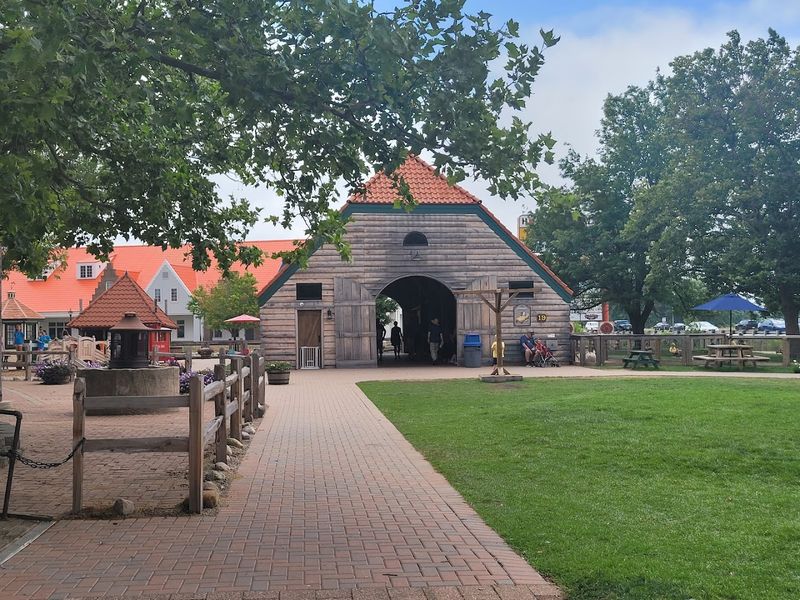
Most people driving through Holland, Michigan in July are thinking about the beach, the downtown shops, or maybe a stop at Windmill Island Gardens. Medieval Days at Dutch Village tends to catch visitors by surprise, which is part of what makes it such a strong word-of-mouth draw.
The combination of a Dutch heritage park and a medieval festival isn’t something that appears on most summer itineraries until someone mentions it in passing.
The event draws a noticeably mixed crowd. History enthusiasts show up with real interest in the period-accurate details of armor and weaponry.
Families with kids come for the spectacle and the energy. Regular Dutch Village visitors return specifically because the programming is so different from what they’ve experienced during the tulip season or a standard summer visit.
All three groups tend to end up in the same place at the same time, creating a lively, social atmosphere that feels more like a community gathering than a ticketed event.
Holland itself adds to the experience. The city has a strong identity built around its Dutch heritage, and Nelis’ Dutch Village sits comfortably within that larger cultural story.
James Street, where the park is located, gives easy access from the main highway, and parking is straightforward. Visitors who arrive early get the benefit of cooler morning temperatures and shorter lines at the food demonstrations before the midday crowds build.
July timing also means the park’s gardens are in a different phase than the famous tulip season. Summer blooms replace the spring tulips, and the grounds take on a greener, more lush character that photographs well and feels relaxed rather than peak-season hectic.
Medieval Days essentially creates a second seasonal peak for the park, giving the summer calendar a specific anchor event worth planning around.
Food, Fudge, and Fresh Stroopwafels Worth the Drive Alone
Somewhere between the combat demonstrations and the petting zoo, hunger hits, and Dutch Village handles that moment better than most theme parks its size. The food options lean into Dutch tradition in a way that makes eating part of the cultural experience rather than just a logistical break.
De Koekjeshoek is the clearest example, a small bakery-style space where stroopwafels are made fresh and served warm.
A stroopwafel done right is two thin waffle layers pressed together with a gooey caramel-cinnamon syrup filling, and the version at Dutch Village consistently earns strong reactions from first-timers who expected something closer to a packaged cookie. The warmth and the filling-to-wafer ratio make the difference.
It’s the kind of food that prompts an immediate second order before the first one is finished.
Fudge gets similar attention from visitors. The raspberry chocolate variety comes up frequently as a standout, and the selection runs wide enough that grazing through a few samples becomes its own activity.
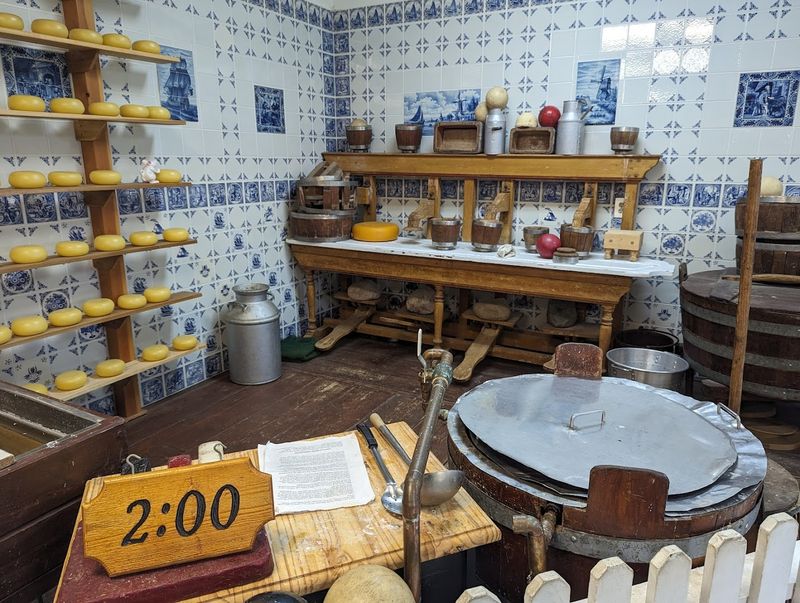
Cheese tasting is available through the demonstration program, which means the tasting isn’t just a sample cup but comes with context about Dutch cheese-making traditions and regional varieties.
Hot chocolate demonstrations add another layer, showing the process behind the drink rather than simply selling it. For families with curious kids, watching chocolate being worked is almost as engaging as the medieval combat shows, just at a significantly smaller scale.
The shop spaces throughout the park incorporate these demonstrations naturally, so browsing Delftware or wooden shoe souvenirs often happens alongside an active production display.
Ice cream rounds out the options for warmer July afternoons, and the overall food footprint feels proportionate to the park’s size without ever feeling sparse. Eating well here doesn’t require a long detour from the main programming.
Getting the Most Out of Your Medieval Days Visit
Arriving early on a Medieval Days weekend pays off in multiple ways. The park opens at 9:30 AM, and the first hour or two before midday crowds build gives visitors a cleaner run at the demonstrations, shorter waits at food stations, and better positioning for the first combat show of the day.
Parking is accessible and the layout at 12350 James Street makes the entrance easy to find from the main road.
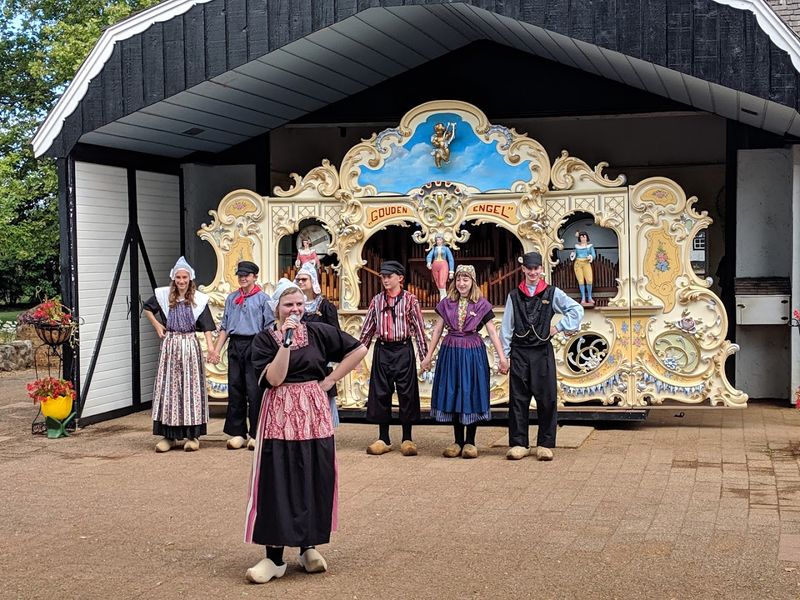
Building a loose schedule around the demonstration times makes the day feel more organized without locking anyone into a rigid plan. The park posts scheduled programming for wooden shoe carving, cheese making, Dutch dancing, and during Medieval Days, combat demonstrations as well.
Catching two or three of these in sequence creates natural momentum, and the gaps between shows leave time for rides, the petting zoo, and food without feeling rushed.
The petting zoo operates on a simple feed-cup system that costs just a dollar and delivers a genuinely interactive few minutes with the animals. Kids who need a change of pace between bigger activities respond well to it, and the animals are varied enough to hold attention longer than expected.
Bringing a few extra dollars specifically for feed cups is a practical tip that pays off in smiles.
Families with children under five will find the park particularly well-suited to that age group. The rides are gentle, the grounds are walkable without long distances between attractions, and the sensory variety keeps toddlers engaged without overwhelming them.
A season pass is worth considering for local families who plan to return more than once, since the programming changes enough between spring, summer, and fall visits to justify multiple trips.
Weekdays run noticeably quieter than weekends, but Medieval Days specifically draws weekend crowds, so early arrival remains the best strategy during the event.
Why Dutch Village Stands Apart From Every Other Michigan Theme Park
Most theme parks in Michigan compete on ride count or thrill factor. Dutch Village operates on a completely different logic, and that’s exactly why it holds a 4.4-star rating across more than three thousand reviews.
The park’s value comes from the density of programming packed into a compact, walkable space where something is always happening within a short walk from wherever you’re standing.
Demonstrations run on a roughly twenty-minute rotation throughout the day, which means idle time is essentially self-inflicted. Between wooden shoe carving, cheese making, hot chocolate production, stroopwafel baking, Dutch folk dancing, and during Medieval Days, combat shows, the schedule stays full without ever feeling like it’s rushing visitors from station to station.
The pace is relaxed but the content keeps moving.
The historic architecture does work that most parks outsource to signage. Walking between buildings, visitors absorb Dutch design, craft traditions, and cultural history through the physical environment rather than through placards alone.
That immersive quality is harder to manufacture than a ride, and it’s one reason the park appeals to adults traveling without children just as much as it does to families.
Medieval Days amplifies all of this by adding a programming layer that draws a different audience and creates a specific reason to visit during a time of year when the tulip season crowds have settled. The event gives the park a second identity for one weekend in July, and it lands with enough spectacle to generate genuine buzz among visitors who stumble into it unexpectedly.
Holland, Michigan already has strong seasonal tourism built around its Dutch heritage, and Nelis’ Dutch Village sits at the center of that identity. Medieval Days doesn’t compete with the park’s core character.
It extends it into territory that surprises nearly everyone who shows up, and that surprise is exactly what makes it worth the trip.
Share this story