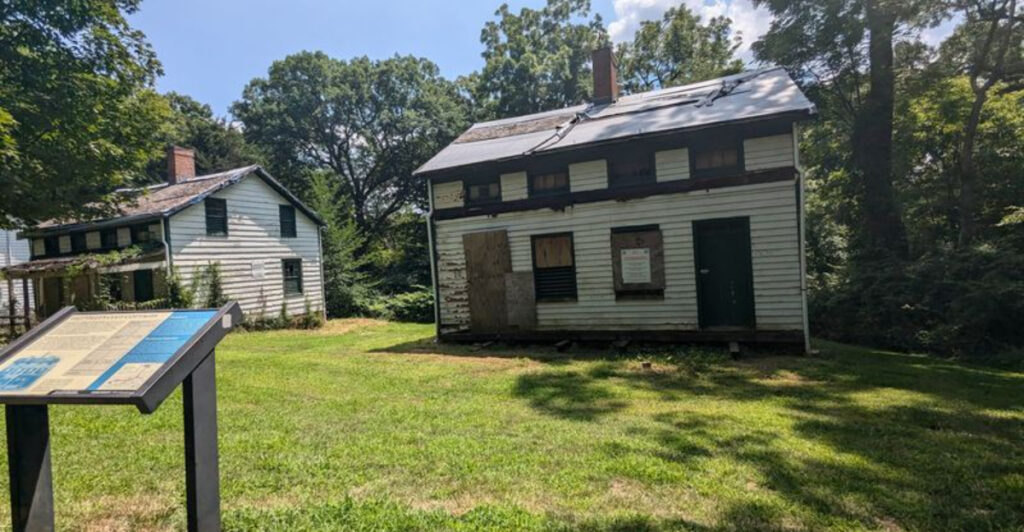
A stone wall in the woods can stop you faster than a neon sign on the boardwalk. One minute you are following a trail, listening to leaves crunch under your shoes, and the next you are staring at a chimney, a foundation, a tunnel, or a mansion staircase that clearly had a whole life before the trees moved in.
New Jersey is full of these strange little interruptions: industrial sites swallowed by the Pine Barrens, old estates hiding above the Hudson, ghost towns tucked behind modern roads, and furnaces that once burned hot enough to shape whole communities. Some are easy walks.
Others feel like the kind of place you hear about from someone’s cousin who “knows the way.” That is exactly the fun. These ruins are not polished museum pieces.
They are clues, and they make every visit feel like the beginning of a story.
1. Van Slyke Castle Ruins – Oakland
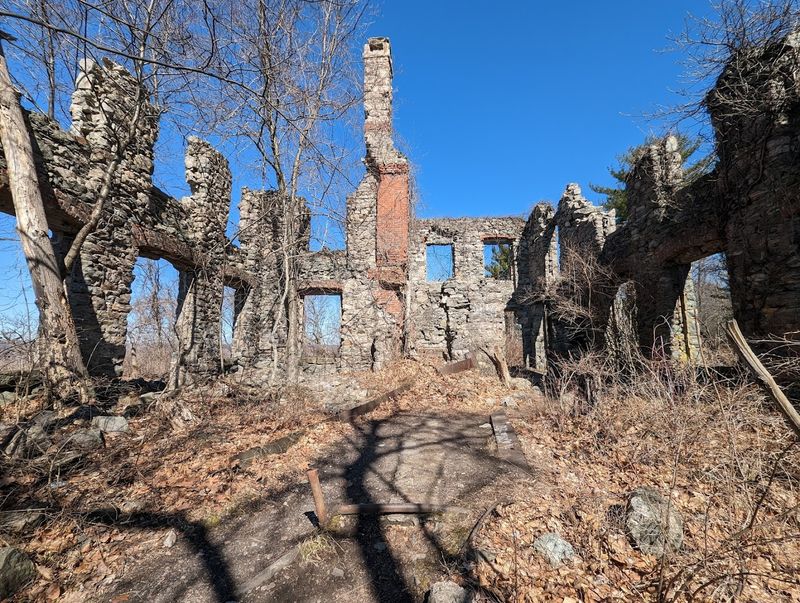
The first glimpse feels almost fake: big stone walls rising out of Ramapo Mountain State Forest like someone started building a castle and then simply walked away. Van Slyke Castle, also known as Foxcroft, is one of North Jersey’s great “wait, this is really here?” hikes.
The ruin sits high above Oakland, and the payoff is not just the crumbling estate itself but the feeling of arriving somewhere that still carries a little drama. The mansion was once a private mountaintop home, and after abandonment and fire, the surviving stonework became part landmark, part local legend.
What makes it worth it is the full experience: the climb, the Ramapo Lake views, the water tower nearby, and that odd mix of elegance and wilderness. You are not walking through a manicured attraction, so sturdy shoes matter, and a trail map is smarter than trusting GPS alone.
Many hikers start from the Ramapo Mountain State Forest upper lot on Skyline Drive, then make a loop that turns the ruins into the centerpiece of a proper woodland outing. Go in fall and the whole place feels cinematic without trying too hard.
2. Brooksbrae Brick Factory – Manchester Township
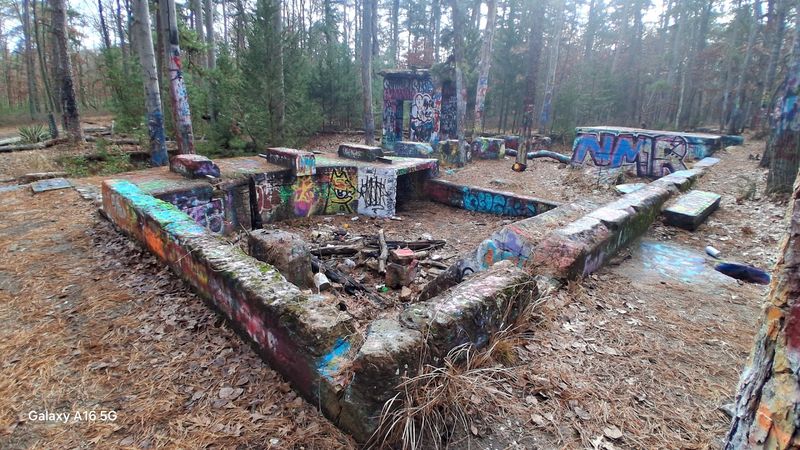
Bright graffiti, broken brickwork, pine needles underfoot, and the sense that the forest has been quietly winning for decades: Brooksbrae Brick Factory has one of the strangest visual personalities on this list.
Hidden in the Manchester Township section of the Pine Barrens, the ruins are tied to the Brooksbrae Terra Cotta Brick Company, an early 20th-century industrial project whose old kilns and production remnants now look more like an open-air art maze than a factory.
It belongs here because it feels less like a single ruin and more like a forgotten industrial campus, with walls, arches, and fragments scattered through the trees. The color is what surprises people first.
Instead of the gray, solemn ruin you might expect, the place has layers of spray paint, tags, and murals that make it feel constantly rewritten. That said, this is not a casual roadside selfie stop.
The area can be tricky to navigate, conditions change, and visitors should be mindful of access, safety, and posted restrictions.
3. Cliffdale Manor Ruins – Alpine
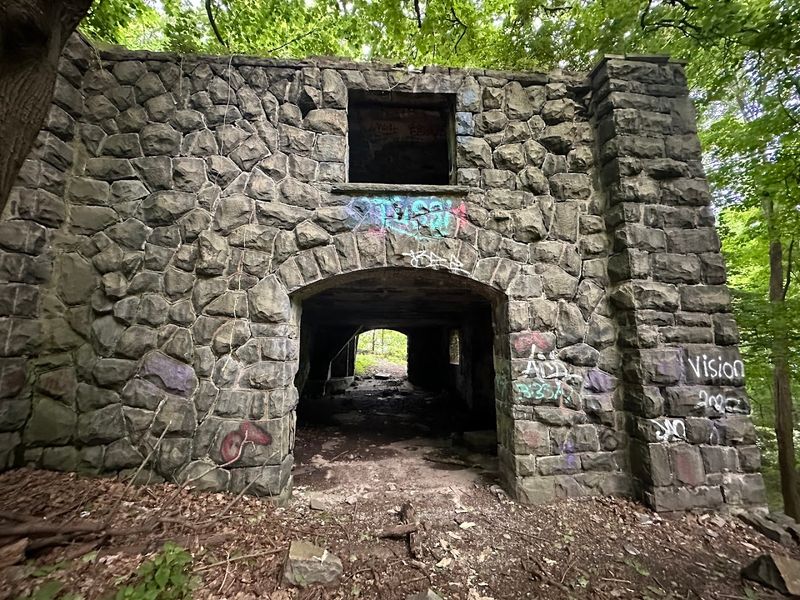
A few steps into the Palisades, the modern world drops away fast. Cliffdale Manor’s ruins sit near the Long Path in Alpine, tucked into the cliffs above the Hudson River, where old stone walls still hint at the estate culture that once lined this dramatic ridge.
The mansion was built in 1911 for George A. Zabriskie, and the remaining foundation has become one of the park’s most memorable hidden historic stops.
The setting does half the work: tall trees, rocky ground, sudden river views, and New York City close enough to feel slightly unreal. What makes Cliffdale especially interesting is how grand it must have been and how quiet it feels now.
You can stand near the remnants and picture a wealthy summer house looking out over the Hudson, then turn around and see nature doing what nature does best: softening the edges, covering the stone, and making the whole thing feel secretive.
It is a great pick for people who like ruins with a walk attached but do not want an all-day expedition.
Parking near Alpine Lookout makes the area fairly approachable, though the trails still deserve real shoes and a little attention. It is elegant, eerie, and surprisingly peaceful.
4. Feltville Deserted Village – Berkeley Heights
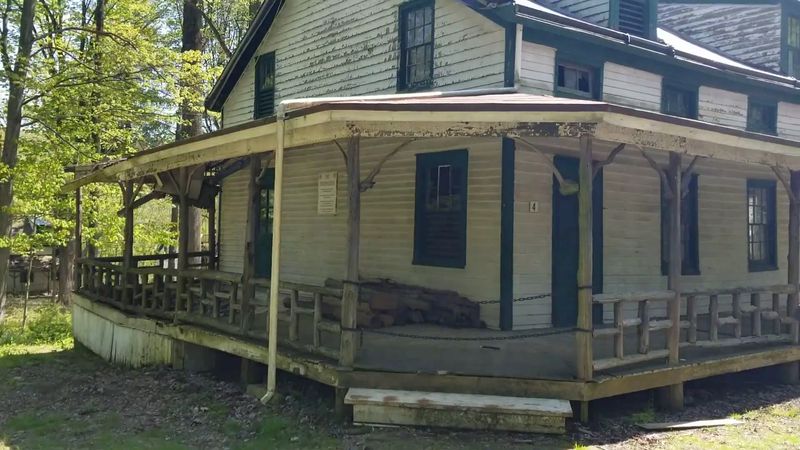
Not every ruin has to be a pile of stones. Feltville is more unsettling because so much of it still looks like a village, just one that has slipped out of normal time.
Set inside Watchung Reservation in Berkeley Heights, the Deserted Village of Feltville-Glenside Park began as an industrial community developed by David Felt in the 1840s, later became a summer resort called Glenside Park, and now survives through cottages, historic structures, archaeological remnants, and wooded paths.
It is one of the most visitor-friendly places on this list, which makes it especially useful for families, history lovers, and anyone who wants mystery without bushwhacking.
The mood is not jump-scare spooky. It is quieter than that.
You walk past old houses, read interpretive signs, notice the forest pressing close, and start wondering how many versions of this place have come and gone. The Blue Brook and surrounding trails add to the feeling that Feltville was never fully abandoned so much as absorbed.
Practical bonus: because it is part of a county reservation, it is easier to plan than many offbeat ruins. Come for a slow stroll, bring a camera, and give yourself time to read the signs.
The story is the attraction here.
5. Jungle Habitat – West Milford
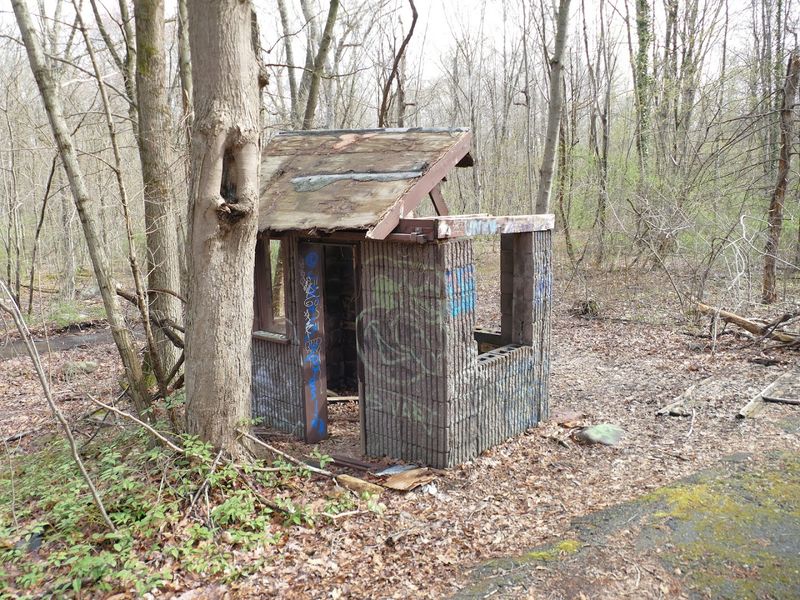
The name still sounds like a roadside promise from another era: Jungle Habitat. In West Milford, the former Warner Bros. safari park opened in 1972 and closed in 1976, leaving behind one of New Jersey’s oddest recreation ghosts.
This was once a place where visitors drove through animal areas and wandered a walk-through section filled with attractions. Today, the appeal is completely different.
The roads, tunnels, platforms, animal-area remnants, and wooded trails make it feel like a theme park after nature repossessed the lease.
It is especially popular with mountain bikers, hikers, and curious locals who grew up hearing some version of “you know there used to be lions up there, right?” What makes Jungle Habitat worth including is the sheer weirdness of the contrast.
It is not an 1800s mill or a romantic stone estate. It is a modern entertainment idea that vanished quickly, then turned into a public outdoor playground with a strange backstory.
The terrain is better for sturdy shoes or a bike than flip-flops, and the site rewards wandering more than rushing. Go in expecting scattered clues rather than one big monument, and it becomes much more fun.
6. Paulinskill Viaduct – Columbia / Knowlton Township
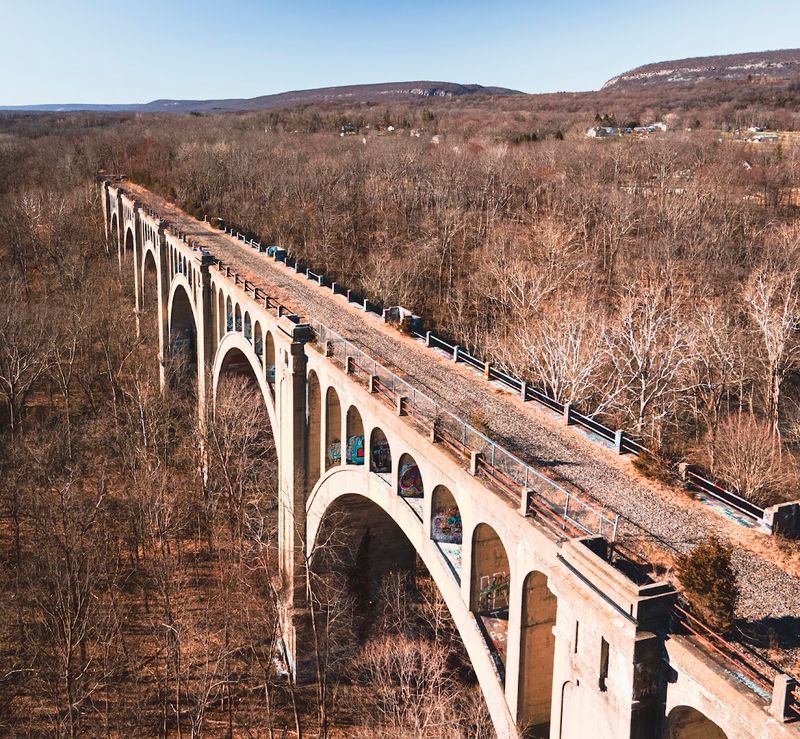
The Paulinskill Viaduct does not hide. It looms.
Stretching across the Paulins Kill near Knowlton Township, this massive reinforced-concrete railroad bridge looks like something built for giants, with huge arches and a scale that still feels bold more than a century later.
Completed as part of the Lackawanna Cut-Off, it was considered one of the largest reinforced concrete structures of its time, and its tracks were later removed after rail service ended.
What makes it mysterious is not that you cannot find it, but that it seems too big to be unused. You look at it and immediately wonder how something so commanding could fall silent.
The viaduct has long attracted photographers, railroad buffs, and curious road-trippers, but it is best appreciated responsibly from safe, legal vantage points rather than treated like a climbable playground.
Its beauty is in the distance: the arches over the valley, the weathered concrete, the way it frames the landscape like an abandoned monument to movement.
In an article full of ruins tucked into forests, Paulinskill brings a different energy. It is industrial, enormous, and almost defiant, a reminder that New Jersey’s forgotten places are not always small.
7. Weymouth Furnace – Mays Landing
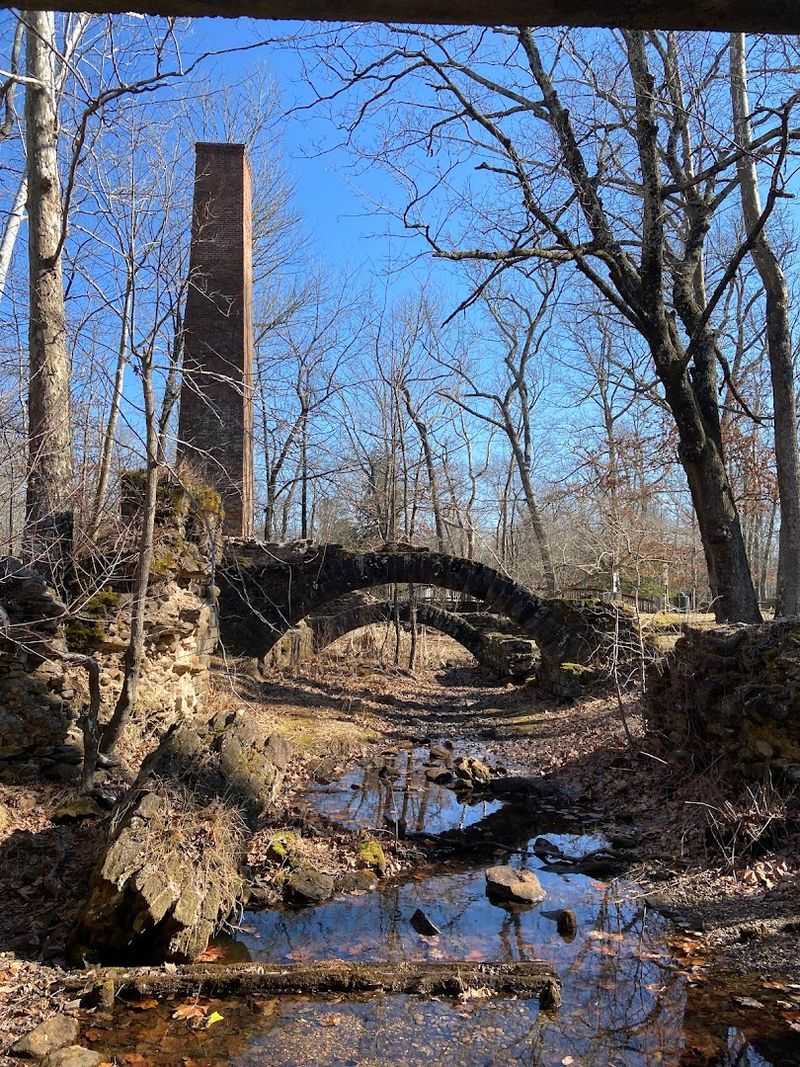
The Great Egg Harbor River gives Weymouth Furnace its mood before you even start thinking about iron. Set near Mays Landing in Atlantic County, the site preserves remnants of an early 1800s iron operation that once used South Jersey’s natural resources to feed a busy furnace and forge complex.
Iron production began in 1802, and the surrounding tract once included far more than the furnace itself, with workers’ houses, mills, a store, a church, and other pieces of a working village. Today, the ruins are quieter: stone, chimney forms, water, trees, and the feeling of a place that used to run hot now cooled into a park setting.
The visit does not need to be complicated. Stop, walk, look closely, and imagine the heat, noise, and labor that once filled the riverbank.
It is peaceful now, but the bones of the place still feel tough.
8. Clinton Furnace – West Milford
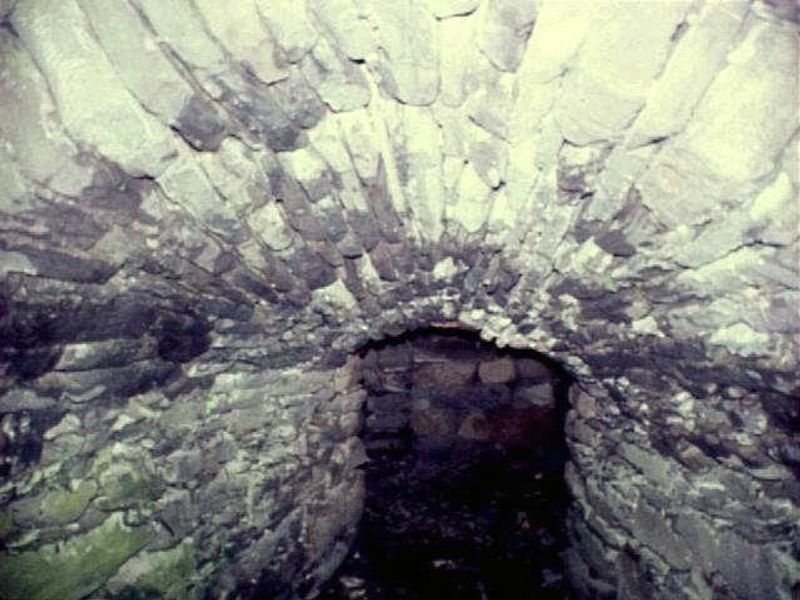
Clinton Road already comes with enough local lore to fill a late-night diner booth, but Clinton Furnace is the real, historic reason to slow down. Built in 1826 in West Milford, the furnace is the last surviving structure from the iron community once known as Clinton, and it was added to the National Register of Historic Places in 1976.
The structure has a blunt, heavy presence, more fortress than ornament, and that is part of its appeal. This was not a pretty estate or a showpiece village.
It was a working industrial furnace, designed for heat, ore, waterpower, and hard labor. What makes it worth including is how easily it gets folded into the myths of Clinton Road, when the actual history is interesting enough on its own.
There is something compelling about seeing a rugged stone stack survive while the community around it disappears from everyday memory. Access can be sensitive because surrounding land includes watershed property, so visitors should respect signs and view the site only from permitted areas.
9. Amatol Ghost Town – Hammonton
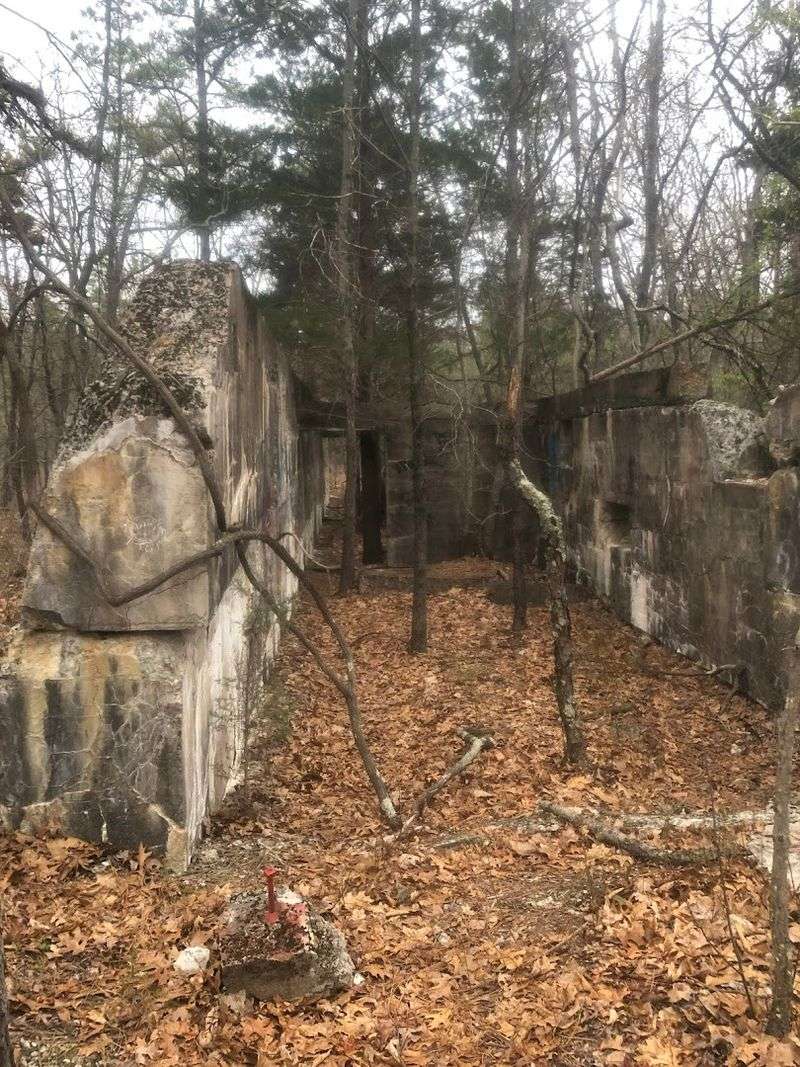
Some ruins are mysterious because they look ancient. Amatol is mysterious because it appeared quickly, served a purpose urgently, and then almost disappeared.
Built during World War I near Hammonton, Amatol was tied to the Atlantic Loading Company and a munitions operation named for the explosive produced there. The town supported thousands of workers, then faded after the war effort ended, leaving roads, foundations, and traces hidden in the Pine Barrens.
That short life gives it a strange energy. This was not a settlement that gradually declined over generations.
It was a wartime boomtown with a built-in expiration date, and now much of it reads more clearly from maps and aerial patterns than from casual wandering.
It is not the easiest ruin for a simple family outing, and readers should be cautious about access and terrain. But as a mystery, it is hard to beat.
A whole town once existed in these woods, and most drivers nearby would never know.
10. Batsto Village – Hammonton
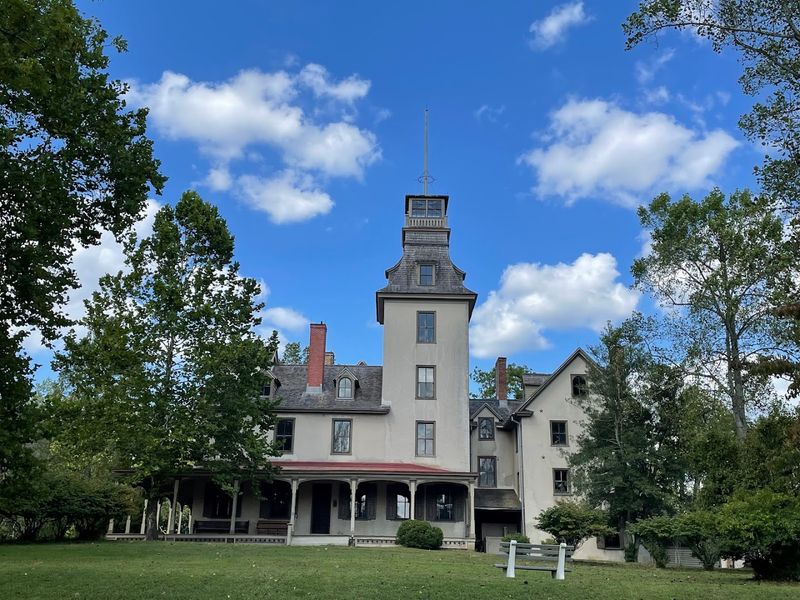
Batsto is the polished elder statesman of New Jersey ruin country. Unlike the more secretive spots on this list, Batsto Village in Wharton State Forest is preserved, interpreted, and easy to explore, but that does not make it any less haunting.
The village dates to 1766 and grew around iron production, later moving through different industrial chapters while the Pinelands slowly framed it in sand roads, cedar water, and pitch pines. What makes Batsto special is that it lets you walk through the remains of a working village without needing to invent the story yourself.
There are historic buildings, paths, a mansion, a post office, and enough preserved detail to make the past feel close. It is less “forbidden ruin” and more “time capsule with weathered edges,” which gives the list needed variety.
The vibe is quiet and Pine Barrens-perfect: sandy paths, dark water, wooden buildings, and the sense that the village is holding its breath between tour groups. It is also one of the easiest places here to recommend practically, with established visitor areas and enough to do for a relaxed half-day.
Bring comfortable shoes, leave time for the trails, and do not rush the small details. Batsto rewards slow looking.
11. Hamburg Paper Mill Ruins – Hamburg
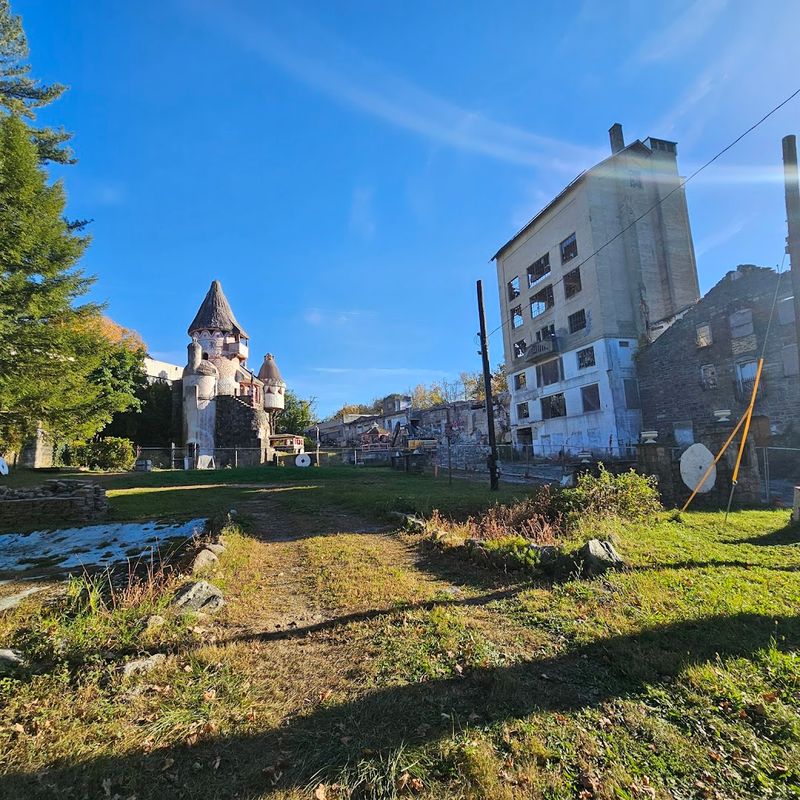
Behind the fairy-tale weirdness of Hamburg’s Gingerbread Castle area, the Hamburg Paper Mill ruins add a rougher industrial shadow.
Also known through its connection to the Union Waxed and Parchment Paper Company, the site still has concrete remains and a smokestack that make it feel like a factory town memory half-hidden behind something from a storybook.
That contrast is exactly why it belongs here. New Jersey has plenty of abandoned industrial spots, but this one has a peculiar neighbor, a layered history, and a look that feels both grim and oddly theatrical.
It is the kind of place that makes people wonder what came first: the industry, the castle, the town identity, or the local stories. The remaining structures are not something to treat casually, and access should always be approached with caution and respect for current property rules.
Still, as a subject, Hamburg Paper Mill is gold. It points to Sussex County’s manufacturing past, when waterpower, rail connections, and mills shaped local growth.
Now the concrete, trees, and surviving stack do the talking. It is not pretty in the postcard sense, but it has texture, and texture is what makes ruins memorable.
12. White Lake Knickerbocker Ice Company & Marl House Ruins – Blairstown
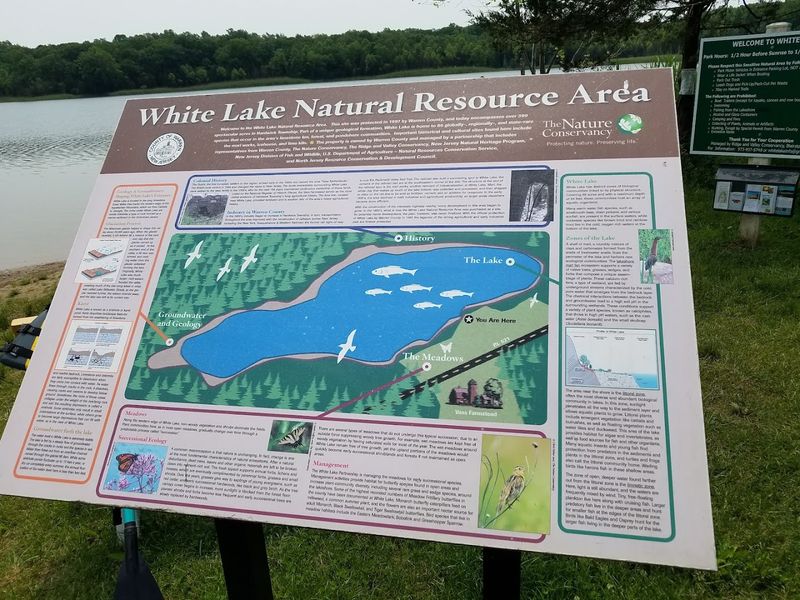
White Lake looks almost too clear for New Jersey, which makes the old industrial ruins nearby feel even stranger. Set in the White Lake Natural Resource Area near Blairstown and Hardwick Township, the lake is known for its pale marl bottom, a chalky material made from shells and clay.
The area also contains remains tied to ice storage and marl processing, including ruins connected with the Knickerbocker Ice Company’s activity on the lake’s south shore. This spot earns its place because it pairs natural beauty with a backstory most visitors do not expect.
You come for clear water, trails, meadows, and quiet views, then find evidence that the landscape was once part of a working operation. In winter, ice could be cut and stored; in other seasons, marl had value for uses like fertilizer and cement.
That practical past gives the ruins a grounded, surprising quality. This is a good option for people who want a mystery with fresh air instead of a creepy mood.
The trails are approachable, the lake is the star, and the ruins add just enough “what happened here?” to make the outing stick in your mind. It is peaceful, pretty, and quietly odd in the best way.