A perfectly normal house in New Jersey can come with a perfectly shocking annual bill, the kind that makes even longtime residents stare at the envelope twice before opening it.
That is the strange tension running through some of the state’s prettiest suburbs right now: leafy streets, walkable downtowns, river views, train stations, beach access, beloved schools, and then a cost of living that keeps inching from comfortable to complicated.
New Jersey’s average residential property tax bill was already over $10,000 in 2025, and in several towns on this list, the average was far higher than that. These are not places people leave because they lack charm.
Quite the opposite. They are places with so much going for them that demand, taxes, insurance, maintenance, commuting costs, and home prices can pile up fast.
For some homeowners, the question becomes less “Do we love it here?” and more “Can we keep making the math work?”
1. Demarest
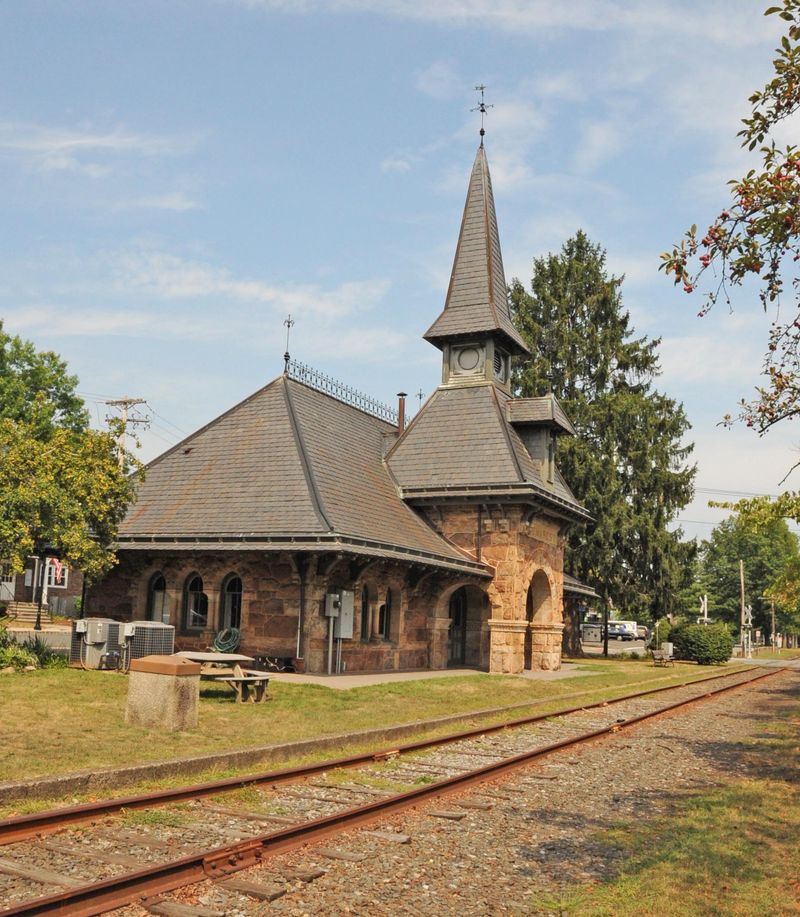
The quiet in Demarest is part of the sales pitch. You get winding residential roads, handsome homes set back from the street, and that polished northern Bergen County feeling where the lawns look like someone measured them with a ruler.
It is the kind of town that appeals to buyers chasing top-tier suburban calm without feeling too far removed from New York City. The tradeoff, of course, is that this calm is not exactly inexpensive.
Demarest posted an average residential tax bill of $26,112 in 2025, with an average sales price just under $1.93 million, which gives you a pretty clear picture of the financial pressure sitting underneath all that curb appeal. What makes it worth including is that Demarest represents the “dream suburb” problem perfectly.
The schools, privacy, and space are major draws, but they also help keep home values high and the cost of staying high. Residents can enjoy small-town routines like walks around the Demarest Nature Center, quick drives to Closter Plaza, and easy access to the rest of the Northern Valley.
Still, for empty nesters, younger families, or anyone whose budget is not growing as quickly as the bills, Demarest can feel like the kind of beautiful place you work very hard to remain in.
2. Rumson
There is a very specific kind of Monmouth County glow in Rumson: river breezes, big old trees, long driveways, boats in the distance, and homes that look like they were designed for golden-hour real estate photos.
Set between the Navesink and Shrewsbury rivers, Rumson has long been one of New Jersey’s signature prestige suburbs, with access to beaches, yacht-club energy, private-school polish, and a quiet confidence that does not need to shout.
But that lifestyle carries a serious price tag. In 2025, the borough’s average residential tax bill was $23,607, while the average sales price topped $2.55 million.
That is not just expensive; it is the kind of expensive that narrows the buyer pool and makes long-term residents think carefully about timing. Rumson is worth including because it shows how even a highly desirable town can become financially awkward for people who already own there.
The day-to-day life is lovely: riverfront drives, easy trips to Red Bank, summer mornings near the shore, and a tucked-away residential feel that still keeps you close to restaurants, schools, and marinas.
Yet when taxes, insurance, upkeep, and home equity all enter the conversation, staying put can become less about loyalty and more about whether the numbers still make sense.
3. Fair Haven
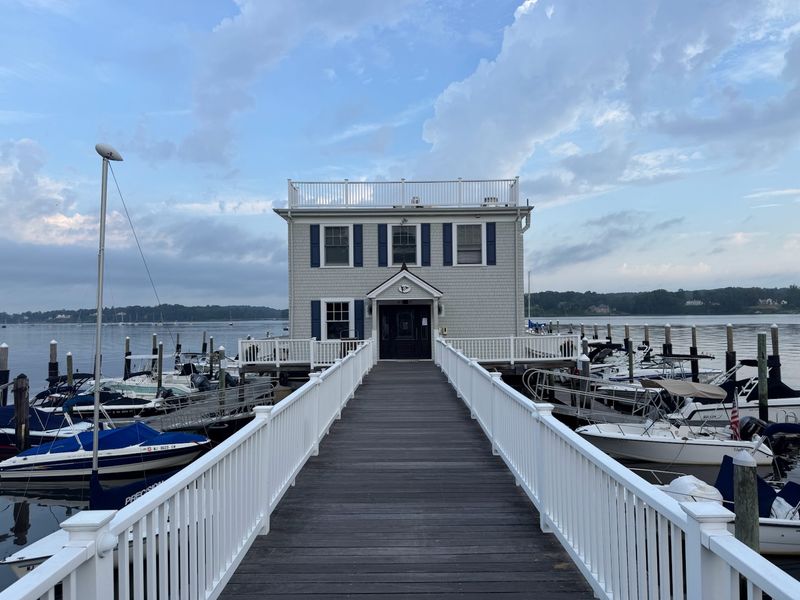
On a sunny afternoon, Fair Haven can feel like someone distilled the best parts of small-town Monmouth County into a few square miles. Kids on bikes, river-area homes, porches with flags, local ballfields, and quick access to Red Bank all give it that settled, neighborly rhythm people spend years trying to find.
It is charming without trying too hard, which is usually when a place becomes very expensive indeed. Fair Haven’s 2025 average residential tax bill was $18,950, and its average sales price was over $1.42 million.
That combination puts the town squarely in the category of suburbs where the lifestyle is deeply appealing but increasingly hard to enter, and sometimes hard to keep carrying. What makes Fair Haven stand out is the way it blends family-town comfort with high-demand location.
You are close to the Navesink River, close to beaches, close to restaurants and arts in Red Bank, and still wrapped in a borough that feels intimate. That is a fantastic setup for daily life, but it also creates pressure from every direction.
Buyers pay for schools, location, and charm; owners pay to maintain the privilege. For families stretching to get in, or longtime residents considering whether to downsize, Fair Haven is exactly the kind of town where “worth it” can still come with a very loud calculator.
4. Little Silver
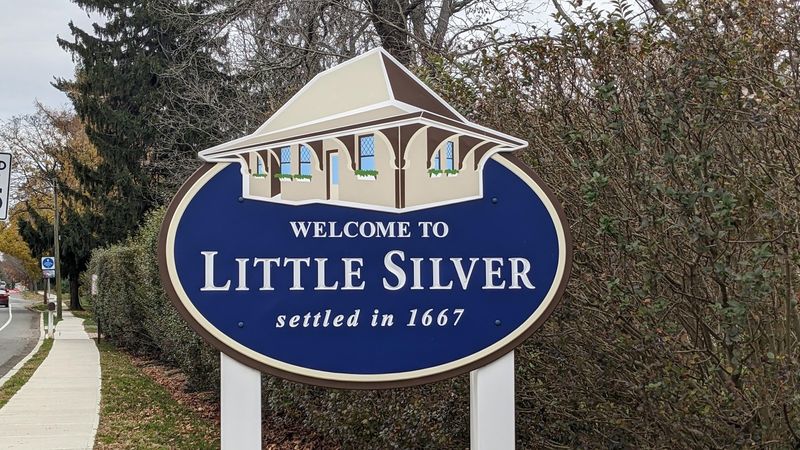
The train station tells you a lot about Little Silver before you even get to the side streets. This is a town built for people who want a true residential feel without giving up a practical connection to the city, the Shore, or the rest of Monmouth County.
The homes are handsome, the roads feel settled, and the pace is quieter than neighboring Red Bank while still keeping you close to restaurants, shopping, and the beach. That balance is exactly why Little Silver has become so desirable, and why it belongs on this list.
In 2025, the borough’s average residential tax bill was $16,481, with an average sales price of about $1.23 million. The appeal is easy to understand.
You can live near a train, get to the river, reach the Shore quickly, and still feel like you are in a classic suburban pocket. The problem is that every one of those advantages adds weight to the price.
For commuters, the train is a blessing; for buyers, it is also part of the premium. For families, the town’s reputation is a draw; for homeowners, it helps keep demand and costs elevated.
Little Silver is not flashy, and that is part of its charm. But the quietest towns are often the ones where the financial squeeze sneaks up the fastest.
5. Madison
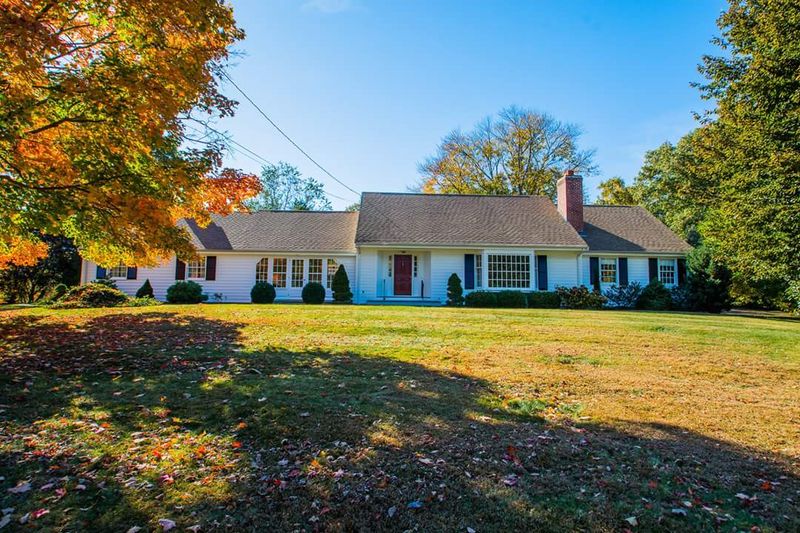
A downtown with a train station, a college-town undercurrent, and enough restaurants and coffee stops to make errands feel pleasant will always have a certain pull. Madison has all of that, plus the leafy Morris County setting that makes it feel refined without being stiff.
Known as the Rose City, it has the kind of Main Street that can make people imagine an easier version of suburban life: walk to dinner, catch the train, run into neighbors, repeat. But Madison’s desirability has a real cost attached.
The borough’s average residential tax bill reached $15,897 in 2025, and the average sales price was about $1.29 million. That puts Madison in the sweet-but-stinging category: a place that offers a lot of what people want, then asks them to pay dearly for it.
Its inclusion here is less about decline than pressure. Madison still has plenty of life, from Drew University’s campus presence to a downtown that works for date nights, families, commuters, and weekend wanderers.
The challenge is that a town this convenient rarely stays affordable for long. Add property taxes, rail-commuter costs, home maintenance, and high purchase prices, and the classic suburban package starts looking more exclusive.
Madison remains one of New Jersey’s most appealing small suburbs, but it is also a reminder that walkability and charm do not come with a discount sticker.
6. North Haledon
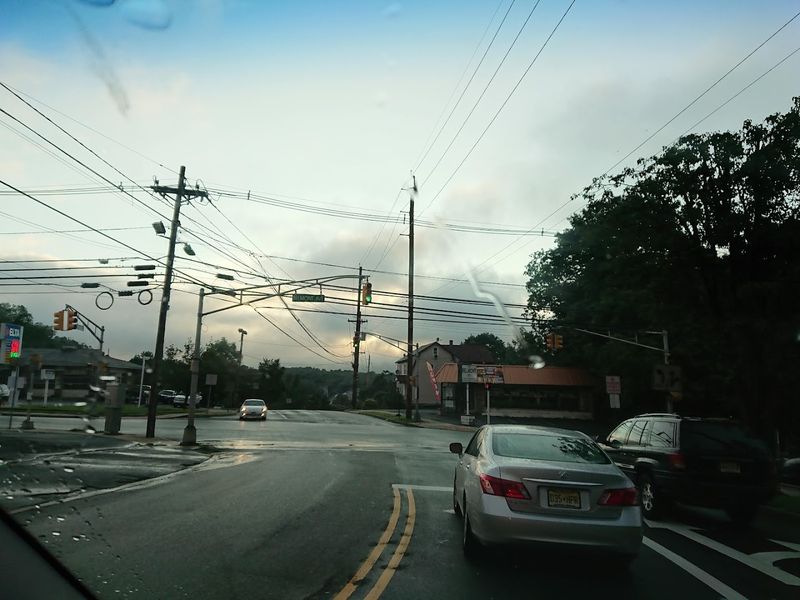
Look west from parts of North Haledon and the landscape starts to feel a little softer, a little hillier, and a little less like the dense commuter belt people imagine when they picture Passaic County.
This borough has always had a quieter personality than its larger neighbors, with residential streets, pockets of open-feeling space, and access to nearby parks and schools that give it a comfortable suburban rhythm.
It is not trying to be trendy, and that is part of the appeal. Still, the cost of maintaining that calm has climbed.
North Haledon’s average residential tax bill was $12,223 in 2025, with an average sales price just under $697,000. Compared with some towns on this list, that may sound almost restrained, but affordability is relative.
For buyers moving out from denser areas, North Haledon can feel like a step toward space. For households already dealing with higher grocery bills, insurance costs, and commuting expenses, the yearly tax load still matters.
The town is worth including because it shows the squeeze beyond New Jersey’s most famous luxury suburbs. Even places that feel steady and middle-to-upper-middle suburban are becoming harder to hold onto.
The reward is real: quieter blocks, access to High Mountain-area recreation nearby, and a more relaxed pace. The question is whether that pace still comes at a price regular families can absorb.
7. Manasquan
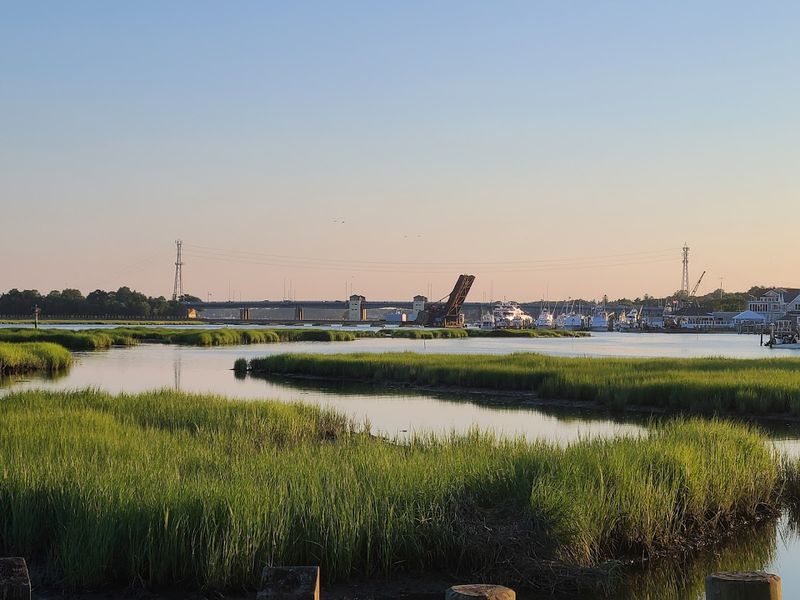
Salt air has a way of making a price tag seem negotiable until the tax bill, insurance renewal, and summer traffic all arrive at once. Manasquan is one of those Shore towns that feels genuinely lived-in, not just visited.
It has a real downtown, a beach scene, a train station, an inlet, surf culture, restaurants, and the kind of year-round community that separates it from places that go sleepy the moment Labor Day ends. That mix is exactly why it is expensive.
In 2025, Manasquan’s average residential tax bill was $11,619, and the average sales price was over $1.41 million. The town deserves a spot here because Shore living has become one of New Jersey’s sharpest affordability tests.
It is not just the mortgage or the taxes; it is flood considerations, maintenance, parking, seasonal crowds, and the premium attached to being close to the water. Yet Manasquan keeps pulling people in because the lifestyle is hard to duplicate.
Grab coffee downtown, walk to the beach, watch boats at the inlet, or catch a train when you need to head north. It is charming because it functions as both a beach town and a hometown.
But that dual identity also keeps demand high, making it harder for regular residents to stay rooted in a place that increasingly prices like a prize.
8. Kearny
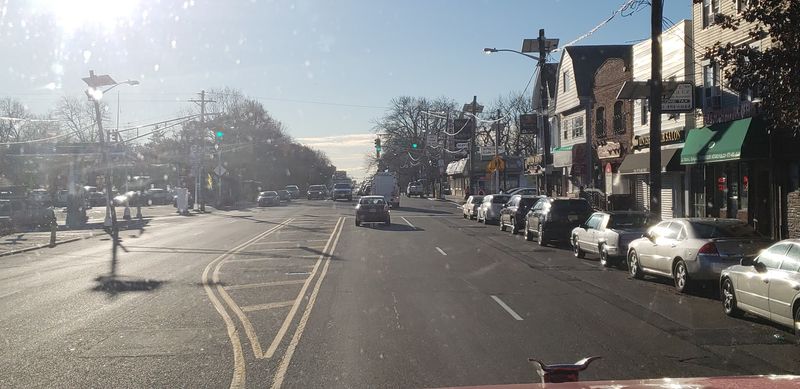
The rhythm on Kearny Avenue is different from the polished quiet of some suburbs on this list, and that is exactly what makes Kearny interesting. It has soccer-town energy, old West Hudson bones, a mix of long-established communities, and a location that puts Newark, Jersey City, Harrison, and Manhattan within practical reach.
Kearny is not a postcard suburb; it is a working, commuting, eating, shopping, school-running kind of place. But even here, the affordability squeeze is real.
The town’s average residential tax bill was $10,749 in 2025, with an average sales price near $580,000. For many buyers, Kearny once looked like a more accessible alternative to pricier Hudson County and Bergen County towns.
That is still part of its appeal, but “more accessible” does not mean cheap. Taxes, home prices, and the cost of commuting can add up quickly, especially for families trying to stay close to jobs in the urban core without paying Hoboken or Jersey City prices.
Kearny’s inclusion matters because it broadens the story beyond mansion-lined suburbs. Rising suburban costs are not only pushing at the top end; they are squeezing practical commuter towns too.
The upside is strong: neighborhood restaurants, parks, schools, and a location that works hard. The downside is that working hard is increasingly required just to keep up.
9. Atlantic Highlands
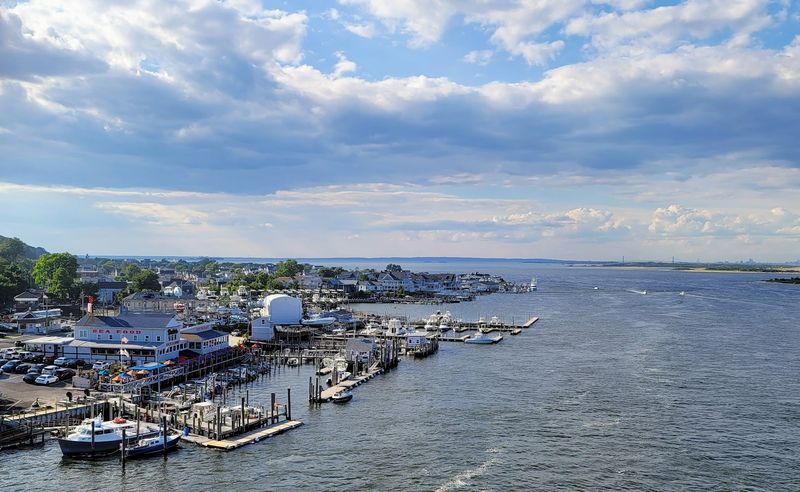
The view from Atlantic Highlands can make even a very serious adult briefly consider becoming a full-time bench sitter. Between the marina, the hills, the New York skyline glimpses, and the quick access to Sandy Hook, this Monmouth County borough has a setting that feels almost unfair.
It is smaller and more tucked-away than some Shore towns, with a downtown that feels local rather than overproduced. That is the magic.
It is also the problem, because magical locations tend to get discovered and repriced. Atlantic Highlands had an average residential tax bill of $10,481 in 2025, with an average sales price around $964,000.
What makes it worth including is the way it combines coastal charm with commuter usefulness, especially for people drawn to ferry access and a Shore lifestyle that still connects to the New York orbit.
You can hike or take in the view at Mount Mitchill, head to the marina, explore First Avenue, or be at Sandy Hook quickly when the beach mood hits.
But hillside homes, older houses, storm considerations, and coastal insurance can complicate the budget. Atlantic Highlands is not the most expensive town on this list, but it is one of the clearest examples of how scenic value turns into financial pressure.
People love it because it feels special. Staying there can require a budget that is special too.
10. Red Bank
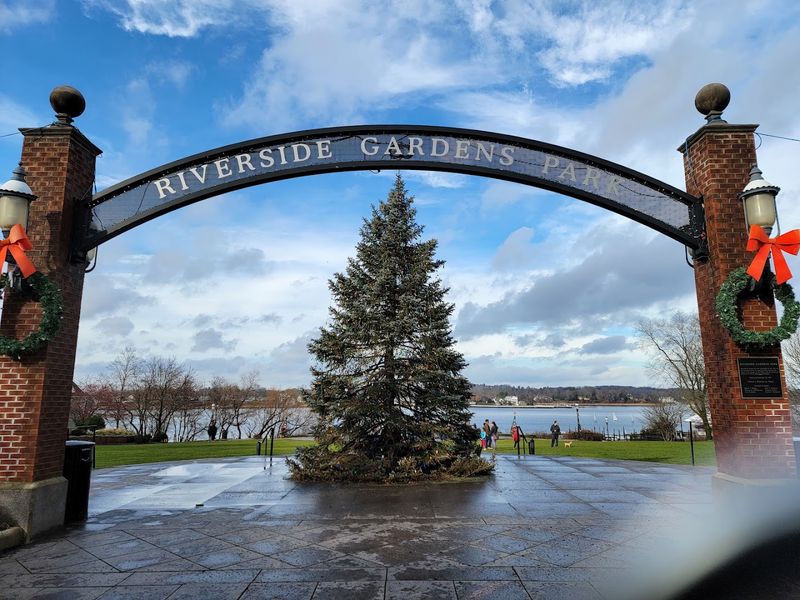
A night out in Red Bank can start with dinner, drift into a show, and end with a walk past storefronts that still make the town feel like a real downtown instead of a lifestyle center. That is Red Bank’s advantage: it has pulse.
Restaurants, theaters, shops, apartments, older homes, river access, and a train station all sit close enough together to make the town feel unusually walkable for New Jersey. But walkability is no longer the affordable alternative it once sounded like.
In 2025, Red Bank’s average residential tax bill was $10,937, and the average sales price was about $694,000. Compared with Rumson or Fair Haven, that price point may seem more approachable, but Red Bank’s appeal brings its own pressure.
Buyers who want culture without giving up suburban access look here. Renters who want nightlife look here.
Empty nesters who want less yard and more restaurants look here. That kind of broad demand can make the town feel competitive from every angle.
Red Bank belongs on this list because it shows how expensive suburban living is not only about big lawns and quiet cul-de-sacs. Sometimes the premium is for convenience, personality, and the ability to do more without getting in the car.
It remains one of New Jersey’s best downtown towns, but that popularity makes holding onto a place there increasingly costly.
11. Hackettstown
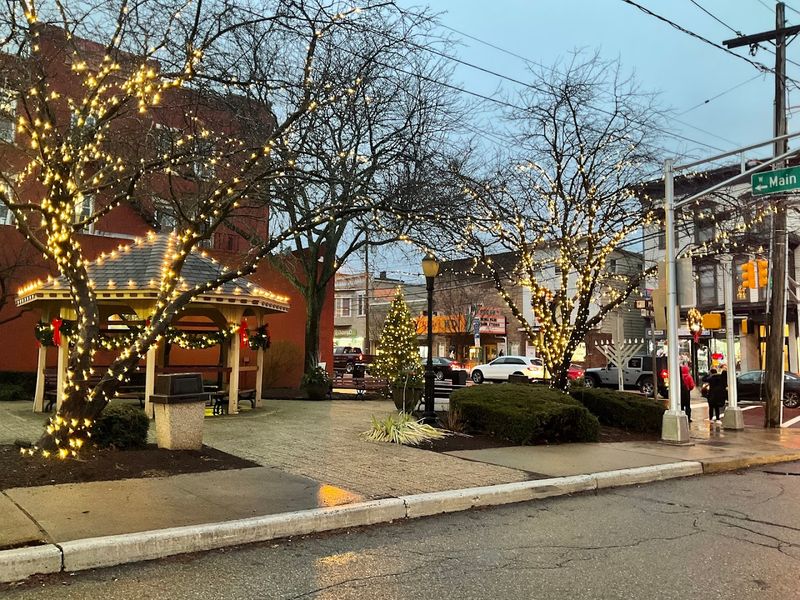
The smell of chocolate has long been part of Hackettstown’s local mythology, thanks to the town’s Mars Wrigley presence, but the town is more than one sweet association.
It has a classic Warren County downtown, Centenary University, access to train service, nearby farms, breweries, and a western New Jersey pace that can feel refreshing after time spent closer to the Turnpike corridor.
Hackettstown often attracts people looking for relative value, which is why its place on this list is especially telling. In 2025, the town’s average residential tax bill was $9,665, with an average sales price around $419,000.
Those numbers are lower than many towns here, but the squeeze can still be real because income, commuting distance, and everyday costs all matter.
A household priced out of Morris, Bergen, or central Monmouth may look west and find Hackettstown appealing, but then face long commutes, rising home competition, and taxes that still take a serious bite.
The town is worth including because it represents the “next stop” problem. Places that once felt like affordable alternatives become more expensive as buyers push farther out.
The good news is that Hackettstown offers character, not just cheaper square footage. The challenge is that character plus relative affordability rarely stays hidden for long in New Jersey.
12. Neptune City
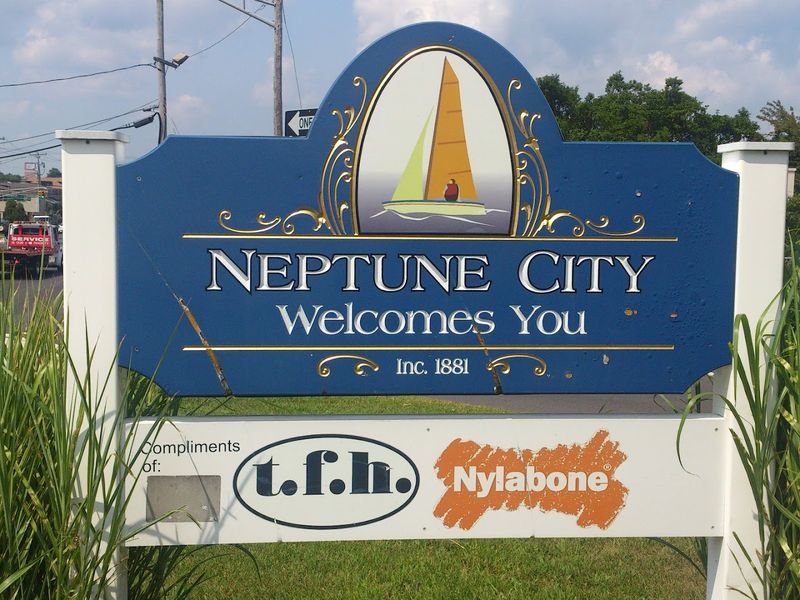
Shark River gives Neptune City a softer edge, the kind of waterfront-adjacent feel that makes a small town seem bigger in possibility than it is on a map. It sits near Bradley Beach, Avon, Belmar, and Neptune Township, which means residents are close to the Shore without necessarily living in the most famous beach ZIP code.
That in-between position is a huge part of its appeal. It can feel more modest and neighborly than some coastal neighbors, yet it still benefits from proximity to beaches, restaurants, marinas, and Shore-town weekends.
In 2025, Neptune City’s average residential tax bill was $9,020, with an average sales price around $545,000. Again, compared with the most expensive towns on this list, that might sound manageable.
But for a small borough near the water, costs can stack up in ways that make residents pay close attention. Home insurance, maintenance on older properties, summer congestion, and the broader rise in Shore-area demand all play a part.
Neptune City belongs here because it shows how affordability pressure spreads into smaller, less flashy communities. The vibe is not grand; it is practical, local, and close to everything people love about the Shore.
That is exactly why it can become difficult to hold onto. When nearby beach towns get pricier, the towns just inland or just across the water start feeling the heat too.
13. Highlands
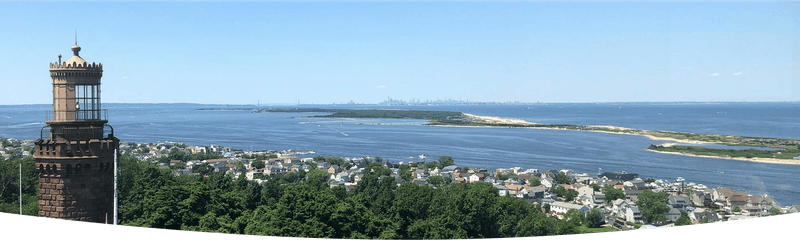
Few towns in New Jersey deliver scenery with as much drama as Highlands. You get steep streets, marina views, seafood spots, Sandy Hook practically next door, and the Twin Lights watching over the whole scene like a reminder that this place has always been tied to the water.
It feels scrappy, historic, salty, and spectacular all at once. Highlands has never had the polished sameness of some Shore suburbs, which is part of why people fall for it.
But coastal affordability is complicated, and Highlands knows that better than most. In 2025, the borough’s average residential tax bill was $8,985, with an average sales price around $646,500.
The tax number may be lower than many towns on this list, but the full cost of living near the water can be much larger than a single line item. Flood risk, insurance, repairs, storm resilience, parking, and seasonal demand all matter.
Highlands is worth including because it shows that “expensive to hold onto” does not always mean mansion prices. Sometimes it means a town with real working-class roots getting pulled into the orbit of Shore demand and commuter convenience.
The reward is obvious: seafood dinners, ferry access nearby, beach days at Sandy Hook, and views that can stop you mid-errand. The cost is figuring out how to stay in a place that more people keep noticing.