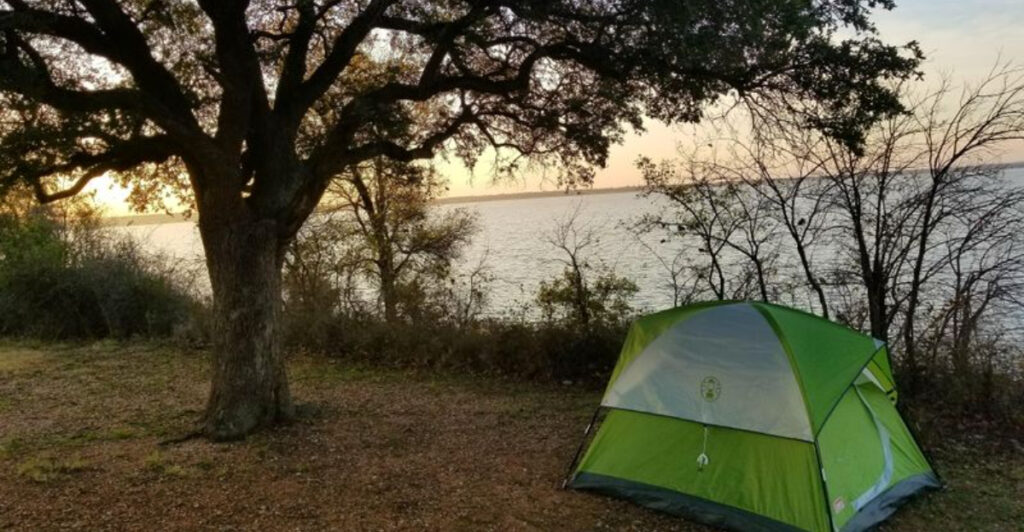
Summer in Texas doesn’t last forever, even though the heat might make you think otherwise. Before the season wraps up and the cooler months roll in, there’s still time to squeeze in one more adventure. From crystal-clear swimming holes to sandy beaches and shaded river banks, the Lone Star State offers plenty of ways to make the most of these sunny days.
1. Frio River (Concan)
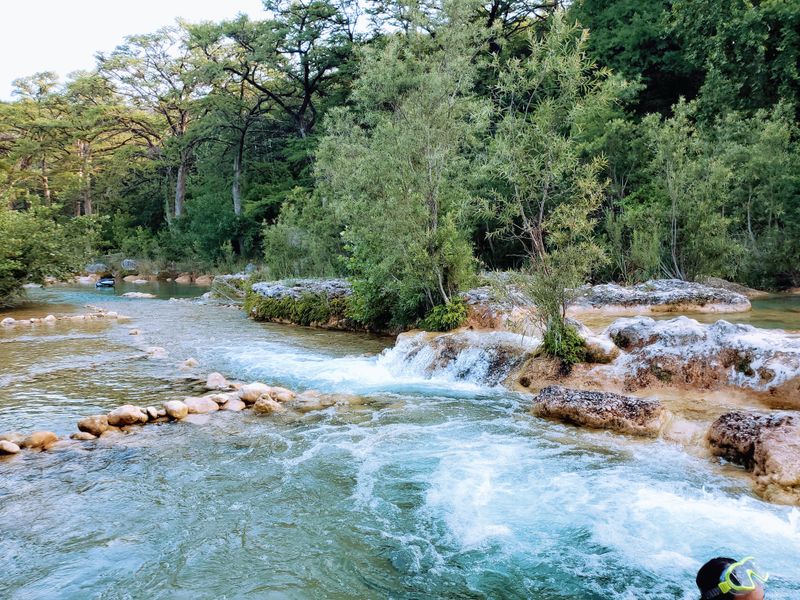
Cold water rushes over smooth limestone, creating natural pools that feel like nature’s air conditioning. The Frio River winds through the Hill Country with water so clear you can count the rocks on the bottom, even in the deeper spots. Locals have been coming here for generations, and once you dip your toes in, you’ll understand why.
Tubing is the main event, with rental spots lining the highway ready to set you up with everything you need. The float takes a few hours depending on which section you choose, giving you plenty of time to soak up the sun and cool off whenever the heat gets too intense. Some stretches move fast over shallow rapids, while others slow down into calm pools perfect for just floating and chatting.
Camping options range from basic riverside spots to full-service RV parks with all the amenities. Many families rent cabins right on the water, waking up to the sound of the river and jumping in before breakfast. Evening brings fireflies and the kind of quiet you don’t get in the city.
Pack a cooler with snacks and drinks because once you’re on the river, you’re committed to the route. Waterproof bags are essential for phones and keys. The sun reflects off the water with extra intensity, so sunscreen needs reapplying more often than you’d think.
Weekends get crowded, especially during peak summer months, but weekdays offer a more peaceful experience. Early mornings are magical, with mist rising off the cool water and wildlife more active before the crowds arrive. The temperature difference between the air and water can be shocking at first, but your body adjusts quickly.
Local outfitters know the river conditions daily and can recommend the best sections based on current water levels. Some areas have rope swings and natural diving spots that older kids and adults love. The whole experience feels like stepping back to simpler times when entertainment meant a river, good company, and a whole lot of sunshine.
2. South Padre Island (South Padre Island)
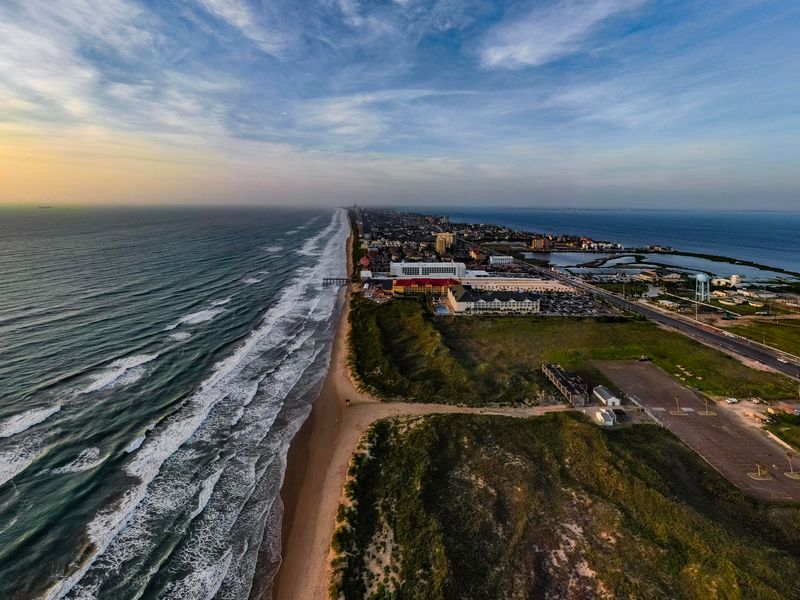
Miles of sandy beach stretch along the Gulf Coast, where the water shifts from green to blue depending on the light. South Padre sits at the southern tip of Texas, separated from the mainland by the Laguna Madre. This barrier island has perfected the beach vacation formula with enough activities to fill a week or enough space to do absolutely nothing but read and nap.
Water sports dominate the scene, from jet skiing and parasailing to paddleboarding in the calmer bay waters. Fishing charters leave early morning, returning with coolers full of redfish and speckled trout. The island also serves as a gateway to dolphin watching tours that almost guarantee sightings.
Beyond the beach, Sea Turtle Inc. rescues and rehabilitates injured sea turtles, offering educational tours that kids and adults find fascinating. The nature center provides a break from the sun while teaching about coastal ecosystems. Birders flock here during migration seasons when rare species stop to rest.
Accommodations range from budget motels to high-rise condos with Gulf views and resort amenities. Many visitors prefer renting a beach house where you can walk straight from your door to the sand. The island is compact enough that most places are within a short drive or bike ride.
Restaurants serve fresh seafood that was swimming hours before it hit your plate. Casual spots with outdoor seating let you eat in sandy feet and swimsuits. Local favorites include blackened redfish tacos and shrimp boiled with potatoes and corn.
Evening brings spectacular sunsets over the bay side, with pink and orange skies reflecting on calm water. The beach stays lively after dark with bonfires and live music at various venues. Summer nights here feel tropical, with warm breezes and the constant sound of waves.
Traffic on the single causeway connecting the island to the mainland can back up during peak times, so plan accordingly. Parking near popular beach access points fills quickly on weekends. Morning beach walks before the crowds arrive offer the best shelling and a peaceful start to the day.
3. Chalk Bluff Park (Uvalde)
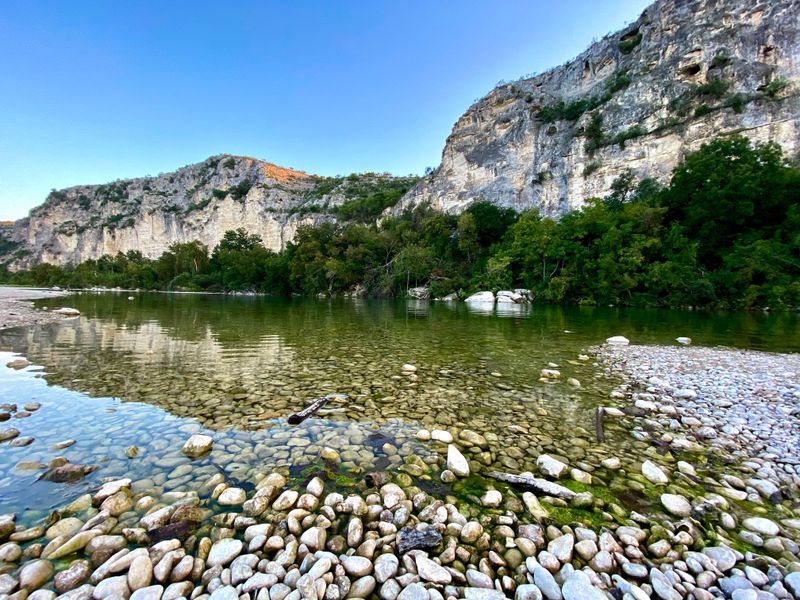
White limestone cliffs rise above the Nueces River, creating a dramatic backdrop for one of Texas’s best-kept swimming secrets. Chalk Bluff Park sits just outside Uvalde, where the river carves through rock layers that have been forming for millions of years. The water here runs clear and cool, fed by springs that keep temperatures refreshing even during the hottest months.
Swimming areas vary in depth, with shallow sections perfect for younger kids and deeper pools where teenagers practice their diving form off the rocks. The current stays gentle in most spots, making it safe for families who want to float without the intensity of faster rivers. Natural formations create little coves and quiet areas away from the main swimming zone.
Pavilions with picnic tables provide shaded spots for lunch and rest breaks between swimming sessions. Grills are available for those who want to make a full day of it, cooking burgers while kids play in the water. The park maintains clean facilities including restrooms and changing areas.
Fishing is allowed in designated areas, with catfish and bass being the most common catches. Some visitors bring kayaks or canoes to explore quieter stretches of the river beyond the main swimming area. The park’s layout makes it easy to find your own space even on busier days.
History buffs appreciate the geological significance of the chalk formations that give the park its name. These white bluffs contain fossils and show distinct layers from different time periods. Interpretive signs explain the area’s formation and the role the river played in shaping the landscape.
Summer weekends attract local families who consider this their go-to spot for beating the heat. Weekday visits offer more solitude and better chances of spotting wildlife like herons and turtles along the riverbanks. Early morning and late afternoon provide the best light for photography against those striking white cliffs.
Entry fees are minimal, making this an affordable option for families on a budget. The park opens early and closes at dusk, giving plenty of time to enjoy the water. Regular visitors recommend bringing water shoes since some areas have rocky bottoms that can be uncomfortable for bare feet.
4. Comal River (New Braunfels)
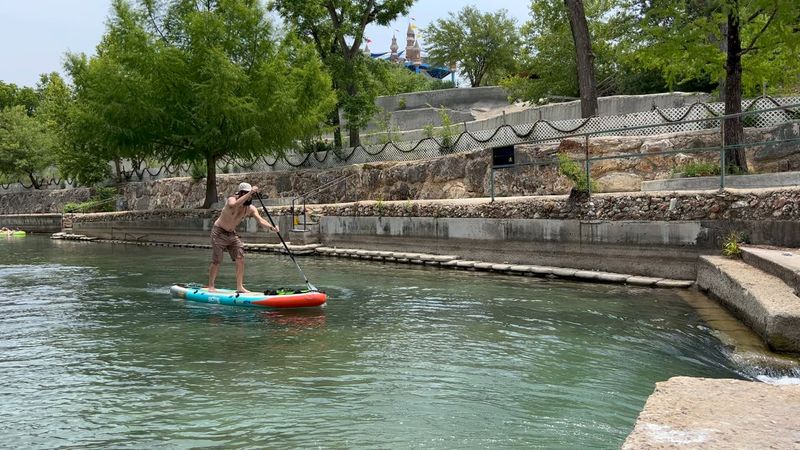
Spring-fed water maintains a constant temperature year-round, making the Comal River one of the shortest rivers in the United States but definitely one of the most popular. Starting at Comal Springs in Landa Park, this river flows just 2.5 miles before joining the Guadalupe. That short distance packs in more fun per foot than seems possible, with tube rentals, riverside restaurants, and countless access points.
Tubing culture here has evolved into a full-blown tradition, with outfitters offering everything from basic tubes to deluxe floating coolers and multi-person rafts. The float typically takes two to three hours, though you can extend it by stopping at one of the many riverside establishments. Some sections move quickly over small chutes and rapids, while others meander slowly through neighborhoods where residents wave from their backyard docks.
Landa Park serves as the river’s headwaters and offers swimming areas, miniature golf, and a small amusement park. The springs pump out millions of gallons daily, creating crystal-clear pools that stay a constant 72 degrees. Families often start their day here before heading downstream.
Private property lines much of the river, but public access points and tube chutes keep the experience accessible. The Chute, a popular spot, creates a small waterfall effect where tubers can ride down repeatedly. Prince Solms Park offers another access point with parking and facilities.
Local ordinances prohibit disposable containers on the river, so plan to bring reusable options for drinks and snacks. This rule helps keep the water clean and reduces litter that once plagued the river. Most outfitters provide waterproof containers that meet these requirements.
New Braunfels’s German heritage shows in the riverside beer gardens and restaurants serving bratwurst and schnitzel. Stopping mid-float for lunch and a cold drink has become part of the experience. Some spots have rope lines where you can tie up your tube while you eat.
Summer weekends bring massive crowds, with thousands of people floating simultaneously. The scene can feel like a party, with music playing from portable speakers and groups celebrating everything from birthdays to bachelor parties. For a calmer experience, weekday mornings offer the same beautiful water with a fraction of the people.
5. Blue Hole Regional Park (Wimberley)
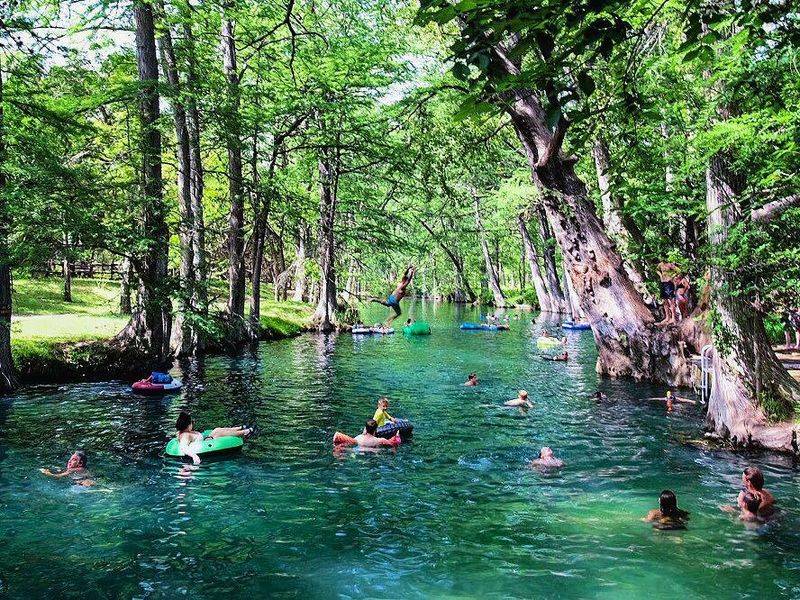
A natural pool carved by Cypress Creek over thousands of years creates one of the most photographed swimming spots in Central Texas. Blue Hole lives up to its name with water that shifts from emerald green in the shallows to deep sapphire in the center. Limestone walls surround the swimming area, and massive cypress trees provide shade along the banks.
The park limits daily visitors through a reservation system, ensuring the area never gets overcrowded. This policy keeps the experience peaceful and helps preserve the natural environment. Reservations open online months in advance and fill quickly for summer weekends, so planning ahead is essential.
Swimming areas accommodate different comfort levels, with shallow wading spots for young children and deeper sections where confident swimmers can really stretch out. The water stays cool year-round thanks to underground springs feeding the creek. On hot summer days, that initial plunge takes your breath away, but your body adjusts within minutes.
Rope swings hang from sturdy tree branches, offering brave souls a chance to swing out over the water before letting go. Watching people work up the courage and then finally take the leap provides entertainment even if you’re not participating. The splash zone below stays clear as swimmers give jumpers plenty of room.
Trails wind through the park beyond the swimming area, following the creek through native vegetation. These paths offer a chance to spot wildlife and explore the Hill Country ecosystem. Benches placed at scenic overlooks provide rest stops with views of the water below.
Picnic areas with tables and grills let families make a full day of their visit. The park provides restrooms and changing facilities, though they’re basic compared to more developed recreation areas. Most visitors bring everything they need in coolers and backpacks.
Photography rules limit commercial shoots but allow personal photos, and people take full advantage. The combination of clear water, natural rock formations, and dappled sunlight through the trees creates stunning images. Golden hour, just before sunset, offers the best lighting.
No lifeguards patrol the area, so parents need to watch children closely. The deepest sections can be over your head, and the underwater terrain includes rocks and roots. Water shoes help protect feet from sharp edges and provide better traction on slippery surfaces.
6. Inks Lake State Park (Burnet)
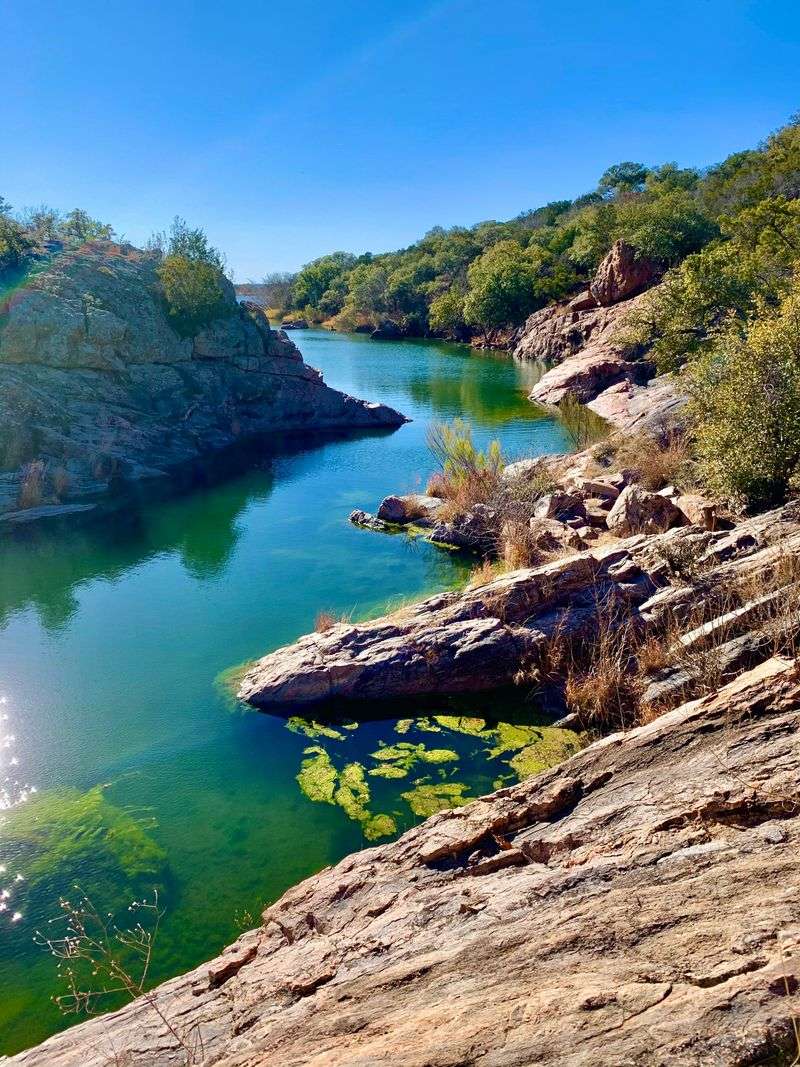
Pink granite boulders line the shore of this Highland Lakes gem, creating a landscape that looks more like the coast of Maine than Central Texas. Inks Lake formed when the Colorado River was dammed in the 1930s, and unlike other lakes in the chain, this one maintains a relatively constant level year-round. That stability makes it reliable for water activities regardless of drought conditions affecting other areas.
The Devil’s Waterhole swimming area features a natural pool surrounded by massive rock formations. Cliff jumping from various heights attracts thrill-seekers, though park rangers monitor to ensure safety rules are followed. The deepest section allows for impressive plunges, while smaller rocks provide options for those wanting a less extreme experience.
Hiking trails crisscross the park, with the most popular being the four-mile loop around the lake. Along the way, you’ll encounter scenic overlooks, quiet coves, and diverse plant life adapted to the rocky terrain. Spring wildflowers paint the hillsides in vibrant colors, while summer brings intense heat that makes the lake even more appealing.
Camping options include waterfront sites where you can literally roll out of your tent and into the lake. RV sites offer full hookups, and screened shelters provide a middle ground between tent camping and cabin comfort. Reservations are strongly recommended, especially for summer weekends when the park reaches capacity.
Boating and fishing draw people who prefer being on the water rather than in it. The lake contains bass, catfish, and crappie, with fishing from shore or boat both producing catches. Kayak and paddleboard rentals are available if you don’t have your own equipment.
The park’s geology makes it unique among Texas state parks, with exposed rock formations telling the story of ancient volcanic activity. Educational programs offered by rangers explain the area’s natural and human history. Night sky programs take advantage of relatively dark skies away from city lights.
Day-use fees are reasonable, and an annual state parks pass quickly pays for itself if you visit multiple times. The park maintains clean facilities including restrooms, showers, and a small store with basic supplies. Cell service can be spotty, which many visitors consider a feature rather than a problem, allowing them to truly disconnect.
7. Barton Springs Pool (Austin)
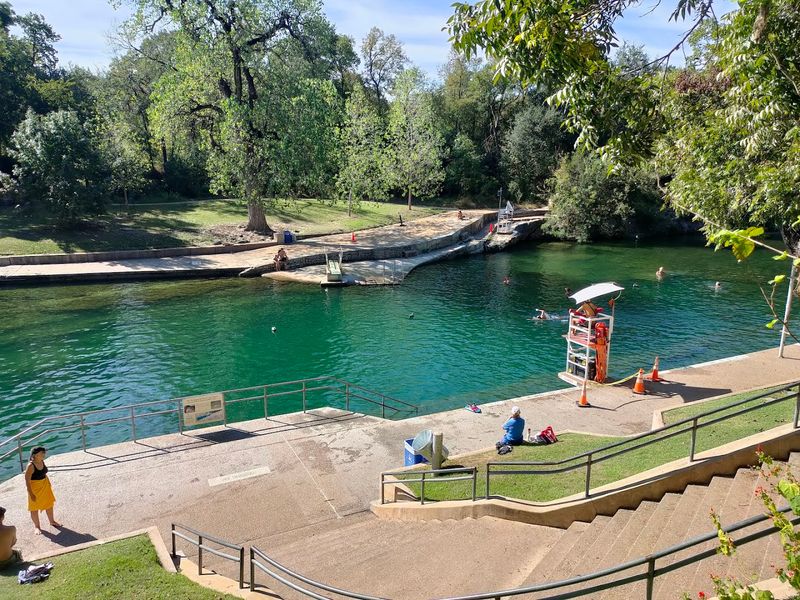
Three acres of spring-fed swimming in the heart of Austin makes this the city’s favorite gathering place during summer months. Barton Springs maintains a constant 68-72 degrees year-round, fed by underground springs pumping out 35 million gallons daily. The pool stretches longer than three football fields, with depths ranging from shallow wading areas to sections over 18 feet deep.
Located within Zilker Park, the pool became a beloved Austin institution decades before the city exploded in size. Locals treat it like their backyard pool, showing up for morning laps before work or evening swims after hot days. Tourists discover it through word of mouth and leave understanding why Austinites are so protective of their springs.
Natural limestone forms the pool bottom and sides, giving it a completely different feel from chlorinated public pools. Small fish swim alongside you, and turtles sun themselves on rocks near the shallow end. The ecosystem includes several endangered species that call the springs home, making this both a recreational area and an important habitat.
Grassy areas surrounding the pool provide space for picnics, sunbathing, and people-watching. Massive pecan trees offer shade for those who’ve had enough sun. The scene feels distinctly Austin, with a mix of families, fitness enthusiasts, and visitors all sharing the space peacefully.
Admission fees help maintain the pool and fund conservation efforts. Lifeguards stay on duty during open hours, and rules prohibit diving in certain areas. The shallow end features a beach-like entry that makes getting in less shocking than jumping straight into the cold water.
Early morning swimmers often spot more wildlife and enjoy the pool before crowds arrive. Summer afternoons pack the pool with people seeking relief from triple-digit heat. Evening brings a more relaxed vibe as the sun sets and the temperature finally drops.
Changing rooms and restrooms are basic but functional. A small concession stand sells snacks and drinks, though many people bring their own food to enjoy on the lawn. Parking in Zilker Park can be challenging during peak times, so arriving early or using public transportation makes sense.
The springs occasionally close for cleaning or after heavy rains that affect water quality. Checking the city’s website before visiting prevents disappointment. When open, few experiences beat floating in cool spring water while surrounded by Austin’s skyline and natural beauty.
8. Galveston (Galveston)
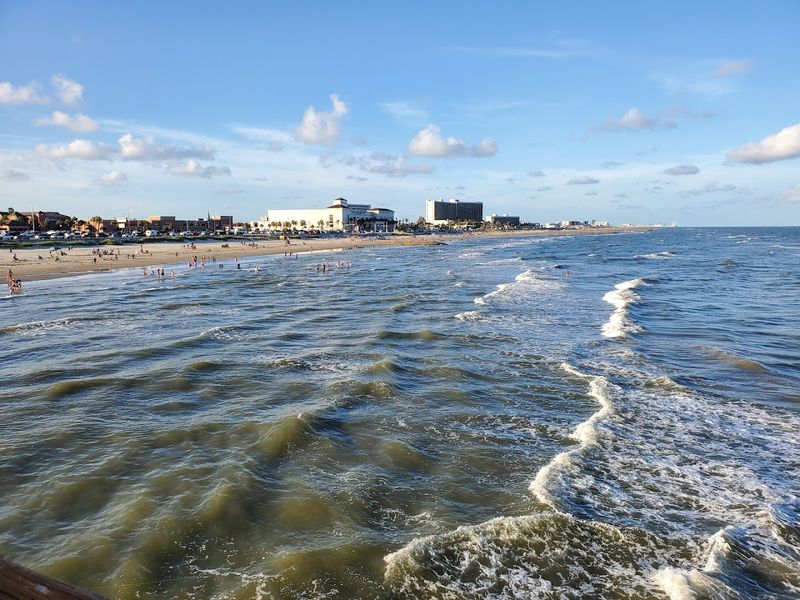
Victorian homes line streets just blocks from the beach, creating a unique blend of historic architecture and coastal living. Galveston Island sits about an hour from Houston, making it the closest beach for millions of Texans. The island survived devastating hurricanes, economic ups and downs, and emerged as a destination that offers way more than just sand and surf.
Beaches stretch for miles, with some areas developed with restaurants and shops while others remain relatively natural. Stewart Beach and East Beach provide full amenities including chair rentals, showers, and lifeguards. West Beach offers a more laid-back vibe with fewer crowds and more space to spread out.
The Strand Historic District showcases restored buildings from Galveston’s glory days as a major port city. Shops, restaurants, and galleries occupy spaces that once housed cotton brokers and shipping companies. Walking these streets, especially in the evening when the brick buildings glow under streetlights, feels like time traveling.
Moody Gardens features a rainforest pyramid, aquarium, and other attractions that provide alternatives when beach time needs a break. The Historic Pleasure Pier extends over the Gulf, offering rides and games with an old-school amusement park feel. Both attractions are especially popular with families traveling with kids.
Fresh seafood defines the local dining scene, from casual shrimp shacks to upscale restaurants with Gulf views. Gaido’s has been serving seafood since 1911, while newer spots bring contemporary approaches to coastal cuisine. Many restaurants have outdoor seating where you can eat while watching pelicans dive for fish.
Fishing opportunities abound from piers, the beach, or charter boats heading offshore. The jetties at the east and west ends of the island produce catches of redfish, flounder, and speckled trout. Bait shops provide everything needed and offer advice on what’s biting.
Accommodations range from historic hotels like The Tremont House to modern beachfront resorts and vacation rentals. Staying on the island means you can enjoy evening walks on the beach and sunrise views over the Gulf. Weekend rates increase during peak summer months, but deals can be found midweek.
The island’s hurricane history is acknowledged at museums and through the massive seawall protecting much of the developed coastline. This engineering marvel also serves as a popular spot for walking, jogging, and biking while enjoying ocean breezes.
9. Lake Whitney (Whitney)
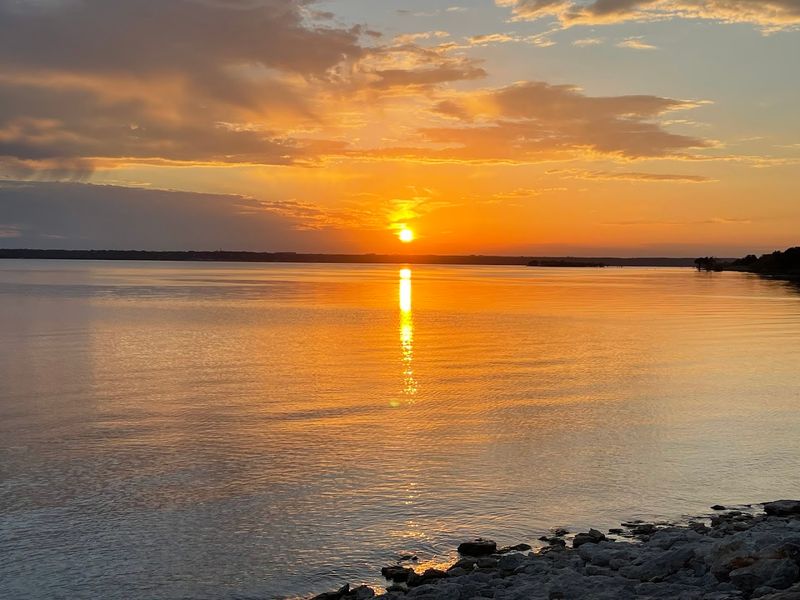
North Texas doesn’t have mountains or beaches, but it does have Lake Whitney sprawling across 23,000 acres with over 200 miles of shoreline. The Army Corps of Engineers created this reservoir in the 1950s by damming the Brazos River, and it’s become a recreation hub for the region. The lake sits about halfway between Dallas-Fort Worth and Waco, making it accessible for weekend getaways without burning half a tank of gas.
Boating dominates summer activities, with everything from fishing boats to pontoons and ski boats crisscrossing the water. Multiple marinas offer rentals if you don’t own a boat, along with fuel, supplies, and repairs. The lake’s size means you can always find open water even on busy holiday weekends.
Several state parks and recreation areas ring the lake, each offering different amenities and atmospheres. Lake Whitney State Park features camping, swimming beaches, and hiking trails through native prairie and woodland. The park’s location on a peninsula provides water views from multiple angles.
Fishing here is serious business, with the lake known for producing trophy-sized striped bass. White bass runs in spring bring anglers from across the state hoping to fill their coolers. Catfish, crappie, and largemouth bass round out the fishing opportunities year-round.
The small town of Whitney serves as the main hub, offering supplies, restaurants, and services for lake visitors. Local businesses cater to the tourist trade while maintaining a friendly small-town atmosphere. Several BBQ joints and cafes provide meals that hit the spot after a day on the water.
Vacation rentals and lakefront cabins give families and groups options beyond camping. Many properties include private boat docks and outdoor spaces perfect for evening cookouts. Waking up to water views and having immediate lake access makes these rentals worth the investment.
Water skiing and wakeboarding are popular, with designated areas keeping faster boats away from swimmers and anglers. Jet skis zip around, and paddleboards offer a more peaceful way to explore coves and quiet areas. The variety of water activities means everyone in a group can find something they enjoy.
Summer can bring intense heat, making early morning and evening the most comfortable times for activities. The lake’s size creates breezes that help cool things down compared to being inland. Thunderstorms occasionally pop up on summer afternoons, so monitoring weather becomes part of the routine.
10. Krause Springs (Spicewood)
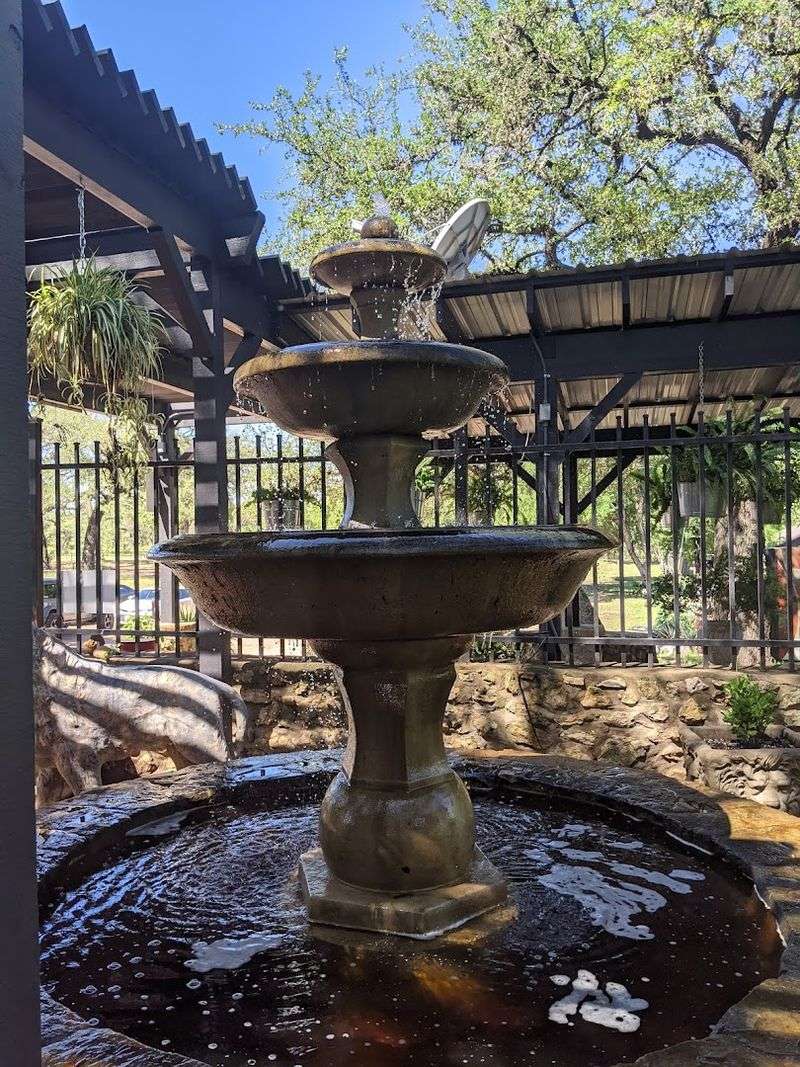
Multiple springs feed pools cascading down a hillside, creating a series of swimming areas that feel like discovering a hidden oasis. Krause Springs operates as a privately-owned campground that opens to day visitors, tucked away in the Hill Country near Spicewood. The property has been in the same family for generations, maintained with a light touch that preserves its natural character.
The main pool sits at the bottom of the hill, fed by a small waterfall that tumbles over limestone rocks. This pool stays the coolest and deepest, perfect for swimming laps or diving under to escape the heat. Smaller pools higher up the hill offer different temperatures and atmospheres, from shallow wading areas to secluded spots surrounded by ferns and moss-covered rocks.
Camping spots scatter across the property under massive oak and cypress trees. Sites range from primitive tent areas to spots that can accommodate RVs, though hookups are limited. The camping experience here focuses on nature rather than amenities, attracting people who want to unplug and decompress.
A manmade pool provides an alternative to the natural springs, especially appealing to families with young children. This pool has a more traditional shallow end and doesn’t have the rocks and uneven bottom of the spring pools. Both options stay busy on summer weekends.
The property’s gardens showcase native plants and create shaded areas for picnicking between swimming sessions. Peacocks roam freely, adding to the quirky charm of the place. Their calls echo across the property, becoming part of the Krause Springs soundtrack.
Day-use fees are cash-only and reasonable for the experience offered. The springs open year-round, though hours vary by season. Summer weekends see the highest traffic, sometimes reaching capacity by mid-morning.
Arriving early or visiting on weekdays provides a more peaceful experience.
Facilities include bathhouses and picnic tables, but this isn’t a polished state park operation. The rustic vibe is part of the appeal, attracting people who appreciate places that haven’t been commercialized. Cell service is spotty, encouraging actual face-to-face interaction.
Swimming in the natural pools means sharing space with small fish, turtles, and aquatic insects. The ecosystem remains relatively undisturbed, and visitors are expected to respect the environment. No glass containers, excessive noise, or littering keeps the springs pristine for everyone.
11. Rio Vista Park (San Marcos)
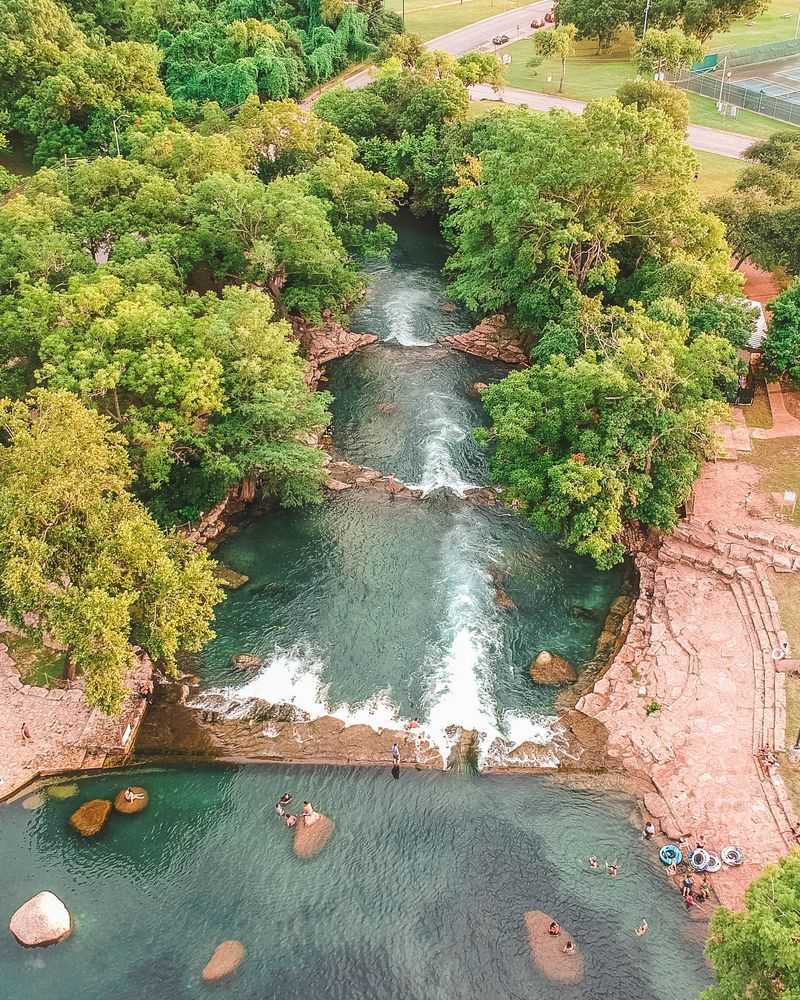
Spring-fed water emerges from the ground at a constant 72 degrees, creating the headwaters of the San Marcos River. Rio Vista Park sits right at this source, offering swimming areas where you can see straight to the bottom even in the deepest spots. The clarity comes from the springs pumping out millions of gallons daily, filtering through limestone before reaching the surface.
Swimming here differs from typical river experiences because the water stays so clear and cool. You can watch fish swimming below you and see every detail of the rocky bottom. The current flows gently in most areas, making it safe for families while still providing enough movement to feel like you’re in a river rather than a pool.
Tube rentals are available nearby, and many people combine swimming at Rio Vista with a float downstream. The river flows through town before heading into more natural areas, creating an interesting urban-to-rural transition. Most floats take two to three hours depending on where you exit.
The park provides picnic areas, restrooms, and grassy spaces for relaxing between swims. Massive cypress trees provide shade, and their roots create interesting underwater landscapes. Some trees lean over the water, offering spots to sit and dangle your feet while watching the constant flow.
San Marcos is home to Texas State University, giving the area a college-town vibe with restaurants, shops, and entertainment options. Downtown sits within walking distance of the park, making it easy to grab lunch or explore after your swim. Local businesses cater to both students and tourists, creating an eclectic mix.
The springs support several endangered species found nowhere else on Earth, including the San Marcos salamander and fountain darter. Interpretive signs explain the unique ecosystem and the importance of protecting these springs. Swimming here comes with an understanding that you’re visiting a rare and fragile habitat.
Summer weekends attract crowds, especially when school is out and temperatures soar. The park sometimes reaches capacity, requiring visitors to wait for others to leave before entering. Weekday mornings offer the best chance for a more solitary experience.
Glass containers aren’t allowed, and rules prohibit alcohol in the park. These regulations help maintain the water quality and keep the area family-friendly. Most visitors respect the rules, understanding they help preserve this special place for future generations.
12. Garner State Park (Concan)
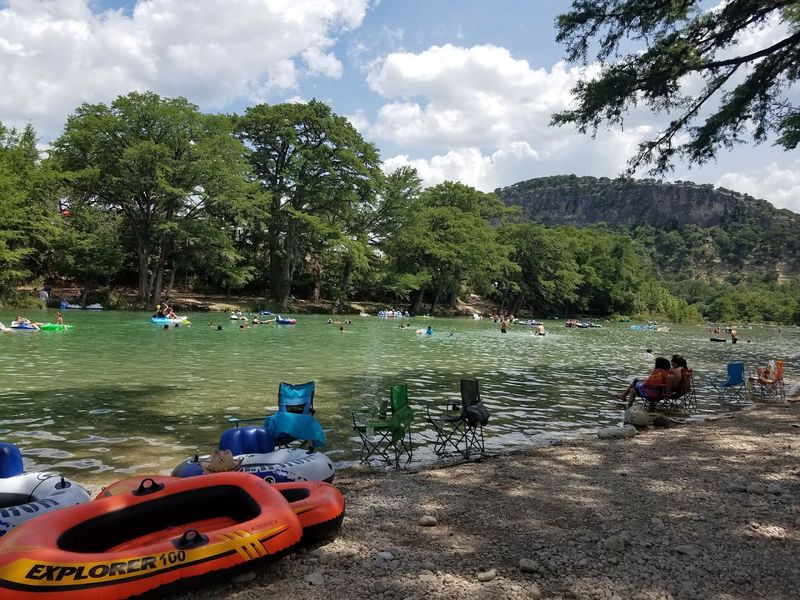
Old Baldy rises 1,400 feet above the Frio River, offering a challenging hike that rewards climbers with panoramic Hill Country views. But most people come to Garner State Park for what’s below: crystal-clear river water perfect for swimming, tubing, and escaping the summer heat. The park has been a Texas favorite since the 1940s, when the Civilian Conservation Corps built the stone structures that still stand today.
The Frio River flows through the park, creating natural swimming holes and tubing runs. Inner tubes are available for rent at the park store, and the float takes you downstream past towering cypress trees and limestone bluffs. Some sections move quickly over small rapids, while others slow down into deep pools where you can stop and swim.
Camping here requires planning ahead, as sites book months in advance for summer weekends. Options range from tent sites near the river to cabins with screened porches and bunk beds. The sound of the river becomes your nighttime soundtrack, occasionally interrupted by owls or coyotes in the distance.
Evening dances at the pavilion have been a tradition for decades, with families gathering to jitterbug and two-step to live music or a jukebox. This throwback entertainment feels charmingly retro, and watching multiple generations dance together captures something special about Texas culture. The pavilion also serves as a gathering spot during the day, offering shade and a place to rest.
Hiking trails beyond Old Baldy explore different parts of the park’s 1,700 acres. The Frio River Trail follows the water, providing access to swimming spots away from the main area. Wildlife sightings are common, with white-tailed deer, armadillos, and numerous bird species calling the park home.
Miniature golf and paddleboat rentals provide alternatives to swimming and hiking. The park store sells basic supplies, snacks, and souvenirs. Firewood is available for purchase since gathering from the park is prohibited to protect the ecosystem.
Day-use visitors pack the park on summer weekends, with the main swimming area becoming crowded by mid-morning. The river’s natural features create different zones, allowing people to spread out somewhat. Upstream areas tend to be quieter than the spots right by the concession area.
Cell service is limited, which many visitors appreciate as a chance to disconnect. The park’s remote location means the nearest significant town is a drive away, so bringing everything you need makes sense.