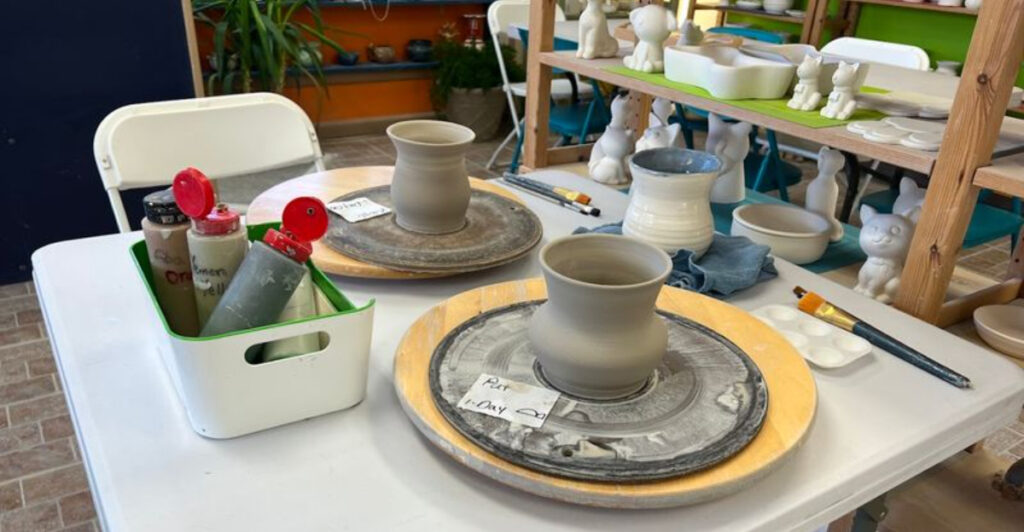
The first surprise is how unimpressive the clay looks before anything happens. It just sits there, gray and stubborn, like a tiny mound of driveway mud with better manners.
Then the wheel starts spinning, your hands get wet, and suddenly that lump begins acting like it has plans. That is the fun of The Clay Pot Pottery Studio in Spotswood, a hands-on Main Street studio where pottery is not limited to picking a pre-made figurine and hoping your paint lines stay neat.
Here, visitors can throw clay on the wheel, build pieces by hand, paint bisqueware, try glazing workshops, or watch a Raku piece come out of the kiln red-hot and glowing.
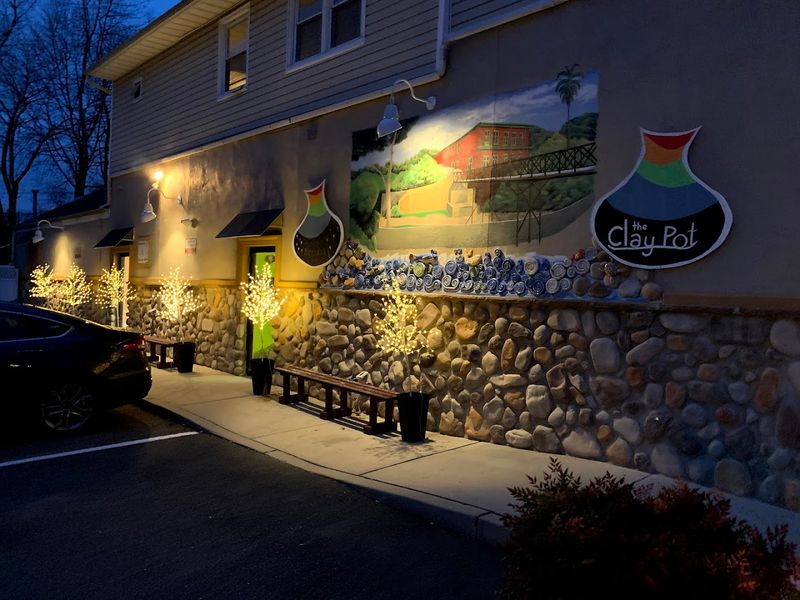
The studio opened in 2010 and sits at 290 Main Street, giving Central Jersey a creative stop that feels wonderfully low-pressure but still genuinely rooted in the craft.
The Spotswood Studio Where Clay Turns Into Something You Actually Made
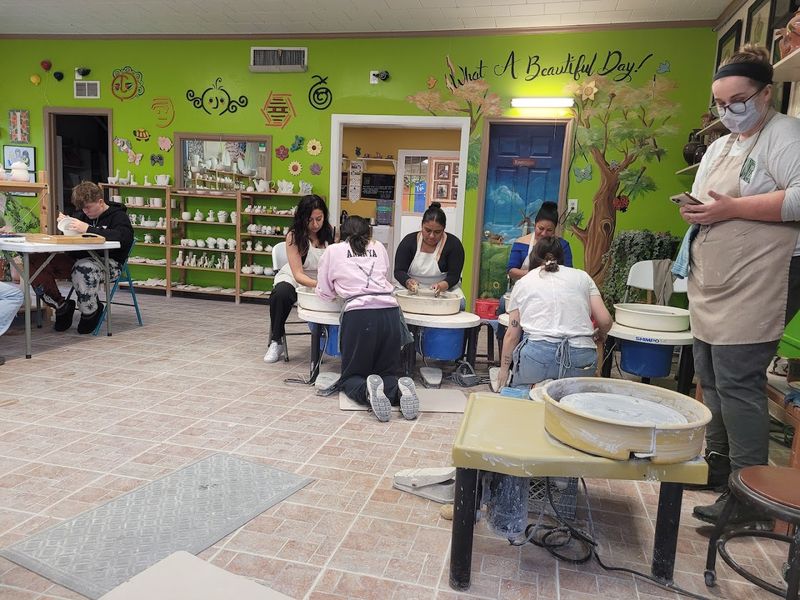
A lump of clay is not sentimental until you have fought with it a little. That is part of the charm at The Clay Pot, where the finished piece matters, but the process is half the story.
The studio is set up for people who want more than a neat afternoon project. It has room for pottery painting, wheel work, parties, workshops, and those glorious moments when a beginner realizes the wobbly little bowl in front of them is, somehow, theirs.
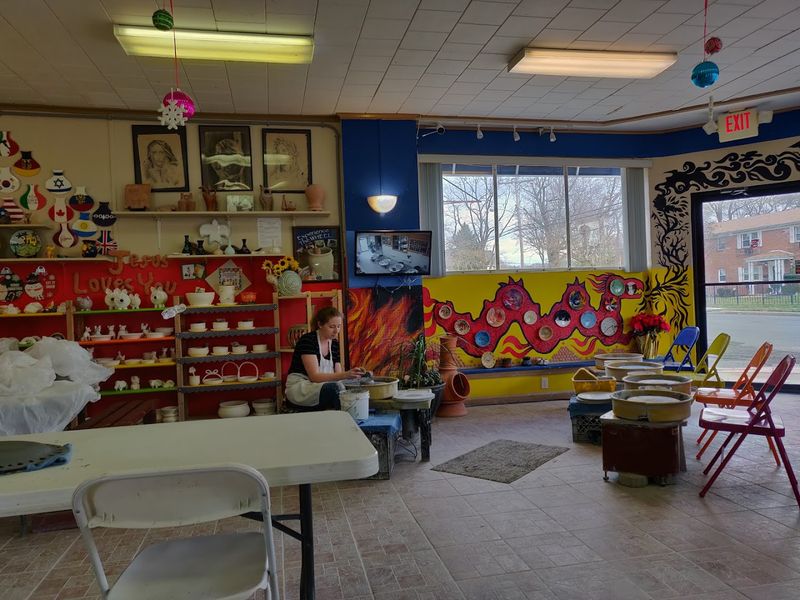
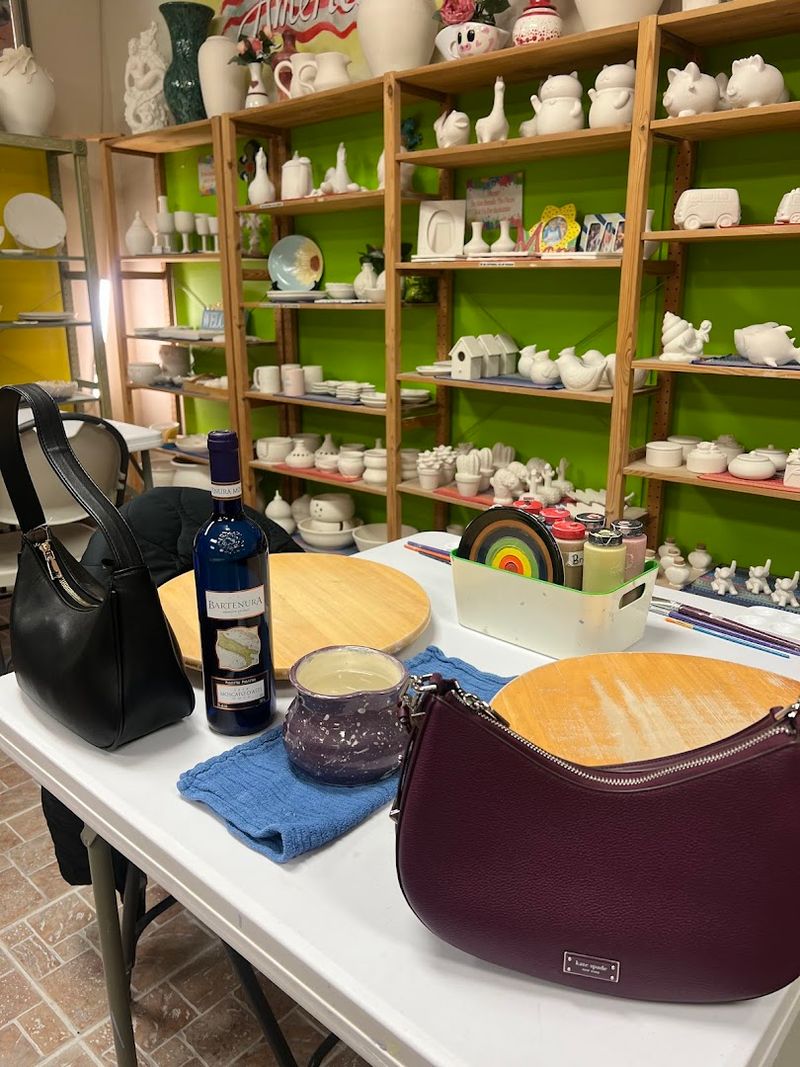
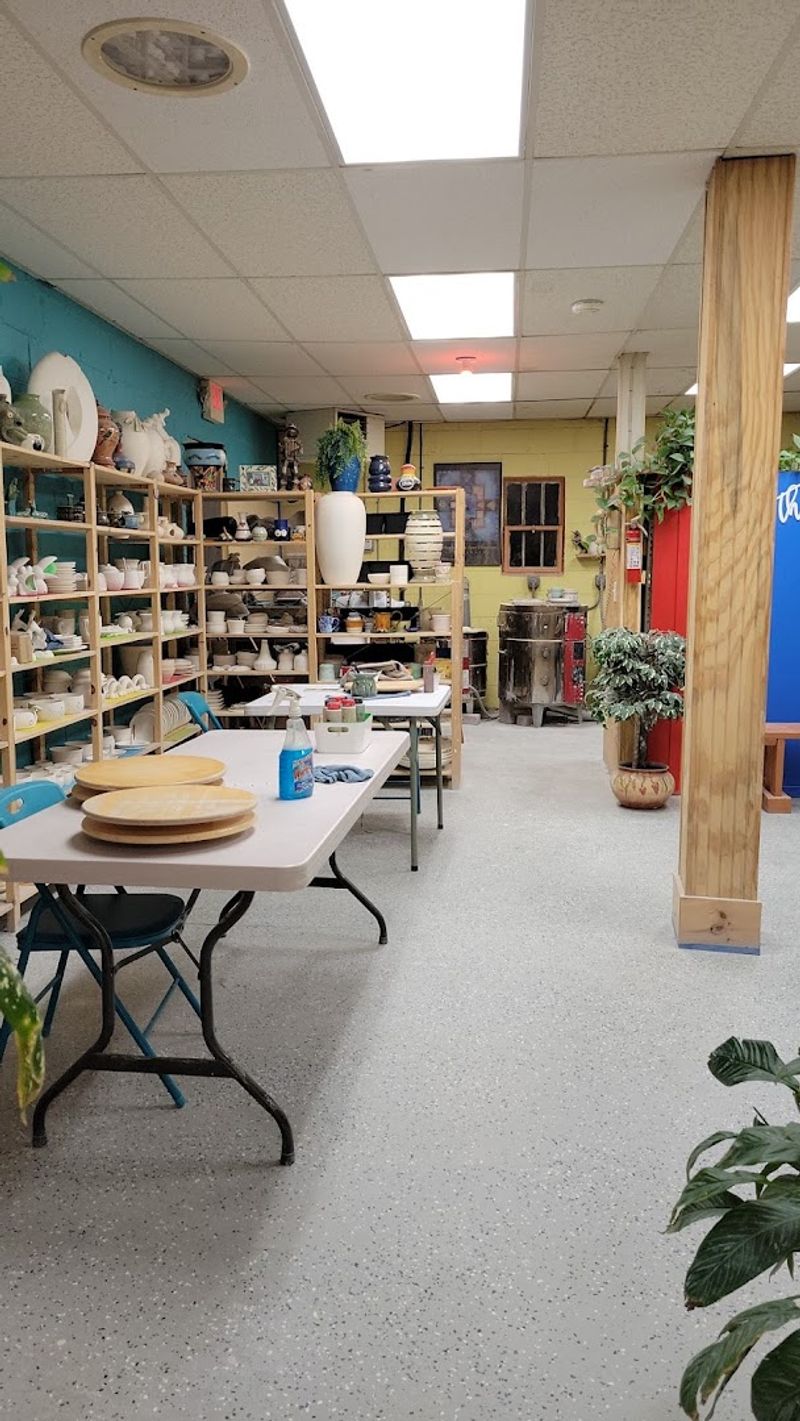
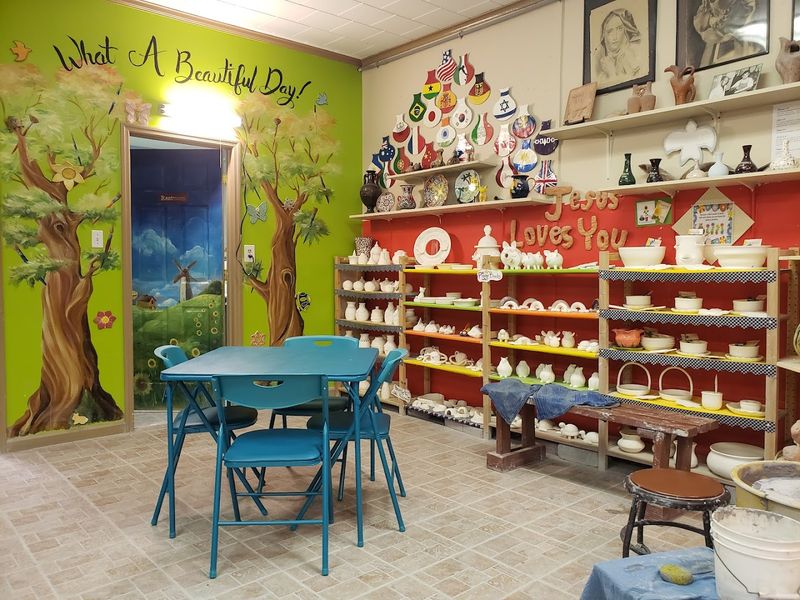
The space itself gives the whole thing room to breathe. The Clay Pot describes its studio as 2,500 square feet, with 10 pottery wheels, several tables for pottery painting, an outdoor covered gazebo for painting outside, a large parking lot, and even a gallery area with finished pieces for sale.
That matters because pottery can get messy fast, and nobody wants to feel like they are elbowing a stranger while trying to keep a spinning bowl from collapsing. The location helps, too.
Spotswood has that Central Jersey small-town practicality where a Main Street errand can turn into something more interesting than expected. Instead of driving to a glossy arts district or signing up for a serious semester-long class, you can walk into a studio built for regular people who are curious, clumsy, creative, or all three.
The Clay Pot works especially well because it treats beginners like they belong there. You do not need to know the difference between bisque and glaze before arriving.
You just need to be willing to sit down, listen, laugh a little when the clay misbehaves, and trust that the person guiding you has seen far worse than your first attempt.
Why The Clay Pot Feels Different From a Typical Pottery Painting Place
Plenty of pottery places are built around the paintbrush. You choose a mug, plate, dinosaur, or bowl from the shelf, pick your colors, settle in, and leave the kiln work to someone else.
The Clay Pot offers that too, and it does it with enough structure to make the experience easy. Pottery painting requires reservations, staff can help with color choices and design ideas, guests may bring their own stencils, and bisque pieces start at $15 depending on what you choose.
Finished items are fired after your visit, and the studio notes that painted pieces are food safe, dishwasher safe, and microwave safe, with handwashing recommended. But the studio’s personality comes from the fact that painting is not the ceiling.
It is one doorway into a much bigger clay world. The Clay Pot also offers wheel experiences, wheel lessons, hand-building, glaze workshops, Raku firing, kids’ programs, parties, and special events, so the place does not feel like a one-note craft stop.
That range changes the energy in the room. Someone may be carefully painting polka dots on a serving dish while another person is across the studio trying to center clay on the wheel for the first time.
A child might be working through pinch-pot basics, while adults come in later for a BYOB Wine and Wheel event. It gives the studio a real workshop feel without making it intimidating.
There is always something happening, but not in a chaotic way. It feels like the kind of place where creativity has options.
You can keep things simple with paint, get muddy at the wheel, or come back for something more adventurous once the first visit gets under your skin.
The Wheel Throwing Experience That Lets Beginners Jump Right In
The pottery wheel looks peaceful until you are the one sitting in front of it. Then it becomes a tiny spinning test of patience, pressure, and whether your hands can agree on a plan.
The Clay Pot’s Pottery Wheel Experience is built for exactly that first-timer moment. It is not pitched as a full lesson series, but as an accessible way to try throwing clay without committing to a longer class.
The experience is reservation-only, costs $55 per adult and $45 for children ages 8 to 12, and usually keeps visitors in the studio for about 1.5 to 2 hours, including time on the wheel and time painting the piece. The format is smart.
A potter first demonstrates the steps involved in throwing clay, then works with participants to create a small bowl, small vase, or small plate. After that, the piece is heated and dried so it can be painted with engobes, which are colored liquid clays, and guests get some time to practice on the wheel themselves.
The piece is later fired, clear glazed, fired again, and made food safe, with pickup arranged according to the studio’s pottery pickup card. That last part is important because it gives the experience a real payoff.
You are not just making a temporary lump for Instagram. You are making something that goes through the ceramic process and comes back as a finished object.
Will your first bowl be perfectly symmetrical? Almost certainly not.
That is not the point. The point is that it will have your fingerprints in the memory of it, even after the glaze smooths everything over.
For couples, families, friend groups, and anyone who has ever watched a pottery video and thought, “I could probably do that,” this is the safe place to prove yourself half right.
Hand Building Workshops Give Pottery a Slower More Personal Feel
This is where pottery gets wonderfully old-school. Before the wheel starts spinning and the clay begins its dramatic little dance, there is the quieter pleasure of building with your hands.
Hand-building is exactly what it sounds like: shaping clay without relying on the wheel, using methods like slabs, coils, and pinch pots. The Clay Pot includes hand-building in its broader clay offerings, and its kids’ programs give a clear sense of how those techniques show up in the studio.
The after-school schedule lists hand-building and slab work, pottery wheel time, pinch-pot and coil-building basics, and pottery painting techniques on different days, with programming for ages 6 to 12.
Summer clay camp follows a similar rhythm, with hand-building and slab work, wheel sessions, pinch-pot and coil basics, and pottery painting techniques built into the weekly schedule.
The appeal is different from the wheel. Wheel throwing has suspense. Hand-building has patience. You press, pinch, roll, smooth, attach, and fix.
The mistakes are less dramatic, but the personality often shows up more clearly. A mug handle can be a little chunky.
A coil-built creature can look charmingly odd. A slab project can carry the marks of the tools, fingertips, and decisions that made it.
For kids, that is a gift because the process feels forgiving. For adults, it can be surprisingly calming because there is no spinning wheel rushing you along.
It is also a good reminder that pottery is not only about making something sleek. Sometimes the best piece is the one that looks like a human being made it while learning, concentrating, and having a better time than expected.
In a state full of polished activities, The Clay Pot’s hand-building side feels refreshingly unpolished in the right way.
Make a Mug Raku Firing and Other Workshops Add the Real Studio Magic
Some workshops are quiet and methodical. Raku is not one of them.
At The Clay Pot, Raku workshops are held on scheduled 2026 Sundays at 2 p.m. and 3 p.m., weather permitting, for ages 16 and older at $65 per person, with reservations required.
Participants choose a ready-to-paint Raku piece from the shelves, paint it with specially formulated Raku glazes, and then watch it emerge red-hot from the Raku kiln before it goes into a reduction atmosphere.
The studio’s outdoor space is where these Raku workshops take place, which makes sense because this is a firing process with heat, smoke, and plenty of drama. The result is the kind of keepsake that does not look factory-made because it cannot.
Raku is known for unpredictable color and surface effects, and The Clay Pot describes the process as one that produces intense, beautifully unpredictable colors. Then there are the other workshop temptations.
The studio’s online shop has listed a Make-A-Mug Workshop for $60, along with wheel experiences, Wine and Wheel, Raku, glazing workshops, and four-session wheel lessons.
The special events page also includes playful glaze options like bubble glazing and shaving cream glazing, both listed at $25 per person plus the cost of the piece, with reservations required for ages 8 and up.
That variety is what keeps The Clay Pot from feeling like a one-and-done activity. You might start with pottery painting, come back for the wheel, try a mug workshop, and eventually decide that standing near a kiln while your piece glows red is a perfectly normal way to spend a Sunday afternoon in Spotswood.
Honestly, New Jersey has offered stranger hobbies.
Why This Hands-On New Jersey Studio Makes Creativity Feel Easy
The trick is that The Clay Pot does not ask visitors to become artists before they walk through the door. It sets up the experience so the making part feels approachable, even when the process itself is real.
That balance is harder to find than it sounds. A studio can be too precious and scare beginners away, or too simplified and make the finished piece feel like a souvenir with a paint job.
The Clay Pot lands in the useful middle. You can book a pottery painting reservation, try a one-time wheel experience, take a four-week wheel lesson block, bring kids for clay programming, reserve a party, or sign up for something with a little more fire and spectacle.
Regular wheel lessons are offered for ages 10 and up, with clay, tools, glazes, and firing included in tuition, and beginner students learn steps like wedging clay, centering it, opening it, pulling walls, shaping, trimming, and glazing. The studio also keeps practical options in mind.
Wine and Wheel runs on Friday and Saturday evenings as a 21-and-up BYOB event, with participants making a small bowl, vase, or plate with help from the potter during an approximately 1.5-to-2-hour studio experience.
Parties can be built around pottery painting, wheel experiences, Raku, or Wine and Wheel, giving the studio a built-in reason for birthdays, bridal showers, team outings, and friend nights that do not revolve around the usual dinner reservation.
What makes the place memorable is not perfection. It is the small suspense of seeing what your hands can do, the little pride of picking up a finished piece later, and the oddly satisfying knowledge that, for once, the keepsake did not come from a shelf.
It started as clay, and you were there for the messy part.