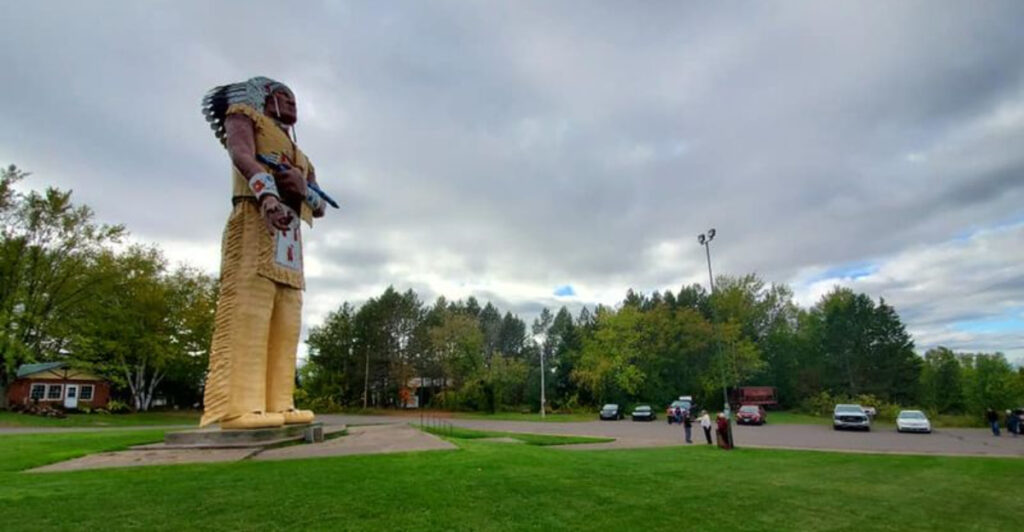
Standing 52 feet tall in the small Upper Peninsula city of Ironwood, Michigan, the Hiawatha statue is one of the most jaw-dropping roadside landmarks in the entire Midwest. Built in the 1960s, this giant figure of the legendary Native American leader has been drawing curious travelers off the highway for decades.
Nestled inside a neighborhood park on Burma Road, the statue is free to visit and packs a surprising amount of history, charm, and scale into one compact stop. Whether you’re passing through or making a dedicated detour, Hiawatha is the kind of landmark that stops you cold the second it comes into view.
A Giant That Earns Every Inch of Its Title
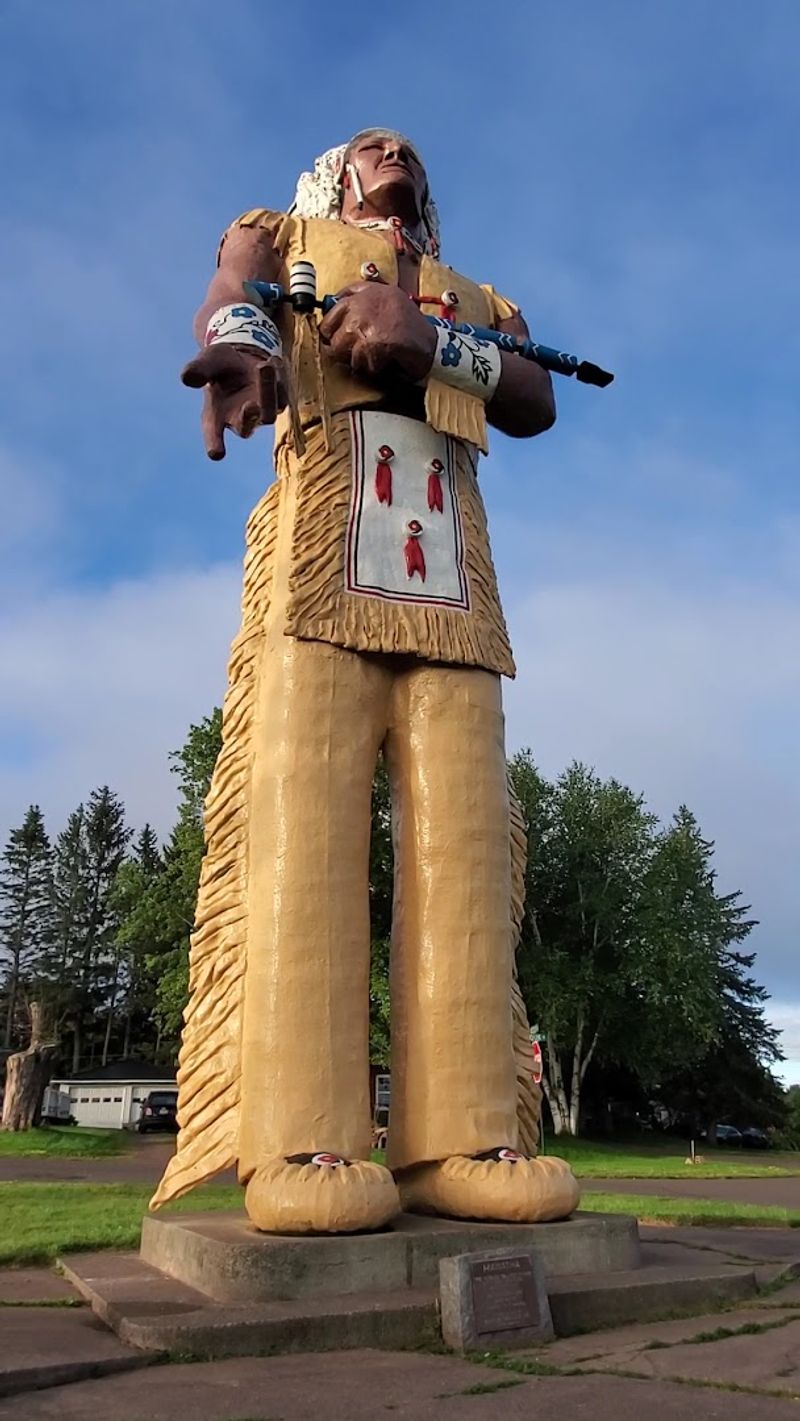
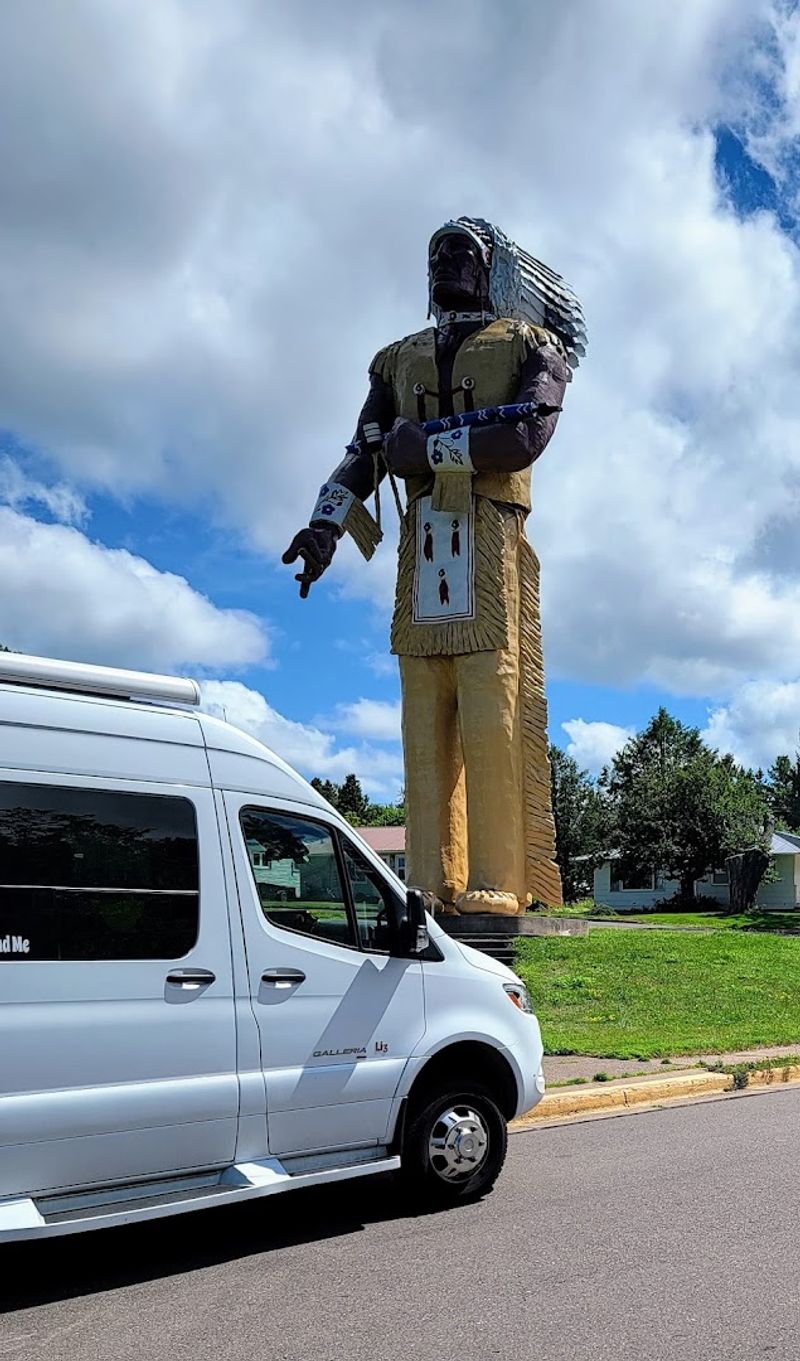
From a distance, the silhouette rising above the treeline of Ironwood’s residential streets looks almost impossible. Then you round the corner onto Burma Road and the full scale of Hiawatha snaps into focus — 52 feet of painted fiberglass towering over a quiet neighborhood park like something out of a fever dream and a history book at the same time.
The statue depicts Hiawatha, the legendary figure from Henry Wadsworth Longfellow’s 1855 poem “The Song of Hiawatha,” who has long been connected to Native American tradition and storytelling. The figure stands in a proud, upright pose, arms at his sides, gaze fixed forward with a calm authority that reads clearly even from far below.
One visitor put the scale perfectly into words when they noted that their six-foot-tall companion looked barely two feet tall standing next to it. That kind of visceral size comparison is exactly what makes Hiawatha land so hard in person.
Photos help, but standing underneath and craning your neck upward is a completely different experience.
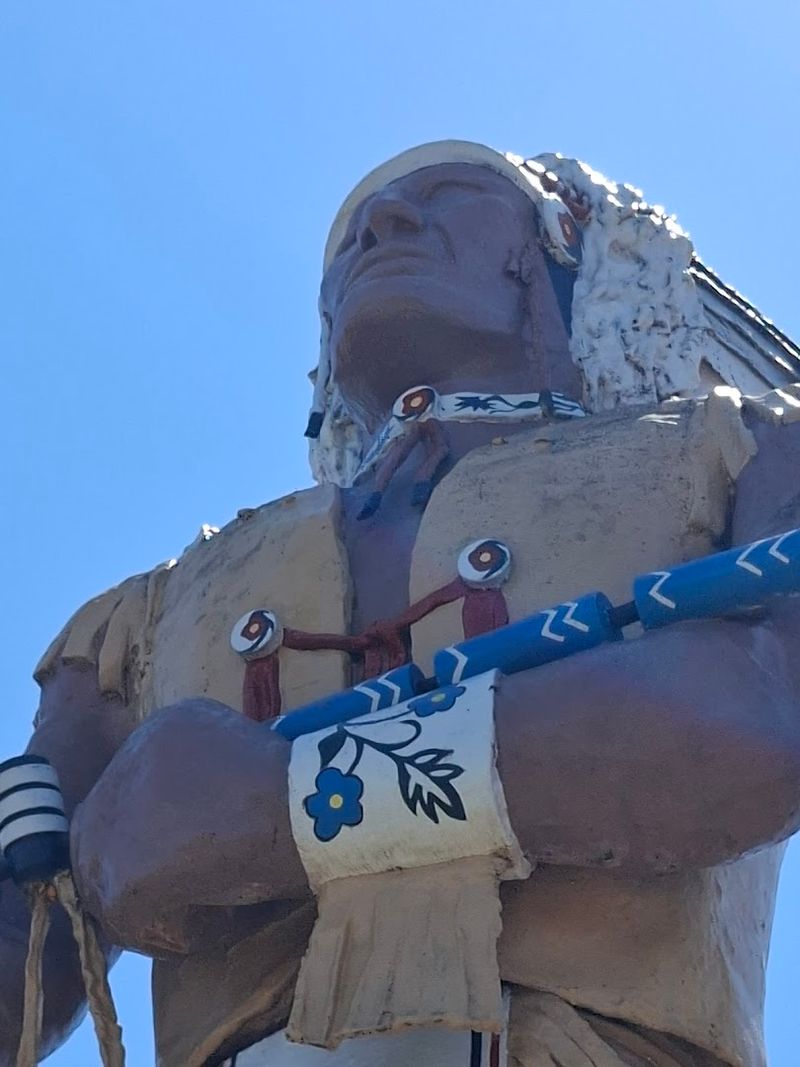
The statue was erected in 1964 and has been a fixture of Ironwood ever since, surviving decades of Upper Peninsula winters, recent restoration work, and a fresh coat of bright paint that gave it renewed visual punch. The repaint brought out details in the figure’s clothing and features that had faded over the years.
Roadside America, the beloved guide to offbeat American attractions, lists Hiawatha among the tallest statues of its kind in the country. That ranking alone makes it a legitimate destination rather than just a passing curiosity.
Few roadside stops in Michigan combine this level of sheer physical presence with genuine cultural and historical weight in such a compact, accessible package.
Miners Park: The Surprising Context Around the Statue
The statue does not stand alone. Hiawatha is set within Miners Park, a compact green space that layers the story of the Upper Peninsula’s industrial past right alongside the cultural landmark.
Cross the street from the statue’s base and a whole other chapter of Ironwood’s identity opens up.
Mining history dominates that side of the park, with informational displays and memorials dedicated to the iron ore and copper industries that shaped this entire region in the late 1800s and early 1900s. The area around Ironwood was once one of the most productive iron-mining zones in the United States, and the park preserves a tangible connection to that era.
A historic mining shaft site once stood nearby, and the park acknowledges that industrial footprint through its interpretive content. Standing in one spot, a visitor can look up at a towering symbol of Native American legend and then turn around to read about the miners who transformed the same land just generations later.
That layering of stories in a single small park is genuinely rare.
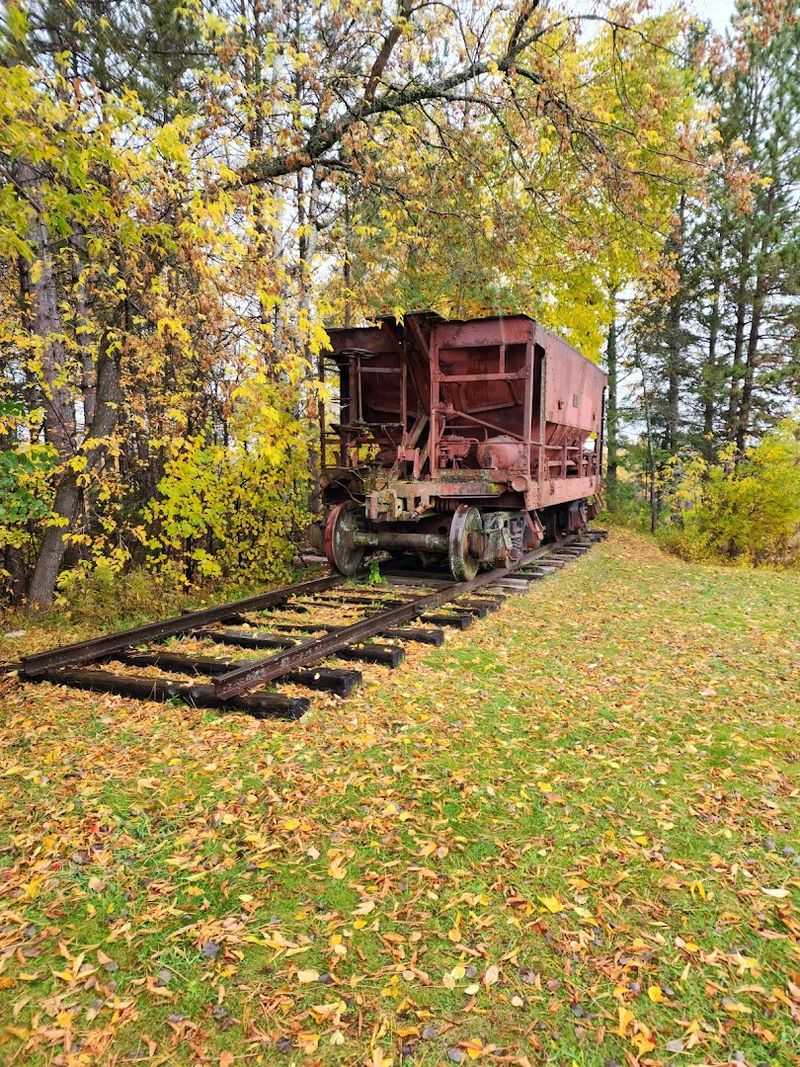
There is also a vintage train car on the grounds, adding another visual anchor to the space and giving younger visitors something tangible and unexpected to discover. The train car connects to the broader transportation and industrial heritage of the Upper Peninsula without requiring a separate museum visit.
Benches and picnic tables are scattered throughout, making the park a comfortable place to slow down rather than just snap a photo and leave. The combination of open green space, historical content, and the statue itself turns Miners Park into a layered stop rather than a single-note attraction.
History lovers especially tend to find more here than they expected when they first pulled into the parking lot.
Fresh Paint and a Restored Legacy in Michigan’s Upper Peninsula
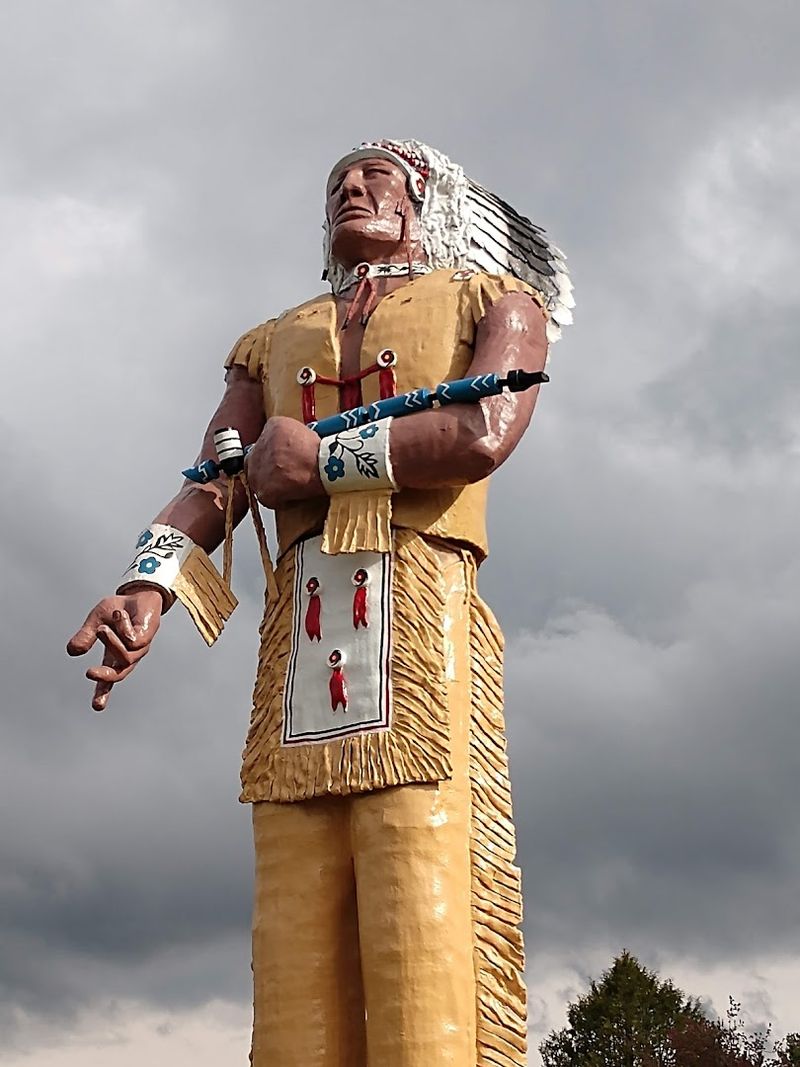
Restoration work on the Hiawatha statue gave the landmark a second life that longtime visitors have noticed immediately. The fresh, bright paint applied in recent years brought the figure back to something close to its original visual impact — vivid, clean, and commanding in a way that weathered fiberglass simply cannot be.
For families who visited the statue decades ago and returned recently, the difference has been striking. Several people who saw it as children in the 1970s and 1980s came back expecting a faded relic and instead found a statue that looked almost newly built.
That kind of careful upkeep signals genuine community investment in preserving the landmark rather than letting it slowly deteriorate.
The Upper Peninsula of Michigan is not a place that gets a lot of national tourism attention compared to the state’s Lower Peninsula destinations. Ironwood sits near the Wisconsin border in the far western edge of the UP, which means most people who find the statue are either locals, road-trippers cutting across the region, or dedicated roadside attraction hunters who planned the stop specifically.
That relative obscurity has kept Hiawatha feeling like a discovery rather than a packaged tourist experience. There are no admission fees, no gift shops attached, and no tour guides waiting at the base.
The statue simply stands there, freshly painted and fully accessible, in a neighborhood that has grown up around it over six decades.
Signage around the statue has been updated to include historical context about the legend of Hiawatha and connections to local Indigenous peoples, giving the site more educational depth than it had in earlier years. Those additions make the stop more meaningful without turning it into something overly formal or structured.
The balance works well for casual visitors and history-minded travelers alike.
The Legend Behind the Towering Figure
Henry Wadsworth Longfellow published “The Song of Hiawatha” in 1855, and the poem became one of the most widely read pieces of American literature in the 19th century. The central figure — a Native American leader of remarkable skill, wisdom, and courage — captured the public imagination in a way that few literary characters managed at that time.
Longfellow drew on earlier ethnographic research about the Ojibwe people and their traditions, weaving those elements into an epic narrative poem structured in rhythmic, chanting verse. The character of Hiawatha became a cultural shorthand for a romanticized vision of Indigenous life, though modern scholarship has examined both the poem’s appeal and its limitations as a representation of actual Native American history.
The Ironwood statue was erected during an era when giant roadside figures were popular across America — the 1960s saw a boom in oversized statues, mascots, and folk heroes used to attract travelers and celebrate regional identity. Hiawatha fit naturally into that tradition while also tapping into the Upper Peninsula’s deep connections to Native American culture and history.
Signs near the statue now provide context about the Hiawatha legend and the Indigenous peoples connected to this part of Michigan, which adds a layer of educational value that the original installation lacked. Reading those panels shifts the visit from pure spectacle into something more grounded and informative.
Knowing the backstory changes how the statue reads visually. The upright posture, the forward gaze, and the calm dignity of the figure all carry more weight once the viewer understands who Hiawatha was meant to represent and why that story resonated so powerfully across American culture for more than a century.
The statue is not just big — it carries a narrative.
A Playground, a Trail, and Reasons to Linger
Not every roadside stop offers reasons to stay longer than ten minutes. Miners Park near the Hiawatha statue is an exception, largely because the surrounding amenities make it genuinely comfortable to spend a half hour or more without feeling like there is nothing left to do.
A playground with recently updated equipment sits close to the statue, making this a practical stop for families traveling with young children who need to burn off energy. The equipment is well-maintained and positioned in a way that keeps the statue visible, so parents can keep an eye on kids while still taking in the landmark from different angles.
A short walking trail extends from the park area, offering a quick nature break that breaks up long drives across the Upper Peninsula. The trail is not a serious hiking route — it is more of a relaxed loop through green space — but it adds a physical dimension to the visit that pure sightseeing stops rarely provide.
Stretching your legs after hours on the road has real value.
Picnic tables and benches are scattered throughout the park, and the open layout makes it easy to spread out, eat lunch, or simply sit and absorb the oddly peaceful atmosphere of a giant statue rising above a quiet residential neighborhood. The contrast between the enormous fiberglass figure and the low-key suburban surroundings is part of the charm.
Parking is plentiful and free, which matters more than it sounds for a stop that requires pulling off a main road. There is no scramble for spaces, no time pressure, and no admission gate.
The whole setup encourages visitors to slow down rather than rush through, which is a rarer quality than most roadside attractions manage to pull off successfully.
Practical Tips for Planning Your Stop in Ironwood
GPS navigation to the Hiawatha statue requires a specific heads-up: do not let your navigation system route you to the Ironwood welcome center. Several visitors have ended up at the wrong location because some map listings conflate the two spots.
The statue is located on Burma Road in a residential neighborhood, and plugging in that address directly saves a lot of confusion.
The site is technically listed with operating hours of 7 AM to 2 PM on weekdays, though the statue itself stands in an open park area that is accessible outside those windows. The listed hours likely correspond to any staffed or maintained services rather than access to the grounds.
Arriving during daylight hours is simply the best approach for photography and visibility.
Ironwood sits near the Wisconsin border at the far western tip of Michigan’s Upper Peninsula, which puts it on the natural route for anyone driving across the UP or crossing between Wisconsin and Michigan. Road-trippers heading to or from Copper Country, Porcupine Mountains Wilderness State Park, or Lake Superior’s south shore pass within easy range of the statue.
The surrounding area has basic services — gas, food, and lodging options are available in Ironwood proper — so the stop integrates easily into a longer regional itinerary without requiring special planning. A few days in Ironwood gives enough time to see the statue, explore Miners Park, and take in the broader character of a town with deep mining and outdoor recreation roots.
Photographers should note that wide-angle lenses work best for full-body shots of the statue from ground level. Getting the entire 52-foot figure into a single frame requires stepping back considerably, and the surrounding park provides enough open space to do that comfortably.
A longer lens helps capture facial and shoulder detail from a distance.
Why This Overlooked Landmark Deserves Far More Attention
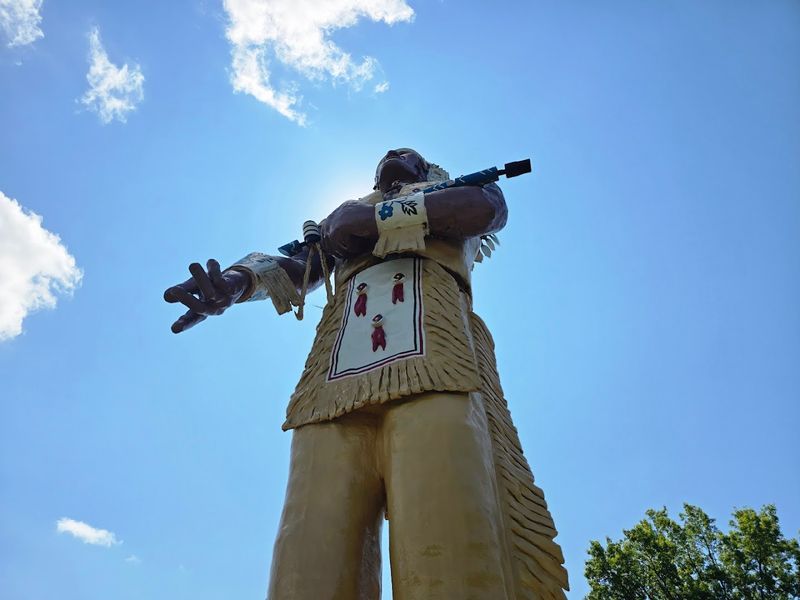
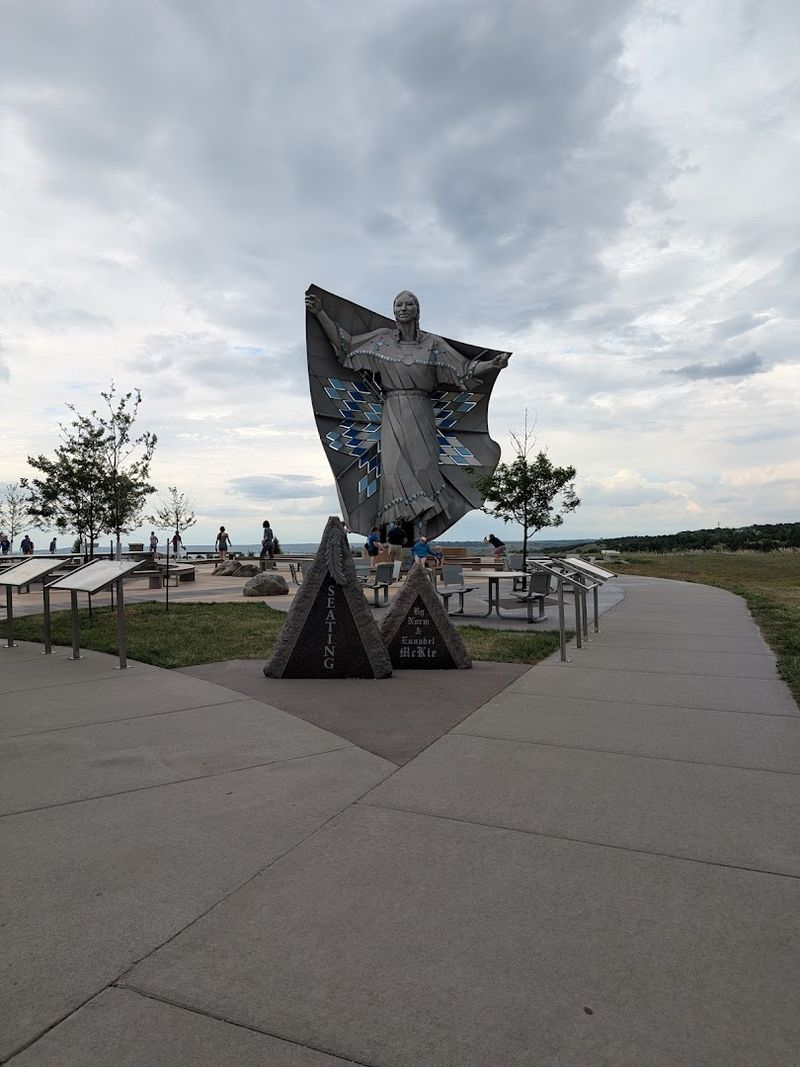
Compared to the Crazy Horse Memorial in South Dakota or the Dignity sculpture in Chamberlain, South Dakota, the Hiawatha statue in Ironwood gets a fraction of the national attention it arguably deserves. Those landmarks are heavily marketed, widely photographed, and deeply embedded in travel itineraries across the region.
Hiawatha, by contrast, sits quietly in a Michigan neighborhood, largely discovered by accident.
That under-the-radar status is both its limitation and its appeal. Visitors who stumble across it consistently describe the experience as a genuine surprise — the kind of discovery that road trips are built around.
There are no crowds, no entrance fees, no merchandise stands. Just a 52-foot painted figure standing in the open air, free for anyone to approach and photograph from any angle.
The statue holds a legitimate record as one of the tallest Native American statues in the United States, a distinction that should place it on more must-see lists than it currently appears on. The combination of sheer physical scale, cultural narrative, surrounding park amenities, and free access creates a stop that punches well above its current profile.
Community investment in the statue’s upkeep — including the recent repainting and improved historical signage — shows that Ironwood takes the landmark seriously as both a point of local pride and a visitor attraction. Those upgrades make the stop more rewarding than it was even a few years ago.
For anyone driving through the Upper Peninsula of Michigan, skipping Hiawatha is a decision that tends to register as a regret afterward. The statue is genuinely impressive in person in a way that photographs only partially capture.
Scale, presence, and the quiet strangeness of finding something this large tucked into an ordinary neighborhood combine into an experience that is difficult to replicate anywhere else on the map.
Share this story