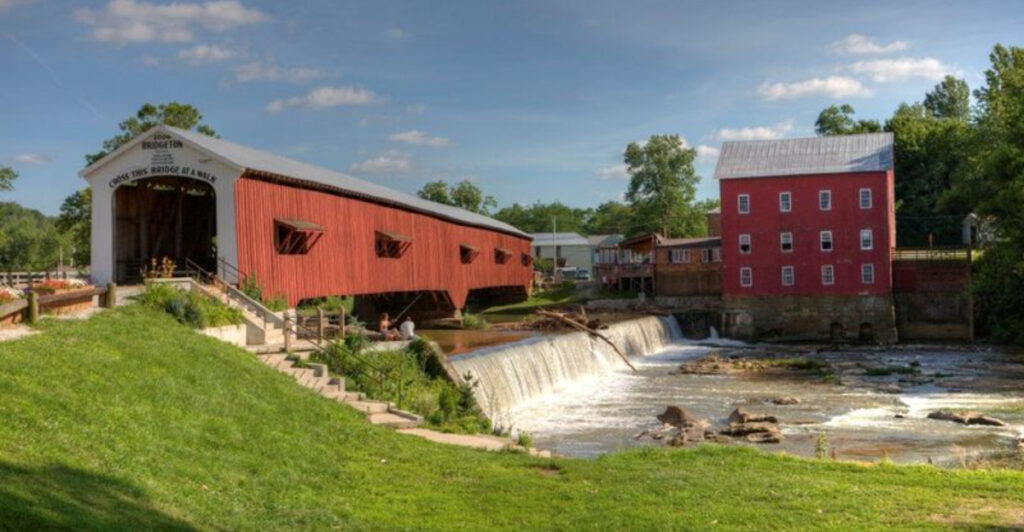
The best road trips are often the ones that slow you down. Scattered across Indiana’s countryside, these historic covered bridges invite travelers to trade busy highways for winding back roads, where weathered timbers, peaceful creeks, and centuries of local history create scenes that feel wonderfully unchanged.
Some stand beside old mills, others span quiet rivers surrounded by farmland and forests, but each one offers a glimpse into Indiana’s rich heritage and enduring craftsmanship. Whether you’re planning a scenic drive, a photography outing, or a weekend exploring small towns, these 8 beautiful covered bridges make every mile worthwhile.
1. Historic Mansfield Covered Bridge (Carbon)
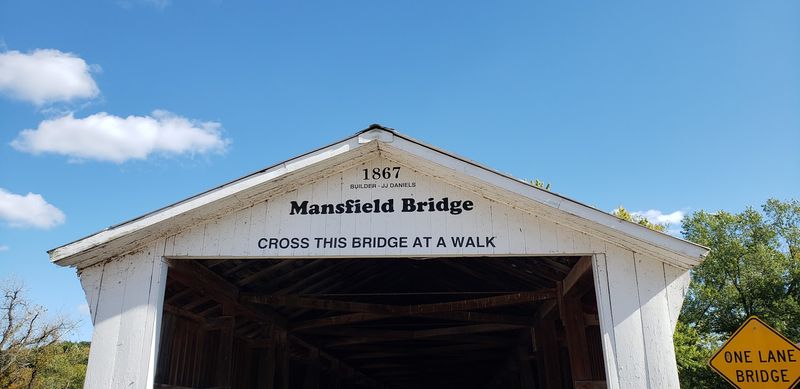
Mansfield is one of those places where the road seems to ease off the gas for you. The covered bridge stretches across Big Raccoon Creek with a long, low profile that immediately stands out, and its bright red sides pop against the trees in every season.
Because it sits in the middle of a historic village setting, the bridge never feels isolated from the life around it. This is Indiana’s longest surviving covered bridge, and that length gives it extra presence when you approach on foot or by car.
You notice the timber framing, the narrow passage, and the way the structure seems built for a different pace of travel. Even with local traffic still using it, the scene stays rooted in older rhythms rather than turning into a museum display.
Just beyond the bridge, Mansfield gives you more than a quick roadside stop. There are small shops to browse, an old mill that adds texture to the view, and plenty of spots where you can pause and look back toward the creek.
That mix makes it easy to spend longer here than planned, especially when the water is moving gently below and the trees are lit up around the banks.
Photographers get strong angles almost everywhere, but you do not need a camera to appreciate the setting. The bridge has scale, the village adds character, and the creek pulls the whole scene together without trying too hard.
If you are mapping out a Parke County bridge drive, Mansfield works best near the top of the list because it sets the tone immediately and does it with unmistakable style.
2. Historic Bridgeton Covered Bridge (Bridgeton)
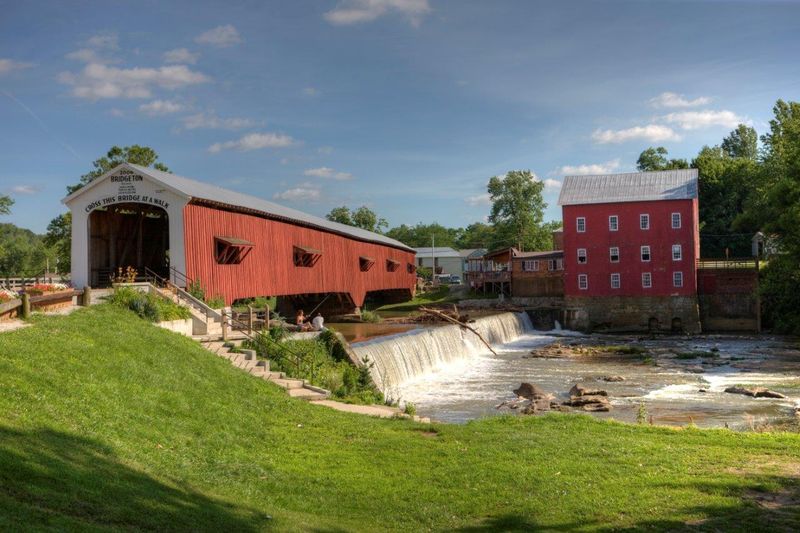
Bridgeton knows exactly how to make an entrance. You pull into town and almost immediately get the full picture: a red covered bridge, a historic mill, a small waterfall, and a village setting that looks arranged for postcards without becoming overly polished.
It is one of the most photographed bridge scenes in Indiana for a reason, and the composition works from nearly every direction.
The current bridge is a faithful reconstruction completed after the original 1868 span was lost to fire in 2005. That history adds an extra layer when you stand nearby, because the bridge represents both preservation and persistence rather than simple nostalgia.
Its familiar form, wooden sides, and crisp lines fit so naturally beside the mill that many visitors would never guess the structure is newer than it appears.
Bridgeton also benefits from having real activity around it instead of just a pull off and a sign. Shops give the area energy, seasonal events draw crowds at the right times, and the sound of water moving beside the bridge adds a steady background note that improves the whole stop.
You can wander a bit, look for different viewpoints, and still feel like the bridge remains the anchor of everything around it.
For a road trip, this one delivers variety in a compact package. You get architecture, water, village charm, and strong photo opportunities without needing a long hike or complicated detour.
If your ideal stop includes a bridge that looks right at home in Indiana’s covered bridge country while offering a fuller village scene around it, Bridgeton earns its spot quickly and without much debate.
3. Historic Medora Covered Bridge (Vallonia)
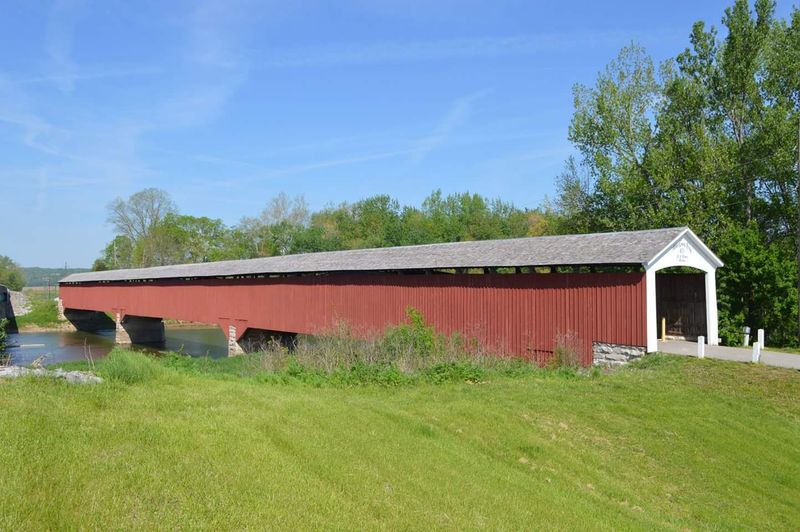
Medora makes a big impression before you even step close. Stretching across the East Fork White River, this bridge looks less like a quick crossing and more like a wooden corridor laid across the landscape.
Its remarkable length changes the whole experience, giving the structure a sense of scale that most covered bridges simply cannot match.
It is widely recognized as the longest historic covered bridge in the United States, measuring 434 feet, and that fact lands differently when you see the span in person.
Built in 1875, the bridge remains an extraordinary example of 19th-century engineering and craftsmanship. Rather than feeling like a forgotten relic, its immense size and remarkably intact design make it easy to appreciate the ambition behind its construction.
The setting helps a lot. The river opens up the view, the surrounding countryside keeps things quiet, and there is enough space around the bridge for its size to register properly.
You are not squeezed into a busy town scene here, so the long trusses, the repeated lines, and the weathered wood all get room to stand out against the calmer background. Medora is especially satisfying for visitors who like structure as much as scenery.
It offers the visual charm expected from a covered bridge, but the real draw is how boldly it stretches across the water with no need for extra decoration. On an Indiana bridge trip, this is the stop that resets your sense of proportion and reminds you that historic craftsmanship could also be ambitious, practical, and seriously impressive.
4. Historic Cox Ford Covered Bridge (Bloomingdale)
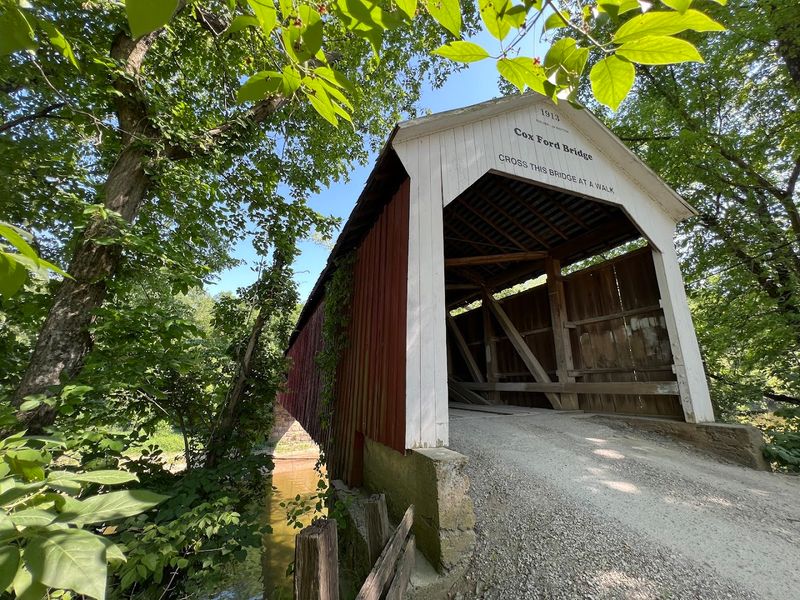
Cox Ford has the kind of setting that makes you lower your voice a little without thinking about it. Tucked near Turkey Run State Park and spanning Sugar Creek, the bridge sits in a landscape of woods, water, and rolling ground that immediately feels calm.
It does not rely on a village backdrop or heavy foot traffic to hold your attention, because the location handles that on its own.
Completed in 1913, the bridge carries a slightly later date than some of Indiana’s more famous spans, yet it still delivers the timber craftsmanship most visitors hope to see. The wooden trusses are well preserved, the proportions are pleasing, and the creek below adds movement without overwhelming the scene.
You get a strong sense of how practical design and natural surroundings can work together when neither one tries to dominate.
This is a rewarding stop for photographers, especially when the light filters through the trees and picks up the red siding against the greens and browns around it. The bridge also suits travelers who prefer quieter places where a few minutes can turn into a longer pause.
Stand nearby, listen to the creek, and the whole area starts to feel more textured than a quick glance from the road suggests.
Because it sits close to one of Indiana’s best known state park areas, Cox Ford fits easily into a broader day of exploring. Yet it never feels like an afterthought or side attraction.
If you want one bridge on your route that delivers strong scenery, a peaceful setting, and a classic Parke County look without the busier village energy of some other stops, this one makes its case fast.
5. Historic West Union Covered Bridge (Montezuma)
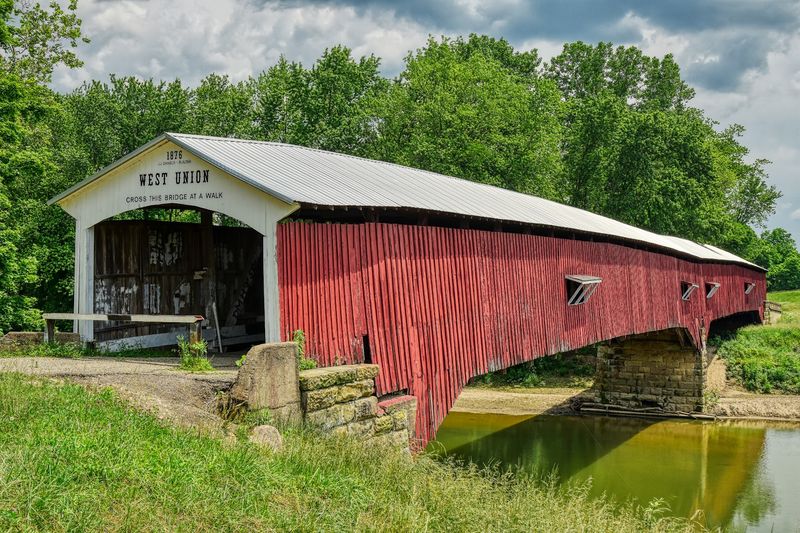
West Union does not need gimmicks to stand out. The bridge stretches across Sugar Creek with a long, commanding profile that immediately signals you are looking at one of Parke County’s major landmarks.
Surrounded by a strong natural setting, it combines engineering heft with scenery that keeps the whole view from feeling purely technical.
Constructed in 1876, West Union is the longest remaining covered bridge in Parke County, and that alone gives it serious presence on any bridge itinerary. It is also recognized as one of the finest surviving examples of a Burr Arch truss bridge in the nation, a detail that matters even if you are not a structural expert.
The visible length, the internal rhythm of the timber framing, and the creek below make the design easy to appreciate in real terms.
National Historic Landmark status adds weight, but the bridge earns its appeal visually before any title enters the conversation. The crossing looks substantial without appearing heavy, and the surrounding trees and water provide enough contrast to make the red siding and wooden geometry stand out.
Depending on the season, the scene can shift from bright and leafy to spare and graphic, which keeps the bridge photogenic year round. For visitors, West Union offers a satisfying blend of scale and setting.
You get a bridge with major credentials, yet the experience still comes down to simple things: the length of the span, the creek moving beneath it, and the quiet confidence of a structure that has held its place for generations. If your route includes only a few stops, this one deserves serious consideration near the top.
6. Neet Covered Bridge (Rockville)
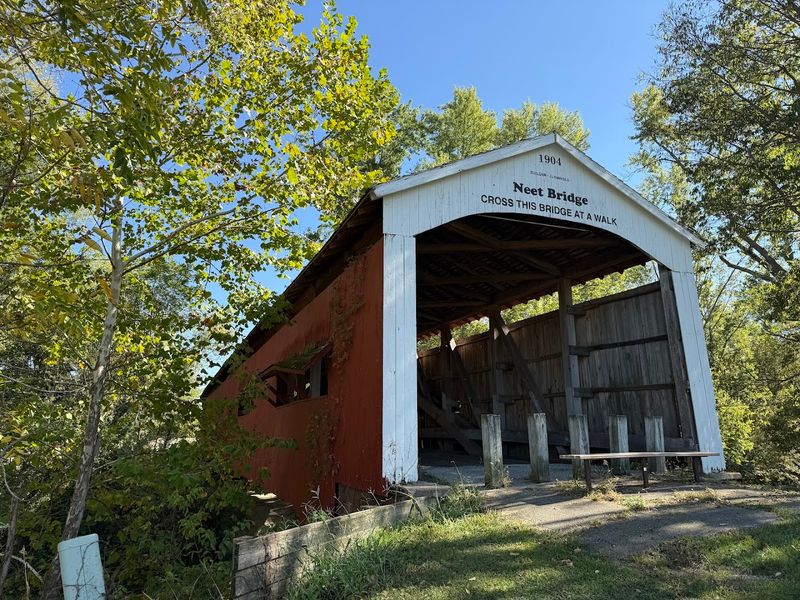
Neet Covered Bridge has a quieter reputation than some of Parke County’s headline names, and that works in its favor. Crossing Little Raccoon Creek just north of Bridgeton, it sits along a scenic driving route where the rural surroundings do plenty of the talking.
You arrive without much buildup, then realize the setting is exactly why the stop lands so well. Built in 1904 by noted bridge builder J. J. Daniels, Neet carries the kind of craftsmanship that bridge fans tend to notice right away.
The proportions are balanced, the timber work reads clearly, and the overall structure retains much of its original character. There is no need for dramatic extras here, because the bridge succeeds through careful design and a location that lets it breathe.
The surrounding landscape feels open and steady, with fields, trees, and water giving the bridge a natural frame instead of a staged one.
That makes it especially good for a leisurely stop when you are already exploring nearby covered bridges and want one that is less crowded in mood.
You can take in the details, look down the road, and appreciate how well the bridge fits the countryside that still surrounds it.
Neet is also a smart reminder that not every memorable bridge stop has to come with shops, festivals, or a large gathering point. Sometimes the appeal is simply a well built wooden span, a peaceful creek, and a road that encourages lingering.
On a Parke County drive, this bridge adds balance to the itinerary by offering a more restrained scene that still carries plenty of visual interest and historic presence.
7. Historic Narrows Covered Bridge (Bloomingdale)
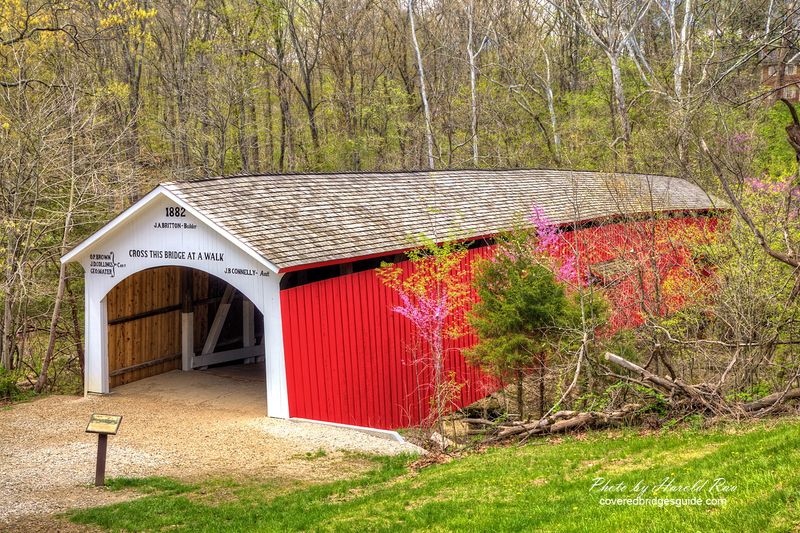
Narrows Covered Bridge wins you over with its setting first. Near Turkey Run State Park, it crosses Sugar Creek in a landscape shaped by wooded hills, bends in the water, and the kind of road that already feels scenic before the bridge appears.
Once the red structure comes into view, the whole composition tightens into one of Parke County’s most attractive historic scenes.
Built in 1882, the bridge carries the visual qualities many travelers hope to find on an Indiana covered bridge drive.
The timber construction looks right at home above the creek, and the proportions are especially pleasing when seen from the banks or nearby approaches. It has enough presence to anchor the view, but it does not overpower the natural lines of the surrounding valley.
This stop shines in spring, summer, and fall, when the creekside landscape adds color and depth around the wooden span. Fresh green growth, dense midsummer foliage, or early autumn leaves all play well with the bridge’s red exterior and the darker tones of the interior framing.
Even on a quick visit, you can tell the scenery is doing more than decorating the bridge; it is part of the experience.
Narrows also works well for travelers who want a peaceful stop that still feels visually rich. The nearby park area brings outdoor appeal, yet the bridge itself remains the clear focus, framed by water and hills instead of village buildings.
On a route filled with strong contenders, this one stands out by delivering a classic covered bridge image in a landscape that looks especially well matched to its age and design.
8. Historic Bean Blossom Covered Bridge (Beanblossom)
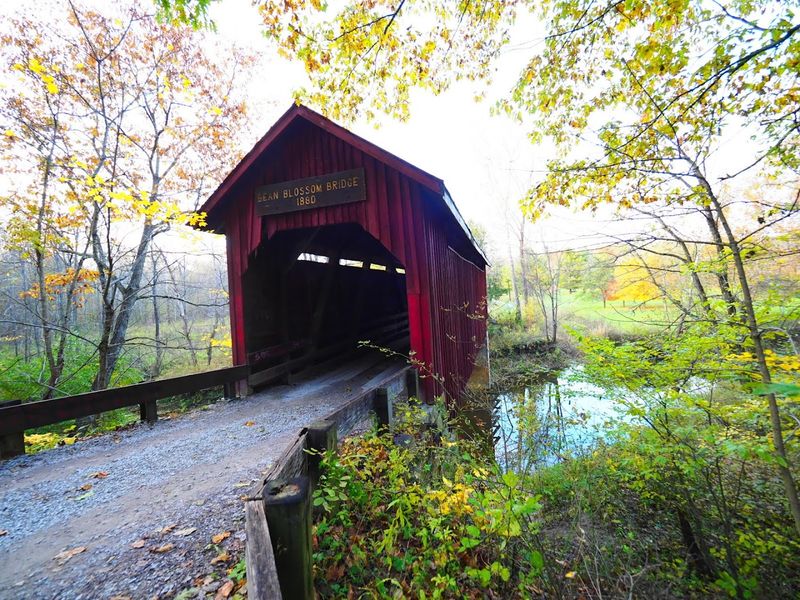
Bean Blossom has a different energy from the Parke County bridges, and that difference is part of the draw. Set in Brown County, it trades festival bustle and multiple bridge clusters for a quieter creekside scene centered on an older wooden span.
The result is a stop that feels grounded, simple, and very easy to enjoy at your own pace. Dating to 1880, Bean Blossom is the oldest covered bridge still standing in its original location in Indiana.
Light local traffic still passes through the bridge, but the pace is slow enough that you have plenty of opportunities to appreciate the timber construction and historic craftsmanship.
Whether you pause nearby or walk around the surrounding area, it is easy to notice the aged wood, the graceful proportions, and the way the bridge settles naturally into the landscape.
The surrounding Brown County landscape adds another layer that suits the bridge well. Trees, gentle terrain, and the creek itself create a calm frame that never competes with the span.
Instead, the setting supports the bridge’s historic character and makes the entire stop feel less like a transportation artifact and more like part of the landscape’s long memory. Bean Blossom is especially appealing if you prefer slower, unhurried visits over rushing from one landmark to the next.
You can linger, study the details, and appreciate a bridge that has remained part of Indiana’s landscape for well over a century.
On an Indiana bridge trip, it offers a nice change of pace from the larger traffic-carrying spans while still delivering the wooden craftsmanship, scenic backdrop, and strong sense of continuity that make covered bridges so memorable.