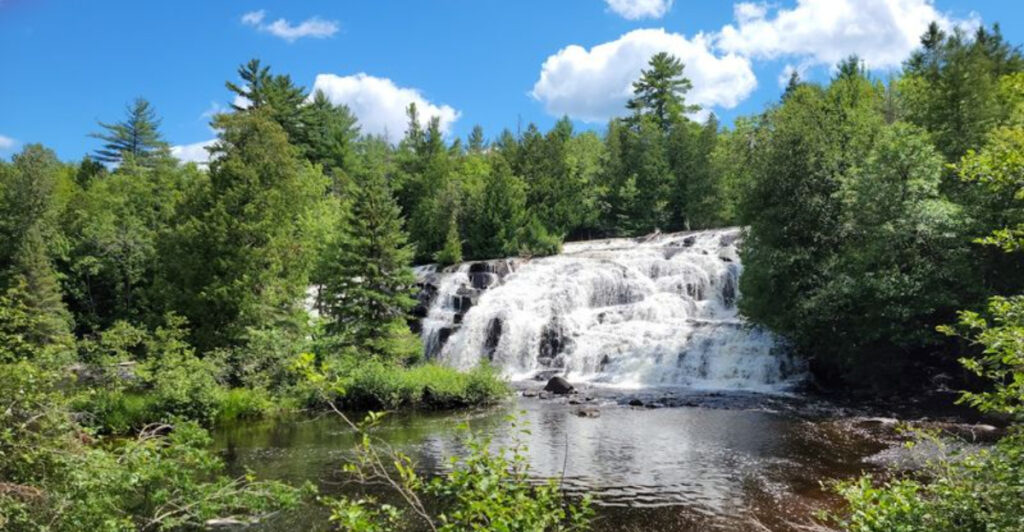
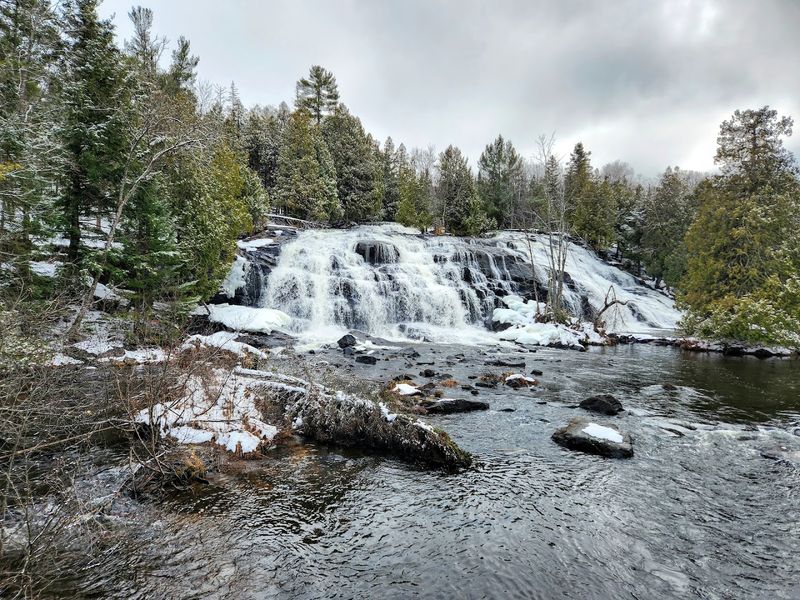
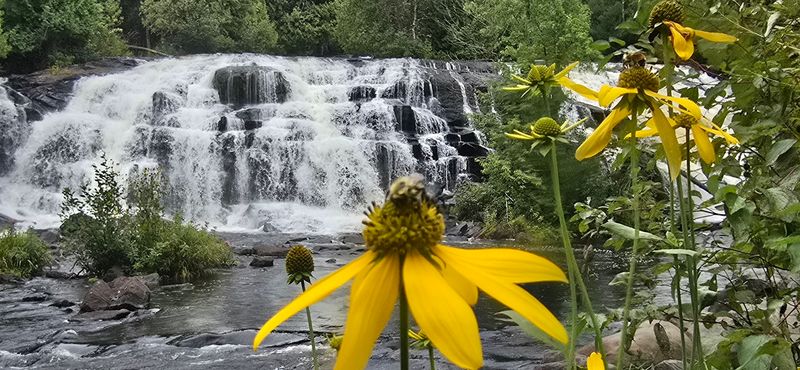
Deep in Michigan’s Upper Peninsula, Bond Falls feels like the kind of place that makes people stop talking for a second. The Ontonagon River spreads across wide, layered rock shelves before dropping roughly 50 feet into a powerful, misty rush below, creating a broad curtain of white water that looks almost too dramatic to be real.
It is easy to see why visitors rank it among the most unforgettable natural sights in the state, with a nearly perfect 4.9-star rating and a reputation that keeps growing quietly. Whether you love waterfalls, scenic drives, easy-access nature stops, or short walks that end with a serious payoff, Bond Falls delivers the kind of Michigan beauty that stays with you long after you leave.
A Wall of White Water You Won’t See Coming
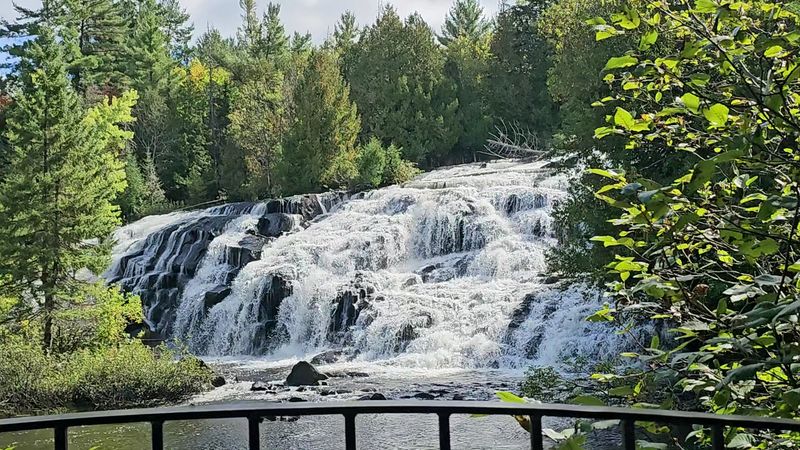
Nothing prepares you for the sheer width of Bond Falls. Most waterfalls drop in a single curtain, but Bond Falls spreads across a broad, stepped rock face that sends water tumbling in dozens of separate streams at once.
The result looks less like a single waterfall and more like a natural amphitheater of cascading white water.
The Ontonagon River gathers momentum before spilling over a series of basalt shelves, each one catching and redirecting the flow before launching it further downward. At peak flow in spring and early summer, the noise alone is something to reckon with — a deep, constant roar that fills the surrounding forest and drowns out everything else.
Standing at the base boardwalk, you feel the cool mist on your face well before you spot the full drop.
The falls sit roughly 50 feet high, but the width is what makes the visual so overwhelming. Estimates place it somewhere between 150 and 200 feet across, which means no single camera angle captures the whole thing cleanly.
Visitors often walk the full length of the boardwalk, stopping repeatedly just to take in a different section of the cascade.
Unlike narrower waterfalls where one good photo spot covers it all, Bond Falls rewards patience. Each step along the viewing platform reveals a slightly different arrangement of channels, drops, and foam patterns.
The rock face itself is darkened by constant moisture and covered in patches of bright green moss, which adds sharp color contrast against the churning white water.
Upper and lower sections of the falls behave almost independently. The upper tier fans out wide and shallow, while the lower portion concentrates into deeper, faster chutes.
Seeing both in one visit gives the impression of experiencing two completely different waterfalls within the same short stretch of river.
The Boardwalk That Puts You Right in the Action
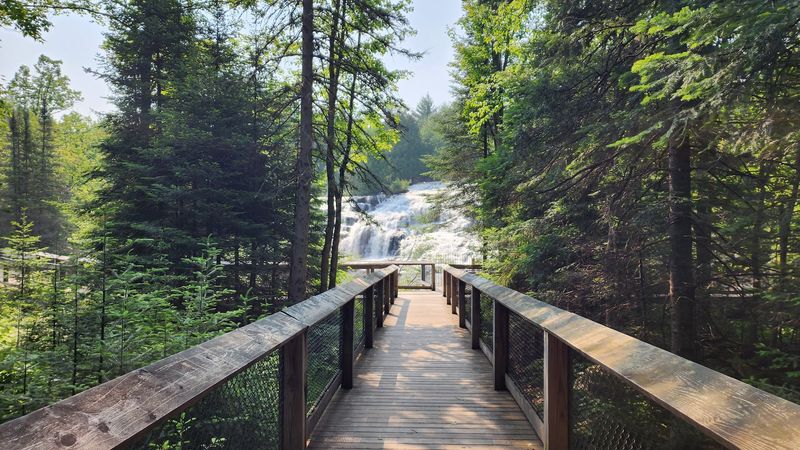
The boardwalk at Bond Falls is one of the smartest pieces of trail design in Michigan’s Upper Peninsula. Constructed along the base of the falls, it gives visitors a front-row perspective on the full cascade without requiring any serious climbing or technical hiking ability.
Families with young children, older adults, and even wheelchair users can reach the main viewing area with minimal effort.
From the parking lot, the walk to the boardwalk takes only a few minutes along a flat, well-maintained path. Once you arrive, the platform stretches parallel to the falls and positions you close enough to feel the spray.
On warm summer days, that mist is a genuine relief — the air near the falls runs noticeably cooler than the surrounding forest.
The railing system along the boardwalk keeps things safe without blocking the view. Steps at certain sections are narrow, so wearing shoes with decent grip is a smart call.
The boards themselves are well-kept, and the overall infrastructure shows consistent maintenance — no rotting planks or wobbly railings to navigate around.
Beyond the boardwalk, a short trail branches off to the right and climbs alongside the falls toward the top. The ascent isn’t steep, but it does involve tree roots and uneven rocks, so sure footing matters more than fitness level.
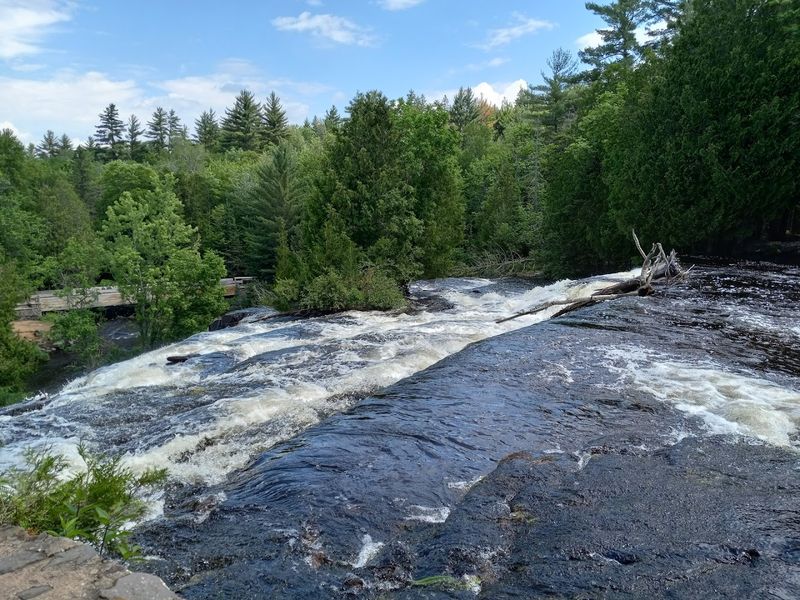
Reaching the summit reveals a completely different perspective — the river above the falls moves quietly through a forested corridor before suddenly accelerating toward the edge.
Going left from the main boardwalk leads to a rocky shoreline where visitors scramble closer to the base of the falls. The rocks are slippery from constant spray, so caution is warranted, but the payoff is an up-close look at the churning pool that most visitors never get.
The boardwalk serves as the starting point for all of it.
Michigan’s Upper Peninsula Hides Its Best Secret Here
Haight Township sits in Ontonagon County, a part of Michigan so remote that most people outside the state couldn’t find it on a map without help. Bond Falls is located within this quiet stretch of the Upper Peninsula, surrounded by dense mixed forest that stays green well into autumn.
The isolation is part of the draw — getting here requires a deliberate decision to seek it out.
The Upper Peninsula as a whole covers more than 16,000 square miles and holds a fraction of Michigan’s total population. That low density translates directly into uncrowded trails, clean air, and a pace of life that doesn’t rush anyone.
Bond Falls benefits from all of it. Even during peak summer weekends, the site rarely feels overwhelmed with visitors, and early morning arrivals often have the boardwalk nearly to themselves.
The surrounding landscape shifts dramatically with the seasons. Spring brings snowmelt that pushes the Ontonagon River to powerful levels, making the falls roar louder than any other time of year.
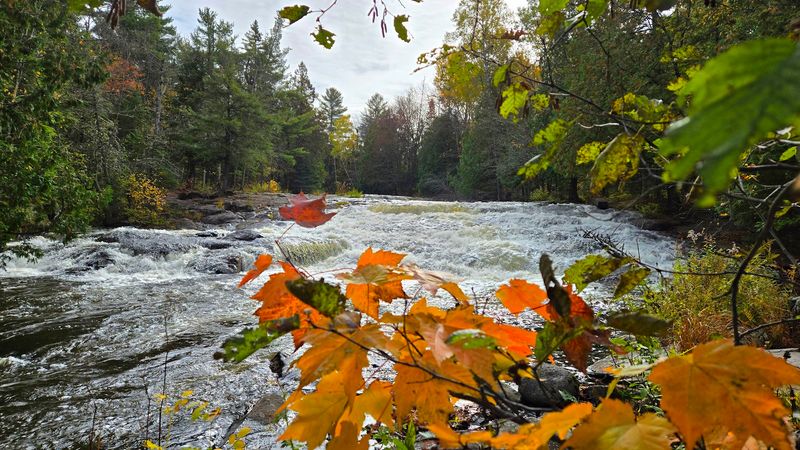
Summer softens things into lush green corridors with wildflowers poking through the understory. Autumn transforms the hillsides into a patchwork of orange, gold, and red that frames the white cascade in colors that look almost digitally enhanced.
Winter visits happen too, mostly by snowmobile since the roads can be difficult to access in heavy snow. The frozen version of Bond Falls — where ice formations cling to the rock face and snow caps the edges — draws its own dedicated crowd of cold-weather explorers.
Each season presents a genuinely different waterfall, not just a colder or warmer version of the same scene.
The remoteness also keeps the site in solid ecological shape. The forest floor around the falls shows little sign of wear beyond the established trails, and the river runs clear even after heavy rain.
Climbing to the Top Changes Everything
Most visitors stop at the boardwalk and call it a day. That’s a perfectly reasonable choice — the view from the base is genuinely impressive.
But skipping the trail to the top means missing the version of Bond Falls that locals tend to talk about most.
The path up runs alongside the right side of the falls, gaining elevation gradually through a mix of packed earth, exposed tree roots, and flat rock sections. The climb isn’t long — the full loop from parking lot to summit and back runs well under a mile — but it asks for attention.
Sections near the water’s edge involve roots crossing the path at ankle height, and some of the rock surfaces stay damp from spray even on dry days.
Reaching the top opens up a view that’s almost the opposite of the base experience. Down below, the falls feel enormous and loud.
Up here, the river arrives calmly from upstream, sliding over smooth rock in wide, shallow sheets before suddenly accelerating toward the drop. The contrast between that peaceful upstream flow and the violent cascade just below it is striking in a way that’s hard to describe without seeing it firsthand.
Looking downstream from the top, the full width of the falls spreads out below in a way that no ground-level angle can replicate. The rock channels, the separate streams, the pool at the bottom — all of it comes into focus at once.
It’s a cleaner, more complete picture of how the waterfall actually works as a system.
The upstream section above the falls also rewards exploration. The river there moves through a quiet, heavily wooded stretch with its own smaller cascades and interesting rock formations.
After the intensity of the main falls, the stillness upstream feels like a deliberate exhale.
Ducks, Picnic Tables, and a Gift Shop Worth Stopping At
Bond Falls isn’t just a waterfall — the site around it has developed into a genuinely comfortable place to spend a few hours. A small outpost near the entrance area stocks snacks, ice cream, and regional souvenirs.
It’s not a full restaurant, but after a warm hike, a cold ice cream cone hits differently when you’re surrounded by the sound of rushing water.
Picnic tables are scattered across a shaded area near the falls, equipped with standing grills for anyone planning to cook. The setup is simple but functional — enough space to spread out, enough shade to stay comfortable during summer afternoons, and enough proximity to the falls to keep the ambient soundtrack going throughout the meal.
Several visitors make a full afternoon of it, hiking first and then cooking out afterward.
Ducks have figured out that humans near the outpost often carry food. A small group of them tends to hang around the water’s edge near the picnic area, making them an unexpected but entertaining addition to the experience.
Feeding them has become something of a tradition for families visiting with younger kids, who tend to find the ducks at least as exciting as the waterfall itself.
Bathroom facilities are available on-site, which matters more than it sounds when you’re driving through remote Ontonagon County with limited stops along the way. Parking is ample and well-organized, accommodating both cars and larger vehicles without much difficulty.
A Michigan Recreation Passport or state park pass is required for entry, so having that sorted before arrival saves time at the gate.
The overall vibe of the grounds is relaxed and unpretentious. There’s no over-development here, no loud signage or crowded vendor stalls — just a well-maintained natural area with enough amenities to keep a visit comfortable from arrival to departure.
When to Go and What to Bring
Timing a visit to Bond Falls involves a few trade-offs worth thinking through. Late spring — roughly May through early June — delivers the highest water volume as snowmelt from the surrounding hills feeds the Ontonagon River.
The falls run fast, wide, and loud during this window, and the visual impact is at its peak. The downside is mosquitoes, which emerge in force across the Upper Peninsula during this same period and can make standing still near the water uncomfortable without proper repellent.
August tends to be the sweet spot for most visitors. Water levels remain respectable, the mosquito population drops significantly compared to late spring, and the surrounding forest is at its fullest green.
Temperatures in the Upper Peninsula stay moderate through summer — hot days do happen, but the shade coverage along the trail and the natural cooling effect of the falls keep things manageable.
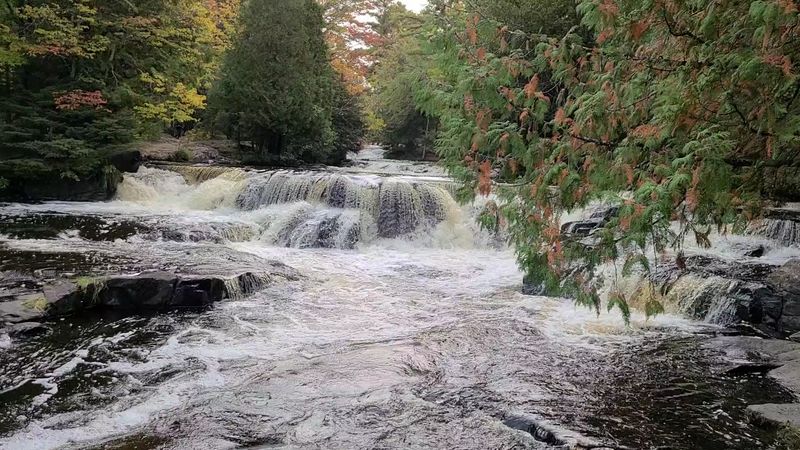
Autumn is worth serious consideration for anyone who enjoys fall color. The hardwood trees surrounding Bond Falls turn quickly in September and October, and the combination of orange and red foliage against white water and dark rock produces some of the most visually striking conditions of the year.
Crowds also thin out after Labor Day, which makes for a quieter, more contemplative visit.
Footwear matters more than most people expect. The trail involves tree roots, wet rocks, and occasionally muddy patches after rain.
Sneakers with decent grip work fine for the boardwalk and lower trail, but anyone planning to scramble on the rocks near the base or climb to the top should opt for something with more ankle support.
Bringing water is a good habit regardless of the season. The hike itself is short, but the drive through Ontonagon County is long, and services along the way are sparse.
Pack accordingly and the logistics stay simple.
Why Bond Falls Stands Apart From Every Other Michigan Waterfall
Michigan has no shortage of waterfalls, particularly in the Upper Peninsula where rivers cut through ancient volcanic rock across hundreds of miles of wilderness. Tahquamenon Falls typically gets the top billing — it’s larger by volume and more widely known.
Bond Falls, however, offers something Tahquamenon doesn’t: the ability to get genuinely close to the action from multiple angles without specialized gear or serious hiking fitness.
The combination of accessibility and visual drama is unusual. Many spectacular waterfalls require long approach hikes or technical terrain.
Bond Falls compresses that experience into a short loop that almost anyone can complete, while still delivering a cascade wide enough and powerful enough to hold serious attention. That balance is rare in any state’s waterfall inventory.
The multi-level structure of the falls also sets it apart. Rather than a single dramatic drop, Bond Falls operates across stacked tiers that each behave differently depending on water levels and season.
Low-water conditions reveal the texture of the underlying rock, showing the channels and grooves carved over thousands of years. High-water conditions bury those details under white foam and spray, creating an entirely different visual experience at the same location.
Rated second best waterfall in Michigan by some regional rankings — just behind Tahquamenon Falls — Bond Falls punches well above its geographic profile. It sits far from any major city, requires a deliberate drive through remote countryside, and still draws visitors who rate it among the best natural sights they’ve encountered anywhere in the Midwest.
The site’s careful maintenance, accessible infrastructure, and preserved natural surroundings ensure the experience stays consistent across visits. Bond Falls isn’t the kind of place that peaks once and disappoints on return trips — the river, the rock, and the surrounding forest make sure of that every single time.
Share this story