A tiny wooden door appears at the base of a tree, and suddenly the trail feels less like a county park and more like the opening scene of a bedtime story.
That is the sneaky magic of New Jersey at its best: one minute you are near a commuter lot, a busy college town, or a perfectly normal suburban road, and the next you are standing beside castle ruins, walking across a wetland boardwalk, or wandering through gardens that seem to have slipped out of another century.
These places are not about big-ticket attractions or packed boardwalk energy. They are quieter, stranger, softer around the edges.
Some ask for hiking shoes, some only need a slow afternoon, and a few reward you for looking closely. If you need a break from errands, traffic, and group chats, these 10 New Jersey wonders make real life feel very far away.
1. South Mountain Fairy Trail – Millburn
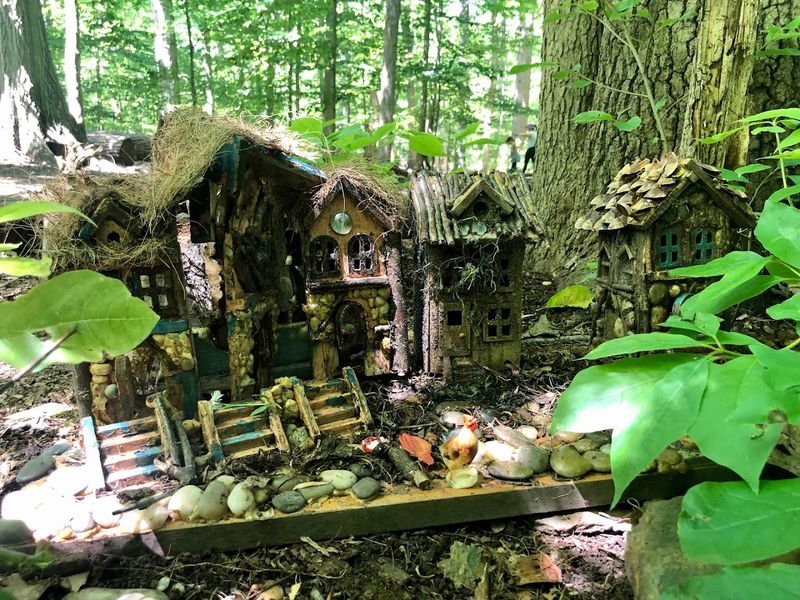
The first clue is usually a miniature roof tucked into a tree hollow, or a tiny front door set so neatly among the roots that you almost apologize for interrupting.
The South Mountain Fairy Trail in Millburn turns a half-mile stretch of the white-blazed Rahway Trail into a small-scale scavenger hunt, with fairy houses built from natural materials and placed along the path near the Locust Grove Picnic Area.
It is whimsical without feeling overdone, which is exactly why it works. Kids race ahead to spot the next little home, adults pretend they are only humoring the kids, and everyone ends up crouching beside mossy logs like they have discovered a secret neighborhood.
The trail is part of South Mountain Reservation, and it is free to visit, open daily from dawn to dusk, with leashed dogs allowed. Parking is available near 197 Glen Avenue, though the lot can fill quickly on weekends, so arriving earlier makes the whole outing feel calmer.
The best move is to slow down, stay on the trail, and let the details come to you: stone paths no bigger than your palm, twig railings, and tiny doors that make the woods feel inhabited in the sweetest possible way.
2. Van Slyke Castle Ruins – Ramapo Mountain State Forest
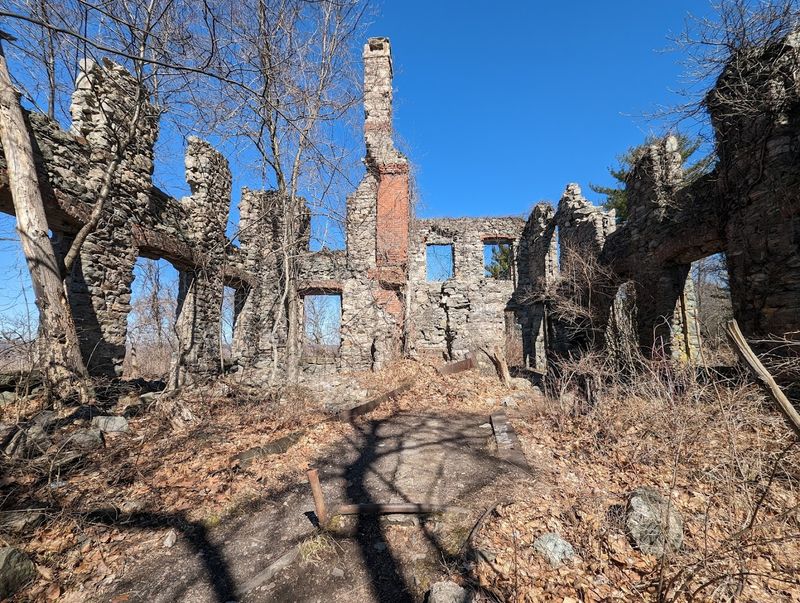
A stone tower in the woods has a way of making even a normal hike feel like a quest. The Van Slyke Castle ruins sit inside Ramapo Mountain State Forest, where old roads, rugged trails, Ramapo Lake, rocky ledges, and mountain views all come bundled into one wonderfully moody North Jersey adventure.
The “castle” is really the remains of a former private estate, and that makes it even better: you are not visiting a polished historic house with velvet ropes, but roofless stone walls, a water tower, and fragments of a grand place slowly being reclaimed by the forest.
The hike can be rocky and uneven, so this is not the outing for flimsy shoes or a “quick stroll before brunch” mindset.
Go for the Castle Loop if you want the full effect, with the lake, ruins, and views stitched together into a satisfying few miles.
The forest itself offers miles of trails for hikers and mountain bikers, and Ramapo Lake is one of its central features, with rock outcroppings that give the landscape a dramatic, almost Adirondack feel without leaving New Jersey.
Pack water, download or bring a trail map, and give yourself time to linger when the ruins finally appear through the trees.
3. Ken Lockwood Gorge – Lebanon Township / Califon
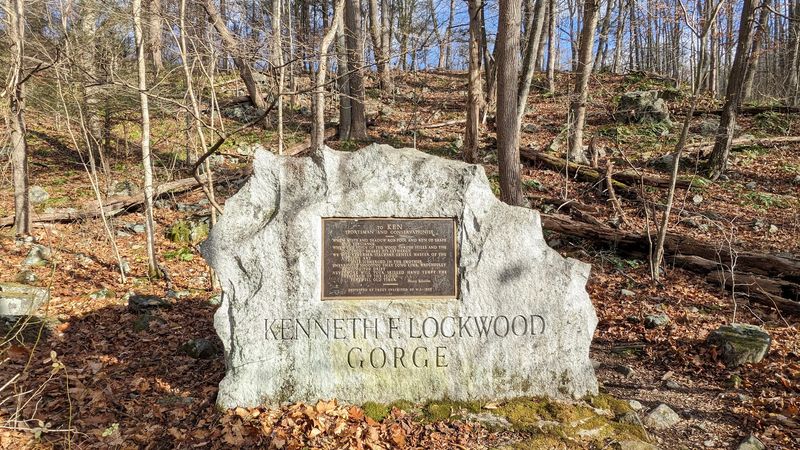
The sound arrives first: water slipping over rock, quick and cold and steady, like the whole gorge is whispering under its breath. Ken Lockwood Gorge, tucked around Lebanon Township and Califon, is one of those places that makes New Jersey feel wilder than people give it credit for.
The centerpiece is a 2.5-mile stretch of the South Branch of the Raritan River, cutting through steep, wooded terrain inside a 563-acre wildlife management area. It is beloved by trout anglers, but you do not need a fishing rod to understand the appeal.
A walk here is all moving water, hemlocks, boulders, and that deep-green shade that makes summer feel cooler by several degrees. The Columbia Trail passes through the area, making it a solid pick for a low-key walk or bike ride, though parts near the river can feel narrow and rustic.
This is not a place with a gift shop mood; it is more “bring coffee, wear good shoes, and remember to look up from your phone.”
In fall, the gorge becomes especially good, with the river flashing between leaves and the road curling beside it like a scene from somewhere much farther north. Visit gently, give anglers space, and let the water do most of the talking.
4. Pyramid Mountain and Tripod Rock – Montville / Kinnelon
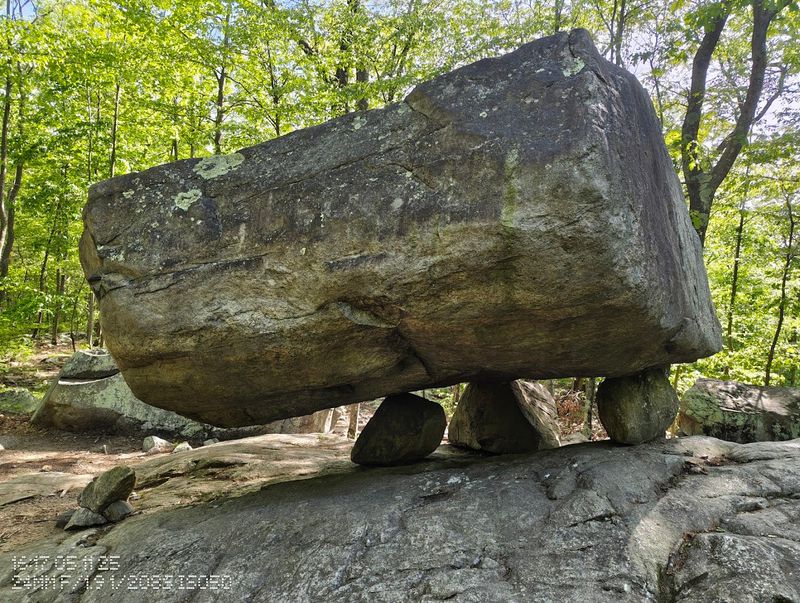
Tripod Rock looks like nature set up a magic trick and forgot to explain it. At Pyramid Mountain Natural Historic Area, the famous boulder balances on three smaller stones, a glacial oddity so strange and precise that it feels staged, even though the Wisconsin Glacier did the heavy lifting more than 18,000 years ago.
The park covers more than 1,600 acres of rugged trails, wetlands, ridges, forests, and rock outcroppings, so Tripod Rock is only the headline act. Bear Rock and Whale Head Rock add to the “how is that just sitting there?” feeling, while the trails offer enough climbs and uneven footing to make the destination feel earned.
Start from the visitor center area and choose a route that matches your patience level; the suggested Tripod Rock hike is not impossible, but it is more of a real walk in the woods than a paved-path wander. The payoff is excellent for curious hikers, geology nerds, and anyone who likes a little mystery with their cardio.
Dogs are allowed on leash, but bikes, climbing, and fishing are not, which helps keep the place focused on walking, looking, and occasionally standing under a giant rock wondering whether you should trust gravity.
5. Deserted Village of Feltville – Berkeley Heights
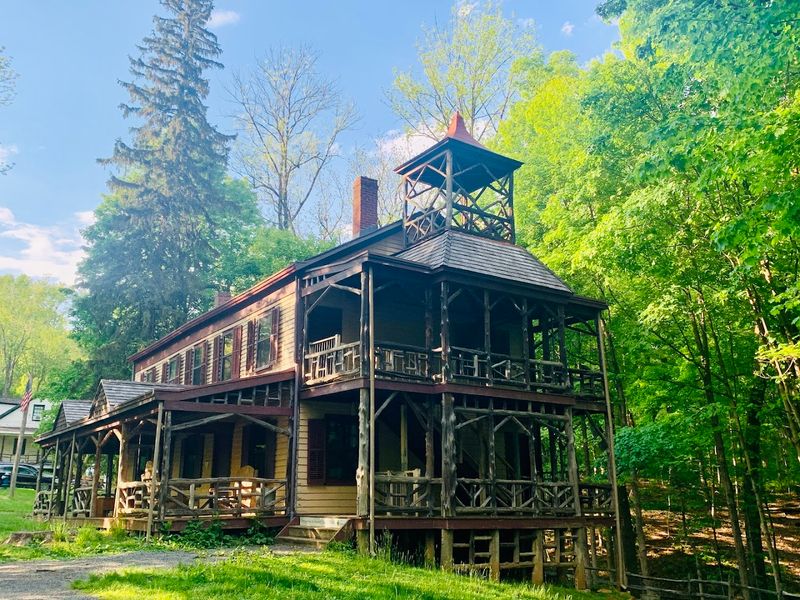
The houses are still there, which is what makes Feltville feel so deliciously odd. In the Watchung Reservation near Berkeley Heights, the Deserted Village of Feltville is not just a trail stop with a plaque; it is a cluster of historic buildings and remnants from a place that has lived several lives.
Over three centuries, the area has been a farming community, a mill town, a summer resort called Glenside Park, and finally part of one of the country’s early county park systems. That layered past gives the walk an unusual texture.
You are not just looking at pretty old structures; you are moving through a story that keeps changing costumes. The grounds are open daily from dawn to dusk, and interpretive panels help explain what you are seeing without turning the visit into homework.
There is roughly a mile-long self-guided walking tour that begins and ends near the parking lot off Glenside Avenue, making it manageable for a relaxed afternoon. The practical rule to remember is simple: admire the old porches and buildings from where you are supposed to stand, because some structures are fragile and some are inhabited.
Go on a quiet morning, when the woods are still, and the place feels less abandoned than paused.
6. Greenwood Gardens – Short Hills
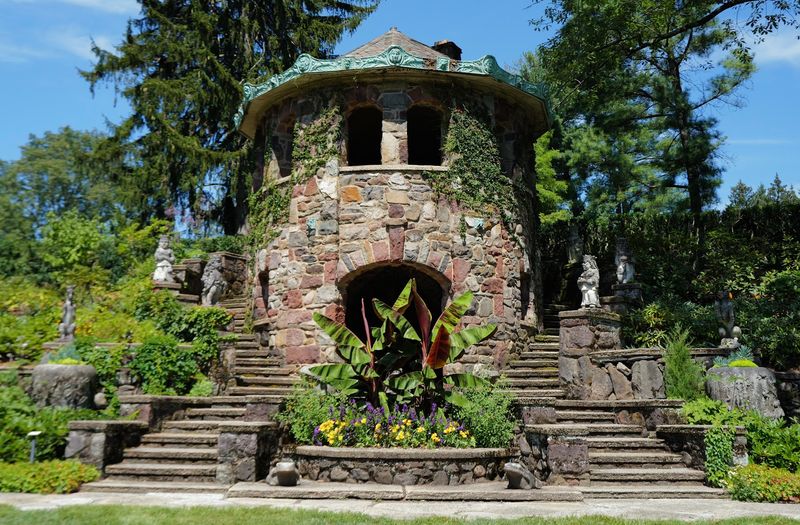
A fountain, a grotto, a stone stairway, a sudden terrace framed by green: Greenwood Gardens knows how to make an entrance.
This 28-acre public garden in Short Hills began as a private estate, and it still carries that hushed, old-world quality, with Arts and Crafts details, winding paths, meadows, woodlands, and garden rooms that unfold slowly rather than shouting for attention.
It is the kind of place where you should resist the urge to “cover” everything quickly. Wander, sit, double back, and let the design reveal itself.
The garden is seasonal and ticketed, with the 2026 season running from May 1 through November 8, and advance tickets are recommended because entry is managed carefully. Parking is complimentary, but entry is by vehicle only, and the uneven paths and stairways mean strollers are not permitted beyond designated stroller parking areas.
That makes Greenwood feel a bit more grown-up than some of the other spots on this list, ideal for a quiet date, a solo reset, or a slow walk with someone who appreciates a good stone wall. It is polished but not stiff, elegant without feeling fussy, and tucked beside preserved parkland in a way that makes Short Hills feel surprisingly far from daily noise.
7. Cross Estate Gardens – Bernardsville
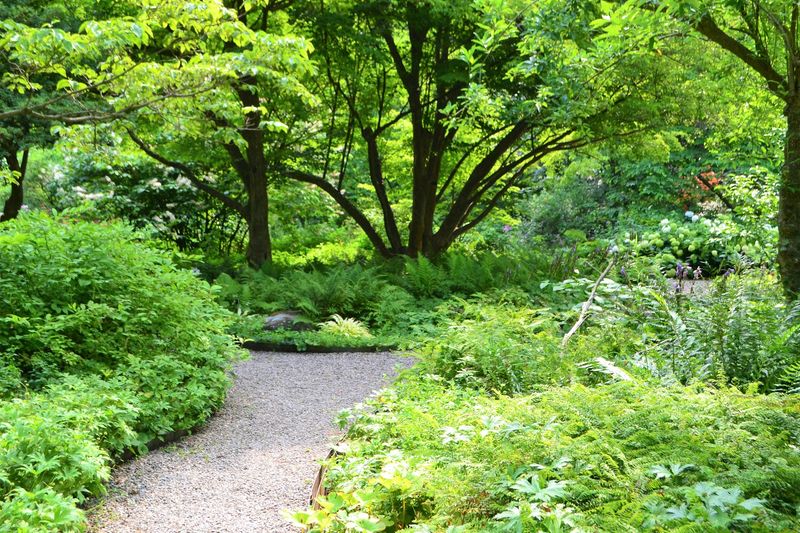
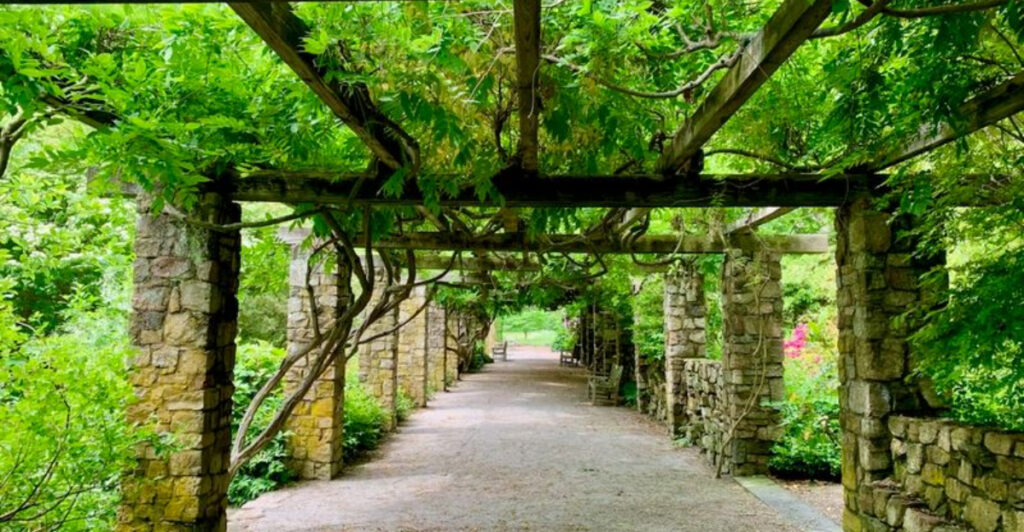
Wisteria has a flair for drama, and at Cross Estate Gardens in Bernardsville, it gets the setting it deserves. Located on the Cross Estate within the New Jersey Brigade area of Morristown National Historical Park, these gardens feel like a gentle secret folded into Revolutionary War country.
There are formal and native gardens, a wisteria-covered pergola, and a mountain laurel allee, all arranged with the sort of quiet grace that rewards slow walkers. This is not a flashy botanical garden with crowds pressing toward the same photo spot.
It is more intimate, more neighborly, and somehow more transporting because of that. The gardens are free to enter, parking is free, and summer hours are listed as 8 a.m. to 8 p.m., making it an easy add-on to a Jockey Hollow outing or a standalone escape when you need green space without a major production.
Spring brings the biggest floral drama, but summer has its own charm, especially when the garden settles into leafy shade and the stonework starts to feel like part of the landscape. Bring a camera, but do not let it boss you around.
The best part of Cross Estate is the feeling that you stumbled into something lovingly tended, not heavily advertised.
8. Rutgers Gardens and Helyar Woods – New Brunswick
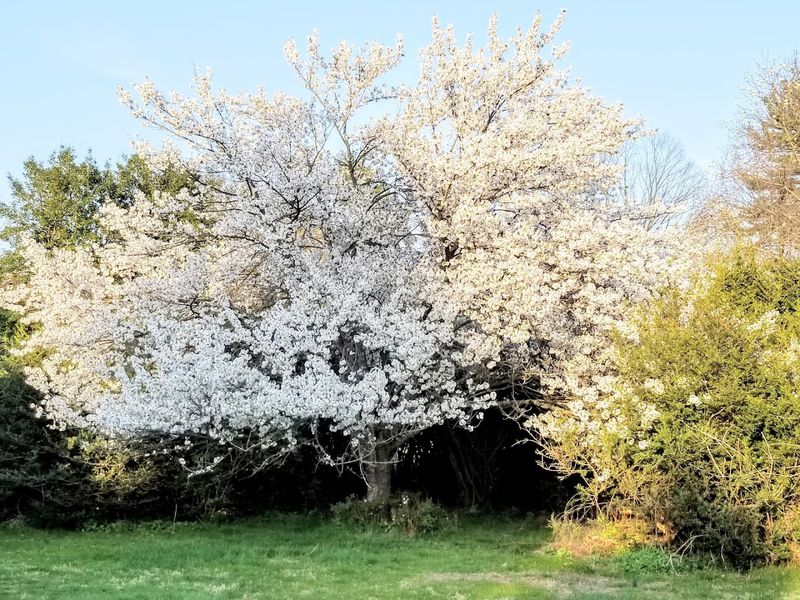
New Brunswick has plenty of noise, movement, and student energy, which makes Rutgers Gardens feel like an especially good trick.
Just off the Rutgers–New Brunswick campus, this 180-acre public botanic garden mixes display gardens, natural spaces, a student farm, research areas, and Helyar Woods into one surprisingly varied escape.
You can go for flowers and planted collections, then slip into nearly 60 acres of old-growth woodland with springs, a stream, and an old quarry near Westons Mill Pond. That contrast is the fun of it: one moment feels cultivated and colorful, the next feels shaded, rooty, and much older than the road you drove in on.
Admission is free, though donations are welcome, and the gardens are open year-round except Mondays, with seasonal hours that shift between longer warm-weather days and shorter winter hours.
Use 130 Log Cabin Road for navigation, and note that the grounds include grass, stone paths, unpaved trails, stairs, and uneven terrain, so comfortable shoes are a good idea.
Rutgers Gardens is also carry-in, carry-out, with no refreshments on site, which is your cue to bring water and keep the picnic simple. It is part garden stroll, part woodland wander, and part reminder that even a busy college town can hide a quiet pocket of green.
9. Pochuck Boardwalk – Vernon Valley
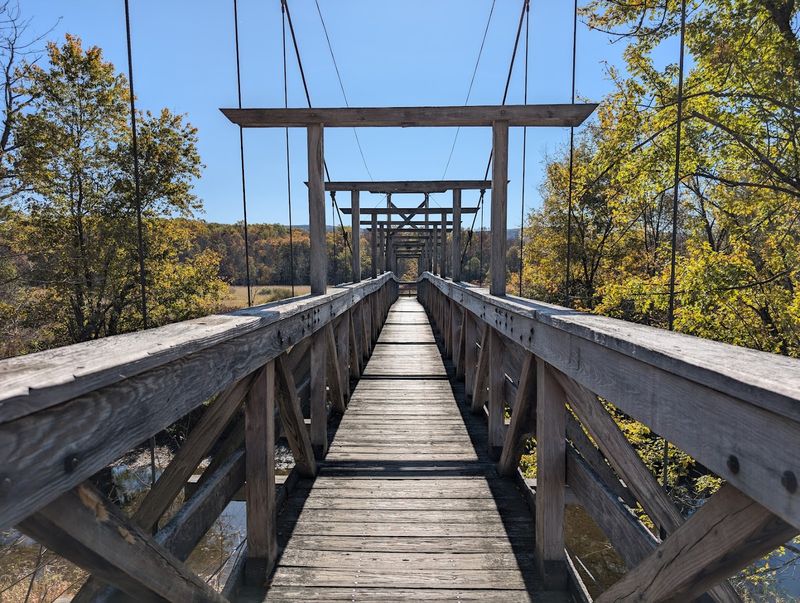
New Jersey’s most surprising boardwalk is not next to saltwater, arcades, or funnel cake. It floats through wetlands in Vernon Valley as part of the Appalachian Trail, stretching more than a mile over one of the largest wetland areas along the entire trail.
The full suggested hike is an easy 2 miles, but the boardwalk itself is the star: long, straight in places, gently bending in others, with grasses, open sky, birds, frogs, turtles, and the kind of big wetland silence that feels almost theatrical.
It opened for public use in 2002, and it remains one of the most accessible-feeling Appalachian Trail experiences in the state, though there are a few practical caveats.
The boardwalk itself is wheelchair accessible in sections, but nearby ADA parking is not available, and the transition from pavement to boardwalk is not fully standard.
For most walkers, the main advice is to wear comfortable shoes, go early if you want fewer people, and bring sun protection because shade can be limited across the open marsh.
The north end also connects toward a suspension bridge over Pochuck Creek, which adds just enough adventure to make the outing feel bigger than its mileage. It is flat, peaceful, and oddly cinematic, especially when the grasses glow late in the day.
10. Whitesbog Historic Village – Browns Mills
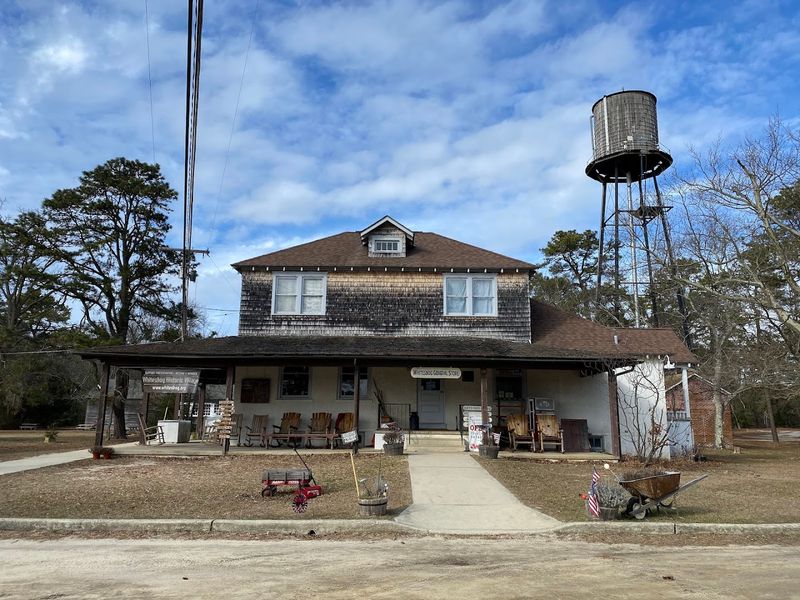
The roads turn sandy, the pines close in, and suddenly Browns Mills feels like the edge of another era. Whitesbog Historic Village is a former cranberry farming village founded in 1857, set within Brendan T.
Byrne State Forest and surrounded by bogs, blueberry fields, reservoirs, creeks, sugar-sand roads, and Pine Barrens woods. It is one of those places where the history and landscape are inseparable.
Whitesbog was once the largest cranberry farm in New Jersey in the early 1900s, and it is deeply tied to the cultivation story of blueberries and cranberries in the United States.
Today, the village is cared for by the Whitesbog Preservation Trust, with historic buildings, trails, events, and a general-store feel that gives the whole place a sturdy, time-capsule charm.
Hiking is available daily from sunrise to sunset, and the wider property covers about 3,000 acres, so you can keep the visit simple or turn it into a longer Pine Barrens ramble.
Look for special walks, harvest events, and seasonal programs if you want more structure, but Whitesbog is just as rewarding when you arrive with no agenda beyond wandering.
It is quiet, a little mysterious, and wonderfully rooted in the sandy, cranberry-colored soul of South Jersey.