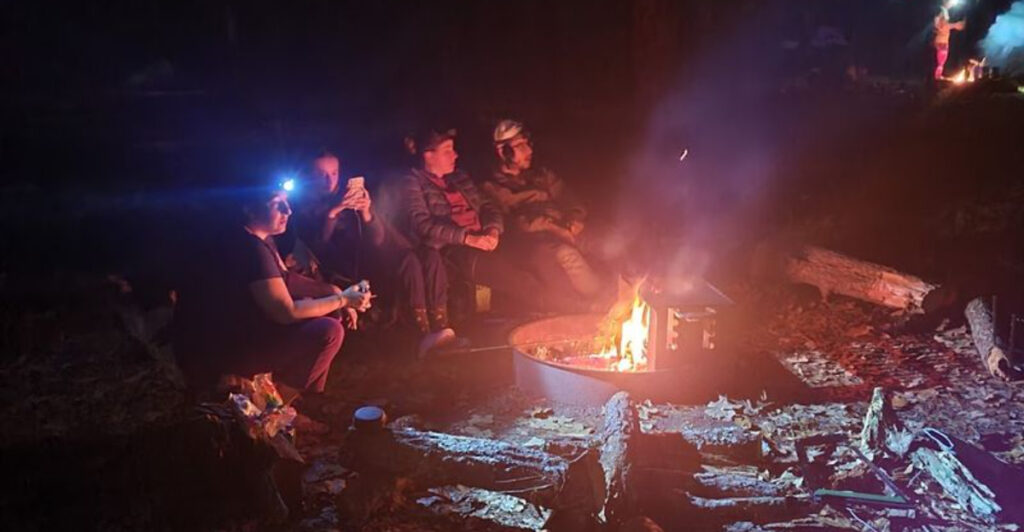
The last thing Lower Forge gives you is convenience, and honestly, that is the whole charm.
Somewhere deep in Wharton State Forest, after the pavement has disappeared, the sand roads have started acting like sand roads, and the pines have closed ranks around you, this little campground waits beside the Batsto River with no showers, no flush toilets, no camp store, and no easy way to pretend you are “roughing it” from the trunk of your car.
Lower Forge is one of those rare New Jersey places that makes the state feel bigger than it looks on a map. It sits in the Pine Barrens, inside Wharton State Forest, which covers more than 124,000 acres and is the largest single tract in the New Jersey State Park System.
The reward is simple: quiet water, sandy trail, pitch pines, and the feeling that you actually earned your night outside.
The trip to Lower Forge starts feeling wild before you even reach camp
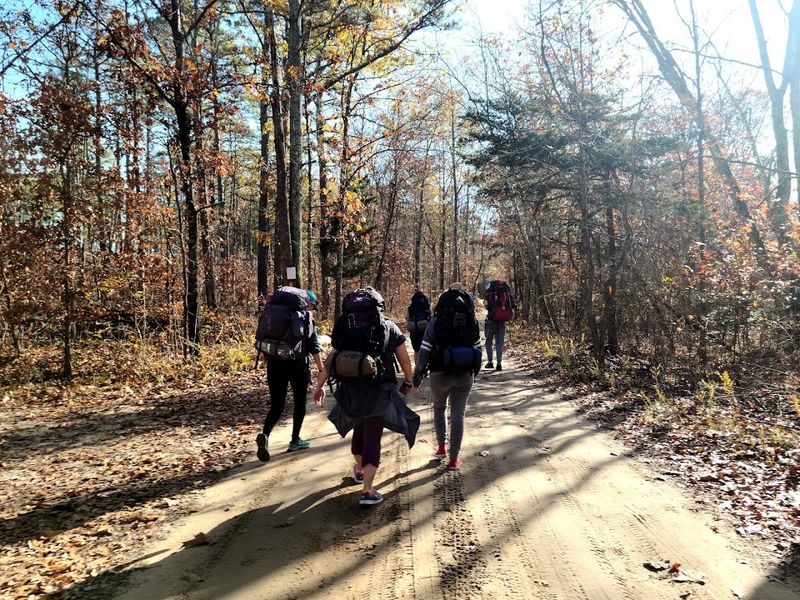
Getting to Lower Forge is not the kind of campground arrival where you roll past a welcome booth, wave at someone in a golf cart, and pull neatly into a numbered gravel pad.
Wharton State Forest has plenty of roads, but many of them are sandy, narrow, and very much Pine Barrens roads, the kind that make you slow down and pay attention.
The state allows street-legal, registered, insured vehicles on approved designated motorized recreation routes, but it also makes the rules clear: stay on sand roads, respect the 20 mph maximum speed limit, and do not treat the forest like an off-road playground. ATVs are not allowed on State Park Service property.
That matters here, because Lower Forge is not a drive-up campsite. Official camping information lists it as accessible only by hiking or paddling, with no motor vehicles permitted at the campground itself.
In other words, the road gets you into the mood, but your feet or your boat do the final work. Depending on how you approach the area, the arrival can feel like a slow peel away from regular New Jersey: less traffic noise, more pine needles, more sandy shoulders, more “are we still in the same state?” moments.
The Batsto Office, at 31 Batsto Road in Hammonton, and the Atsion Office, at 744 Route 206 in Shamong, are the practical anchors for planning, permits, and check-in. The state lists Lower Forge as a 6.5-mile hike from either office, so this is not a campground to improvise at sunset with a cooler in one hand and flip-flops on your feet.
This is primitive Pine Barrens camping in the best possible way
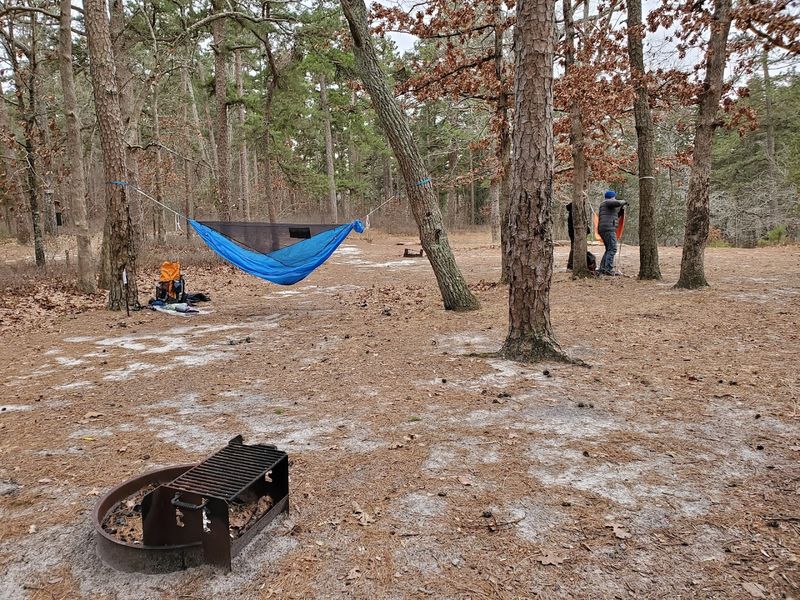
A fire ring, a tent site, partial shade, and access to a pit toilet are the amenities package at Lower Forge, so adjust your expectations before you start packing. There is no potable water on-site, which is not a tiny footnote here; it is the difference between a smart trip and a miserable one.
State camping details list Lower Forge as having nine primitive tent sites with fire rings and pit toilets, but no drinking water, so every bottle you plan to drink, cook with, brush your teeth with, or pour over a stubborn coffee setup needs to come in with you. That stripped-down setup is exactly why the place works.
Lower Forge does not try to soften the Pine Barrens into a campground resort. It lets the forest stay a little sandy, a little buggy, a little damp at the edges, and a little mysterious after dark.
The sites are listed as hike-in, with a maximum of six people per site, and nightly costs are posted at $3 per person per day for New Jersey residents and $5 per person per day for non-residents.
Dogs and cats are allowed at pet-friendly Wharton campsites, including Lower Forge, with registration, rabies paperwork, a two-pet maximum per camping permit, and an additional $5 per night pet fee.
None of this is complicated, but it does reward campers who plan like adults. Bring a real tent, a water plan, a headlamp, food storage that does not invite trouble, and shoes that can handle sand.
Lower Forge is simple, not sloppy.
The Batsto River gives the whole place its quiet magic
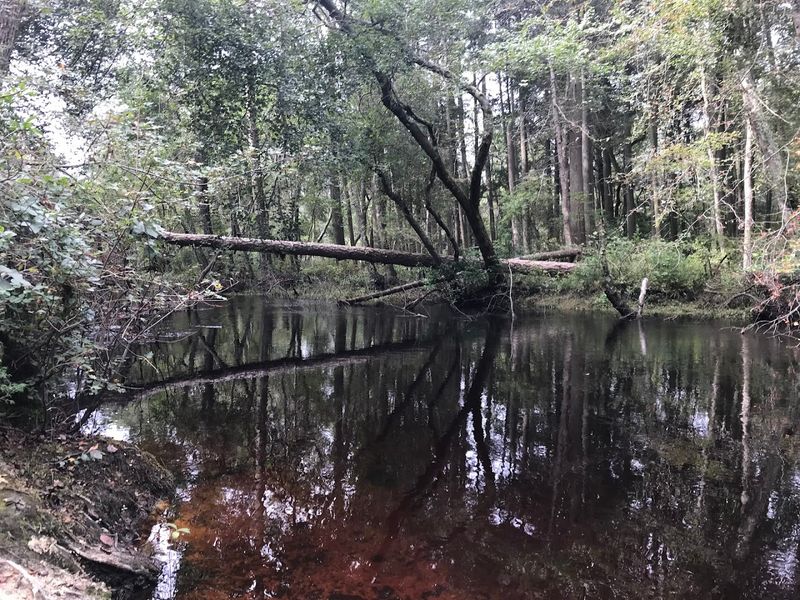
The Batsto River is not dramatic in the big, thundering, postcard-waterfall way. Its magic is quieter than that.
It slips through the Pine Barrens with tea-colored water, soft banks, cedar shadows, and the kind of stillness that makes every paddle dip, frog call, and twig snap feel amplified. Lower Forge sits along that river, which is a huge part of why the campground feels so removed even though it is still in New Jersey.
The color of the water is part of the Pine Barrens personality: dark, clear, and stained by natural tannins from leaves, roots, and cedar swamps rather than mud. Around Wharton, the landscape is full of the ingredients that make South Jersey’s interior so distinct, from pitch pine and oak woods to Atlantic white cedar wetlands.
The state’s trail brochure notes that nearby routes pass through pine-oak uplands, wetlands, cedar swamp habitat, and sandy forest, with wildlife such as beaver, whitetail deer, great blue heron, and red-tailed hawk frequently observed in the broader area. That is the rhythm you come for at Lower Forge.
Morning is the good stuff: a little mist above the river, sand still cool underfoot, birds moving before the heat settles in, and the campfire ring looking much less romantic until coffee happens. The river also adds responsibility.
Conditions can change, obstructions happen, and paddling access is not something to assume.
Current state advisories have listed the Batsto River closed to paddlers from Hampton Furnace to Lower Forge because of obstructions, so anyone planning to arrive by water should check conditions before building a trip around that route.
You can hike in on the Batona Trail or arrive by paddle
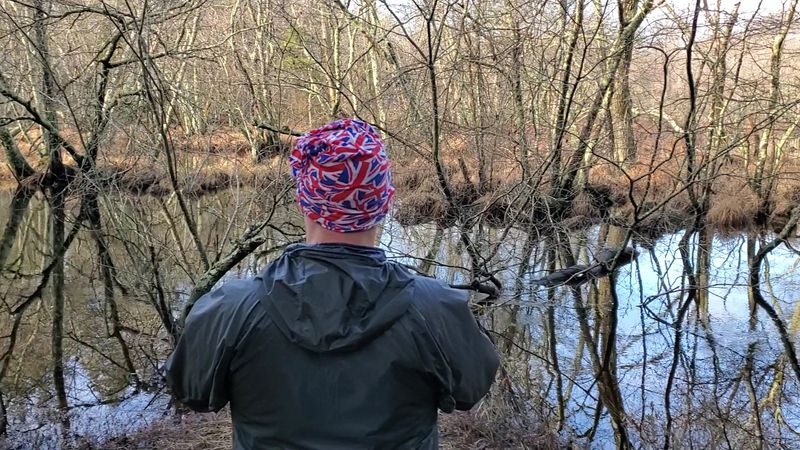
Lower Forge has two classic Pine Barrens approaches: by foot or by water. The hiking version is tied to the Batona Trail, one of South Jersey’s great long-distance routes and one of the most wonderfully odd trail experiences in the state.
Instead of big climbs and summit drama, the Batona gives you sand, pines, cranberry-country moods, cedar swamps, quiet roads, and miles of flat walking where the challenge sneaks up on your calves instead of your lungs. Official trail information says the Batona now runs roughly 53 miles from Ong’s Hat in Brendan T.
Byrne State Forest through Franklin Parker Preserve and Wharton State Forest to Bass River State Forest. Lower Forge sits along the Batona Trail and the Batsto River, making it a natural overnight stop for hikers who want the Pine Barrens to feel like a real backpacking trip rather than an afternoon loop.
If you are starting from Atsion or Batsto, the state lists the hike to Lower Forge at 6.5 miles from either office, which is very doable for prepared hikers but long enough that you will notice every extra canned beverage you packed “just in case.”
The paddling version sounds romantic, and it can be, but it needs extra homework. Wharton’s rivers are part of the fun of the forest, and the park is known for canoeing and kayaking, but official advisories can affect specific stretches.
The Batsto River closure between Hampton Furnace and Lower Forge is a good reminder that Pine Barrens water routes are living routes, not theme-park rides. Hike in, paddle in when conditions allow, but do not wing it.
Nine simple campsites keep the experience small and peaceful
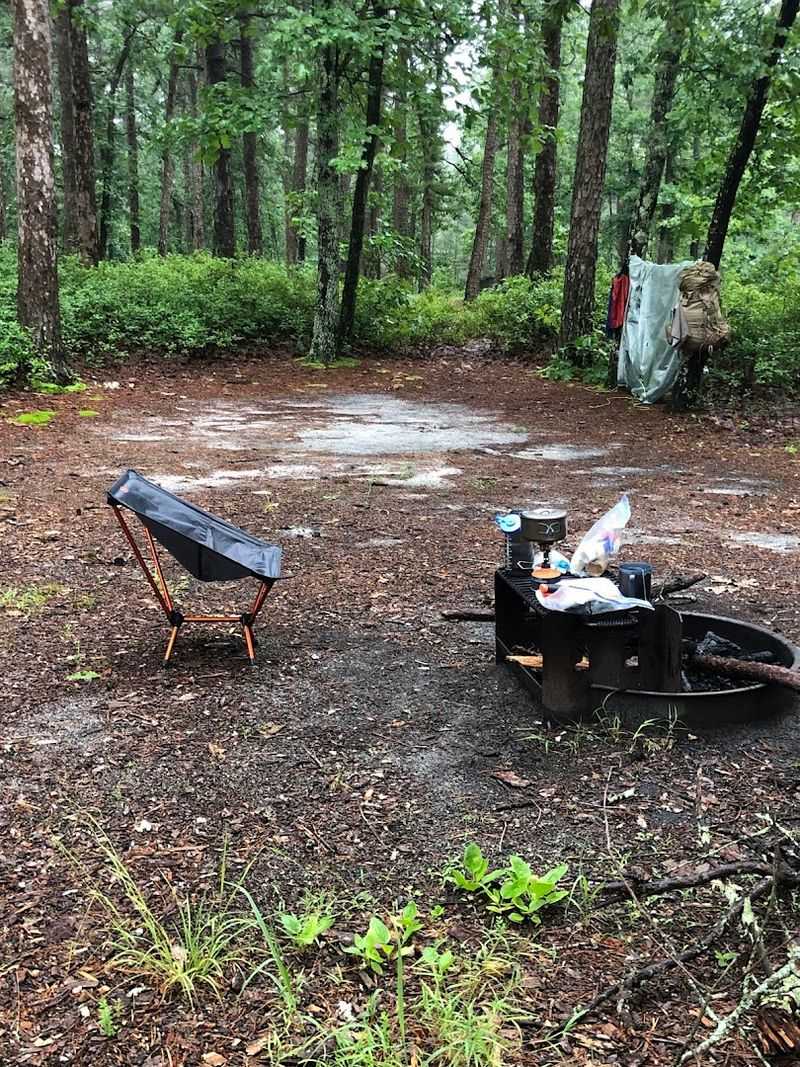
Nine sites is the whole Lower Forge universe. That is not a typo, and it is also the reason this campground has such a different feel from the busier parts of Wharton.
The reservation system lists Lower Forge sites LF001 through LF009, each with hike-in access, pit toilets, partial shade, and a maximum of six people. That small scale changes the mood.
You are not wandering through loops of RVs, string lights, Bluetooth speakers, and kids circling the bathhouse on scooters. You are sharing a primitive pocket of forest with a handful of other campers who, at minimum, made enough effort to get there.
That does not guarantee silence, because sound travels surprisingly well in the woods, but it does help Lower Forge feel intentional.
The campground is better suited to people who like the process of camping: setting up before dark, filtering or carrying water, making a fire only when conditions and rules allow, and knowing where their headlamp is before the sun disappears.
It is also the kind of place where “simple” becomes a feature. A fire ring is dinner theater. A pit toilet is enough infrastructure. A flat tent site feels luxurious after sandy trail miles.
And because Lower Forge is listed as open year-round along with Wharton’s other campgrounds, it can feel completely different depending on when you go: buggy and lush in warm weather, crisp and quiet in fall, spare and almost secretive in winter. The reservation and check-in details are not glamorous, but they matter.
Campers must check in at either the Batsto Office or Atsion Office, and the named permit holder needs ID. If arriving after office hours, the state instructs campers with reservations to check in the following morning between 9 and 10 a.m.
What to know before you trade pavement for pine trees
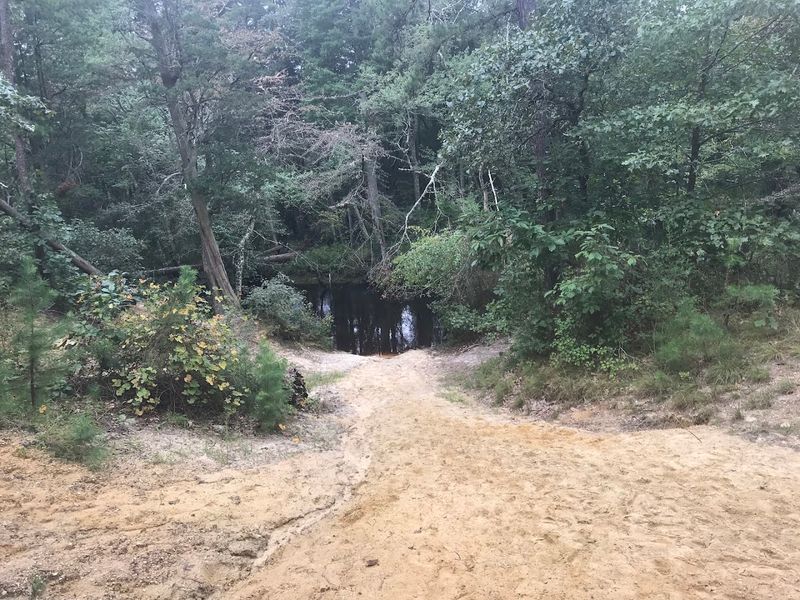
The biggest Lower Forge mistake is treating it like a regular campground with fewer amenities. It is better to think of it as a small backcountry-style Pine Barrens campsite that happens to sit inside a state forest with offices, permits, maps, and rules.
Start with the basics: reserve ahead through the state camping system, check in at Batsto or Atsion, bring your permit, and do not count on water, showers, flush toilets, or car access at camp.
Pack more drinking water than you think you need, especially in summer, because sandy trails and humid Pine Barrens air can turn a mild hike into a sweaty little negotiation. Bug spray is not optional in warm months. Neither is tick awareness.
Long socks, a post-hike check, and a little common sense go a long way. A paper map or downloaded georeferenced map is also smart, since Wharton’s sandy roads and forest routes can feel repetitive fast.
The state released a Visiting Vehicle Use Map in 2024 to show legal roads for driving in Wharton, improve visitor safety, support patrols and maintenance, and help protect habitat, including with a georeferenced PDF that can be used in areas with limited or no cell service.
Also remember the state park rules that can surprise casual campers: alcohol is not permitted in New Jersey state parks and forests, smoking and vaping are prohibited in state parks and forests, and campfires are subject to regulations explained when the permit is issued.
Lower Forge is not polished, and that is the point. It gives you the Pine Barrens without much padding: sand under your shoes, dark river water nearby, pines overhead, and a campsite that feels just far enough from everything.