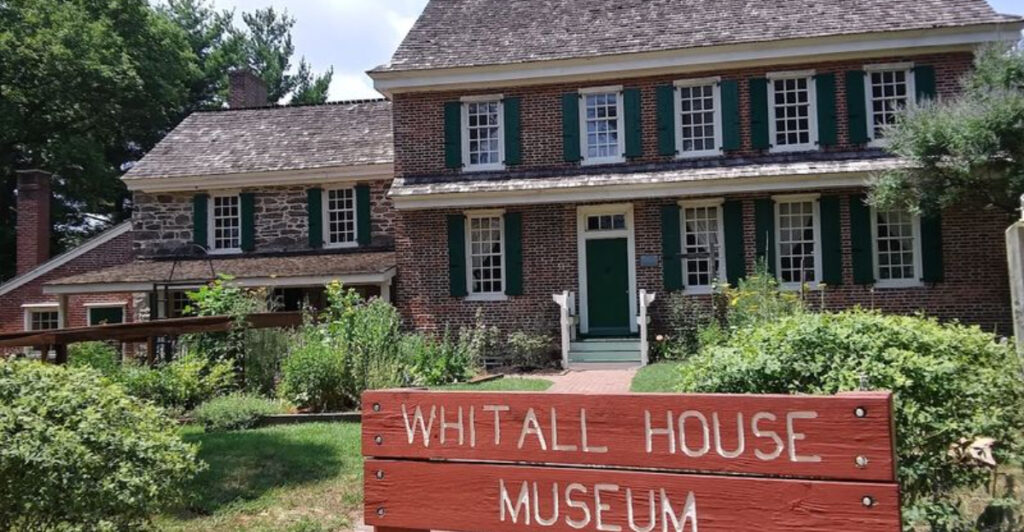
A cannonball mark inside an old Gloucester County house has a funny way of shutting down small talk. One minute, you are standing in a brick-and-stone home that looks like it belongs on a quiet colonial postcard.
The next, you are staring at a scar from 1777, when war rolled right up to the front door and refused to stay outside. The James and Ann Whitall House sits at Red Bank Battlefield in National Park, New Jersey, close enough to the Delaware River that the water still feels like part of the story.
This is not one of those historic sites where the drama has to be coaxed out of a display case. The house was here before the battle.
It survived the battle. Then it became part of the battle’s aftermath, serving as a field hospital after the fight at nearby Fort Mercer. Some places preserve history. This one still looks faintly bruised by it.
A quiet Gloucester County manor where 1777 still feels close
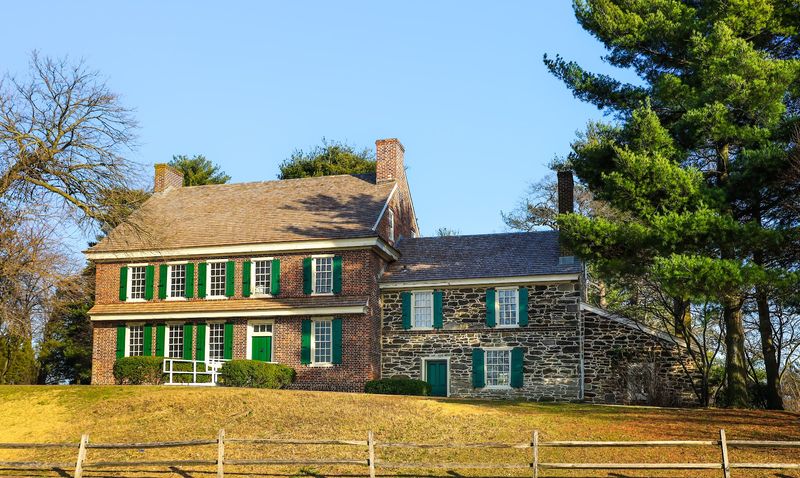
Red Bank Battlefield does not announce itself with theme-park drama, which is part of why it works so well. The park sits at 100 Hessian Avenue in National Park, a small Gloucester County borough tucked along the Delaware River, and the setting can feel almost too peaceful for what happened here.
There are walking paths, picnic areas, open grass, river views, monuments, and the kind of shade that makes people slow down without realizing it. Then the name Hessian Avenue starts to register.
Then the cannons do. Then the brick house comes into view, and suddenly the whole place sharpens.
This 44-acre county park marks the site where Hessian forces attacked Fort Mercer on October 22, 1777, during the Philadelphia campaign of the Revolutionary War.
The Whitall House stands as the domestic counterpoint to all that military history: not a reconstructed symbol, but the actual 1748 home that watched a family property turn into a battlefield.
That contrast is what gives the place its punch. You can look toward the river and imagine British ships trying to control the Delaware.
You can walk near the remains of Fort Mercer and understand why this patch of South Jersey mattered. And then, instead of ending at a battlefield marker, the story pulls you indoors, into rooms where war was not an abstract cause but a mess carried across the floorboards.
The Whitall House was built for family life before war found it
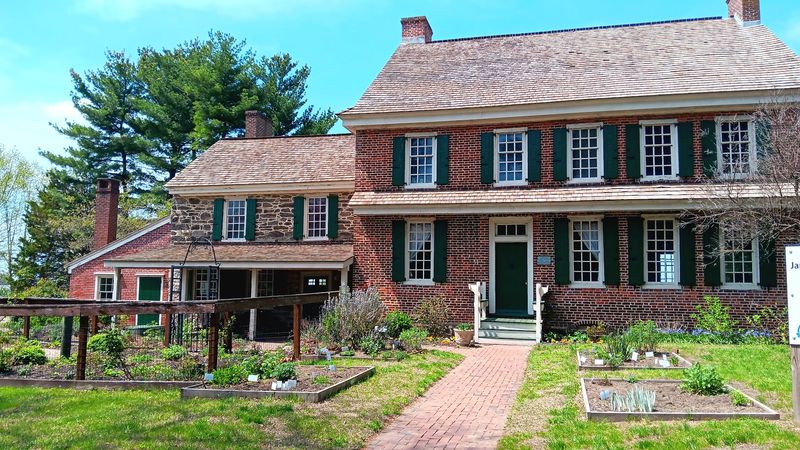
The house began with a much calmer purpose. In 1748, Quakers James and Ann Whitall established their Red Bank plantation along the Delaware River, and the property was not some sleepy little homestead with a cow and a vegetable patch.
It spread across about 400 acres and included fruit orchards, a lumberyard, a shad fishery, livestock, and a ferry, which made it a working riverfront operation as much as a family home. Ann and James raised nine children here, and the plantation also relied on dozens of indentured servants from places including Ireland, the Netherlands, and Germany.
That detail matters because it pulls the house out of the storybook version of colonial life and puts it back into the complicated, busy, labor-filled world it actually occupied. This was a place of work, food, faith, family arguments, river traffic, and routines.
Then 1777 arrived with boots, shovels, and military urgency. American forces built Fort Mercer immediately north of the house, turning the Whitalls’ land into a defensive position on the Delaware.
Imagine having a family property one season and a fortification next door the next. The Whitalls were Quakers, which meant pacifism was not a casual preference but a core principle, so the arrival of war on their land was not just inconvenient.
It violated how they believed life should be lived. That tension gives the house its deeper story before a single shot is fired.
Cannonball damage still marks the day Red Bank came under fire
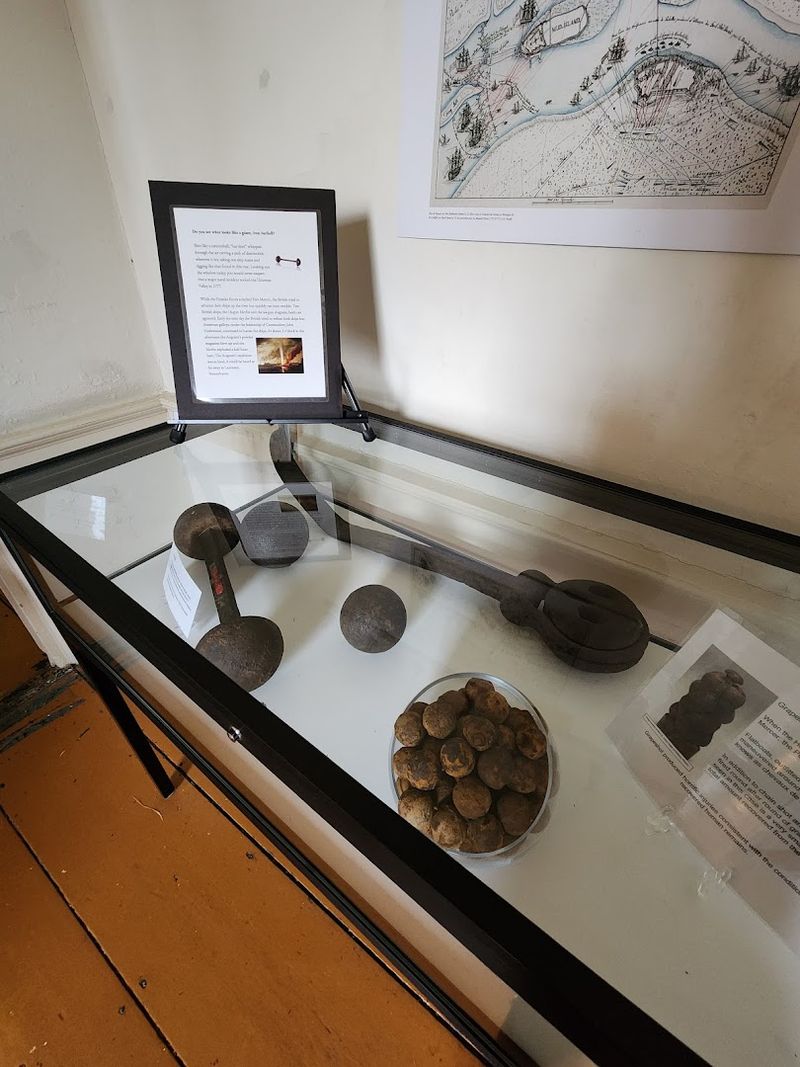
The Battle of Red Bank was short, brutal, and far bigger than the quiet park setting suggests. On October 22, 1777, Hessian troops fighting for the British attacked Fort Mercer, hoping to help open the Delaware River after the British capture of Philadelphia.
Inside the fort, Colonel Christopher Green’s Rhode Island Regiment held the position, and the result was a costly American victory that inflicted heavy losses on the Hessian force. The details can sound like a military-history paragraph until you put the Whitall House back into the frame.
This was not happening miles away. It was happening on the family’s land, within sight of the house, with warships and artillery turning the riverfront into chaos.
The famous cannonball story is the moment most visitors remember: Ann Whitall, who had refused to leave, was said to have been working at her spinning wheel when cannon fire struck the house, after which she moved her spinning wheel to the basement and carried on.
Whether you come for the battlefield strategy or the human stubbornness of that image, the house makes the story feel startlingly physical. A cannonball mark is different from a sentence in a textbook. It has weight.
It has a point of impact. It reminds you that the Revolution in New Jersey was not only fought in grand declarations and famous crossings, but also in family rooms, orchards, riverbanks, and houses that never asked to become landmarks.
The floor stains tell the darker story of a battlefield hospital
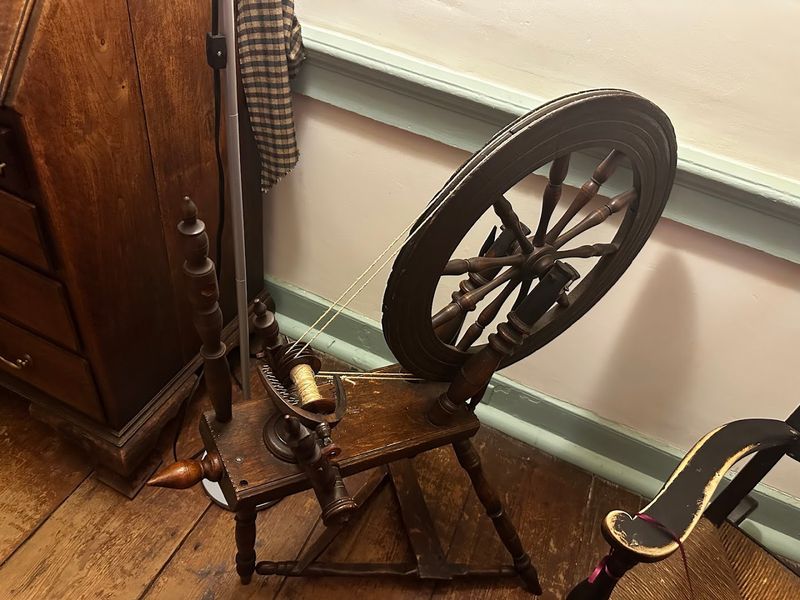
The battle did not end neatly when the fighting stopped, and the Whitall House is most haunting because it makes room for that uglier second act. After the attack on Fort Mercer, the home served as a field hospital for wounded soldiers.
That means the same rooms built for family life became places where men were carried in bleeding, groaning, stunned, or dying. The dark floor stains long associated with the house’s hospital period are not glamorous, and that is exactly the point.
They pull the visitor away from polished patriotism and toward the bodily cost of the fight. It is easy to admire a victory from a safe distance; it is harder when the aftermath has soaked into the boards beneath your feet.
The Hessian losses at Red Bank were severe, and Gloucester County’s own history notes that hundreds of Hessian soldiers died in the battle and were buried just north of the house. That single detail changes the mood of the property.
The lawn is no longer just lawn. The quiet is no longer just quiet.
The Whitall House also complicates the easy habit of dividing Revolutionary War stories into heroes on one side and villains on the other. A hospital does not get to be that tidy.
Wounds arrive attached to people. Ann Whitall and others tending the injured were dealing with pain first and politics second, which gives this house a kind of moral heaviness that lingers longer than the cannonball story.
Ann Whitall turned courage into something quieter than legend

Ann Cooper Whitall is often remembered as the Heroine of Red Bank, but the best way to understand her is not as a Revolutionary War action figure.
She was a Quaker woman born in Woodbury in 1716, married to James Whitall, rooted in a faith tradition that rejected violence, and already living a full, demanding life before anyone turned her home into a chapter of American history.
Her courage was not loud. It was almost stubbornly practical.
When people were warned to flee, she refused to abandon the house. When fighting battered the property, the story goes, she moved her spinning wheel to the basement rather than surrender her composure.
When the battle was over, she tended the wounded and dying. That is the part that makes her feel less like a legend and more like a person with steel under the plain dress.
She was not celebrating the war. She was enduring it, resisting its chaos in the only way available to her, and meeting suffering at close range.
The fact that she cared for injured soldiers in a house on land devastated by military occupation gives her story a strange balance of conviction and compassion. She did not have to become a general, a spy, or a battlefield messenger to matter.
In a place overflowing with cannon fire and military ambition, Ann Whitall’s legacy comes from staying put, keeping her principles, and doing the next necessary thing when the wounded were carried through her door.
Red Bank Battlefield makes this history easy to walk right into
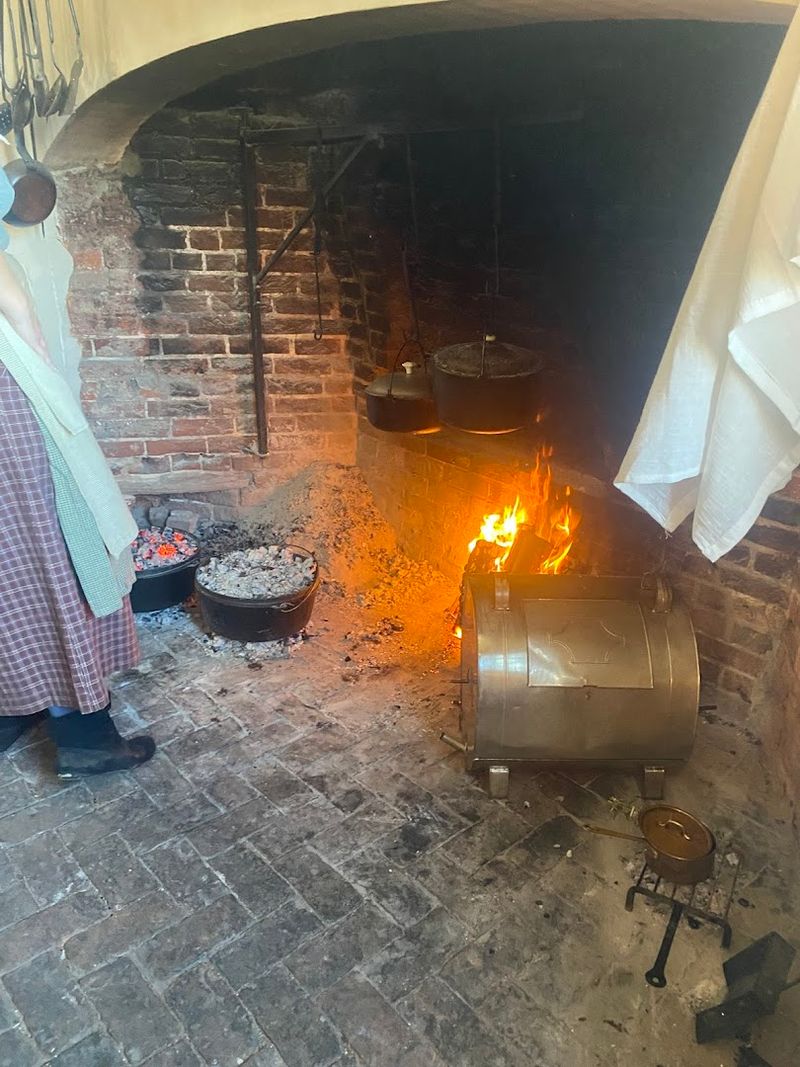
Today, Red Bank Battlefield is one of those South Jersey places that can be as simple or as deep as you make it. Someone could stop by for a riverfront walk and a picnic and still sense they have landed somewhere important.
Someone else could spend the visit tracing the relationship between the Whitall House, the remains of Fort Mercer, the monuments, the river defenses, and the land where archaeology keeps adding texture to the old story.
The park is open year-round from sunrise to sunset, except Christmas Day and New Year’s Day, and the county lists amenities that make it feel like a real public park as much as a historic site, including walking and jogging trails, picnic areas, restrooms, play structures, pavilions, grills, and historical monuments.
The Whitall House itself offers seasonal tours, with Gloucester County listing house tours from April through October, Thursday through Sunday, 11 a.m. to 3 p.m.
The grounds also include historic gardens maintained by Gloucester County Certified Gardeners, with vegetables, culinary and medicinal herbs, dyeing flowers, and cutting flowers selected to reflect the eighteenth century.
That last detail is small but lovely. After the cannonball marks, hospital history, and battlefield losses, the garden brings the place back to daily life.
It reminds you that this house was not built to be a war story. It was built to be a home, and somehow, nearly 250 years after Red Bank came under fire, both truths are still standing in the same rooms.