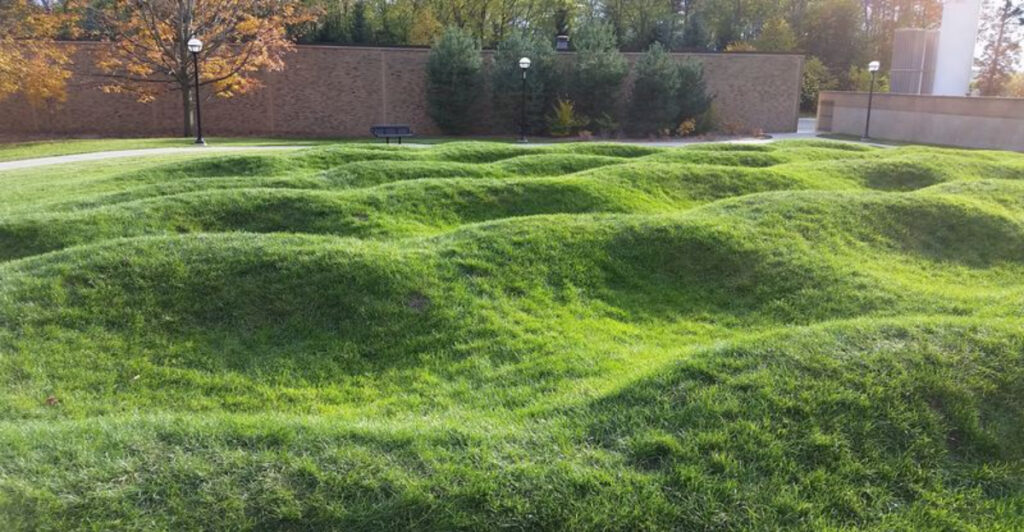
When the sun starts to drop behind the engineering buildings on the University of Michigan’s North Campus, something almost magical happens at the Wave Field. The rolling grass hills cast long, dramatic shadows that transform a quiet outdoor art installation into a living, breathing landscape of movement and mood.
Created by world-renowned artist Maya Lin, this hidden gem sits tucked behind buildings most people walk right past. Whether you are a student, a curious visitor, or a local looking for something different, dusk at the Wave Field is an experience that genuinely surprises you.
The Art Behind the Waves: Maya Lin’s Earth Sculpture
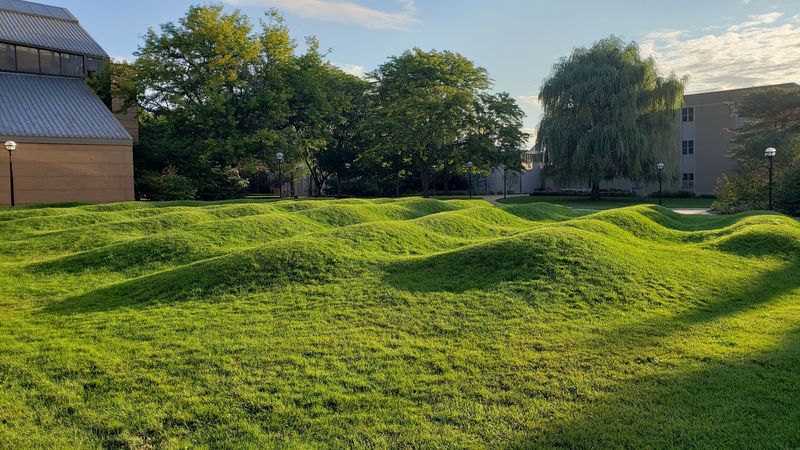
Not every piece of public art stops you in your tracks, but the Wave Field manages to do exactly that — especially when the evening light gets involved. Designed by Maya Lin, the same visionary behind the Vietnam Veterans Memorial in Washington D.C., this earth sculpture is a serious work of art hiding in plain sight on a college campus.
The field consists of a series of carefully sculpted grass mounds that mimic the rhythm and shape of ocean waves frozen in time.
Maya Lin completed the Wave Field in 1995 as part of her ongoing interest in landscapes and natural forms. She wanted to create a space where the land itself became the art, blurring the line between sculpture and nature.
Standing at ground level, you feel surrounded by the rolling hills, almost like you are standing at the edge of a green sea.
At dusk, the low angle of sunlight skims across the mounds and pulls out shadows you simply cannot see at midday. Each wave casts a dark valley next to a bright ridge, creating a visual rhythm that feels genuinely alive.
Visitors who come just once in the afternoon and return at sunset often say it feels like a completely different place.
The field sits nestled between engineering buildings, which makes discovering it feel like finding a secret room. Art lovers and architecture students frequently make the trip out to North Campus just to see this installation.
If you appreciate thoughtful design, knowing who made it and why adds a whole new layer of meaning to every curve and crest you walk across.
Chasing Shadows: How Dusk Rewrites the Wave Field’s Whole Personality
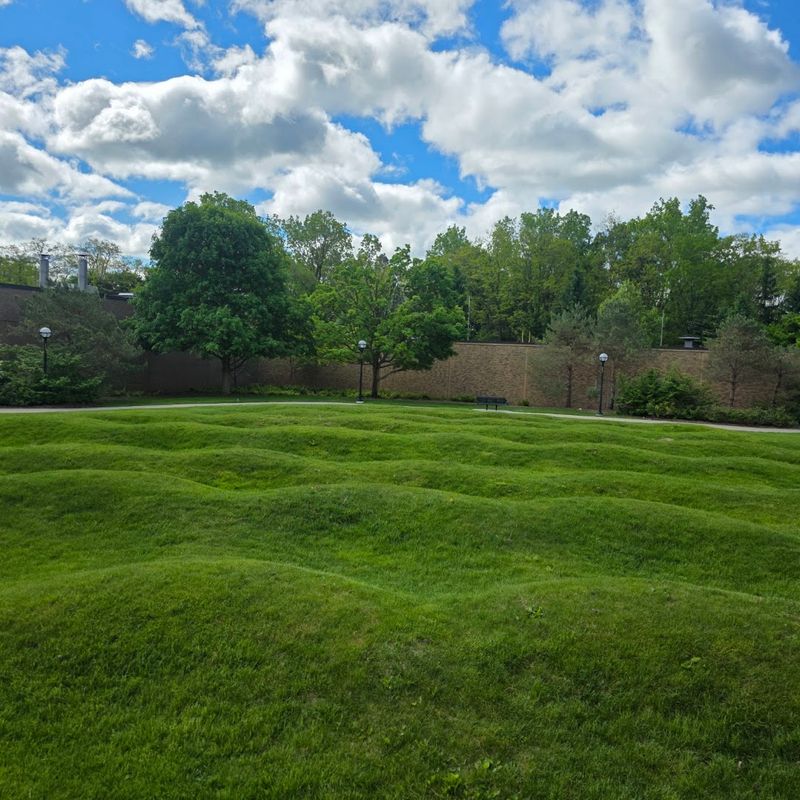
Golden hour photographers have a saying: light does not just illuminate a subject, it transforms it. Nowhere on the University of Michigan campus proves that idea more convincingly than the Wave Field at dusk.
As the sun drops low in the western sky, each sculpted mound becomes a study in contrast — one side glowing warm gold while the other falls into deep, cool shadow.
The shadows at the Wave Field do not just sit still. As the minutes tick by during sunset, they stretch and shift, making the hills look taller, more dramatic, and almost theatrical.
A mound that seems modest at noon can look like a genuine rolling hillside when the evening light catches it at just the right angle. This is why so many visitors and campus photographers specifically time their visits around sunset.
What makes this light show even more interesting is how it changes with the seasons. In summer, the lush green grass amplifies the contrast between sunlit peaks and shaded valleys.
In late fall, when the grass turns golden-brown, the entire field takes on a warm, earthy palette that feels almost cinematic. Winter visits bring a completely different drama, especially when a light dusting of snow fills the valleys while the ridge tops stay bare.
You do not need a professional camera to appreciate this. Even a phone camera captures something genuinely striking when the timing is right.
Plan to arrive about 30 to 40 minutes before sunset, walk to the far end of the field, and look back toward the west. The view from that angle, with the waves rolling toward the fading light, is the kind of thing that makes people stop mid-step and just stare for a moment.
Running the Ridges: Why the Wave Field Becomes a Playground After Dark
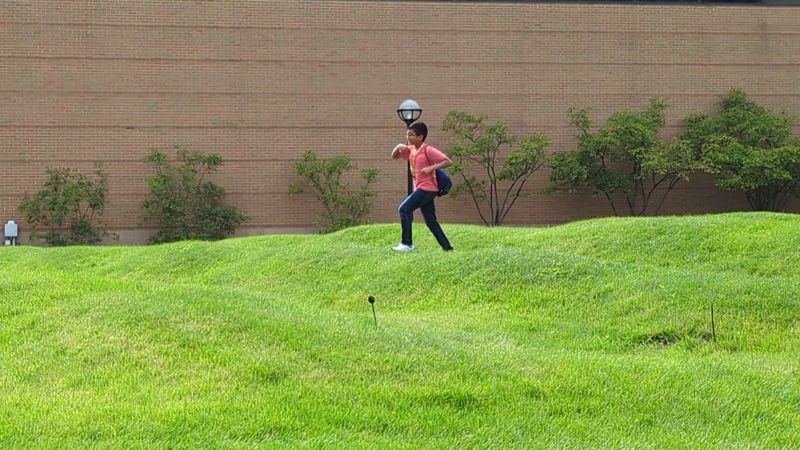
There is a reason parents with five and seven-year-olds keep showing up here on weekends. The Wave Field is not a passive, look-but-don’t-touch kind of art installation.
From the moment you step onto the first mound, your body starts doing things it would not do on flat ground — you lean forward going uphill, you brace yourself going down, and your legs work harder than expected just to cross from one end to the other.
Running across the Wave Field at dusk turns into something genuinely hilarious in the best possible way. The uneven terrain means you cannot build a straight-line sprint.
You bob up and over each crest, disappear into the valleys, and pop back up again like a human cork on choppy water. Groups of friends have been known to race each other across the field, and the results are almost always chaotic and memorable.
The open 24-hour access policy means the fun does not have to stop when the sun goes down. On clear nights, the moonlight creates its own version of the shadow play, and the field takes on a quieter, more mysterious energy.
The surrounding engineering buildings go dark and quiet, and the Wave Field becomes a surprisingly serene spot for an evening walk or a slow, thoughtful stroll between the mounds.
Kids tend to gravitate toward the steeper mounds for rolling down, while adults usually end up sitting on a crest and looking out over the pattern of hills. Both responses are completely valid.
The field is also a popular spot for reading or studying on nice days, and more than one student has admitted to sneaking out here between classes just to reset their brain with a few minutes of fresh air and movement.
Finding the Field: Navigating to Ann Arbor’s Best-Kept Secret
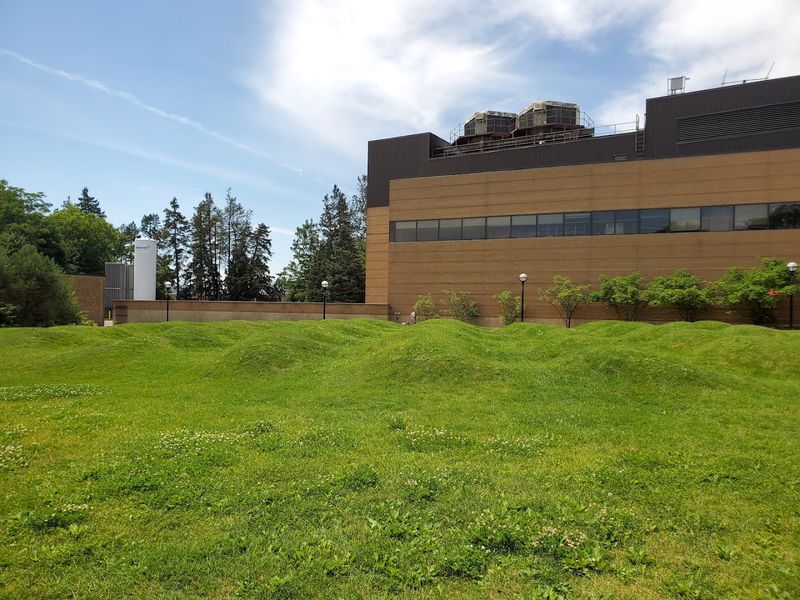
Ask ten people on the University of Michigan campus where the Wave Field is, and at least a few will give you a blank stare. That is part of its charm, honestly.
Tucked behind the François-Xavier Bagnoud (FXB) Aerospace Engineering building on North Campus, the Wave Field does not advertise itself with big signs or a prominent entrance. You kind of have to know it exists before you go looking for it.
Google Maps does actually take you close to the right spot, but the last stretch requires a little faith. The field sits in what feels like a courtyard surrounded by engineering buildings, and the approach from the parking area can feel like you are walking into a restricted zone even though it is completely open to the public and accessible 24 hours a day, seven days a week.
First-time visitors sometimes circle the building once before spotting the green waves behind it.
Parking is the other piece of the puzzle that trips people up. Weekday visits during the school year can be frustrating because campus parking is competitive.
The consensus from experienced visitors is clear: come on a weekend, ideally Saturday or Sunday, when student lots open up and the whole experience becomes much more relaxed. Arriving in the late afternoon ahead of dusk gives you time to park without stress and walk over at a comfortable pace.
Once you find it the first time, returning becomes effortless. Many people who visit once end up coming back repeatedly because the field genuinely looks and feels different depending on the season, time of day, and weather.
Knowing the hidden path behind FXB becomes a small point of local pride, the kind of insider knowledge you end up sharing with every out-of-town visitor you bring to Ann Arbor.
Seasons at the Wave Field: Four Completely Different Experiences in One Spot
Most outdoor spots look their best in one particular season and just okay the rest of the year. The Wave Field breaks that rule in a satisfying way.
Each season brings a genuinely different mood to the sculpted mounds, and regulars will tell you that picking a favorite is surprisingly difficult once you have experienced all four.
Summer is the showstopper for first-time visitors. The grass grows thick and green, the mounds look their most defined, and the contrast between sunlit peaks and shadowed valleys is at its sharpest during those long evening hours.
Warm temperatures also mean people linger longer, turning the field into a relaxed social space where students sprawl on the hillsides with books or just lie back and watch the sky change color.
Fall is quieter and arguably more beautiful in a melancholy way. The grass shifts from green to gold and amber, and the surrounding trees on North Campus add splashes of red and orange to the view from the top of any mound.
Dusk arrives earlier, which means you can catch the full sunset spectacle without staying out too late on a school night.
Winter transforms the Wave Field into something almost surreal. A light snowfall settles differently on the ridges versus the valleys, creating a natural topographic map of the sculpture’s shape.
The mounds look sharper and more defined under snow, and on clear winter evenings, the fading blue light of dusk turns the whole field a soft, cool silver.
Spring is the wild card. As the snow melts and the grass begins to wake up, the field takes on a patchy, textured look that is less polished but full of energy.
Early spring evenings here carry a freshness that is hard to describe but easy to appreciate after a long Michigan winter.
Photography at Dusk: Capturing the Wave Field’s Most Dramatic Moments
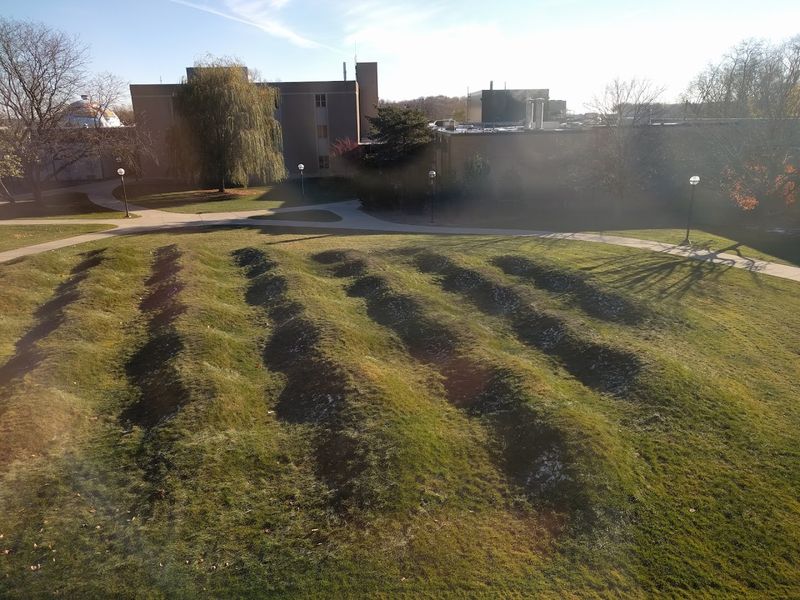
Campus photographers and hobbyist shooters who stumble onto the Wave Field at dusk often describe the same reaction: they start shooting and cannot stop. The combination of repeating geometric forms, dramatic light, and constantly shifting shadows creates a scene that rewards patience and rewards it generously.
Every few minutes, as the sun drops a little lower, the image in front of you changes enough to feel like a brand-new shot.
The best angles tend to be from the top of one of the taller mounds, looking along the length of the field toward the setting sun. From that vantage point, the wave pattern becomes clear, and the shadows fill the valleys between each ridge in a way that emphasizes the sculpture’s rhythmic design.
Wide-angle lenses capture the full sweep of the pattern, while a zoom lens lets you isolate individual mounds and compress the shadows for a more abstract effect.
Smartphone photographers are not at a disadvantage here. The high contrast between lit peaks and dark valleys is exactly the kind of scene that modern phone cameras handle well.
Portrait mode can blur out the engineering buildings in the background and keep the focus on the sculptural grass forms. HDR mode helps preserve detail in both the bright ridges and the deep shadows during that brief window right after the sun drops below the horizon.
One practical tip: arrive with at least 45 minutes before sunset. Use the first part of your visit to walk the field and scout angles.
The last 15 minutes of golden hour and the 10 minutes of blue hour immediately after sunset are your prime shooting windows. The field is open around the clock, so there is zero pressure to rush, and that relaxed pace almost always leads to better images than a frantic last-minute scramble.
Share this story