Sitting right along the Grand River in the heart of downtown Grand Rapids, Michigan, the Van Andel Museum Center is the kind of place that makes you lose track of time in the best possible way. Three floors of history, science, and hands-on exhibits pull you through centuries of stories without ever feeling like a textbook.
Whether you are seven years old or seventy, the museum manages to make learning feel like an adventure. Grand Rapids has plenty to offer, but this riverbank landmark keeps earning its spot at the top of every local must-visit list.
A Building That Commands Attention Before You Even Walk In
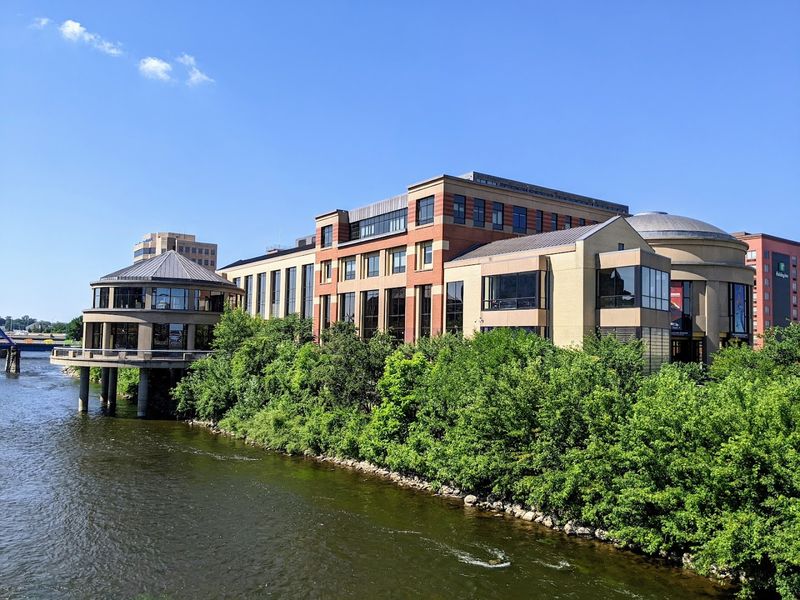
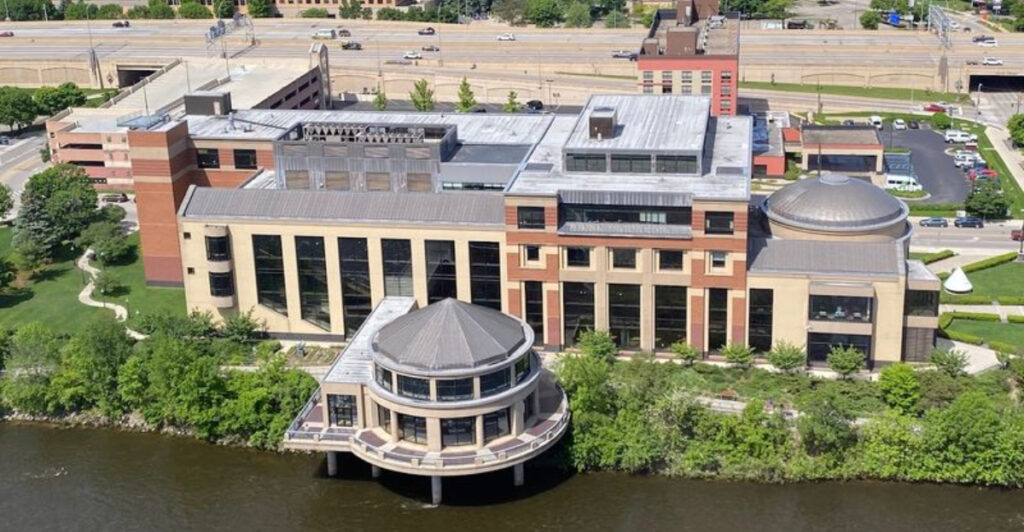
Standing on Pearl Street, the Van Andel Museum Center announces itself with the kind of confident architectural presence that makes you slow your walk. The building stretches along the western bank of the Grand River, blending brick and glass in a way that feels both modern and grounded in the city’s industrial past.
That river view is not incidental — it is part of the experience before you even reach the front door.
The exterior gives visitors a preview of scale. This is not a cramped neighborhood museum tucked between storefronts.
The structure rises prominently, and on sunny days the glass panels catch light in a way that makes the whole building seem alive. From the adjacent riverfront walkway, the museum looks like something a major city would be proud to claim.
Grand Rapids, Michigan has invested heavily in its downtown cultural corridor, and the Van Andel Museum Center sits at the center of that effort geographically and symbolically. The museum’s position along the river ties it directly to the city’s founding story — Grand Rapids grew because of this waterway, and placing a major cultural institution beside it was no accident.
Parking is available in a dedicated garage directly across the street, which takes one logistical headache completely off the table. Kent County residents also benefit from reduced admission pricing, making the visit accessible rather than exclusive.
The museum validates parking for those who qualify, which is a genuinely practical detail that families appreciate.
First-time visitors often pause outside longer than expected, taking in the river view and the building’s footprint before heading inside. That moment of orientation matters.
The Van Andel Museum Center earns its reputation partly because of how well it presents itself from the outside — unhurried, substantial, and ready to deliver.
Three Floors That Each Tell a Completely Different Story
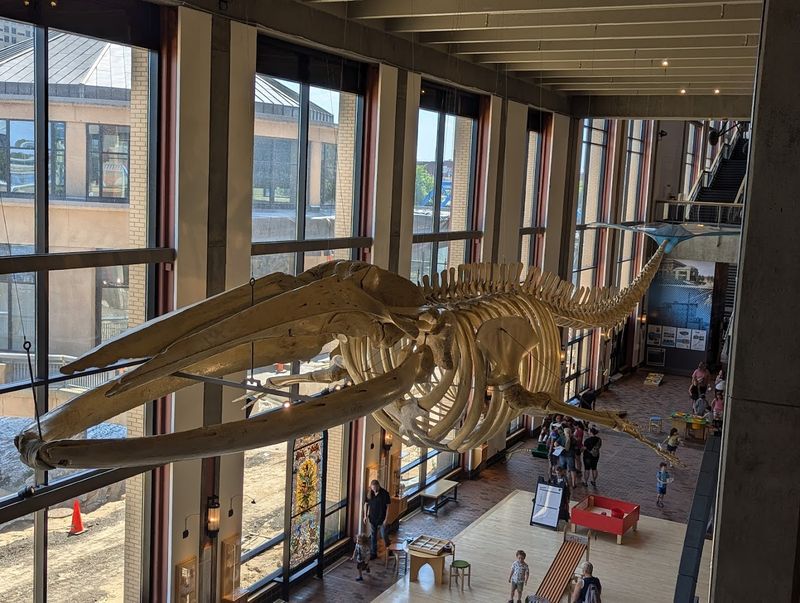
Most museums have a clear pecking order — one great floor and a couple of forgettable ones. The Van Andel Museum Center breaks that pattern decisively.
Each of its three floors operates with its own identity, covering distinct subject matter with enough depth to hold attention rather than just skim the surface.
The ground level tends to anchor visitors in the natural world, with geology and natural history exhibits that set the stage for everything above. Large specimens, interactive stations, and displays that reward close inspection make this floor approachable for younger visitors while still offering enough complexity for adults who linger.
Moving upward, the focus shifts toward human history and the story of Grand Rapids itself — furniture manufacturing, cultural heritage, and the evolution of a Midwest city that punched above its weight.
The third floor brings in science and broader world history, creating a conversation between local identity and global context. That progression feels deliberate.
By the time visitors reach the top level, they have traveled through geological time, regional history, and scientific discovery in a sequence that builds rather than scatters.
Navigating between floors is straightforward, and the open layout prevents that claustrophobic feeling some older museums carry. Natural light filters through strategically placed windows, giving the space an airy quality that keeps energy levels up during longer visits.
Families with children often spend two to three hours working through the building without running out of new material to explore.
Staff members circulate through the exhibit spaces and are consistently described as approachable and patient — the kind of team that answers questions without making visitors feel like they are interrupting. That human element matters in a space this large, where it would be easy to feel anonymous moving through the galleries.
The 1928 Carousel That Spins Right Inside the Museum
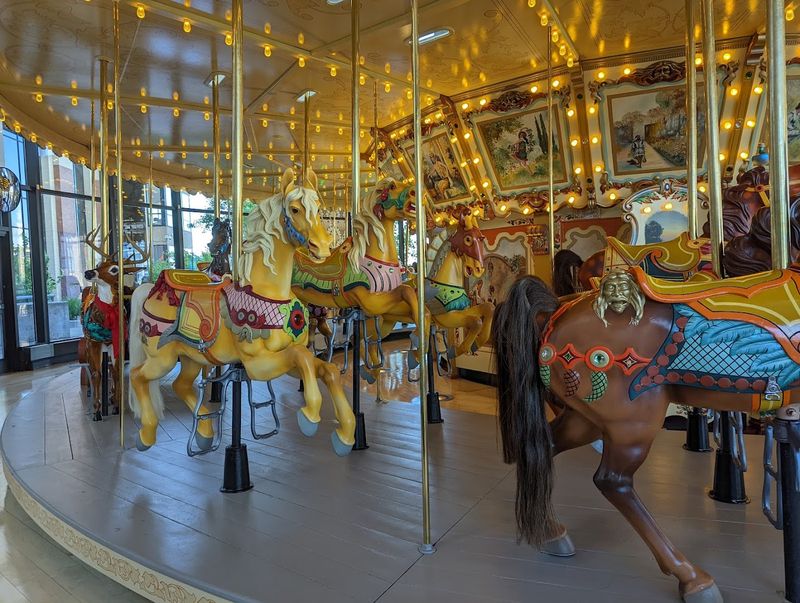
A working antique carousel inside a museum sounds like something you would make up to impress a skeptical child — but the Van Andel Museum Center actually has one, and it has been turning since 1928. Originally built by the Spillman Engineering Corporation, this carousel is not a replica or a recreation.
It is the genuine article, with hand-carved wooden horses and the kind of craftsmanship that modern manufacturing simply does not replicate.
The carousel sits on the main level and operates during museum hours for a small additional fee. Watching it run, even before climbing on, is its own kind of experience.
The horses move with that distinctive rise-and-fall rhythm, the mechanical music plays, and for a moment the decade does not feel entirely certain. It has that quality of making time feel slightly elastic.
For families visiting with young children, the carousel tends to become the centerpiece of the trip. Kids who might lose focus in exhibit halls find their enthusiasm fully reset after a ride.
Parents often report that the carousel functions as a natural reset point during longer visits — a reward that keeps the overall experience moving forward rather than stalling.
Beyond the fun of riding it, the carousel carries genuine historical weight. It represents a specific moment in American manufacturing and leisure culture, and the museum contextualizes it well without turning it into a dry artifact.
The fact that it still works, still carries passengers, and still operates as intended nearly a century later is a quiet marvel.
Carousel tickets are sold separately from general admission, which keeps the pricing transparent. For most families, adding the ride is an easy decision.
It is one of those details that elevates the Van Andel Museum Center from interesting to genuinely memorable for younger visitors especially.
Old Town Exhibit: Walking Through Grand Rapids History Room by Room
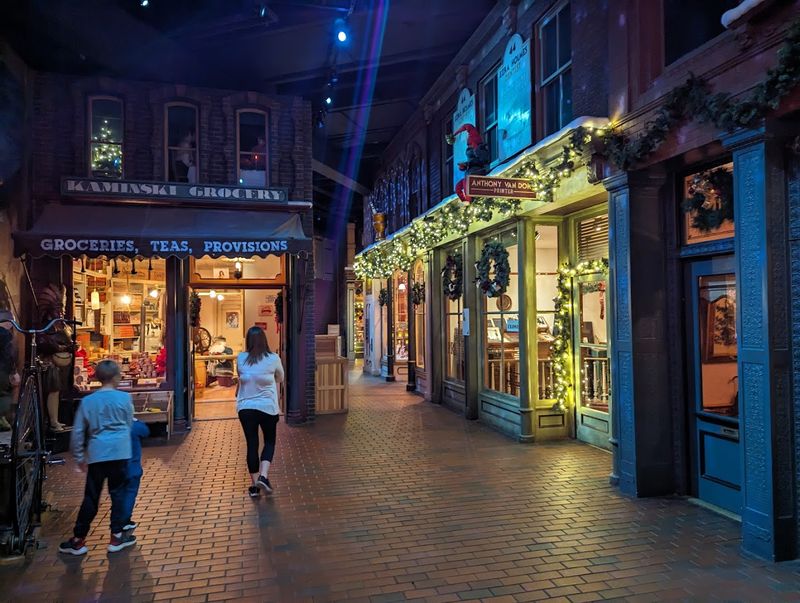
Among everything the museum offers, the Old Town exhibit consistently draws the strongest reactions from first-time visitors. Stepping into it feels less like entering a gallery and more like crossing a threshold into a completely different century.
Recreated storefronts, period-accurate interiors, and carefully sourced artifacts reconstruct what daily life in Grand Rapids looked like during the 1800s.
The attention to detail in Old Town is what separates it from generic historical dioramas. Individual shop interiors — a furniture store, a general goods shop, a printing establishment — are dressed with objects that actually belonged to that era rather than modern approximations.
The textures, the scale, and the layering of objects create an environment that rewards slow exploration over a quick walk-through.
Grand Rapids built its early reputation on furniture manufacturing, and Old Town reflects that industrial identity with exhibits that trace how the city became a national center for the trade. Visitors who grew up in West Michigan often recognize names and family connections in the exhibit panels, which creates a personal resonance that generic history displays rarely achieve.
That local specificity is one of the exhibit’s greatest strengths.
Children tend to engage with Old Town differently than adults. While parents read the interpretive text and examine artifacts, kids often gravitate toward the spatial experience — the narrow corridors, the low counters, the sense of being inside a place rather than looking at it through glass.
The exhibit design accommodates both modes of engagement without forcing either.
Museum staff occasionally lead guided tours through Old Town, adding oral history and anecdotes that the panels alone cannot fully convey. Catching one of those tours is worth planning around.
The exhibit runs deep, and having a knowledgeable guide unlocks layers that independent exploration can miss entirely.
The Planetarium Experience That Reframes Your Sense of Scale
The Roger B. Chaffee Planetarium sits inside the Van Andel Museum Center and operates on a separate ticketing system from general admission.
At five dollars per show, it delivers a projection experience that reorients your understanding of scale in a way that flat screens simply cannot replicate. The dome format wraps the image completely around the audience, eliminating peripheral reality and replacing it with deep space or the night sky above Michigan.
Shows rotate on a scheduled basis, covering topics that range from solar system exploration to constellation navigation to more thematic presentations suited for younger audiences. The schedule is posted outside the planetarium entrance, and tickets are sold at that location rather than at the main admissions desk.
Timing a visit around a show requires a small amount of planning — arriving early enough to check the schedule and purchase tickets before the show fills.
The reclining seats tilt back at an angle that positions viewers to look directly up at the dome, which takes a moment to adjust to but becomes completely natural within the first few minutes of a show. That physical orientation — leaning back, eyes upward, surrounded by projected stars — has a way of quieting the mental noise that follows most visitors into a museum.
Roger B. Chaffee, for whom the planetarium is named, was a Grand Rapids native and NASA astronaut who died in the Apollo 1 fire in 1967.
The naming carries local historical weight and gives the planetarium a human story alongside its scientific programming. That connection to a real person from this city makes the space feel less institutional and more personal.
For visitors who skip the planetarium to save time or money, it is worth reconsidering. The five-dollar price point is one of the better entertainment values in downtown Grand Rapids, and the show typically runs under an hour.
Sensory-Friendly Programming and Accessibility That Goes Beyond the Minimum
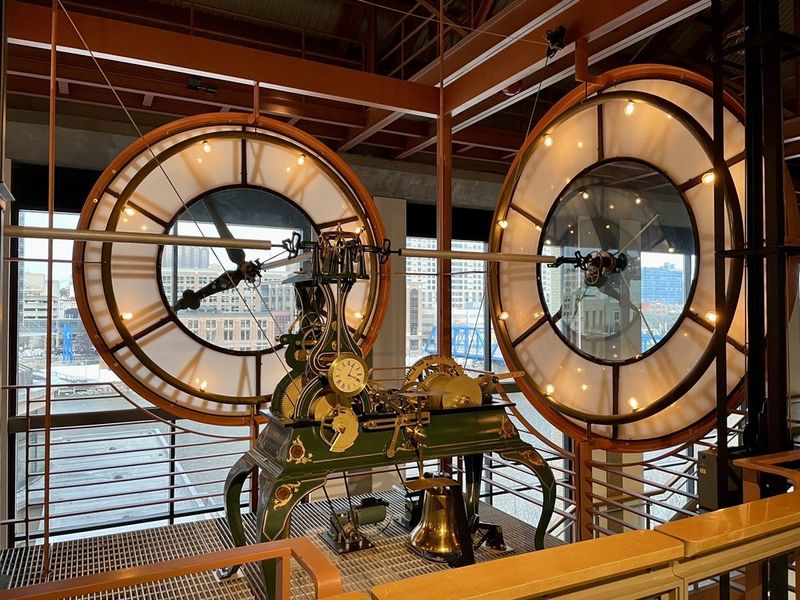
Not every museum thinks carefully about who might need a quieter, lower-stimulation environment. The Van Andel Museum Center has built a recurring program called Sensory Sunday specifically to address that gap.
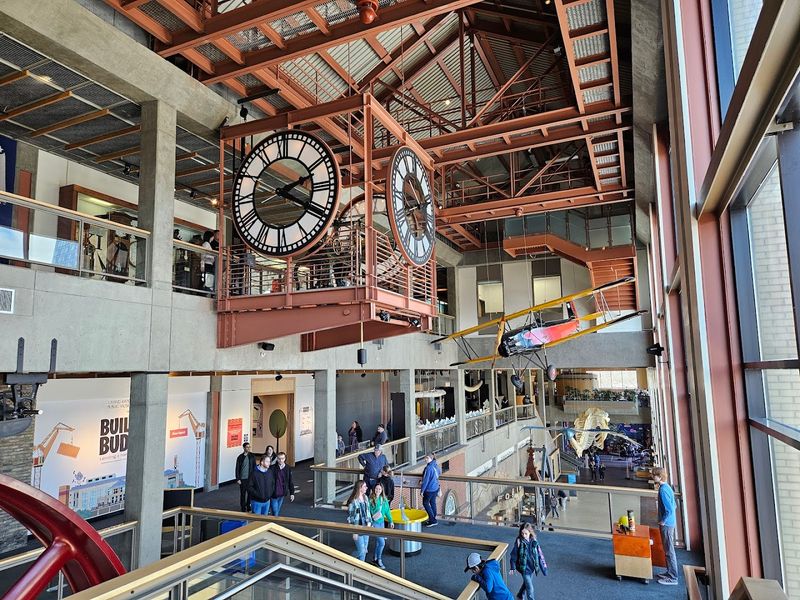
On those designated days, the third-floor clock tower — which chimes on the hour and can be jarring for visitors with sensory sensitivities — is switched off for the entire day.
Quiet rooms are made available throughout the building on Sensory Sundays, giving visitors a designated space to decompress without needing to leave the museum entirely. The practical effect of this is significant.
Families who might otherwise avoid the museum due to a child’s sensory needs have a reliable, planned option that removes the guesswork from the visit. Arriving earlier in the day, before crowds build around noon, tends to produce a calmer experience overall even on non-designated days.
The broader accessibility infrastructure at the museum extends beyond sensory programming. The building’s layout accommodates mobility devices without the awkward workarounds that older museum buildings often require.
Elevator access between floors is reliable, and the exhibit pathways are wide enough to navigate comfortably with strollers or wheelchairs.
Staff training appears to reflect genuine awareness of different visitor needs. The team circulating through the building tends to read situations without needing to be prompted — offering help before visitors have to search for it, and maintaining a calm, unhurried presence that benefits everyone in the space, not only visitors with specific needs.
The cafe on-site provides a convenient stopping point for families managing shorter attention spans or energy dips. It operates more like a compact convenience counter than a full restaurant, but the pricing is reasonable for a downtown Grand Rapids attraction, and having food available on-site removes one more logistical complication from the visit.
Planning Your Visit to Get the Most Out of Every Hour
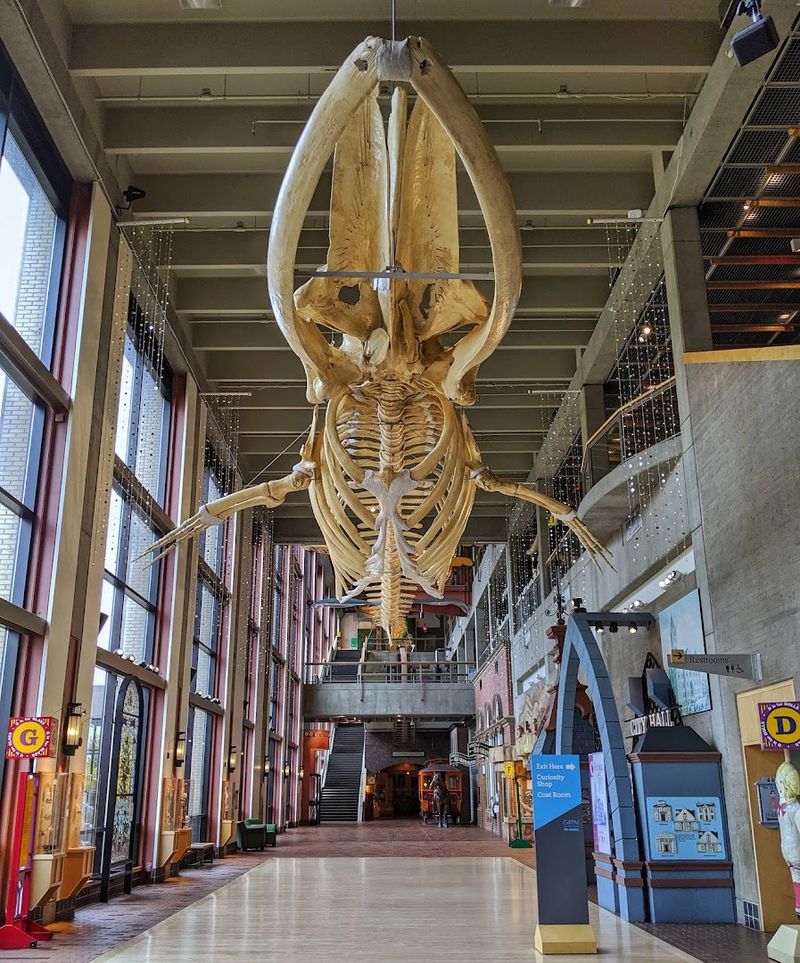
Getting the timing right at the Van Andel Museum Center makes a noticeable difference in the quality of the experience. The museum opens at nine in the morning on most weekdays, which gives early arrivals a quieter window before school groups and midday crowds arrive.
Weekends shift the opening to ten, and Thursday evenings extend hours until eight, making it one of the few cultural venues in Grand Rapids open past the standard five o’clock close.
General admission runs approximately fourteen dollars for adults, with Kent County residents receiving a significant discount — children from that area enter free, and adults pay around ten dollars. The parking garage directly across Pearl Street validates for museum visitors who qualify, which brings the total cost of a visit down considerably.
Budgeting separately for planetarium tickets and carousel rides keeps the math straightforward rather than surprising at checkout.
A typical visit covering all three floors, a planetarium show, and a carousel ride runs between two and three hours for most families. Visitors who want to spend extended time in the Old Town exhibit or natural history galleries should budget closer to four hours.
The museum does not feel rushed at that pace — there is enough material to justify the time without padding.
The on-site cafe handles lunch and snack needs without requiring visitors to leave and return, which matters when managing younger children or tight schedules. Parking validation and the adjacent riverfront walkway make the post-visit experience easy — a short walk along the Grand River after leaving the museum extends the afternoon without requiring additional planning.
Checking the planetarium show schedule before arriving and purchasing those tickets immediately upon entry is the single most useful logistical tip for a first visit. Shows sell out, and the five-dollar price disappears fast once word spreads through the lobby.
Share this story