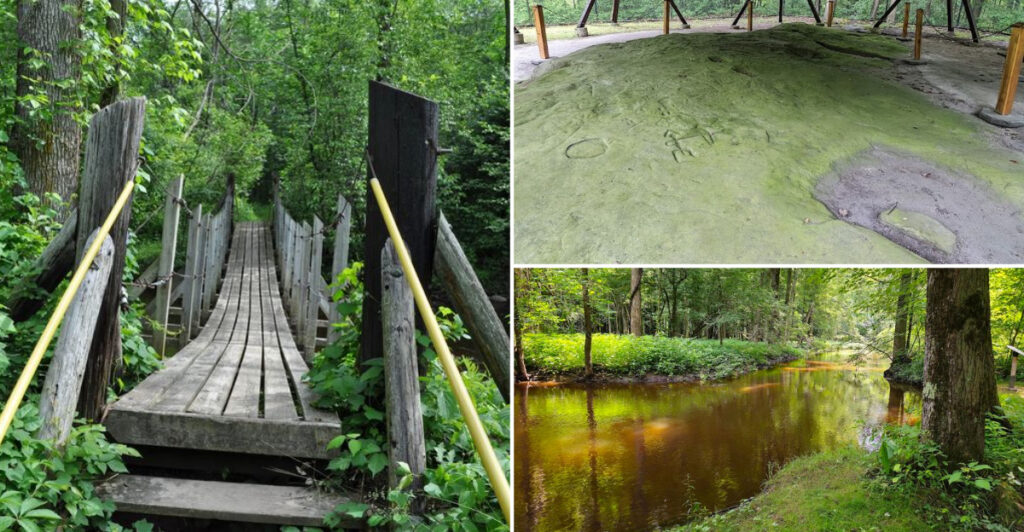
Tucked deep in Michigan’s Thumb region, Sanilac Petroglyphs Historic State Park holds one of the most remarkable open-air records of ancient human life in the entire Great Lakes area. Ancient carvings etched into a large sandstone slab tell stories that stretch back roughly 1,000 years, left behind by Indigenous people long before European settlers arrived.
The park sits quietly off Germania Road near Cass City, surrounded by second-growth forest and a gently flowing river, making it far more than just a historical site. Whether you come for the carvings, the trail, or simply the stillness of the woods, this place earns its reputation as one of Michigan’s most underrated natural and cultural treasures.
Ancient Carvings Frozen in Sandstone
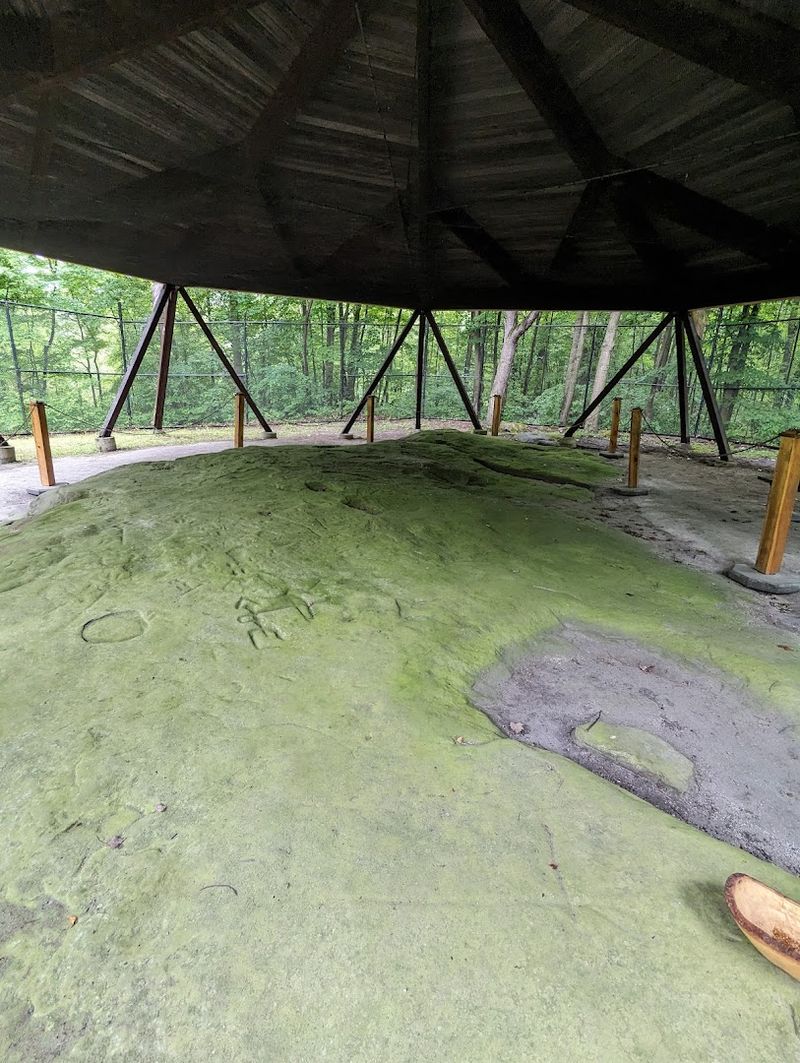
Somewhere around a thousand years ago, someone crouched over a flat sandstone slab in what is now Michigan and carved figures into rock with careful, deliberate strokes. Those carvings still exist today at Sanilac Petroglyphs Historic State Park, and standing over them produces a genuinely disorienting sense of time collapsing.
The images include human figures, animals, and abstract shapes that researchers believe were created by an Algonquian-speaking people during the Late Woodland period.
The main petroglyph site covers a broad, relatively smooth sandstone surface exposed near the forest floor. Figures of a hunter, a deer, and what appears to be a large bird with outstretched wings are among the most recognizable carvings.
Other markings are harder to interpret, which only adds to the sense of mystery surrounding the site.
Because the carvings are exposed to the elements, the park takes careful steps to protect them. A covered shelter shields the rock from rain and direct sunlight during open season.
The protective fencing that surrounds the carvings is not meant to frustrate visitors but to preserve something that cannot be replaced.
Docents stationed at the site during open hours walk visitors through what researchers currently understand about the images. They explain the cultural context, point out specific figures that are easy to miss at first glance, and answer questions with real depth.
The guided experience turns a simple viewing into something much more layered.
Access to the petroglyphs themselves is only possible during the park’s open season, which runs from late spring through Labor Day weekend. After that, the shelter is closed and the carvings are fenced off to reduce exposure during the harsher months.
Timing your visit to fall within that window makes a significant difference in what you actually get to see up close.
The 1.2-Mile Forest Trail That Surprises at Every Turn
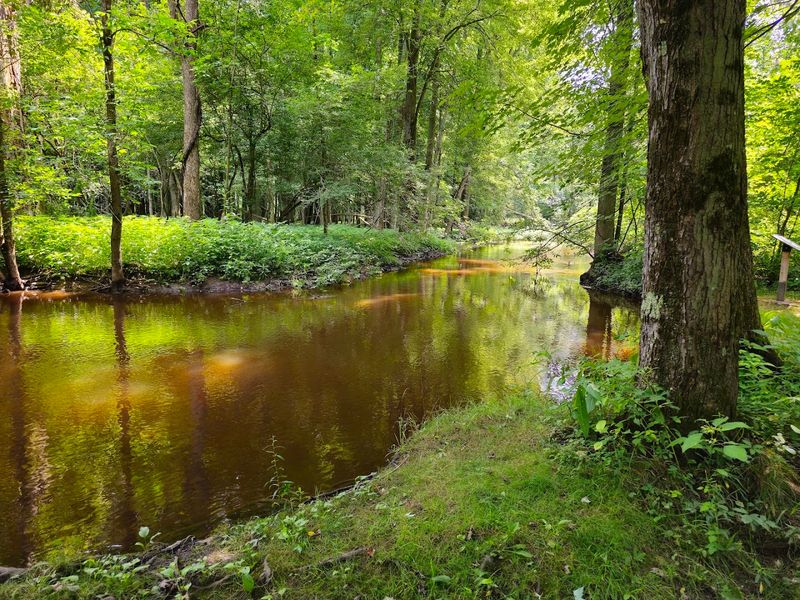
Most visitors come for the petroglyphs, but the trail itself is worth the drive on its own terms. The path runs approximately 1.2 miles through a mix of hardwood forest and low-lying riparian terrain, crossing the Cass River branch via small wooden bridges that feel genuinely charming rather than purely functional.
The sound of moving water follows you through much of the walk, which changes the mood of the hike considerably compared to a dry upland trail.
The terrain is not difficult by any technical measure, but it does require attention. Exposed tree roots and scattered rocks make certain stretches uneven, so footwear with decent grip matters more than it might seem at first.
Flat sneakers work in dry conditions, but after rain the trail becomes noticeably slippery in a few spots near the water.
One of the trail’s quieter pleasures is the variety of what you encounter along the way. Birders regularly spot warblers, woodpeckers, and the occasional great blue heron near the river corridor.
Fly fishers sometimes work the stream below the bridges during cooler months, adding a living, unhurried quality to the surroundings that feels specific to this part of Michigan.
The trail loops back to the trailhead without requiring backtracking, which makes the whole experience feel complete rather than interrupted. Most people finish at a comfortable walking pace in about an hour to an hour and a half, though stopping frequently to photograph the river or watch birds can extend that easily.
Fall is widely considered the peak season for the trail itself, when the hardwoods shift into deep oranges and yellows that reflect off the river surface. The petroglyph shelter closes after Labor Day, but the trail stays open, giving autumn hikers a different but equally rewarding experience to pursue.
Michigan’s Thumb Region Holds More Than Most People Expect
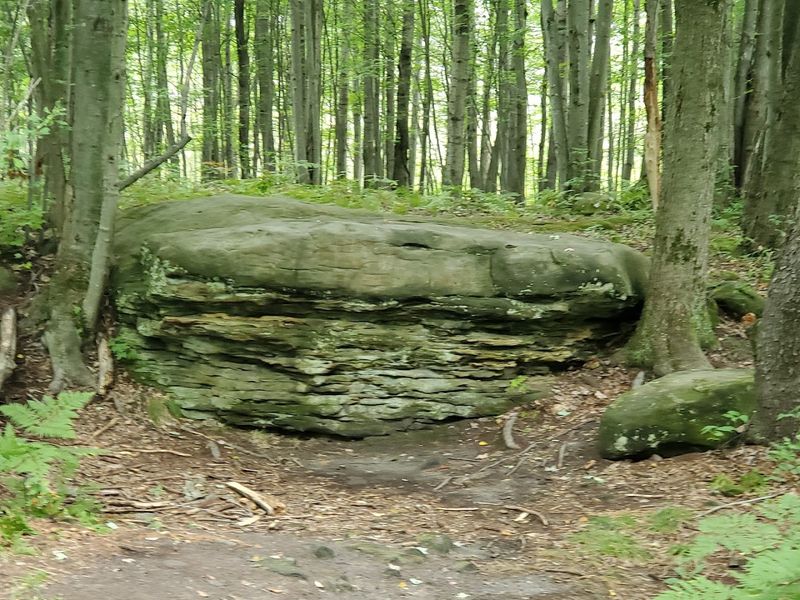
The Thumb region of Michigan does not get the same attention as the Upper Peninsula or the shoreline towns along Lake Michigan, and that is precisely what makes it interesting. Sanilac County sits on the eastern edge of the Thumb, bordered by Lake Huron to the east and defined inland by a flat, agricultural landscape that opens suddenly into patches of preserved forest.
The contrast between open farmland and the dense canopy surrounding the park is striking when you first pull off Germania Road.
Cass City, the nearest town, is a small rural community without a lot of tourist infrastructure. That is not a complaint.
It means the park operates without the crowds that follow more publicized destinations, and the experience of visiting feels personal rather than processed. Gas up and grab food before arriving, because services close to the park are limited.
The broader Sanilac County area has a quiet, unhurried character that complements the pace of the park itself. Gravel roads cut through cornfields and woodlots, and the sky feels wider than it does in denser parts of the state.
Driving to the park through that landscape is its own kind of preparation, gradually shifting your attention away from noise and toward something older and slower.
For anyone road-tripping across Michigan’s lower peninsula, the Thumb region is genuinely underexplored. The petroglyphs represent a rare concentration of preserved Indigenous rock art in the Midwest, and the surrounding forest adds ecological value to the cultural significance.
Pairing the park with a drive along the Lake Huron shoreline to the east creates a full-day itinerary that covers both natural and historical ground without feeling rushed or overplanned.
The Knowledgeable Docents Who Make the Difference
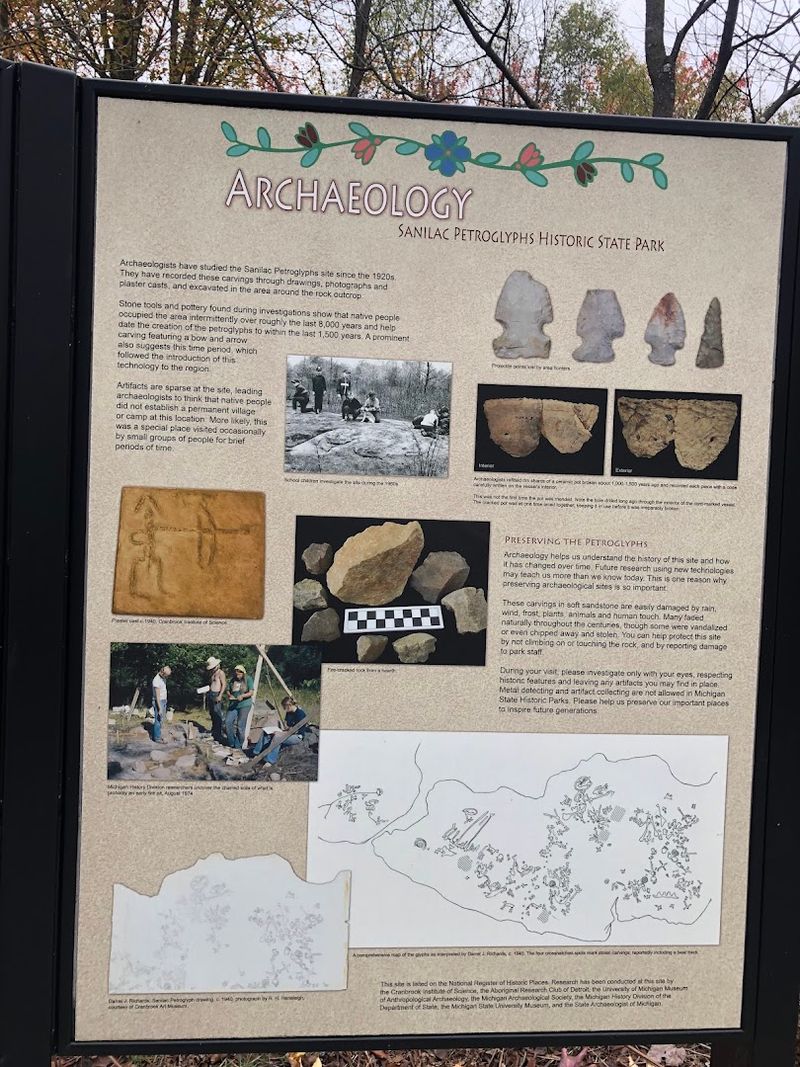
Not every historic site has people stationed there who genuinely know the material, but Sanilac Petroglyphs delivers on that front. The docents working at the park during open season are trained in the cultural and archaeological context of the carvings, and their explanations go well beyond what a posted sign could communicate.
Conversations with them tend to run longer than visitors expect, pulled forward by details that keep opening into new questions.
One of the more valuable things the docents do is help visitors see figures in the stone that are easy to overlook without guidance. The carvings are shallow in places and the sandstone surface has its own texture, which means certain images only become clear once someone points out the angle and the outline.
Without that guidance, a first-time visitor might leave thinking they saw less than they actually did.
The guides also provide cultural framing that prevents the site from being reduced to a curiosity. They discuss what researchers understand about the people who created the carvings, the significance of specific figures within Algonquian cultural traditions, and the ongoing relationship between the site and Indigenous communities today.
That context transforms the experience from sightseeing into something closer to genuine learning.
Docent availability is tied to the park’s operating hours, which run Wednesday through Sunday from 10 AM to 5 PM during the open season. Arriving early in the day gives you more time to ask questions and less competition for the docent’s attention, especially on busier weekend afternoons.
Weekday visits tend to be quieter overall, making Wednesday or Thursday ideal for anyone who prefers a more relaxed, conversation-friendly pace at the site.
Seasonal Access Rules That Are Worth Understanding Before You Go
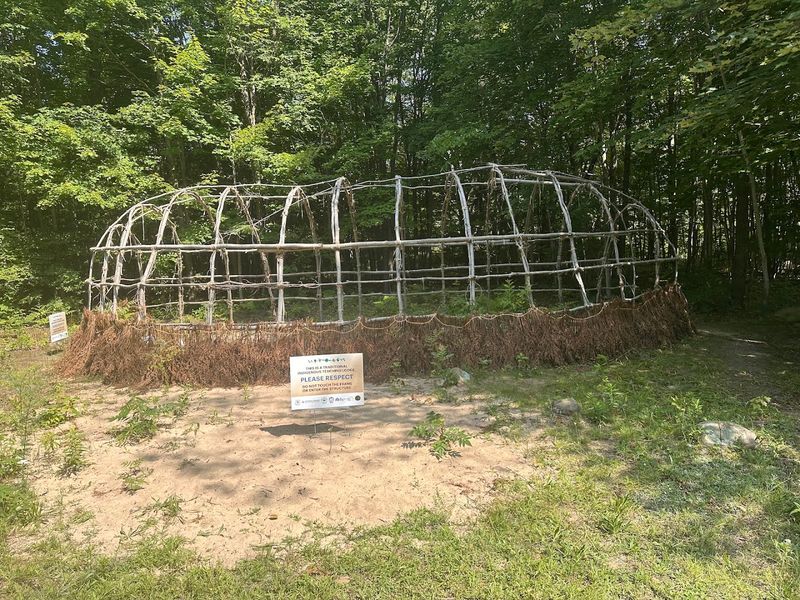
Planning a visit without checking the seasonal schedule is one of the most common ways people end up disappointed here. The petroglyph shelter and the enclosed viewing area close after Labor Day weekend each year, and they do not reopen until late spring.
During the closed season, the carvings are fenced off and not visible from a meaningful distance. The trail remains accessible year-round, but the main attraction requires timing.
The park operates Wednesday through Sunday from 10 AM to 5 PM during its open season. Monday and Tuesday are closed entirely, which catches some visitors off guard, particularly those passing through on a long weekend that includes a Monday.
Checking the schedule before driving out from a distance is not optional if your primary goal is viewing the petroglyphs.
The seasonal closure exists for good reason. Vandalism has been a documented problem at the site over the years, and limiting access during months when supervision is reduced helps protect carvings that cannot be repaired or recreated.
The closure is a practical response to real damage, not bureaucratic caution, and understanding that context makes it easier to accept rather than resent.
Visiting in late summer, particularly in August or early September before the Labor Day cutoff, offers the best combination of petroglyph access, comfortable hiking temperatures, and trail conditions. The forest canopy is fully developed by then, providing shade on the trail, and the river runs at a pleasant level for watching or photographing.
Early September weekdays are especially good because the summer crowd has thinned while the season technically remains open, giving the park a calm, unhurried atmosphere that suits the character of the place.
Photography Opportunities Hidden Across the Whole Property
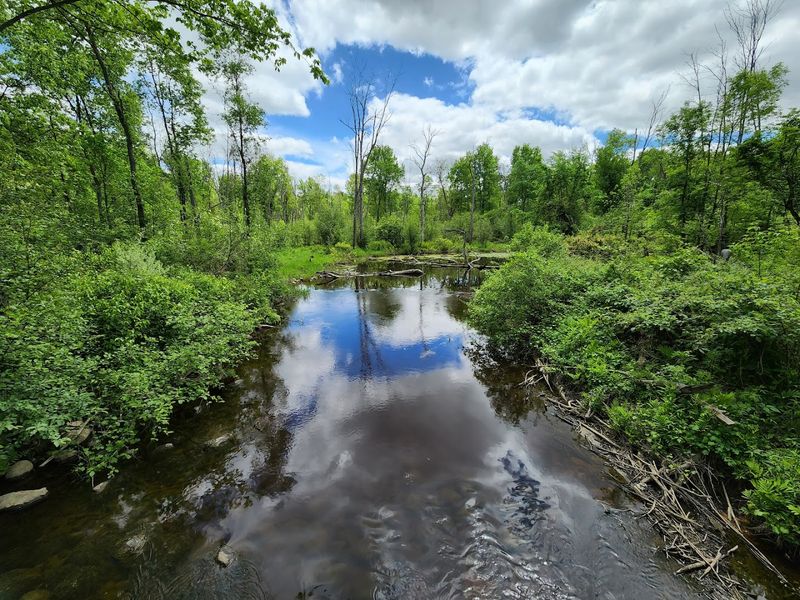
Photographers who make the trip to Sanilac Petroglyphs often come back with more images than they anticipated, and not all of them involve the carvings. The property contains a surprising range of visual material spread across a relatively compact area.
The wooden bridges over the river, the way light filters through the hardwood canopy in the morning, and the texture of the sandstone surface all reward close attention from anyone carrying a camera.
The petroglyphs themselves present a specific photographic challenge. Shallow carvings on a stone surface require angled light to show up clearly, which means midday overhead sun is actually the worst time to photograph them.
Early morning or late afternoon light raking across the rock at a low angle brings the figures into sharp relief, making the lines easier to read in an image. Docents are generally happy to advise on the best angle and time of day for shooting the carvings.
Fall is consistently described as the strongest season for photography at the park. The hardwoods that line the trail turn in late September and into October, and their reflection in the river creates layered compositions that are difficult to replicate at other times of year.
The petroglyph shelter is closed by then, but the rest of the property is still accessible and visually at its peak.
Bird photography is another draw during spring migration and into early summer. The riparian corridor along the river attracts warblers, flycatchers, and waterfowl that pass through or nest in the area.
The relatively low human traffic on weekday mornings means wildlife is less disturbed than at busier parks, giving patient photographers a real advantage. Bringing a longer lens alongside a wide-angle setup covers most of what the property has to offer.
Why This Quiet Park Stands Apart From Every Other Michigan State Park
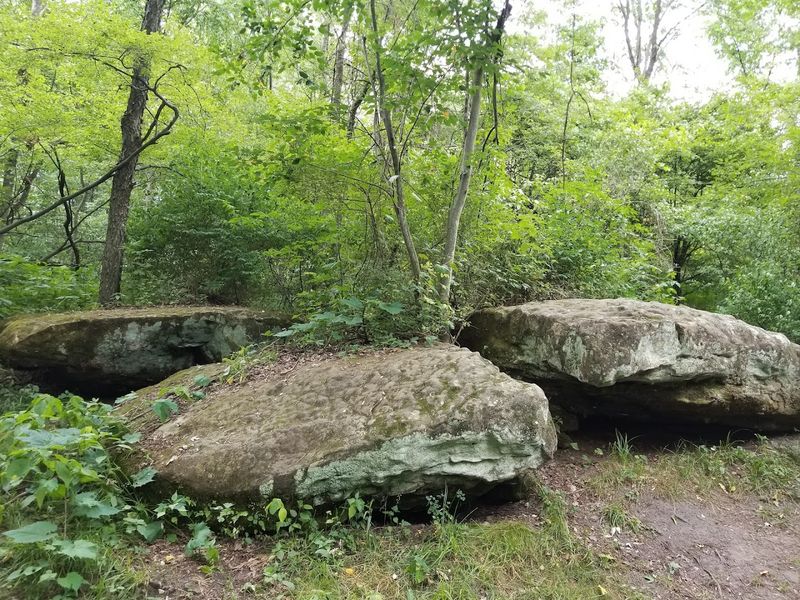
Michigan has more than 100 state parks, and most of them compete on scenery alone. Sanilac Petroglyphs offers something that dune parks and lakeside campgrounds simply cannot replicate: direct, physical proximity to a surviving record of human presence from a thousand years ago.
The carvings exist nowhere else in Michigan with this level of preservation and accessibility, which gives the park a specific cultural weight that separates it from the rest of the system.
The scale of the place actually works in its favor. At roughly 240 acres with a 1.2-mile trail, the park is compact enough to experience fully in a single visit without feeling like you rushed through anything.
Larger parks can leave visitors with a nagging sense of incompleteness, wondering what they missed on the trails they skipped. Here, the experience has a natural beginning, middle, and end that feels deliberately paced.
The combination of Indigenous history, riparian ecology, and accessible hiking creates an unusual mix that appeals to people who do not usually overlap. Families with children old enough to absorb some history, solo hikers, birders, fly fishers, and photographers all find something worth their time on the same small property.
That breadth without sprawl is genuinely rare.
Located off the main roads in Sanilac County, the park rewards the extra navigation required to reach it. The drive through rural Michigan farmland and into the wooded approach along Germania Road is part of the transition into a different kind of attention.
By the time you park and step onto the trail, the surrounding quiet has already started doing its work. The stone carvings at the end of that walk simply complete it.
Share this story