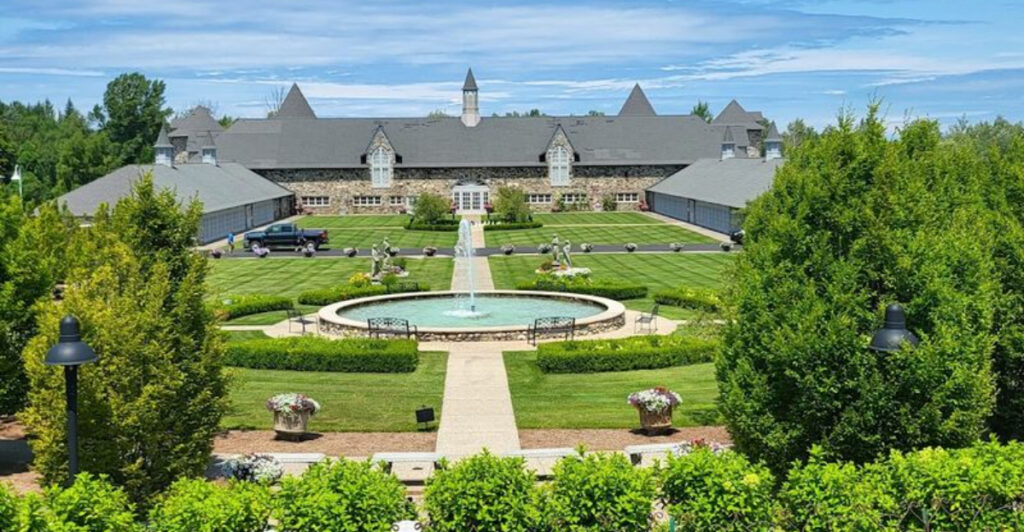
Every so often, Michigan hides something so unexpected that it feels almost impossible to explain until you see it for yourself. Castle Farms in Charlevoix is one of those places.
Rising along M-66 with stone towers, arched passageways, sweeping courtyards, and gardens that feel made for wandering, it looks less like a northern Michigan landmark and more like a castle from another country. But the story gets even better once you look closer.
Built in 1918 as a model dairy farm, the property has lived several lives over the past century, transforming from agricultural estate to concert venue to one of the state’s most unusual attractions. Today, visitors come for the architecture, the gardens, the history, the model trains, and the little surprises tucked throughout the grounds — including a resident dragon.
Whether you are planning a day trip, scouting a wedding venue, or simply looking for a Michigan place that feels completely different from the usual stops, Castle Farms gives you plenty of reasons to keep reading.
The Castle Architecture That Stops Traffic on M-66
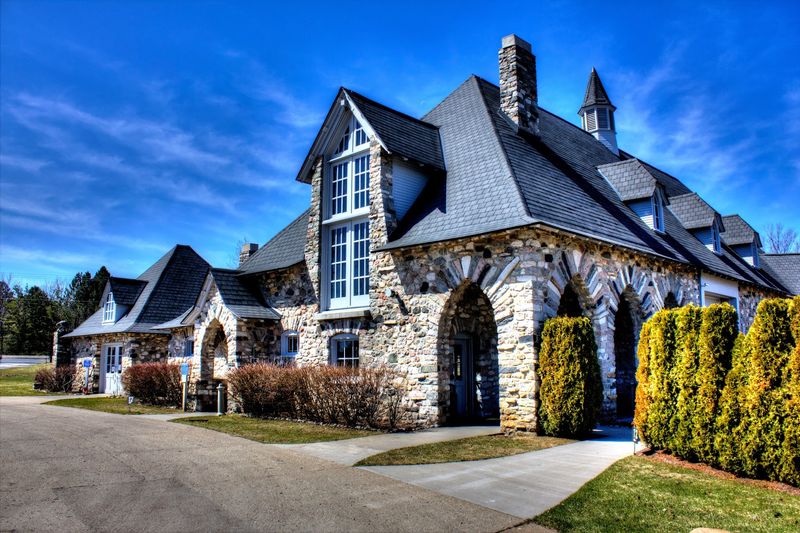
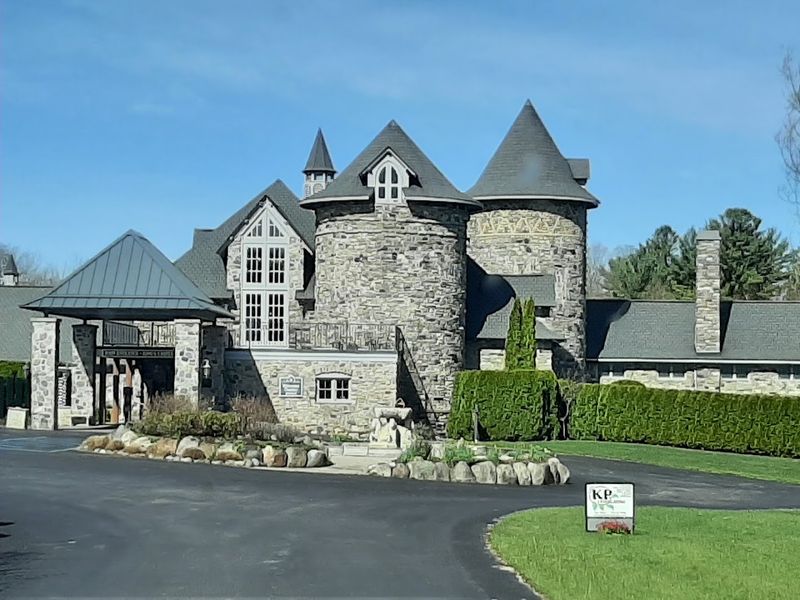
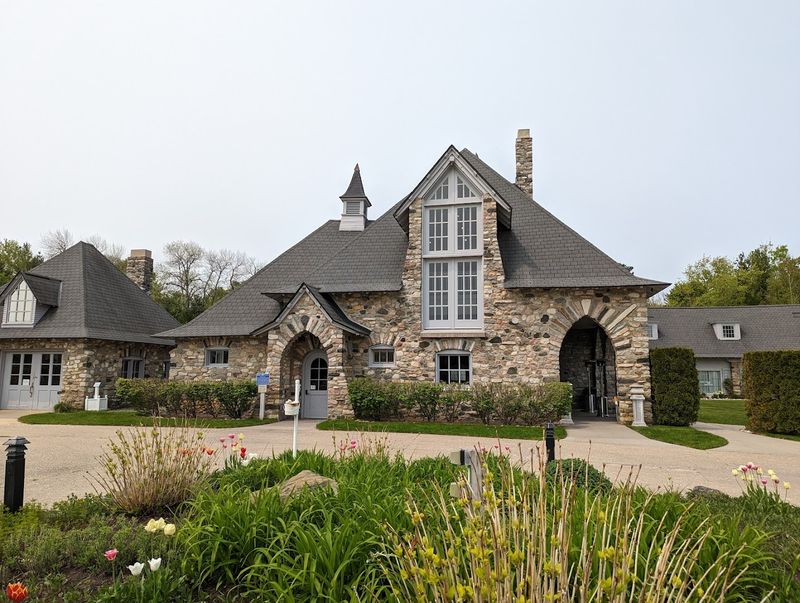
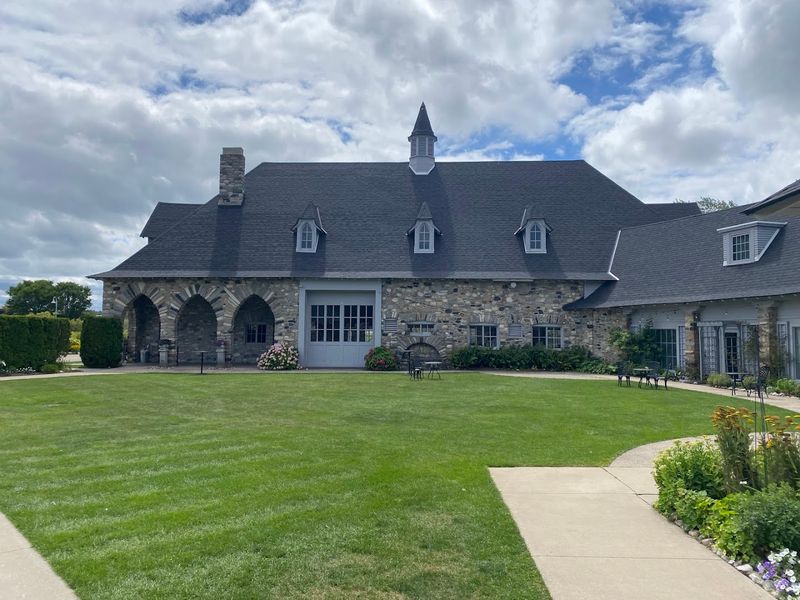
Long before visitors read a single sign or purchase a ticket, the building itself delivers the first jolt of surprise. Castle Farms was constructed in 1918 by Louis Sands, a lumber baron who modeled the complex after the agricultural estates of Normandy, France.
The result is a sprawling stone structure with crenellated rooflines, thick castle walls, and archways that look carved out of a European countryside rather than rural northern Michigan.
The scale catches most people off guard. This is not a decorative facade or a themed attraction built for tourism.
The original stonework, the towering walls, and the heavy timber details were constructed with genuine craftsmanship, and much of that original character has been preserved through careful restoration by the current owner. Walking along the exterior, the texture of the stone and the weight of the architecture communicate something that photographs rarely capture fully.
Several distinct sections make up the complex, each with its own character. The Knights Castle anchors one end of the property while other wings stretch outward into courtyards and garden spaces.
From certain angles, the rooflines stack up against the Michigan sky in a way that genuinely resembles a medieval fortification. The property sits on enough land that the full scope of the structure only reveals itself gradually as visitors move through different sections of the grounds.
Restoration work over the years has kept the stonework intact while updating interiors for modern use without stripping the historic atmosphere. The architecture alone justifies the trip for anyone who appreciates craftsmanship, history, or the rare experience of encountering something this visually unexpected in a small Michigan town.
Michigan’s Largest Outdoor Miniature Train Setup
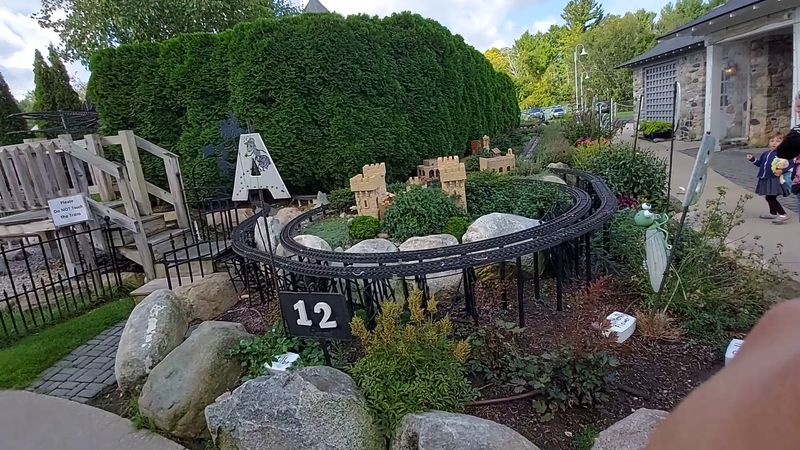
The model railroad at Castle Farms holds a specific distinction worth knowing before you arrive: it is recognized as the largest outdoor miniature train setup in Michigan. That claim carries real weight once you see the scale of the layout spread across the garden grounds.
Tracks wind through landscaped terrain, past tiny buildings, over miniature bridges, and through detailed scenes that reward close inspection from multiple angles.
Kids gravitate toward it immediately, but adults tend to linger just as long. The craftsmanship in the miniature village elements gives the display a depth that goes beyond a simple novelty.
Seasonal operation means the trains run during warmer months, so summer visits offer the full experience of watching the locomotives move through the layout in real time. Early spring visits, while still beautiful, may find the trains parked while the grounds warm up for the season.
The train area connects naturally to the garden spaces surrounding it, so moving between the two feels seamless rather than abrupt. Children who might otherwise grow restless during a walking tour tend to snap back to full attention the moment the miniature trains come into view.
For families planning a visit, this section alone makes Castle Farms a strong choice over more conventional attraction options in the region. The combination of operating trains, detailed scenery, and open garden space around the layout gives it room to breathe in a way that indoor model railroad displays simply cannot replicate.
Tram tours of the grounds also pass through portions of the property, offering a seated view of the estate for visitors who want a guided experience rather than a self-paced walk. The train display sits comfortably at the center of what makes this property so layered and genuinely engaging for groups of all ages.
Norm the Dragon and the Whimsical Side of the Grounds
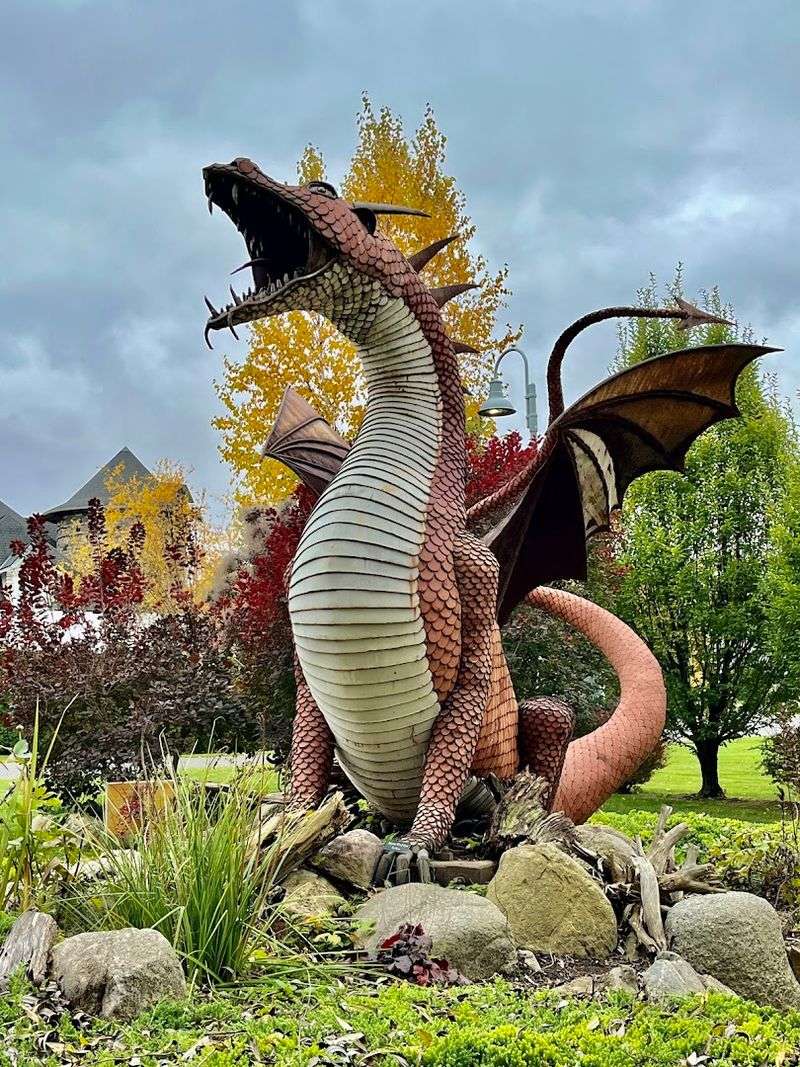
Somewhere between the stone archways and the garden paths, Castle Farms introduced a character that has quietly become one of the most talked-about features on the property. Norm the dragon presides over a section of the grounds with the kind of presence that makes adults do a double take and children immediately ask for a photo.
The sculpture is large enough to be genuinely impressive rather than merely decorative, and its placement within the castle setting gives it an oddly fitting quality, as though a dragon should naturally be stationed near a medieval-style fortification.
The decision to include Norm reflects something deliberate about how Castle Farms approaches its identity. Rather than presenting itself purely as a historic property or a serious wedding venue, the estate leans into a sense of playfulness that runs alongside its architectural gravitas.
The Enchanted Forest trail reinforces this approach, threading visitors through a whimsical garden experience that adds storybook texture to what could otherwise be a straightforward historical tour.
Wedding guests who have celebrated at the property frequently mention Norm specifically, often noting the dragon as an unexpected highlight in an already visually rich setting. For families visiting with younger children, the dragon provides an immediate focal point that transforms the tour from a passive walk into something closer to an adventure.
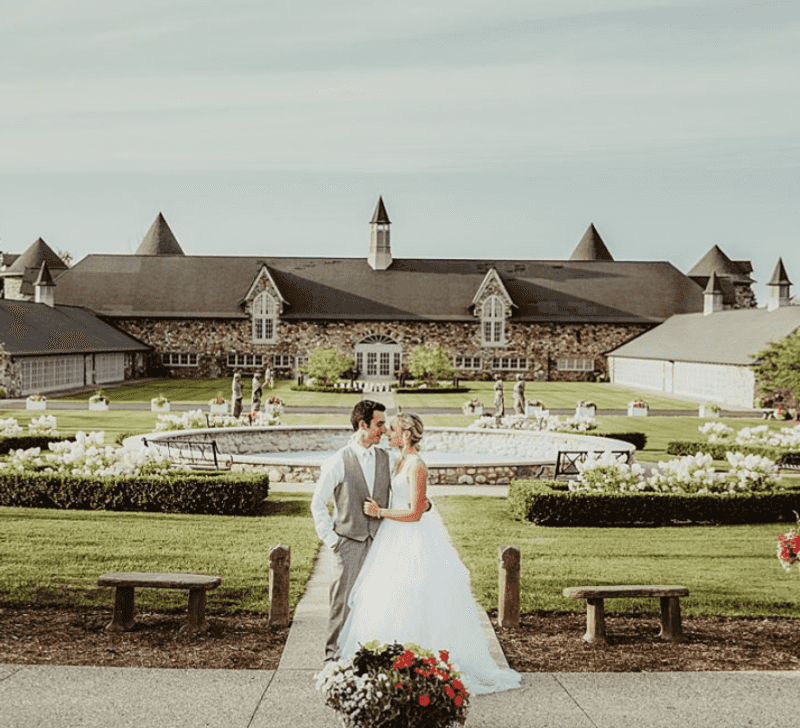
The broader garden spaces contain other surprises as well, including a reflective pool and pathway features that reward explorers who wander beyond the main routes. Castle Farms has built a reputation for layering unexpected details throughout the property, and Norm sits at the top of that list as the most memorable single surprise waiting on the grounds.
Spotting the dragon for the first time carries a genuine jolt of delight that holds up even on repeat visits.
Gardens That Shift With Every Season
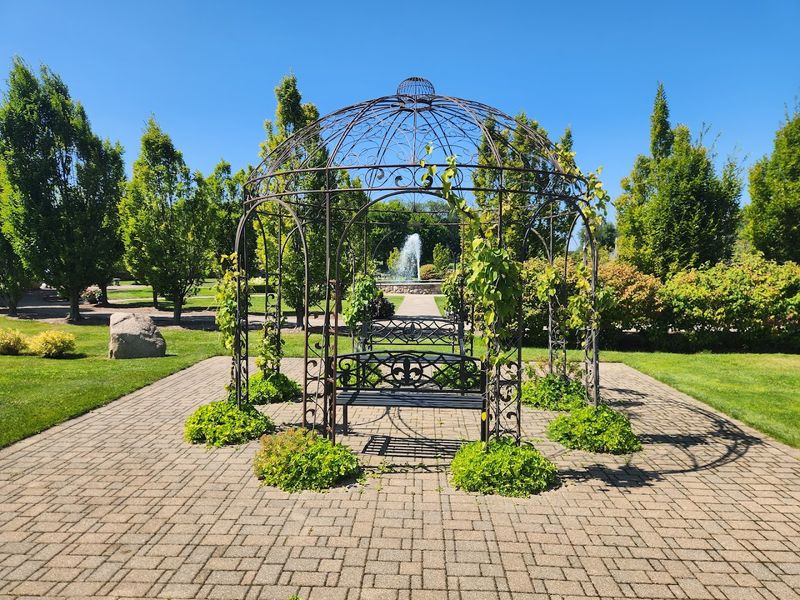
The gardens at Castle Farms operate on a seasonal rhythm that gives the property a different personality depending on when you arrive. Summer visits bring the full display: blooming flower beds, operating fountains, and lush greenery filling the spaces between the stone walls and courtyard areas.
Spring visits catch the grounds in transition, with the architecture still commanding attention even before the plantings reach their peak. Fall softens everything into warm tones that photograph beautifully against the gray stone.
Pathways wind through distinct garden zones rather than presenting one continuous open lawn. Each section has its own character, from more formal arrangements near the main structures to looser, more exploratory paths through the Enchanted Forest area.
The reflective pool adds a calm counterpoint to the more active sections of the grounds, offering a place to pause and take in the surrounding stonework from a different angle. Seasonal flowers are selected and arranged with enough variety that repeat visitors notice genuine changes between trips.
The grounds are well-maintained throughout the operating season, which visitors consistently note as a detail that elevates the overall experience. Manicured edges, clean pathways, and carefully tended beds signal that the property is actively cared for rather than simply preserved.
For photography, the garden areas offer an almost unreasonable number of compositions, with stone walls, archways, fountains, and plantings combining in ways that work from nearly any angle. Wedding couples frequently cite the grounds as the primary reason they chose Castle Farms, and touring the gardens during a regular visit makes that reasoning easy to understand.
The combination of structured formal plantings and more naturalistic garden paths gives the property a range that keeps exploration interesting well beyond the first circuit of the grounds.
The WWI Museum and Historical Collections Inside the Walls
Behind the castle walls, history takes on a tangible form in the WWI museum housed within the complex. The exhibit brings together artifacts, memorabilia, and displays that document the First World War period in a setting that already carries its own historical weight.
The stone interior rooms provide a fitting backdrop for the collection, reinforcing the early twentieth century context without requiring any theatrical staging. The museum adds a layer of substance to the visit that distinguishes Castle Farms from purely decorative attractions.
Beyond the WWI collection, the property contains other curated displays that reflect the eclectic sensibility of the current ownership. Vintage wedding cake toppers, colored glass collections, and Great Britain memorabilia appear throughout the interior spaces, creating a cabinet-of-curiosities atmosphere that rewards slow, attentive touring.
The variety of collections means that different visitors tend to fixate on different things, making group tours naturally conversational as people point out details that caught their eye.
The self-guided tour experience begins with a video from the current owner explaining her acquisition of the property and the vision behind its restoration. That personal introduction creates a sense of connection to the place before visitors take a single step through the rooms.
Staff members stationed throughout the property are consistently described as knowledgeable and genuinely enthusiastic about sharing the history of the estate. The story of Castle Farms itself, from its origins as a working dairy operation through its years of decline and eventual transformation into a public attraction and event venue, is compelling enough to anchor the entire visit.
Understanding that arc gives the architecture, the collections, and even the garden spaces a richer meaning than they would carry without that context. The history is not just displayed here; it is embedded in the structure itself.
Five Distinct Wedding Venues Within One Estate in Northern Michigan
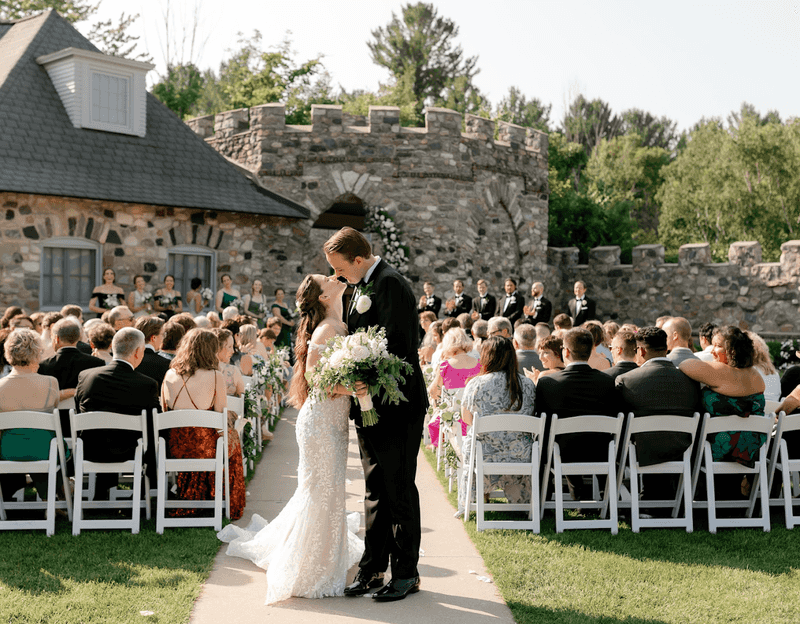
Northern Michigan has no shortage of scenic event spaces, but Castle Farms operates on a different level when it comes to sheer variety within a single property. Five separate private venues sit within the estate, each with its own architectural character and atmosphere.
The Knights Courtyard, the Queens Courtyard, the East Garden Room, and additional spaces give couples genuine options rather than a single template applied to every event. That variety means a medieval-themed celebration and a garden party wedding can both find their ideal setting without compromise.
The coordination staff, particularly venue coordinator Bella, receives consistent praise from couples who have married at the property. The level of support offered goes beyond basic logistics.
Coordinators check in throughout the event, manage vendor communication, and handle the kind of small-moment details that couples rarely anticipate needing but deeply appreciate in real time. For couples planning from a distance, the team’s communication throughout the planning process has been noted as a genuine differentiator, with questions answered promptly and details confirmed well in advance of the wedding date.
The practical infrastructure supports large events effectively. Ample guest parking, a catering area with refrigeration, a bridal suite positioned near ceremony spaces, and well-maintained grounds that photograph cleanly from virtually any angle all contribute to an event experience that runs smoothly.
Vendors working the property for the first time frequently comment on how well-organized the operation is, which matters enormously on a day when timing and coordination carry so much weight. The estate also accommodates dogs at outdoor ceremonies, a detail that matters more to couples than many venues acknowledge.
Castle Farms has built its wedding reputation not just on visual appeal but on operational reliability, and that combination is harder to find than the photographs alone suggest.
The Castle Pub and Wine Tasting Experience
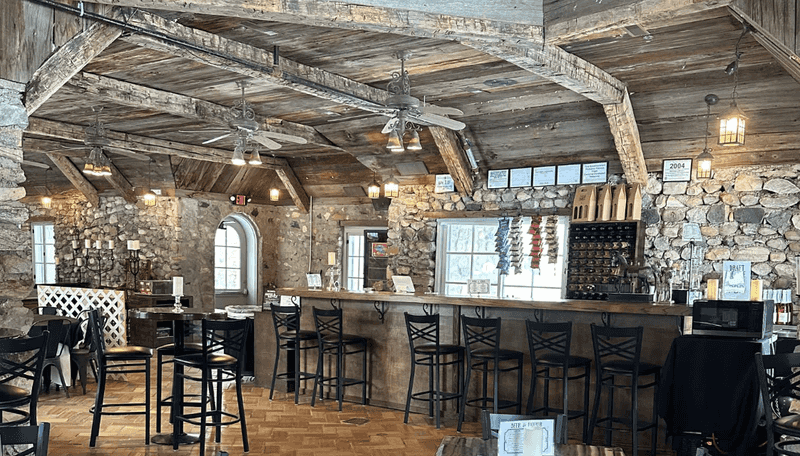
Not every visit to Castle Farms needs to follow the full tour itinerary. The Castle Pub offers a distinct entry point into the property for visitors who want to settle in with a drink before exploring or who simply want to enjoy the atmosphere without committing to the entire self-guided experience.
The pub operates within the castle complex, giving it a setting that no purpose-built bar could replicate. Stone walls, historic architectural details, and the general character of the estate carry directly into the drinking experience.
Wine tasting rounds out the beverage options for visitors looking for something beyond a casual drink. The combination of a functional pub and wine tasting within a castle setting creates an atmosphere that works equally well for a relaxed afternoon stop and for groups who want to linger longer than a standard tour allows.
Pricing at the pub has drawn positive reactions from visitors who expected a premium for the setting and found the experience reasonably accessible instead.
For couples touring the venue before booking a wedding, stopping at the pub provides a practical opportunity to experience the property from a guest’s perspective rather than purely as a planning exercise. The pub also functions as a natural gathering point after a self-guided tour, offering a place to sit down and process the scale of what the grounds contain before heading back out.
Groups visiting Castle Farms on a cooler day tend to appreciate having an indoor space with genuine character to anchor part of their visit. The acoustic quality inside the stone rooms adds an unexpected dimension to the pub experience, giving conversation and ambient sound a warmth that modern interiors rarely produce.
It is a detail that registers physically rather than intellectually, and it stays with you after the visit ends.
Self-Guided Tours and Tram Rides Across the Estate
Castle Farms gives visitors meaningful flexibility in how they move through the property. The self-guided tour format lets guests set their own pace, double back to spaces that caught their attention, and spend extra time in areas that resonate most.
Detailed maps provided at the start of the tour are genuinely useful rather than decorative, pointing out features and offering context that makes the walk more informative without requiring a live guide at every turn. The format suits both quick visitors and those planning a full afternoon on the grounds.
Tram tours offer a seated alternative that covers the estate with narration, making them a practical choice for visitors who want an organized overview before deciding where to focus their remaining time. The ticket price includes a tram ride, which means the choice between walking and riding does not require an additional decision about cost.
Families with younger children or visitors who find extended walking less comfortable tend to gravitate toward the tram option, while more exploratory visitors often combine both approaches during a single visit.
Staff throughout the property consistently receive high marks for their willingness to answer questions and share details about the history and layout of the estate. The gift shop attendant in particular has been noted for genuine helpfulness rather than the transactional approach common in retail spaces attached to tourist attractions.
Castle Farms recommends planning for a full day to take in the complete range of what the property offers, and that recommendation is well-founded. Two to three hours covers the main features comfortably, but visitors who slow down, explore the garden paths thoroughly, examine the collections carefully, and stop at the pub tend to find the afternoon gone before they expected.
The property simply has more layers than a first glance suggests.
Practical Details for Planning Your Visit to Charlevoix
Castle Farms operates on a schedule that shifts slightly depending on the day of the week. Thursday and Friday hours run from 10 AM to 4 PM, while Saturday through Tuesday hours close earlier at 2 PM.
Monday is the one day the property stays closed entirely. For visitors driving up from southern Michigan or arriving from out of state, checking the current schedule before making the trip saves the frustration of arriving on a closed day or outside operating hours.
The property sits at 5052 M-66 in Charlevoix, making it straightforward to locate and easy to incorporate into a broader northern Michigan itinerary.
Admission is structured as an annual pass rather than a single-entry ticket, which means the entry fee paid during a first visit grants return access throughout the season. For visitors who live within reasonable driving distance or who plan to spend multiple days in the Charlevoix area, this structure makes repeat visits genuinely practical rather than an afterthought.
The pricing has been described as reasonable relative to the volume of content the property contains, particularly given the combination of museum access, garden exploration, model railroad viewing, and tram riding included in a single admission.
Summer visits capture the gardens and model trains at full operation, making them the most visually complete option for first-time visitors. Spring and fall each offer their own appeal, with quieter crowds and different atmospheric qualities that some visitors prefer.
Dogs are welcome on the outdoor grounds during regular visits and at outdoor wedding ceremonies, though they are not permitted inside the buildings. Parking is available on site and described as ample even during busy wedding weekends when multiple events may be running simultaneously on the property.
Charlevoix itself offers additional restaurants, waterfront access, and lodging options that pair naturally with a Castle Farms day trip.
Why Castle Farms Earns Its Reputation as Northern Michigan’s Most Surprising Stop
A dairy farm turned Norman-style castle turned public attraction and wedding venue sounds like a description assembled by committee, but Castle Farms pulls every element together with a coherence that surprises first-time visitors. The property works because each layer adds something distinct rather than competing with the others.
The architecture anchors the experience, the gardens soften it, the museum deepens it, the trains and dragon inject personality, and the pub gives it a social dimension that most historic properties never manage to develop.
The 4.6-star rating across more than 1,400 reviews reflects a consistency that goes beyond any single standout feature. Visitors who came for the gardens mention the trains.
Visitors who came for a wedding tour mention Norm. History enthusiasts end up spending more time in the garden than they planned.
That cross-pollination of unexpected discoveries is the clearest signal of a property that has been thoughtfully developed rather than assembled from a standard attraction checklist.
Charlevoix already draws visitors for its waterfront, its proximity to Lake Michigan, and its general northern Michigan charm. Castle Farms fits naturally into that context while offering something that has no real equivalent in the region.
The French Normandy architecture alone would be worth a detour, but the full package of gardens, trains, museum collections, dragon sculpture, wedding venues, and a functioning pub inside stone walls creates a destination that resists easy categorization. That resistance is exactly what makes it memorable.
Most places can be summarized in a sentence. Castle Farms keeps requiring more sentences, more details, and more time to describe accurately, which is ultimately the best argument for simply showing up and seeing it for yourself.
Share this story