A dark mine tunnel suddenly flashes electric red and green. A row of glowing rail bikes rolls through Cape May after sunset.
Somewhere deep in the Pine Barrens, a paddle dips into water the color of strong iced tea while the forest closes in on both banks. These are not scenes from an elaborate theme park version of New Jersey.
They are real experiences hiding across the state, often within an easy drive of neighborhoods, highways, and beach towns you already know. This particular bucket list skips the predictable stops in favor of adventures that feel wonderfully specific to the Garden State.
You can sleep aboard a decorated battleship, listen to wolves howl in the mountains, operate heavy machinery, and carry home rocks that glow beneath ultraviolet light. Some outings require reservations, others demand sturdy shoes, and one is strictly for grown-up rock collectors.
All eight, however, deliver the kind of story you will still be telling long after the day is over.
1. Tour the fluorescent Rainbow Tunnel at Sterling Hill Mining Museum in Ogdensburg
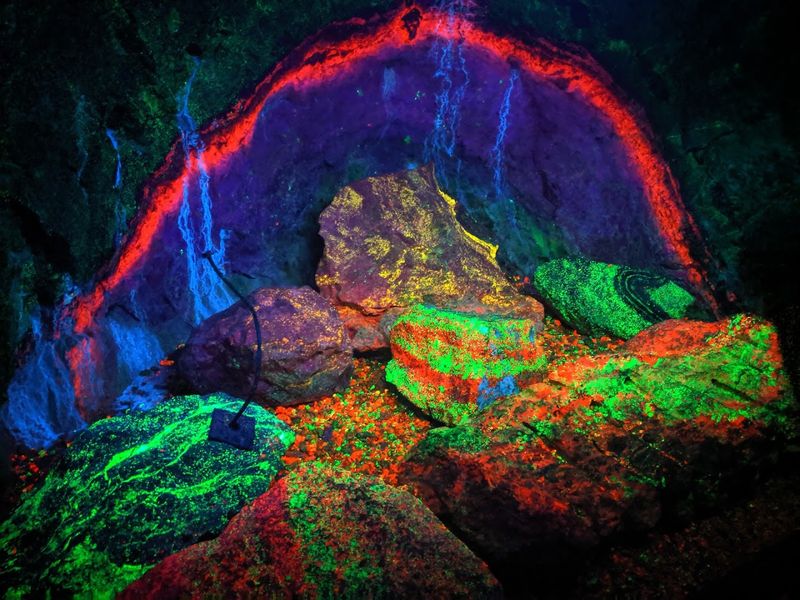
The lights go down, ultraviolet lamps come on, and an ordinary-looking rock wall erupts into bands of glowing red and green. That transformation is the unforgettable centerpiece of the Rainbow Tunnel at Sterling Hill Mining Museum, located on the site of a former zinc mine in Ogdensburg.
It is strange, beautiful, and far more dramatic than most people expect from a geology lesson. The guided experience takes visitors through roughly 1,300 feet of underground passageways, with stops explaining the mine’s machinery, geology, working conditions, and long industrial history.
You will see old mine galleries, equipment, a shaft station, and spaces where generations of workers extracted ore beneath Sussex County. The fluorescent minerals are the showstoppers, but the human side of the mine gives the tour its weight.
This was once an active workplace, not a tunnel constructed for visitors. Wear closed-toe shoes with decent traction and bring a light layer, even when the weather outside is hot.
Underground temperatures remain cool, and the route is completed entirely on foot rather than aboard a mine train. Public tour schedules may change seasonally, so check the timing before making the drive.
Leave extra room in the day for the museum collections, which explain why the Franklin-Ogdensburg mineral district became famous among scientists and collectors far beyond New Jersey.
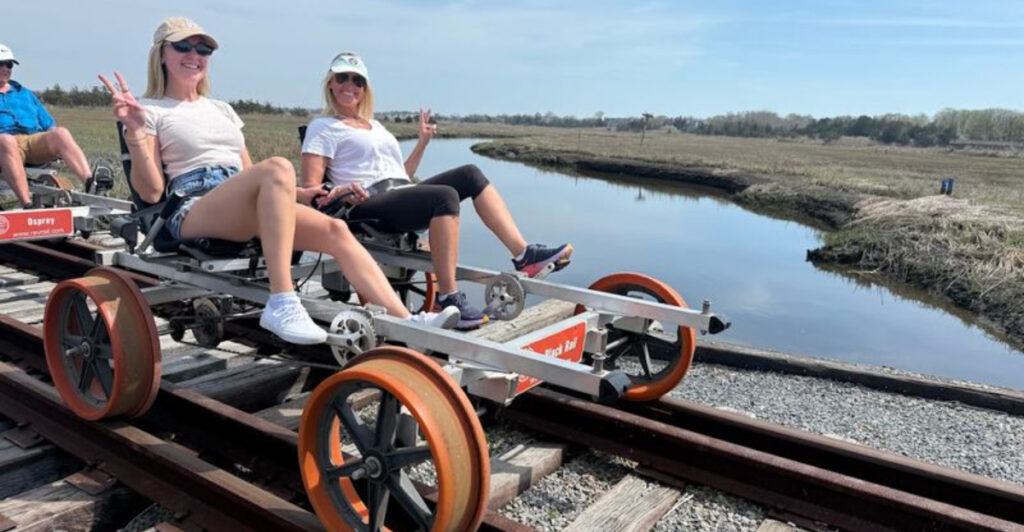
2. Pedal a rail bike through Cape May’s coastal countryside at twilight
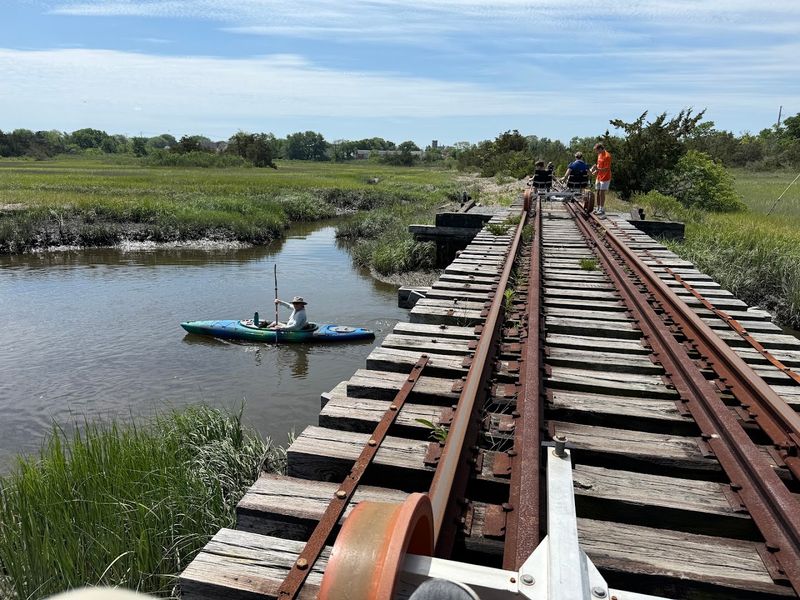
Cape May becomes noticeably quieter once beachgoers begin folding their umbrellas, and that is precisely when this ride gets interesting. Riders climb onto pedal-powered rail bikes near Lafayette Street and follow old tracks toward the Cape May Canal, passing fields, wetlands, and wildlife habitat as daylight begins to fade.
The excursion covers about four miles round trip and takes roughly an hour and a half, making it long enough to feel like a real outing without requiring serious cycling experience.
Two-seat and four-seat bikes are available, and everyone can contribute to the pedaling, although one companion will inevitably become unusually focused on taking pictures.
Twilight adds more than a prettier sky. Riders pause near the turnaround point, often with time for a campfire-style treat, before returning on bikes decorated with small lights and colorful glow sticks.
By then, the route feels completely different, with the rails stretching into the evening and the surrounding countryside growing darker by the minute. Prices are generally charged per bike rather than per rider, making the larger option useful for families or groups of friends.
Bring water, dress for the evening temperature, and reserve early during busy summer and fall weekends. Cape May sunsets follow their own schedule, and this is one adventure where arriving late can mean missing the best part.
3. Paddle the tea-colored Mullica River through the heart of the Pine Barrens
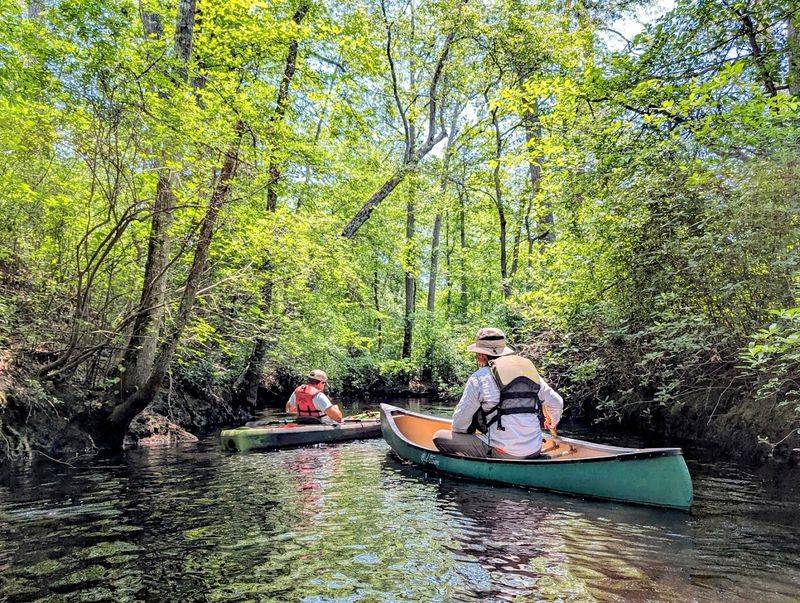
The water beneath your kayak looks as though somebody brewed an entire river from tea leaves. That dark amber shade comes from natural plant tannins, giving the Mullica River its distinctive color as it twists between cedar trees, pine forest, and sandy banks in the heart of the Pinelands.
A guided paddle is one of the best introductions for visitors who want more than a quick trip around a lake. Routes vary in length, but even a few hours on the Mullica can take paddlers through narrow bends, quiet forest corridors, and sections where signs of development disappear completely.
Guides can point out beaver activity, native plants, birds, and the environmental details that make this ecosystem different from anywhere else in New Jersey. Some stretches are suitable for relative beginners, while longer routes may involve tight turns, fallen branches, changing water levels, and several hours of steady paddling.
Choose the trip that matches your experience rather than assuming every river float will be effortless. Wear clothes that can get wet, secure your phone in a waterproof case, and bring insect repellent during warmer months.
Most importantly, resist the urge to hurry. The Mullica is best experienced slowly, with enough silence to notice the reflections on the water and the movement in the trees.
It is one of the rare New Jersey adventures where getting away from everything does not require leaving the state.
4. Wander through the larger-than-life artwork at Grounds For Sculpture in Hamilton
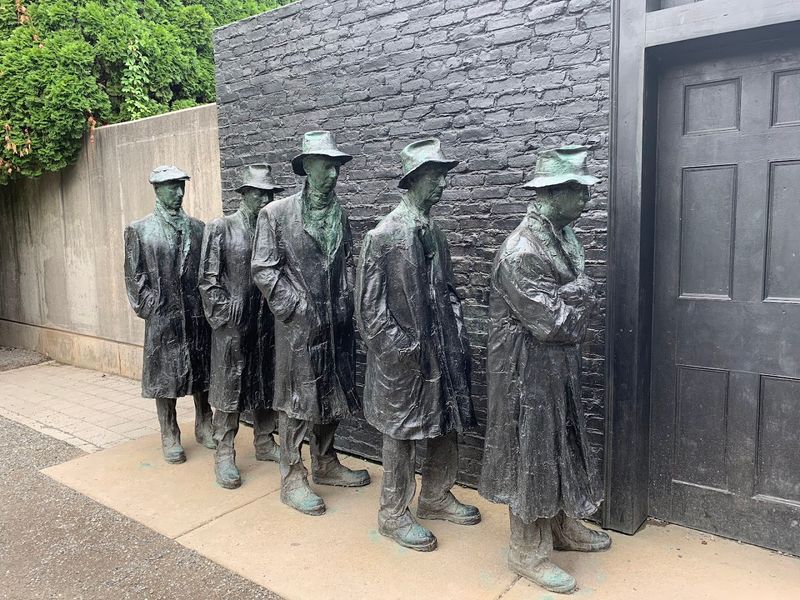
A familiar-looking lunch party appears through the trees, except the diners are sculptures and the scene seems to have stepped out of a painting. Elsewhere, enormous abstract forms rise above carefully planted gardens, figures wait beside ponds, and paths disappear behind bamboo and flowering trees.
Grounds For Sculpture is built to make wandering part of the artistic experience rather than something that happens between galleries. The Hamilton property covers 42 landscaped acres and combines an outdoor sculpture park, indoor exhibition spaces, and an arboretum filled with hundreds of plant species.
More than 300 works are positioned throughout the grounds, ranging from monumental contemporary pieces to lifelike figures that can briefly fool visitors from a distance. The most enjoyable approach is to begin without a rigid route.
Follow whichever path looks promising, use the map when necessary, and leave time for the small pieces hiding beyond the headline attractions. The experience also changes dramatically with the seasons.
Spring brings blossoms, summer creates leafy hiding places, autumn sharpens the colors, and winter reveals forms that dense foliage can obscure. Advance timed admission is strongly recommended, especially on weekends and during special exhibitions.
Comfortable shoes matter more than dressing for a conventional museum because a visit involves bridges, garden trails, gravel, and plenty of standing. Give yourself several hours rather than trying to squeeze the park into a quick stop.
This is the kind of place where the next turn often becomes the best part of the visit.
5. Join a guided wolf-watch tour at Lakota Wolf Preserve in Columbia

The first howl often triggers another. Within seconds, voices from several wolf packs may begin carrying through the wooded hills, creating a sound that feels deeper and more powerful than any recording can capture.
At Lakota Wolf Preserve in Columbia, visitors observe wolves from a designated viewing area while guides explain the animals’ behavior, social structures, histories, and individual personalities. The preserve is also home to foxes, bobcats, and lynx, adding several more reasons to keep a camera ready.
This is not a petting zoo, and that distinction is essential to the experience. Visitors watch from a respectful distance rather than touching or feeding the animals, allowing the focus to remain on education and natural behavior.
Getting to the viewing area is part of the outing. Guests may walk about half a mile through the forest or use the available shuttle, depending on current operations and accessibility needs.
The wooded setting near the Delaware Water Gap makes the transition feel like a gradual step away from traffic and into the animals’ territory. Reservations are important because tours operate at scheduled times rather than as an open-ended walk-in attraction.
Arrive early enough to check in, dress for the weather, and bring a camera with a useful zoom. Cooler days can be particularly rewarding, as the wolves may be more active and easier to spot.
When several packs begin answering one another across the preserve, even the most committed phone users usually stop scrolling and listen.
6. Spend the night sleeping in a sailor’s bunk aboard the Battleship New Jersey in Camden

Your sleeping quarters come with steel walls, narrow passageways, stacked Navy bunks, and one of the most formidable ships ever built surrounding you.
Spending the night aboard the Battleship New Jersey turns Camden’s massive waterfront museum into an after-hours adventure where the vessel’s scale becomes impossible to ignore.
Overnight encampments are offered for families, Scout troops, school groups, youth organizations, and occasionally adult participants through specially scheduled programs. A typical stay includes meals, guided exploration, educational activities, and the chance to sleep in the same style of bunks used by enlisted sailors.
During the visit, guests may encounter towering gun turrets, officers’ spaces, crew areas, steep ladders, and seemingly endless companionways while learning about the battleship’s service during World War II, Korea, Vietnam, and later operations. Do not expect hotel comfort.
The compact bunks, shared spaces, and shipboard routines are part of the point, offering a small glimpse of daily life aboard a floating city made almost entirely of steel. Pack lightly, wear closed-toe shoes suitable for climbing ladders, and follow the provided gear recommendations carefully.
Large suitcases become awkward very quickly inside naval passageways. Reservations are essential because overnight dates frequently fill with organized groups.
Waking up aboard the “Big J,” with the Camden waterfront outside and Philadelphia visible across the Delaware River, makes an ordinary hotel room seem especially forgettable.
7. Drive and operate real construction machinery at Diggerland USA in West Berlin
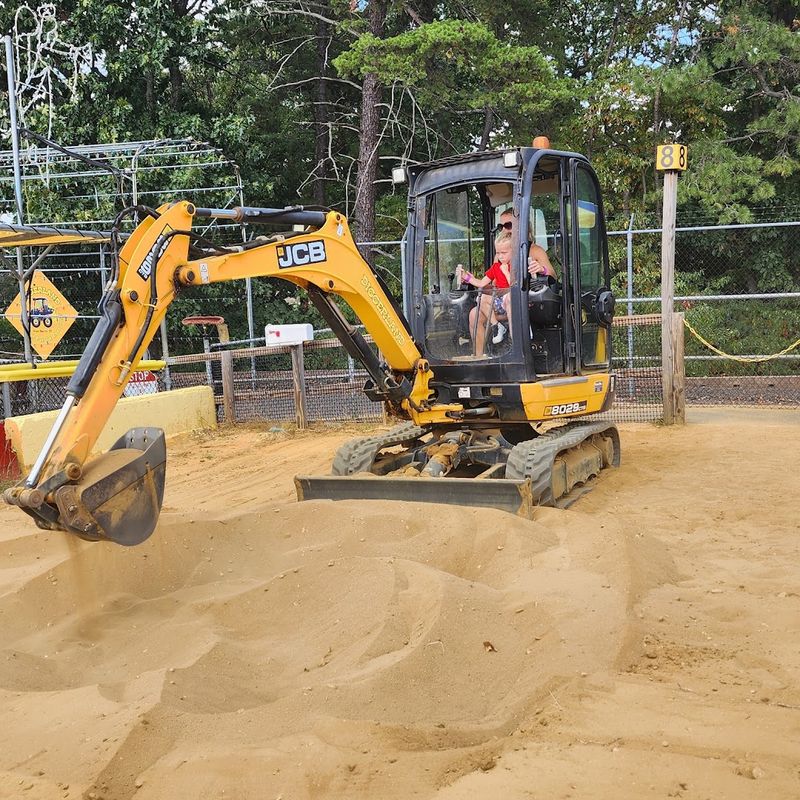
Most amusement parks tell guests to keep their hands away from the machinery. Diggerland USA hands over the controls.
The West Berlin attraction is built around construction equipment that has been specially engineered so visitors can drive, ride, steer, and operate it in a controlled theme park environment. The most satisfying attractions are the ones that let you scoop, lift, spin, or maneuver rather than simply sit through a conventional ride.
Excavators, tractors, loaders, and construction-inspired machines turn childhood sandbox ambitions into something much larger and considerably louder. Adults often discover that they are every bit as interested in the equipment as the children, even when they claim they are only there to supervise.
Each attraction has its own height and participation requirements, so check the current restrictions before promising a particular machine to a younger visitor. Arriving close to opening time is also helpful on summer weekends, when the most popular equipment may develop lines.
During the warmer season, visitors can often combine the construction attractions with the adjoining water park, making swimsuits, towels, sunscreen, and a change of clothes useful additions to the car. Seasonal events may bring fall activities or holiday displays, but the basic appeal remains delightfully straightforward.
You sit down, grab the controls, and make a very large piece of machinery move. Few places let families say they spent the day operating heavy equipment without requiring anyone to report to a construction site at dawn.
8. Dig for fluorescent minerals at the Sterling Hill Mine Run Dump in Ogdensburg
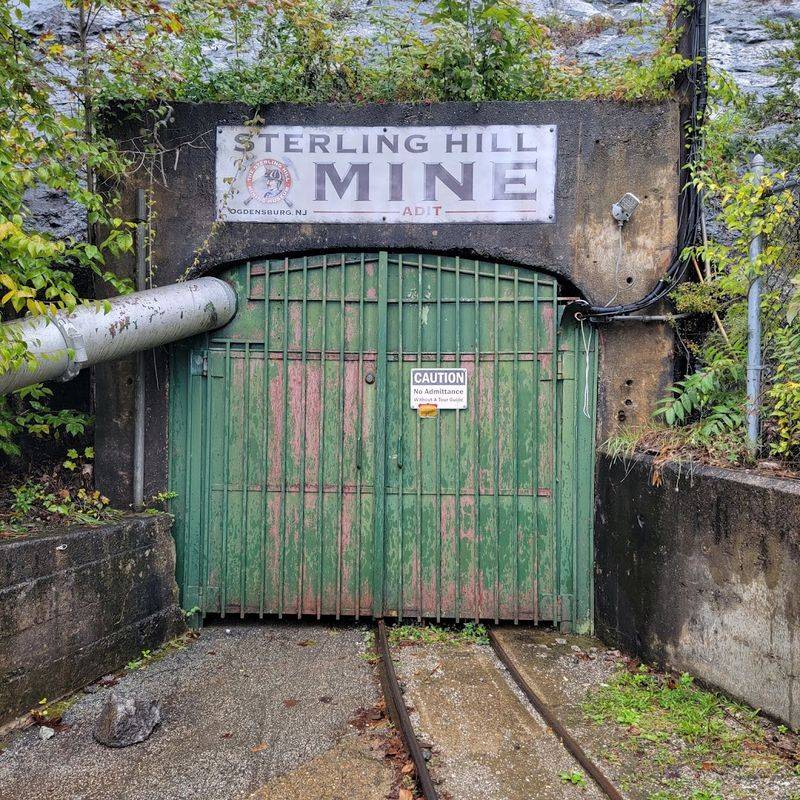
Bring a bucket, wear shoes you do not mind covering in dust, and prepare to stop judging rocks by their appearance. The Mine Run Dump at Sterling Hill is not a decorative gem-sifting station stocked with polished stones.
It is an outdoor collecting area filled with genuine mineral material that can reward patient searching with specimens that glow brilliant colors beneath ultraviolet light. Collectors can examine material from local mining operations as well as minerals originating from other locations.
The local pile is the main draw for fluorescence hunters because it contains zinc ore associated with the Sterling Hill Mine and the surrounding mineral district.
After selecting a promising piece, visitors can test it beneath a shortwave ultraviolet lamp to see whether a dull gray rock suddenly flashes red, green, orange, or another unexpected color.
The experience is geared toward serious adult collectors, and age restrictions may apply. Closed-toe shoes are required, collecting tools are limited, and visitors should bring sturdy bags or buckets for anything they plan to purchase and carry home.
Rocks are typically priced by weight, so enthusiasm can become heavy surprisingly quickly. Because the collecting area is outdoors, heat, rain, mud, and seasonal operating schedules can all affect the visit.
Bring water, go early, and allow time to search carefully rather than grabbing the first interesting stone. Finding one glowing specimen after sorting through ordinary-looking ore delivers a peculiar kind of satisfaction—the geological equivalent of uncovering treasure without needing a pirate map.