
A river cuts clean through a mountain ridge. A 77-foot waterfall thunders behind old brick mills.
Wild foxes wander among coastal dunes while, less than two hours away, a battleship’s enormous guns point across the Delaware River. New Jersey fits an almost unreasonable amount of scenery, history, and personality between its borders.
The problem is not finding somewhere interesting to go. It is deciding which direction to drive first.
These 14 destinations make a strong case for exploring the state one weekend at a time, whether that means climbing to a three-state view, paddling through the Pine Barrens, wandering among outdoor sculptures, or eating something gloriously messy on the Atlantic City Boardwalk.
Some are famous, while others tend to get postponed because they feel close enough to visit “someday.” Consider this your reminder that someday should probably be this year.
Bring comfortable shoes, leave room in the camera roll, and start checking off the places every New Jerseyan ought to experience at least once.
1. Delaware Water Gap National Recreation Area – Warren and Sussex Counties
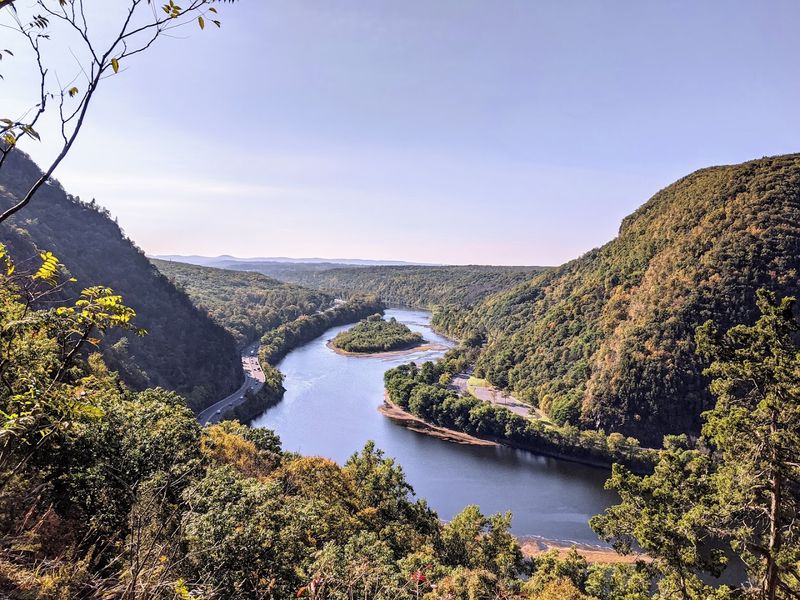
The first glimpse of the Delaware River slipping between the steep walls of the Kittatinny Ridge makes northern New Jersey feel much farther from home than it actually is.
Spread across both sides of the river in New Jersey and Pennsylvania, Delaware Water Gap National Recreation Area protects roughly 40 miles of free-flowing river along with waterfalls, forested ridges, historic settlements, and enough trails to fill many return trips.
For a serious workout, tackle the rocky climb up Mount Tammany, where viewpoints look across the gap toward Mount Minsi. The Red Dot Trail is steep and demanding, so sturdy footwear and more water than you think you need are smart additions.
Easier days can revolve around a picnic at Kittatinny Point, a walk to a waterfall, or a slow drive along Old Mine Road with stops at historic sites and river overlooks.
Paddling is another excellent way to experience the park, particularly on calmer sections suitable for beginners, although river conditions and proper life jackets should always be taken seriously.
The real appeal is the freedom to build your own version of the day. You can chase a summit, float beneath wooded slopes, explore an old village, or simply sit beside the Delaware and wonder why you do not come here more often.
2. Cape May Historic District and Cape May Lighthouse – Cape May and Cape May Point
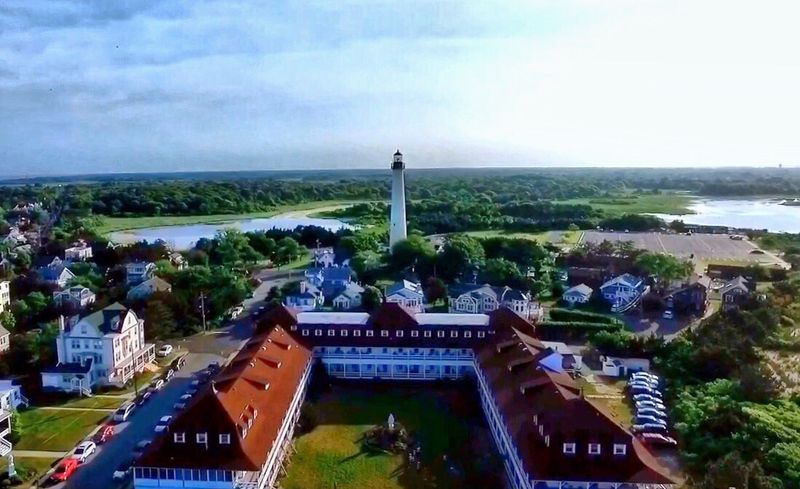
Cape May rewards anyone willing to slow down and look above the storefronts. Elaborate porches, patterned shingles, stained glass, towers, and decorative trim turn ordinary streets into an open-air gallery of Victorian architecture.
The historic district is best explored on foot, preferably without a strict schedule. Wander around the Washington Street Mall, detour down residential blocks lined with painted cottages, and leave time for the beachfront promenade.
A guided trolley or walking tour can add the stories behind the buildings, but aimless strolling works remarkably well too. Then head a few miles west to Cape May Point State Park, where the landscape changes from polished seaside town to dunes, ponds, coastal woods, and open sky.
The Cape May Lighthouse is the natural finale. Reaching the top requires climbing 199 steps, but the payoff is a sweeping view over the Atlantic, Delaware Bay, and surrounding wetlands.
Back at ground level, walk one of the park’s nature trails or scan the trees and marshes for migrating birds and monarch butterflies. Cape May can feel elegant, beachy, historic, and slightly eccentric within the same afternoon.
Stay through sunset if possible. The light over the bay has a way of making even lifelong Jersey residents feel like they have gone somewhere entirely new.
3. Palisades Interstate Park – Alpine and Fort Lee
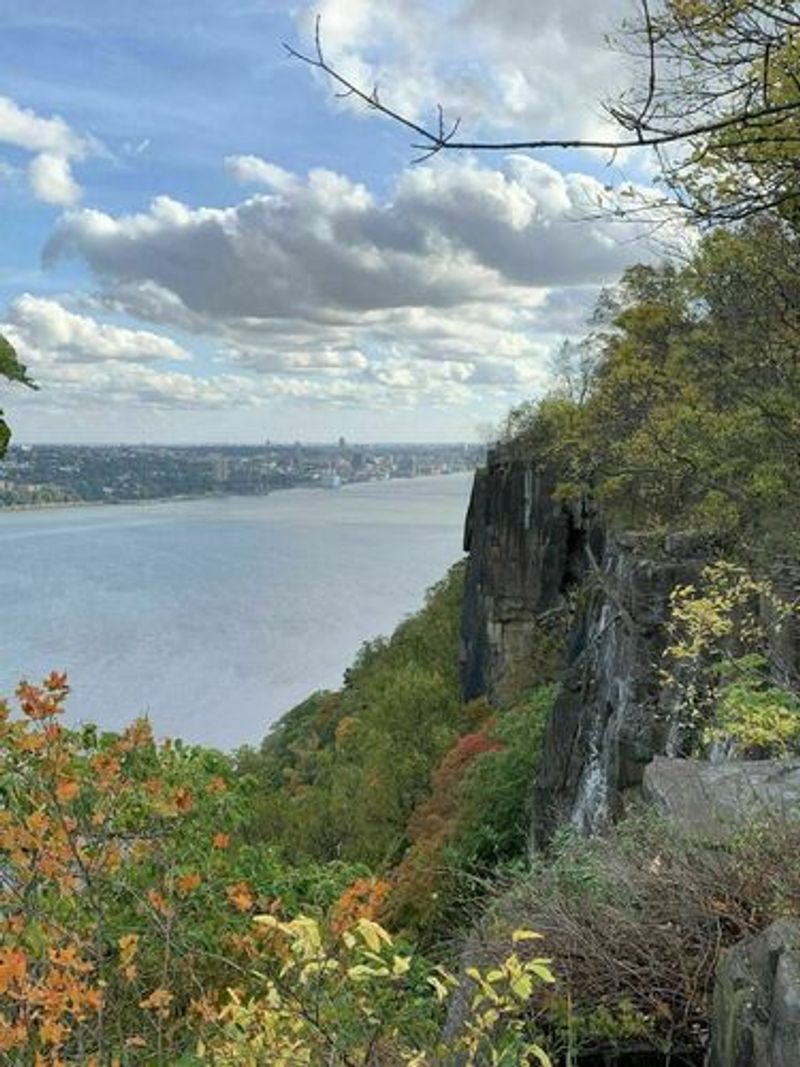
A few minutes after leaving some of the most congested roads in North Jersey, you can be standing above the Hudson River with a sheer wall of rock beneath you and Manhattan visible in the distance. That sudden shift is what makes Palisades Interstate Park such a satisfying escape.
The New Jersey section stretches for about 12 miles along the Hudson, protecting approximately 2,500 acres of cliffs, forest, shoreline, overlooks, and historic sites. State Line Lookout is the easy introduction: drive up, park, and walk to broad river views without committing to a major hike.
For something more active, choose from clifftop paths, riverside routes, and steep connector trails that reveal just how rugged this narrow park can be. The Giant Stairs route is famous for its boulder scrambling, but it is a demanding undertaking rather than a casual walk, and trail advisories should always be checked before setting out.
Fort Lee Historic Park adds another layer, with Revolutionary War history and close views of the George Washington Bridge. Even a drive along the Palisades Interstate Parkway can feel like part of the experience, especially when autumn color reaches the cliffs.
This is not a manicured urban park pretending to be wild. The rocky terrain, sharp elevation changes, and wooded shoreline make it feel genuinely untamed, which is impressive considering how close it sits to millions of people.
4. High Point State Park and Monument – Sussex
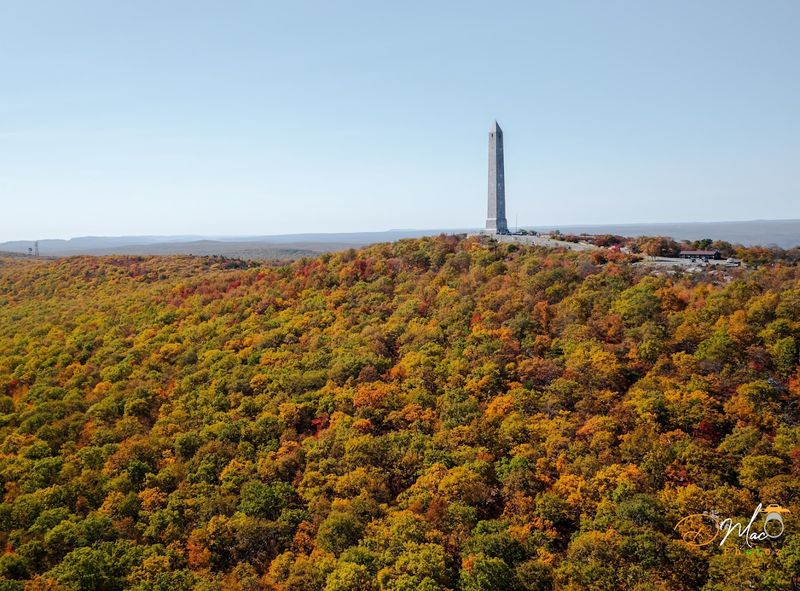
New Jersey’s highest elevation comes with a view that refuses to stop at the state line. From the summit area at High Point State Park, the landscape rolls into New York and Pennsylvania, with ridges, farmland, forest, and distant mountains spreading in several directions.
The highest point sits 1,803 feet above sea level, crowned by the granite High Point Monument, a memorial dedicated to New Jersey’s veterans. On days when the monument is open for climbing, the trip up its interior staircase adds an even broader panorama, but the ground-level viewpoints alone are worth the drive.
The park covers more than 16,000 acres, so there is much more here than a summit photo. Trails range from relaxed woodland walks to longer routes connecting with the Appalachian Trail.
Lake Marcia provides a calmer change of pace, with picnic areas and seasonal recreation surrounded by trees. Autumn is understandably popular, when the ridges turn red, orange, and gold, but clear winter days can produce some of the sharpest long-distance views.
Arrive early on peak fall weekends, when parking near the monument can fill quickly. High Point works equally well as a short scenic stop or the centerpiece of an all-day outing.
Pack lunch, take the longer walk, and give yourself enough time to watch shadows move across three states from one very Jersey mountaintop.
5. Paterson Great Falls National Historical Park – Paterson
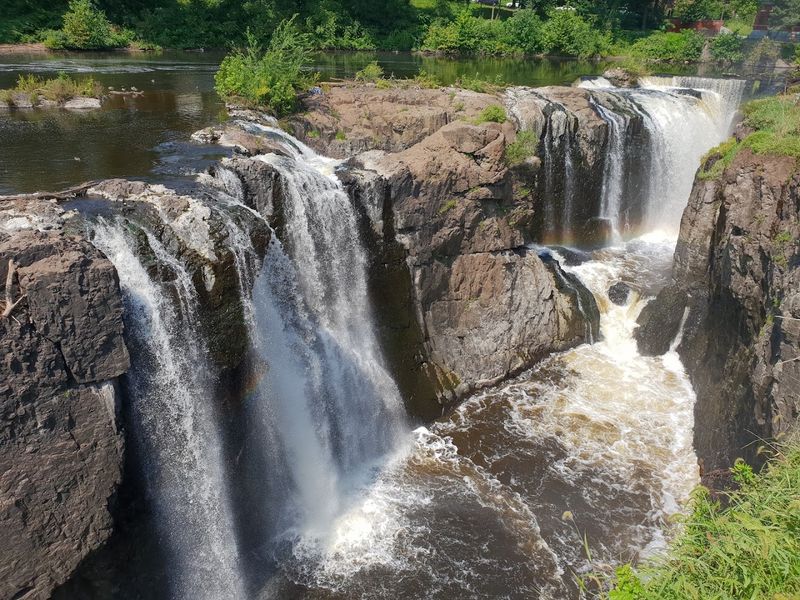
You hear the falls before the full view appears. Water crashes over dark rock, mist hangs above the chasm, and old brick industrial buildings frame a scene that feels both natural and mechanical.
The Great Falls of the Passaic River helped turn Paterson into America’s first planned industrial city after its establishment in 1792. Textile mills, locomotive works, paper manufacturers, and other industries grew around a waterpower system engineered to harness the river’s force.
That combination of waterfall and industrial history is what separates this park from a typical scenic overlook. Start around Overlook Park, then follow the paths toward different angles of the falls and the surrounding raceways.
Water volume changes with recent weather, so the experience can range from an elegant curtain to an all-out roar.
Ranger-led walks, when offered, are especially useful because many pieces of Paterson’s history are hiding in plain sight: canals, mill ruins, stonework, and factory buildings that make more sense once someone explains how the system operated.
The park grounds are generally open daily, although seasonal closures and changing path conditions make a quick check before visiting worthwhile. This is not a remote waterfall surrounded by wilderness, and that is precisely the point.
Great Falls shows how one dramatic natural feature helped power a city, attract generations of workers, and shape American manufacturing.
6. Island Beach State Park – Berkeley Township
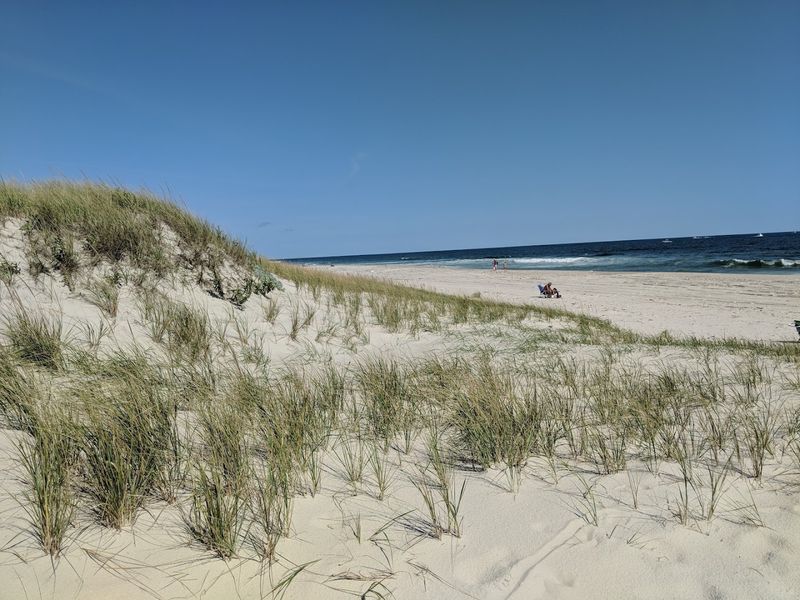
The road narrows, the beach houses disappear, and the Shore gradually sheds its boardwalk-and-arcade personality. By the time you reach the quieter stretches of Island Beach State Park, dunes and scrub have taken over the view.
The park protects a nearly 10-mile barrier island between the Atlantic Ocean and Barnegat Bay, preserving beaches, maritime forest, freshwater wetlands, tidal marshes, and some of the most intact coastal habitat in New Jersey. Most visitors come for the sand, and rightly so.
The beaches feel spacious and comparatively undeveloped, with long views broken mainly by dunes and shorebirds. Yet stopping only at the ocean misses half the fun.
Short nature trails lead through different habitats toward the bay, while the southern end provides a view across Barnegat Inlet toward Barnegat Lighthouse. Wildlife sightings can include ospreys, foxes, wading birds, and migrating songbirds, although animals should always be admired from a respectful distance.
Summer weekends can bring entrance lines and capacity closures, so early arrival is the safest strategy. Pack food, water, sunscreen, and whatever you need for the day rather than assuming a full commercial strip will be nearby.
Island Beach is the Shore with fewer distractions: salt air, shifting dunes, crashing waves, and the welcome realization that a large piece of New Jersey’s coastline still looks wonderfully wild.
7. Sandy Hook at Gateway National Recreation Area – Middletown
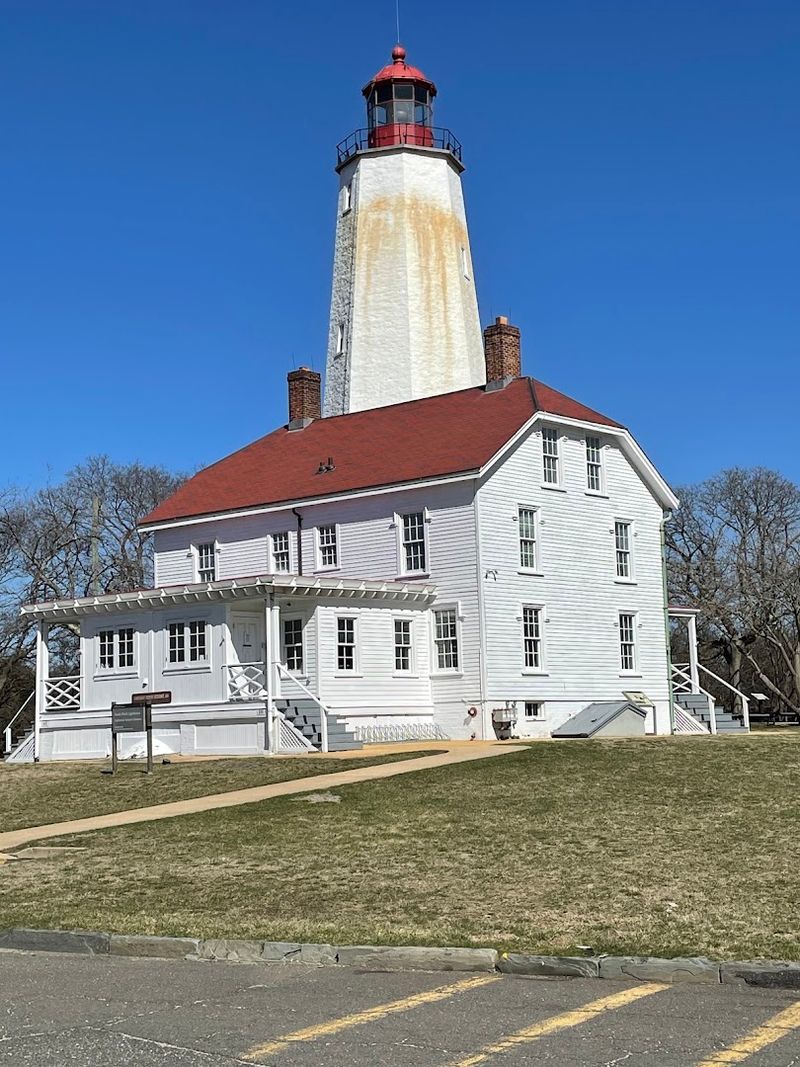
A lighthouse, military ruins, ocean beaches, bay beaches, bike paths, and Manhattan skyline views somehow share the same narrow peninsula at Sandy Hook. That mix turns a straightforward beach day into one of the most varied outings on the Jersey Shore.
Part of Gateway National Recreation Area, Sandy Hook combines protected coastal landscapes with the historic buildings of Fort Hancock. Begin with whichever side matches your mood.
The Atlantic side delivers rolling surf and broad beaches, while the bay side generally feels calmer and offers views toward New York Harbor. A multi-use path makes it easy to explore by bicycle, passing dunes, woods, old officers’ homes, and former military structures.
The Sandy Hook Lighthouse, completed during the colonial era, remains one of the peninsula’s essential stops, and limited first-come tours may be available on selected days. Fort Hancock deserves time beyond a quick drive-through.
Its faded yellow buildings and massive coastal batteries reveal Sandy Hook’s long role in protecting the harbor. There is no general entrance fee, though seasonal beach-parking charges apply during the main summer period.
Sandy Hook also follows a carry-in, carry-out policy, so bring bags for your trash. Stay late enough to watch the light change over the bay.
Few Jersey beach trips end with such a good skyline.
8. Wharton State Forest and Batsto Village – Burlington County
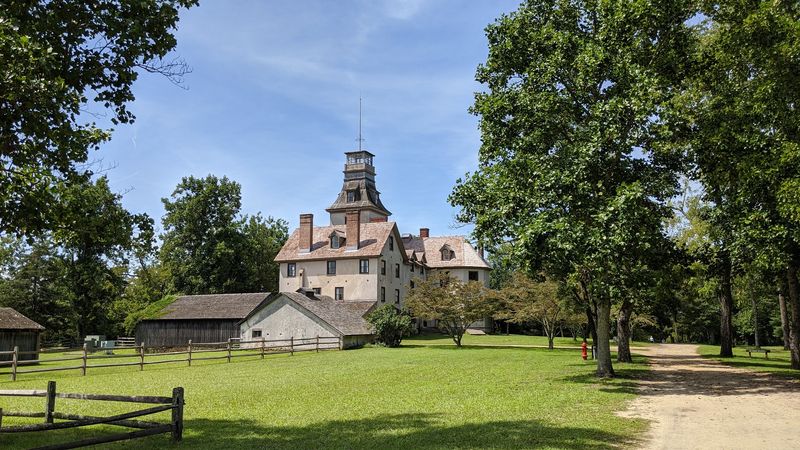
Tea-colored rivers curl through pitch pine, sandy trails vanish between the trees, and the quiet can feel almost exaggerated. Wharton State Forest is the place to understand that the Pine Barrens are not empty land between highways but a distinctive world with their own ecology, history, and rhythm.
As New Jersey’s largest state forest, Wharton offers hiking, camping, paddling, fishing, and miles of roads and trails through the Pinelands. Canoeing or kayaking the Batsto or Mullica River is one of the best ways to enter the landscape, particularly when cedar-stained water reflects the surrounding forest.
Conditions vary, and arranging a rental or shuttle through an experienced local outfitter can simplify the trip. On land, make Batsto Village your anchor.
Once a center of bog-iron and glass production, the preserved settlement contains more than 30 surviving 19th-century buildings, including the Batsto Mansion, general store, sawmill, and workers’ homes. Walking the village grounds is free, while mansion tours may follow a separate schedule.
The nearby nature center helps explain the plants and animals that make the Pine Barrens unusual. Cell service can be unreliable in parts of the forest, so download maps before arriving and do not treat sandy back roads casually.
Wharton rewards a little preparation with one of the most immersive landscapes in the state.
9. Grounds For Sculpture – Hamilton

A perfectly ordinary-looking path bends around a hedge, and suddenly you are staring at a giant head, a surreal human figure, or an entire scene that seems to have stepped out of a painting. Grounds For Sculpture succeeds because it never feels like a museum collection dropped onto a lawn.
The artwork, ponds, gardens, trees, and architecture constantly play off one another, turning a walk through the 42-acre property into a sequence of discoveries. More than 300 contemporary sculptures are displayed outdoors, with additional rotating exhibitions in six indoor galleries.
Some works demand attention from across a field; others hide behind foliage or reveal their best angle only after you circle them. That makes this an unusually good destination for people who insist they are “not really museum people.” There is no pressure to interpret every piece correctly.
You can admire the engineering, laugh at an unexpected detail, take photos, or simply enjoy the landscaping. Comfortable shoes matter because visitors often cover more ground than expected, and the park remains largely outdoors in changing weather.
Timed admission is used to manage entry, so advance reservations are a sensible move, particularly for weekends and special events. Allow at least a few hours rather than squeezing it into a crowded itinerary.
Grounds For Sculpture is playful, strange, polished, and relaxing all at once—an impressive combination hiding in Hamilton.
10. Liberty State Park – Jersey City
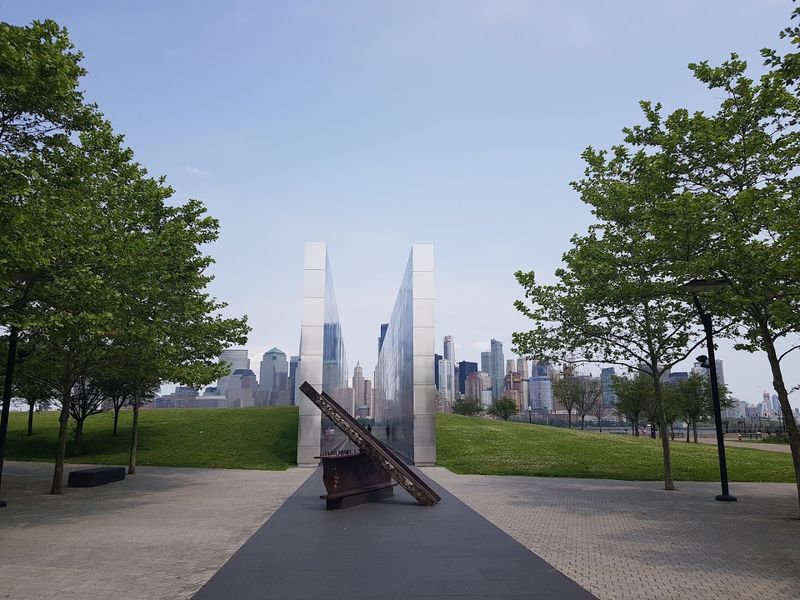
Few views announce New Jersey’s place in the region as clearly as the waterfront at Liberty State Park. The Statue of Liberty stands across the water, Ellis Island sits nearby, and Lower Manhattan rises behind them, close enough for individual buildings to dominate the horizon.
Yet the best reason to visit is that the park gives you room to enjoy that view. Broad lawns, paved paths, picnic areas, and long waterfront promenades provide space to walk, run, cycle, or sit with coffee while ferries cross the harbor.
The park also contains the historic Central Railroad of New Jersey Terminal, once a major transfer point for immigrants and other travelers continuing inland after arriving through New York Harbor.
Nearby, the Empty Sky 9/11 Memorial aligns with the former location of the World Trade Center, creating a simple but powerful frame around the skyline.
Families can pair the park with a visit to the adjacent Liberty Science Center, while photographers tend to linger near the waterfront as sunset approaches and city lights begin to appear. Parking is available in several areas, but large events and pleasant weekends can bring crowds.
The Hudson-Bergen Light Rail also stops within walking distance of parts of the park. Liberty State Park is not merely a viewpoint across the river.
It is a huge public front porch for Jersey City, where history, open space, and one of America’s most recognizable skylines meet.
11. Duke Farms – Hillsborough
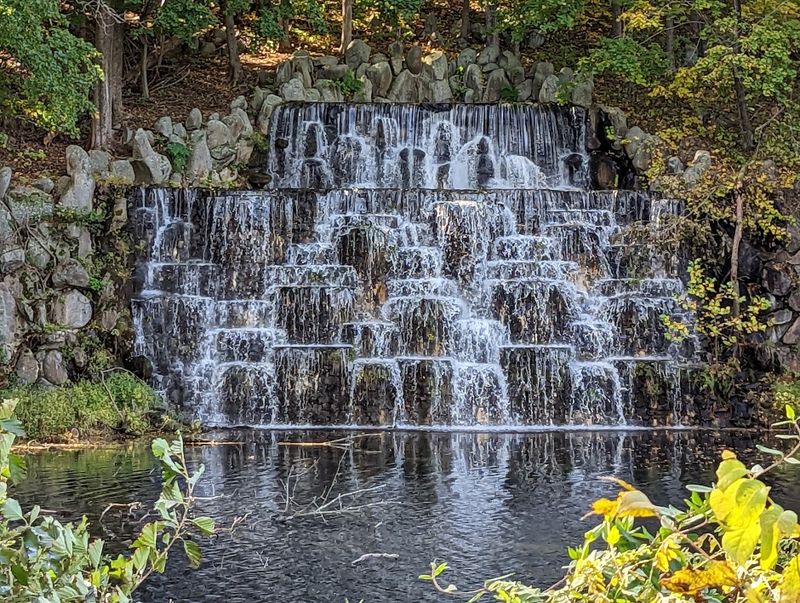
The property is so large that trying to see everything on foot in one visit quickly becomes a lesson in ambition. Duke Farms covers approximately 2,700 acres of meadows, woods, lakes, wetlands, gardens, and restored habitats in Hillsborough, with more than 18 miles of trails running through the landscape.
Bicycles make it easier to explore farther reaches, although a relaxed walk around the central areas still provides plenty to see. The estate began as the vision of industrialist James Buchanan Duke and later became closely associated with his daughter, philanthropist Doris Duke.
Today, the focus is firmly on conservation, sustainability, and ecological restoration rather than displaying private luxury. Visitors may pass old stone walls, historic farm structures, native plantings, solar installations, lakes, and broad fields busy with birds and pollinators.
The Farm Barn serves as the main orientation point and includes a café offering seasonal food, making it a useful place to begin or end the day. Bring water and dress for an outdoor outing; much of the property is exposed to the elements, and distances between highlights can be substantial.
Saturday parking reservations are required during part of the year, so check the current system before driving over. Duke Farms feels part country estate, part nature preserve, and part working laboratory, giving every return visit a slightly different purpose.
12. Princeton University and Downtown Princeton – Princeton
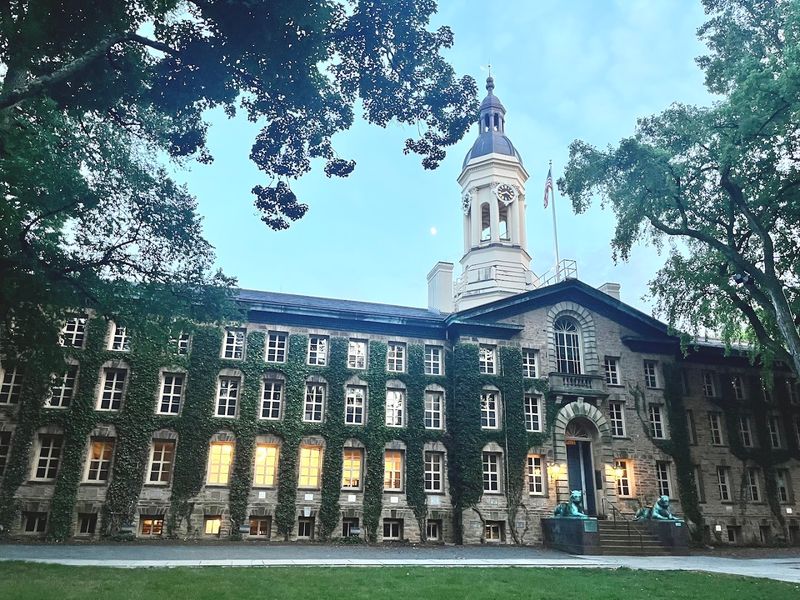
Church bells, stone archways, bicycles, and the low murmur of conversations along Nassau Street give Princeton a rhythm unlike anywhere else in the state. Start on the university campus, where Collegiate Gothic buildings, quiet courtyards, modern architecture, and enormous old trees make even an unguided walk worthwhile.
Nassau Hall is the obvious landmark, but the pleasure comes from wandering through passages, crossing greens, and discovering how architectural styles change from one corner to the next. Historical campus tours are offered at selected times, while visitors can generally explore many outdoor areas independently.
The university’s visitor-parking arrangements differ between weekdays, evenings, and weekends, so checking ahead can prevent an unnecessary loop around town. Once you reach Nassau Street, the visit becomes less academic and more delicious.
Browse independent bookstores and small shops, cut through Palmer Square, and stop for coffee, ice cream, or lunch. The downtown area is compact enough to explore without moving the car, provided you find a legal space or use a municipal garage.
Princeton works because the campus and town are not separate attractions. One flows directly into the other.
You can spend the morning looking at historic buildings, eat at a busy counter spot, wander into a bookshop, and finish with a walk through a leafy residential street—all without ever feeling rushed.
13. Atlantic City Boardwalk – Atlantic City
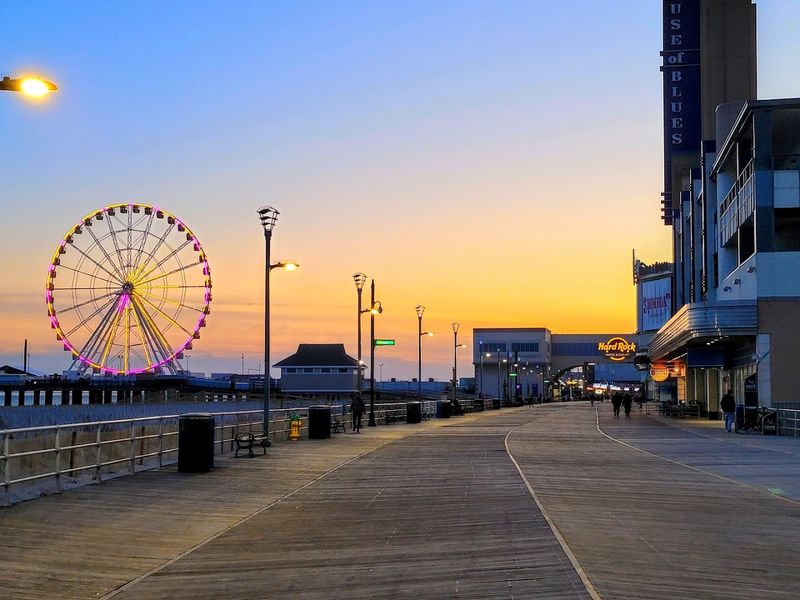
The soundtrack arrives first: bicycle bells, gulls, rolling tram cars, snippets of casino music, and waves breaking just beyond the railings. Atlantic City’s Boardwalk is not subtle, and it should not be.
This is the place for bright signs, old-school snack stands, grand resort entrances, souvenir shops, ocean views, and the occasional stretch where one era of the city seems to collide with another. The beach and Boardwalk connect major hotels, casinos, restaurants, shops, attractions, and entertainment venues within a walkable coastal strip.
Begin during daylight, when you can step onto the sand or take in the architecture along the oceanfront, then stay after dark as marquees and hotel towers begin to glow. Steel Pier supplies the classic amusement-park energy, while Boardwalk Hall brings monumental 1920s design to the route.
Food should be part of the plan. Go casual and appropriately messy with pizza, fries, saltwater taffy, or a cheesesteak rather than trying to turn every stop into fine dining.
Distances can be deceptive, so comfortable shoes—or a ride in one of the rolling chairs—may save the day. Parking rates vary widely by casino, garage, and event schedule, making a little advance comparison worthwhile.
Atlantic City has polished corners and rough edges, often on the same block. That unpredictability is part of its identity and exactly why every New Jerseyan should walk the Boardwalk at least once.
14. Battleship New Jersey – Camden

Standing beside one of the ship’s 16-inch gun barrels immediately resets your sense of scale. Photographs do not prepare you for how enormous the Battleship New Jersey feels from the Camden waterfront, and boarding it only deepens the effect.
The vessel served through World War II, the Korean War, the Vietnam War, and operations in the Middle East, earning 19 battle and campaign stars before becoming a floating museum and memorial.
Touring the ship means climbing ladders, squeezing through narrow passages, ducking beneath pipes, and moving between spaces that once supported thousands of sailors.
Routes lead through crew quarters, command areas, exhibits, weapons systems, and portions of the engineering spaces, with staff positioned along the way to explain what daily life aboard was actually like.
Self-guided admission allows visitors to explore multiple decks at their own pace, while specialized and guided experiences can provide deeper access to areas such as the engine room or gun turrets.
Wear secure shoes and expect plenty of stairs; the main deck offers better accessibility, but much of the ship retains its original military layout. The museum typically boards visitors during daytime hours, though schedules can change for maintenance and special events.
Battleship New Jersey is impressive as machinery, compelling as history, and unexpectedly personal once you see the cramped spaces where its crew lived and worked.