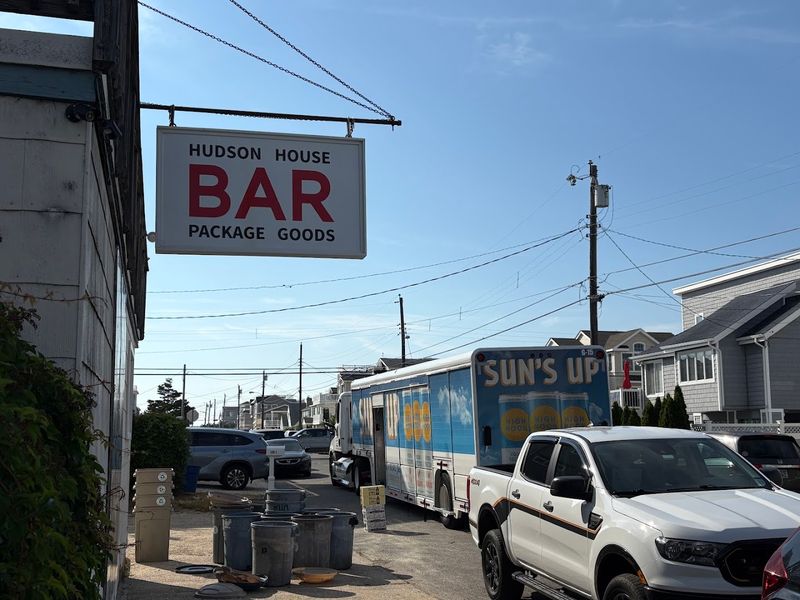
The sign does not bother with clever branding. It simply says “BAR,” with “PACKAGE GOODS” printed underneath, as if anything more would be showing off.
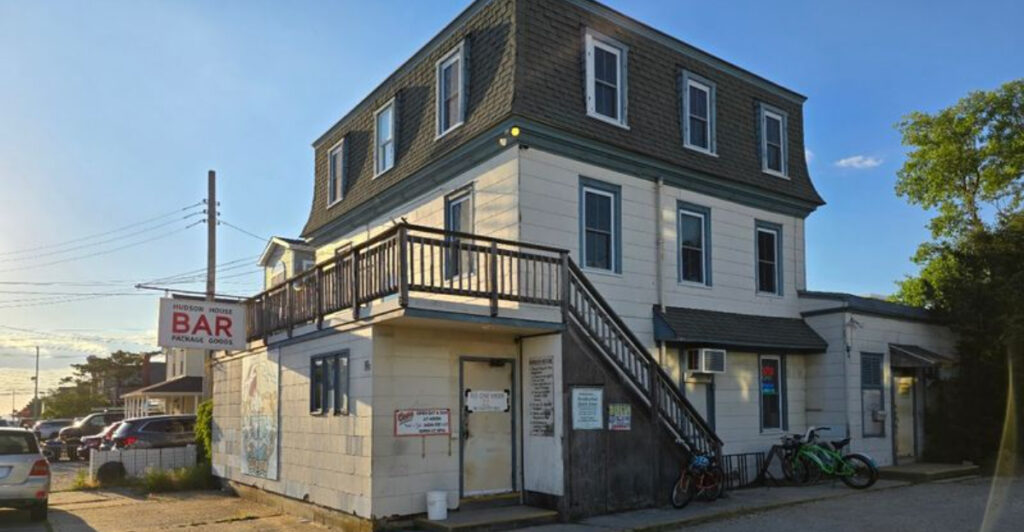
Behind it stands Hudson House, a weather-beaten Long Beach Island building with an outdoor staircase, mismatched siding and the general appearance of a shore house that accidentally became everyone’s favorite neighborhood watering hole.
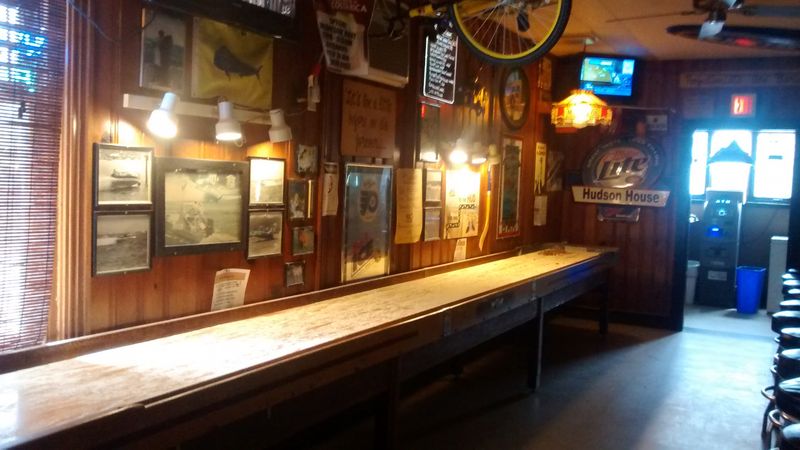
Inside, cash changes hands, neon beer signs light the wood-paneled walls and a 22-foot shuffleboard table takes up enough room to qualify as permanent architecture.
There is pool, pinball, darts and a jukebox, but no carefully manufactured nostalgia. Locals call the place The Hud, and it has been accumulating its personality naturally since the building began life as a hotel in 1882.
At a time when Shore bars are increasingly polished, themed and photographed from every angle, Hudson House remains gloriously uninterested in becoming anything other than itself.
A weathered side-street bar that feels hidden in plain sight
On East 13th Street, away from the steady traffic and bright storefronts of Long Beach Boulevard, Hudson House blends into its residential surroundings with almost comic effectiveness. The building sits in North Beach Haven, technically within Long Beach Township, although its address is commonly listed as 19 E. 13th Street in Beach Haven.
From the street, it looks less like a nightlife destination and more like an old coastal boardinghouse that has resisted several generations of suggested repairs. The plain sign, exterior stairs and faded surfaces are not decorative touches chosen by a hospitality designer.
They are simply part of the building, and that distinction matters. You do not arrive expecting a rooftop lounge, a raw bar or a hostess holding a tablet.
You arrive wondering whether you have the right place. Then the door opens, music slips outside and the mystery is settled.
That low-key entrance helped create Hudson House’s reputation long before digital maps made every business easy to locate. Older locals remember a time when visitors generally found The Hud only because somebody from the island brought them.
Sending vacationers in the wrong direction apparently became part of the fun, with some hopeful bar seekers reportedly dispatched toward Barnegat Lighthouse at the opposite end of Long Beach Island. The joke worked because Hudson House was not sitting beside a major attraction or beneath a glowing marquee.
It was hiding among houses, operating on neighborhood logic rather than tourist logic. Navigation is easier now, but the first impression remains wonderfully uncertain.
The place still makes newcomers feel as though they have been handed an address that was supposed to stay within the group chat.
The 1882 hotel roots behind one of Long Beach Island’s oldest buildings
The story begins with an ambitious development called Waverly Beach rather than a dive bar called The Hud. During the 1880s, English real-estate developer William Hewitt worked to establish a resort community in what is now Long Beach Township.
Hewitt, who was involved in bringing early railroad service to Long Beach Island, hoped the area could compete with Beach Haven’s growing tourism trade. In 1882, he built a three-story lodging property known variously as the Hotel Waverly, Waverly House and Waverly Inn.
It offered the sort of bed-and-breakfast accommodations that made sense on an island attracting summer guests but still lacking the dense development seen today. More than 140 years later, that building survives as Hudson House and is routinely described as one of the oldest structures still standing on LBI.
Its endurance is especially striking in a place where salt air, storms, changing tastes and soaring property values have encouraged constant rebuilding. The original hotel has received updates, naturally, but its basic character has not been polished out of existence.
You can still read the building’s past in its unusual proportions and house-like layout. It was not constructed as an open-plan bar with optimized seating and clear sightlines.
It evolved into one, room by room and decade by decade.
Longtime owner Ross Felten has also said the Hotel Waverly may have held the first liquor license issued on Long Beach Island in the early 1900s, though surviving accounts treat that distinction as part of the property’s handed-down history rather than a conclusively documented record.
What is certain is that Hudson House did not adopt an old-time look to create atmosphere. The atmosphere comes from occupying a building that was already welcoming thirsty Shore visitors before automobiles became the standard way to reach the island.
Prohibition lore and the strange history that shaped The Hud
History gets murkier—and considerably darker—once the conversation reaches Prohibition. Local stories have long connected the old Waverly House with rum-running, speakeasy activity and imported liquor brought ashore around southern Long Beach Island.
The region was well positioned for smuggling during the 1920s and early 1930s, when boats carrying Scotch and other contraband operated off the New Jersey coast.
Tales repeated around Hudson House claim organized-crime figures had a hand in the trade, although even the bar’s most detailed histories warn that fact and folklore have become thoroughly tangled.
Other stories describe the building as a former bordello and point to a small opening near the present pinball area that was allegedly used to pass drinks to Black customers who were barred from being served inside.
Those accounts are difficult to confirm, but they speak to the less comfortable realities hidden beneath the romantic image of the Prohibition-era speakeasy.
One grim episode is better documented. In 1932, owner Amos Crosta was shot by his 15-year-old daughter, Pauline, during a domestic dispute.
Historical research citing police reports says the shooting was treated as self-defense after threats and abuse within the family; Crosta later died at a hospital in Lakewood. The property was sold soon afterward to Bill Reese of Jersey City.
Reese renamed it Hudson House in recognition of Hudson County, giving the building the name it still carries. When Prohibition ended in 1933, Hudson House received the fifth liquor license issued by Long Beach Township.
An older account also says that original license carried a grandfathered New Year’s Eve privilege allowing the bar to remain open until 6 a.m. Whether patrons come for the history or never hear a word of it, the building has witnessed far more than its casual appearance suggests.
Pool, pinball, and a 22-foot shuffleboard table keep the night moving
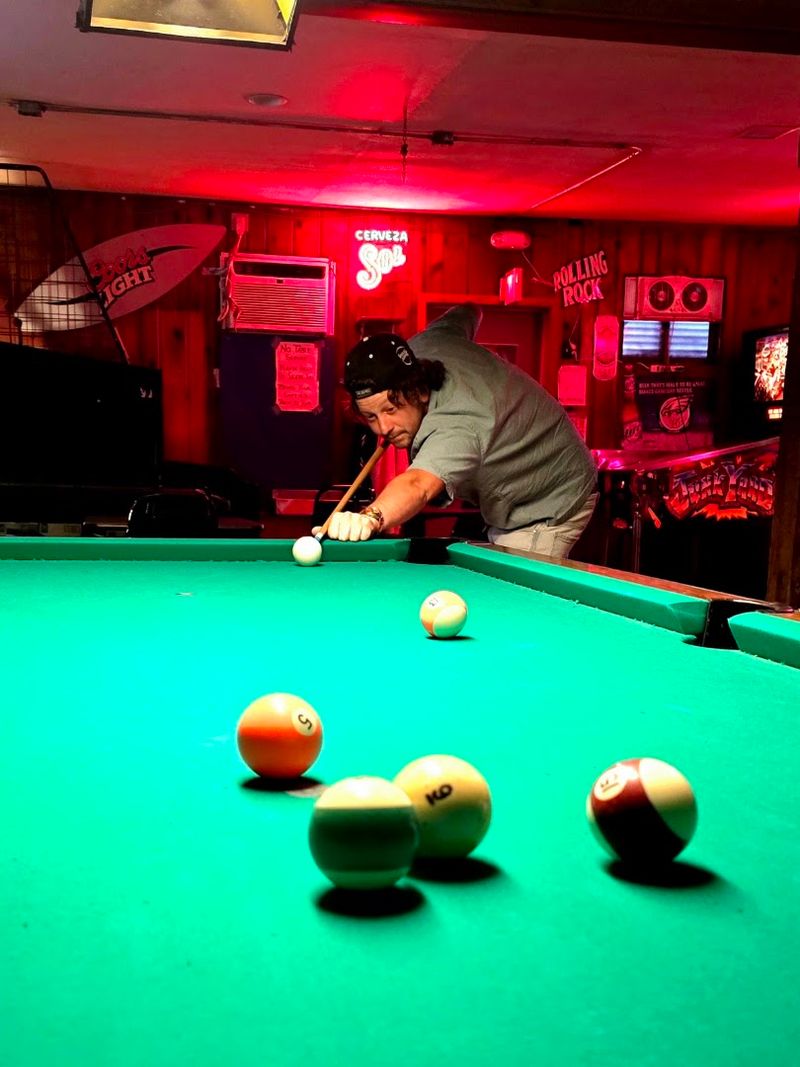
Set a drink on the rail and Hudson House quickly turns into an old-school rec room with a liquor license. The headline attraction is its 22-foot wooden shuffleboard table, a regulation-length survivor reportedly dating to the 1950s.
It stretches along the wall like a polished runway, requiring the gentle touch and maddening restraint that make table shuffleboard far more competitive than it initially appears. A puck sent with too much enthusiasm sails into the gutter; one delivered too softly becomes an easy target.
Before long, complete strangers are discussing strategy as though the league championship depends on the next shot. The rest of the room keeps the same analog rhythm.
There is a pool table with the scuffs expected from years of actual use, not a spotless showpiece placed there to complete a theme. Darts wait on the wall, pinball brings the clatter of bumpers and bells, and a vintage-style jukebox supplies familiar music without turning the room into a full-volume dance club.
The games do more than fill time between rounds. They give the bar its social structure.
You can ask to play the winner at pool, join a shuffleboard match or watch somebody’s pinball run collapse when the ball drops straight between the flippers. Conversation starts without introductions because there is always something happening within arm’s reach.
That was true when The Hud was grouped with the old Acme Bar and Le Garage Discotheque as part of LBI’s late-1960s nightlife scene, and it remains true now. The entertainment may look basic beside bars filled with simulators, digital scoreboards and reservation-only game bays, but that simplicity is exactly why it works.
Nobody needs an app, an account or a tutorial. A few quarters, a loose grasp of the rules and a willingness to lose gracefully will cover the evening.
Cold drinks wood paneling and zero interest in looking trendy
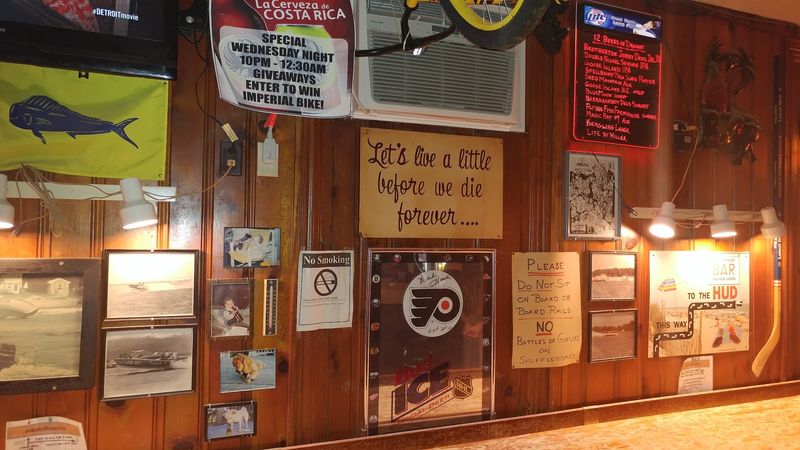
There is no mood board behind Hudson House’s interior. Pine paneling covers the walls, beer signs glow in the half-light and decades of photographs, signs and assorted bar memorabilia occupy whatever space was available when somebody decided to hang them.
A bicycle suspended overhead does not come with an explanatory plaque. Neither does the duct tape that has occasionally been counted among the building’s practical improvements.
The effect is closer to a beloved basement hangout than a modern Shore cocktail room, except this basement has served generations of locals. Drinks follow the same straightforward philosophy.
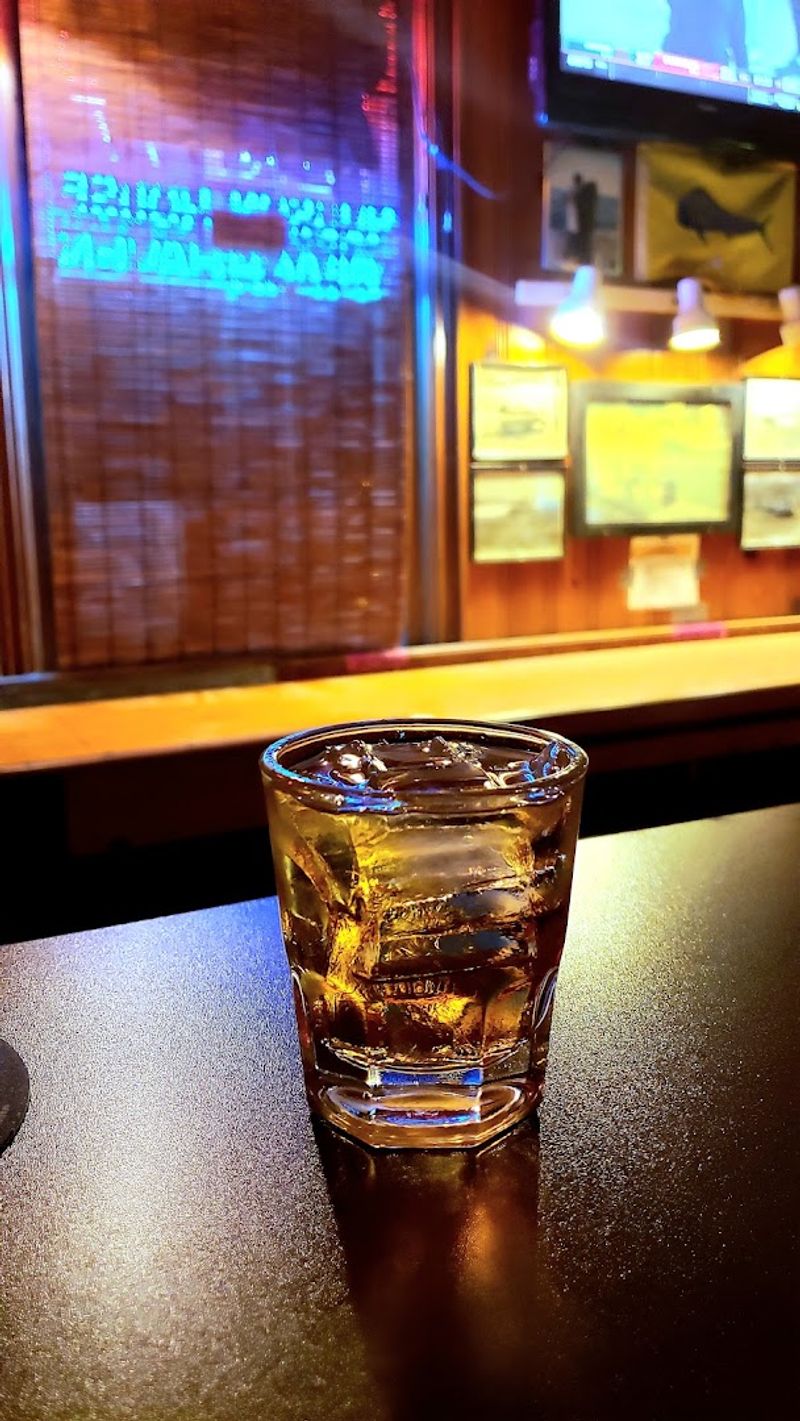
Hudson House is known for beer, basic mixed drinks and familiar pours rather than elaborate cocktails requiring smoke, foam or a sprig clipped from an herb garden. Older accounts remember exceptionally cheap drafts, including $3 Miller Lite and $4 Yuengling, but those figures date to 2018 and should be treated as bar history rather than a current price list.
The establishment does not maintain a glossy online menu, and recent listings continue to identify it as cash-only. Bring actual bills rather than assuming a phone can settle everything.
The Hud is also fundamentally a drinking-and-games bar, not a place organized around dinner service. Its appeal lies in ordering something cold, claiming a stool and watching the room supply the entertainment.
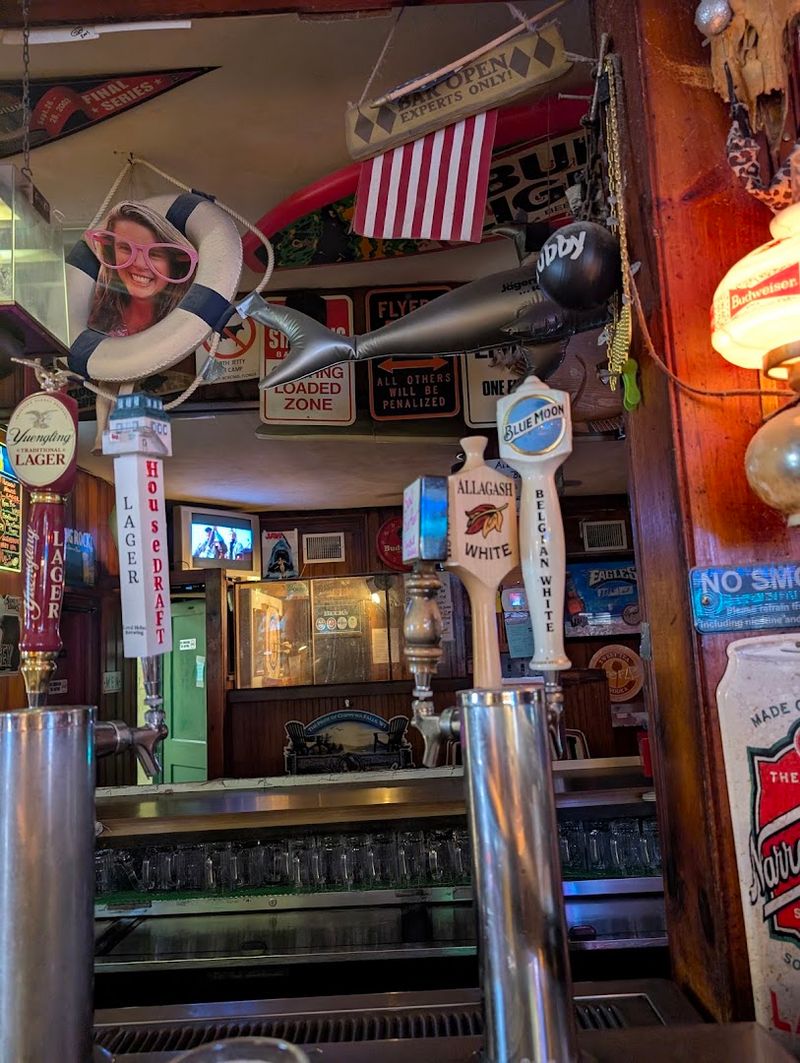
None of this means the beer choices are limited to one row of indistinguishable cans. Hudson House has long been noted for a solid draft selection alongside recognizable domestic options, and past regulars have singled out less common pours such as Costa Rica’s Imperial.
Availability changes, but the attitude does not. Order a lager, a straightforward highball or whatever is pouring well that night.
Nobody is going to deliver a speech about tasting notes, and nobody at the next stool needs to know whether your drink photographs nicely.
Why locals still treat Hudson House like an island secret
The address is public now, but the instinct to protect The Hud has never completely disappeared. Before GPS, locals could keep the place quiet simply by giving bad directions or refusing to explain where it was.
Today, anyone can type the name into a map, yet Hudson House still feels separate from the businesses competing loudly for summer attention. That is partly geographic: it remains on a side street instead of the main commercial strip.
More importantly, it has preserved the habits of a neighborhood bar. Regulars, seasonal residents, surfers, hospitality workers and curious visitors share the same games and narrow stretches of bar without being sorted into different experiences.
Summer nights can become packed, while the off-season version is slower and more conversational. Either way, the room belongs to the people using it rather than to a programmed concept.
Practical details require a little flexibility. The commonly listed address is 19 E. 13th Street, and recent business listings have shown limited late-night schedules, including Friday and Saturday hours from 8 p.m. to 2 a.m.
Other directories display different hours, which is a strong reason to confirm the schedule before making a special drive. Seasonal operations on Long Beach Island can shift quickly, particularly outside summer.
The cash-only rule is much more consistent, so arriving prepared avoids the least interesting possible detour. Once inside, the reason for the local loyalty becomes clear.
Hudson House has survived changing ownership, Prohibition, storms, nightlife fashions and the steady upscale transformation of LBI without sanding away the peculiarities that make it recognizable. The Hud is not frozen because nobody noticed it needed updating.
It stays this way because a long wooden shuffleboard table, a jukebox, inexpensive fun and a room full of familiar faces still make a very good bar.