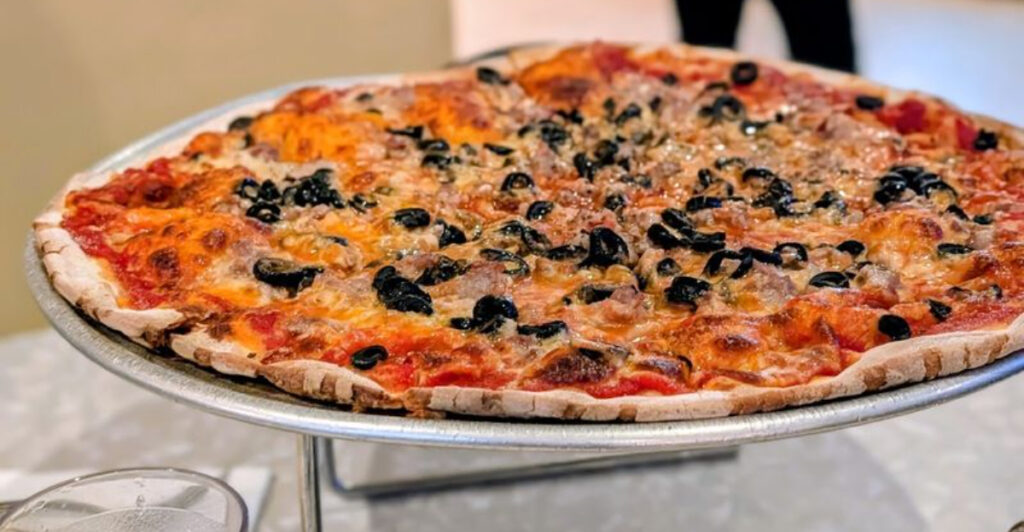
The first bite at Conte’s Pizza and Bar usually comes with a sound effect. Bend the tip of a thin slice, take a bite, and the crust answers with a clean little crackle before the cheese, tomato sauce, and toppings get involved.
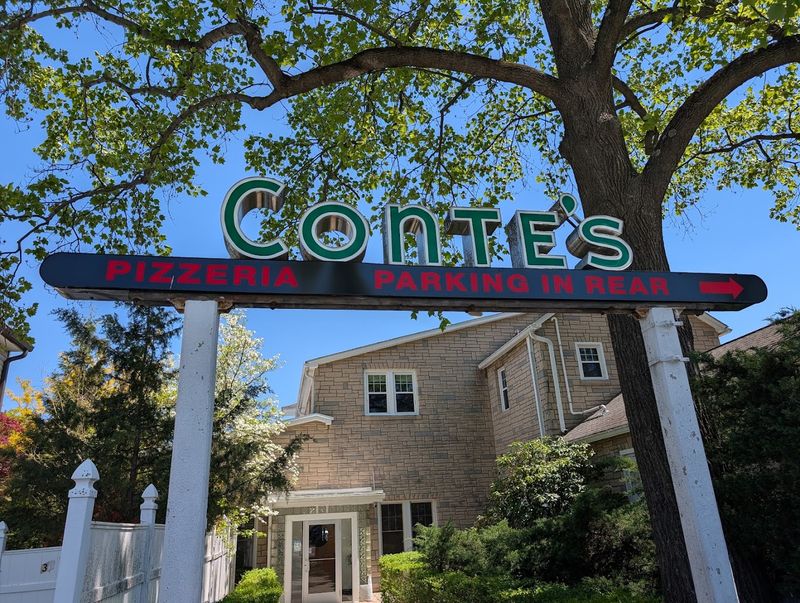
That crispness has been drawing people to 339 Witherspoon Street in Princeton since 1950. Conte’s is not interested in turning pizza into a stunt, either.
There are no towering crusts, overloaded specialty combinations, or toppings chosen because they photograph well. The formula is simpler: thin dough, red sauce, melted cheese, familiar toppings, and enough time in the oven to give the bottom some backbone.
The setting is just as stubbornly old school. Whole pies arrive at white tables beside a long tavern bar that has watched generations of Princeton families, students, coaches, and neighborhood regulars come through the door.
Plenty has changed outside. Conte’s has mostly kept making dinner the same way.
A Princeton institution serving thin-crust pizza since 1950
October 13, 1950, was a pretty important day for hungry people in Princeton. That was when Conte’s opened its expanded pizza restaurant and began serving what many customers still called tomato pies, bringing pizza to town at a time when locals otherwise had to travel a considerable distance to find it.
The restaurant celebrated its 75th anniversary in 2025, but its roots on Witherspoon Street stretch even further back. Sebastiano Conte had opened a small one-room saloon at the same address in 1936, serving drinks and light lunches before pizza eventually changed the direction of the business.
Today, Conte’s still sits at 339 Witherspoon Street, away from the busiest stretch of Nassau Street but hardly hidden from anyone who has lived in Princeton for long. It is roughly a 15-minute walk from Nassau Hall, which makes it close enough for university students yet firmly connected to the residential neighborhood surrounding it.
That distinction matters. Conte’s may be in a famous college town, but it has always felt more like the town’s pizza place than a restaurant designed around campus traffic.
Lunch reservations are accepted, while evenings operate on a first-come, first-served basis. When the line stretches toward the door, regulars know the drill.
They wait. That loyalty explains why Conte’s has lasted while countless restaurant trends have come and gone.
On a typical night, the dining room fills with familiar faces, including customers willing to make a 45-minute drive for their usual pie. At a place this established, repeat business is not a marketing line.
It is practically the seating chart.
The family story behind Conte’s Pizza and Bar
Long before thin-crust pies began sliding across the tables, Sebastiano and Anna Conte were building a neighborhood gathering place. Sebastiano first ran Conte’s Café on Birch Avenue during the 1930s, then moved the business to Witherspoon Street and opened the Witherspoon Bar in 1936.
The property included bocce courts, beer service, and one of Princeton’s earliest publicly accessible television sets. Friday-night boxing matches drew crowds, while a rental hall behind the bar hosted neighborhood weddings for just $15.
Pizza entered the picture because Sebastiano saw both a problem and an opportunity. Princeton did not have a local pizza shop, and the bar was struggling financially during the late 1940s.
He brought in a pizza maker from New York, learned the process, and trained employees to reproduce it. His decision was not universally popular at home at first, but it worked.
The recipe developed during those early years became the foundation for the pizza Conte’s still serves. The next chapters stayed within the extended family.
In 1967, Sebastiano sold the business to his daughter Amelia Conte and her husband, Louis Lucullo, who had immigrated from Ischia and spent years making pizzas at night. Rita Baldino, Louis’s sister, later became an important presence in the kitchen, particularly known for handmade meatballs and tomato sauce.
When Louis retired in 1982, Rita’s sons Ciro and Tony Baldino bought the restaurant. Their brother John later became a partner, followed by John’s wife, Angela.
That succession is more than a neat historical timeline. Family members have worked the dining room, bar, and kitchen for generations, often starting young and staying for decades.
The family did not preserve an old recipe because nostalgia became fashionable. They preserved it because it was their recipe, their dining room, and their grandfather’s gamble in 1950.
Why the crust delivers that signature crispy crackle
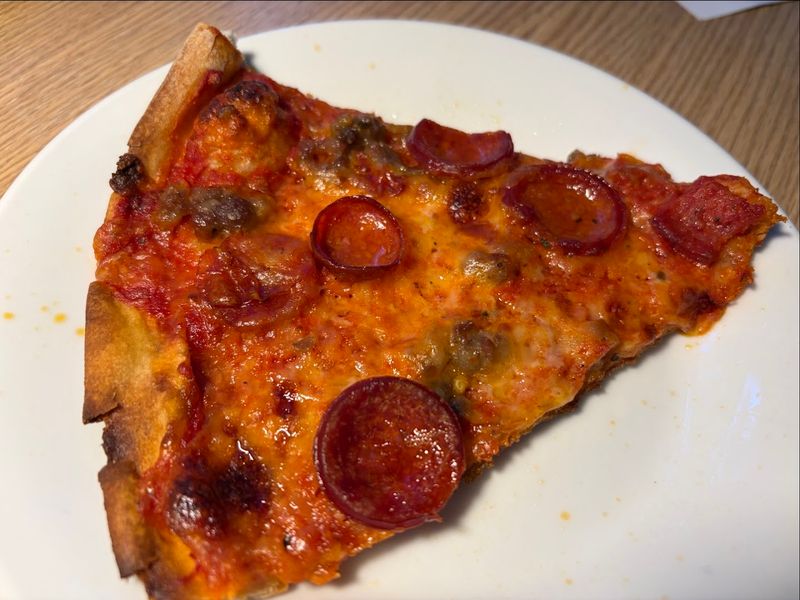
Conte’s does not publish a detailed dough formula or announce its oven temperature in giant numbers on the wall. The restaurant simply sends out thin pies with the kind of crisp underside that makes a slice easy to lift without everything sliding into your lap.
Size plays a role in that experience. Traditional pizzas come in 12-inch, 14-inch, and 16-inch sizes, with the largest divided into 12 narrow slices.
A 10-inch gluten-free version is also available. Across those sizes, the defining feature remains the same: the base is thin enough to crisp properly but substantial enough to carry sauce, cheese, and toppings without turning into a brittle cracker.
The best slices show off two textures at once. Around the outer edge, the crust has a dry, browned snap.
Move inward and it becomes slightly more flexible beneath the sauce and cheese, giving the slice a little chew without losing its structure. There is no oversized rim demanding to be admired on its own.
This is tavern-style pizza, so the crust works as part of the complete bite. Restraint helps, too.
A thin pizza cannot support an avalanche of ingredients without steaming itself soft, and Conte’s does not treat each pie like an all-you-can-stack buffet. Sauce, cheese, and toppings are applied in proportions that allow heat to reach the dough.
Even when sausage, onions, or mushrooms join the party, the crust remains noticeable rather than disappearing under the load. The recipe has changed very little since Sebastiano Conte’s era, and consistency matters with pizza this thin.
A small difference in the dough, topping weight, or baking time can alter the entire result. Conte’s has had more than seven decades to eliminate those surprises.
Classic toppings keep every pie refreshingly old school
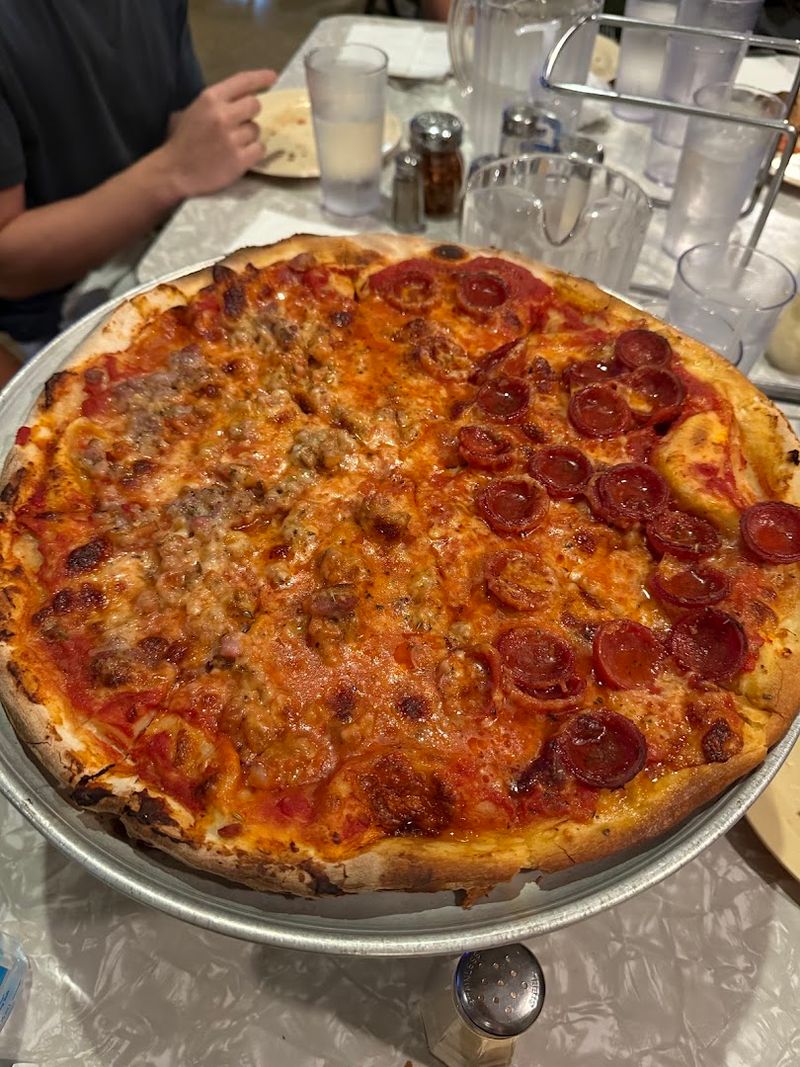
Plenty of modern pizzerias have menus that require several minutes and a working knowledge of artisan cheese. Conte’s gives customers a much shorter decision tree.
The topping lineup covers the standards, including pepperoni, onions, mushrooms, anchovies, sausage, peppers, garlic, and olives. That is enough variety to build a pie with personality, but not so much that the pizza loses its identity beneath burrata, truffle cream, fried chicken, hot honey, or three different kinds of drizzle.
A plain cheese pie is the clearest introduction. Without toppings to distract from the foundation, it shows how the tomato sauce, melted cheese, and thin crust balance one another.
The sauce brings enough acidity and seasoning to cut through the cheese, while the crisp base keeps the slice from feeling heavy. It is straightforward pizza, though straightforward should not be confused with careless.
Pepperoni adds familiar salty edges, and garlic gives the sauce a sharper punch without changing the essential character of the pie. Mushrooms and onions work well for anyone who wants more flavor while keeping things traditional.
Anchovies remain available for the proudly old-school crowd, the diners who know exactly what they are ordering and do not need the table’s approval. Sausage is an especially fitting choice because it connects the pizza to the restaurant’s broader Italian-American kitchen.
The family has long made its reputation with meatballs, sausage, and red sauce, and the sausage-topped pie remains a favorite among regulars. Its rich, savory flavor works against the tomato sauce without overwhelming the crust.
Conte’s is also fundamentally a whole-pie restaurant. A pizza lands hot at the table, everyone reaches in, and the last few pieces continue crisping slightly as they sit.
It feels less like grabbing fuel and more like sharing dinner, even when nobody is feeling particularly generous.
The vintage tavern atmosphere is part of the experience
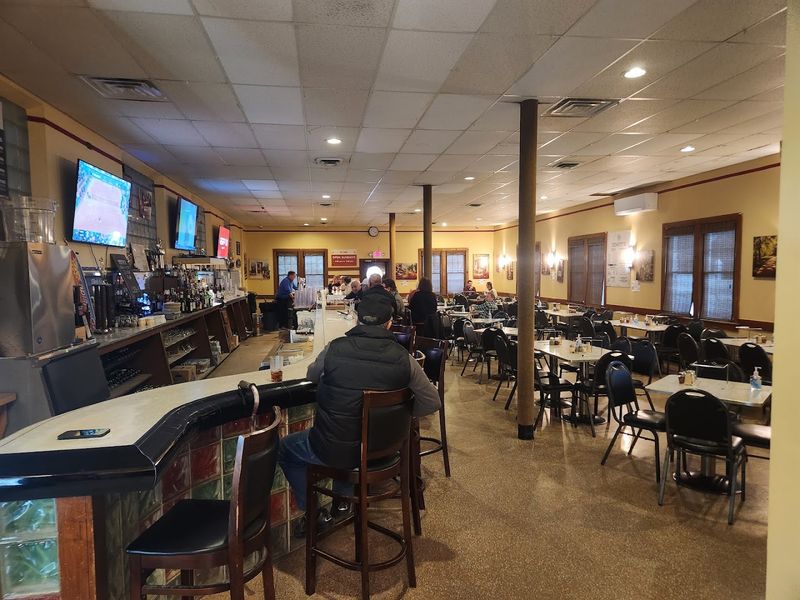
Picture the restaurant on opening night in 1950. The new room had a 70-foot bar, reportedly the longest in Princeton, with glass blocks running along its front and red blocks spelling out the Conte’s name.
The stools were covered in red vinyl. Formica tables filled the room, tiny mirrored tiles wrapped the pillars, and Venetian blinds covered the windows.
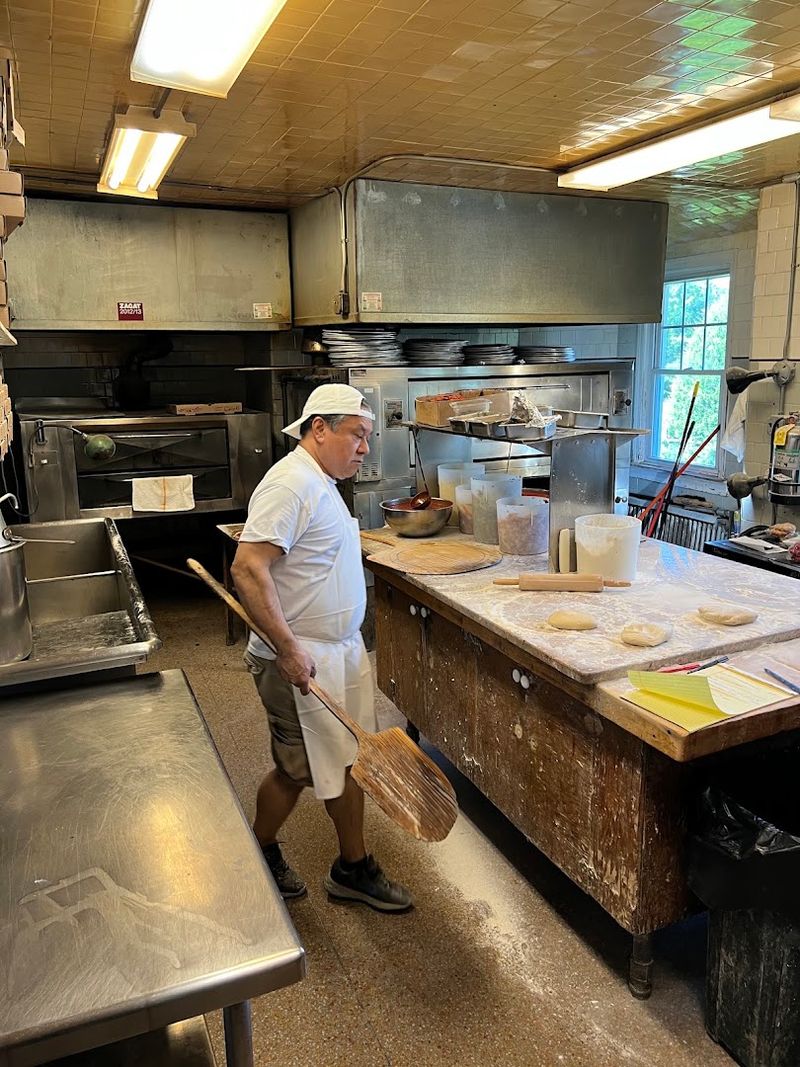
A jukebox competed with the television, while a shuffleboard table occupied space until interest faded and its wood was repurposed for a pizza-making table in the kitchen. Not every one of those details survives unchanged, but enough remains to make Conte’s feel genuinely old rather than retro by design.
The restaurant still occupies its longtime home, and the original bar, dark green exterior sign, and simple white tables continue to anchor the setting. Nobody appears to have held a meeting about creating a vintage aesthetic.
The room simply accumulated one by staying open. That history gives the dining room a particular kind of energy.
Regulars settle into familiar seats. Families split large pies.
A game may be playing on television, a reminder that Conte’s was attracting crowds to watch Friday-night fights before most Princeton homes had their own sets. The full bar remains a major part of the operation, with draft beers, bottled options, wine, cocktails, and nonalcoholic choices available alongside the pizza menu.
There is outdoor history, too. Bocce courts occupied the site before the restaurant expanded over them in 1950, reflecting the business’s beginnings as a social place where neighbors drank beer and spent the evening together.
The room can become busy and noisy, especially during peak dinner periods. That is not a defect requiring soft lighting and acoustic panels.
It is what happens when an old neighborhood tavern is still functioning as an old neighborhood tavern.
Pasta sandwiches and homemade soups round out the menu
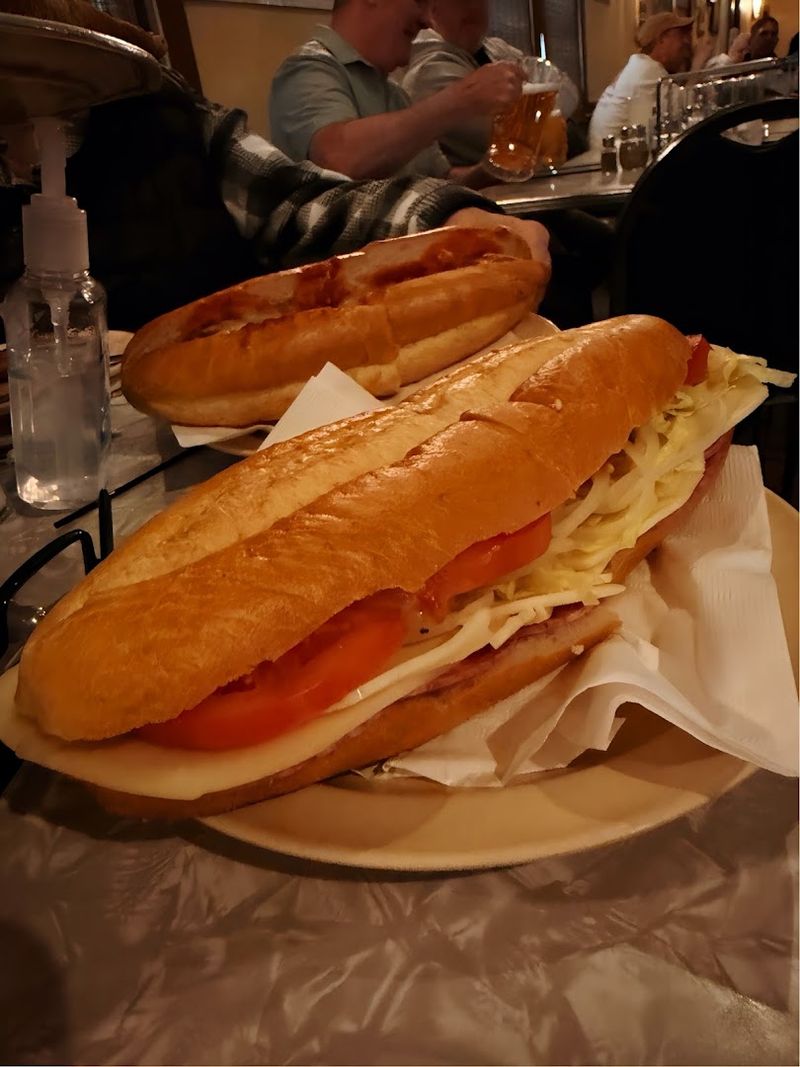
The pizza may receive top billing, but Conte’s has never operated like a one-item counter. Its menu reflects the kind of practical Italian-American tavern cooking that can feed an entire family even when one person has inexplicably decided not to order pizza.
Pasta comes in small or regular portions, accompanied by a house salad and bread. Diners can choose spaghetti or penne with meatballs or sausage, and gluten-free pasta is available in both shapes.
These are not elaborate plates built around foams, microgreens, or a server’s lengthy explanation. They are red-sauce staples that match the restaurant: filling, familiar, and comfortably unfussy.
The sandwiches follow the same logic, with choices that include sausage, meatball, steak, ham, and salami. A meatball or sausage sandwich makes particular sense here because both ingredients have deep roots in the family kitchen.
Rita Baldino became known for handmade meatballs and savory tomato sauce after joining the restaurant, and those flavors remain part of the menu’s identity beyond the pizza oven. Side orders of meatballs or sausage are available for anyone who wants to skip the bread and get directly to the important part.
Then there are the homemade soups, a seasonal feature served during the colder months. The rotating selection can include pasta fagioli, split pea, lentil, minestrone, and vegetable soup.
On a cold Princeton evening, a bowl of pasta fagioli beside a thin, hot pizza makes a convincing argument for ignoring more complicated dinner plans. House salads come in individual and family sizes, with classic dressings such as Italian, French, Russian, blue cheese, and oil and vinegar.
They provide a crisp, cold counterpoint to the heavier plates, though nobody should pretend the salad is why a line forms outside. That supporting menu helps explain Conte’s longevity.
People may first arrive to hear the crust crackle, but the restaurant has always been built to serve the neighborhood around it. Pizza, pasta, soup, sandwiches, a drink at the bar, and a room where somebody probably already knows your order—that was a dependable formula in 1950, and it still holds up.