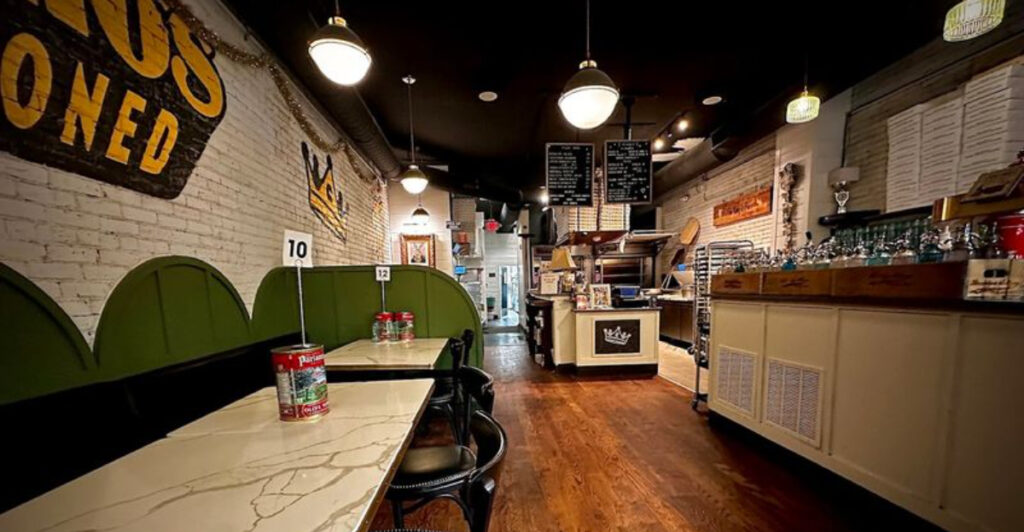
At 11 South Street, rabbits peer down from the walls while sourdough rests near the oven and full-sized pies arrive balanced on repurposed olive-oil tins. The room looks as though an old Brooklyn slice shop, an Italian bakery, and a neighborhood soda fountain decided to share one address near the Morristown Green.
Yet Coniglio’s Old Fashioned is not a decades-old institution. Nino Coniglio and his wife opened the family-run pizzeria in November 2022, taking over a former Bareburger space and immediately drawing lines before the doors opened.
Roughly three months later, Coniglio’s walked into New Jersey’s third annual Pizza Bowl and left with the event’s top pizza prize. That rapid rise sounds almost suspiciously tidy until you look at the experience behind the counter.
Coniglio was already a decorated pizzaiolo with world titles, television credentials, and years of New York pizza-making behind him. Morristown did not get a beginner learning on the job.
It got a veteran starting fresh.
A Morristown newcomer that conquered New Jersey’s pizza scene almost overnight
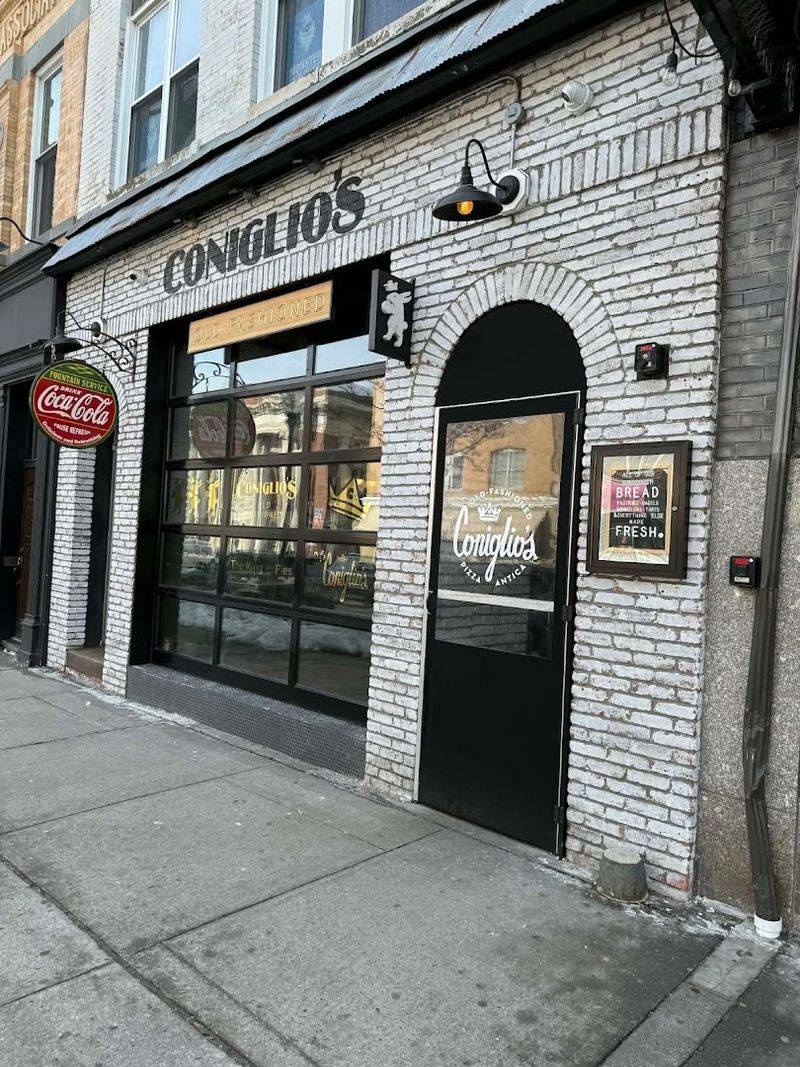
When Coniglio’s Old Fashioned opened in early November 2022, the restaurant was still operating with a modified menu and walk-in service. That did not stop curious locals from gathering outside before opening time, eager to see what an award-winning pizza maker would do with the former Bareburger space at 11 South Street.
The address is only a short walk from the Morristown Green, placing it directly in the middle of a downtown already packed with restaurants, bars, coffee shops, and enough established dining favorites to make any newcomer work for attention. Coniglio’s earned it quickly.
Inside, the design avoids the predictable industrial look that has taken over so many modern pizzerias. Green-and-white walls, vintage Coca-Cola pieces, old-fashioned lettering, and paintings of rabbits give the room a playful sense of history.
“Coniglio” means rabbit in Italian, so those long-eared mascots are more than random decoration.
Large imported olive-oil tins double as pizza stands, keeping the pies raised above the table and making room underneath for plates, salads, and whatever else has been ordered. The restaurant’s initial appeal, however, was not built on clever décor.
Word spread because the pizzas felt fully formed from day one. The dough was already light, flavorful, and carefully fermented.
The tomato sauce had enough brightness and garlic to command attention without burying the cheese. Even two pies with nearly identical toppings could taste dramatically different because a round base, a Sicilian crust, and a square pan each created their own texture.
Coniglio’s behaved less like a restaurant finding its feet and more like a mature pizzeria that had somehow arrived with its traditions already intact. By February 2023, the rest of New Jersey had started paying attention too.
The statewide Pizza Bowl victory that put Coniglio’s Old Fashioned on the map
February 4, 2023, was not an ordinary Saturday for New Jersey pizza obsessives. That was the day Jersey Pizza Joints held Pizza Bowl 3, the third edition of a statewide competition created to narrow the Garden State’s enormous field of pizzerias down to one champion.
Coniglio’s entered as a barely three-month-old business facing restaurants with decades of history, loyal multigenerational customers, and trophy cases that had been filling up since long before Instagram existed. It won anyway.
The contest had begun with thousands of New Jersey restaurants placed into bracket-style voting before the field was reduced to 29 finalists. During the nine-hour championship event, judges worked through more than 250 pizzas and approximately 2,000 meatballs.
Earlier rounds involved panels of 52 judges, while the final decision was handed to 40 VIP judges, including actor Joseph D’Onofrio, known for playing young Tommy in Goodfellas. Coniglio’s finished with the top pizza title, while the event also raised $20,000 for the Tunnel to Towers Foundation.
Winning a competition is always useful publicity, but the timing made this victory especially powerful. Coniglio’s had not spent years campaigning to become a statewide name.
It had opened in November, survived its first holiday season, and then defeated some of the most established pizza kitchens in one of America’s most opinionated pizza states. Suddenly, the lines on South Street were no longer being formed only by Morristown neighbors.
Pizza fans arrived from other parts of New Jersey wanting to taste the new champion for themselves. The award did not create Coniglio’s reputation from nothing—the early crowds were already there—but it gave the pizzeria a statewide introduction that most restaurants spend years trying to earn.
Nino Coniglio brought a champion’s résumé back to his New Jersey roots
Long before Morristown knew his name, Nino Coniglio was learning pizza through repetition, competition, and the sort of hands-on education that cannot be picked up from a recipe card. He began making pizza at 14 after watching his grandmother Josephina cook for him and his cousins.
As a teenager, he worked at Johnny’s Pizza before moving through New York kitchens including Numero 28, Cacio e Vino, and Moonstruck. The most consequential chapter came when he apprenticed under Dom DeMarco, the famously exacting founder of Brooklyn’s Di Fara Pizza.
Watching DeMarco finish pies with hand-torn basil and painstaking attention to every ingredient reinforced an idea that would later define Coniglio’s own work: simple pizza stops being simple once every small decision matters. Competition results followed.
Coniglio won a world pizza title in Salsomaggiore Terme, Italy, in 2005 and eventually collected ten championship victories, according to his restaurant’s official biography.
He also won the Food Network’s Chopped, earned honors at the Caputo Cup and Las Vegas Pizza Expo, and was named Pizza Maker of the Year after defeating the winners of the expo’s individual divisions.
His restaurant résumé grew alongside the trophies. Williamsburg Pizza and Brooklyn Pizza Crew helped establish him in New York, where he became known for combining classic slice-shop instincts with obsessive dough work.
Opening Coniglio’s Old Fashioned brought that experience back across the Hudson. Although the Morristown restaurant was new, its owner had spent years testing flour, fermentation, ovens, cheese, sauce, and timing under the pressure of both busy kitchens and judged competitions.
That is why the pizzeria could arrive looking like a rookie while cooking like a veteran. The South Street location was not Coniglio’s first chapter.
It was the moment an already accomplished pizza maker gave New Jersey a shop carrying his own name.
Old-school ingredients and slow-fermented dough make every pie stand out
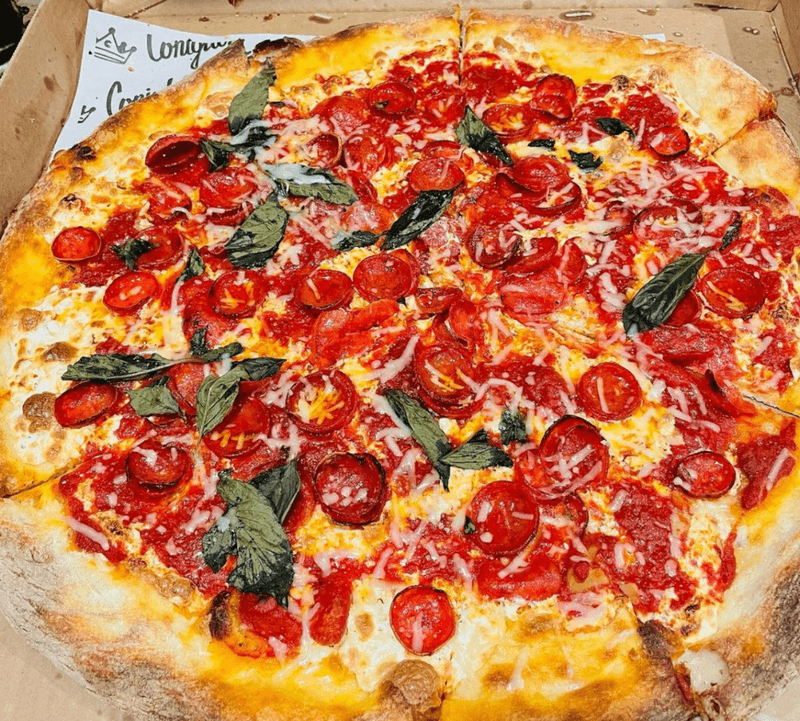
The phrase “old fashioned” is doing real work here. Coniglio’s approach is built around imagining the kind of New York pizza that might have existed between roughly 1900 and 1920, before commercial shortcuts became standard and before menus ballooned into endless combinations of novelty toppings.
Nino Coniglio has explained that the kitchen uses unbleached, unbromated flour, with most of it imported from Italy and a smaller portion sourced locally. Instead of relying entirely on commercial yeast, the team maintains its own wild-yeast culture and allows the dough time to develop naturally.
That fermentation produces the subtle tang and layered flavor commonly associated with sourdough, but its biggest contribution becomes clear in the texture. The round crust lands somewhere between crisp and soft, with a golden exterior and enough chew to support a generous amount of sauce.
The Sicilian dough is thicker but surprisingly airy, with an open interior that keeps a square slice from feeling heavy. High-quality toppings are used with similar restraint.
The pizzas have featured real San Marzano tomatoes, locally made New Jersey mozzarella, Italian pecorino, Parmigiano-Reggiano, and flour such as Caputo 00. None of those ingredients would matter much if they were piled on carelessly, which is why Coniglio frequently emphasizes the order in which a pie is assembled.
Sauce beneath cheese behaves differently from sauce spooned over it. Fresh mozzarella melts differently from low-moisture mozzarella.
Basil baked from the beginning delivers a different flavor from leaves added near the end. That attention explains how the Brooklyn Round and Upside Down Sicilian can share much of the same ingredient list yet feel like completely separate experiences.
One is saucy, thin, and chewy; the other is lofty, crisp-edged, and deeply fermented. The menu may look straightforward at first glance, but the real complexity has been worked into the dough long before a customer places an order.
The Brooklyn Round that won over the championship judges
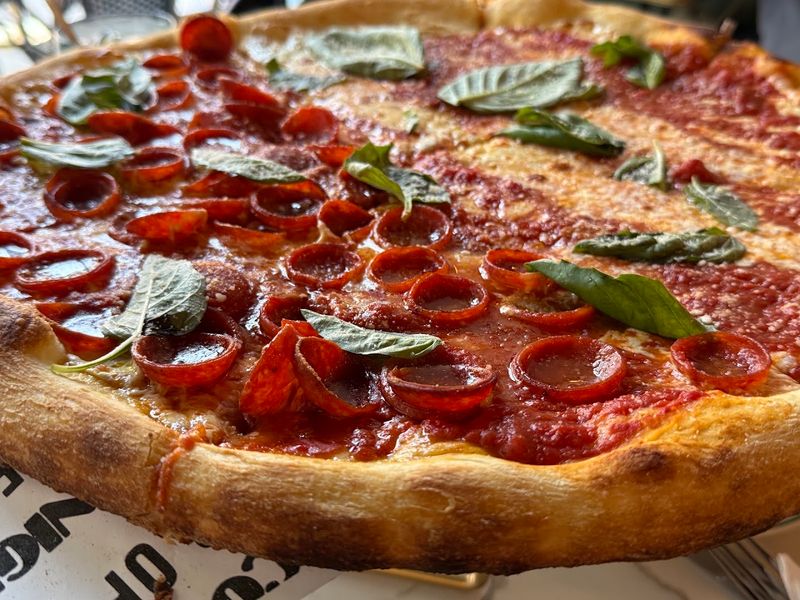
One glance at the Brooklyn Round explains the confidence behind Coniglio’s menu. There is no mountain of toppings or zigzag of flavored sauce trying to distract from the foundation.
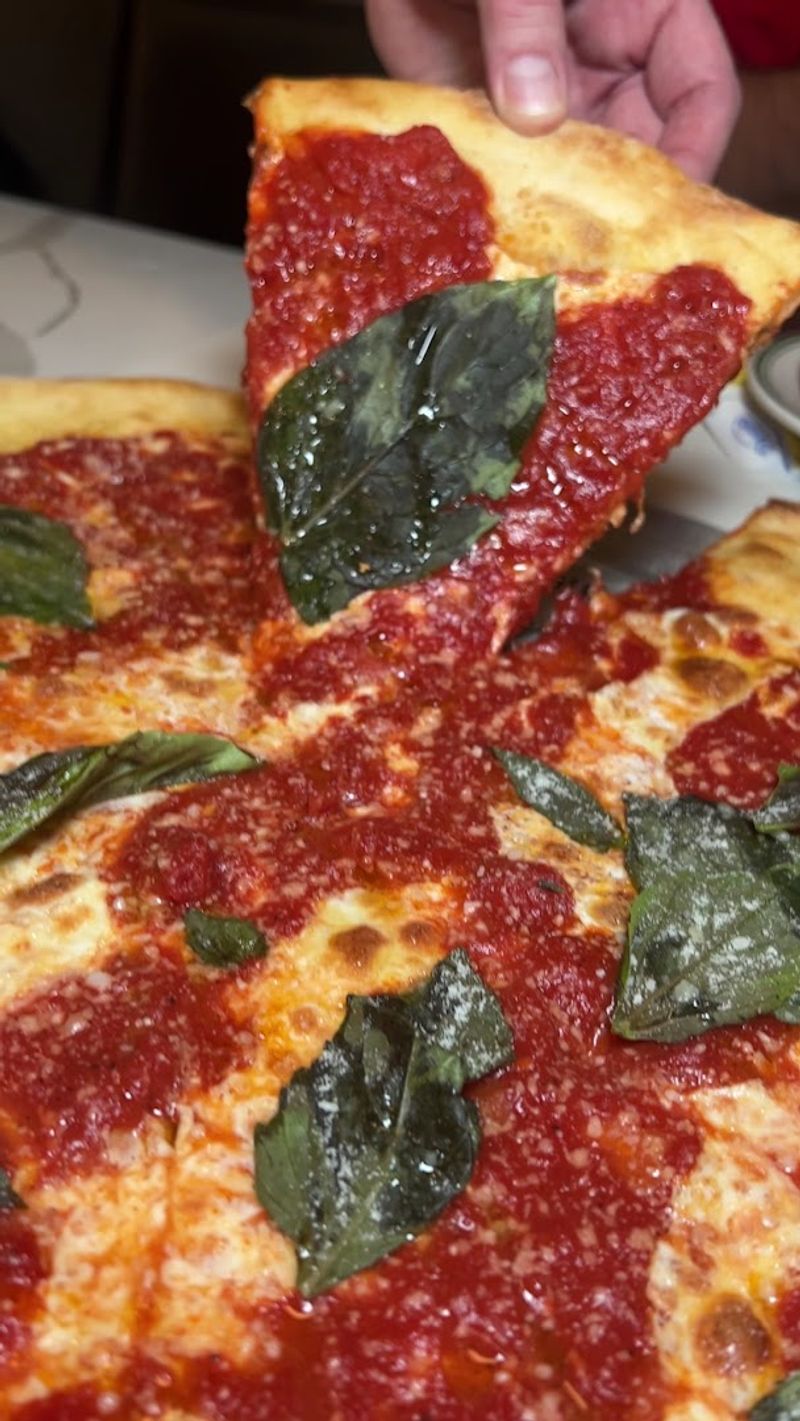
The regular version is built from tomato sauce, mozzarella, Parmigiano-Reggiano, and basil, leaving the dough and tomatoes with nowhere to hide. It arrives as a full round pie with a wide, browned rim and a center that carries more sauce than many familiar New York slices.
That extra tomato could easily overwhelm a weaker crust, but the fermented dough remains sturdy and chewy beneath it. The sauce brings bright tomato flavor and a noticeable touch of garlic, fresh basil cuts through the richness, and grated cheese adds the salty finish that pulls everything together.
For the Pizza Bowl, Coniglio created a more elaborate championship version of the Brooklyn Round. The competition pie combined Calabrese tomato sauce with garlic confit, crispy basil, Italian pecorino, Parmigiano-Reggiano, Jersey Girl ricotta from Branchville, and mozzarella from Lioni Latticini in Union.
It was still recognizably an old-school round pizza, but every component had been sharpened for the judges. Garlic confit added sweetness and depth without the harshness of raw garlic.
Ricotta supplied cool, creamy pockets against the acidic sauce. Pecorino delivered a saltier edge, while Parmigiano-Reggiano brought nuttiness and a longer finish.
Crispy basil offered a different experience from the fresh leaves used on the standard pie. Most importantly, the crust remained the center of the calculation rather than a platform overloaded with expensive ingredients.
That balance helped the Brooklyn Round rise above a field containing hundreds of pies.
The championship version was special enough for competition, yet its basic logic remains visible on the everyday menu: use excellent tomatoes, excellent cheese, properly fermented dough, and just enough restraint to let each one taste like itself.
Sicilian pies homemade pasta and soda-fountain nostalgia complete the experience
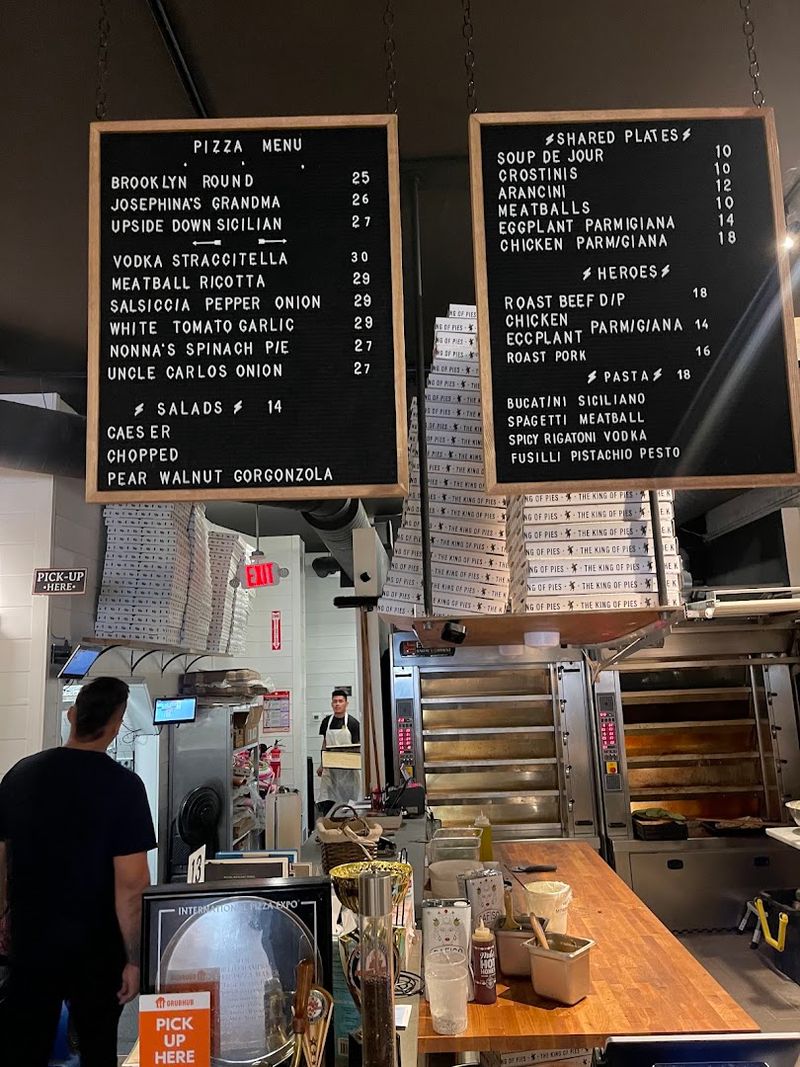
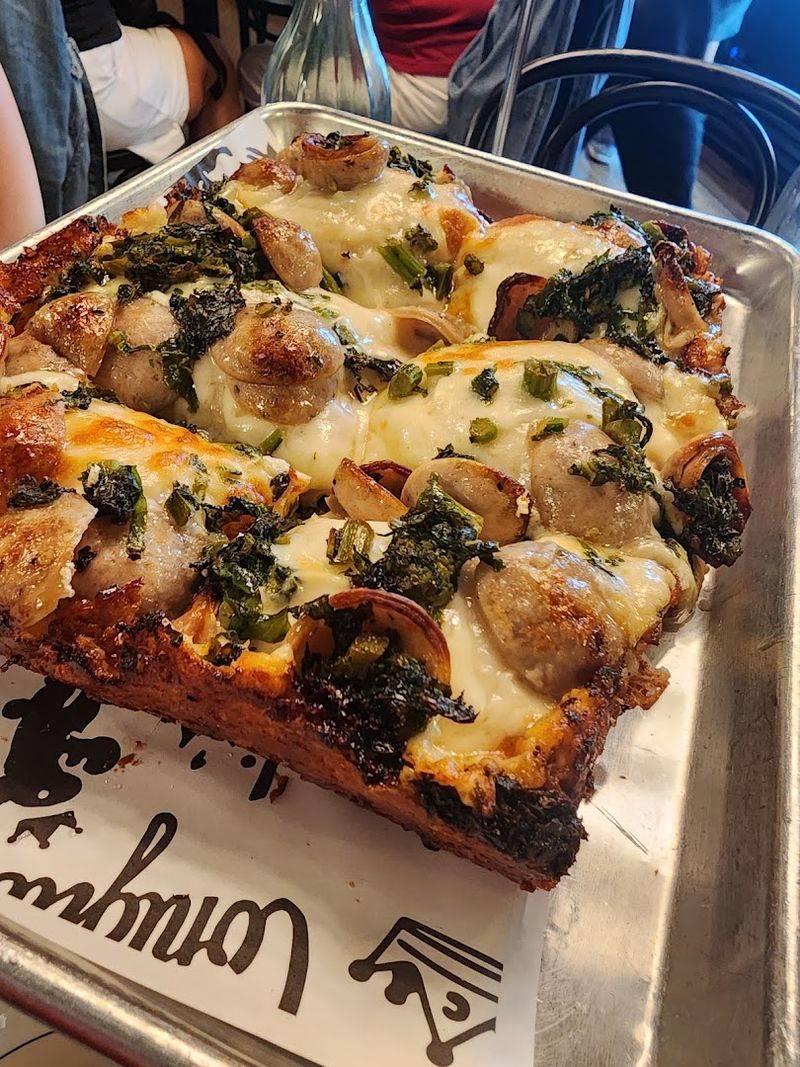
The championship round may receive top billing, but stopping there would miss the wonderfully odd range of things happening under one roof. Coniglio’s Upside Down Sicilian places mozzarella against the dough before covering it with tomato sauce, pecorino, and basil.
That reversed order protects the airy base from the moisture of the sauce while creating distinct layers of melted cheese and bright tomato. The crust is thick without becoming dense, carrying crisp edges, an open crumb, and enough fermented flavor to make the corner pieces especially prized.
Other options have included Meatball Ricotta, topped with house-made meatballs and ricotta dollops, along with square, Grandma-style, and Detroit-influenced pies. Then the menu keeps going.
Italian comfort dishes have included chicken parmigiana, eggplant parmigiana, rigatoni in spicy vodka sauce, bucatini with guanciale and pecorino, fusilli with mushrooms and four-cheese fonduta, and the Coniglio family’s spaghetti and meatballs.
House-made breadcrumbs, locally produced cheeses, naturally fermented sandwich bread, arancini, salads, and heroes make this much more than a place that happens to keep a few backup entrées around.
Mornings bring another personality entirely. The bakery counter turns out bagels, bomboloni, brioche, cinnamon buns, and croissants filled with everything from chocolate to cannoli cream.
The restaurant’s current schedule begins at 7 a.m. Monday through Friday and 8 a.m. on weekends, making it possible to visit for an espresso and pastry hours before the first dinner pie hits a table.
The vintage soda-fountain setup completes the time warp with Italian sodas and classic egg creams made from milk, seltzer, and chocolate syrup.
A customer can begin the day with a croissant, return for a Sicilian square, and finish with spaghetti, an egg cream, and a championship round pie—all in a room where painted rabbits keep watch from the walls.