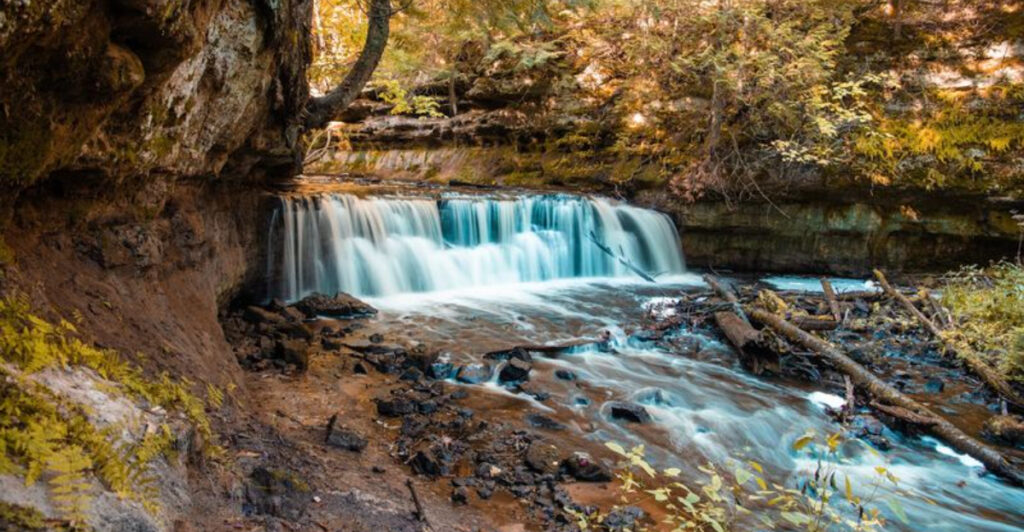
Not every Pictured Rocks waterfall needs a big crowd to feel worth the hike. About 15 miles east of Munising, Mosquito Falls hides along the Mosquito River in Michigan’s Upper Peninsula, where three separate cascades slip over rocky shelves in the middle of thick, quiet forest.
The hike is short enough to sound easy on paper, but the rolling, root-filled, sometimes muddy trail makes you work just enough to feel like you earned the view. That effort is part of the charm.
While many travelers hurry toward the park’s headline stops, Mosquito Falls rewards the ones willing to slow down with a wild, peaceful scene that feels far more secluded than its distance suggests.
A Three-Part Waterfall That Earns Its Surprise
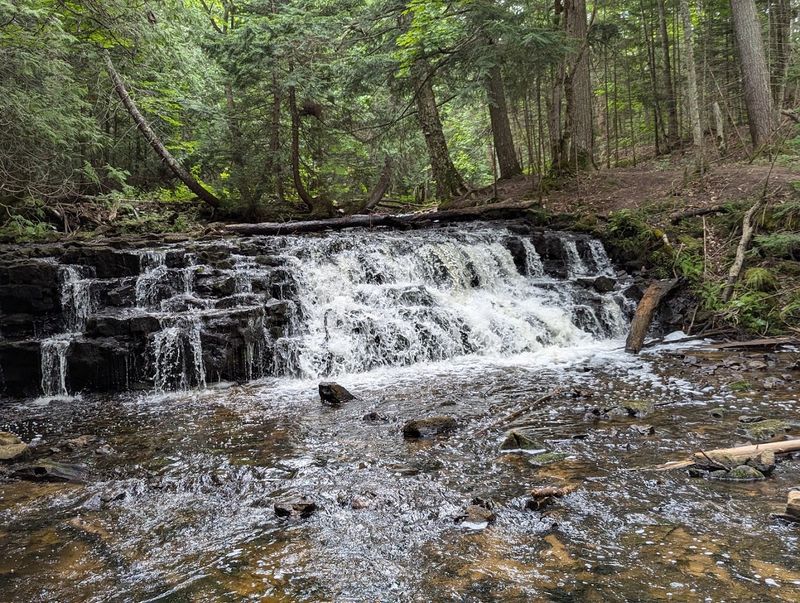
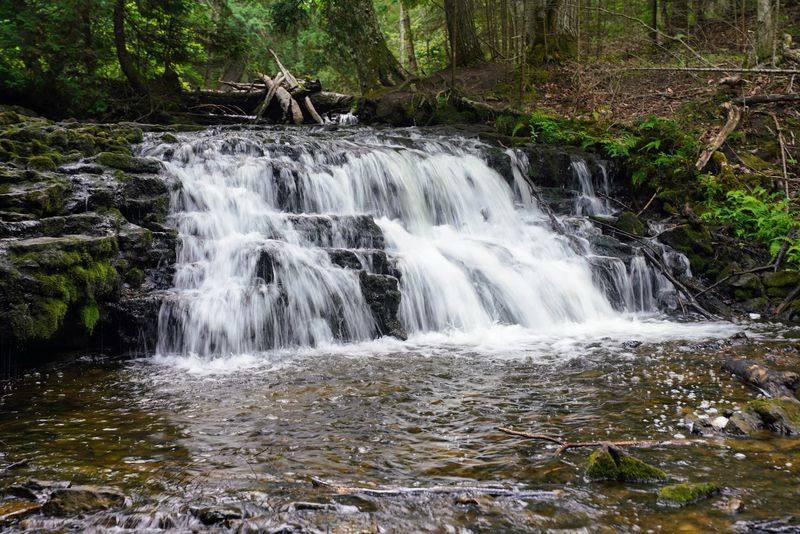
Not every waterfall announces itself with dramatic height. Mosquito Falls works differently — it spreads across the Mosquito River in three distinct cascades, each dropping over an eight-foot rock shelf before the water flattens and moves on through the trees.
The result is a wide, layered scene that rewards hikers who take a moment to actually look around instead of snapping one photo and heading back.
The three sections fan out in a way that feels almost deliberate, like the river decided to put on a show from multiple angles at once. Standing near the base, you can hear all three drops at the same time, and the combined sound fills the surrounding forest with a steady, low roar that cuts through the usual quiet of the woods.
It is louder than the size suggests.
One detail many first-timers miss: the trail sign marks the falls before the full cascade is visible. Walking a couple hundred feet past that sign reveals the additional sections tucked just around the bend.
Skipping that extra stretch means missing the most photogenic part of the entire waterfall. The river also forms shallow wading pools at certain points, and after a sweaty uphill stretch, stepping into the cold current is a genuinely satisfying way to cool down before the return hike.
The Mosquito River itself adds to the experience. Moving water flanks the trail for much of the approach, offering glimpses of small rapids and mossy boulders well before the main falls come into view.
River otters and beavers have been spotted in this stretch of the river, though sightings depend entirely on timing and luck. The falls sit within Alger County, deep inside one of Michigan’s most scenic protected landscapes.
What the Trail Actually Looks Like Underfoot
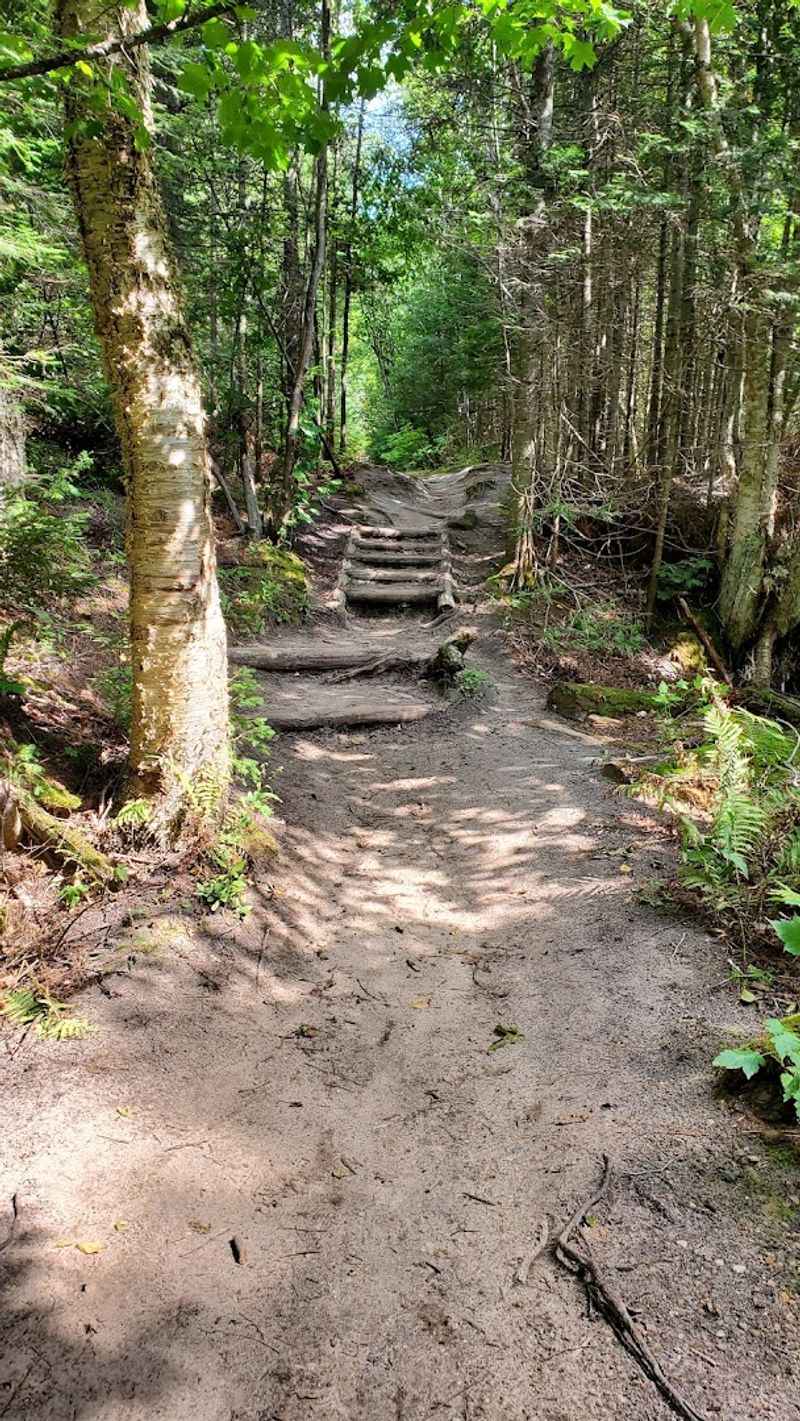
The Mosquito Beach Trail covers roughly 1.1 miles from the parking area to the falls, but the mileage understates the effort involved. The path climbs and drops repeatedly across a heavily wooded landscape, and several sections involve high, awkward steps over exposed roots and eroded terrain.
Hikers with knee problems or limited mobility will feel every one of those elevation changes on the return trip.
Mud is a recurring theme, especially after rain. Much of the trail cuts through low-lying forest where water collects and does not drain quickly.
Waterproof boots are not optional here — they are the difference between a good hike and a miserable one. The mud patches can appear suddenly after otherwise dry stretches, so even on a clear day, the trail surface stays unpredictable in spots.
Shade covers most of the route, which is a genuine advantage during summer. The forest canopy stays thick enough to block direct sun for long stretches, keeping the trail noticeably cooler than open paths.
That same dense tree cover also means bugs accumulate in the still air near the ground, so bug spray belongs in every pack before stepping onto this trail.
The trail is well-marked throughout, and navigation stays straightforward even for first-time visitors. There are no confusing junctions or unmarked forks to worry about.
The path simply follows the river corridor, dipping close to the water in some places and climbing away from it in others. For hikers continuing past the falls, the trail eventually connects to Mosquito Beach on Lake Superior, adding another 45 minutes or so of walking and a completely different landscape reward at the end.
That optional extension turns a short waterfall trip into a full half-day adventure worth planning around.
Parking, Permits, and Getting to the Trailhead in Michigan
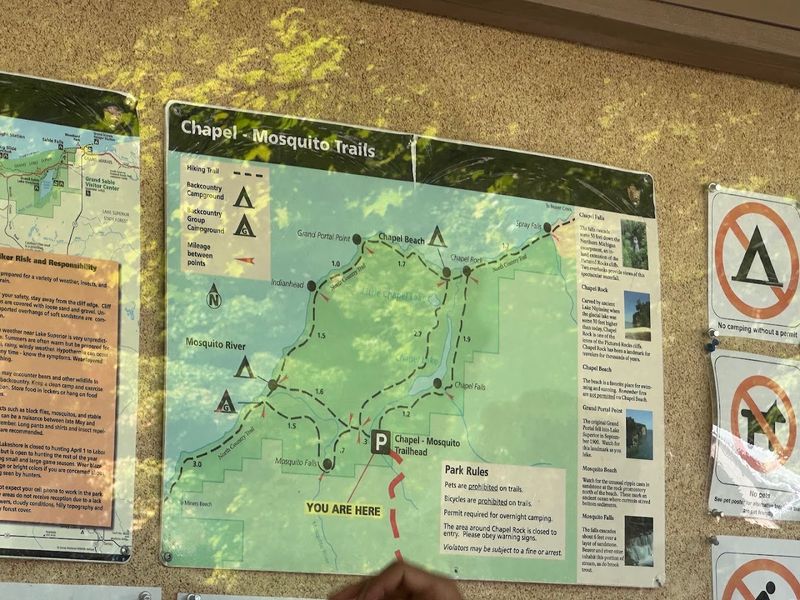
Finding the trailhead requires a bit of navigation. From Munising, the drive runs 15 miles east on H-58, then north on Chapel Road for about five miles until the parking area appears.
The lot is small — notoriously so. On busy summer weekends, cars overflow down the road for a quarter mile or more, meaning the hike effectively starts well before the official trailhead marker.
Arriving early in the morning, particularly on weekends, is the most reliable way to secure a spot close to the trail entrance.
A Michigan Recreation Passport is required for entry, so out-of-state visitors should plan accordingly. The passport is available at Secretary of State offices and can be purchased when renewing a Michigan vehicle registration.
Without it, access to the parking area becomes complicated, and there is no fee booth on-site to handle walk-up payments. Double-checking that requirement before the drive saves a frustrating turnaround.
Campervan travelers have a separate designated parking area available, which takes some pressure off the main lot. However, that accommodation is limited, and the general advice holds: the earlier the arrival, the smoother the experience.
Midday visits during peak season mean competing with large crowds, and the trail, while not enormous, does feel congested when many hikers are moving through simultaneously.
Approaching from the east involves a narrow two-track dirt road, which catches some visitors off guard. A standard passenger vehicle handles it fine in dry conditions, but after heavy rain the road surface gets rough.
The trailhead itself has no water source, so carrying enough hydration for the full round trip — and more if continuing to the beach — is a basic necessity that should be sorted out before leaving the car. Plan the logistics early and the rest of the day runs smoothly.
The Forest Surrounding the Falls Is Half the Experience
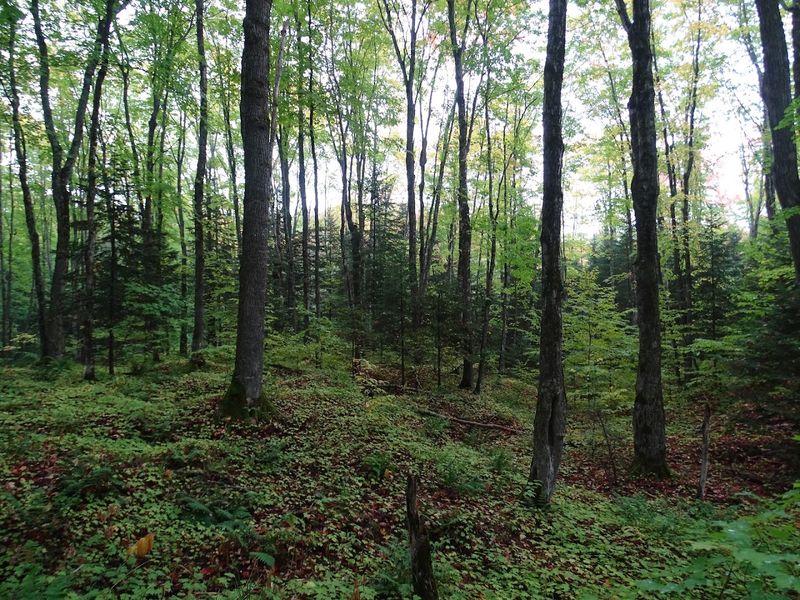
Before the falls ever come into view, the forest announces that this is a special stretch of land. The canopy closes tightly overhead, filtering sunlight into shifting patterns across the trail floor.
Moss covers most of the exposed rock surfaces, and the undergrowth stays thick enough on either side of the path to make the woods feel genuinely immersive rather than just decorative. This is not a manicured park trail — it is a working forest, and it feels like one.
The heavily wooded corridor along the Mosquito River sits within one of the most intact forested landscapes in the Upper Peninsula. Trees crowd the trail from both sides, and the combination of shade, moisture, and dense root systems creates a microclimate that stays noticeably cooler and quieter than the surrounding area.
Sound behaves differently here — footsteps on the soft forest floor barely register, and conversation fades quickly into the background noise of the river and the trees.
Wildlife activity runs consistently through this stretch. Beyond the occasional beaver or river otter spotted near the water, birds move through the canopy in numbers that reward anyone willing to stop and listen for a few minutes.
The trail does not allow pets, which keeps the natural behavior of local animals less disrupted than on more permissive paths. That restriction contributes directly to the calm that makes this corridor feel undisturbed.
Late spring and early fall shift the forest into particularly striking visual territory. Spring brings out vivid green undergrowth pushing up through leaf litter, while fall turns the canopy into a patchwork of amber and rust.
Summer offers the densest shade and the most consistent river flow at the falls. Each season delivers something genuinely different, and the forest itself is the constant thread running through all of them.
How Difficult Is the Hike, Honestly
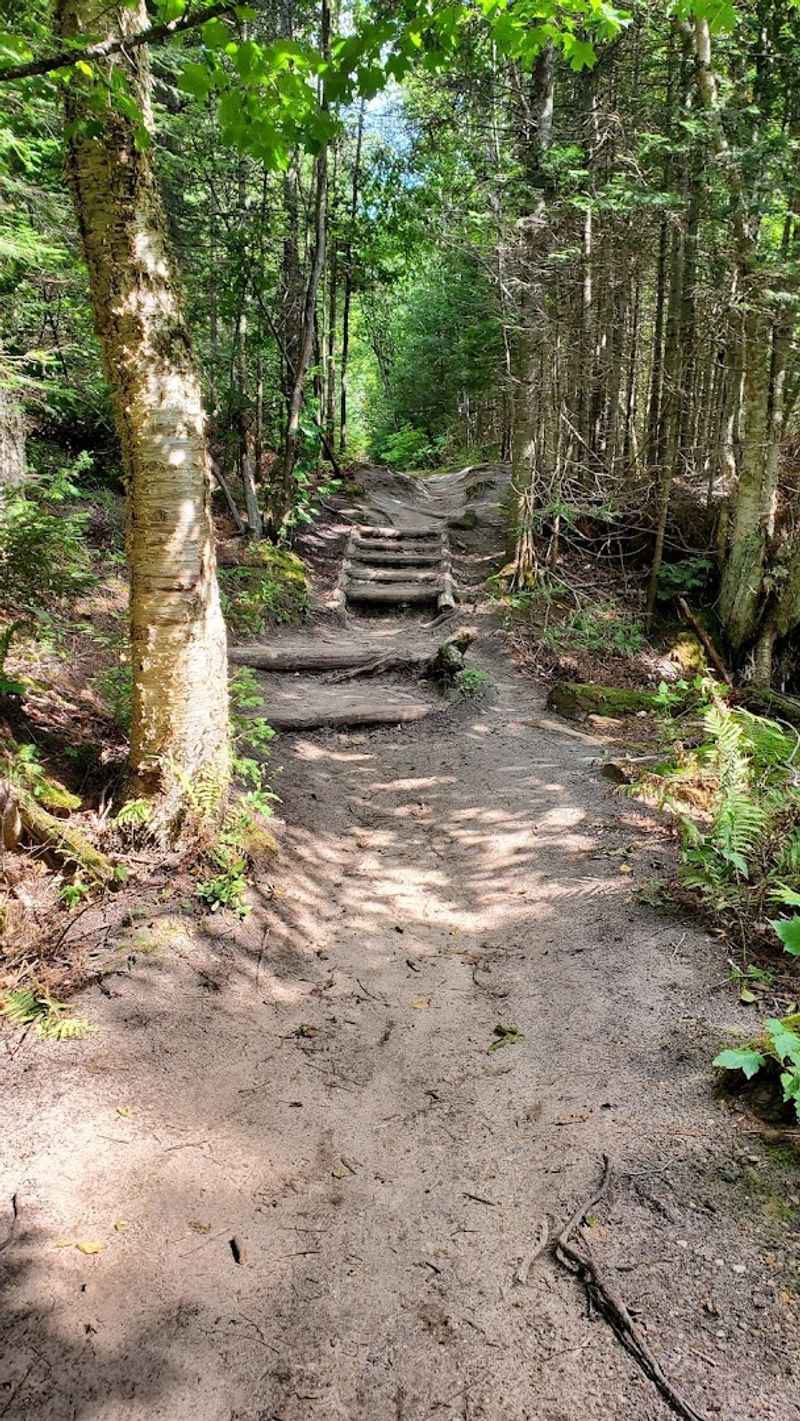
Calling this trail moderate is technically accurate, but the word undersells the specific challenges waiting on the path. The elevation changes are frequent rather than sustained — the trail does not climb one long hill but instead strings together a series of short, steep pitches with descents in between.
That pattern is harder on the body than a single long climb because the legs never fully settle into a rhythm. By the halfway point, most hikers feel it more than the mileage would suggest.
Height plays a role in difficulty here in an unexpected way. Several sections require stepping up onto elevated roots or rock ledges that sit noticeably high off the ground.
For taller hikers these are manageable inconveniences. For shorter hikers or anyone with limited hip or knee mobility, those same steps require real effort and careful footing.
Trekking poles make a measurable difference on the steep descents, particularly when the trail surface is wet.
The round trip covers about 2.2 miles and takes most hikers between 45 minutes and an hour and a half depending on pace and how much time they spend at the falls. Continuing on to Mosquito Beach adds significant time and distance, turning the outing into something that requires more preparation and energy management.
The trail does not have any bailout points or shortcuts once underway, so starting with tired legs or low water supplies creates real problems before the turnaround.
Children can handle the trail, but strollers are completely impractical — the terrain rules them out within the first few minutes. Young kids who are comfortable scrambling over uneven ground and following instructions near drop-offs near the ravine edges will manage fine with attentive adults.
The trail rewards confident, prepared hikers and punishes those who underestimate it based on the short mileage alone.
Timing Your Visit to Avoid the Crowds
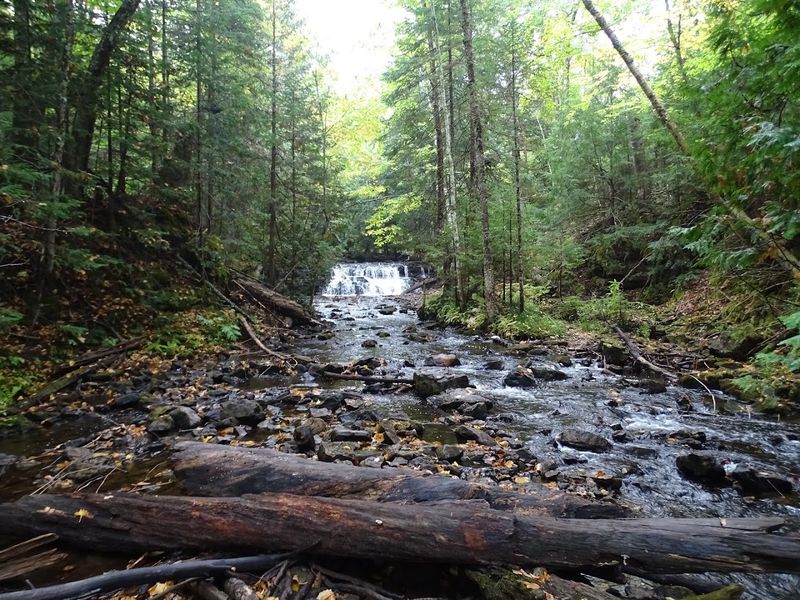
Mosquito Falls draws significantly fewer visitors than Chapel Falls, which sits just up the road and pulls large crowds throughout the summer season. That relative quiet is one of the trail’s biggest advantages — but it evaporates fast on peak weekends.
By midday on a Saturday in July or August, the parking situation deteriorates quickly, and the trail itself sees enough foot traffic to feel crowded at the narrow sections near the falls.
Early Sunday mornings offer the most consistent window for a low-crowd experience. Arriving before 8 a.m. typically means an open parking spot close to the trailhead, a quieter trail through the forest, and more space to stand near the falls without waiting for other groups to move.
The light quality also improves dramatically in the early morning hours, with soft directional light filtering through the canopy in a way that midday sun simply cannot replicate.
Shoulder season visits in late May or mid-September hit a sweet spot between good trail conditions and manageable visitor numbers. Spring snowmelt feeds the Mosquito River well into May, which pushes the falls to their highest and most photogenic flow.
Fall color peaks in late September across this part of Alger County, and the cooler temperatures make the physical demands of the trail considerably easier to manage. Bugs, which can be aggressive near the water during peak summer, also thin out significantly by early September.
Weekday visits during the summer remain a solid option for anyone with schedule flexibility. The trail sees far lighter use Monday through Thursday, and the parking lot rarely fills before noon on those days.
Combining the falls with a continued walk to Mosquito Beach works best on a weekday when the pace of the whole outing can stay relaxed without other groups pressing from behind on the narrow path.
Why This Waterfall Holds Its Own in the Upper Peninsula
The Upper Peninsula of Michigan has no shortage of waterfalls. Tahquamenon Falls pulls massive crowds.
Chapel Falls sits a short drive from this same parking lot and consistently ranks among the most visited natural features in the region. Against that competition, Mosquito Falls does not try to compete on scale — it offers something different instead.
The three-section structure of the falls, the wading access, and the relative quiet create an experience that feels personal rather than performative.
Wading into the Mosquito River at the base of the falls is one of those simple outdoor moments that holds up in memory long after the hike is over. The water runs cold even in August, and the rock shelves underfoot are covered in the kind of smooth, colorful stones that the Upper Peninsula rivers do well.
Standing in the current with the falls dropping just upstream is a tactile, immediate reward that no overlook platform or viewing deck can replicate.
The falls also connect to a larger trail system that extends to Lake Superior, which gives the outing a natural arc. Starting at the parking lot, moving through the forest, reaching the falls, then continuing to the beach covers multiple distinct landscapes within a single half-day trip.
That variety — forest, river, waterfall, lake — is rare enough in any region that finding it all accessible from one trailhead makes the logistics unusually efficient for a full outdoor day.
For anyone building an Upper Peninsula itinerary around waterfalls, Mosquito Falls fits cleanly into a day that also includes Chapel Falls from the same parking area. The two hikes use different trails, cover different terrain, and deliver different visual payoffs.
Pairing them turns a single morning into a complete waterfall tour without driving to a second location — a practical bonus that experienced UP travelers already know to take advantage of.