Colorado’s past is written into far more than museums and history books. Scattered across deserts, mountains, and remote valleys are ancient stone communities, cliff dwellings, abandoned mining settlements, and weathered structures that have survived long after their original residents moved on. Some preserve stories stretching back many centuries, while others capture the ambition and hardship of Colorado’s mining era.
Seeing these places in person turns history into something remarkably tangible, especially when crumbling walls still stand against dramatic landscapes. Bring water, curiosity, and plenty of respect for these fragile sites. These 10 historic Colorado ruins offer unforgettable glimpses into the people who shaped the state.
1. Mesa Verde National Park (Mesa Verde)
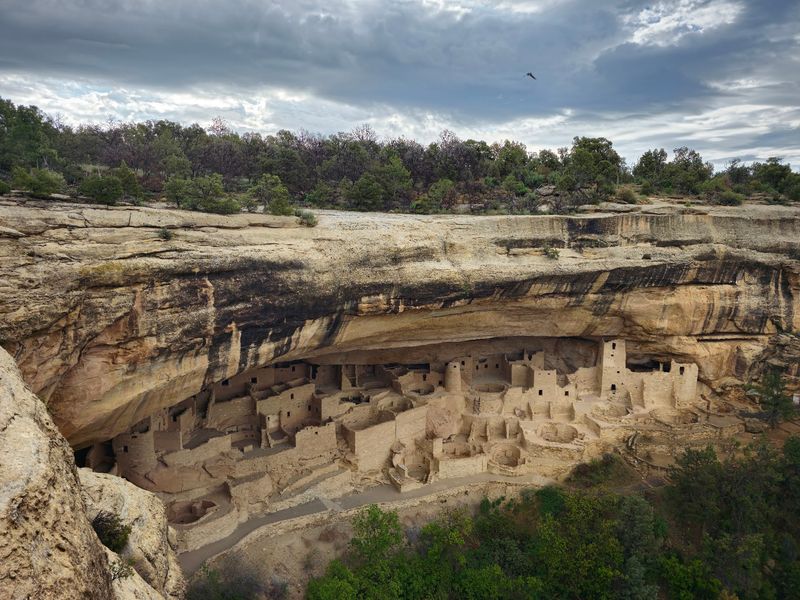
Picture a whole village tucked into the side of a cliff, with stone towers and rooms stacked like building blocks under a giant rock ceiling. That scene is real, and it sits in the southwest corner of Colorado. Mesa Verde protects more than 5,000 archaeological sites, making it one of the most important ancient places in the country.
The star of the show is Cliff Palace. Its sandstone walls, square rooms, and round kivas were built by Ancestral Pueblo people, who lived on and around this mesa for generations. Standing near it, you can spot tiny handprints in the old mortar and soot stains from long-ago fires.
Mesa Verde is bigger than most first-time visitors expect. The drive from the entrance to the main cliff dwelling areas winds up and across the mesa, so plan for a full day instead of a quick stop. Overlooks along the way let you peek down into canyons where more dwellings hide in the shadows.
Families will find plenty to do here. Kids usually love spotting cliff homes from the rim viewpoints, almost like a real-life hide-and-seek game. Adults tend to get hooked on the smaller details, like the careful shaping of each stone block or the way doorways were sized for people much shorter than us.
Here is one tip worth remembering. Some of the most famous dwellings can only be entered on ranger-guided tours, and those tours often require tickets booked ahead of time. Checking the park website before you go can save you from disappointment at the gate.
The mesa-top sites deserve attention too. Pithouses and early villages there show how building styles changed over hundreds of years, moving from simple dug-out homes to the impressive cliff architecture that made this park famous around the world.
2. Yucca House National Monument (Near Cortez)
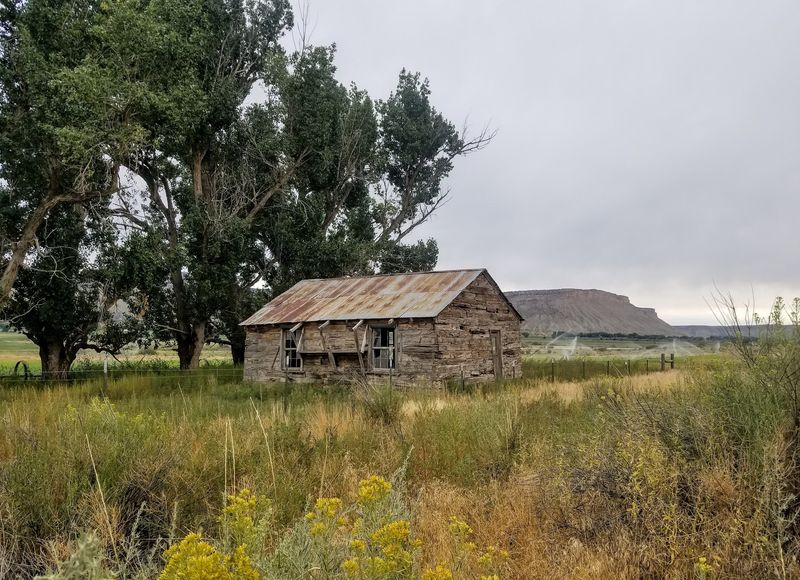
At first glance, Yucca House looks like a field of bumpy hills. Look closer, and those grassy lumps turn out to be buried rooms, walls, and ceremonial spaces. Much of this Ancestral Pueblo site has never been dug up, which makes it a very different kind of ruin.
Here, the ground itself keeps the secrets. Archaeologists believe the community once included hundreds of rooms and more than 100 kivas, so this was no tiny farming outpost. It was a busy, crowded place in its day.
You will still find some standing masonry poking out from the mounds. Those short sections of stone wall act like clues in a puzzle, hinting at the shape of the large pueblo underneath. Your imagination has to fill in the rest, and that turns out to be half the fun.
Visitors should know that Yucca House is simple and quiet. There is no large visitor center, no gift shop, and no busy parking lot full of tour buses. The road in is rural and passes through private land, so staying on the marked route and respecting property is important.
That quiet setting pays off. With Sleeping Ute Mountain rising nearby, you can stand in the wind and hear little more than birds and rustling grass. Few places in the Four Corners let you experience an ancient site with so little modern noise around you.
Leaving a site unexcavated is also a choice with a purpose. Keeping the ruins covered protects them from weather and damage, and it saves them for future researchers with better tools. In a way, Yucca House is a time capsule that has not been opened yet, and walking across it gives you a front-row seat to that mystery.
3. Chimney Rock National Monument (Near Pagosa Springs)
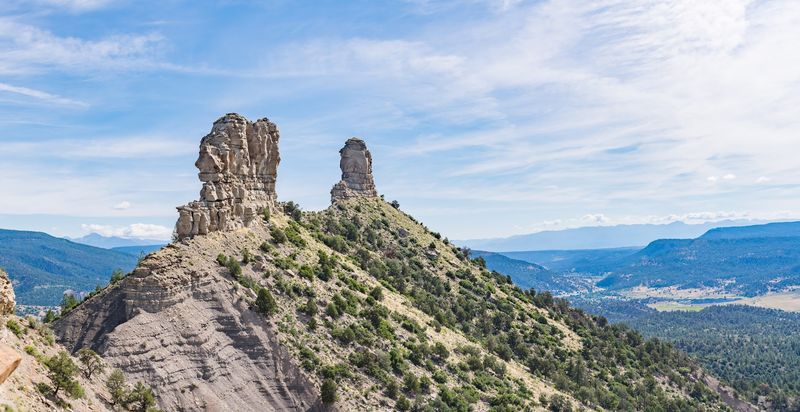
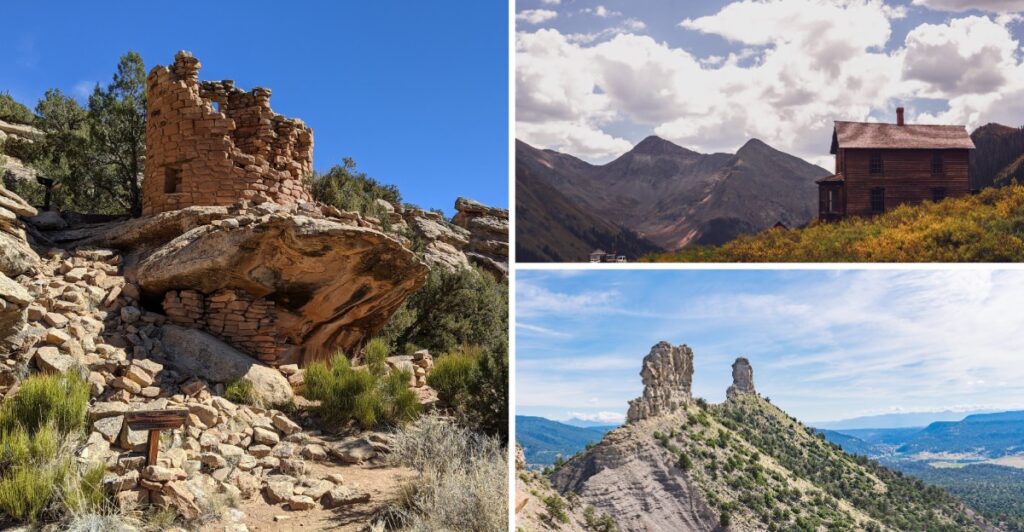
Two stone spires shoot up from a high ridge in southern Colorado, and you can see them from miles away. Ancestral Pueblo people clearly noticed them too. More than 1,000 years ago, they built a village right beneath these towering rocks.
The Great House Pueblo is the showpiece. Perched near the top of the ridge, its stone walls outline rooms and kivas with a view that stretches across forests and valleys. Getting up there takes some effort, but the payoff includes one of the most dramatic ruin settings in the entire state.
Why build up here, so far from easy water? Researchers have long wondered about that. Many connect Chimney Rock with the famous Chaco culture of New Mexico, since the building style looks similar to great houses found there.
Along the trails, you will pass other remains, including pit houses and smaller structures lower on the mesa. Each stop gives you a better sense of how people lived here, from daily chores to community gatherings. Guided tours share stories about the site that are hard to find on signs alone.
Sky watchers get extra excitement here. Chimney Rock is linked to a rare moon event called a lunar standstill, when the moon appears to rise between the twin spires. Special programs are sometimes held around these events, and they draw curious crowds.
The monument usually operates on a seasonal schedule, so checking open dates before driving out is smart. Once there, bring a hat and sturdy shoes, since the ridge trail is exposed and rocky in spots.
Pagosa Springs sits nearby, so pairing ancient ruins with a relaxing soak in the town’s famous hot springs makes for a pretty great day.
4. Lowry Pueblo National Historic Landmark (Pleasant View)
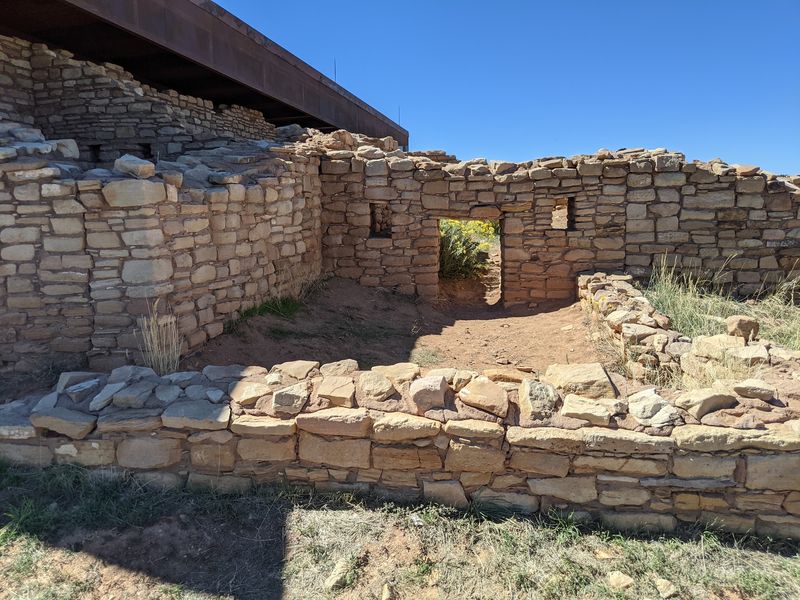
Around 1,000 years ago, a small but lively village stood on this spot near Pleasant View. Today, Lowry Pueblo still shows off its bones: about 40 rooms, eight kivas, and a large Great Kiva. For anyone who wants to see ancient walls up close, this is a strong pick.
The masonry here has been stabilized, which means the walls are protected and reinforced so they can survive. That work lets visitors walk right up to the stonework and study it. You can see how builders layered flat stones and filled gaps with mud mortar.
Kivas were round rooms often used for gatherings and ceremonies. The Great Kiva at Lowry is especially large, suggesting it served people from the wider community, not just one family. Standing at its edge, you can almost hear the crowd that once filled it.
Lowry sits inside Canyons of the Ancients National Monument, a huge area packed with thousands of archaeological sites. Many of those sites are remote and hard to reach. Lowry stands out because it is reachable by road and has a short, easy path around the ruins.
Short legs and older visitors can enjoy it without a tough hike. Interpretive signs explain what each part of the pueblo was used for, so you can take a self-guided tour at your own pace. It rarely feels rushed.
Fun fact: parts of Lowry show different building phases, which means people added on and remodeled over time. Much like a modern family building a new bedroom or porch, these residents changed their homes as needs shifted.
Farmland and sagebrush stretch out around the site, giving a clear view of how open and sweeping this region really is.
5. Escalante Pueblo (Dolores)
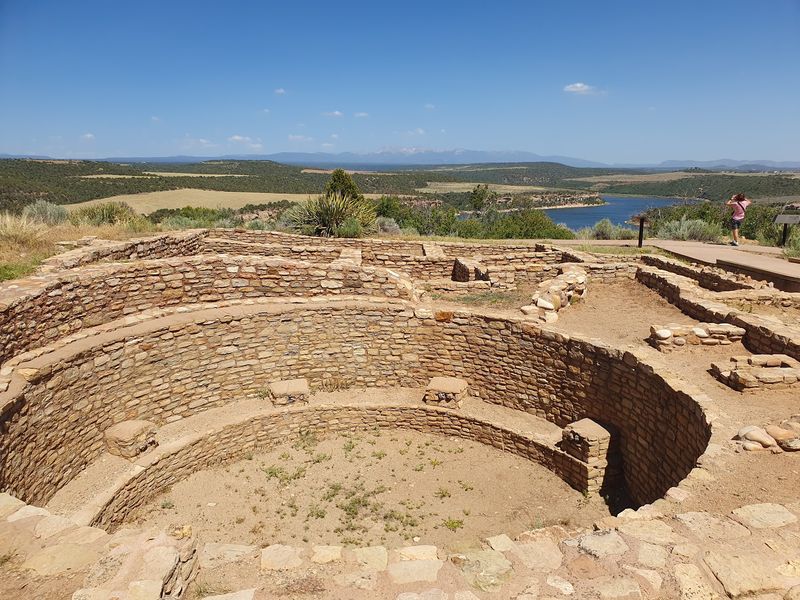
Short walk, big view. That is the deal at Escalante Pueblo, perched on a hilltop above the Dolores area in southwestern Colorado. A paved trail climbs up from the Canyons of the Ancients Visitor Center, and within minutes you are standing beside stone walls built by Ancestral Pueblo people.
Archaeologists have pieced together a timeline for this place. Evidence shows the pueblo was first built around A.D. 1129. After that, it went through several periods of use before people finally left it around A.D. 1200.
Think about that for a second. Different groups may have moved in, fixed up the rooms, and moved out again over about 70 years. The walls you see hold traces of all those comings and goings.
The pueblo’s design is compact, with rooms arranged around a central kiva. Some experts note the layout looks similar to buildings from the Chaco region, which adds a layer of mystery about how far ideas and people traveled back then.
From the top, the scenery spreads wide in every direction. McPhee Reservoir shines in the distance, and mountains frame the horizon on clear days. It is one of the easiest spots in the area to get a history lesson and a scenic overlook at the same time.
Before or after the walk, the visitor center is well worth your time. Its museum displays artifacts from the region, including pottery and tools, which help bring the ruins outside to life. Kids often enjoy the hands-on exhibits.
The name comes from a Spanish priest, Father Silvestre Velez de Escalante, whose 1776 expedition passed through this area and recorded seeing ruins nearby. That makes this site a meeting point of two very different chapters of history.
6. Sand Canyon Pueblo (Near Cortez)
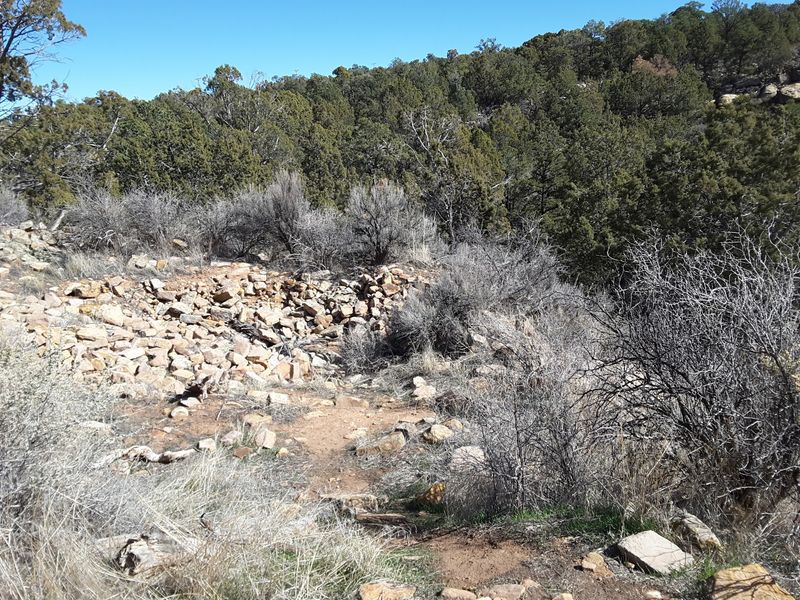
Here is a number that stops people in their tracks. By around A.D. 1275, Sand Canyon Pueblo had grown to roughly three times the size of Cliff Palace at Mesa Verde. Hundreds of rooms and many community buildings once crowded this spot.
Today the scene looks much quieter. Low walls, stone rubble, and outlines in the dirt are most of what you will find. It takes a little imagination, but once you picture everything standing tall, the scale becomes mind-blowing.
The village wrapped around the head of a canyon, with a spring nearby that likely made the location valuable. Researchers have studied the site closely because it was built and lived in during the final decades before Ancestral Pueblo people left this region. That timing makes it an important piece of a very big puzzle.
Many visitors reach the site through the Sand Canyon Trail, a popular route within Canyons of the Ancients National Monument. The trail passes red rock cliffs, twisted juniper trees, and smaller cliff dwellings tucked into alcoves. Hikers, bikers, and horseback riders share the path in some sections.
Summer heat in this area can be intense, and shade is hard to find. Starting early in the morning makes the outing far more pleasant. Spring and fall bring cooler air and softer light across the canyon walls.
Leaving no trace matters a lot here. Pottery shards and stones should stay exactly where they are, since moving them erases clues that archaeologists rely on. Even small pieces help tell the story of the people who lived here.
Walking among these low walls, you get a sense of how busy the place once was, with families cooking, children playing, and neighbors trading goods around the canyon’s edge.
7. Painted Hand Pueblo (Pleasant View Area)
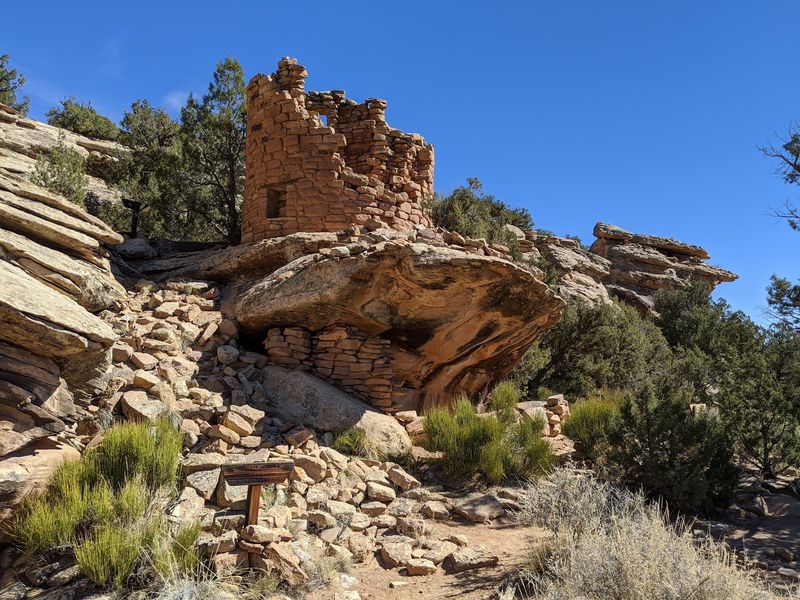
Faded handprints on stone greet the few travelers who make it out to this corner of Canyons of the Ancients. Those images gave Painted Hand Pueblo its name, and they are only one reason this spot sticks with people long after they leave.
The site holds the remains of a small village from the 1200s, with about 20 rooms. A stone tower balanced on a boulder is often the first thing visitors notice. It looks almost impossible, like it was built on top of a giant rock pedestal.
Getting here requires some planning. The drive involves dirt roads that can turn rough or muddy after rain, so a vehicle with good clearance helps. From the parking area, a short trail leads down toward the ruins.
Solitude is the big draw. Unlike busier parks, you might have the whole canyon to yourself, with only lizards and ravens for company. Wind brushing through juniper branches is sometimes the loudest sound around.
Look carefully at the rock surfaces nearby. Faint rock images and petroglyphs appear in places, some so light they are easy to miss. Morning or late-afternoon light often makes them easier to spot, since the shadows bring out details.
Treat these images gently. Touching rock art can leave oils that damage it over time, so looking and taking photos is the best way to enjoy them. Ruins here are fragile as well, and climbing on walls can cause them to crumble.
Painted Hand works best for visitors who enjoy a bit of adventure. Bring plenty of water, a map, and a full tank of gas, because services are far away. The reward is a quiet, rugged setting where ancient builders chose a truly unusual place to make their homes.
8. Animas Forks Ghost Town (Near Silverton)
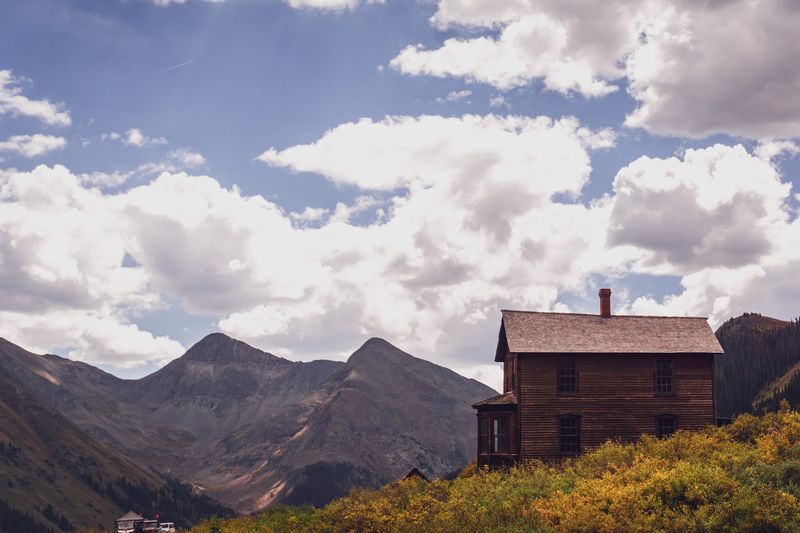
Swap stone walls for splintered wood, and jump ahead many centuries. Animas Forks sits at roughly 11,200 feet in the San Juan Mountains, where miners once chased silver and gold in the late 1800s. Now, weathered buildings lean into the wind as if they are still guarding the valley.
Life up here was tough. Winters brought deep snow and freezing temperatures, and many residents left during the coldest months. Still, for a while, this town buzzed with miners, supply wagons, and the clatter of mills.
Several structures remain standing, including houses you can peek into. One two-story home with a large bay window is a favorite photo stop. Walking through the empty rooms, you notice creaky floors, thin walls, and windows that frame jagged mountain peaks.
Animas Forks lies along the Alpine Loop, a famous backcountry byway. The road climbs steep, rocky passes that are best handled with a high-clearance or four-wheel-drive vehicle. Many visitors rent a jeep or join a guided tour from Silverton.
Summer and early fall are the usual visiting seasons, since snow closes the high roads for much of the year. Weather can change fast at this height, so pack a warm layer even in July. Afternoon thunderstorms roll in often.
At this altitude, breathing takes more effort. Moving slowly and drinking plenty of water can help your body adjust, especially if you just arrived from lower land.
Wildflowers pop up across the meadows in midsummer, adding bright color around the gray, wind-beaten buildings. Marmots whistle from the rocks, and streams tumble down the slopes. It is a striking mix of wild nature and leftover human effort, all packed into one small high valley.
9. Independence Ghost Town (Near Aspen)
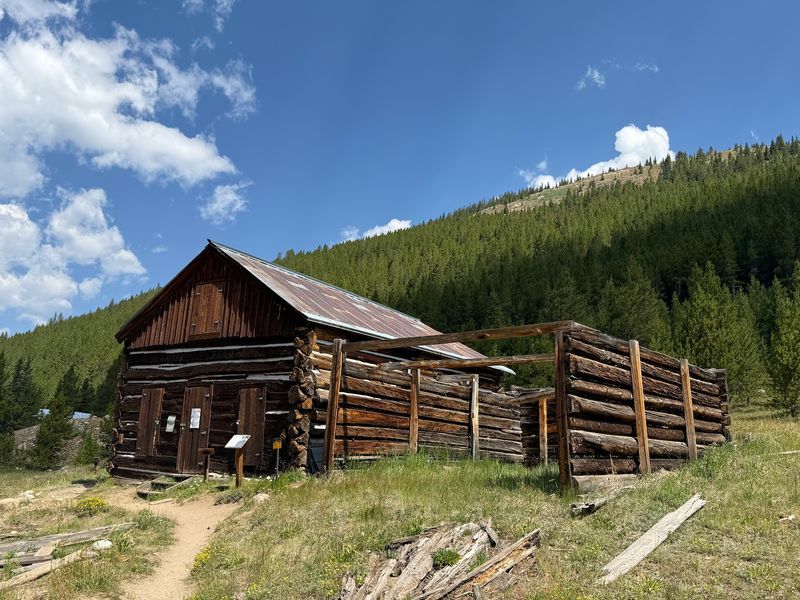
Gold turned up here on the Fourth of July in 1879, and the town that followed borrowed its name from the holiday. Independence sprang up high in the mountains east of Aspen, filled with miners hoping to strike it rich. Like many boom towns, it faded fast when the good ore ran out.
Crumbling log cabins now dot a grassy meadow beside the highway. Some still have walls and doorways, while others have sunk into piles of old timber. A general store, stable, and homes are among the remains that visitors can explore on foot.
Easy access sets this ghost town apart. Many old mining camps require rough four-wheel-drive roads, but Independence sits right along Highway 82 near Independence Pass. You can pull over, stretch your legs, and wander through history in minutes.
Short paths loop around the site, and signs share stories about daily life. Imagine cooking dinner on a wood stove at over 10,000 feet, with snow piling up outside for months. Harsh winters pushed many residents away, and one legendary storm reportedly forced people to leave on makeshift skis.
The highway over Independence Pass is closed in winter, usually reopening in late spring. Summer offers green meadows, and early fall brings golden aspen leaves around the old cabins. Both seasons make for colorful photos.
Be gentle with the structures. Old wood is fragile, and climbing on it can speed up damage. Local groups work hard to preserve the site, so staying on paths helps them out.
Visiting pairs nicely with a drive to the top of the pass, where the Continental Divide offers big views. Aspen’s shops and restaurants sit just down the road, making the ghost town an easy addition to a mountain day.
10. Amache National Historic Site (Granada)
Some ruins tell stories of ancient villages or gold rushes. Amache tells a harder one. During World War II, the U.S. government forced thousands of Japanese Americans from their homes and confined them at this camp in southeastern Colorado.
Most people held here had done nothing wrong. Many were American citizens, including children and elderly grandparents. They lived behind barbed wire in rows of barracks on the windy prairie near the small town of Granada.
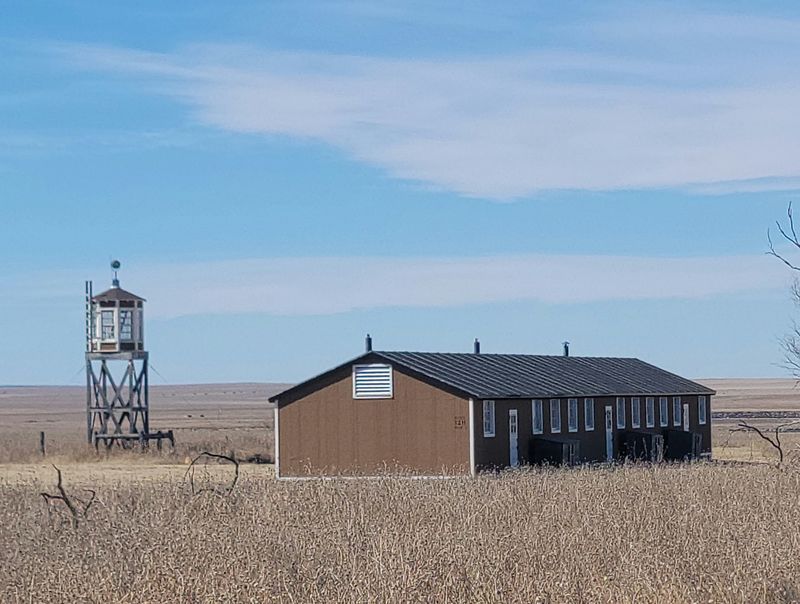
Today, the landscape looks empty at first. Concrete foundations mark where barracks, mess halls, and other buildings once stood. Walking the dirt roads, you can trace the grid of the camp and see how many people were packed into this space.
Reconstructed structures help fill in the picture. A rebuilt barrack, a guard tower, and a water tower give visitors a clearer sense of daily life under watch. There is also a cemetery and a memorial honoring those who lived and died at the camp.
Amache became a National Historic Site to protect this chapter of American history. Former incarcerees and their families have worked with local students and preservation groups to keep the memories alive. The Amache Museum in Granada displays photos, letters, and objects from the camp years.
Visiting here is less about adventure and more about understanding. Signs share personal stories, like families planting gardens in dry soil or students attending school inside the camp. Those small details show how people tried to keep some normal life going.
Plan to spend time reading and reflecting. The site is spread out across open land, so good walking shoes and a hat come in handy. Amache is a reminder of how fear can lead to unfair treatment, and why remembering history matters.
Share this story