A giant shoe beside the road, a hillside pagoda, and rocks that ring like bells are just a few of the surprises waiting in Pennsylvania. Beyond its cities and famous landmarks, the state is filled with unusual destinations that can turn an ordinary drive into a memorable adventure. From a building shaped like a coffee pot to standing stones and a home built above a waterfall, these attractions offer something different from the usual sightseeing stops. Some are well known, while others feel like unexpected discoveries.
Before visiting, check current hours, seasonal schedules, and access requirements. Whether you enjoy quirky roadside attractions, architecture, history, or outdoor adventures, these Pennsylvania destinations are worth taking the scenic route.
1. The Reading Pagoda: A Skyline Surprise
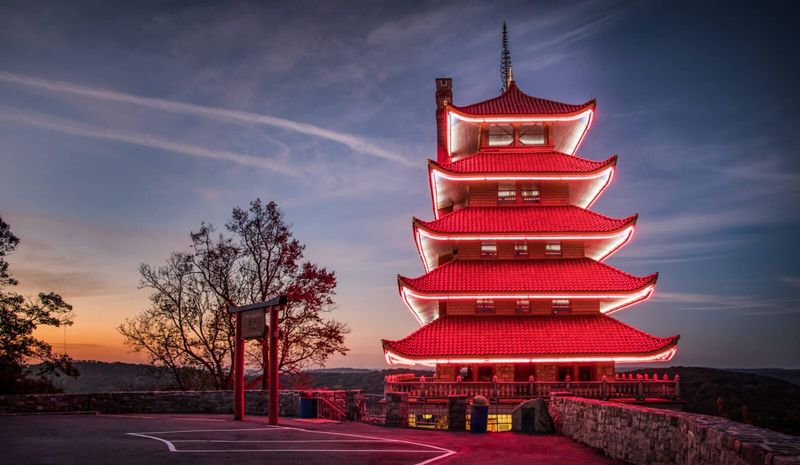
A red roof appears above the trees, and suddenly the city below feels very far away.
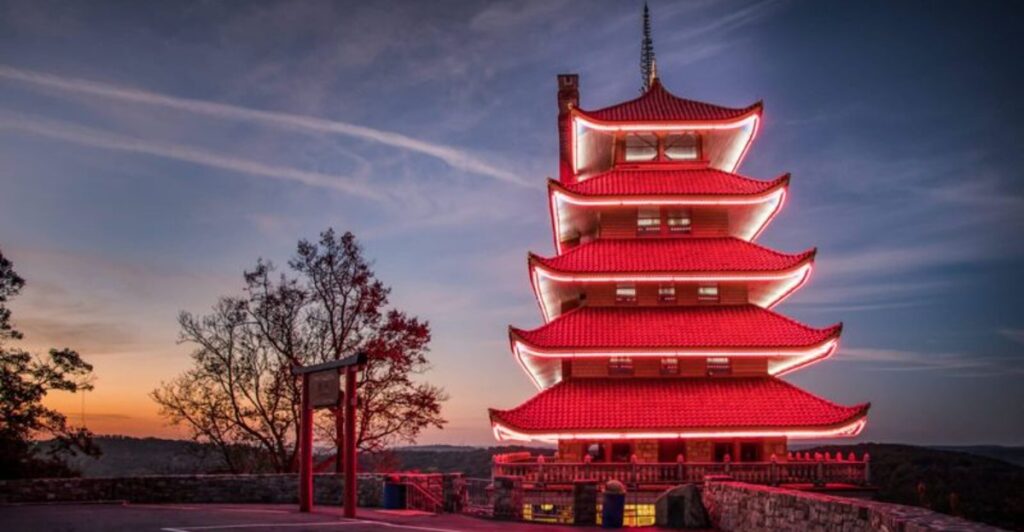
Perched on Mount Penn, the Reading Pagoda brings an unexpected shape to the skyline of southeastern Pennsylvania.
Completed in 1908, the building was originally intended as part of a resort plan.
That project never developed as expected, but the pagoda became a lasting symbol of Reading.
Its layered roofs and hillside setting make it easy to recognize.
The strongest reason to visit is the view.
From the surrounding outdoor area, you can look across rooftops, streets, and the wider valley.
Clear weather gives you the best chance to understand how the city fits into the surrounding hills.
Plan your stop around daylight rather than counting on interior access.
Building access, visitor services, and restoration work can change, so check current information before making the climb.
Treat any posted closures as firm boundaries, even if other visitors ignore them.
Bring a light jacket because the hilltop may feel cooler and windier than downtown.
Comfortable shoes help on paved slopes and uneven edges.
Keep children close around roads, parking areas, and steep ground.
Photographers should try both wide views and small architectural details.
The roofs, windows, and nearby stonework offer different angles without requiring a long visit.
Late afternoon can add warm light, although weather and seasonal conditions matter more than any fixed schedule.
Pair the stop with a meal or another attraction in Reading instead of treating the building as a full day outing.
Allow time to enjoy the overlook quietly.
The pleasure here comes from contrast: an unusual landmark above a familiar Pennsylvania city, with enough history to make the view more meaningful.
Before leaving, look back from another safe viewpoint.
Seeing the pagoda against the wooded ridge helps explain why residents have treasured this distinctive landmark for generations.
2. The Haines Shoe House: A Giant Step into Roadside History
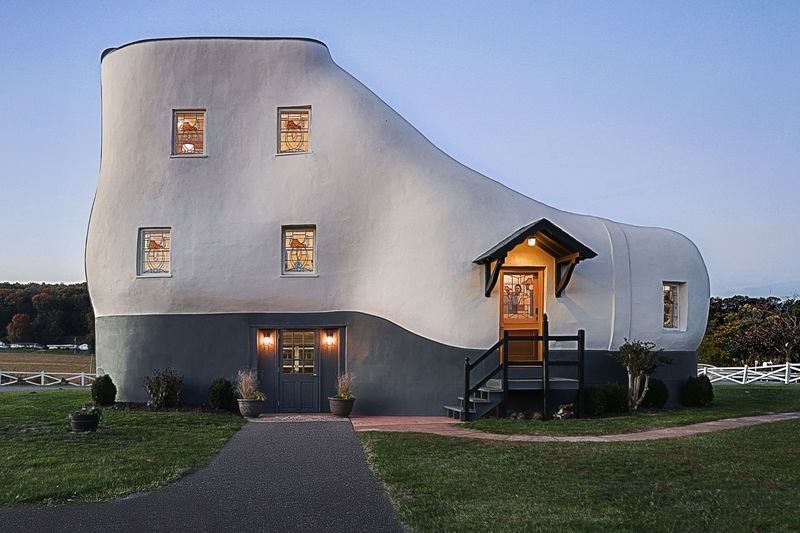
Most shoes belong in a closet, but one enormous boot in York County has windows, rooms, and a front door.
The Haines Shoe House turns a simple roadside stop into a cheerful reminder that advertising once had a wonderfully strange side.
Shoe salesman Mahlon Haines commissioned the building in 1948 to promote his business.
Its unusual shape helped people remember both the house and the man behind it.
The result looks playful, yet it was designed as a usable building rather than a hollow display.
Located near Hallam, the house has served different purposes under different owners.
More recently, it has been offered as vacation lodging.
Do not assume that past tours, snack service, or public visiting hours are still available.
Check the property’s current official information before traveling.
If guests are staying there, respect their privacy and stay outside any restricted areas.
A reservation for lodging is very different from permission to walk around the grounds.
The best photographs show the full outline of the boot.
Look for the heel, the toe, and the windows tucked into its sides.
Use only authorized viewing areas, and avoid stopping in an unsafe place along the road.
Families can turn the visit into a small design game.
Ask children where they would place a kitchen or bedroom inside a shoe.
The conversation makes the building fun even when an interior visit is not possible.
Nearby York County towns offer food stops and other reasons to extend your drive.
Keep expectations simple: this is an architectural oddity, not a large attraction with endless activities.
Its charm comes from seeing a bold idea made real.
For travelers who enjoy old roadside America, that is plenty.
A building shaped like footwear captures a time when standing out meant building something people could not possibly forget on an ordinary afternoon drive.
3. The Bates Motel & Haunted Hayride: A Night of Staged Frights
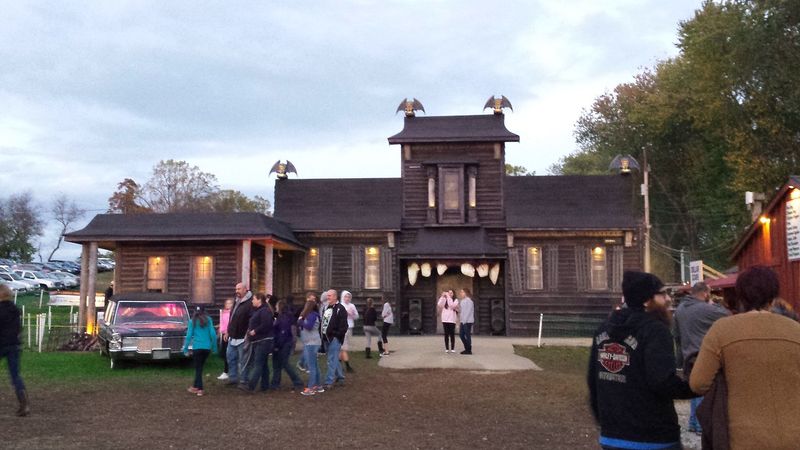
A quiet farm setting takes on a very different mood when fog rolls through the lights and actors step out of the shadows.
At Arasapha Farm in Glen Mills, the Bates Motel & Haunted Hayride delivers fear as carefully staged entertainment.
The attraction is known for its seasonal haunted experiences, including a hayride and other scare areas.
Detailed sets, sound effects, and live performers create the atmosphere.
Despite the name, you are visiting a haunted attraction, not booking a room at an operating motel.
This stop suits travelers who actively enjoy jump scares.
Younger children and people sensitive to loud sounds, darkness, flashing lights, or intense scenes may find it overwhelming.
Read the current attraction warnings before deciding who should come.
Tickets, dates, and entry rules can change each season.
Buy through the official website, and check whether your ticket has a scheduled arrival time.
Popular autumn nights may involve crowds and waits, especially near Halloween.
Wear shoes that can handle dirt and uneven ground.
Farm conditions can become muddy after rain, and evenings often turn cold.
Clothing that keeps you warm is more useful than an elaborate costume that gets caught or drags.
Follow staff instructions throughout the experience.
Avoid touching performers or props, and keep your phone put away whenever photography is prohibited.
The safest approach is to let the attraction control the action while you enjoy the surprises.
Build some flexibility into your evening.
Traffic, parking, lines, and weather can affect how long the visit takes.
Have dinner beforehand if you want to focus on the attractions rather than rush between food and entry.
Unlike a peaceful overlook or museum, this destination wants your heart racing.
Its appeal lies in shared reactions: nervous laughter, startled friends, and the relief of discovering that the monster ahead is part of a show designed for visitors.
4. The Coffee Pot: Bedford’s Oversized Brewing Buddy
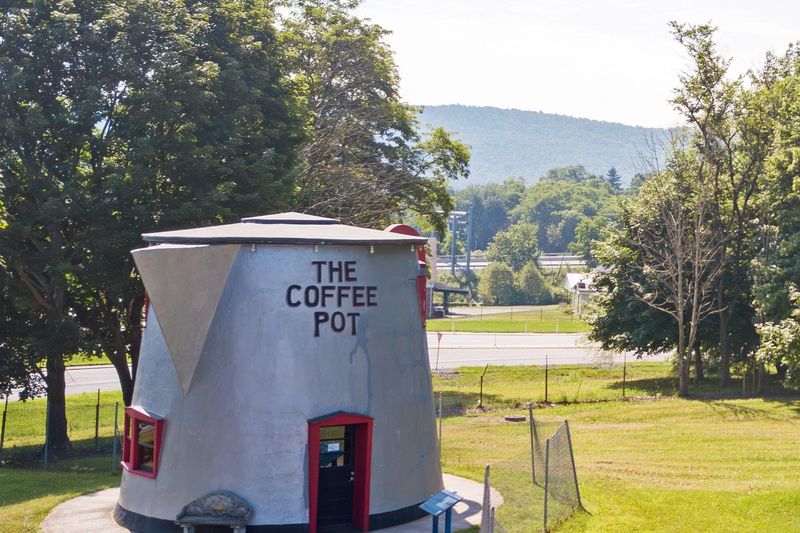
Your morning coffee probably never came from a pot taller than you.
Along the historic Lincoln Highway in Bedford, a giant coffee pot proves that a roadside building can have a sense of humor.
Built in 1927 by David Koontz, the Coffee Pot originally served as a small lunch spot.
Its shape was meant to catch the attention of passing drivers.
Travelers could notice the building before reading a sign or hearing anything about its menu.
The structure later faced deterioration, but preservation efforts saved it.
It was moved to the Bedford County Fairgrounds and restored.
Today, it stands as a reminder of an era when independent businesses used bold designs to compete for road traffic.
Think of the visit as a short history stop rather than a cafe break.
Do not arrive expecting daily coffee service or a full restaurant inside.
Access to the building and grounds may depend on current arrangements or fairground events.
Check local visitor information before making a special trip.
During busy events, parking and access can differ from an ordinary day.
Follow signs and avoid walking into areas being used by staff or event vehicles.
A wide photograph captures the handle and spout together.
Include a person in the frame, with permission, to show the surprising scale.
Step back only where it is safe, not into traffic or a working driveway.
Bedford makes an easy place to turn this quick stop into a longer outing.
Explore the downtown area, find a meal, or look for other historic sites nearby.
The Coffee Pot works especially well as one chapter in a relaxed road trip.
What makes it memorable is not complexity.
It is the simple confidence of a building that announces its purpose through its shape.
Decades later, that oversized pot still encourages travelers to pause and smile before continuing down the road.
5. Centralia: A Place to Approach with Respect
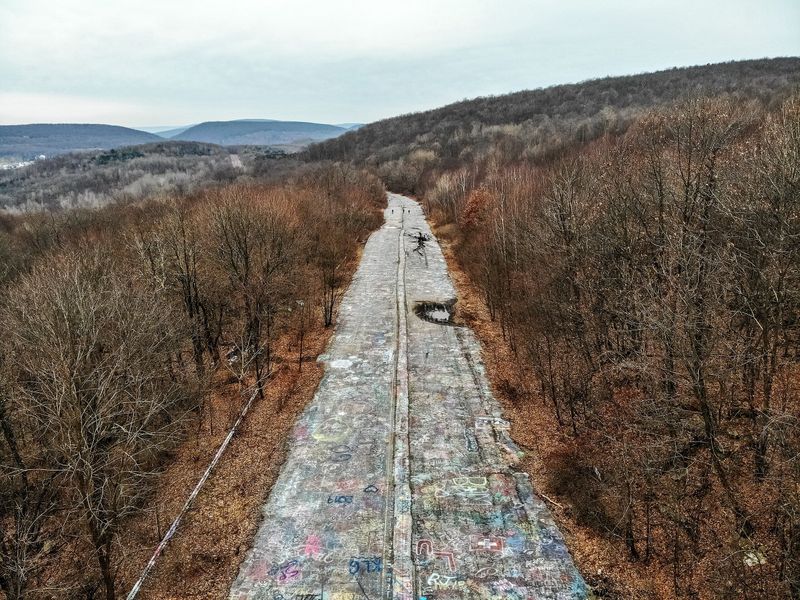
Empty spaces can tell a story as clearly as buildings.
In Centralia, gaps where homes and streets once supported a busy community reveal the lasting effects of an underground mine fire.
The fire began in 1962 and spread through abandoned coal workings beneath the area.
Over time, dangerous conditions led to relocation and the removal of many buildings.
A small number of residents remained, so describing the place as completely abandoned misses an important part of its story.
Approach Centralia as a community shaped by loss, not a playground for risky exploring.
Underground fire areas may involve unstable ground and harmful gases.
A calm surface does not prove that the land below is safe.
The former graffiti highway is not an open visitor attraction.
That closed road was covered with soil in 2020, and trespassing is not a responsible way to experience the area.
Ignore outdated travel posts that encourage walking there.
Stay on public routes where access is permitted, obey signs, and never enter closed land or remaining private property.
Avoid searching for smoke vents or unusual ground conditions.
If your goal is a casual family walk, choose a managed park instead.
Before visiting, read about the town’s coal mining background and the relocation of residents.
That context makes the remaining landscape easier to understand.
It also shifts attention away from dramatic myths and toward the people who lived through the changes.
Photography deserves extra care here.
Do not photograph residents closely without permission or treat occupied homes as exhibits.
A respectful view of the wider landscape tells the story without intruding.
Centralia feels unique because absence is its strongest feature.
The most worthwhile visit is quiet, brief, and informed.
Leave with a better understanding of Pennsylvania’s mining history, rather than a souvenir gathered from unsafe ground or a photograph taken beyond a posted boundary.
6. Fallingwater: A House That Listens to the Stream
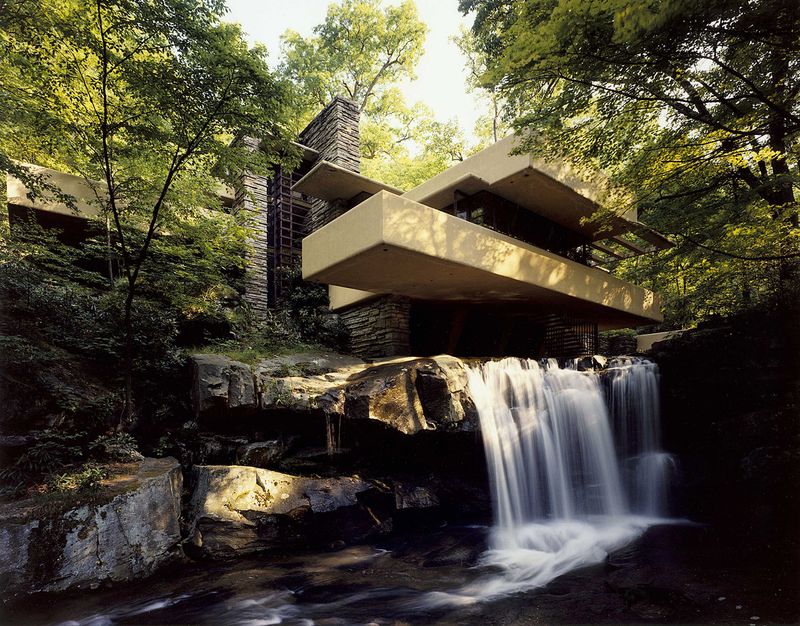
The sound of moving water reaches you before the full design makes sense.
Then a house appears above the stream, its broad terraces stretching outward like ledges in the surrounding forest.
Frank Lloyd Wright designed Fallingwater for the Kaufmann family in the 1930s.
Located near Mill Run in the Laurel Highlands, it was built over Bear Run rather than simply facing the waterfall.
That choice joins the building and landscape in a way that still feels surprising.
Although this is a famous architectural landmark rather than a true secret, its setting earns it a place among Pennsylvania’s most distinctive destinations.
Photographs show the shape, but they cannot fully convey the sound, scale, or relationship between the rooms and woods.
Reserve your visit through the official website well ahead of time.
Tour types have different rules, age limits, and levels of access.
Read those details carefully instead of assuming every ticket includes the same experience.
Allow time for arrival procedures and the walk from the visitor area.
Paths, stairs, and uneven surfaces can affect accessibility.
Travelers with mobility needs should contact the site before booking to discuss suitable options.
Wear comfortable footwear and prepare for changing mountain weather.
Rain can make outdoor surfaces slick, while cooler days may call for an extra layer.
Follow the site’s current photography rules, especially inside the house.
During the visit, notice the materials as much as the dramatic terraces.
Stone, glass, and the placement of windows help connect indoor spaces with the surrounding landscape.
Small details explain the design better than a quick photograph alone.
Leave room in your schedule for a quiet moment afterward.
Nearby natural areas can extend the day, but rushing onward weakens the experience.
Fallingwater rewards attention, offering a chance to consider how a home might belong to a place rather than simply occupy space within it.
7. Mütter Museum: An Unusual Window into Medical History
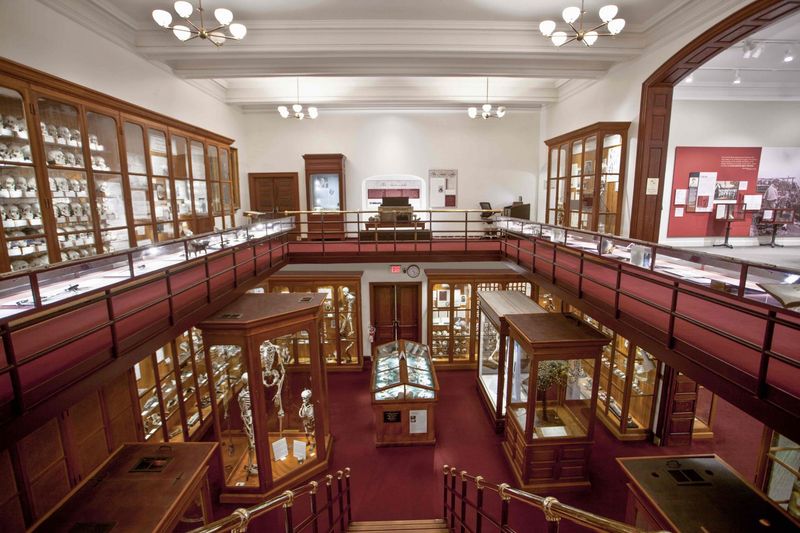
Curiosity and discomfort sometimes arrive together.
Inside Philadelphia’s Mütter Museum, medical history becomes personal through preserved specimens, anatomical models, old instruments, and stories about the human body.
The museum belongs to the College of Physicians of Philadelphia.
Its collections grew from a tradition of teaching doctors through direct observation.
Today, visitors encounter both the development of medical knowledge and difficult questions about how human remains have been collected and displayed.
Expect a thoughtful museum, not a haunted house or a collection of jokes about unusual bodies.
Some exhibits include real human remains and material that visitors may find upsetting.
Read current exhibit descriptions before choosing it for children or anyone sensitive to these subjects.
Give yourself time to read labels rather than moving quickly from one striking object to another.
Context helps explain what a specimen taught physicians and what its display means today.
The people connected to the collection deserve dignity, even when an exhibit first catches your attention through surprise.
Check ticket arrangements and opening hours before traveling.
Special programs, temporary displays, and visitor policies may change.
Follow the museum’s photography restrictions instead of assuming that pictures are allowed throughout the galleries.
A visit works well on a day when you feel ready to concentrate.
Eat beforehand if medical displays tend to make you uneasy, and take a break when needed.
There is no prize for staying with an exhibit that makes you uncomfortable.
Outside the galleries, Philadelphia offers plenty of places to walk, eat, and reset your mood.
Balance the museum with a lighter activity rather than packing the whole day with intense material.
The lasting value is not shock.
It is a clearer sense of how medicine has changed and how much remains to be understood.
For visitors willing to look carefully and respectfully, this is one of Pennsylvania’s most unusual educational experiences.
8. Columcille Megalith Park: Quiet Paths among Standing Stones
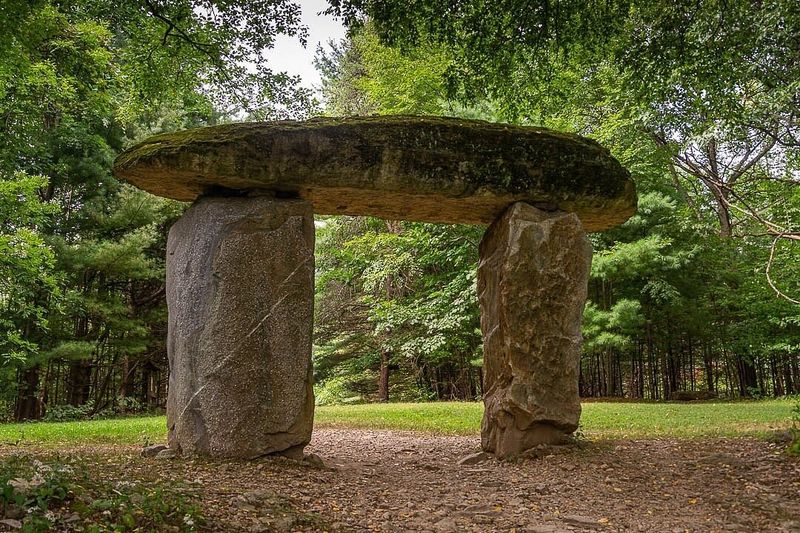
Tall stones rise from the grass, and the noise of the day begins to fade.
Near Bangor in eastern Pennsylvania, Columcille Megalith Park offers a quiet landscape that feels far removed from ordinary roadside attractions.
The park was inspired by Celtic traditions and the Scottish island of Iona.
Its stone arrangements are modern creations, not the remains of an ancient Pennsylvania civilization.
Knowing that distinction lets you enjoy the setting without confusing atmosphere with archaeology.
Woodland paths connect standing stones, open spaces, and small structures.
There is no need to solve a puzzle or complete a demanding route.
Walking slowly and noticing how light falls across the rocks is enough.
Columcille is a privately maintained contemplative space, so visitor behavior matters.
Check current visiting guidelines, hours, and donation information before arriving.
Quiet conversation fits the setting better than speakers, loud games, or a group photo session that blocks a path.
Wear shoes with reliable grip because natural surfaces can be uneven or slippery.
Roots, stones, and damp leaves deserve attention, especially after rain.
Visitors who need smooth, level access should ask about suitable areas before making the trip.
Photography can be rewarding without much equipment.
Try framing a single stone against the trees, then step back for a wider view of the arrangement.
Keep other visitors’ privacy in mind, particularly if they are resting or reflecting.
Families can enjoy the grounds when children understand the expectations.
Encourage observation rather than climbing, and leave stones, plants, and any meaningful objects where they belong.
The park’s appeal depends on people treating it gently.
Allow yourself an unhurried visit instead of squeezing it between appointments.
You may leave with fewer facts than at a museum, but with a different kind of memory.
The combination of woodland, stone, and silence gives this corner of Pennsylvania a character all its own.
9. Gravity Hill: Where Your Eyes Challenge the Road
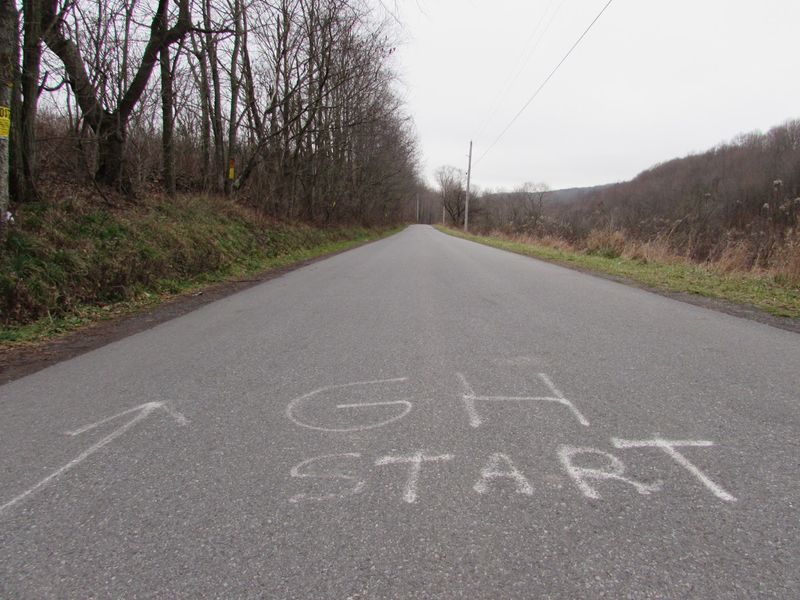
Imagine watching something roll in a direction your eyes insist is uphill.
Near New Paris in Bedford County, Gravity Hill turns a stretch of rural road into a lesson about how easily a landscape can fool us.
The effect is an optical illusion, not a place where gravity stops working.
Surrounding slopes and a misleading view of the horizon can make a downhill section appear to rise.
Your brain reads the larger scene and reaches the wrong conclusion about the road.
That explanation does not remove the fun.
In fact, knowing the cause makes the experience more interesting.
You can compare what the land seems to show with what a careful measurement would reveal.
Get current directions from Bedford County’s official visitor resources.
Pennsylvania has other places called gravity hills, and a vague map search may lead to the wrong road.
Local guidance also helps you identify the intended viewing area without wandering onto private property.
Safety comes before any demonstration.
This is a road, not a closed science exhibit, so do not block traffic or attempt a test when other vehicles are approaching.
The driver must remain in control and follow all traffic rules.
Avoid copying videos that show people standing in travel lanes or leaving vehicles unattended.
If there is no safe, legal way to observe the effect during your visit, simply study the landscape and move on.
No illusion is worth creating a hazard.
Bring a curious attitude rather than expecting a large attraction.
There may be little infrastructure, and the experience can be brief.
Pair the stop with Bedford or other nearby destinations to make the drive worthwhile.
The best souvenir is a fresh respect for perception.
A familiar road can look completely different when the horizon plays tricks.
That small surprise makes Gravity Hill memorable without requiring anything supernatural to explain it.
10. Ringing Rocks Park: A Boulder Field with Its Own Sound
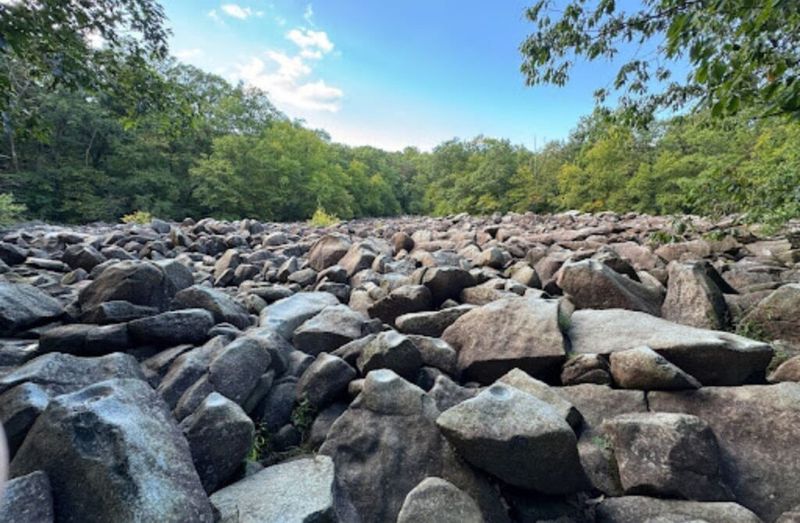
A stone usually answers a tap with a dull thud.
Here, some boulders respond with a bright metallic note, turning a rocky clearing into one of Pennsylvania’s strangest outdoor experiences.
Ringing Rocks Park lies in Upper Black Eddy in Bucks County.
Its boulder field contains rocks that can ring when struck.
Not every rock produces the same sound, and differences between them make patient listening more rewarding than random pounding.
The ringing is linked to the rocks’ physical properties and internal stresses.
Scientists have studied the effect, but visitors do not need a geology degree to appreciate it.
A careful tap and a listening ear are enough to notice that something unusual is happening.
Check current county park rules before bringing a small hammer.
Use only permitted equipment and avoid heavy blows that could damage rock or send chips flying.
Keep generous space between yourself and anyone else exploring the field.
Footing is the main challenge.
The boulders have gaps, sloped surfaces, and places where a shoe can slip.
Sturdy footwear is a much better choice than sandals, and wet weather can make the rocks harder to cross safely.
Children need close supervision, particularly when stepping between stones.
Visitors with balance or mobility concerns may prefer to observe from an accessible nearby position rather than enter the boulder field.
Ask park staff about current access conditions if needed.
Wooded trails offer another side of the park, and a waterfall area can be part of a visit when conditions allow.
Water flow varies with recent rainfall.
Stay back from slippery edges and follow any posted warnings.
Carry water, leave rocks where they are, and take all litter home.
This destination is most enjoyable when treated as a shared natural place, not an outdoor demolition project.
Its unexpected sounds provide the surprise; careful exploring helps preserve that experience for everyone.
Share this story