Tennessee is packed with stunning architecture that’ll make you stop and stare. From grand Greek Revival mansions to ornate theaters and a full-size replica of an ancient temple, the state’s most beautiful buildings tell stories of history, culture, and serious craftsmanship.
Whether you’re into classical columns, red-brick charm, or over-the-top historic details, these ten buildings are absolutely worth a visit.
1. The Parthenon — Nashville
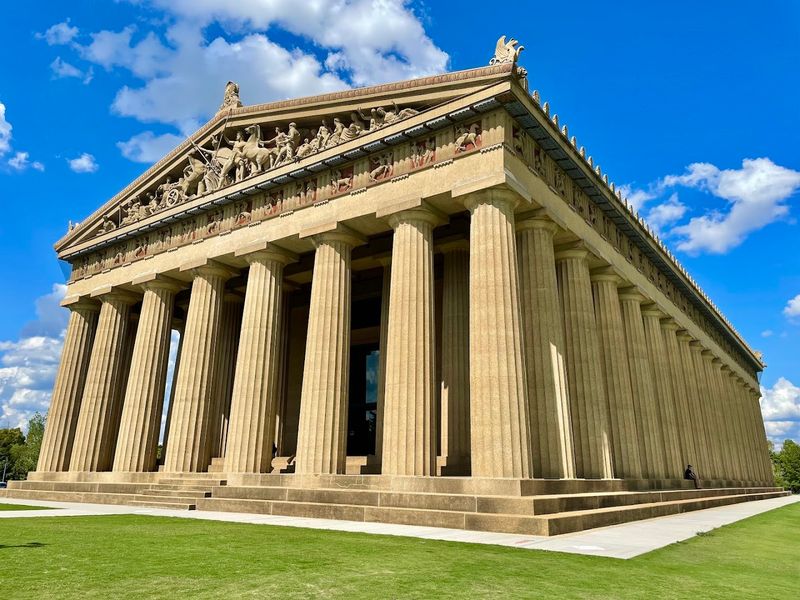
Standing in the middle of Centennial Park, this full-scale replica of the ancient Greek Parthenon is one of the most jaw-dropping sights in Nashville. Built in 1897 for Tennessee’s Centennial Exposition, it was originally meant to be temporary. But people loved it so much that the city decided to rebuild it permanently in concrete.
The structure is massive and perfectly symmetrical, with 46 outer columns and detailed sculptures that mirror the original in Athens. Inside, you’ll find a 42-foot statue of Athena covered in gold leaf, which is the tallest indoor sculpture in the Western world. The whole place feels like you’ve stepped into ancient Greece without leaving Music City.
What makes it especially striking is how it sits in the landscape. The building commands attention from every angle, whether you’re walking up to it through the park or catching a glimpse from the street. The cream-colored columns glow in the sunlight, and the sheer scale of it makes you feel small in the best way.
It’s also an art museum, so you can explore Greek history and American art collections inside. But even if you just walk around the outside, the Parthenon is worth the trip. It’s dramatic, elegant, and unlike anything else you’ll see in Tennessee.
The Parthenon proves that Nashville isn’t just about honky-tonks and hot chicken. This building is a love letter to classical beauty, and it’s been standing proud for over a century. If you only see one building in Nashville, make it this one.
2. Tennessee State Capitol — Nashville

Perched on one of the highest points in downtown Nashville, the Tennessee State Capitol has been watching over the city since 1859. Designed by architect William Strickland in the Greek Revival style, it’s all clean lines, limestone elegance, and serious presence. The building sits on a hill, so you can see it from multiple spots around the city.
The exterior is made of Tennessee limestone, which gives it a pale, stately glow. Tall columns frame the entrances, and the tower on top adds just enough drama without going overboard. It’s the kind of building that looks like it belongs on a coin or a postcard.
Inside, the architecture is just as impressive. The central rotunda has soaring ceilings, intricate ironwork, and portraits of Tennessee’s most important historical figures. The craftsmanship is detailed but not overly flashy, which keeps the focus on the building’s dignity and strength.
What sets this capitol apart from others is its setting. Because it’s on a hill, the building feels elevated in every sense. You approach it by walking up steps or driving up winding roads, and the whole experience feels intentional and grand.
The grounds are beautiful too, with statues, memorials, and old trees that have been there almost as long as the building itself. It’s a peaceful spot in the middle of a busy city, and the view from the top is worth the climb.
The Tennessee State Capitol is proof that government buildings don’t have to be boring. This one is elegant, timeless, and genuinely beautiful.
3. Ryman Auditorium — Nashville
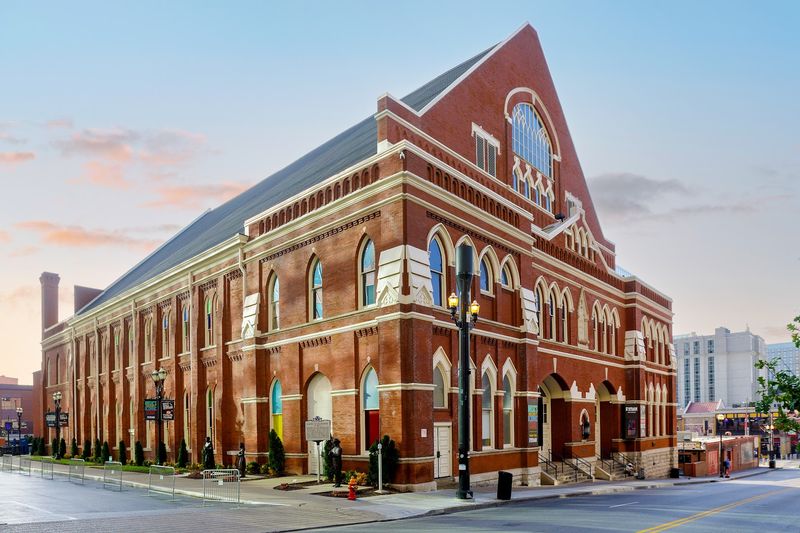
Originally built as a church in 1892, the Ryman Auditorium has one of the most recognizable exteriors in Nashville. The red-brick facade, tall pointed windows, and Gothic Revival details give it a cathedral-like appearance. It’s beautiful in a way that feels both sacred and welcoming, which makes sense given its history.
For decades, the Ryman was home to the Grand Ole Opry, earning it the nickname “Mother Church of Country Music.” But even if you’re not a country fan, the building itself is worth seeing. The brick glows warm in the evening light, and the arched windows add a sense of height and grace.
Inside, the acoustics are legendary. The wooden pews, high ceilings, and natural materials create a sound quality that musicians still rave about. It’s intimate but grand, with balconies that wrap around the main floor and stained glass that filters light in soft colors.
What’s special about the Ryman is how it blends beauty with purpose. It wasn’t designed to show off—it was built to bring people together for worship and later for music. That sincerity shows in every detail, from the simple but elegant woodwork to the way the space feels alive when it’s full of people.
The exterior alone makes it one of the prettiest buildings in Tennessee. The shape, the color, the craftsmanship—it all works together to create something that feels timeless. And because it’s still an active venue, you can experience it the way it was meant to be experienced: filled with sound, energy, and community.
4. Union Station Nashville Yards — Nashville
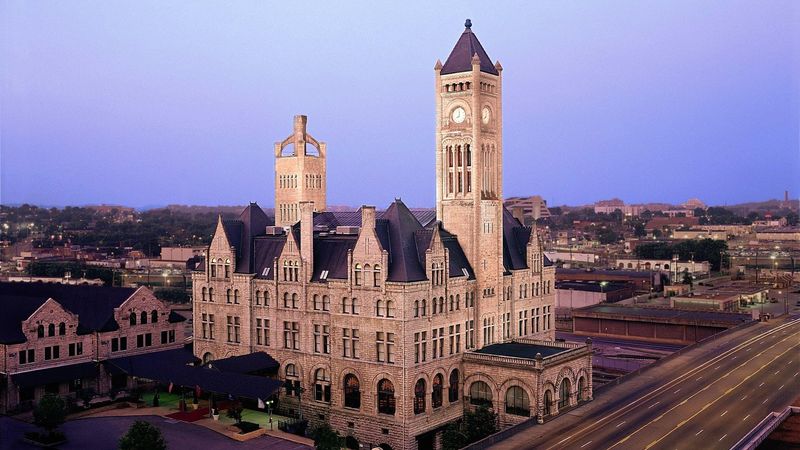
Union Station looks like a castle dropped into downtown Nashville, and that’s exactly why it’s so stunning. Built in 1900 as a train depot, it features Romanesque Revival architecture with towers, arches, and Tennessee marble that give it a fairy-tale quality. The building was designed to impress travelers, and more than a century later, it still does.
The exterior is a mix of textures and colors. The marble has a warm, honey tone, and the stonework is detailed with carvings and decorative elements. The clock tower rises above everything else, making it a landmark you can spot from blocks away.
Inside, the original lobby is breathtaking. The vaulted ceilings are covered in gold-leaf detailing, and the stained glass windows let in colored light that shifts throughout the day. The space feels grand but not cold—there’s a warmth to it that makes you want to linger.
Union Station has been converted into a hotel, so you can actually stay inside this architectural gem. But even if you’re just passing through, it’s worth stepping inside to see the craftsmanship. Every surface has something interesting going on, from the tile floors to the ironwork railings.
It’s one of Nashville’s most photographed buildings for good reason. The combination of towers, arches, and marble makes it look like something out of a storybook, and it’s absolutely worth seeing in person.
5. Belmont Mansion — Nashville
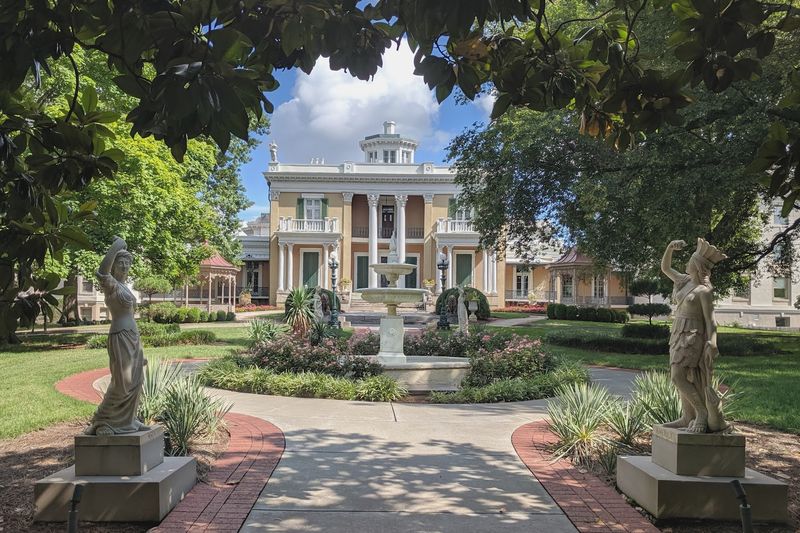
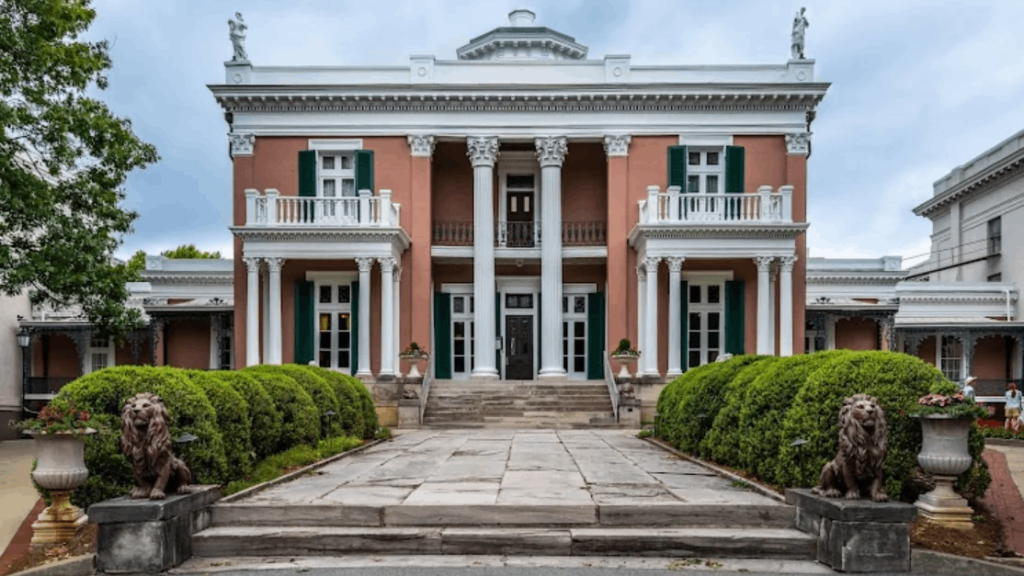
Belmont Mansion is the kind of house that makes you stop in your tracks. Built in the 1850s as a summer home for Adelicia Acklen, one of the wealthiest women in America at the time, it’s the largest antebellum mansion still standing in Nashville. The exterior is grand without being over-the-top, with tall columns, symmetrical wings, and a graceful porch that wraps around the front.
The mansion is painted in soft, historic colors that complement the surrounding gardens. The proportions are perfect—everything feels balanced and intentional. It’s the kind of building that looks like it was designed by someone who understood elegance on a deep level.
Inside, the rooms are filled with original furnishings, artwork, and decorative details that show off 19th-century craftsmanship. The ceilings are high, the windows are tall, and every room has something interesting to look at. From hand-painted wallpaper to marble fireplaces, the mansion is a masterclass in antebellum design.
What sets Belmont apart is its history. Adelicia Acklen was a remarkable woman who managed her own business empire and traveled the world collecting art. Her taste and vision shaped every corner of this house, and that personal touch makes it feel less like a museum and more like a home.
The grounds are beautiful too, with manicured gardens and old trees that provide shade and privacy. It’s easy to imagine what life was like here in the 1850s, when the mansion was the center of Nashville’s social scene.
Belmont Mansion is a reminder that beauty doesn’t have to be flashy. Sometimes, it’s about proportion, craftsmanship, and attention to detail. This mansion has all three in spades.
6. Belle Meade Historic Site Mansion — Nashville
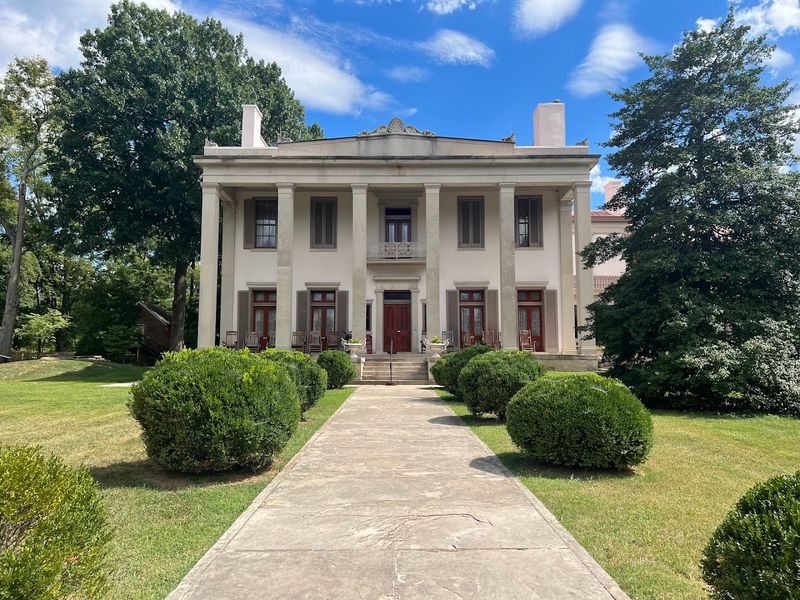
Belle Meade is the picture of Southern grace. This Greek Revival mansion, built in 1853, sits on what was once a 5,400-acre plantation and thoroughbred horse farm. The exterior is all about symmetry and proportion, with six massive columns supporting a two-story porch.
It’s painted white, which makes it glow against the green lawns and old trees.
The columns are the star of the show. They’re perfectly spaced, perfectly proportioned, and they give the mansion a sense of strength and elegance. The front facade is balanced and clean, without any unnecessary decoration.
It’s the kind of beauty that comes from simplicity and good design.
Inside, the mansion is filled with period furnishings and original architectural details. The rooms are spacious and light-filled, with tall windows that let in natural light. The craftsmanship is evident in every corner, from the carved woodwork to the plaster moldings on the ceilings.
Belle Meade’s history is tied to Tennessee’s past, both the good and the complicated. The site includes not just the mansion but also outbuildings, gardens, and exhibits that tell the full story of the people who lived and worked here. It’s a place where beauty and history intersect in meaningful ways.
The grounds are stunning, with walking paths, gardens, and views of the surrounding countryside. The mansion itself is set back from the road, so you approach it slowly, taking in the full effect of the columns and the porch.
Belle Meade is one of those buildings that looks exactly like what you picture when you think of a Southern mansion. It’s classic, elegant, and beautifully preserved. If you’re in Nashville, it’s worth the short drive to see it.
7. Andrew Jackson’s Hermitage — Hermitage
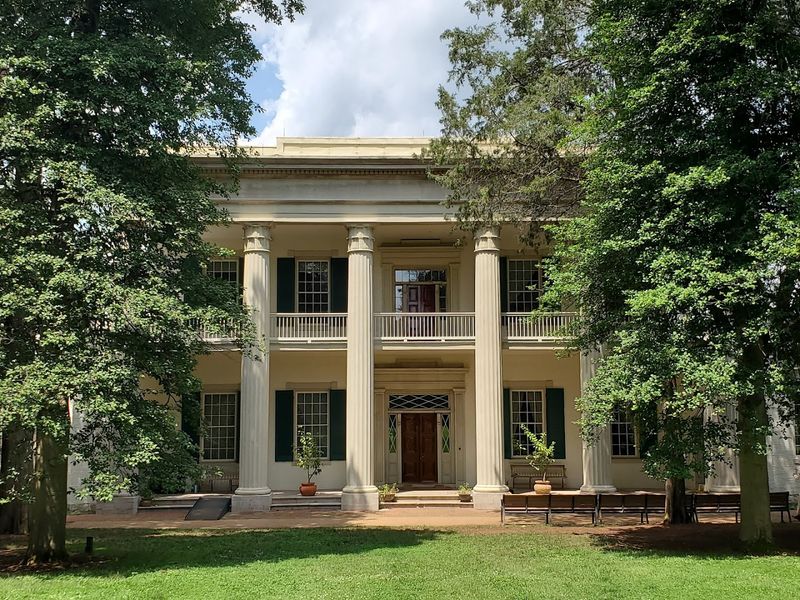
Just outside Nashville, Andrew Jackson’s Hermitage offers a glimpse into early American architecture and the life of the seventh president. The mansion, built in 1819 and later expanded, combines Federal and Greek Revival styles. The result is a home that feels both stately and surprisingly personal.
The exterior features white columns, red brick, and a symmetrical design that’s pleasing to the eye. The mansion is surrounded by gardens, walking paths, and original outbuildings, all of which are carefully maintained. The setting is peaceful, with old trees and open fields that give you a sense of what rural Tennessee looked like in the 1800s.
Inside, the rooms are filled with original furniture, wallpaper, and decorative objects that belonged to Jackson and his family. The wallpaper in the entrance hall is especially striking—hand-painted scenes that have been preserved for nearly two centuries. The attention to detail is impressive, from the carved mantels to the period lighting fixtures.
What makes the Hermitage special is how it balances grandeur with livability. This was a working plantation, and the house reflects that. It’s elegant but not ostentatious, with rooms that feel like they were actually used by real people.
The grounds are just as beautiful as the house. The formal garden is laid out in geometric patterns, and the tomb where Jackson and his wife are buried is a peaceful spot surrounded by trees. The whole site feels like a step back in time.
The Hermitage is a beautiful example of early American architecture, and it’s one of the best-preserved presidential homes in the country.
8. Tennessee Theatre — Knoxville
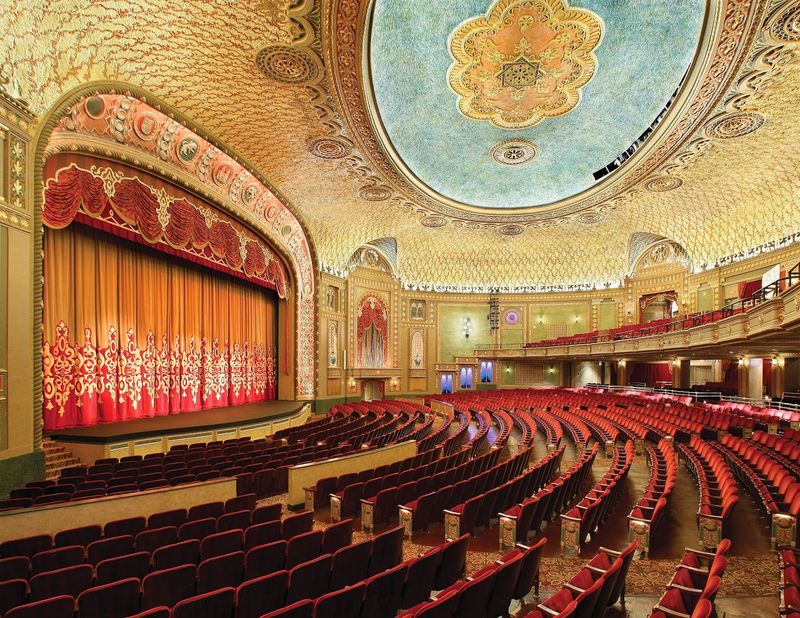
The Tennessee Theatre in Knoxville is a stunner, especially on the inside. Built in 1928 as a movie palace, it’s one of the most ornate and beautifully restored theaters in the South. The exterior is handsome but understated, which makes stepping inside feel like entering a different world.
Inside, the theater is a feast for the eyes. The walls and ceilings are covered in intricate plasterwork, with designs inspired by Spanish Moorish architecture. There are gilded details, hand-painted murals, and decorative elements everywhere you look.
The color palette is rich and warm, with golds, reds, and creams that create a sense of luxury.
The theater’s grand chandelier is a showstopper. It hangs in the center of the auditorium, sparkling with hundreds of lights. The seating area is arranged in a way that makes every seat feel special, and the acoustics are excellent.
What makes the Tennessee Theatre even more impressive is its restoration. In the 1970s, the building was at risk of demolition, but a community effort saved it. Today, it’s fully restored and serves as Tennessee’s official state theater.
It hosts concerts, Broadway shows, and classic film screenings.
The theater is listed on the National Register of Historic Places, and it’s easy to see why. The level of craftsmanship is extraordinary, from the carved details to the painted ceilings. Every surface has been thoughtfully designed and executed.
9. Cathedral of the Incarnation — Nashville
The Cathedral of the Incarnation is one of Nashville’s most beautiful religious buildings. Modeled after a Roman basilica, it features Italianate architecture with a limestone exterior that’s both elegant and understated. The facade is symmetrical, with arched windows and a central entrance that draws your eye upward.
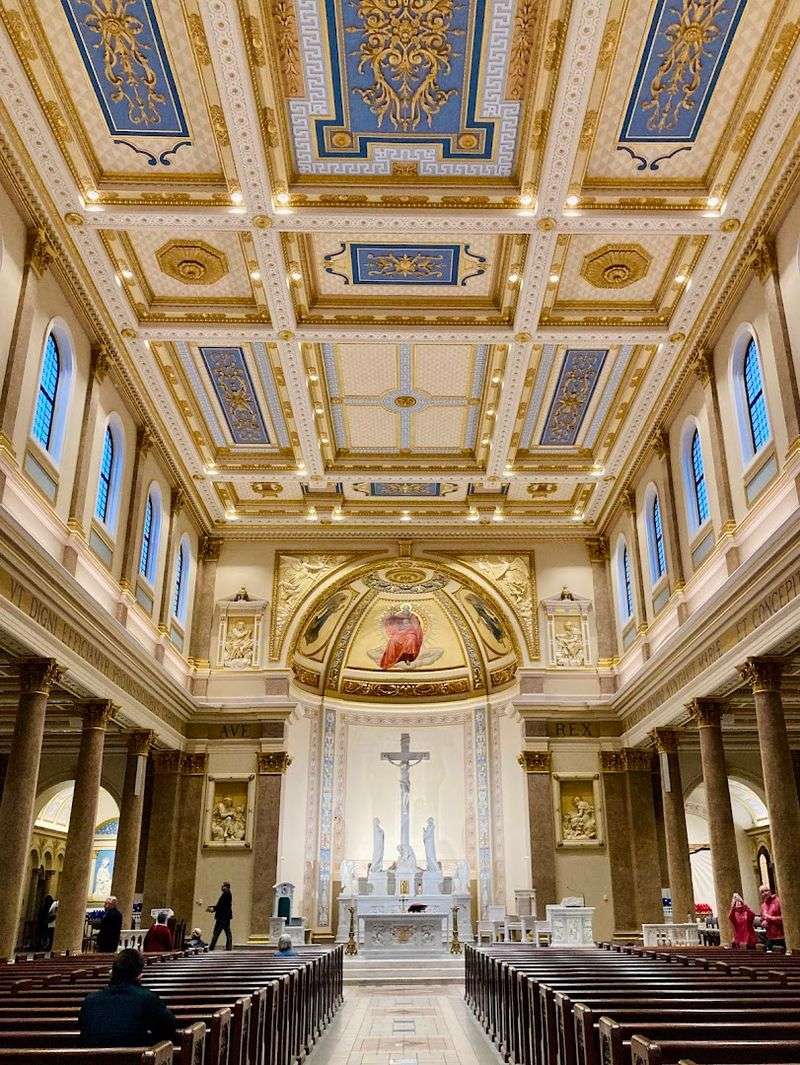
Inside, the cathedral is richly decorated. The ceilings are coffered and painted with intricate designs, and the walls are covered in murals and bas-relief sculptures. The altar area is especially striking, with marble columns and gold accents that create a sense of reverence and beauty.
The cathedral’s design is all about balance. Nothing is overdone, but nothing is plain either. Every element has been carefully considered, from the stained glass windows to the carved wooden pews.
The result is a space that feels both grand and intimate.
What sets this cathedral apart is its attention to detail. The murals depict religious scenes with skill and care, and the sculptures add depth and texture to the walls. The craftsmanship is evident in every corner, and it’s clear that the builders wanted to create something that would inspire and uplift.
The lighting inside is soft and warm, filtering through the stained glass and bouncing off the painted surfaces. It creates an atmosphere that’s peaceful and contemplative, perfect for a space dedicated to worship.
Even if you’re not religious, the Cathedral of the Incarnation is worth visiting for its beauty alone. It’s a masterpiece of Italianate architecture, and it’s one of the most visually impressive buildings in Nashville. The combination of marble, murals, and careful design makes it a standout.
10. Hunter Museum of American Art — Chattanooga
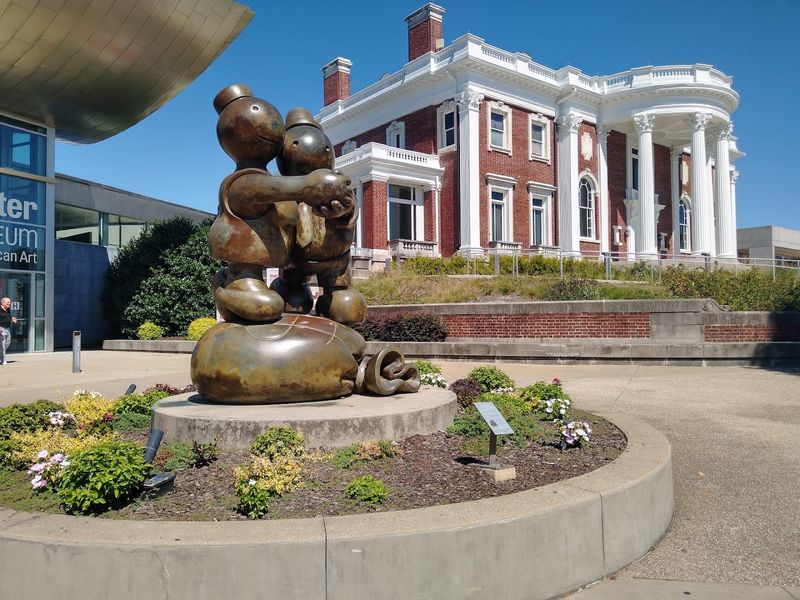
The Hunter Museum of American Art in Chattanooga is beautiful because it combines old and new in a way that actually works. The original building is a 1904 Georgian Revival mansion with classic proportions, elegant details, and a commanding view of the Tennessee River. Over the years, modern additions have been added, creating a mix of architectural styles that span more than a century.
The mansion itself is gorgeous. It has symmetrical windows, a hipped roof, and decorative elements that are typical of Georgian Revival design. The limestone exterior gives it a solid, timeless feel, and the setting on a bluff overlooking the river makes it even more dramatic.
The modern additions are sleek and contemporary, with glass walls and clean lines that contrast with the mansion’s traditional style. But instead of clashing, the two styles complement each other. The glass allows natural light to flood the galleries, and the modern spaces create a dialogue with the historic building.
Inside, the museum is filled with American art from the colonial period to the present. But the architecture is just as much a draw as the artwork. The way the old and new sections connect is thoughtful and interesting, and the views from the glass-walled galleries are stunning.
You can see how design has evolved over the decades, all in one place. It’s a visual timeline of American architecture, and it’s fascinating to explore.
Share this story