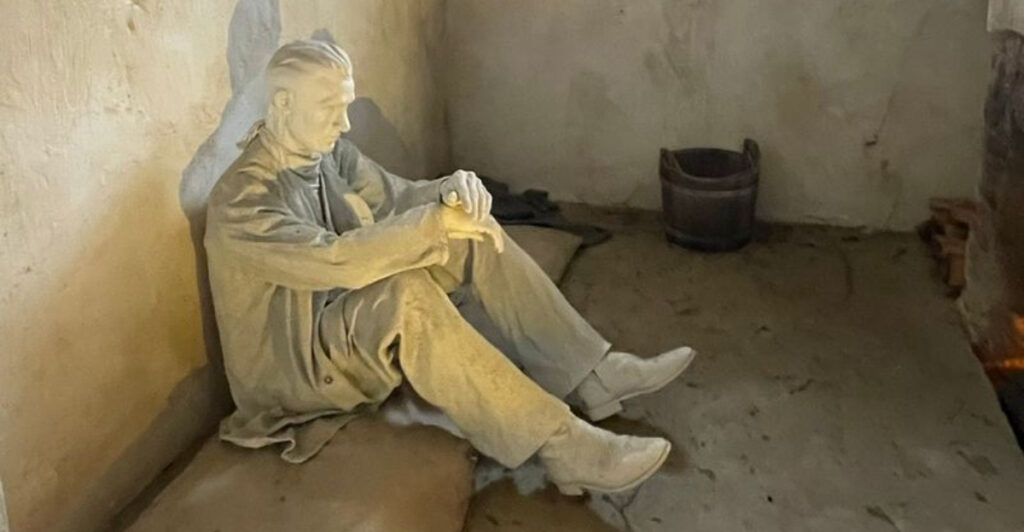
A quarter placed on an empty bridge. Footsteps climbing a lighthouse staircase when nobody is there.
A gnarled oak that supposedly punishes anyone foolish enough to insult it. New Jersey’s creepiest stories do not stay neatly contained in abandoned buildings or around Halloween.
They cling to country roads, Revolutionary War battlefields, prison cells, Victorian mansions, and more than a million acres of shadowy pine forest. Some are rooted in documented violence and hardship.
Others have grown through generations of retelling until separating history from folklore becomes half the fun. You do not have to believe in ghosts, cursed trees, or winged monsters to feel a small chill at these places.
Old stone walls and dark woods can handle that job quite well on their own. From Atlantic City’s tallest lighthouse to a rural road with possibly the most alarming name in America, these ten destinations reveal a New Jersey that becomes considerably less comfortable once daylight begins to fade.
1. The Pine Barrens – South Jersey
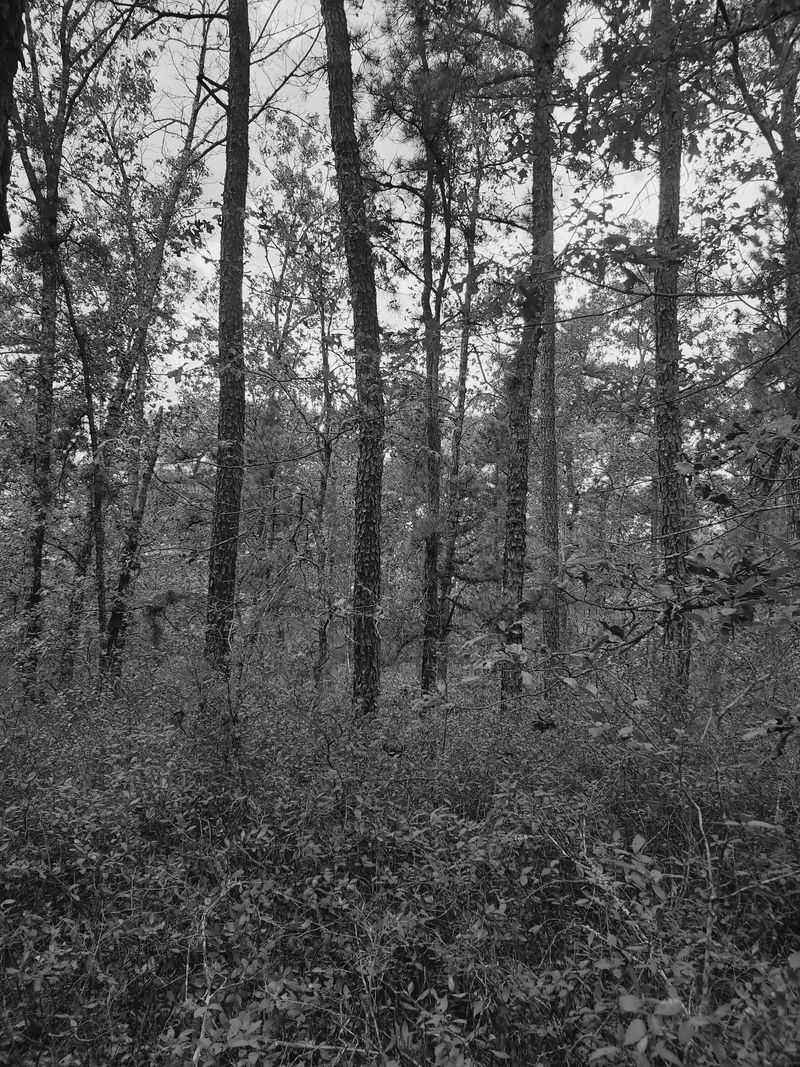
Lose the sound of the highway in the Pine Barrens, and the silence becomes surprisingly loud. Pitch pines crowd sandy trails, cedar water runs the color of strong tea, and seemingly familiar turns begin looking suspiciously alike.
Spread across an enormous portion of South Jersey, this wilderness feels far removed from the diners, subdivisions, and shore traffic sitting beyond its edges. Its most infamous resident is the Jersey Devil, a winged creature said to have been born as the unwanted thirteenth child of Mother Leeds.
Descriptions vary wildly, but horns, hooves, leathery wings, and a piercing cry appear regularly in the folklore. The tale developed over generations and surged into public attention during a frenzy of reported sightings in 1909.
Whether those witnesses encountered an animal, a prank, or their own nervous imaginations hardly matters when a fox screams somewhere beyond the firelight. The Pines also contain abandoned settlements, old industrial sites, and family cemeteries slowly being absorbed by the forest.
Batsto Village and Wharton State Forest offer accessible starting points for visitors who want atmosphere without wandering blindly into the wilderness. Go during daylight, carry a reliable map, and remain on marked routes.
The real dangers are getting lost, encountering unstable ruins, or discovering that a sandy road is less passable than it appeared. The Jersey Devil may be folklore, but poor preparation can create a frightening story all by itself.
2. Burlington County Prison Museum – Mount Holly
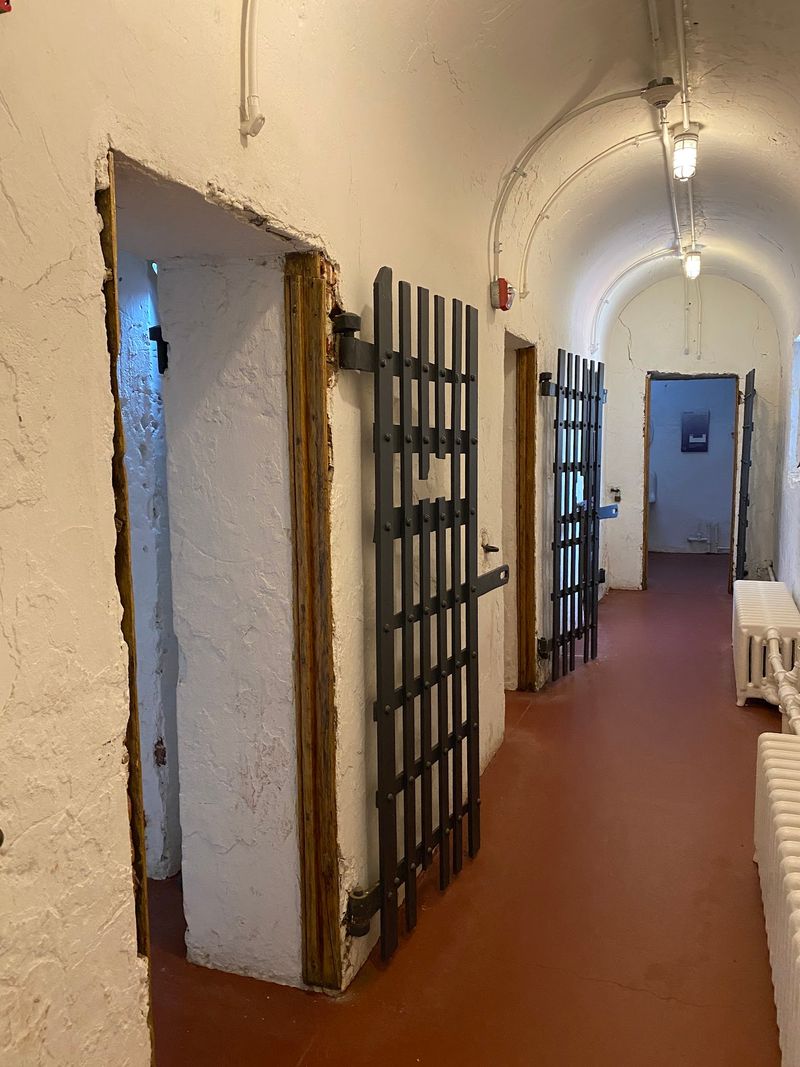
“Justice, which while it punishes, would endeavor to reform the offender.” That hopeful message above the entrance feels considerably less comforting once the heavy door closes behind you. Designed by noted architect Robert Mills and opened in 1811, the Burlington County Prison remained in service until 1965.
By then, it was the oldest continuously operating prison in the country. Its fortress-like stone exterior gives way to narrow passages, cramped cells, iron hardware, and graffiti scratched by people who had little besides time.
The building was considered progressive when constructed, with individual cells, ventilation, and fire-resistant materials. Two public executions nevertheless took place on the grounds, and generations of prisoners experienced isolation, fear, and punishment inside its walls.
That history gives the museum more genuine weight than any staged haunted attraction could manufacture. Visitors and paranormal investigators have reported voices, footsteps, cold spots, and shadowy forms, especially around the basement and upper floors.
The museum does not require anyone to accept those claims; standing inside an original cell and imagining 154 years of occupants is unsettling enough. Self-guided visits allow time to inspect the warden’s quarters, exercise yard, dungeon, and inmates’ markings at your own pace.
An optional audio tour adds roughly an hour of context, while occasional paranormal programs lean into the building’s darker reputation. The museum generally operates Thursday through Sunday, but confirming current hours before heading to Mount Holly is wise.
3. Seabrook-Wilson House, The Spy House – Port Monmouth
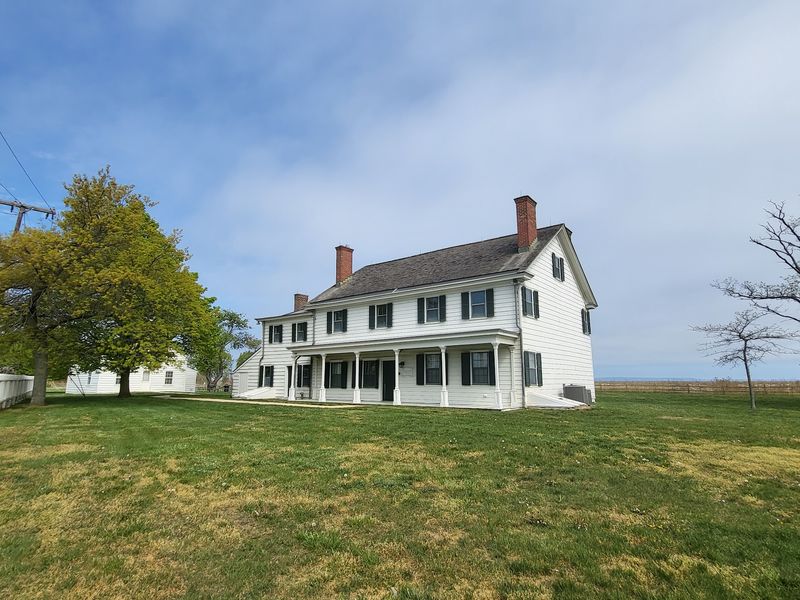
From the beach at Bayshore Waterfront Park, this old farmhouse looks almost too peaceful to deserve its nickname. The water spreads toward New York in the distance, shorebirds work the mudflats, and the white house stands behind the dunes like a scene from a quieter century.
Yet few historic homes in New Jersey have accumulated a busier collection of ghost stories. The Seabrook-Wilson House dates in part to the early 1700s and passed through several generations before becoming an inn during the early 20th century.
Its popular “Spy House” identity comes from stories that patriots watched British movements on Sandy Hook Bay and gathered intelligence here during the Revolutionary War.
Historians have found no solid evidence that the building served as a tavern or espionage station at the time, making the nickname a wonderful example of folklore outrunning the record.
Its haunted reputation followed a similar path, amplified during its years as a local museum. Tales have included mysterious footsteps, doors moving without help, a woman appearing in an upstairs window, and the spirits of children.
Those accounts remain stories rather than proven events, but the house’s age, creaking timber, and isolated waterfront position give them excellent scenery. Today, the property belongs to Monmouth County and sits within a public park, so visitors can enjoy the beach and views even when the interior is closed.
House access is limited and seasonal; checking the current schedule is essential if going inside is the main goal.
4. Proprietary House – Perth Amboy
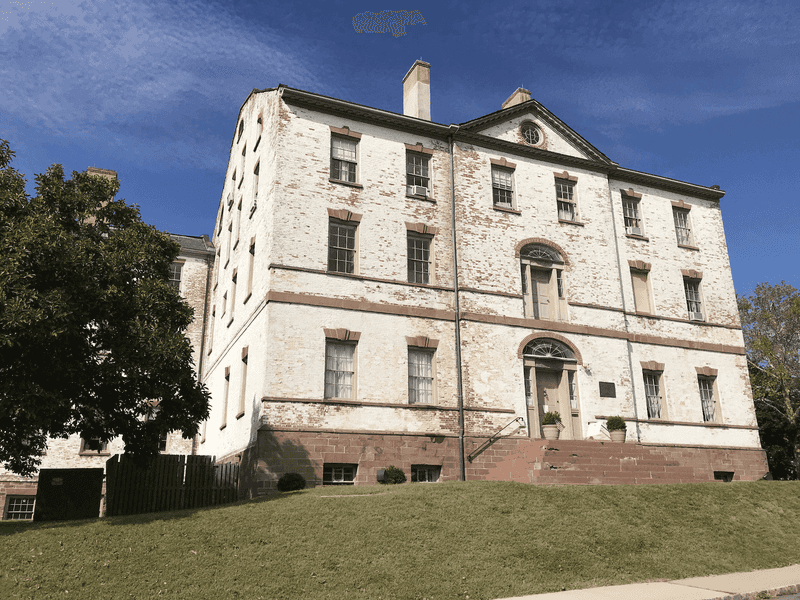
Imagine watching a revolution close in from the windows of your own mansion. William Franklin, New Jersey’s final royal governor and Benjamin Franklin’s loyalist son, occupied this grand Perth Amboy residence as relations between Britain and the colonies collapsed.
Completed in 1764, the Georgian building is the only surviving official royal governor’s mansion from the original 13 colonies. William’s politics eventually led to his arrest, ending the house’s brief period as a seat of colonial authority.
Its later life was just as eventful. The property became the Brighton Hotel, returned to use as a private mansion, and eventually served as a retirement home and boarding house.
It endured fire, storms, alterations, neglect, and restoration, collecting more than 250 years of human drama along the way. Ghost lore naturally moved in with the history.
Visitors and volunteers have described unexplained voices, footsteps, sudden coldness, and figures in period clothing. One often-repeated tale concerns a woman seen near a staircase, while other stories suggest former residents never entirely surrendered their rooms.
Guided ghost events have occasionally explored those reports, but ordinary historical tours provide plenty of unease without paranormal equipment. Formal rooms, old portraits, and long corridors make it easy to imagine someone lingering just outside the edge of sight.
The museum announced that it would remain closed until late 2026 because of unforeseen circumstances, so prospective visitors should verify its reopening status before making the trip. Even viewed from outside, the old governor’s mansion carries the stern presence of a building that survived both family conflict and revolution.
5. Absecon Lighthouse – Atlantic City
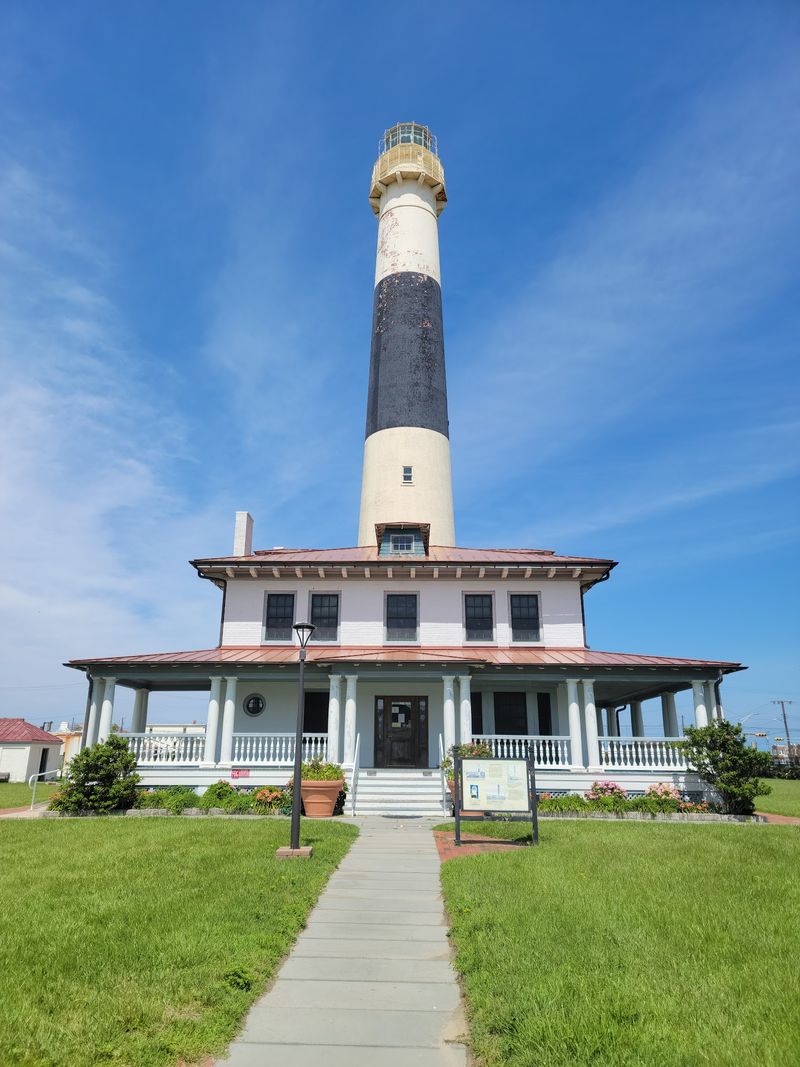
Atlantic City’s casinos glitter below, but the most unnerving sound at Absecon Lighthouse may be a single metallic footstep echoing above your head. At 171 feet, “Abby” is New Jersey’s tallest lighthouse and the third-tallest masonry lighthouse in the United States.
Visitors can climb 228 steps to the watchroom, passing through a narrow tower where every shuffle, breath, and clang travels farther than expected. First lit in 1857, the lighthouse guided ships with a first-order Fresnel lens whose beam could reach nearly 20 nautical miles.
That original lens remains at the top and is illuminated each evening, though the lighthouse was officially decommissioned in 1933. Its construction was overseen in part by George Meade, who later commanded the Union Army at Gettysburg.
The site’s paranormal stories are quieter than its engineering achievements but considerably harder to forget during the climb. People have reported hearing unseen footsteps, sensing someone following them on the stairs, and noticing unexplained sounds around the reconstructed keeper’s dwelling.
Lighthouse life involved long stretches of isolation, violent weather, and constant responsibility, providing fertile ground for stories about keepers who never abandoned their posts. The height supplies a perfectly real thrill, especially when wind circles the upper gallery.
Back at ground level, exhibits in the keeper’s house explain the tower’s operation and restoration. Comfortable shoes are a better choice than dramatic ghost-hunting attire, and anyone uneasy with tight spiral staircases should admire the structure from below.
Current admission and climbing hours vary seasonally.
6. Princeton Battlefield State Park – Princeton
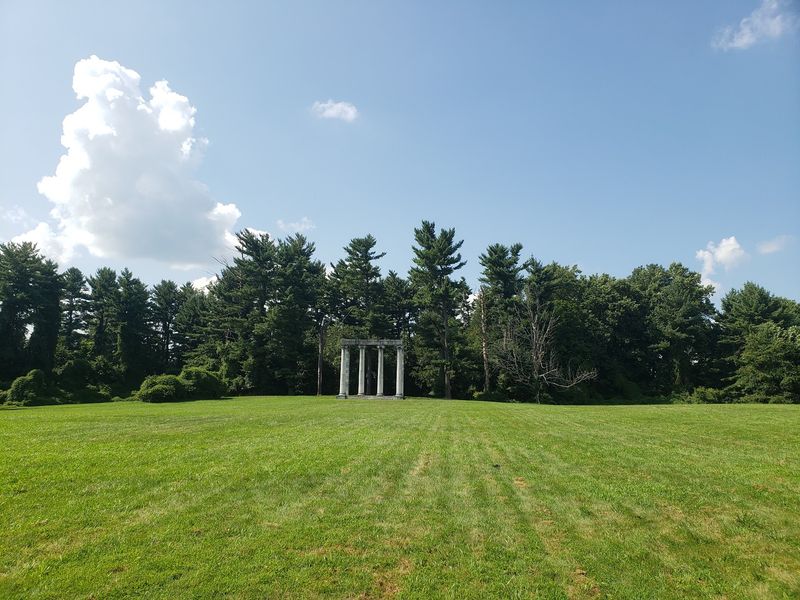
On January 3, 1777, this quiet stretch of grass became a scene of smoke, bayonets, artillery fire, and desperate close-range fighting. The Battle of Princeton lasted only a short time, but it delivered an important American victory and left dead and wounded soldiers across the frozen ground.
British troops initially drove back an American brigade, and General Hugh Mercer was surrounded and mortally wounded after refusing to surrender. George Washington then rode onto the field and helped rally the Continental forces.
Knowing that history changes an ordinary walk through the park. The open lawn is peaceful now, yet it takes little imagination to replace distant traffic with musket fire.
The Clarke House, standing near the battlefield, became a makeshift hospital after the fighting. Mercer was carried inside and died there nine days later.
Visitors have since told stories of phantom soldiers, distant drums, unexplained voices, and figures moving across the field before vanishing. None of those accounts comes with historical certainty, but the documented events are somber enough.
Stop at the Clarke House when it is open, walk toward the Mercer Oak memorial, and visit the Ionic Colonnade, which marks the graves of unidentified soldiers. Late afternoon gives the park its most striking character as long shadows stretch across the battlefield, though posted closing times should be respected.
Admission to the grounds is generally free, and parking is available near the park. Treat the landscape as both a public recreation area and a burial place connected to real sacrifice, not simply a backdrop for a spooky challenge.
7. Clinton Road – West Milford
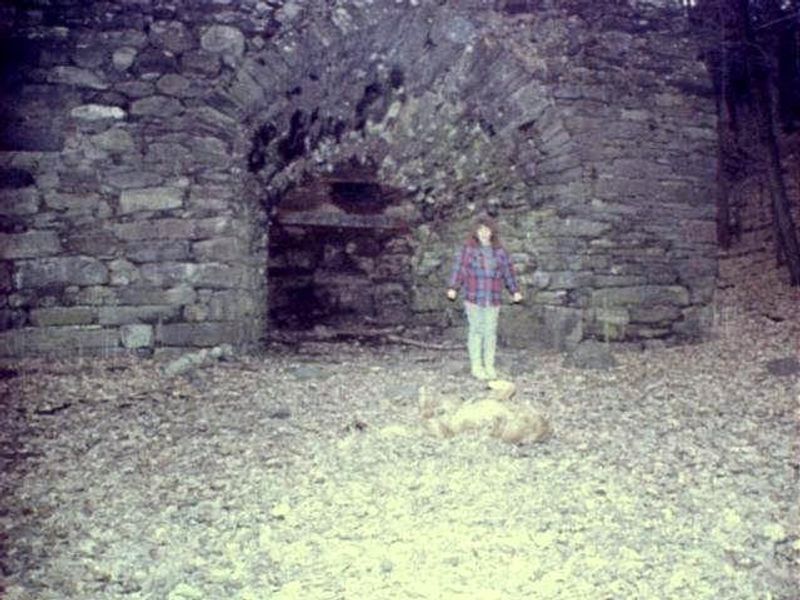
The best-known ritual on Clinton Road requires a bridge, a coin, and enough nerve to wait. According to local legend, placing a coin near “Dead Man’s Curve” at midnight summons the ghost of a boy who drowned nearby.
The child supposedly returns the coin—or pushes it back—to prevent another person from sharing his fate. There is no verified history behind the ghost boy, but that has never stopped generations of curious drivers from repeating the story.
Running about ten miles through the wooded landscape of West Milford, Clinton Road has gathered a remarkable catalog of legends. Phantom vehicles, strange animals, robed figures, unexplained lights, and the ruined Cross Castle have all appeared in its lore.
The castle itself was real: a large early-20th-century estate that fell into ruin and was demolished in 1988, leaving foundations in the woods. The road’s darkest verified association came when the body of a murder victim linked to contract killer Richard Kuklinski was discovered nearby in 1983.
Dense forest, limited lighting, sharp bends, and long empty stretches do the rest of the psychological work. A visit should be a legal drive-through, not an excuse to stop on bridges, trespass near reservoirs, enter restricted land, or antagonize residents.
Pulling over after dark creates a traffic hazard, and wildlife is a much more plausible roadside encounter than a phantom Camaro. Drive slowly, keep headlights on, and let the story unfold through the windshield.
Clinton Road does not need theatrical props; ordinary darkness suits it perfectly.
8. Shades of Death Road – Warren County
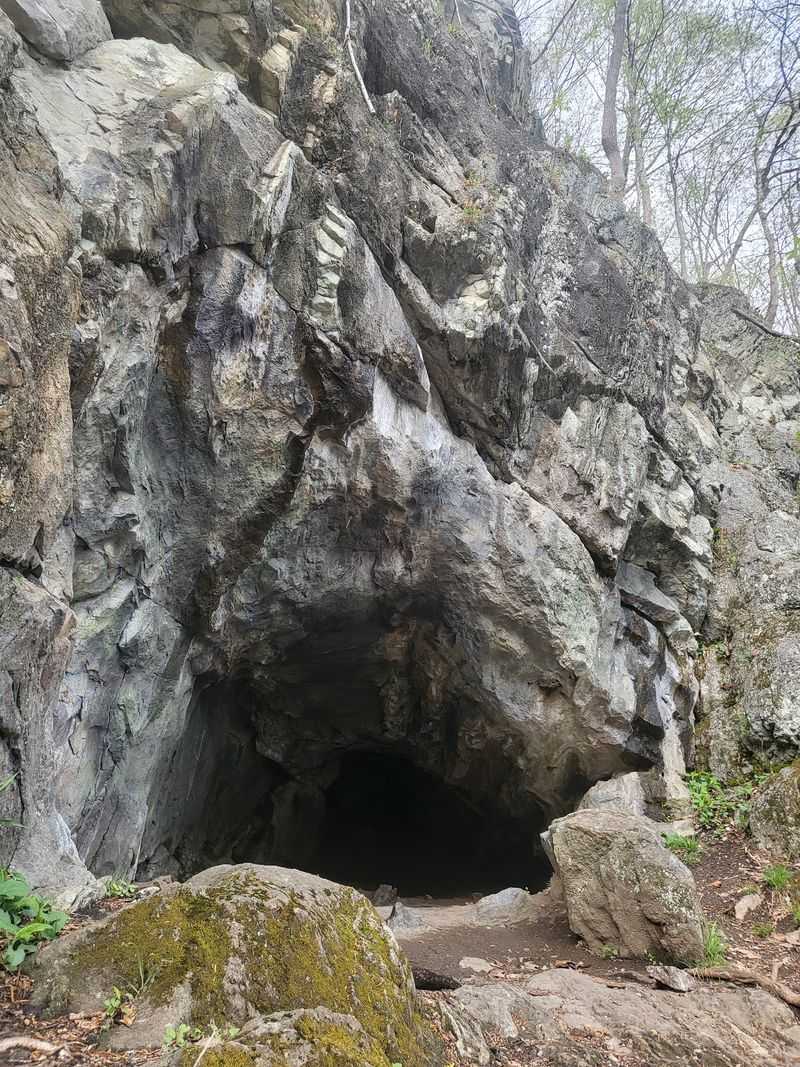
Most roads wait until the first ghost story to become frightening. This one handles the job with its street sign.
Shades of Death Road twists for nearly seven miles through Liberty, Independence, and Allamuchy townships, passing thick woods, wetlands, farms, and the edge of Jenny Jump State Forest. Nobody can state with certainty how it received its macabre name.
Explanations range from the heavy shade cast by old trees to malaria outbreaks, highwaymen, lynchings, fatal crashes, and several brutal murders committed in the surrounding area. Some theories are documented more firmly than others, but together they have created one of New Jersey’s richest pockets of roadside folklore.
Ghost Lake adds another layer. The small body of water was created when a creek was dammed in the early 20th century, and its name reportedly came from mist that rose in pale, shifting shapes on cool mornings.
Later stories introduced apparitions, strangely bright nighttime skies, and mysterious lights. Nearby Lenape Lane has its own legend about a glowing orb that follows vehicles, though visitors should remember that roads and driveways may serve residents and are not paranormal playgrounds.
The most rewarding way to experience the area is during daylight, combining a careful drive with a legitimate hike in Jenny Jump State Forest. Narrow shoulders and sudden curves make casual stopping unsafe.
Fog, deer, and poor visibility pose real risks after dark, so nobody needs to manufacture extra danger. Read the sign, watch the trees close around the pavement, and accept that the road’s name alone will stay in your mind for miles.
9. The Devil’s Tree – Bernards Township
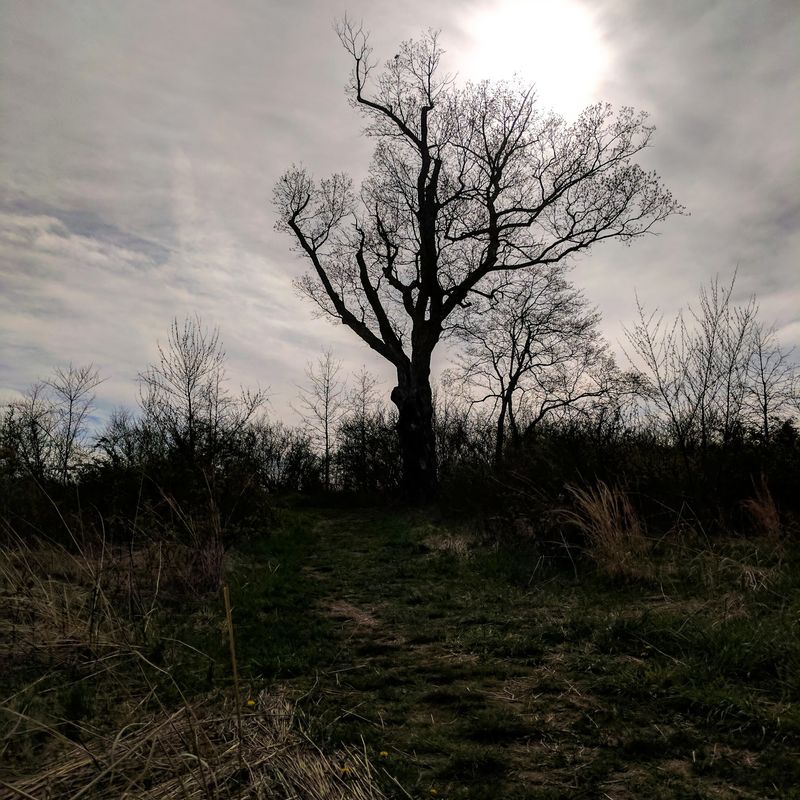
A chain-link fence surrounds the trunk, which is rarely a reassuring accessory for an old oak. Standing in a field off Mountain Road, the Devil’s Tree is scarred, asymmetrical, and ominous enough to attract attention before anyone shares its legends.
Once the stories begin, however, the tree becomes considerably stranger. One tale claims that a farmer killed his family and then hanged himself from its branches.
Others say the tree was used for lynchings, that the ground beneath it remains warm and snow-free, or that anyone who damages it will suffer a breakdown or crash while leaving. A black pickup truck supposedly chases disrespectful visitors before vanishing.
These claims belong to local folklore, and the more gruesome historical allegations have not been supported by dependable evidence. What is certain is that the tree has endured repeated vandalism from people trying to test the curse or take pieces home.
Bernards Township protected it with fencing, turning the barrier into yet another unsettling visual detail. Visiting is less an activity than a quick encounter: park only where permitted, observe posted hours and rules, and admire the oak without climbing, carving, touching, or attempting a supernatural experiment.
The surrounding neighborhood is not a haunted attraction, and nighttime disturbances understandably frustrate residents. In daylight, the solitary tree still has an oddly commanding silhouette, particularly when bare branches cut across a gray winter sky.
Is it cursed? Almost certainly not.
Does it look like the sort of tree that might remember every insult? Absolutely.
10. Emlen Physick Estate – Cape May
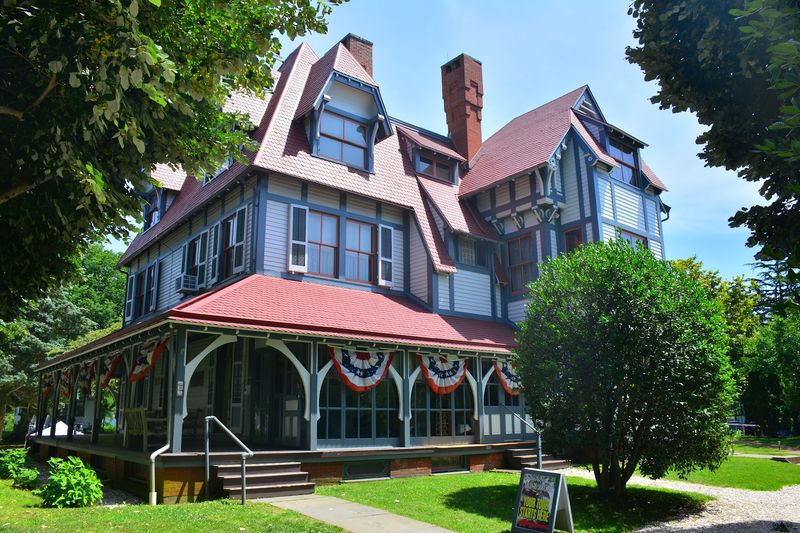
Sharp angles, oversized chimneys, and hooded dormer windows give this Cape May mansion a personality that is more brooding than beachy. Completed in 1879, the 18-room house was designed by architect Frank Furness for Dr. Emlen Physick, his widowed mother, Frances Ralston, and his aunts Emilie and Isabella.
Furness rejected dainty Victorian prettiness in favor of muscular forms, irregular shapes, and dramatic details. The result remains striking even in bright sunshine.
Saved from demolition in the 1970s, the estate now functions as a museum interpreting Victorian domestic life. Family objects, period rooms, and the home’s preserved layout create an intimate sense that its former occupants have only stepped outside.
Naturally, Cape May’s best-known historic mansion has also become one of its paranormal landmarks. Staff members and visitors have reported unexplained sounds, shadowy forms, voices, and what some interpret as the presence of the Physick family and their dogs.
The estate openly explores these stories through specialty programs rather than leaving visitors to trespass after hours.
“Voices from Beyond” tours share recorded audio and visual material described as unexplained, while other programs examine Victorian spiritualism, superstition, mystery, and illusion. Standard house tours are a better fit for anyone more interested in architecture than apparitions.
Schedules change throughout the year, and ghost-focused events can sell out during the fall, so advance booking is sensible. Leave time to walk the four-acre grounds and see the carriage house.
Few places make a better finale to a creepy New Jersey tour: elegant, meticulously preserved, and just unsettling enough to make an empty upstairs doorway feel occupied.
Share this story