Empty buildings have a strange way of making the past feel closer. Across Illinois, abandoned prisons, forgotten settlements, military remnants, and weathered structures preserve traces of lives and events that unfolded decades—or even centuries—ago. Some have become famous for ghost stories and local legends, while others are unsettling simply because of the history attached to them.
Together, they reveal a darker, less polished side of the Prairie State that rarely appears on postcards. Many are best viewed only from legal public areas, so exploration should always respect closures and private property. These 11 eerie Illinois places prove that forgotten history rarely stays completely silent.
1. Ashmore Estates (Ashmore)
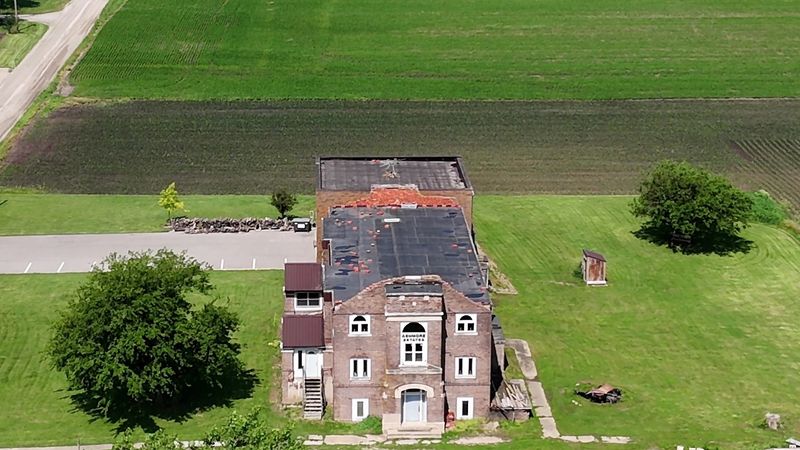
Out in the flat farmland of Coles County, a three-story brick building rises from the fields like it took a wrong turn and never left. Ashmore Estates started life as a place for people with nowhere else to go. Later, it served as a psychiatric facility, and that layered past is a big reason the building now draws ghost hunters from all over the Midwest.
Almshouses were the old-school safety net. Before modern programs existed, counties ran poor farms where elderly, sick, or struggling residents could live and work.
Life inside was often hard, and many residents never left. Those histories sit heavily in the hallways today. Walking through the place, you notice the details first. Peeling paint curls off the walls.
Long corridors stretch into shadow, and empty rooms echo with every footstep. Doors creak in a way no sound designer could improve on.
Paranormal fans have collected plenty of tales over the years. People report hearing voices in empty rooms, feeling sudden cold spots, and catching movement out of the corner of their eye. Whether those stories are real or just nerves playing tricks, they add a strong pull to the visit.
Unlike many abandoned buildings, Ashmore Estates welcomes guests through scheduled tours and overnight investigations. That matters, because sneaking into old buildings is dangerous and illegal. Going with an organized group means you get access, safety, and usually some solid history from guides who know the building inside and out.
Bring a good flashlight and wear sturdy shoes. Old floors and stairs are uneven, and the lighting is limited on purpose. Check the official schedule before driving out, since events tend to cluster around fall and spooky season. Few places in Illinois combine real social history with such a chilling setting.
2. Old Shawneetown (Gallatin County)
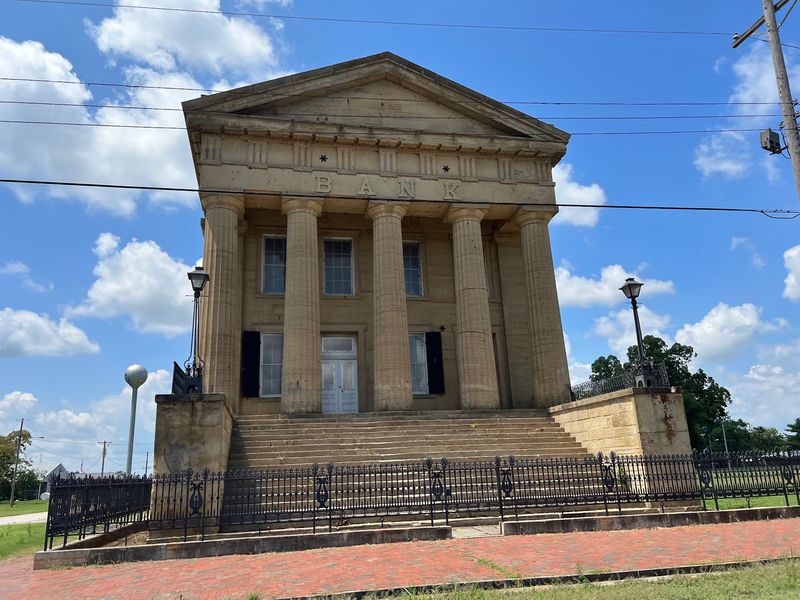
Picture a busy river town where steamboats docked, merchants traded, and the state’s early banking history took shape. Now picture the Ohio River rising so high it swallowed nearly everything. That is the story of Old Shawneetown, a community reshaped by water.
The great flood of 1937 was one of the worst disasters in the Ohio Valley. Water poured over the levees and flooded homes, stores, and streets. After the waters went down, much of the population moved to higher ground a few miles away, creating a new Shawneetown.
The old town did not vanish completely, though. A small number of people stayed, and several historic buildings still stand. The most famous is the old Shawneetown Bank, a grand building with tall stone columns that looks wildly out of place in such a quiet spot.
Strolling here is a strange experience. Wide streets that were built for crowds now see only a few cars. Weeds push through cracks, and empty lots mark where houses once stood.
Old Shawneetown also played a role in early Illinois history. It was one of the important gateways for settlers coming into the region. Traders, travelers, and officials all passed through its streets long before Chicago was much more than a muddy outpost.
Fun fact: local legend claims that Shawneetown bankers once turned down a loan request from a little settlement up north called Chicago, believing it would never amount to much. The story gets repeated often, and it sure makes a great piece of trivia.
Bring a camera and take your time reading the historic markers. They help fill in the blanks about what life was like before the river changed everything.
3. Cahokia Mounds (Collinsville)
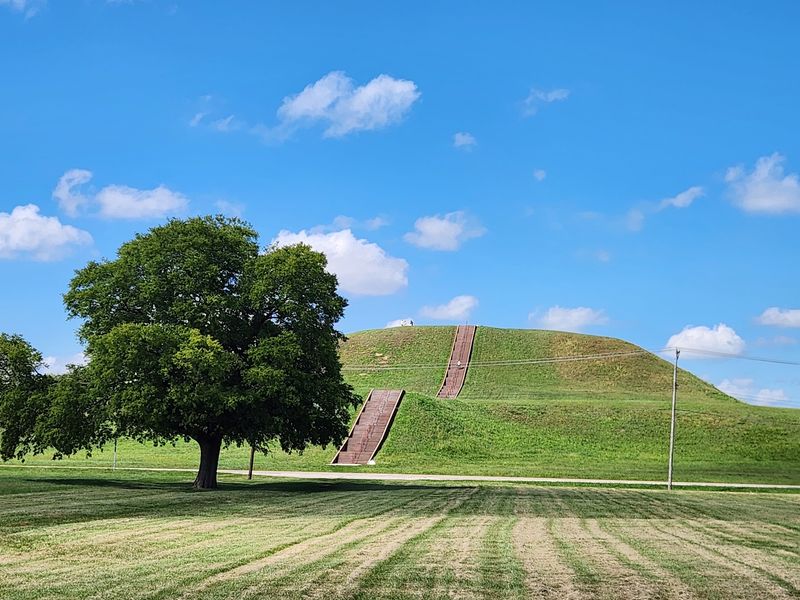
Long before skyscrapers, there was a city just east of the Mississippi River that may have been home to thousands of people. Its builders moved enormous amounts of soil by hand, basket by basket, to create giant earthen mounds. Today, those mounds are all that remain of Cahokia, and standing on them is humbling.
Cahokia was the heart of the Mississippian culture. It had plazas, homes, farms, and huge ceremonial platforms. Historians consider it one of the most important ancient urban centers in North America.
The biggest structure is Monks Mound. It rises high above the surrounding land, and a long staircase lets visitors climb to the top. From up there, you can see the St. Louis skyline in the distance, which creates a wild contrast between old and new.
So why include it with abandoned places? Because the people who built Cahokia eventually left. Nobody knows every reason for sure, and that mystery makes the site feel haunting in a quieter, more thoughtful way than a creaky old hospital.
Fog on an early morning turns the mounds into shadowy shapes. Wind rolls across the grass. Even on a sunny afternoon, it is easy to imagine the crowds and fires that once filled these fields.
The site is a UNESCO World Heritage Site, which puts it in the same category as famous landmarks around the globe. The grounds and trails remain open daily, while portions of the Interpretive Center are still undergoing renovations. A lobby, temporary exhibit, site model, gift shop, and restrooms are currently available Wednesday through Sunday.
Please stay on marked paths. These mounds are sacred and fragile, and treating them with respect keeps them standing for future visitors.
4. Cairo (Alexander County)
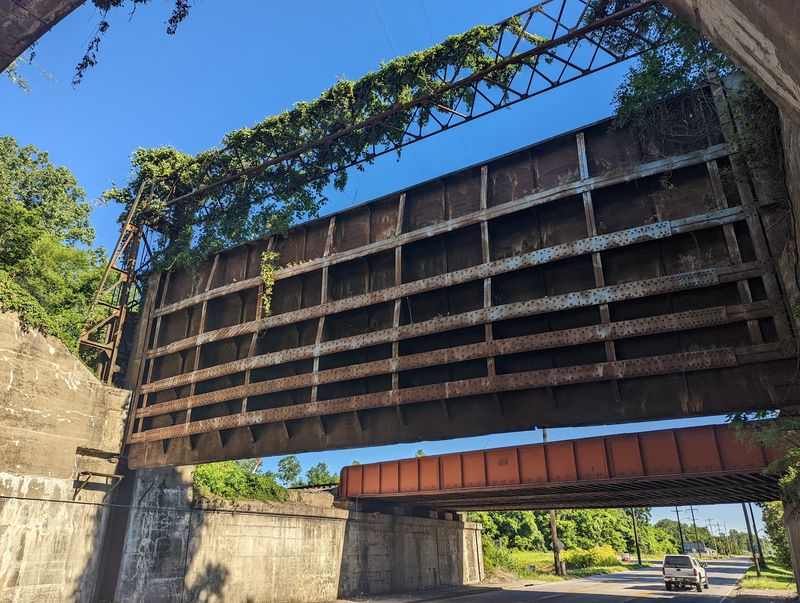
Geography gave Cairo a dream location. Perched at the southern tip of Illinois where the Ohio and Mississippi rivers meet, the town seemed destined to become a giant. For a while, it was a busy hub for steamboats, railroads, and trade.
Then things changed. Shipping shifted, jobs left, and the city faced decades of hard times, including painful conflicts over civil rights. The population dropped sharply, and many buildings were left empty.
Driving down Commercial Avenue today is like flipping through an old photo album. Brick storefronts with decorative tops line the street, but many windows are dark or boarded up. Faded painted signs still cling to some walls, advertising businesses that closed long ago.
Not everything in Cairo is crumbling, though. The city has some beautiful historic homes, including the grand Magnolia Manor. The old customs house is another standout, showing just how important Cairo once was to the federal government.
Fort Defiance, at the very point where the rivers join, was an important spot during the Civil War. Union troops gathered here, and General Ulysses S. Grant spent time in the area. Standing at that point, watching two mighty rivers merge, is a powerful moment.
Cairo’s story is complicated, and it deserves to be told honestly. Its decline was not caused by ghosts but by real struggles that affected real families. That truth makes the empty streets more meaningful than any spooky legend could.
Visitors should remember that people still live here. Be respectful, support any local businesses that are open, and treat the town like a neighborhood, not a movie set.
5. Bachelor’s Grove Cemetery (Midlothian)
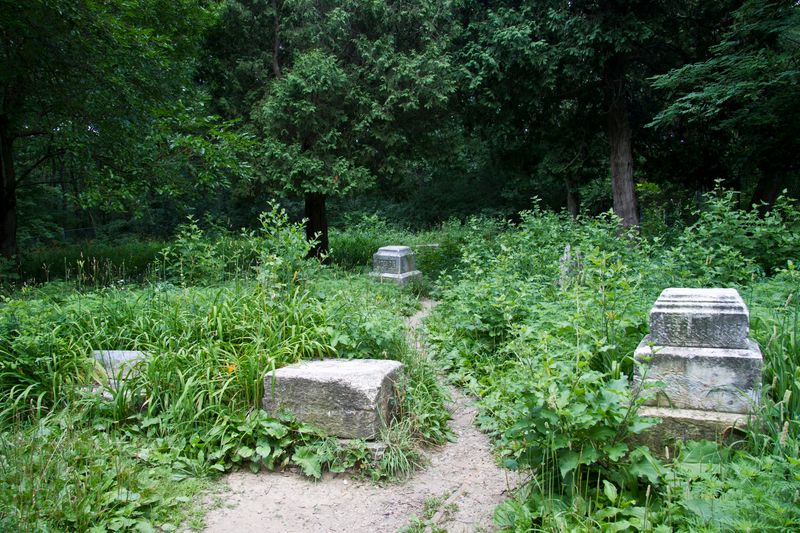
Ask any Chicago-area ghost hunter to name the spookiest spot around, and there is a good chance they will say Bachelor’s Grove. This tiny cemetery sits tucked inside the Rubio Woods Forest Preserve near Midlothian. It is small, quiet, and surrounded by trees, which only adds to its reputation.
The cemetery dates back to the 1800s, when early settlers buried their loved ones here. Over time, the road nearby closed, the area grew wild, and the graveyard became isolated. Vandals damaged many headstones, leaving only a handful standing today.
Then came the legends. Visitors have reported seeing glowing lights floating among the trees. Some claim to have spotted a phantom farmhouse that appears and disappears.
Others tell of a woman in white, sometimes called the Madonna of Bachelor’s Grove, wandering among the graves.
One famous photo, taken decades ago, appears to show a translucent woman sitting on a gravestone. Whether it is real or a trick of the camera, that image helped make the cemetery famous far beyond Illinois.
There is also a small pond near the cemetery with its own set of eerie tales. Stories about strange figures near the water have been shared for years.
Getting there means a short walk down an old, closed road through the forest. The trail is peaceful during the day, and that calm makes the stories feel even stranger once you reach the gate.
Visit only during forest preserve hours, and leave everything exactly as you found it. These are real graves of real people, and the cemetery has already suffered plenty of damage.
6. Illinois Iron Furnace (Hardin County)
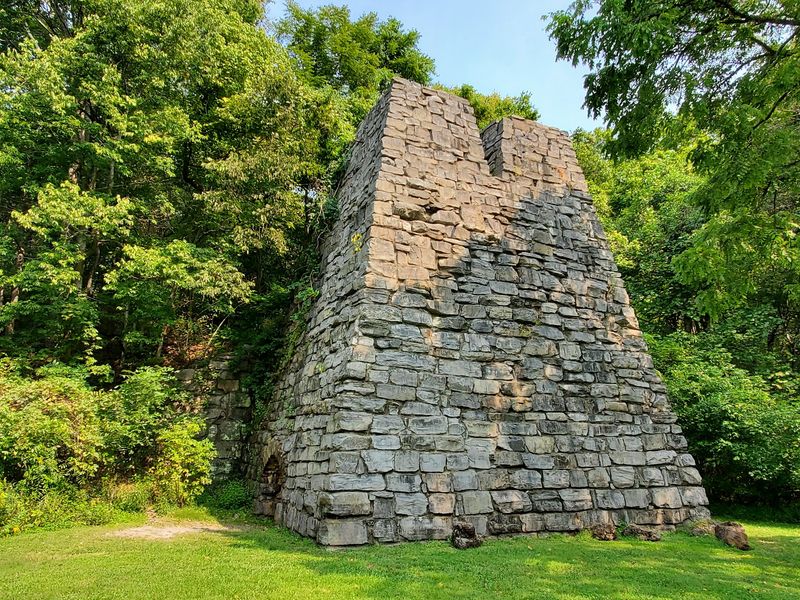
Deep in the Shawnee National Forest, the trees part to reveal a hulking stone tower that seems way too big for the quiet woods around it. Hikers sometimes stumble on it by surprise. The Illinois Iron Furnace is a leftover from a time when southern Illinois was busy making iron.
Back in the 1800s, furnaces like this one turned raw iron ore into metal. Workers fed the furnace with ore, limestone, and charcoal made from nearby trees. Heat roared inside, and molten iron flowed out the bottom.
The work was hot, loud, and dangerous. Whole communities grew up around these operations, with workers cutting wood, hauling ore, and keeping the fires going day and night. Iron from this region reportedly helped supply needs during the Civil War.
Eventually, the industry moved on. The forest crept back in, swallowing roads and buildings. What remains is the massive stone furnace, which has been restored so visitors can see it up close.
Nearby, a small creek trickles past, and short trails wind through the woods. Picnic tables make it an easy place to stop and stretch. Moss grows on the rough-cut stones, giving the structure an ancient look even though it is less than two hundred years old.
The spooky factor here is different from haunted hospitals. Instead of ghost stories, it is the eerie silence of a place that used to roar with fire and noise. Stand next to it, and you can almost hear the clang of tools.
Pair this stop with other Hardin County sights. The area is packed with bluffs, caves, and river views worth exploring.
7. McPike Mansion (Alton)
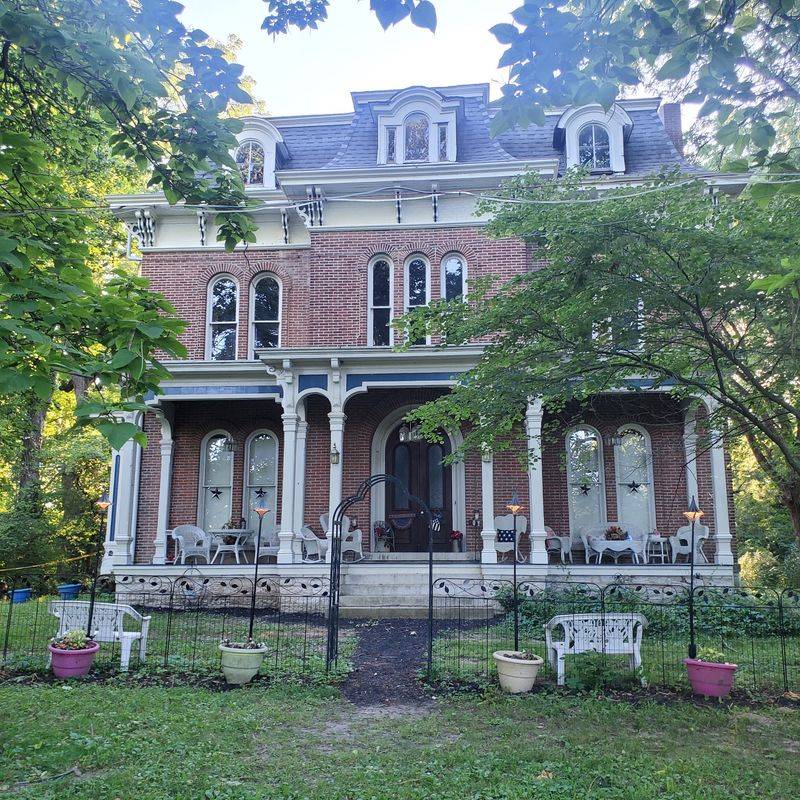
Alton calls itself one of the most haunted small towns in America, and McPike Mansion is one of its brightest stars. Well, dimmest might be a better word. This hilltop house looks exactly like the haunted mansion kids draw in art class.
Henry Guest McPike built the home in 1869. It was a fancy Italianate mansion with tall windows, decorative trim, and plenty of room. Over the years, it changed hands several times before sitting empty for decades.
Empty houses do not age gracefully. Windows broke, plaster fell, and trees grew wild around the property. By the time preservation efforts started, the once-grand home was a shell of its former self.
That decay is part of the appeal. Peeling walls, sagging floors, and a dark wine cellar give visitors plenty to feel nervous about. Many people report odd encounters, from whispers to the smell of perfume in empty rooms.
Some guests claim to have seen figures in the windows, including a former owner and a servant girl. The cellar gets the most attention, with tales of cold spots and strange sounds. Ghost hunting shows have featured the house, boosting its spooky fame.
Current owners have worked to save the mansion and open it to the public. Tours, events, and investigations help raise money for restoration. So every ticket helps keep the old house standing.
Alton itself is packed with history, from Lewis and Clark connections to Civil War sites. Make a day of it by exploring the riverfront and other haunted spots around town after visiting the mansion.
8. Savanna Army Depot / Lost Mound (Carroll and Jo Daviess Counties)
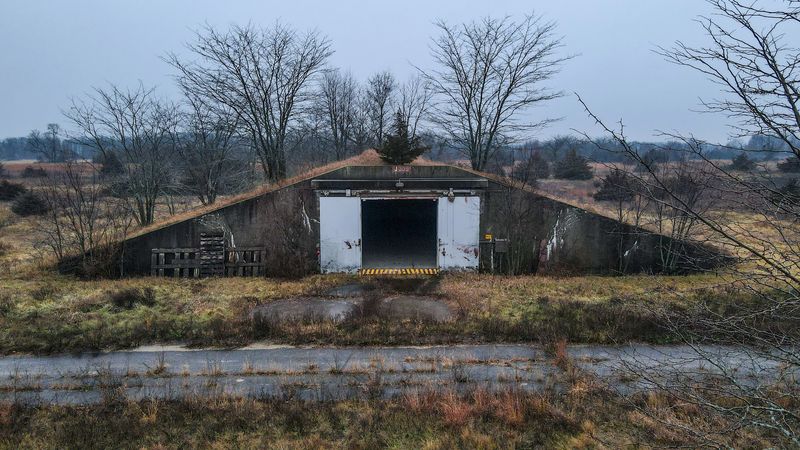
Rows of grassy bumps stretch across the sandy prairie, looking almost like giant hobbit homes. Look closer, and you will spot concrete doors. These are old military bunkers, and they once held ammunition for the United States Army.
The Savanna Army Depot covered a huge area along the Mississippi River in northwest Illinois. For decades, it stored, tested, and shipped ammunition. Rail lines crisscrossed the land, connecting warehouses, bunkers, and work areas.
The depot played a role in several major conflicts, including both world wars. Thousands of people worked there over the years. Eventually, the military closed it down, leaving behind a strange landscape of abandoned structures.
Nature took over in a big way. Much of the land is now part of the Lost Mound Unit of the Upper Mississippi River National Wildlife and Fish Refuge. The sandy soil supports rare plants and animals, and birds flock to the area.
That mix of military leftovers and wild prairie creates a mood unlike anywhere else in the state. Empty bunkers sit quietly under open skies. Old roads lead to nowhere, and rusting rails disappear into the grass.
Here is the big catch. Some areas are restricted because of past contamination and safety concerns. Visitors need to follow posted rules and stick to areas open to the public.
The refuge sometimes offers guided tours and special access days. Checking with refuge staff before heading out is the smartest move, since open areas and schedules can change.
For history fans and nature lovers alike, this spot tells a story about how land can change from a war machine into a wildlife haven.
9. Joliet Correctional Center / Old Joliet Prison (Joliet)
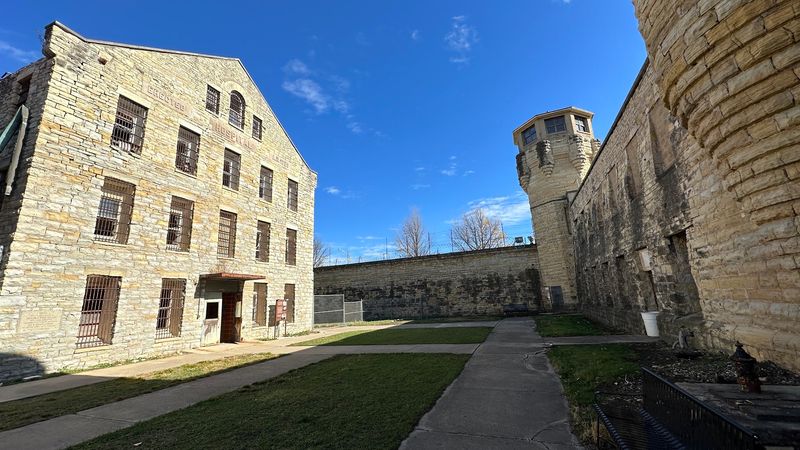
Movie fans might recognize it right away. The Old Joliet Prison showed up in The Blues Brothers and the TV show Prison Break. But long before Hollywood, it was a real prison holding real inmates for well over a century.
Built in the 1800s, the prison was made largely from local limestone. Its tall walls and guard towers look almost like a castle. Ironically, prisoners helped quarry the stone used to build it.
Life inside was rough. Cells were small and cramped, and rules were strict. Some famous criminals spent time behind these walls, adding to the prison’s dark reputation.
The facility closed in 2002. After that, it sat empty, and weather and vandals took a toll on many buildings. Windows shattered, roofs leaked, and paint peeled away from cell walls.
Luckily, the story did not end there. Preservation groups and the city stepped in, and the prison reopened for tours. Visitors can now walk legally through parts of the complex and hear stories about its long history.
Tour options often include history walks and special themed events. Some focus on the architecture, while others lean into the eerie side with flashlight tours. Guides share tales of escapes, riots, and daily routines.
Standing in an empty cellblock is a strange feeling. Rows of tiny cells stretch down the hall, and sounds bounce off the stone. It is easy to imagine how loud and crowded the place once was.
Wear comfortable shoes, since tours involve walking on uneven ground. And grab a photo by the front gate on your way out.
10. Joliet Iron Works Historic Site (Joliet)
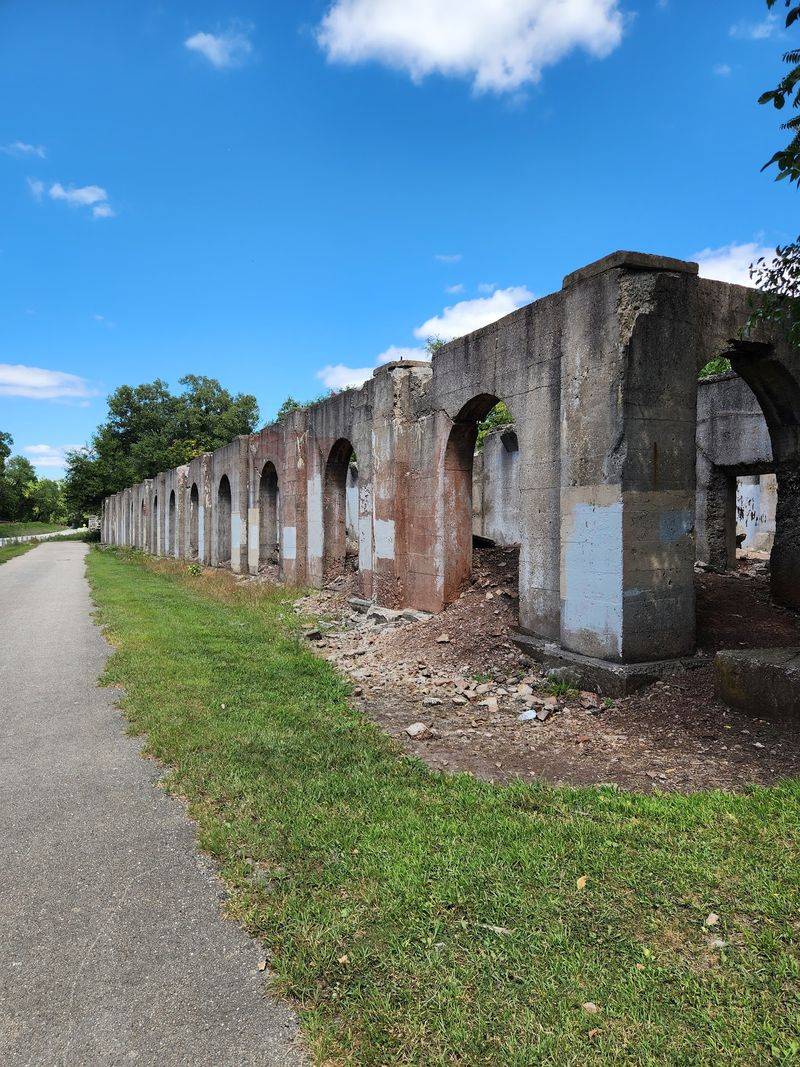
There is something strange about finding the bones of an old factory sitting quietly beside the Des Plaines River. At Joliet Iron Works Historic Site, massive stone and concrete foundations are all that remain of a place that once roared with furnaces, machinery, and thousands of workers.
The iron works opened in the 1800s and helped turn Joliet into an industrial powerhouse. Workers produced iron and, later, steel here, feeding a growing country that needed rails, machinery, and building materials. At its busiest, this was anything but peaceful.
Eventually, the industry changed and the old works shut down. Much of the complex was dismantled, but not everything disappeared. Foundations, walls, and other industrial remnants were left behind, creating the unusual landscape visitors see today.
The best part is that you do not have to sneak through a fence to explore it. The 52-acre historic site is managed by the Forest Preserve District of Will County, and a paved interpretive trail winds for about half a mile through the ruins.
Signs along the route explain what the surviving foundations once supported and help put the enormous operation back together in your imagination.
Nature has softened the scene over the years. Grass grows around old concrete, trees rise beside forgotten foundations, and birds have replaced the constant noise of heavy industry.
Stay on the designated trail and resist the temptation to climb on the ruins. They may look sturdy, but visitors are required to view them from the trail.
Come when the light is low, and the empty foundations feel especially eerie. It is a reminder how quickly even the busiest places can fall completely silent.
11. Peoria State Hospital (Bartonville)
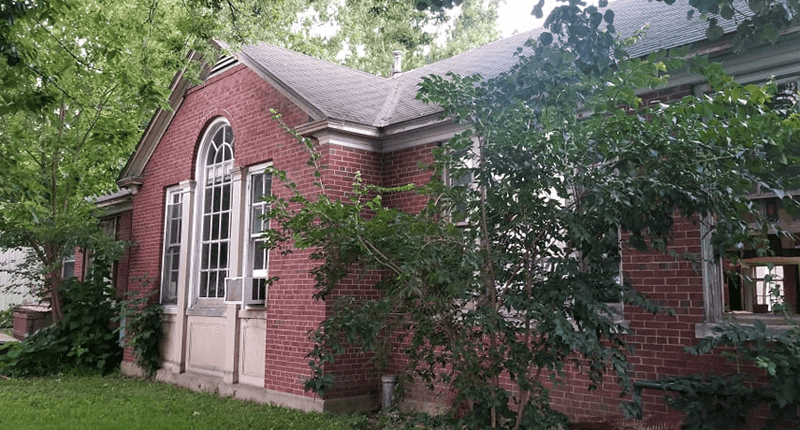
High on a bluff overlooking the Illinois River, a castle-like stone building stares out over Bartonville. It is one of the last big survivors of Peoria State Hospital. Once, this site held a massive psychiatric complex with dozens of buildings.
The hospital opened in the early 1900s. Under the leadership of Dr. George Zeller, it became known for more humane treatment than many institutions of its time. He pushed to remove restraints and gave patients more freedom, which was a big change back then.
The hospital closed in 1973, and most of its sprawling campus was eventually demolished. A handful of remnants still survive, and tours now take visitors to the asylum cemeteries, existing structures, and Cottage B1, the last remaining patient cottage.
And then there is the legend of Manual Bookbinder. That was the nickname of a patient who helped dig graves at the hospital cemetery.
According to the story, he would weep beside an old elm tree at each burial. After his death, mourners claimed they saw him crying by the tree during his own funeral.
Dr. Zeller himself wrote about the event, which helped the tale spread for generations. It remains one of the most famous ghost stories in central Illinois.
Today, the site offers history tours, paranormal investigations, and seasonal events. A museum shares photos and artifacts from the hospital’s working years.
The cemeteries are still there, quiet reminders of the many patients who lived and died on the grounds. Fall is the busiest season, so booking ahead is smart. Either way, the view from the bluff is reason enough to visit.
Share this story