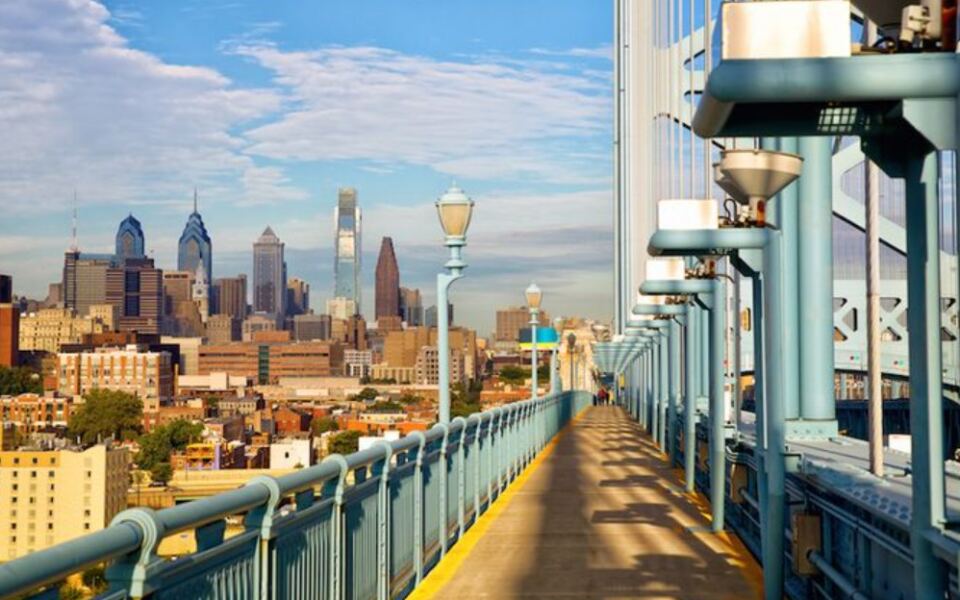
A tornado ripped apart one of the tallest railroad bridges on Earth in 2003. The piece left standing now lets you walk out and stand on glass, 225 feet above a valley floor. I still can’t get over that comeback story.
That bridge isn’t even the only wild one. Another sways under your sneakers as you cross a river. A third saw soldiers from both armies march across it during the most famous battle of the Civil War.
Pennsylvania is packed with spans like these, and most of them reveal their best side when you slow down. Cars zip across in seconds. On foot, you notice the rivets, the creaky planks, the river below, and the stories hiding in plain sight.
Some bridges are more than a way across; they’re a little history, a little adventure, and a whole lot of nerve.
1. Kinzua Bridge Skywalk
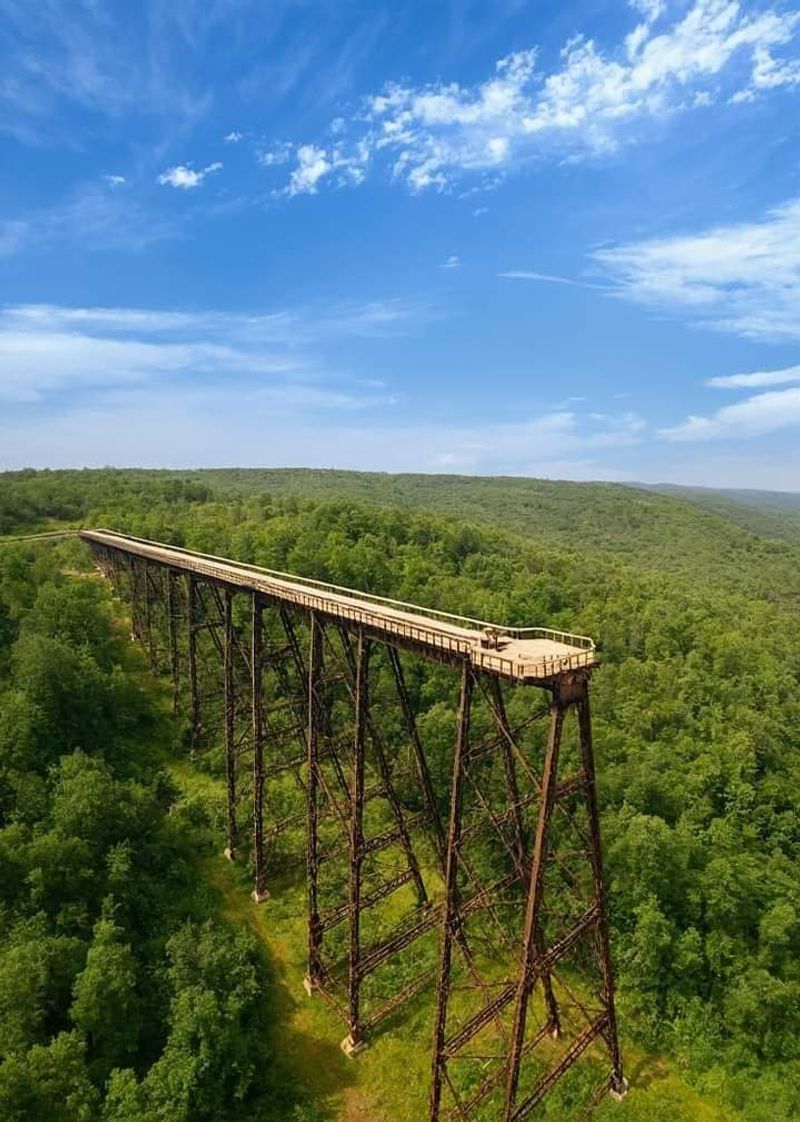
Few bridges get a second career after a tornado knocks most of them down.
This one did, and the result is one of the most jaw-dropping walks in the state.
The story starts with the Kinzua Viaduct, which first opened in 1882.
It was rebuilt in 1900 and ranked among the tallest and longest railroad bridges in the world.
Then came 2003.
A tornado tore through the valley and toppled a huge part of the structure.
Instead of giving up, Pennsylvania turned the surviving section into a pedestrian skywalk.
Today you can stroll about 600 feet out along the old rail line.
Here’s the part that makes knees wobble.
Near the end, a partial glass floor lets you look straight down about 225 feet to Kinzua Creek Valley.
Brave souls stand right on it and wave for photos.
Nervous walkers can hug the edges, and nobody will judge you.
The view from the end is the real payoff.
You get a sweeping look at the wooded valley and the twisted steel towers still lying where the storm left them.
Those fallen towers are pretty humbling.
They show just how strong that wind was, and they make the standing section feel even more impressive.
Before or after your walk, stop by the visitor center.
Its exhibits explain the bridge’s long history and what happened during the tornado.
That context changes how the walk feels.
Suddenly you’re not just crossing a bridge, you’re standing on a survivor.
The park sits in McKean County near the small town of Mount Jewett.
It’s a rural spot, so plan your trip with time to soak in the scenery.
Fall is a popular time to visit, when the valley trees turn color.
Any season works, though, as long as you bring good shoes and a little courage.
Want a fun challenge?
Try looking down through the glass for a full ten seconds without grabbing anyone’s arm.
Address: 296 Viaduct Rd, Mount Jewett, PA 16740
2. Hyde Park Walking Bridge
Some bridges stay perfectly still under your feet.
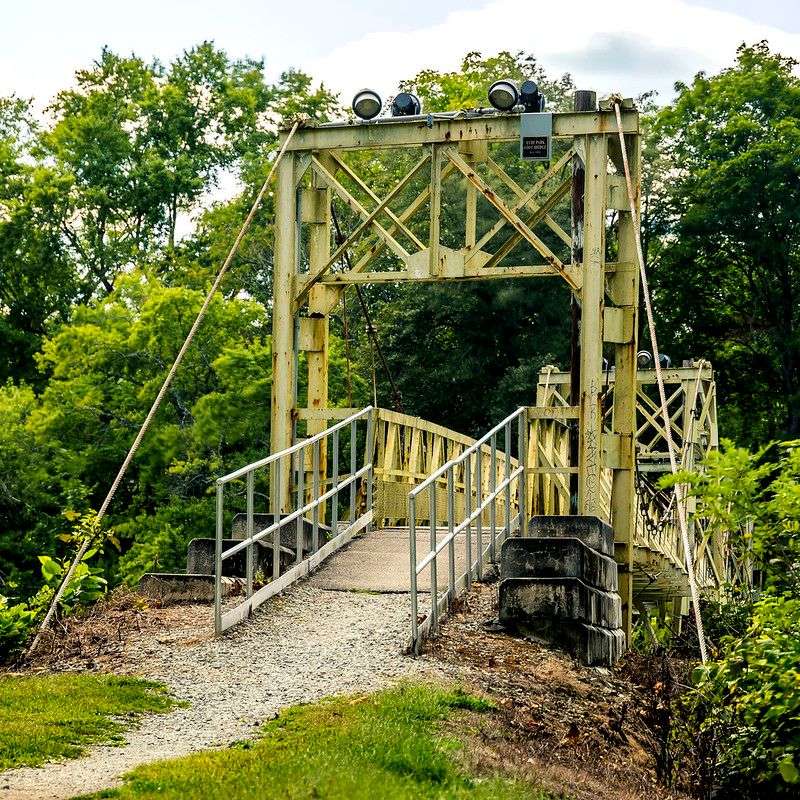
The one connecting Hyde Park and Leechburg prefers to dance a little.
Locals know it by several names, including the Hyde Park Foot Bridge and the Hyde Park Swinging Bridge.
Officially, it goes by Armstrong County Bridge No. 13, which sounds far less fun.
At 600 feet long, it’s considered the longest swinging pedestrian bridge in Pennsylvania.
It crosses the Kiski River, linking Westmoreland County on one side with Armstrong County on the other.
So yes, you can stroll between two counties in a few minutes.
That’s a pretty good trick for a casual afternoon walk.
The swaying is the main attraction.
As people walk across, the bridge moves with their steps, giving the crossing a gentle bouncy feel.
Look down and you’ll get another surprise.
The deck uses metal grates, so you can see the river through your feet.
Depending on the spot, the bridge rises roughly 20 to 40 feet above the water.
That’s high enough to feel exciting, but not so high that most people turn back.
History runs deep here too.
The current metal bridge dates to 1955 and replaced a wooden footbridge built in 1920.
Even older are the piers holding it up.
They came from a railroad bridge that once stood at this same crossing.
Once you reach the Leechburg side, take a minute to explore the small parklet.
That land was once part of the old Pennsylvania Canal system.
It’s fun to think about canal boats floating through here long ago.
Now the main traffic is walkers, joggers, and curious visitors testing the sway.
A tip for first-timers: walk slowly at first and get a feel for the motion.
Once you’re comfortable, the rhythm becomes part of the fun.
And if a group of friends starts marching in step, hold onto the railing.
You’ll understand why the moment it happens.
Address: Railroad Street, Hyde Park, PA 15641
3. Benjamin Franklin Bridge
Walking to New Jersey sounds like a joke until you try it.
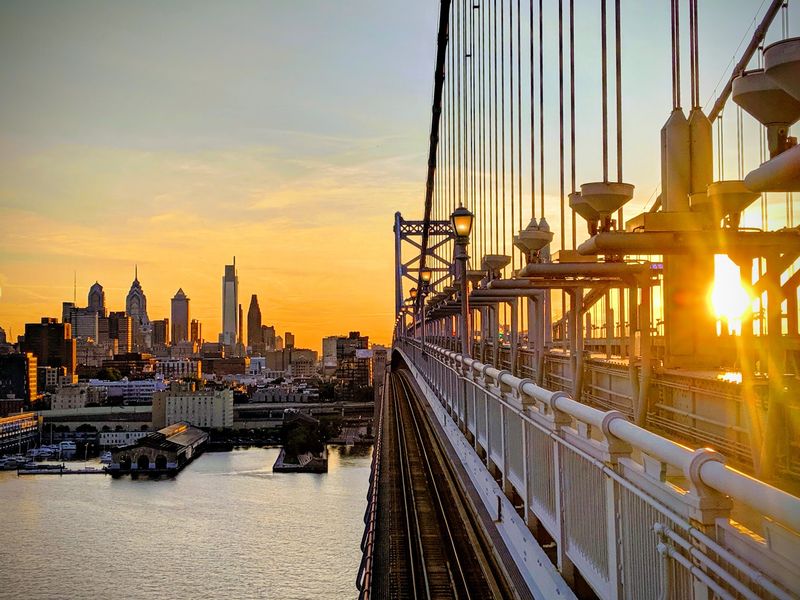
On this giant blue suspension bridge, it’s a real and wonderful way to spend an hour.
The bridge opened in 1926 under a different name, the Delaware River Bridge.
Today it carries the name of Philadelphia’s most famous founding father.
It connects Philadelphia with Camden, New Jersey, across the Delaware River.
A dedicated pedestrian walkway runs along the span, so you don’t have to dodge traffic.
The route covers about 1.5 miles.
That’s long enough for a solid workout and short enough to finish before your snack runs out.
The views are the big reward.
As you climb, the Philadelphia skyline spreads out behind you while the river glitters below.
Then there are the towers.
Up close, their size feels enormous, and you’ll probably crane your neck more than once.
Timing matters here.
The walkway opens at 6 a.m. daily and closes at 8 p.m. from October through April.
From May through September, it stays open until 9 p.m.
Those summer evenings are a lovely time for a sunset stroll.
Keep in mind the hours depend on the weather.
Storms or other conditions can lead to closures, so check before you head out.
Getting on is easy from the Philadelphia side.
One entrance sits at 5th and Race Streets, right across from the U.S.
Mint.
Another access point is south of 5th and Vine Streets on Marginal Road.
Either way, you’ll start near the heart of Old City.
That location makes it easy to pair with other sightseeing.
Walk the bridge in the morning, then explore the historic streets nearby.
One more tip: bring a jacket even on mild days.
Breezes off the river can surprise you once you’re high above the water.
Address: 5th and Race Streets, Philadelphia, PA 19106
4. Portland-Columbia Pedestrian Bridge
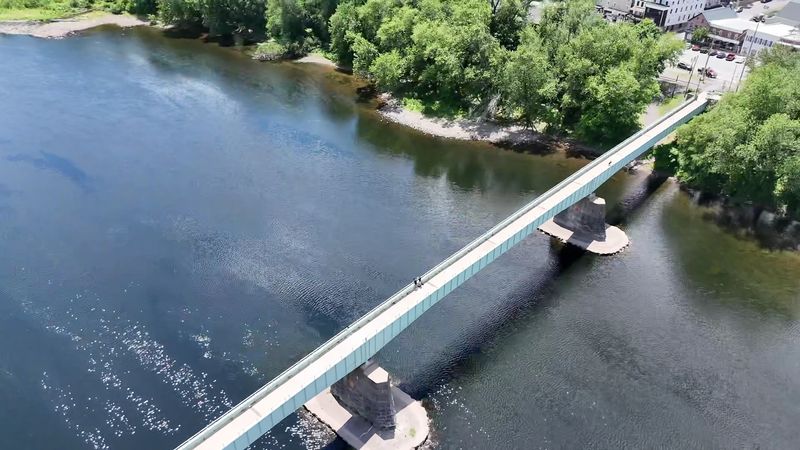
Hurricane Diane wiped out a covered bridge here in 1955.
What rose in its place gives walkers a rare way to cross the Delaware River.
The footbridge links Portland, Pennsylvania, with Columbia, New Jersey.
It was built in 1957 and 1958 on top of the old covered bridge’s piers.
That old bridge holds a special place in history.
It was the last of 16 covered bridges that once spanned the Delaware.
So when you step onto this crossing, you’re walking where an entire era of bridges ended.
That’s a pretty cool thought for a quiet stroll.
The Portland-Columbia Pedestrian Bridge is a pedestrian-only crossing of the Delaware River.
No cars, no trucks, just people and the river.
Getting there costs nothing.
The bridge is free and open year-round, so you can visit in any season.
Dogs are welcome too.
Bring your four-legged buddy along for a walk between two states.
Accessibility is another plus.
An ADA-compliant ramp makes it easier for more visitors to enjoy the crossing.
The bridge also forms part of the September 11th National Memorial Trail.
That trail stretches about 1,300 miles and links meaningful sites across several states.
Many visitors come for photos and wildlife watching.
The wide river and wooded hills make a peaceful backdrop for both.
Bring binoculars if you like spotting birds.
Big rivers like the Delaware often attract interesting visitors from the sky.
After your walk, Portland itself is worth a wander.
The small town has antique shops and historic sites to browse.
That makes this an easy half-day outing.
Cross the river, snap some pictures, and then go treasure hunting for old trinkets.
Address: Portland-Columbia Pedestrian Bridge, Portland, PA 18351
5. Bogert’s Covered Bridge
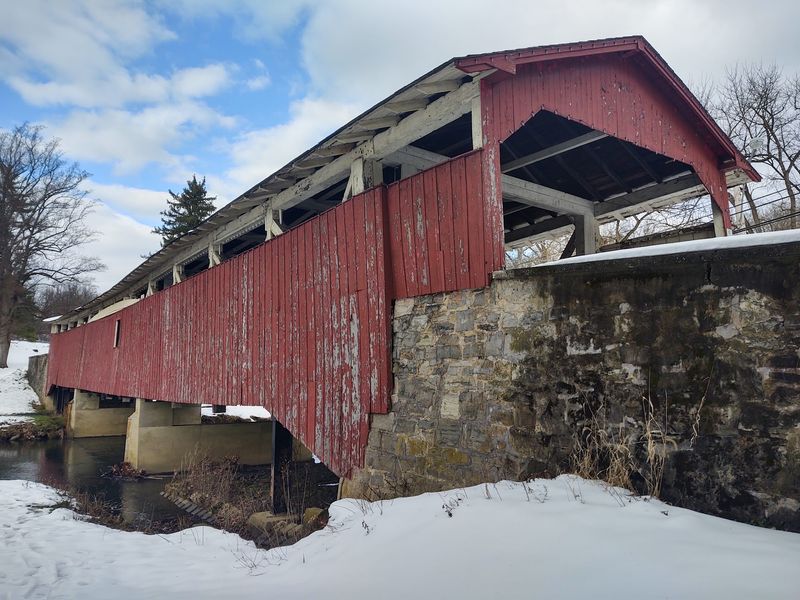
Built in 1841, this covered bridge has been around longer than the telephone.
It’s still standing strong in the middle of an Allentown park.
Bogert’s Covered Bridge sits in Lehigh Parkway, a stretch of green space loved by walkers and runners.
Today the bridge carries foot traffic only.
It’s considered one of the oldest covered bridges in Pennsylvania.
That alone makes it worth a visit for any history fan.
Engineering nerds will enjoy the design too.
The bridge is a strong example of a Burr arch truss, a style that combines wooden arches with a truss frame.
Step inside and look up at the beams.
Seeing the old woodwork up close is one of the best parts of walking through.
Below the bridge flows the Little Lehigh Creek.
The creek is known as a popular fishing spot, so you may spot anglers casting lines nearby.
The setting makes this an easy place to slow down.
You can listen to the water, admire the wooden structure, and take your time.
Because the bridge sits within Lehigh Parkway, it fits naturally into a longer walk.
Many people use the park for jogging, strolling, and fresh air.
Try making the bridge the halfway point of your route.
Pause inside, grab a photo, and then keep going along the creek.
The City of Allentown owns the bridge.
That means it’s a public treasure, open for the community to enjoy.
Photographers often love covered bridges, and this one is no exception.
The framed view through the entrance makes a natural picture.
Visit in different seasons for different moods.
Spring greenery and autumn leaves both look great around the old wood.
Fun thought to ponder: this bridge has outlasted horse buggies, steam trains, and dial-up internet.
Not bad for something made mostly of wood.
Address: Lehigh Parkway, Allentown, PA 18103
6. Kreidersville Covered Bridge
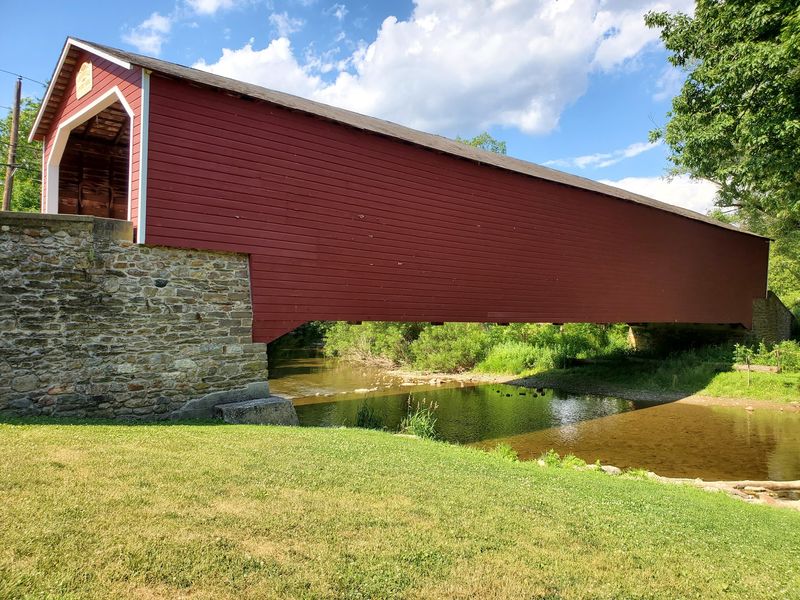
Northampton County once had covered bridges, but only one remains.
It’s sitting pretty over a creek, waiting for you to walk through.
The Kreidersville Covered Bridge dates to 1839, though some sources say 1840.
Either way, it ranks among the oldest covered bridges in the Lehigh Valley.
It spans Hokendauqua Creek in Allen Township.
The name of the creek is a fun one to practice saying out loud.
Cars no longer use the bridge.
It’s open only to walkers and bicyclists, which keeps the visit calm and safe.
Best of all, it’s free.
You can pop by for a quick look or linger for an afternoon without spending a cent.
Like a few other old Pennsylvania bridges, it uses a Burr arch truss design.
Inside, you can see the heavy timbers that have held it together for generations.
The area around the bridge feels like a little park.
Benches and a gazebo invite you to sit down and enjoy the view.
That makes it a great place for a picnic.
Pack some sandwiches, find a seat, and watch the creek roll by.
Photographers often find plenty to work with here.
The bridge, creek, and surrounding greenery fit together nicely in one frame.
The bridge earned a spot on the National Register of Historic Places in 1980.
That listing recognizes its importance in local and state history.
Families might enjoy turning the visit into a mini history lesson.
Ask kids to guess how old the bridge is before telling them the answer.
Most guesses will probably fall short.
A wooden bridge from 1839 tends to surprise people.
Visit on a quiet weekday morning if you want peaceful photos.
Then stroll through slowly and enjoy the sound of your steps on the boards.
Address: 100 Covered Bridge Road, Northampton, PA 18067
7. Sachs Covered Bridge
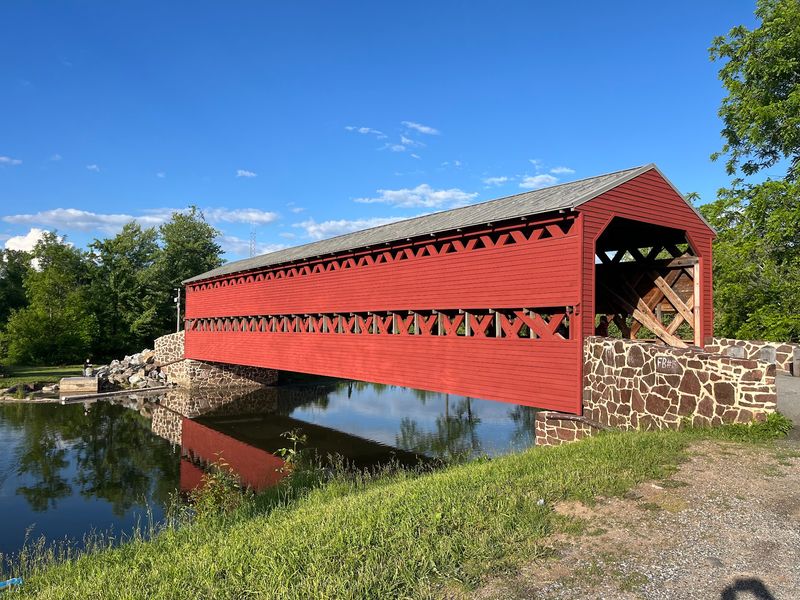
Union and Confederate soldiers both crossed these boards during the Battle of Gettysburg.
Today, the only marching comes from curious visitors.
The bridge goes by a few names, including Sauck’s Covered Bridge and Waterworks Covered Bridge.
Most people simply call it Sachs.
David Stoner built it around 1852 to 1854.
It stretches about 100 feet over Marsh Creek in Adams County.
Look closely at the sides and you’ll notice a crisscross pattern.
That’s a Town lattice truss, a design that uses many diagonal boards to share the load.
Its Civil War role made it famous.
Troops from both armies used the bridge during and after the battle in July 1863.
In 1938, it earned the title of Pennsylvania’s most historic bridge.
That’s quite a badge for a wooden span in the countryside.
Cars stopped crossing in 1968.
Since then, the bridge has been open only to people on foot.
It hasn’t had an easy life.
A flash flood damaged it in 1996, and crews repaired it before a rededication in 1997.
The bridge joined the National Register of Historic Places in 1980.
That listing helps protect its story for future visitors.
Now for the spooky part.
The bridge is rumored to be haunted, and it shows up often in local ghost tales.
Whether you believe the stories is up to you.
Either way, the legends add an extra shiver to a twilight visit.
Pairing the bridge with a Gettysburg trip is easy.
It sits just outside town, so you can fit it in between museum stops and battlefield tours.
Walk across slowly and think about who stood here before you.
It’s one of those places where history feels close enough to touch.
Address: Waterworks Road, Gettysburg, PA 17325
8. Wyit Sprowls Covered Bridge
Most bridges stay put for their whole lives.
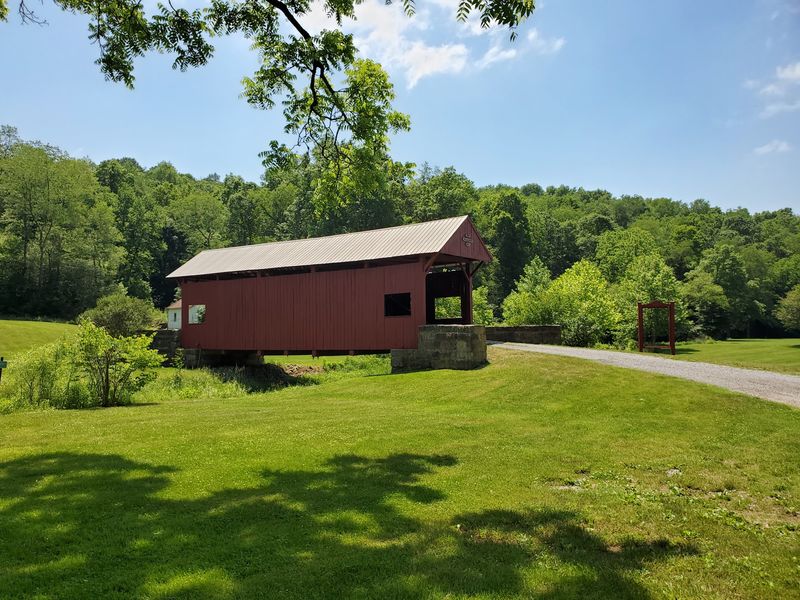
This little covered bridge in Washington County has already moved twice.
The Wyit Sprowls Covered Bridge was built in 1915.
It’s a queenpost truss design and measures just 43 feet long.
Small doesn’t mean boring, though.
Four rectangular windows let light spill into the wooden interior.
So why all the moving?
Mining subsidence, which happens when the ground sinks above old mines, threatened its original spot.
The bridge first stood in West Finley Township.
After its moves, it found a new home in East Finley Township Park.
Crews rebuilt it in 2001.
Today it serves walkers only, making it an easy and relaxing stop.
Here’s a bonus you don’t get at many bridges.
The Jordan One-Room Schoolhouse sits right next door in the same park.
That schoolhouse dates to around 1895.
It was moved to the park in 2005, so the bridge has some historic company.
Together, they make a neat little time capsule.
You can picture what rural life in this corner of Pennsylvania looked like a century ago.
The bridge was listed on the National Register of Historic Places in 1979.
It’s one of many covered bridges that give Washington County its old-fashioned charm.
Every year, the park hosts a Covered Bridge Festival.
It’s a fun way to see the bridge with a lively crowd.
If you prefer peace and quiet, visit on an ordinary day instead.
You’ll likely have more space to explore at your own pace.
Kids might enjoy comparing the schoolhouse to their own classrooms.
One room for many grades is quite a change from today.
Bring a camera and a curious mind.
A bridge that moved twice definitely has stories to tell.
Address: East Finley Township Park, Claysville, PA 15323
9. Smithfield Street Bridge
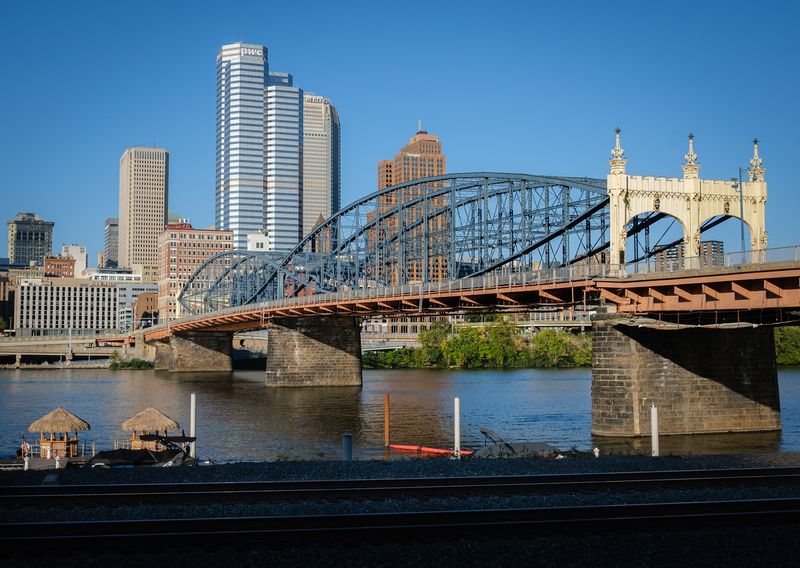
Pittsburgh has hundreds of bridges, and this one is the oldest surviving river bridge in the bunch.
It also happens to be one of the prettiest.
Workers built it between 1881 and 1883.
It crosses the Monongahela River, connecting Downtown with the South Side.
Gustav Lindenthal designed the bridge.
He became one of the best-known bridge engineers of his time.
The shape is what grabs your eye first.
Its lenticular truss looks like a row of stretched lenses, curved on top and bottom.
It was also one of the earliest major bridges in the United States built mainly of steel.
That made it a big deal when it opened.
Today it holds two impressive titles.
It’s a National Historic Landmark and a National Historic Civil Engineering Landmark.
The paint job adds even more personality.
Blue and beige colors make the bridge stand out against the river and skyline.
Cars still use the bridge, but walkers and cyclists love it too.
The sidewalks make crossing on foot easy and safe.
It also connects with the Great Allegheny Passage.
That famous trail draws bikers and hikers from far and wide.
Walking across gives you a front-row view of the city.
Downtown towers rise on one side, while the South Side and hills sit on the other.
Stop in the middle and look back toward Downtown.
The view of Pittsburgh’s skyline from here is hard to beat.
Because the bridge is open around the clock, you can visit anytime.
Evening walks offer a different look as city lights come on.
Take a moment to study the steel up close.
Those curves were cutting-edge engineering back in the 1880s.
Address: Smithfield Street at Fort Pitt Boulevard, Pittsburgh, PA 15222
10. Roberto Clemente Bridge
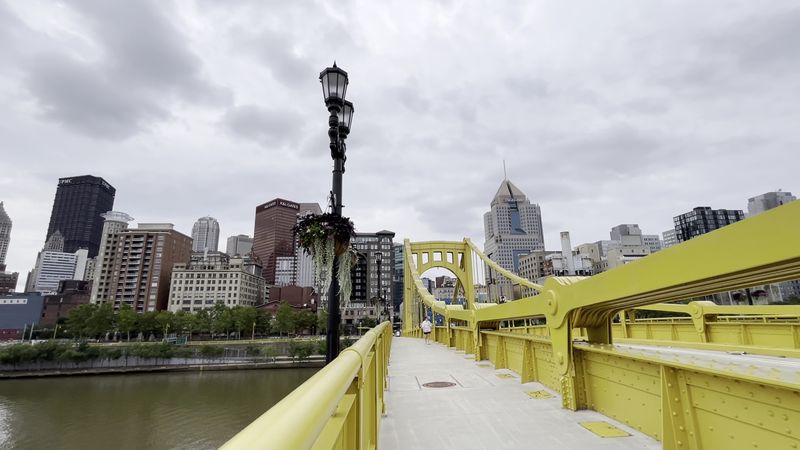
On Pirates game days, cars get kicked off this bridge.
Fans in black and gold take over, and the whole crossing turns into a party path.
Many people still call it the Sixth Street Bridge.
In 1988, it was renamed to honor Pirates legend Roberto Clemente.
The bridge spans the Allegheny River in downtown Pittsburgh.
It leads walkers straight toward PNC Park on the North Shore.
It’s one of the city’s Three Sisters bridges.
These three nearly matching self-anchored suspension bridges sit side by side across the river.
Seeing all three together is a treat.
Their matching look makes a great photo from the riverbank.
The current bridge went up between 1925 and 1928.
It’s actually the fourth bridge to stand at this spot.
Earlier versions included a covered bridge and a suspension bridge.
Pittsburgh clearly thought this crossing was worth keeping.
In 1928, it won an award as the Most Beautiful Steel Bridge of the year.
It’s also listed on the National Register of Historic Places.
Walking across gives you stunning views of the Pittsburgh skyline.
Downtown buildings line up behind you as the ballpark comes closer.
Game days bring the most energy.
With traffic closed, the bridge fills with fans heading to the stadium.
Not a baseball fan?
A quiet walk on a regular day still offers great river views and plenty of space.
Try crossing at sunset if you can.
The light on the river and buildings makes for some memorable photos.
Either way, take a moment to remember the man the bridge honors.
Clemente remains one of the most beloved figures in Pittsburgh sports history.
Address: Sixth Street at Fort Duquesne Boulevard, Pittsburgh, PA 15222
11. Falls Bridge
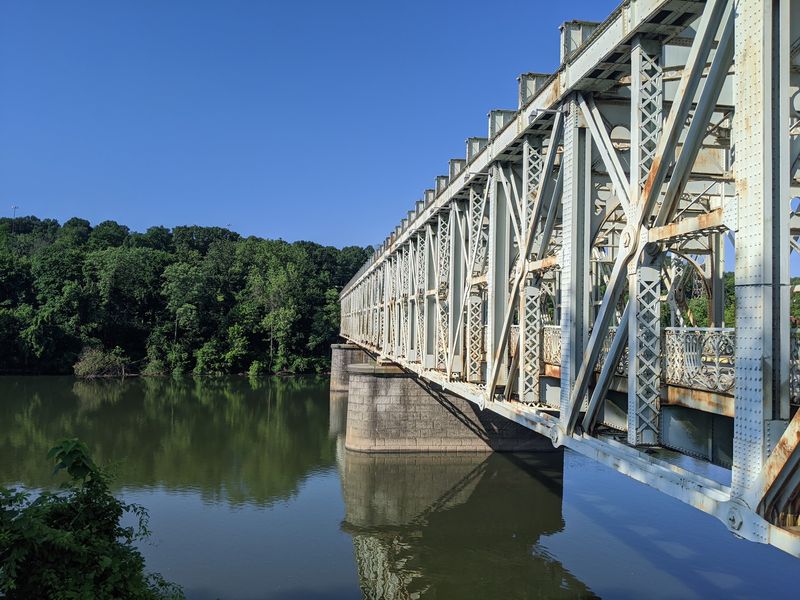
Engineers planned this bridge with two decks.
More than a century later, the second one still hasn’t shown up.
The Falls Bridge was built in 1894 and 1895.
It crosses the Schuylkill River inside Philadelphia’s Fairmount Park.
It connects Kelly Drive at Calumet Street with Martin Luther King Jr. Drive.
That puts it right between two of the city’s favorite riverside routes.
The design is a steel Pratt truss, a sturdy framework of diagonal and vertical beams.
It stretches about 556 feet from end to end.
That missing upper deck is a fun piece of trivia.
The plans called for it, but it was never built.
Look closely at the railings as you walk.
They feature detailed decorative touches that are easy to miss from a car.
The bridge is popular with cyclists and walkers.
Many people use it to loop between the two drives along the river.
That loop makes for a great outing.
You can walk or ride one side of the river, cross here, and head back on the other.
The views reach up and down the Schuylkill.
Trees line the banks, and the water often carries rowers gliding past.
The bridge sits within the Fairmount Park historic district.
That district is listed on the National Register of Historic Places.
Fall is especially lovely here.
The colorful trees frame the steel trusses beautifully.
Spring and summer bring their own charm, with green leaves and busy paths.
You can’t really pick a bad season for a stroll.
Bring a snack and find a riverside spot after crossing.
Watching the boats is a relaxing way to end the walk.
Address: Kelly Drive at Calumet Street, Philadelphia, PA 19129
Share this story