Ohio has a beautiful driving route that tells a story through tall church towers, old brick walls, and quiet small towns. The Scenic Byway of Cross-Tipped Steeples winds through western Ohio, where many historic Catholic churches stand as landmarks of faith, hard work, and community life.
These churches matter because they help show how immigrants shaped the region, building places that still bring people together today. If you enjoy local history, peaceful road trips, and architecture that feels grand even in tiny towns, this route is full of memorable stops.
1. St. Augustine Catholic Church, Minster
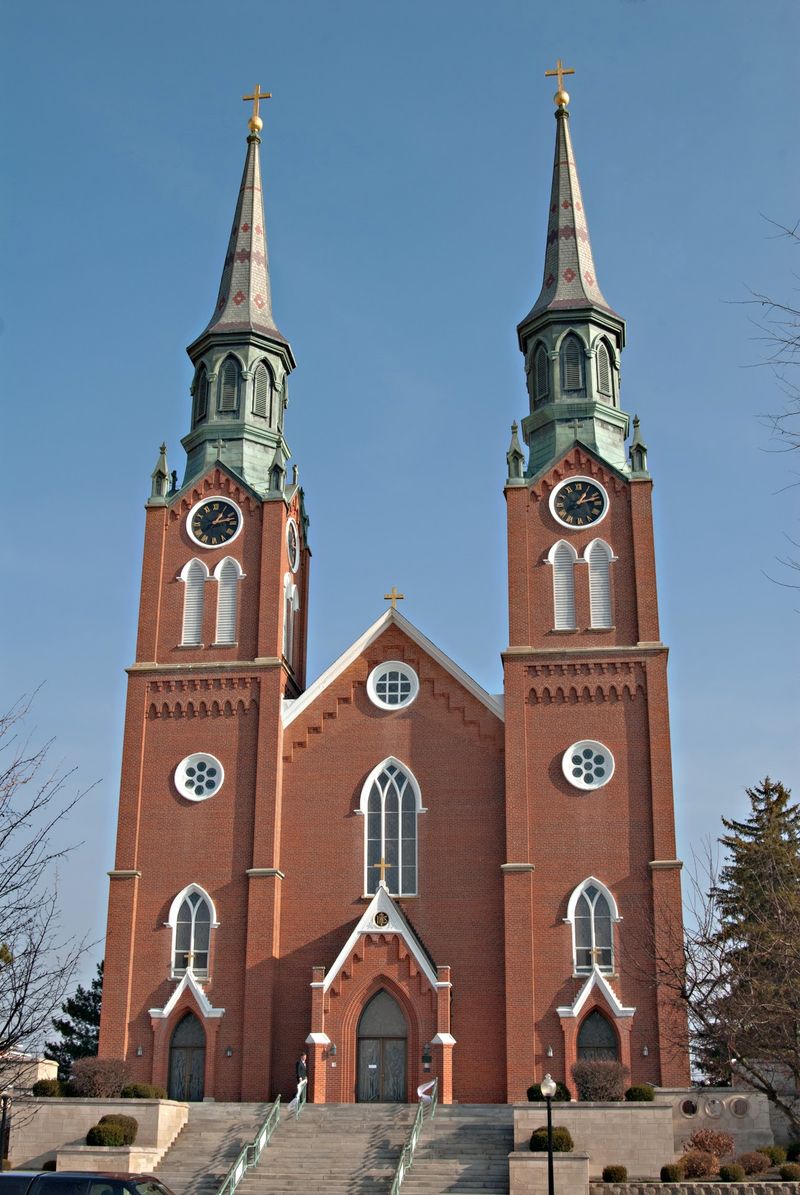
Few buildings set the tone for this byway better than the striking church at the heart of Minster. St. Augustine Catholic Church rises above town with a strong, confident look that reflects the deep roots of German Catholic settlers in this part of Ohio.
Its size alone tells visitors that faith, family, and shared effort shaped everyday life here for generations.
Standing outside, you can notice the balance of brick, stone details, and the steeples that help define the route’s nickname. The church feels grand, yet it still fits the rhythm of a small Ohio town where people gather for worship, festivals, and community events.
Take a few minutes to walk around the area, because the nearby streets add to the sense of history.
Inside, visitors often admire the sense of height and calm that historic churches create so well. Even if you are not there for a service, it is worth checking local visiting rules and being respectful of parish activity.
Quiet voices, modest clothing, and a little patience go a long way when exploring active churches that are still important to local residents.
Minster makes a smart early stop on a byway trip because it offers both history and a welcoming small-town setting. Pair your visit with a walk through town or a meal nearby, and you get a fuller picture of life in western Ohio.
St. Augustine Catholic Church is not just a photo stop. It is a place that helps explain why these steeples remain such proud symbols across the region.
2. St. Joseph Catholic Church, Egypt
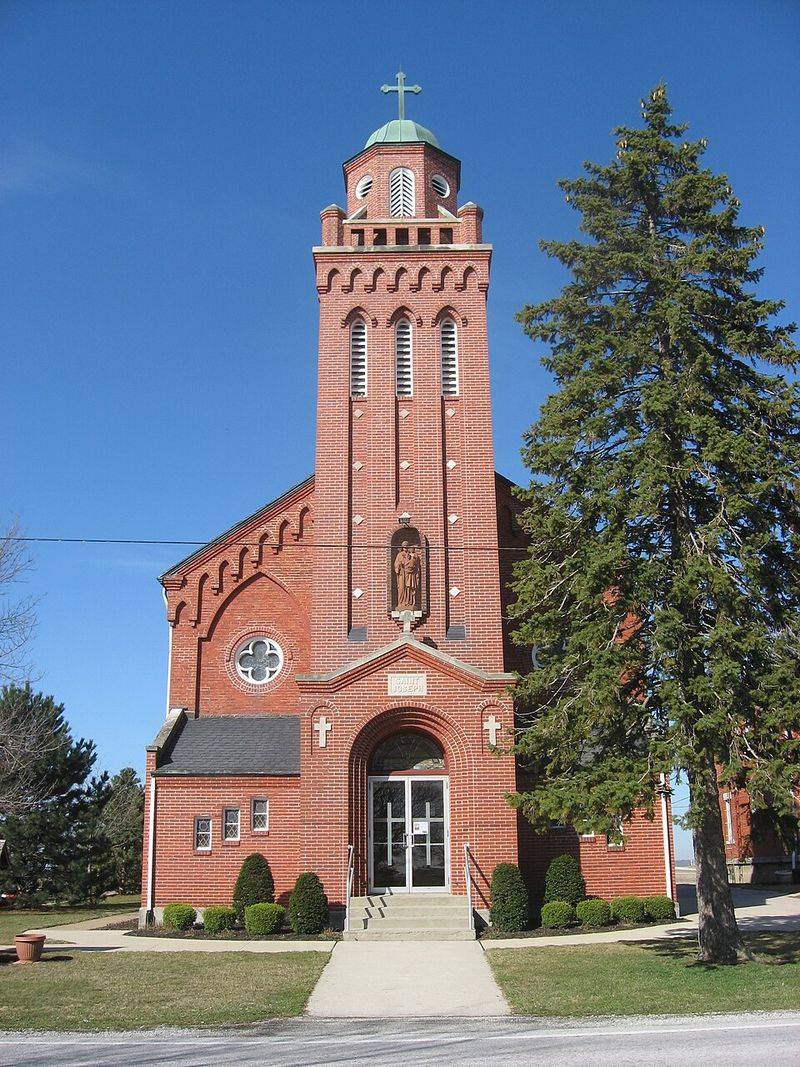
Out in the small community of Egypt, the scenery shifts from busier town centers to a more open rural setting. St. Joseph Catholic Church feels closely tied to the farmland around it, which makes the stop especially memorable for travelers exploring Ohio’s byway.
The church carries the kind of presence that seems simple at first glance, yet grows more meaningful the longer you stay.
Rural churches like this often served as more than houses of worship. They were gathering places where neighbors met, celebrated milestones, and supported one another through hard seasons.
Looking at St. Joseph Catholic Church today, it is easy to imagine wagons, early farm families, and church festivals bringing life to the area long before modern roads connected everything so quickly.
Because the setting is quieter, this stop rewards slow travel. Pull over safely, take in the steeple against the sky, and notice how the church anchors the landscape instead of competing with it.
If you enjoy photography, morning or late afternoon light can make the building and surrounding fields look especially peaceful.
Visitors should remember that small communities value courtesy. Keep noise low, avoid blocking driveways or church access, and check whether the building is open before expecting to step inside.
St. Joseph Catholic Church in Egypt offers a gentle reminder that Ohio history is not found only in big cities or famous landmarks. Sometimes it stands beside a country road, steady and familiar, holding the memory of a whole community in one beautiful sacred space.
3. Nativity of the Blessed Virgin Mary Catholic Church, Cassella
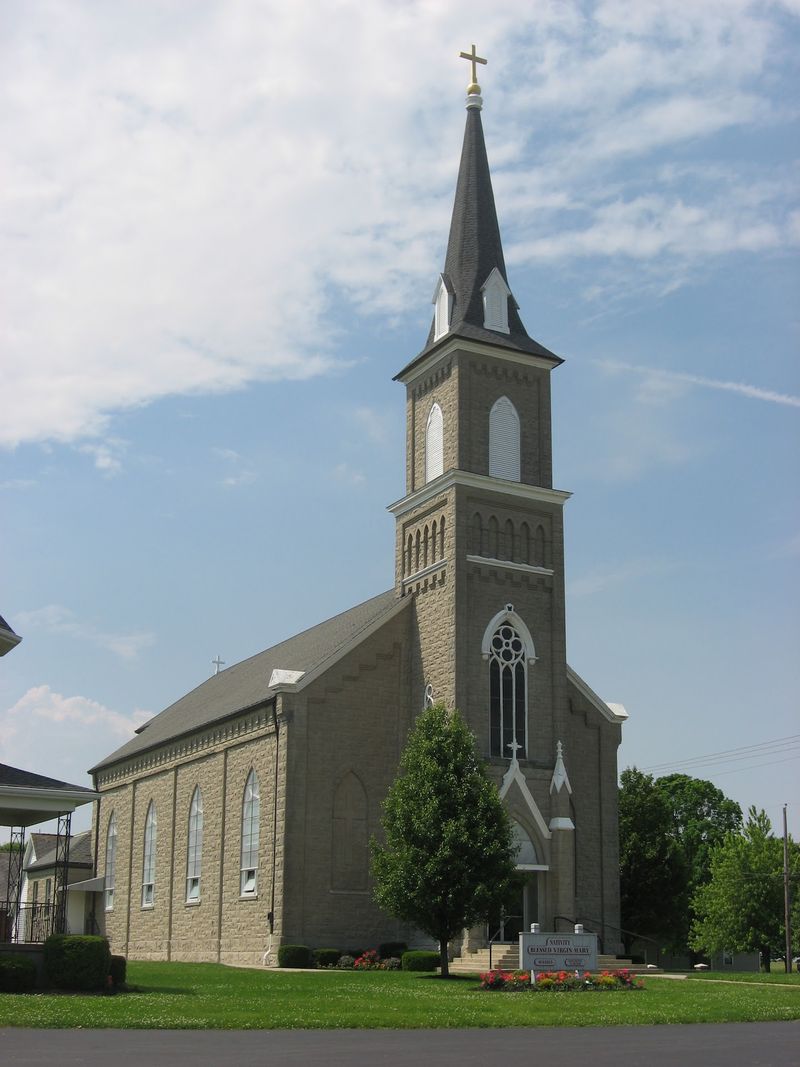
A name this long hints at a church with deep tradition, and the one in Cassella certainly lives up to that feeling. Nativity of the Blessed Virgin Mary Catholic Church stands as one of the route’s treasured landmarks, blending religious history with the everyday character of rural Ohio.
It has the kind of presence that makes visitors pause before they even reach the front doors.
The architecture helps tell the story. Strong lines, careful detailing, and a steeple that lifts your eyes upward give the church both dignity and warmth.
In small communities like Cassella, buildings like this were often the most impressive structures around, showing how much people were willing to give in order to create something lasting for future generations.
If you stop here, spend a little time noticing the setting as well as the church itself. The nearby homes, roads, and open land help explain why the byway feels so special.
It is not only about individual churches, but also about how these sacred places fit naturally into the landscape of western Ohio.
Travelers who enjoy local history may want to read parish materials or community markers, if available, to learn more about founding families and key dates. Respectful visits are always best, especially if parishioners are arriving for services or prayer.
Nativity of the Blessed Virgin Mary Catholic Church offers more than a beautiful photo. It gives a clear window into the devotion, craftsmanship, and community pride that shaped this part of Ohio and still give the byway its strong identity today.
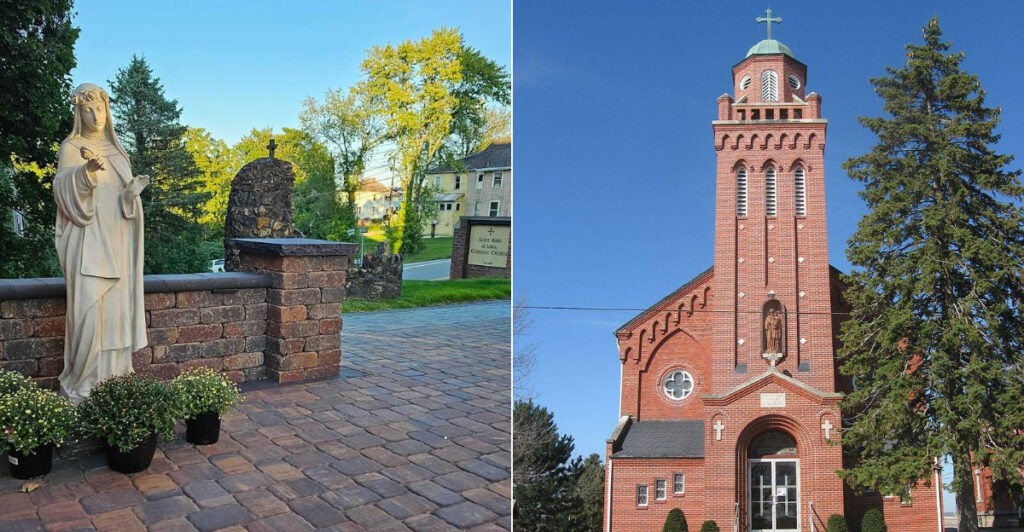
4. St. Rose Catholic Church, St. Rose
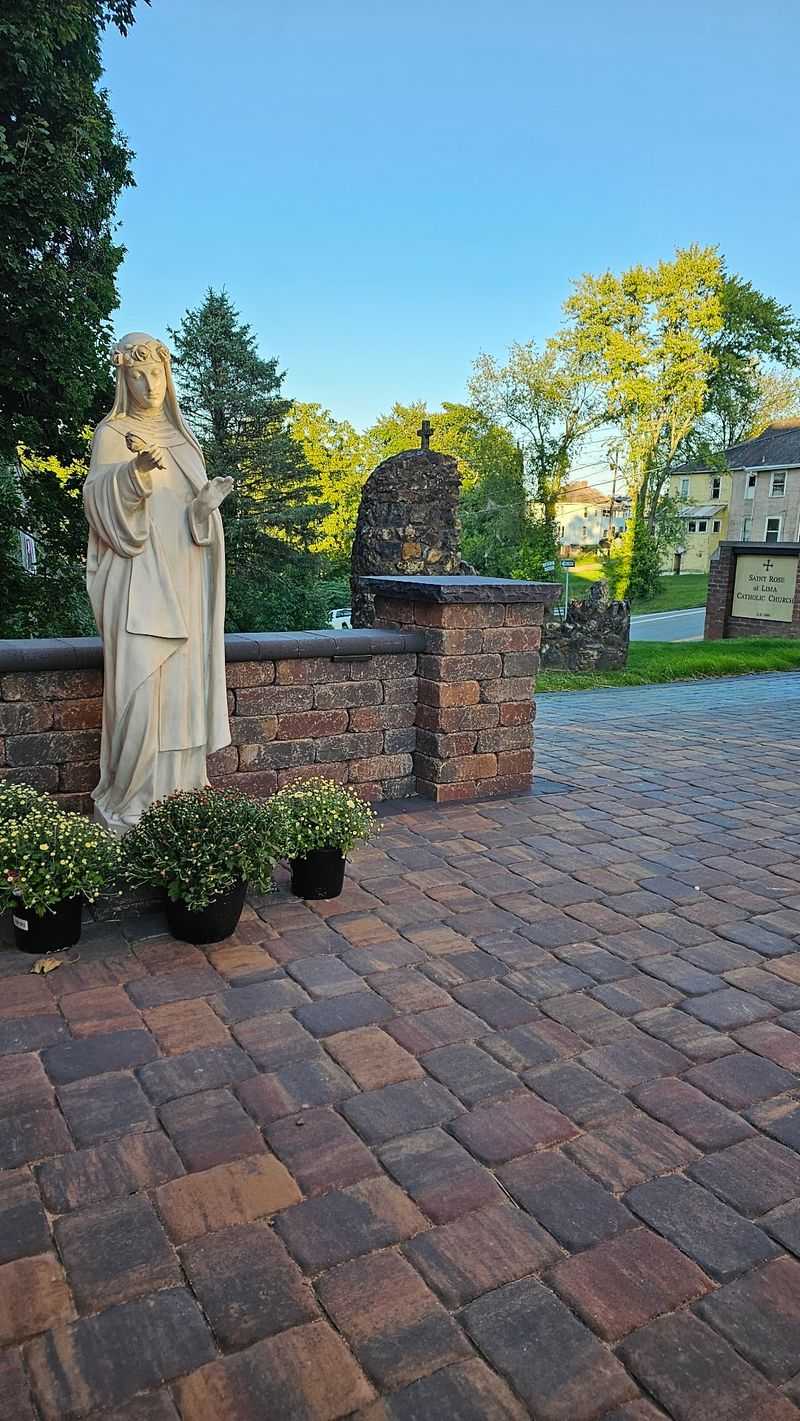
Some places feel welcoming before you even step out of the car, and St. Rose Catholic Church is one of them. Set in the small community that shares its name, the church gives travelers a close look at how faith and local identity grew together in this corner of Ohio.
The building feels rooted, familiar, and quietly proud.
Its historic character comes through in the strong church form, the tall steeple, and the way the structure serves as a visual center for the area. Generations of baptisms, weddings, funerals, and feast days have likely passed through these doors, making the church more than an old building.
It remains tied to the life stories of many families in and around St. Rose.
When visiting, it helps to slow down and look at details that are easy to miss. Notice the entryway, windows, and proportions of the building, then step back for a wider view from across the street if it is safe to do so.
That wider angle often reveals how church architecture was meant to stand out while still belonging to the town around it.
St. Rose Catholic Church also works well as a quiet pause on a longer driving day. Bring water, wear comfortable shoes, and leave room in your schedule so the byway does not feel rushed.
A short stop here can become a favorite memory because of its calm setting and clear sense of heritage. For anyone tracing Ohio’s scenic route of cross-tipped steeples, this church offers a graceful example of why these communities continue to treasure their sacred landmarks.
5. St. Sebastian Catholic Church, St. Sebastian
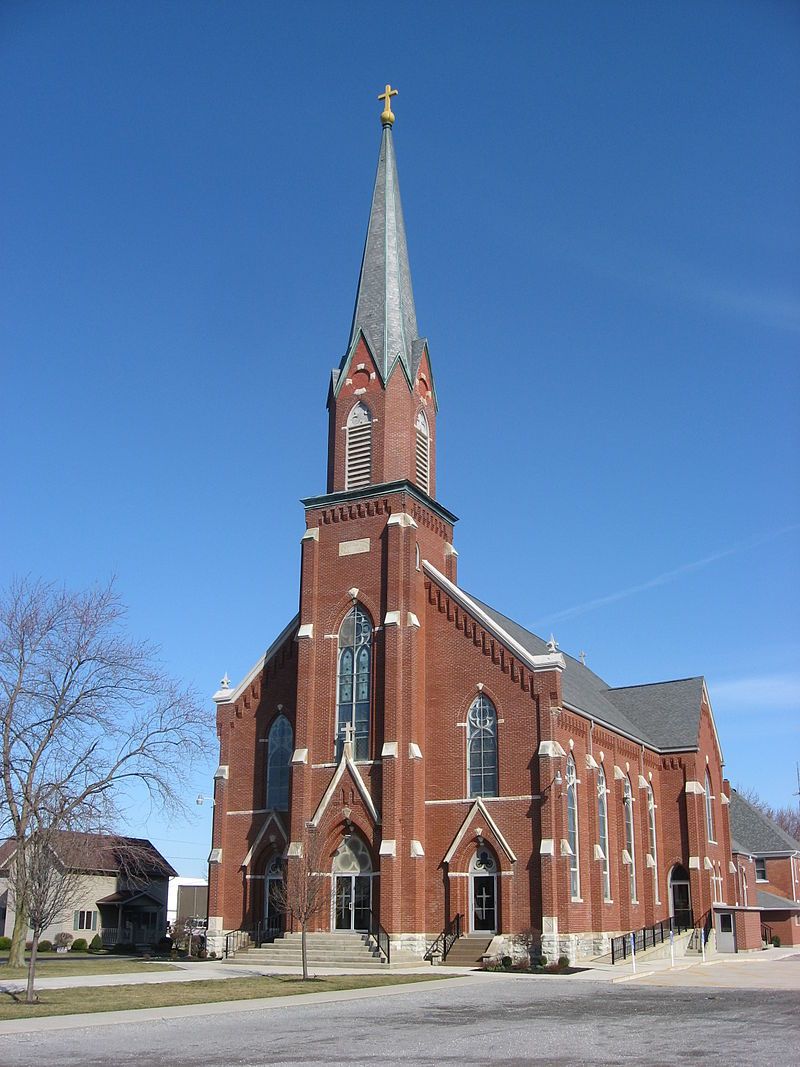
There is something memorable about arriving in a place called St. Sebastian and finding a church that seems to define the whole community. St. Sebastian Catholic Church is a key stop along the byway, known for the kind of historic church design that immediately catches the eye.
Its steeples, solid form, and village setting make it feel both impressive and deeply local.
The church reflects the strong Catholic heritage of western Ohio, where immigrant communities often worked together to build beautiful parish homes. That shared effort was not only about religion.
It was also about creating stability, preserving culture, and giving future generations a place to belong. You can sense that layered history when standing on the grounds.
For travelers, this stop offers a nice mix of architecture and atmosphere. The church photographs well, but it also rewards simple observation.
Listen to the quiet, watch how the building meets the sky, and notice how the surrounding roads and homes seem arranged around a familiar landmark that has guided people for years.
Planning ahead can make the visit easier. Check local parish information if you hope to go inside, and remember that worship schedules and community events may affect access.
A respectful visit is always the best approach, especially in small towns where parish life remains active and personal. St. Sebastian Catholic Church stands out not because it is flashy, but because it shows how beauty, faith, and local history can come together in a way that still feels alive.
That is one reason the Scenic Byway of Cross-Tipped Steeples leaves such a lasting impression on people who travel through this part of Ohio.
6. St. Aloysius Catholic Church, Carthagena
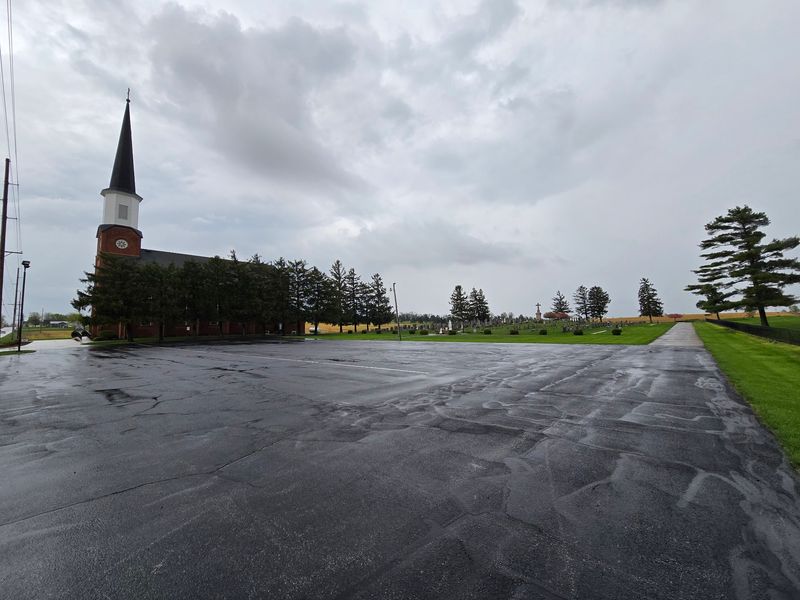
Tucked into Carthagena, St. Aloysius Catholic Church has a quieter kind of charm that sneaks up on you. Instead of relying on size alone, it draws attention through its sense of age, purpose, and connection to the surrounding countryside of Ohio.
The church feels like a keeper of local memory, standing watch over a community shaped by faith and farm life.
Historic parishes such as this one often grew from the determination of settlers who wanted both spiritual support and a strong social center. In places with fewer public buildings, the church became a main stage for community life.
That history still matters because it explains why these churches are treasured long after the first builders are gone.
A visit here can be especially rewarding for travelers who enjoy finding meaning in smaller details. Look at the steeple, the brickwork, and the overall shape of the building within the rural landscape.
You may also notice how the setting feels less commercial and more personal, which gives the stop a calm, reflective quality.
Because Carthagena is not a large destination, it helps to pair your visit with nearby byway stops for a fuller day trip. Keep a paper map or saved directions, since rural routes can feel more winding than expected.
St. Aloysius Catholic Church shows that some of Ohio’s most interesting places are not the loudest or busiest. They are the ones that invite you to pay attention, slow your pace, and appreciate the stories built into walls, windows, and steeples that have watched over generations.
7. St. Henry Catholic Church, St. Henry
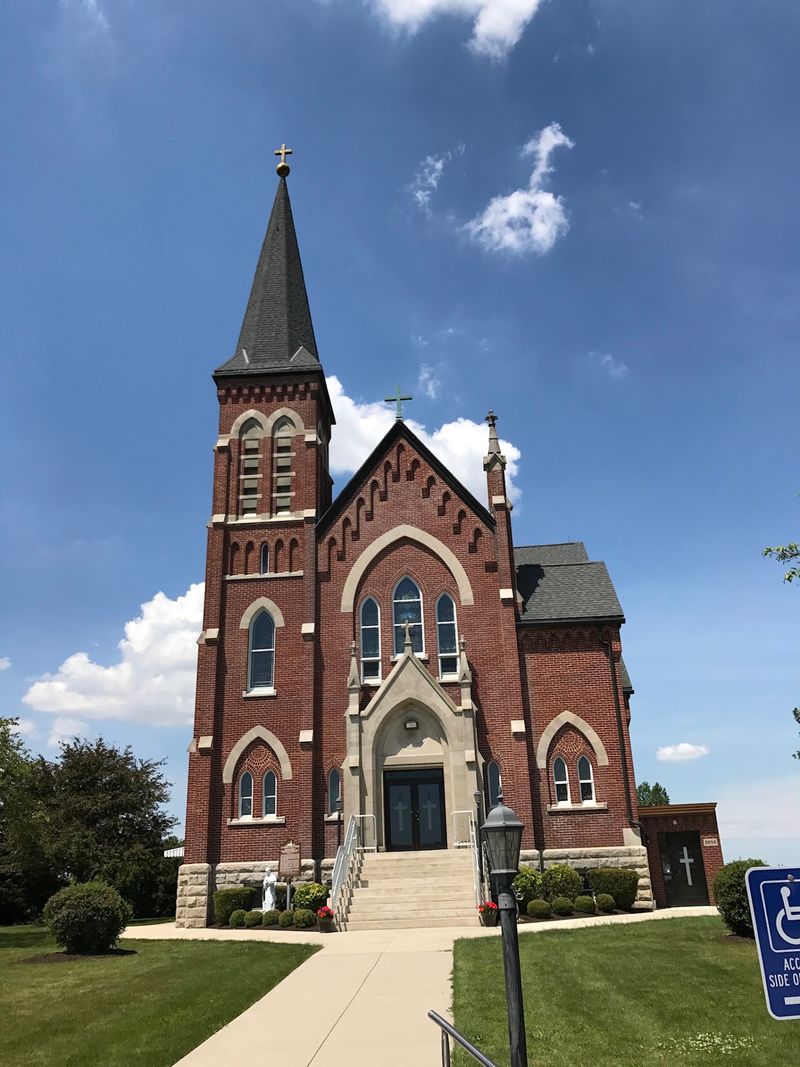
Big history often lives in small places, and St. Henry Catholic Church proves that point in a memorable way. Located in the village of St. Henry, the church has a commanding look that reflects the strong role Catholic tradition has played in the town’s identity.
It is the kind of landmark that helps visitors understand a community almost right away.
The building stands out for its scale and presence, especially when seen as part of the town streetscape. Churches like this were designed to inspire, but they also served a practical role as gathering places for worship, education, and social life.
In western Ohio, that combination helped shape tight-knit communities that still value their local heritage.
One smart way to enjoy this stop is to explore beyond the church for a few minutes. Walk through nearby streets, notice the town layout, and see how the church fits into daily life rather than sitting apart from it.
That connection between sacred space and ordinary life is part of what makes the byway feel genuine instead of staged.
Travelers with an interest in architecture may enjoy comparing St. Henry Catholic Church with other churches along the route. Each one has its own personality, and this stop offers a strong example of confidence and civic pride expressed through religious design.
Bring your camera, but also give yourself time to stand still and look upward. St. Henry Catholic Church captures the spirit of Ohio’s cross-tipped steeples by showing how a church can be both a spiritual home and a lasting symbol of the people who built their town around shared belief and hard work.
8. St. Wendelin Catholic Church, Wendelin
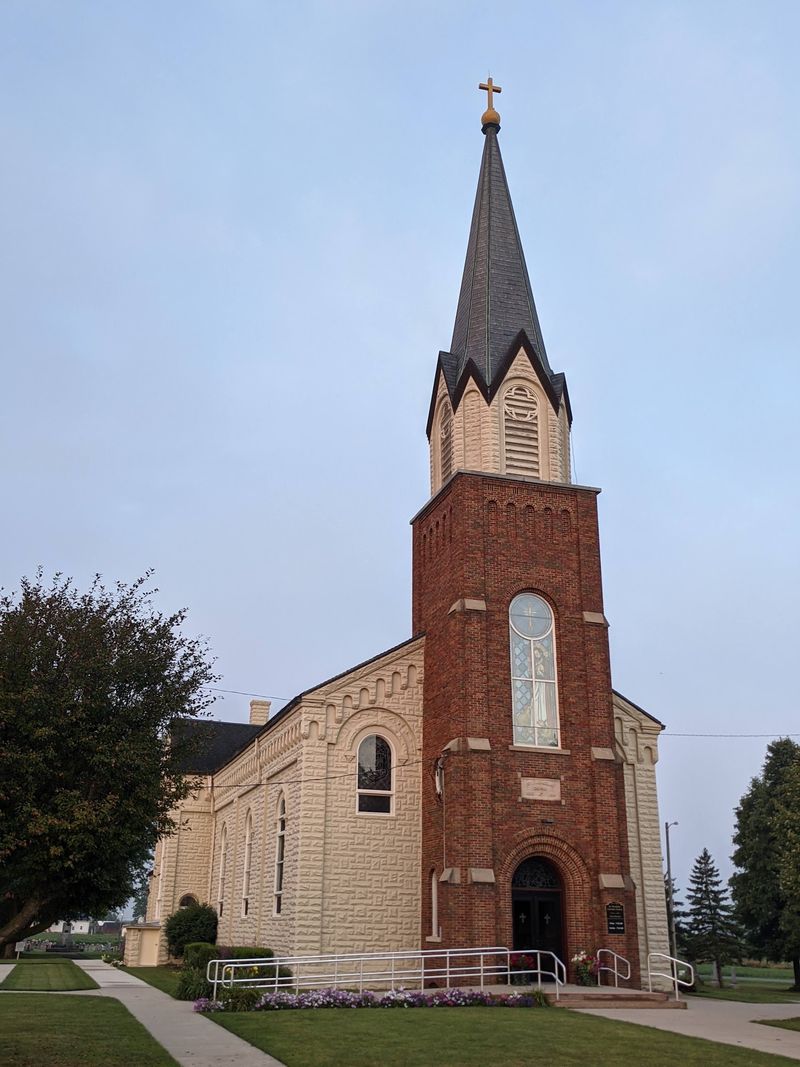
At Wendelin, the church and the community seem to speak in the same voice. St. Wendelin Catholic Church brings together rural calm, deep tradition, and the strong visual character that makes this Ohio byway so appealing.
It may not sit in a big city or a crowded tourist district, but that is part of what gives it lasting charm.
The church reflects a heritage shaped by immigrant faith and local dedication. In many western Ohio communities, parish buildings became anchors for both worship and neighborhood life, helping families stay connected across generations.
Looking at St. Wendelin Catholic Church today, you can still sense that it was built to endure, not just to serve a short season.
Visitors often enjoy stops like this because they feel personal. The churchyard, surrounding roads, and open landscape create a slower mood than many travel destinations.
If you are making a full byway drive, this is a good place to take a breath, stretch your legs, and let the setting remind you that Ohio history is often strongest in its small towns.
For the best experience, visit with a spirit of curiosity and patience. You may not find long lines, gift shops, or flashy exhibits, but you will find authenticity, which is harder to create and easier to remember.
St. Wendelin Catholic Church offers a simple lesson about travel: meaningful places do not always announce themselves loudly. Sometimes they stand quietly at a crossroads, shaped by belief and community effort, waiting for careful visitors to notice how much beauty and history can live in one peaceful corner of Ohio.
9. St. Bernard Catholic Church, Burkettsville
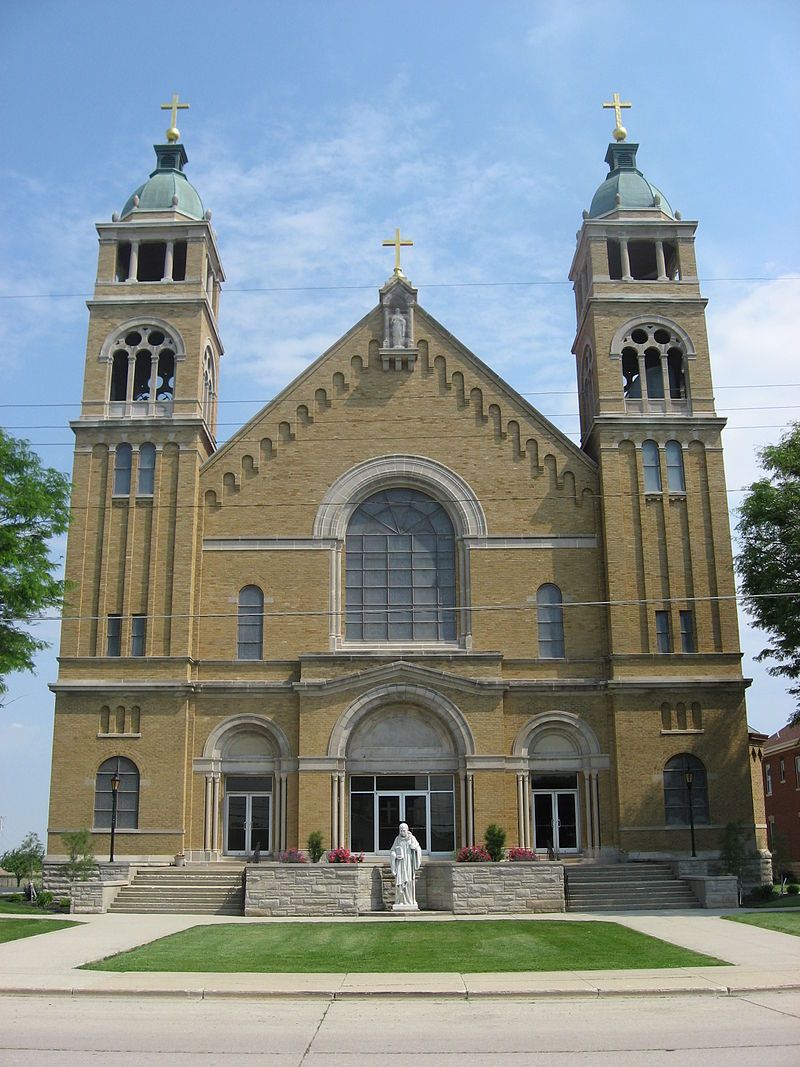
Burkettsville may be small, but the presence of St. Bernard Catholic Church gives the village a strong historic center. Travelers following the Scenic Byway of Cross-Tipped Steeples often find that stops like this become favorites because they feel genuine and unpolished in the best way.
The church speaks clearly of local pride without needing grand surroundings.
Its historic value comes from more than age alone. Churches like St. Bernard helped shape daily rhythms in Ohio communities, from Sunday worship to school events and holiday gatherings.
They were places where news traveled, friendships deepened, and families marked the biggest moments of life. That role helped turn parish buildings into emotional landmarks as well as architectural ones.
When you visit, try to see the church as part of a lived-in setting rather than a stand-alone attraction. Look at the nearby streets, homes, and open spaces that frame the building.
That broader view helps explain why these churches mattered so much. They were not isolated monuments.
They were the center of neighborhoods built on trust, routine, and shared values.
St. Bernard Catholic Church is also a reminder that road trips are often best when they include quieter stops between major destinations. Bring a flexible schedule, stay respectful of parish property, and leave room for surprise discoveries along the way.
A short visit can reveal plenty if you pay attention to place and atmosphere. In Burkettsville, the church stands as a steady sign of western Ohio’s religious heritage and the enduring bond between architecture, memory, and community life.
10. Holy Trinity Catholic Church, Coldwater
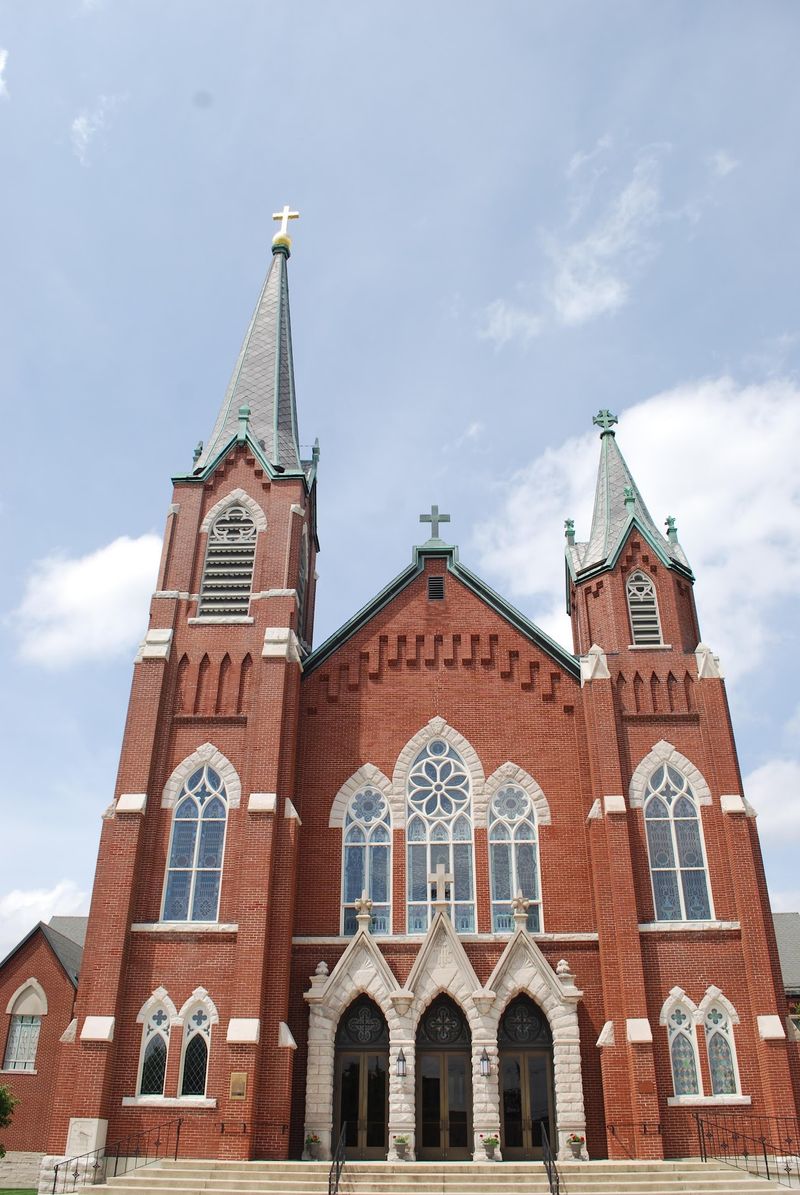
Coldwater offers one of the byway’s best-known communities, and Holy Trinity Catholic Church is a major reason why. The church carries a strong visual presence that fits well with the route’s theme of soaring steeples and rich parish history across Ohio.
Even for travelers who know little about church architecture, the building makes an immediate impression.
Holy Trinity Catholic Church reflects the region’s long-standing Catholic heritage and the energy of communities that invested heavily in their sacred spaces. Buildings like this were often designed to communicate hope, permanence, and shared identity.
In a growing town, a church could become both a spiritual home and a symbol of collective ambition.
One enjoyable part of visiting Coldwater is that the church can be paired with other local stops, making it easy to turn a single landmark into a fuller afternoon outing. Spend a little time around town, and you start to see how the parish relates to schools, homes, and the wider community.
That relationship helps explain why these churches continue to matter beyond their architecture.
If you are traveling the full Scenic Byway of Cross-Tipped Steeples, Holy Trinity Catholic Church makes a useful anchor stop because it combines beauty, accessibility, and a clear sense of place. Be respectful if services are taking place, and check parish information before trying to enter.
Even from the outside, there is plenty to appreciate in the design and setting. Holy Trinity Catholic Church captures the spirit of this Ohio route by showing how faith, craftsmanship, and town life can come together in one memorable landmark that still feels central to the community today.
11. Immaculate Conception Catholic Church, Celina
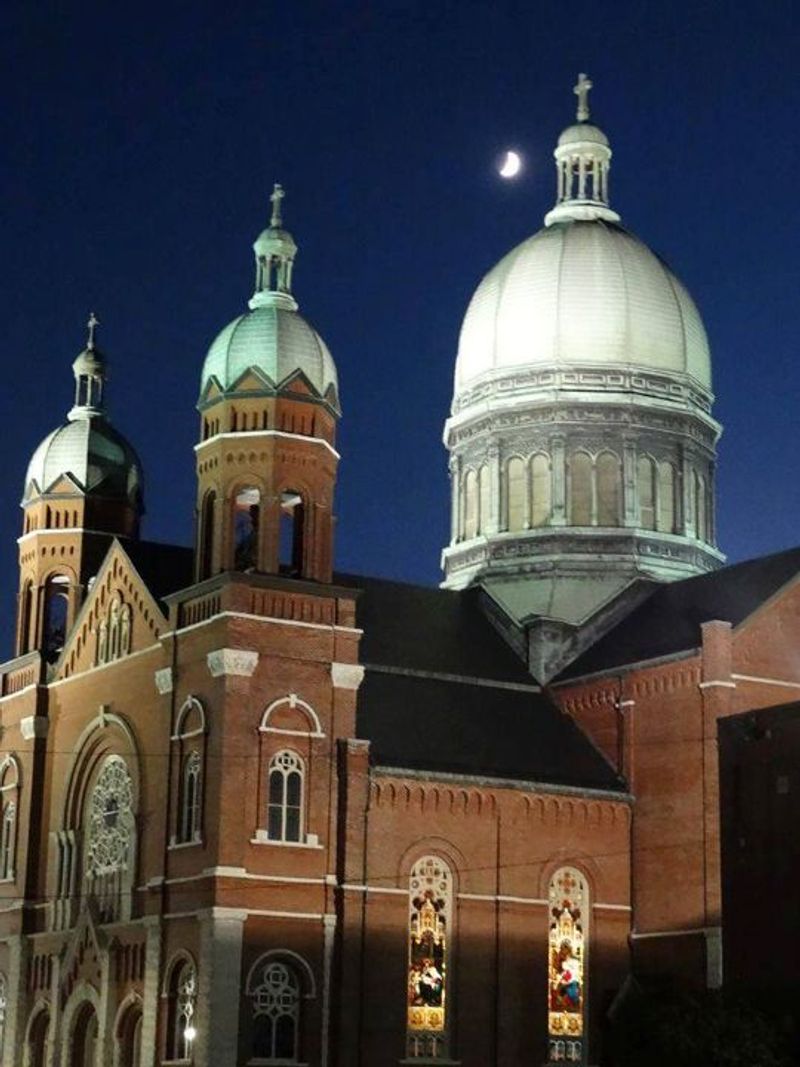
A byway filled with village churches ends on a strong note in Celina, where Immaculate Conception Catholic Church adds a slightly different setting to the journey. Here, the church connects historic faith traditions with the life of a larger community in western Ohio.
That change in scale gives the final stop its own energy while still fitting the route’s overall story.
The church stands as an important local landmark, shaped by the same regional Catholic heritage seen throughout the byway. Like the others, it reflects the effort of people who wanted to build something lasting, beautiful, and meaningful.
Yet in Celina, the church also feels woven into a busier town pattern, which can help visitors see how these traditions adapted in different places.
Exploring this stop can be especially rewarding if you take time to notice both the building and the surrounding area. Downtown streets, nearby businesses, and local activity create a different mood from the more rural parishes on the route.
That contrast is helpful because it shows the broad reach of the church communities that helped shape Ohio across town and country settings alike.
Immaculate Conception Catholic Church works well as either the last stop of the day or a starting point for deeper exploration in Celina. Keep your camera ready, but also stay mindful of parking, parish schedules, and respectful behavior on church grounds.
By the time you reach this church, the byway’s theme becomes very clear. These steeples are not only beautiful features on the skyline.
They are signs of Ohio history, community persistence, and the lasting power of places built to lift both eyes and hearts upward.
Share this story