Texas has something amazing waiting around every corner, and the best part is you don’t need to spend a dime to experience it. From stunning architectural landmarks to peaceful gardens and vibrant street art, the Lone Star State offers countless adventures that won’t cost you anything. Whether you’re a lifelong Texan or just visiting for the weekend, these free attractions will give you unforgettable memories without emptying your wallet.
1. Fort Worth Water Gardens (Fort Worth)
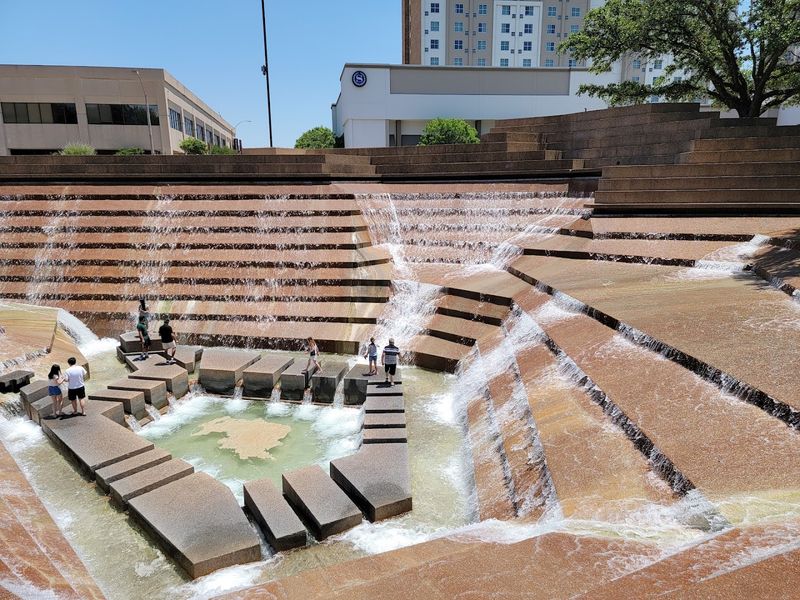
Tucked into downtown Fort Worth, this urban oasis feels like stepping into another dimension. The concrete structures rise and fall in dramatic angles, while 38,000 gallons of water cascade down the walls every minute. It’s loud, mesmerizing, and unlike anything else you’ll find in Texas.
Designed by architect Philip Johnson and dedicated in 1974, the gardens cover 4.3 acres of prime real estate. Three distinct pools create different moods: the Active Pool with its rushing waterfalls, the Quiet Pool with its cypress trees and still water, and the Aerating Pool with its mist and spray. Most visitors head straight for the Active Pool, where you can walk down steps into the center as water crashes around you.
Bring a camera because the photo opportunities are endless. The interplay of light, shadow, and water creates dramatic shots throughout the day. Early morning offers softer light and fewer crowds, while sunset bathes everything in golden hues.
The gardens sit right next to the Fort Worth Convention Center, making them easy to combine with other downtown activities. Parking can be tricky on weekends, but street parking is usually available within a few blocks. The entire experience takes about 30 to 45 minutes if you’re just walking through, but many people bring lunch and stay longer.
Summer gets scorching hot, but the water keeps things surprisingly comfortable. The sound of rushing water drowns out city noise, creating a peaceful bubble in the middle of urban chaos. Kids love running around the edges, though parents should keep close watch near the Active Pool’s steep steps.
The gardens underwent major renovations in 2007 after being featured in the movie Logan’s Run. Today they’re maintained beautifully and remain one of Fort Worth’s most photographed spots. Whether you need a quick mental reset or want to explore something architecturally unique, this downtown gem delivers without asking for your credit card.
2. San Antonio Missions National Historical Park (San Antonio)
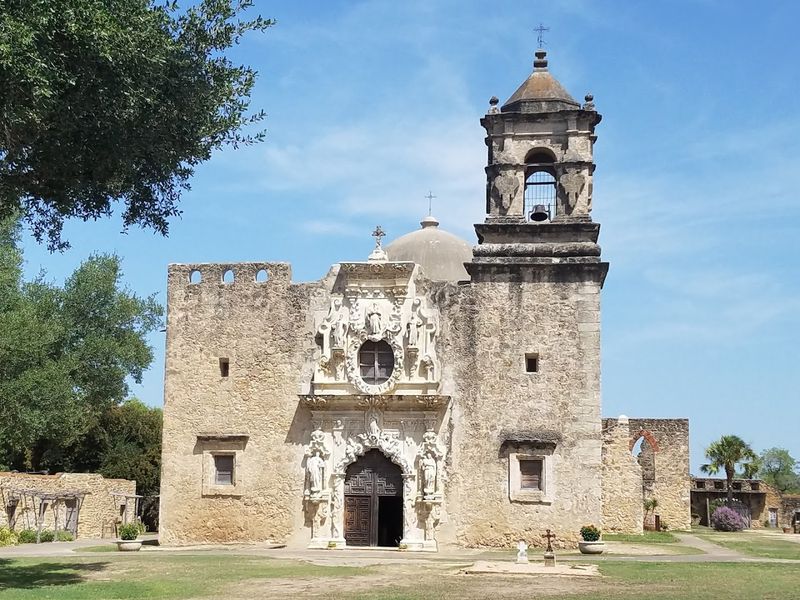
Four Spanish colonial missions stretch along the San Antonio River, telling stories that go back nearly 300 years. Mission Concepción, Mission San José, Mission San Juan, and Mission Espada form the only UNESCO World Heritage Site in Texas. Walking these grounds connects you directly to the people who built communities here centuries ago.
Each mission has its own personality and layout. Mission San José earned the nickname “Queen of the Missions” for good reason—its ornate Rose Window and reconstructed granary showcase incredible craftsmanship. Mission Concepción still displays original frescoes on interior walls, with colors that have survived since the 1700s.
The missions aren’t just about buildings. You’ll find active acequias (irrigation ditches) that still flow with water, using the same engineering principles from Spanish colonial times. These water systems supported farming communities and demonstrate how settlers adapted to South Texas conditions.
Rangers offer free guided tours on weekends, sharing details about daily life, religious practices, and interactions between Spanish missionaries and indigenous peoples. The stories go beyond simple history lessons—they explore complex cultural exchanges, survival strategies, and community building. Self-guided tours work great too, with informative plaques throughout each site.
All four missions remain active Catholic parishes, so mass still happens in these historic spaces. Visitors are welcome, but respectful behavior is essential. The park also includes hiking and biking trails connecting the missions, though distances between them require planning.
Mission San José hosts cultural demonstrations on weekends, including tortilla making and traditional crafts. These hands-on experiences help visitors understand daily life beyond the religious aspects. The park’s visitor center provides context before you explore, with exhibits explaining the mission system’s broader impact.
Bring water and comfortable shoes because you’ll be doing plenty of walking. Each mission deserves at least 30 minutes, and serious history buffs could easily spend an entire day exploring all four locations and their surrounding grounds.
3. Texas State Capitol (Austin)
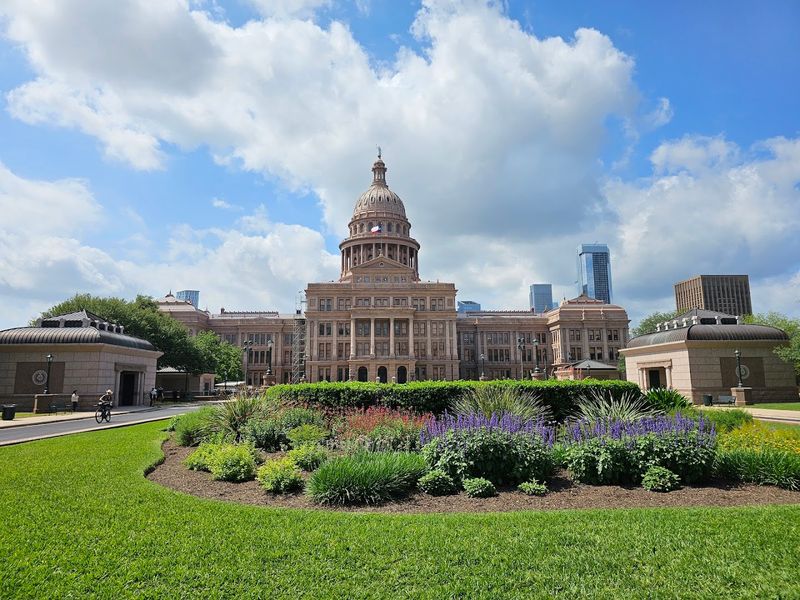
Standing taller than the U.S. Capitol in Washington D.C., this pink granite beauty dominates Austin’s skyline. The building opened in 1888 and remains one of the most impressive state capitol structures in America.
Its Renaissance Revival architecture and sheer size make it impossible to ignore, even in a city packed with interesting buildings.
Free guided tours run throughout the day, led by knowledgeable guides who share fascinating details about Texas politics, architecture, and history. You’ll walk through the rotunda, peek into legislative chambers, and learn stories about the building’s construction. The rotunda floor features terrazzo portraits of six flags that have flown over Texas, while the dome soars 218 feet overhead.
The building itself tells stories through its details. Look for brass door hinges shaped like Texas stars, intricate woodwork in the legislative chambers, and portraits of every Texas governor lining the walls. The Senate chamber features custom desks built in 1888, still used by senators today.
Underground tunnels connect the Capitol to several surrounding buildings, creating an entire government complex beneath your feet. The Capitol Extension, completed in 1993, added 667,000 square feet of space underground without disrupting the original building’s appearance. Visitors can explore parts of this underground area during tours.
The surrounding Capitol grounds cover 22 acres and include 17 monuments and memorials. The grounds feature heritage oak trees, walking paths, and plenty of benches for taking breaks. You’ll find monuments honoring everyone from Texas Rangers to Holocaust survivors, each adding layers to Texas history.
Security screening is required to enter, similar to airport procedures, so leave extra time. Tours last about 45 minutes but you’re welcome to explore on your own afterward. The visitor center in the underground extension offers exhibits about Texas government and history.
Evening visits offer a different perspective as the building lights up against the night sky. The grounds stay open after the building closes, perfect for photographs or casual strolls through downtown Austin.
4. Gerald D. Hines Waterwall Park (Houston)
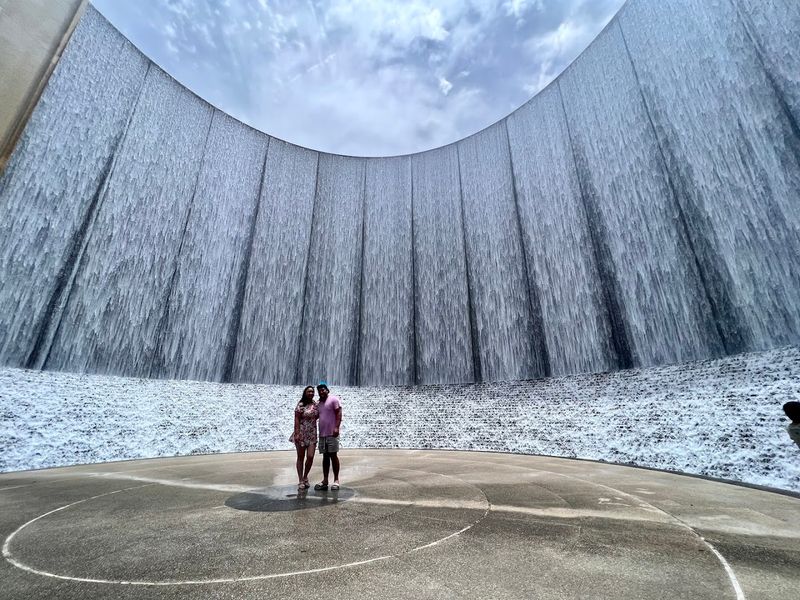
Water crashes down a 64-foot semi-circular fountain, creating a wall of white noise and mist in the heart of Houston’s Galleria area. This architectural fountain pumps 11,000 gallons of recycled water per minute, creating one of Houston’s most popular photo spots. The roar of falling water blocks out traffic noise from nearby streets, transforming a small park into an unexpected retreat.
Completed in 1985, the waterfall was designed as part of Williams Tower (formerly Transco Tower). The U-shaped design creates an amphitheater effect, with stairs leading up to an observation deck where you can stand behind the falling water. Kids love running through the mist on hot days, while adults appreciate the cooling effect and dramatic views.
The park sits in a two-and-a-half-acre oak grove, providing shade and greenery despite being surrounded by commercial development. Live oak trees frame the waterfall, their branches creating natural archways over walking paths. Benches scattered throughout let you sit and enjoy the scenery without feeling rushed.
Parking can be challenging during weekday business hours when nearby office workers take lunch breaks here. Weekends and evenings offer easier access and fewer crowds. Street parking is available, and some nearby businesses allow public parking after hours.
The waterfall operates continuously during daylight hours, with lighting added after dark for evening visits. Sunset creates beautiful lighting conditions as natural and artificial light mix. The combination of illuminated water and surrounding trees creates an almost magical atmosphere.
Photographers flock here for engagement photos, family portraits, and architectural shots. The constant movement of water creates interesting long-exposure effects for camera enthusiasts. Just be prepared for mist that can affect equipment if you get too close.
This isn’t a place where you’ll spend hours exploring, but it’s perfect for a 20-minute break from Houston’s intensity. The combination of water, trees, and open space provides a mental reset that’s surprisingly effective. Bring a book, pack a snack, or just sit and watch the water fall—sometimes the best free activities are the simplest ones.
5. Pioneer Plaza (Dallas)
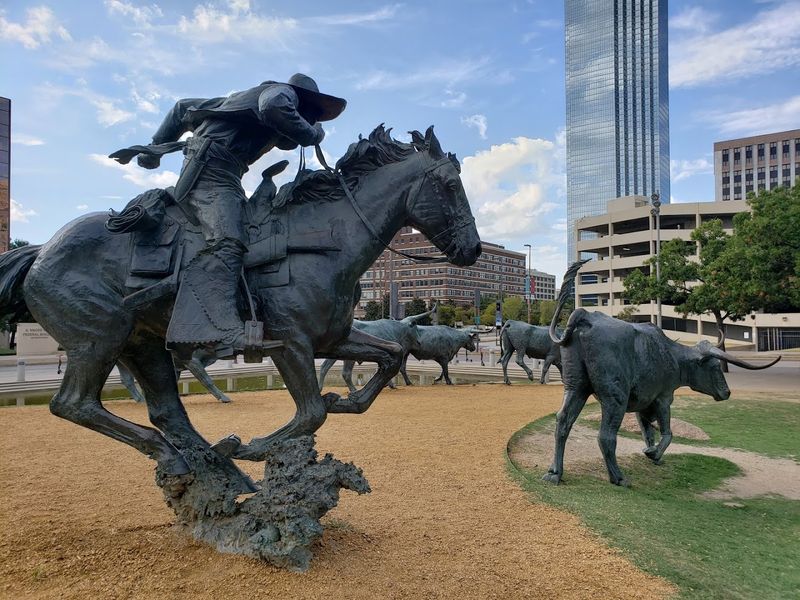
Forty bronze longhorn cattle stampede down a limestone cliff in the middle of downtown Dallas. These life-sized sculptures capture a moment from Texas history when cattle drives defined the state’s economy. Three bronze cowboys on horseback guide the herd, frozen mid-action in one of the largest bronze monuments in the world.
Created by artist Robert Summers and installed in 1994, the sculpture weighs more than 100 tons total. Each steer was individually crafted with unique poses and expressions, making every animal worth examining up close. The attention to detail extends to the cowboys’ gear, the texture of the cattle’s hides, and even the dust kicked up beneath their hooves.
The plaza sits at the corner of Young Street and Griffin Street, near the Dallas Convention Center. A limestone cliff and waterfall provide the backdrop, with native Texas landscaping completing the scene. The designers created an environment that feels authentic to 1850s Texas, even though you’re surrounded by modern skyscrapers.
This isn’t just a photo opportunity—it’s a chance to walk among the sculptures and appreciate the scale. You can stand right next to the cattle, touch the bronze, and imagine the thundering sound of an actual stampede. Kids love climbing on the lower rocks and posing with the animals.
The plaza includes interpretive markers explaining the history of cattle drives and their economic impact on Texas. The Shawnee Trail, one of the first major cattle trails, ran through Dallas in the 1840s. By the 1860s, millions of cattle had been driven north from Texas to railroad connections in Kansas.
Parking downtown requires planning, but the plaza is easily accessible from several nearby garages. The area is well-lit at night, making evening visits safe and visually interesting as lights illuminate the bronze sculptures. Surrounding office buildings create a dramatic contrast between old and new Texas.
The plaza works perfectly as a quick stop while exploring downtown Dallas. Combine it with nearby attractions like the Sixth Floor Museum or Dealey Plaza for a full day of free activities. Most visitors spend 15 to 30 minutes here, though photography enthusiasts often linger longer to capture different angles and lighting conditions.
6. Klyde Warren Park (Dallas)
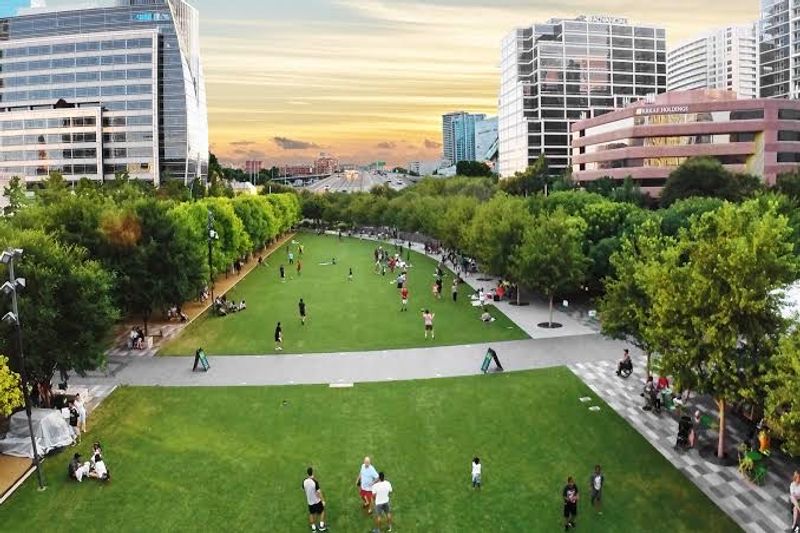
Built on top of a highway, this five-acre park literally bridges downtown Dallas and the Uptown neighborhood. Opened in 2012, Klyde Warren Park transformed unused air rights above Woodall Rodgers Freeway into one of Dallas’s most beloved public spaces. Cars zoom beneath your feet while you relax on grass, grab food from trucks, or watch kids play in fountains.
The park’s design maximizes every square foot. You’ll find a children’s park with climbing structures, a reading room with free books, ping-pong tables, a dog park, and multiple lawn areas perfect for picnics or sunbathing. Food trucks line one edge, offering everything from tacos to ice cream.
Seating options include traditional benches, lounge chairs, and shaded tables.
Free programming happens almost daily. Morning yoga classes, afternoon concerts, movie nights, and fitness boot camps fill the calendar year-round. The park’s events team books local musicians, food vendors, and activity organizers to keep things interesting.
Check their schedule before visiting to catch special events.
The Perot Museum of Nature and Science sits right next to the park’s north edge, while the Dallas Museum of Art and Nasher Sculpture Center are just a short walk away. This central location makes Klyde Warren Park an ideal base for exploring Dallas’s Arts District. You can easily spend an entire day in this area without driving anywhere.
Shade structures and mature trees provide relief from Texas heat, though summer afternoons still get intense. The park’s design encourages air circulation, making it more comfortable than you might expect for a space surrounded by concrete and glass. Water features and misting stations help cool things down during peak heat.
Parking can be validated at nearby garages if you make purchases from park vendors. Street parking exists but fills quickly on weekends. The park is also accessible via Dallas’s DART rail system, with stations within walking distance.
What makes this park special isn’t just the engineering feat of building over a freeway—it’s how the space brings together diverse crowds. Families, business people on lunch breaks, tourists, and dog owners all share the space comfortably. The park proves that good public spaces can thrive even in car-dependent cities like Dallas.
7. The Menil Collection (Houston)
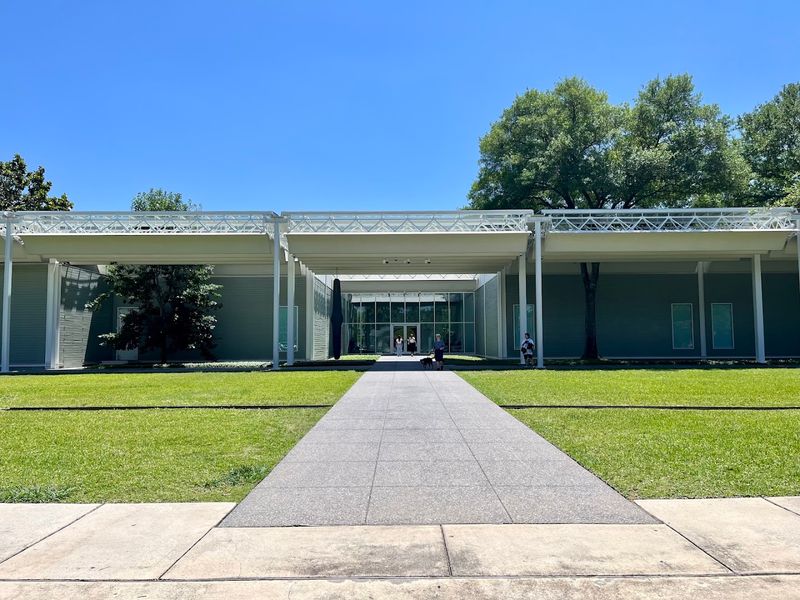
One of the world’s most important private art collections opens its doors for free every day except Monday. The Menil Collection houses more than 17,000 works spanning from ancient to contemporary art, all displayed in a building designed by Renzo Piano. Natural light filters through the ceiling louvers, creating perfect viewing conditions that change throughout the day.
Dominique and John de Menil spent decades assembling this collection, focusing on quality over quantity. You’ll find works by Picasso, Warhol, Magritte, and Rothko alongside African sculptures, Byzantine artifacts, and Surrealist pieces. The collection’s strength lies in its depth—multiple works by featured artists allow you to understand their evolution and techniques.
The building itself deserves attention. Piano designed the space to feel intimate rather than overwhelming, with small galleries connected by hallways. The famous “Menil roof” uses custom louvers to diffuse Houston’s harsh sunlight, protecting artwork while creating a luminous viewing environment.
Walking through feels more like visiting someone’s very sophisticated home than touring a traditional museum.
The surrounding campus includes several other buildings worth exploring. The Cy Twombly Gallery, also designed by Piano, houses works by the abstract expressionist in a dedicated space. The Byzantine Fresco Chapel preserves 13th-century frescoes in a contemplative setting.
The Menil Drawing Institute, opened in 2018, focuses on works on paper with rotating exhibitions.
The neighborhood around the museum, known as the Menil District, features bungalow-style houses painted in shades of gray. The de Menils purchased properties around their museum to maintain the area’s residential character. Today, the district includes galleries, bookstores, and restaurants, all walkable from the main museum.
Photography policies vary by gallery, so check signs before snapping pictures. The museum shop offers excellent art books and unique gifts, though shopping isn’t required to enjoy your visit. Staff members are knowledgeable and happy to discuss works or answer questions.
Plan at least two hours for a thorough visit, though art enthusiasts could easily spend an entire afternoon here. The museum’s free admission policy means you can return multiple times to explore different sections or revisit favorite pieces. This approach to accessibility reflects the de Menils’ belief that art should be available to everyone.
8. Japanese Tea Garden (San Antonio)
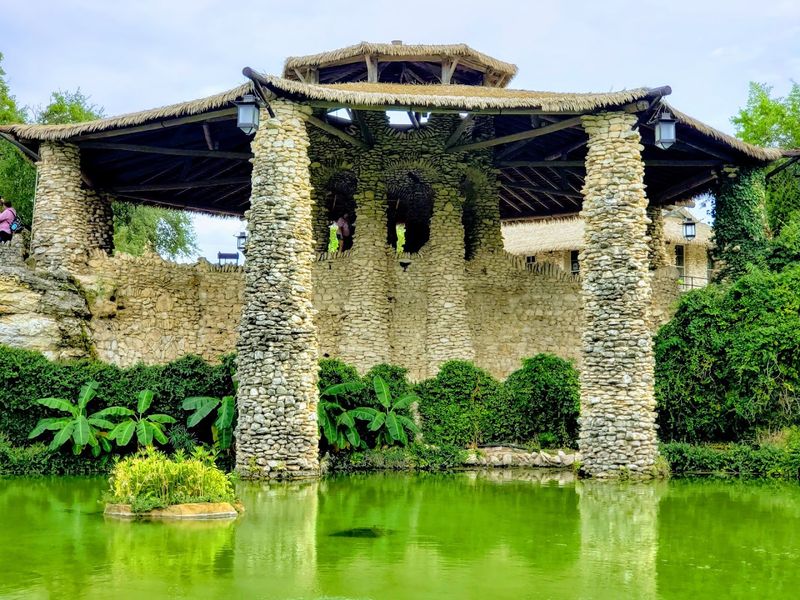
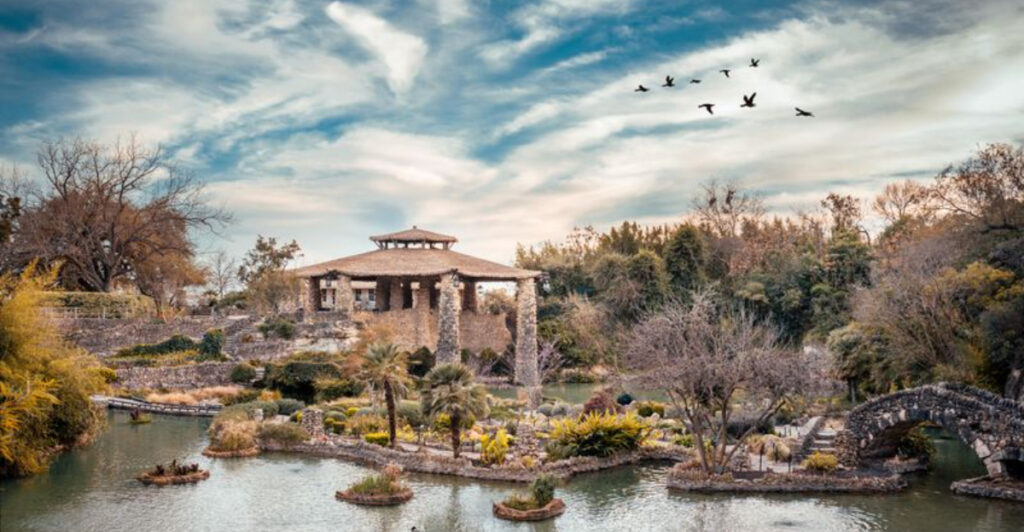
Built into an abandoned cement quarry, this garden transforms industrial scars into peaceful beauty. Stone pathways wind past koi ponds, over moon bridges, and through spaces that feel transported from Japan. The garden’s history is complex and fascinating, involving a Japanese-American family who lived and worked here for decades.
The site started as a rock quarry in the late 1800s, supplying limestone for San Antonio’s growing infrastructure. After the quarry closed, Parks Commissioner Ray Lambert hired Japanese artist Kimi Eizo Jingu in 1917 to transform the space into a tea garden. The Jingu family lived on-site, maintaining the gardens and operating a tea house for visitors.
During World War II, anti-Japanese sentiment led to the garden being renamed the “Chinese Tea Garden,” and the Jingu family was forced to leave. This painful chapter lasted until 1984, when the city officially restored the original name and acknowledged the Jingu family’s contributions. Today, plaques throughout the garden tell this fuller history.
The garden’s design works with the quarry’s natural features rather than fighting them. Limestone cliffs create dramatic backdrops for plantings, while former quarry pits became ponds filled with massive koi fish. A 60-foot waterfall cascades over rocks, feeding the ponds below.
Bridges and pathways encourage slow exploration, revealing new views around every corner.
The original pavilion, built using quarry stone, sits near the upper entrance. This structure has been renovated but maintains its historic character. Nearby, wisteria vines drape over arbors, creating purple tunnels during spring blooming season.
The garden includes both Japanese design elements and plants that thrive in San Antonio’s climate.
The garden sits within Brackenridge Park, making it easy to combine with other activities. The San Antonio Zoo is next door, and the park offers walking trails, playgrounds, and picnic areas. Parking can fill up on weekends, especially during peak blooming seasons in spring and fall.
Visit early morning for the most peaceful experience and best light for photography. The garden’s compact size means you can see everything in 30 to 45 minutes, though many visitors linger longer on benches, watching koi and enjoying the tranquility.
9. Barton Creek Greenbelt (Austin)
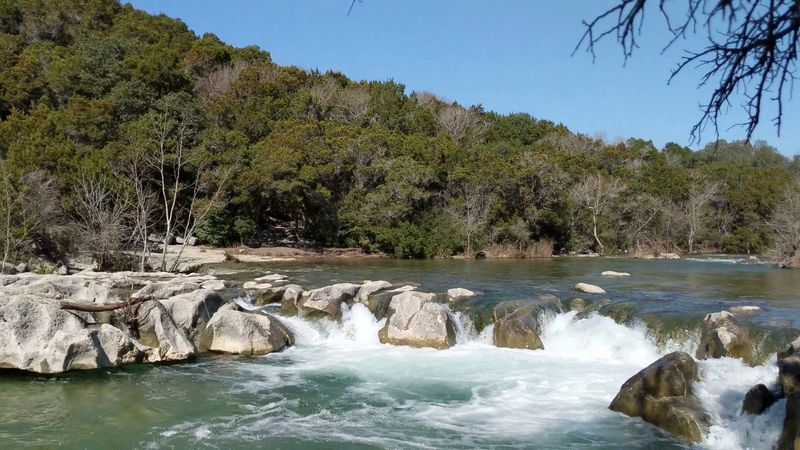
Eight miles of trails follow Barton Creek through the heart of Austin, offering hiking, swimming, and rock climbing without leaving city limits. This greenbelt preserves a limestone canyon ecosystem where spring-fed pools provide year-round swimming opportunities. The trail system attracts everyone from serious hikers to families looking for easy creek access.
Several access points serve different purposes. The main entrance at Loop 360 (Capital of Texas Highway) offers the most parking and easiest trail access. Sculpture Falls, about 1.5 miles in, is the most popular swimming destination with a small waterfall and deep pool.
The hike there is moderate, with rocky sections and creek crossings that require good footwear.
Water levels vary dramatically depending on recent rainfall. After heavy rains, the creek becomes impassable and dangerous. During dry periods, some sections reduce to shallow streams or dry beds.
Spring typically offers the best conditions, with flowing water and comfortable temperatures. Summer brings crowds seeking relief from heat, while fall and winter offer quieter experiences.
The greenbelt’s limestone formations create interesting geology to explore. You’ll hike past caves, overhangs, and layered rock faces that tell millions of years of geological history. Rock climbers use several cliff faces along the trail, and watching them work routes adds entertainment while you rest.
Dog owners love this trail because dogs can run off-leash in most sections. The creek provides natural water sources and cooling opportunities for four-legged hikers. Be prepared for muddy paws and wet dogs if you bring your pet.
The trail’s popularity means you’ll rarely have solitude, especially near main access points and swimming holes. Weekday mornings offer the quietest conditions. Leave No Trace principles are crucial here—pack out all trash, stay on established trails, and respect the natural environment.
This greenbelt exists because Austin residents fought to preserve it from development.
Bring water, snacks, and appropriate footwear. The trail surface ranges from packed dirt to loose rocks to creek crossings requiring wading. Cell phone coverage is spotty in the canyon, so download trail maps before heading out.
Swimming is at your own risk—there are no lifeguards or facilities beyond the trailhead.
10. Deep Ellum Murals (Dallas)

Massive murals cover buildings throughout this historic Dallas neighborhood, creating one of the largest outdoor art galleries in Texas. Deep Ellum’s walls serve as canvases for local and international artists, with new pieces appearing regularly. Walking these streets means discovering art around every corner, from abstract designs to realistic portraits to political statements.
The neighborhood’s artistic tradition goes back decades, but the current mural boom started around 2015 when property owners began inviting artists to paint their buildings. Today, you’ll find more than 100 murals within a few walkable blocks. Some pieces are massive, covering entire building sides, while others occupy small spaces between windows or doorways.
Main Street and Elm Street hold the highest concentration of murals, but exploration rewards those who wander side streets and alleys. The constantly changing nature of street art means some pieces disappear as new ones take their place. This evolution keeps the neighborhood feeling fresh even for repeat visitors.
Several murals have become Dallas icons. The “Come Closer” butterfly wings by Nils Westergard are constantly surrounded by people taking photos. The “Good Morning Beautiful” piece by Tex Moton greets visitors with a positive message.
The “Deep Ellum” text mural has become the neighborhood’s unofficial logo, appearing in countless social media posts.
Artists use different styles and mediums, from spray paint to acrylics to wheat paste. Some murals carry social messages about community, equality, or environmental issues. Others exist purely for aesthetic beauty or playful interaction.
The variety ensures there’s something for every artistic taste.
The neighborhood comes alive at night when many businesses open and murals are illuminated by street lights and neon signs. Daytime visits offer better light for photography and easier parking. The area is also known for live music venues, breweries, and restaurants, making it easy to combine mural hunting with other activities.
Respect the art and property—don’t touch murals or add your own marks. Many pieces took artists days or weeks to complete. Some building owners welcome visitors, while others prefer you view from the sidewalk.
Use common sense and courtesy.
Comfortable shoes are essential because you’ll be doing plenty of walking. The entire mural district covers about half a square mile, easily explored in an afternoon. Bring a charged phone for photos because you’ll want to document these larger-than-life artworks.
11. The Alamo Plaza And Exterior Grounds (San Antonio)
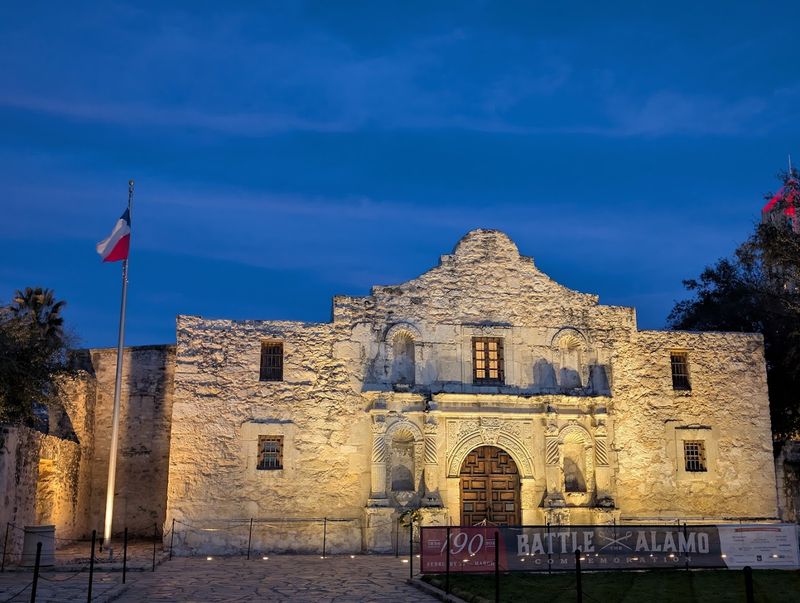
The most famous building in Texas history stands in downtown San Antonio, its limestone facade instantly recognizable. The Alamo’s exterior grounds and plaza are free to explore, even though the interior church requires timed tickets. Walking the grounds connects you to the site where 189 defenders died during a 13-day siege in 1836, an event that became a rallying cry for Texas independence.
The compound originally served as Mission San Antonio de Valero, founded in 1718 by Spanish missionaries. By 1793, the mission was secularized and eventually became a military outpost. The famous battle in March 1836 lasted less than two weeks but changed Texas history forever.
Understanding this timeline helps make sense of the site’s architecture and layout.
The plaza in front of the church offers space to sit, reflect, and photograph the iconic facade. Interpretive markers explain the battle’s timeline and key figures like William B. Travis, James Bowie, and Davy Crockett.
The grounds include the Long Barrack, which housed soldiers and missionaries at different times in the site’s history.
Recent renovations have improved visitor flow and interpretation while maintaining the site’s dignity. The Alamo is a shrine and burial site, so respectful behavior is expected. Men are asked to remove hats, and quiet voices are appreciated.
These requests honor those who died here and maintain the site’s solemn atmosphere.
The surrounding area has changed dramatically since 1836. Modern buildings now tower over the mission, and Alamo Plaza bustles with tourists, street performers, and vendors. This juxtaposition between historic significance and modern commercialism creates interesting tensions that visitors experience firsthand.
Free guided tours of the grounds happen regularly, led by knowledgeable staff who share details beyond what plaques can convey. These tours last about 30 minutes and provide context about the battle, the site’s earlier history, and ongoing preservation efforts. Self-guided exploration works fine too, with plenty of signage throughout the grounds.
The best times to visit are early morning or late afternoon when crowds thin out and light improves for photography. The site sits in the heart of downtown San Antonio, within walking distance of the River Walk, making it easy to include in a day of exploring the city. The grounds themselves take about 30 minutes to explore thoroughly, though history enthusiasts often spend longer reading every marker and imagining the events that unfolded here.
Share this story