Some New York trails leave you with a great view. Others leave you wondering who once stood in the same spot centuries ago. Across the state, hikers can stumble upon abandoned settlements, weathered ruins, forgotten fortifications, and places tied to outlaws, industry, and local legend.
The scenery is often spectacular on its own, but the history adds a second layer that changes the entire experience. Every bend in the trail feels like it might reveal another clue from the past. For anyone who likes their outdoor adventures mixed with a little mystery, these hikes offer far more than fresh air and exercise.
1. Breakneck Ridge (Hudson Highlands State Park, Cold Spring)
Breakneck Ridge has a reputation, and it earns every bit of it. The climb starts fast, then gets steeper, rougher, and more exciting as rock ledges pull you upward above the Hudson.
You are not easing into this one with a lazy warmup lap around the woods. The payoff arrives in bursts. One minute you are gripping stone and scanning for footing, and the next the river opens wide, trains look miniature below, and Storm King rises across the water like a painted backdrop.
That hard edge in the mountain gives the whole route a raw, worked-over look that lines up neatly with its quarrying past.
Old industrial traces are part of the trail’s personality even when they are subtle. The slopes were once used heavily, and that history adds grit to a hike already famous for drama.
Instead of polished parkland, you get broken rock, sudden drop-offs, and terrain that suggests people have been wrestling with this mountain for a very long time.
Then there is the lore, which fits the setting almost too well. Stories tied to Revolutionary War lookouts still circulate, and the maze of folds in the ridgeline invites talk of hidden routes, smugglers, and people slipping through the Highlands unnoticed. Whether you take every tale literally or not, the landscape gives those stories room to breathe.
This is a place for clear weather, steady nerves, and full attention. Go ready for a real scramble, pause often, and look beyond the views to the scars in the stone. Breakneck Ridge is thrilling on its own, but the old-history undertow is what gives the climb extra voltage.
2. Bull Hill / Mount Taurus (Hudson Highlands State Park, Cold Spring)
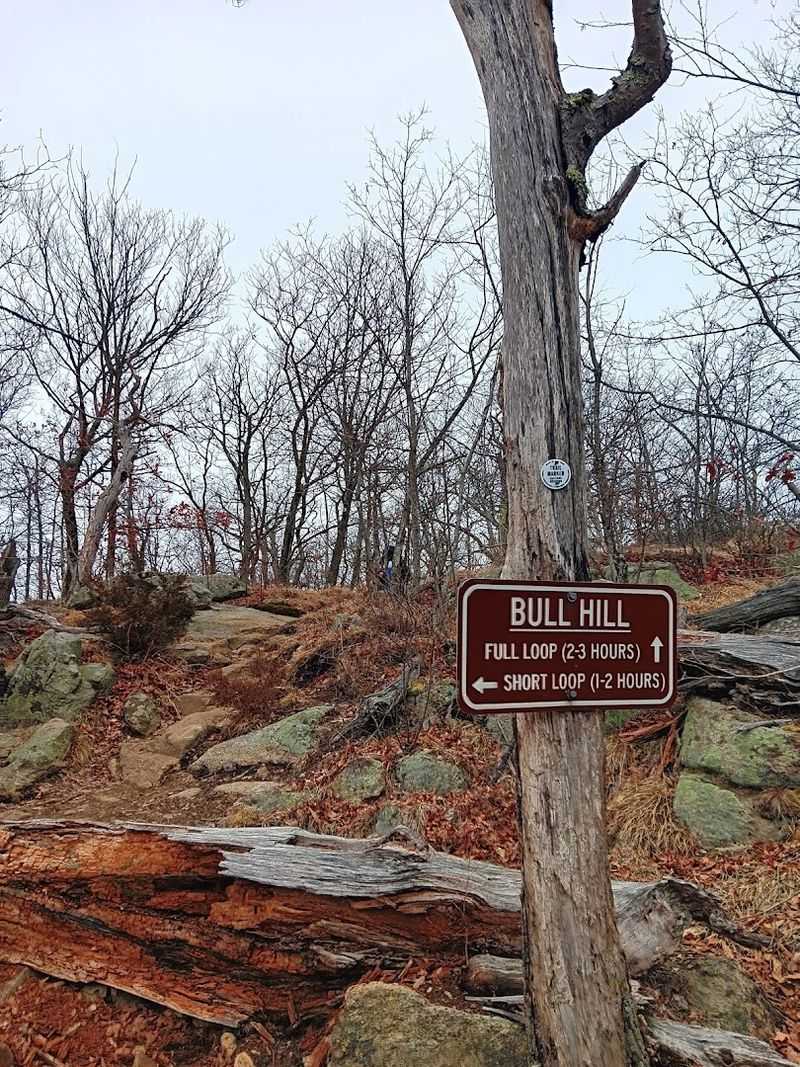
Bull Hill tends to live in Breakneck’s shadow, which is great news if you like a trail with space to think. Rising above Cold Spring, it delivers broad Hudson Valley views without quite the same all-out scramble, and that gives you more room to notice the details underfoot.
This mountain carries plenty of old stories in its roads, rock cuts, and worn routes. The trail climbs through woods that occasionally open to impressive overlooks, and the changing terrain keeps the route engaging.
Instead of one dramatic ridge sequence, Bull Hill unfolds in stages, mixing uphill pushes with stretches where the landscape starts hinting at another era.
Abandoned roads and quarry remnants quietly interrupt the forest, adding a rough industrial layer to the scenery.
Those old scars matter here. They remind you that these slopes were shaped not only by geology but also by work, hauling, blasting, and the steady human habit of trying to turn mountains into materials.
Even when the woods have softened the edges, you can still sense that practical past beneath the leaf litter and stone.
Local legend gives the mountain a darker side. People have long traded stories about strange noises, odd sightings, and unexplained presences tied to the rugged terrain above town.
On a windy day, with branches scraping and loose rock shifting somewhere out of sight, it is easy to understand why Bull Hill inspires a few ghostly additions to regional folklore.
This is a strong pick when you want a hike that balances scenery, history, and a faintly eerie undertone. The summit views are excellent, but the route earns its character from everything between the trailhead and the top. Bull Hill rewards hikers who pay attention to the old roads as much as the horizon.
3. Overlook Mountain Trail (Catskill Forest Preserve, Woodstock)
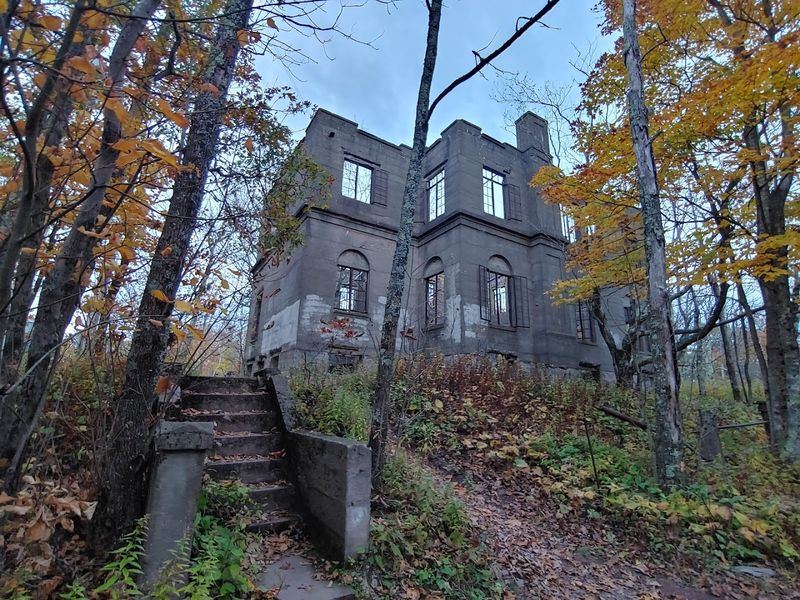
Overlook Mountain starts with a steady climb on a broad old road, and that unusual beginning sets the tone immediately. You are heading uphill on a path that already suggests past traffic, past ambition, and a destination bigger than a simple summit clearing.
By the time the ruins appear, the mountain has already started telling you what kind of place this is. The remains of the Overlook Mountain House are the reason many hikers remember this trail so vividly.
Crumbling walls, foundations, and open stone shells sit high on the mountain beneath the fire tower, creating a scene that lands somewhere between grand and unsettling.
It is easy to picture guests arriving in another century, only now the building is open to weather, silence, and curious boots.
That contrast is the trail’s real strength. You move through Catskill woods toward classic views, yet the route also delivers one of New York’s most striking examples of faded resort history.
The ruins do not need dramatic embellishment to stand out, because their scale alone makes the mountain seem larger than the usual out-and-back hike.
Of course, Overlook has plenty of local lore attached to it. Stories of hauntings and unexplained sightings have floated around the mountain for years, and the setting makes those tales stick.
Fog on the slope, empty windows in broken stone, and the fire tower standing overhead create the kind of visual combo that does half the storytelling for you.
If you like your hikes with a strong final reveal, this one delivers. The mountain gives you views, yes, but the ruined hotel is the image that stays with you after the descent. Overlook is where Catskills grandeur and ghost-story energy meet on the same uphill road.
4. Mount Beacon Fire Tower Trail (Mount Beacon Park, Beacon)
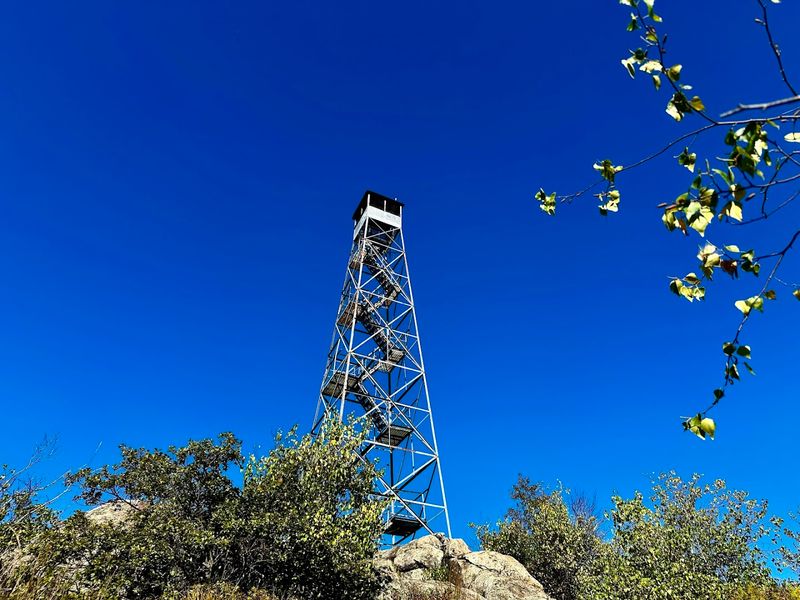
Mount Beacon comes at you with history almost immediately. The trail climbs the same mountain that once hosted an incline railway, a casino complex, and the kind of resort-era excitement that now sounds slightly unbelievable when you are sweating uphill through the trees.
That backstory gives every switchback a little extra charge. As you gain elevation, you start encountering remnants of that earlier chapter.
Old foundations and structural traces appear along the route, not as polished museum pieces but as fragments that require a bit of imagination.
They make the mountain read like a hillside archive, with recreation, commerce, and changing tastes all layered into the climb.
The trail itself is no joke, especially on the steeper sections. You work for the summit, and that effort makes the restored fire tower and expansive views over Beacon, the Hudson, and the surrounding highlands land even harder.
The mountain is scenic in the obvious sense, but it is the collision between panorama and infrastructure ruins that gives the route its personality.
Local stories add another thread. Abandoned attractions have a way of attracting rumor, and Mount Beacon has long inspired talk about odd happenings tied to the vanished resort landscape.
Even without leaning too far into ghost territory, there is undeniable intrigue in walking past remains of places built for crowds that are now reclaimed by weather and brush.
This is the hike to choose when you want your cardio with visible evidence of a lost leisure empire. The fire tower gives you a classic summit goal, yet the mountain’s strongest moments often happen lower down, where broken foundations interrupt the forest. Mount Beacon proves that a trail can be both a leg workout and a walk through New York reinvention.
5. Tiorati Brook Trail to Claudius Smith’s Den (Harriman State Park)
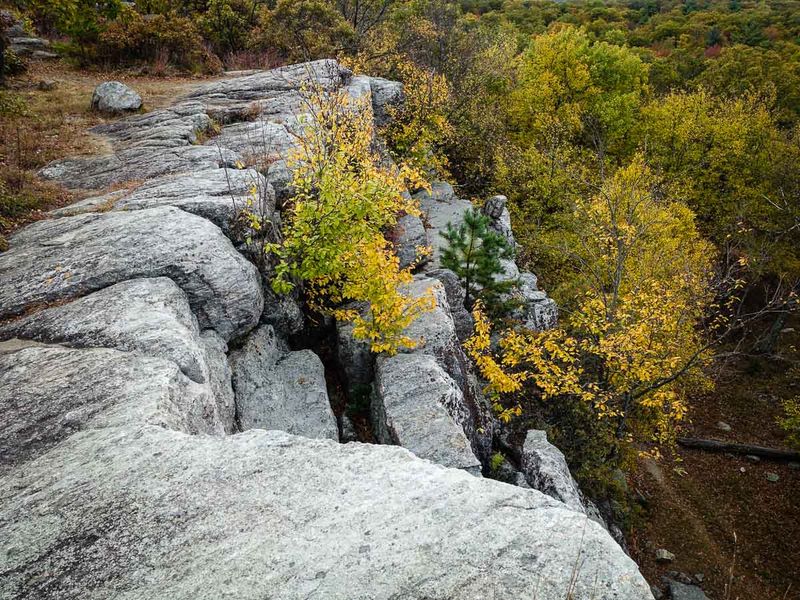
Claudius Smith’s Den gives you a destination with a name that already sounds half outlaw tale, half campfire dare.
The Tiorati Brook approach winds through Harriman woods toward a rocky hideout linked to one of the region’s most persistent Revolutionary War-era legends. You are not just heading to a viewpoint here – you are walking toward a story.
The den itself is a rugged formation tucked into forested terrain, and its appeal comes from imagination as much as geology.
Even if you arrive on a bright afternoon with birds calling and hikers passing by, the place still carries a secretive edge. Big rocks, enclosed spaces, and uneven ground do a lot of work when a notorious name is attached to them.
Claudius Smith is often remembered as the so-called Cowboy of the Ramapos, a figure surrounded by tales of banditry, divided loyalties, and hidden goods. That kind of folklore has staying power because the landscape supports it.
Harriman’s folds, ridges, and deep woods make the idea of someone slipping away into the hills seem entirely plausible.
There is also a treasure-hunt element that keeps this destination lively in the local imagination. Stories about buried valuables and secret caches give the route an extra layer of fun, even if most hikers are really after the den, the forest, and the satisfaction of reaching a place with real narrative weight.
You can almost hear the old rumors echoing between the rocks. This hike is less about grand summit drama and more about destination-driven intrigue. The trail offers a satisfying woodland journey, but the real draw is standing at a site that has been mythologized for generations.
Claudius Smith’s Den turns a simple hike into a brush with frontier legend, which is a pretty solid upgrade for an afternoon in the woods.
6. Doodletown Loop (Bear Mountain State Park Region)
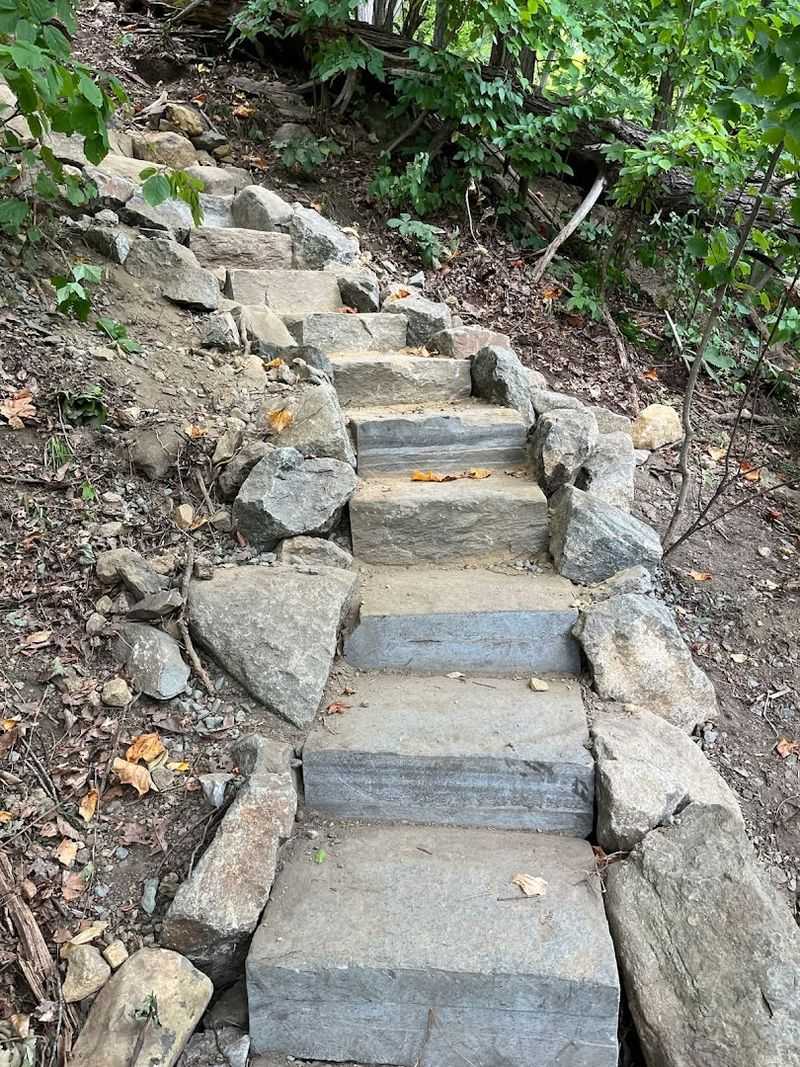
Doodletown Loop is the kind of hike that changes your pace without asking permission. Once you know an entire hamlet stood here, every old road and stone remnant starts reading differently, and the woods stop being just woods.
You are walking through absence, which is a very different experience from strolling through a standard park trail.
The route threads through the former community site, where foundations, forgotten roadbeds, and scattered cemetery traces hint at ordinary lives that vanished from the map. There is no single dramatic ruin doing all the heavy lifting.
Instead, Doodletown works by accumulation, with one subtle fragment after another building a remarkably strong sense of place.
That is what makes this loop so memorable. You are not looking at a castle or a resort hotel perched on a summit, but at the remains of a lived-in settlement absorbed into parkland over time.
The result is quieter, more intimate, and in some ways stranger because the missing pieces are domestic rather than monumental.
Stories about ghosts and lingering spirits have attached themselves to Doodletown for years, which is hardly surprising. Empty roads, family plots, and the knowledge that generations once called this hollow home create an ideal setting for local legend.
Even skeptical hikers tend to lower their voices a little when the trail passes the more overt remnants.
This loop rewards patient attention instead of summit-chasing speed. Pause at the walls, notice how roads lead nowhere obvious now, and let the shape of the vanished hamlet come together in your head.
Doodletown is one of those rare hikes where the strongest view is not necessarily outward across the valley, but backward into a community that quietly disappeared.
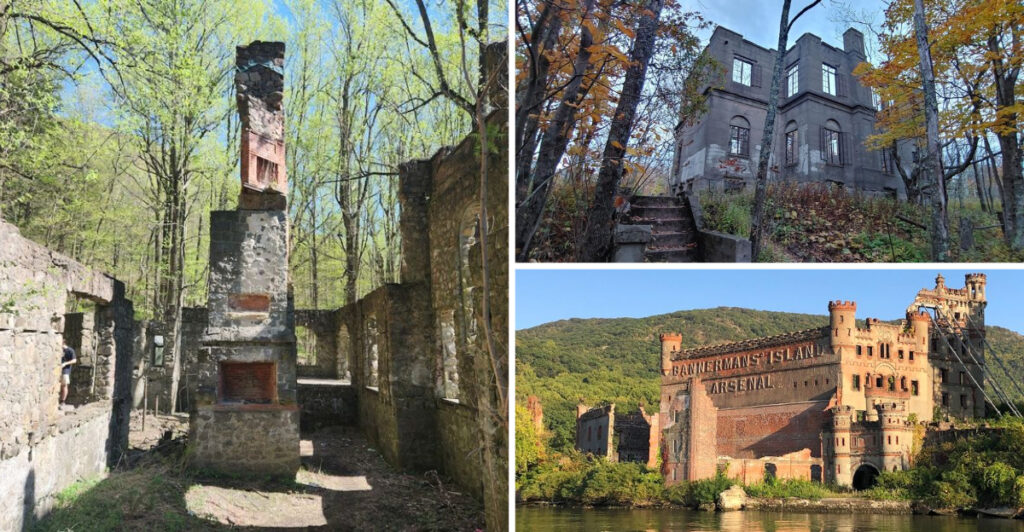
7. Bannerman Island Trail Experience (Hudson River, Beacon Area)
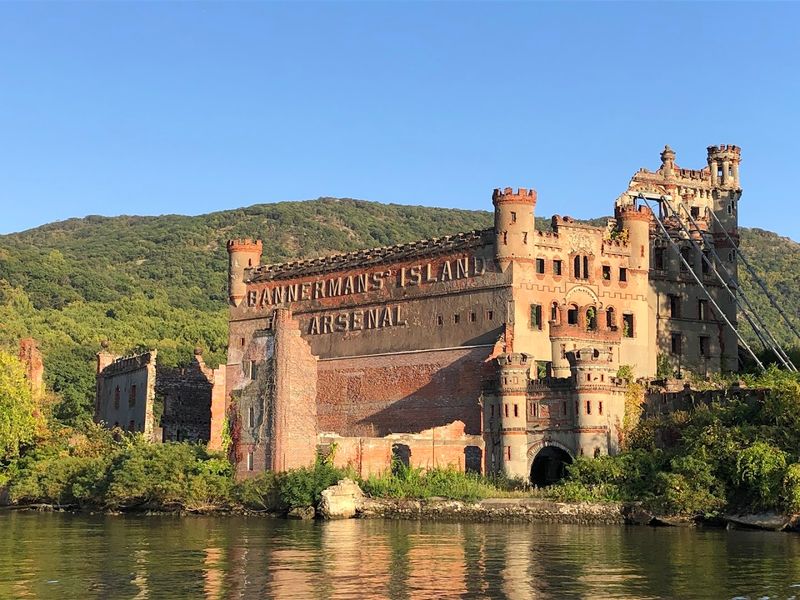
Bannerman Island is not your standard lace-up-and-go trail day, and that is exactly the point. Reaching it usually involves a guided visit with walking portions on the island, which adds a sense of occasion before you even set foot among the ruins.
This is a Hudson River outing where the approach matters almost as much as the destination. Then the castle ruins come into view, and the whole place starts showing off.
Bannerman Castle, originally built as part of a military surplus complex, rises from the island in broken yet unmistakable form, with dramatic walls and architectural flourishes that look almost surreal against the river.
It is one of those structures that can carry history, spectacle, and mild unreality all at once. Walking the island gives you close contact with that mix. You are not just admiring a ruin from a scenic overlook but moving through a site shaped by commerce, storage, storm damage, and time.
Every surviving wall suggests both bold ambition and the difficulty of preserving anything exposed in the middle of the Hudson.
Of course, Bannerman comes packed with stories. Explosions, storms, and mysterious happenings have all become part of the island’s reputation, and the setting practically encourages retelling them.
Water on every side tends to sharpen a place’s mythic quality, especially when the central landmark already looks like a half-vanished fortress from another world.
This experience stands out because it combines ruin tourism, river scenery, and narrative intrigue without needing a punishing climb. You still get movement, history, and memorable visuals, just in a different format from the usual mountain ascent.
Bannerman Island proves that one of New York’s most compelling hikes can begin with a boat and end in the shadow of a castle shell.
8. Mount Jo (Adirondack High Peaks Region, Lake Placid)
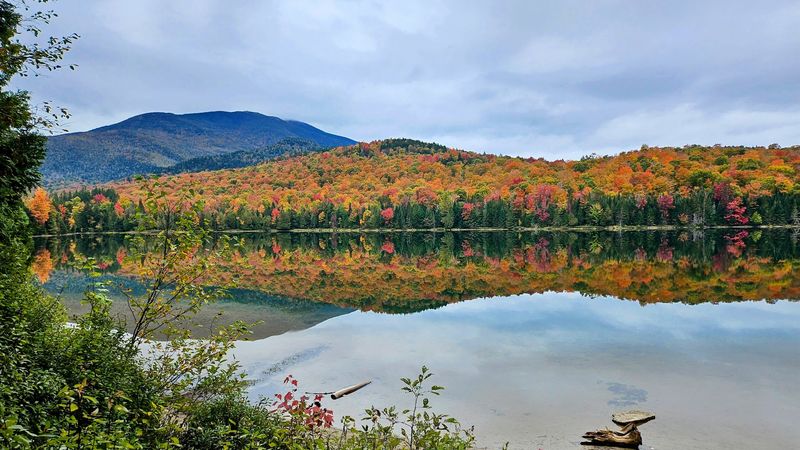
Mount Jo is often introduced as a shorter Adirondack climb with outsized views, which is true, but that undersells its deeper appeal.
This trail threads through terrain shaped by early conservation ideals, guide culture, and generations of mountain storytelling. You get the scenic payoff quickly, yet the route carries more heritage than its modest length might suggest.
The ascent is approachable enough for many hikers, but it still feels properly mountain-like. Roots, rock, and forest keep the climb honest, and the summit opens toward a broad Adirondack spread that looks organized by ridgelines and water rather than roads and towns.
From up there, you can see why this region bred both practical wilderness knowledge and a healthy supply of legends.
Mount Jo’s historical thread is quieter than the dramatic ruin sites farther south, but it is there. The surrounding area is closely tied to the development of outdoor recreation and conservation in the Adirondacks, and that context gives the hike a grounded sense of place.
Rather than abandoned buildings, the story here lives in landscape use, trail tradition, and the long relationship between people and mountains.
Folklore helps round it out. Tales of seasoned guides, lost travelers, sudden weather shifts, and mountain mysteries have long circulated in the High Peaks region, and Mount Jo sits within that wider cultural weather system.
Even on a clear day, the Adirondacks have a way of reminding you that beauty and uncertainty have always shared the same ridgeline.
This is a great choice when you want a hike that blends accessibility with regional character. The summit view may be the headline, but the surrounding history gives the route more texture than a simple photo-op climb. Mount Jo is proof that a mountain does not need massive ruins to carry a strong sense of legend.
9. Rockefeller Preserve – Swan Lake Area (Pleasantville)
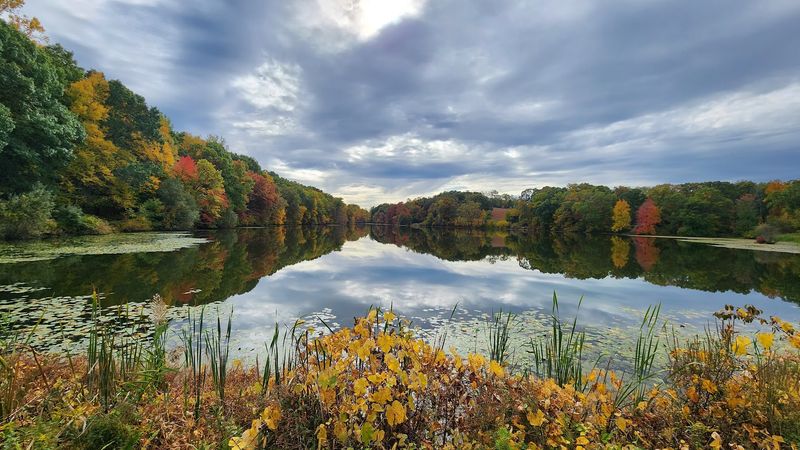
Not every history-rich hike in New York announces itself with crumbling towers or outlaw caves. Around Swan Lake in Rockefeller Preserve, the intrigue is quieter, tucked into carriage roads, stonework, and the carefully shaped landscape of a former estate world.
The result is a walk that balances calm scenery with a strong sense of inherited design. The trails here move through woods and around water with an ease that feels intentional, because much of it was.
Old carriage roads guide you through the preserve in broad, graceful lines, and occasional stone structures hint at the labor and planning behind the setting. Even when the lake is still and the mood is peaceful, the built history remains close at hand.
Swan Lake is the anchor. Water reflects the trees, birds animate the edges, and the route invites a slower kind of attention than a steep summit trail.
But this is not a bland stroll. The estate-era traces give the landscape backbone, reminding you that beauty here was shaped as well as preserved.
That layered background connects naturally to local storytelling traditions. Places with long histories tend to gather anecdotes, family lore, and regional memory, and this preserve carries that kind of quiet narrative weight.
You may not get sensational ghost-town energy, but you do get a trail network where nearly every curve suggests an older chapter just beneath the present one.
This is the pick for days when you want ruins in softer focus. Instead of dramatic collapse, you get preservation, adaptation, and traces of past lives embedded in a polished natural setting.
The Swan Lake area offers a different kind of mystery – one built from old roads, restrained elegance, and the lingering impression that the land remembers more than it says out loud.
10. Fort Montgomery Trail (Fort Montgomery Historic Site)
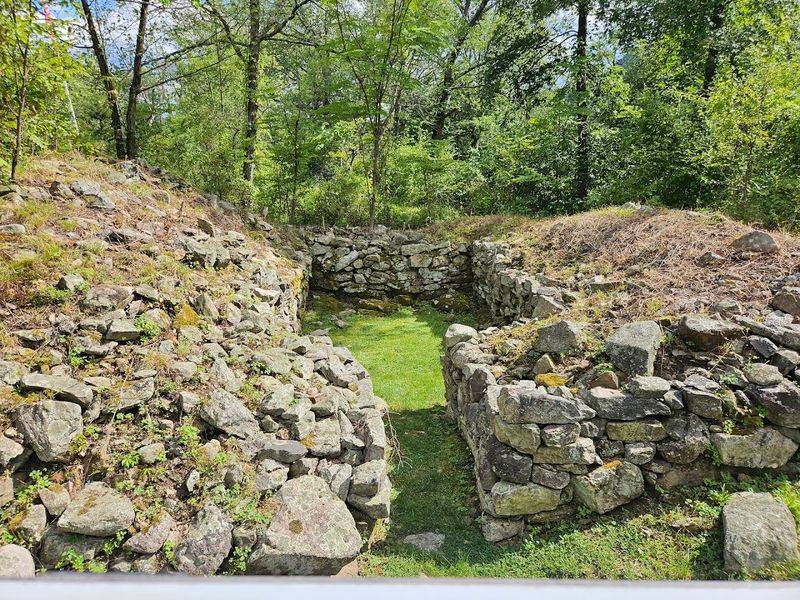
Fort Montgomery is the rare hike where the ground under your boots was once part of a major military struggle. The trail explores the remains of the Revolutionary War fort destroyed during the 1777 British assault, and that alone gives the outing uncommon weight.
This is less a walk to escape history than a walk directly through it. The site blends wooded paths with visible earthworks, stone ruins, and interpretive stops that help you piece together the scale of what happened here.
Instead of imagining battle from a textbook map, you move across actual terrain where elevation, river control, and defensive positioning mattered enormously. The Hudson Highlands setting sharpens the whole experience.
There is a tactile quality to this trail that makes it stand out. Mounded earth, broken walls, and remaining structures create a landscape that still looks shaped by urgency and strategy.
You can appreciate it as a scenic hike, but the strongest moments come when the physical remains click together and the site starts reading like a disrupted stronghold rather than a generic ruin field.
Legends add the final layer. Stories about hidden military tunnels and lost wartime artifacts have persisted for years, and they fit naturally with a place where so much was built, destroyed, and left behind under pressure.
Whether those tales are proven or not, they make the fort’s remnants even more absorbing as you move from one section to the next.
This is a trail for hikers who enjoy context as much as scenery. You get river-country beauty and a manageable route, but the historical concentration is what gives Fort Montgomery its punch.
By the end, the old earthworks and ruins do more than decorate the landscape – they turn the entire hike into a live-action lesson in contested ground.
11. Cornish Estate Trail / Northgate Ruins (Hudson Highlands State Park, Cold Spring)
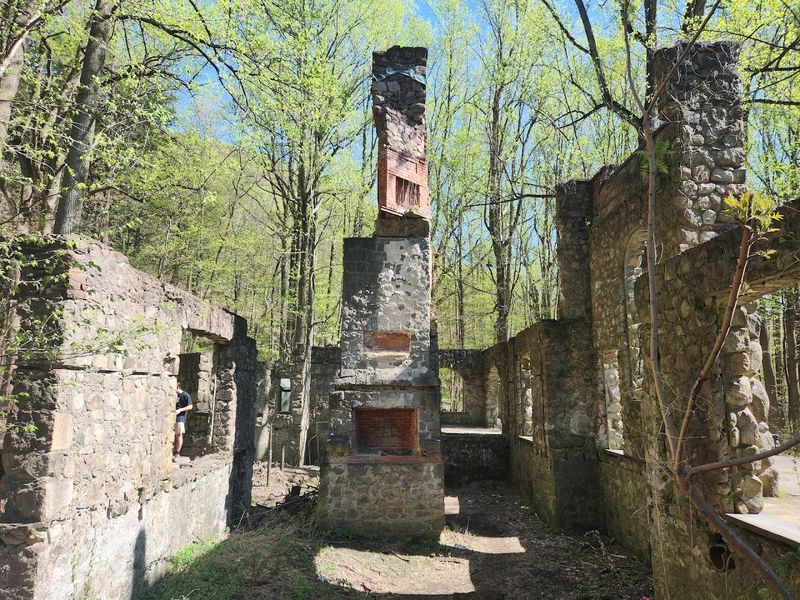
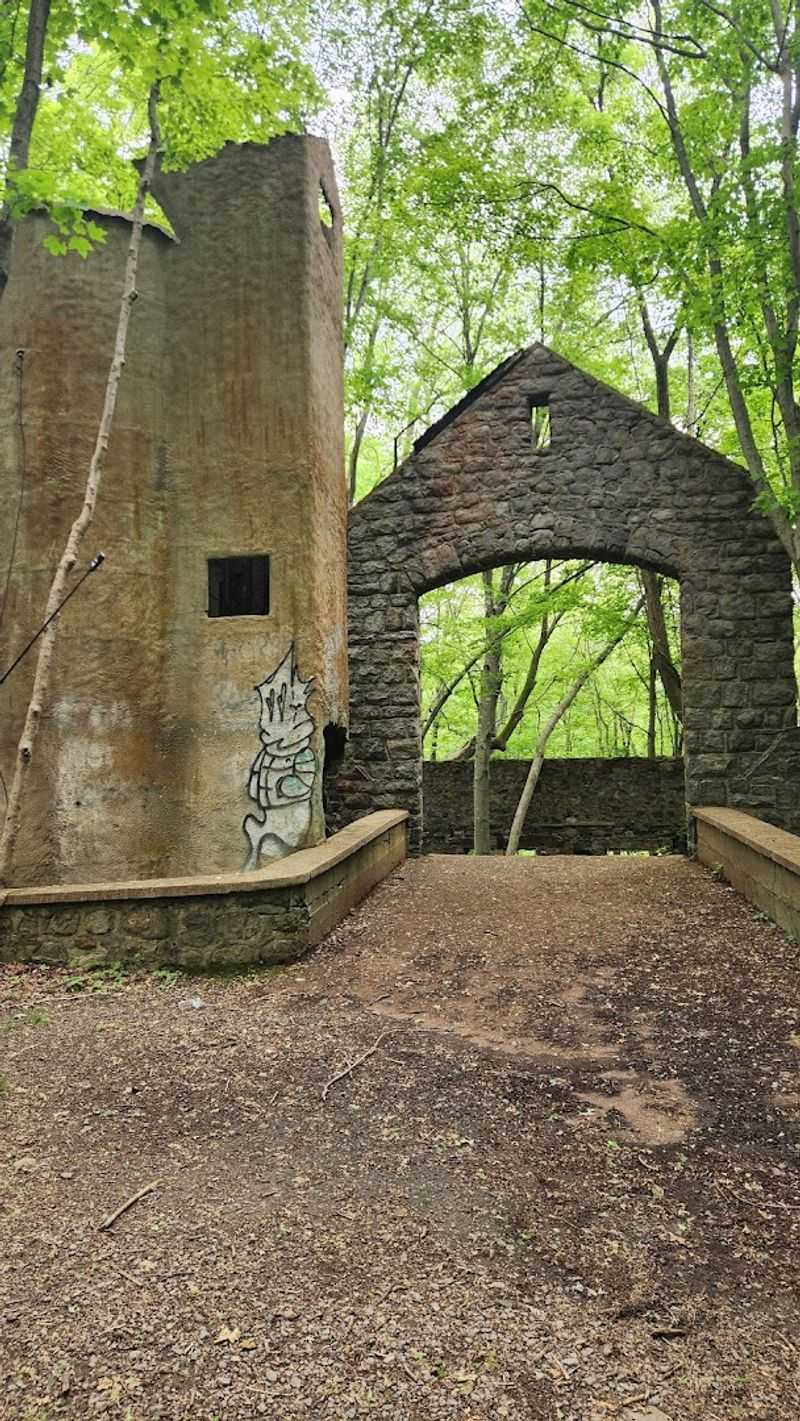
The Cornish Estate Trail wastes no time establishing its mood. Before long, you are standing among the Northgate ruins, where ivy-covered stone walls, open staircases, and broad foundations turn a simple Hudson Valley walk into something much more cinematic.
It is one of those places where nearly every angle looks ready for a historical mystery cover. Unlike ruins that hide on a remote summit, these remains are relatively approachable, which means you can spend more energy noticing the details.
Arched openings frame the woods, masonry lines suggest vanished rooms, and the surviving structure is just substantial enough to let your imagination furnish the missing parts. The setting is photogenic, yes, but it is also deeply strange in the best way.
The estate’s destruction by fire in 1958 gives the site a sharp dividing line between grandeur and aftermath. You are not looking at ancient collapse worn smooth by centuries, but at a more recent loss that still feels readable.
That freshness, at least by ruin standards, gives the place a particular bite and keeps the story close to the surface.
Local lore has done the rest. Stories of tragedy, abandonment, and ghostly encounters have attached themselves firmly to Northgate, and the architecture practically invites them in.
Empty stairways leading nowhere, roofless stone shells, and filtered light through old openings create a setting that does not need much help from imagination, though it certainly rewards it.
This is one of the Hudson Valley’s most memorable ruin walks for good reason. The trail is enjoyable on its own, but the estate remains are the star, combining beauty, damage, and legend with unusual clarity.
If you want a hike where history is visible in nearly every step and the photos come with a side of goosebumps, start here.
Share this story