
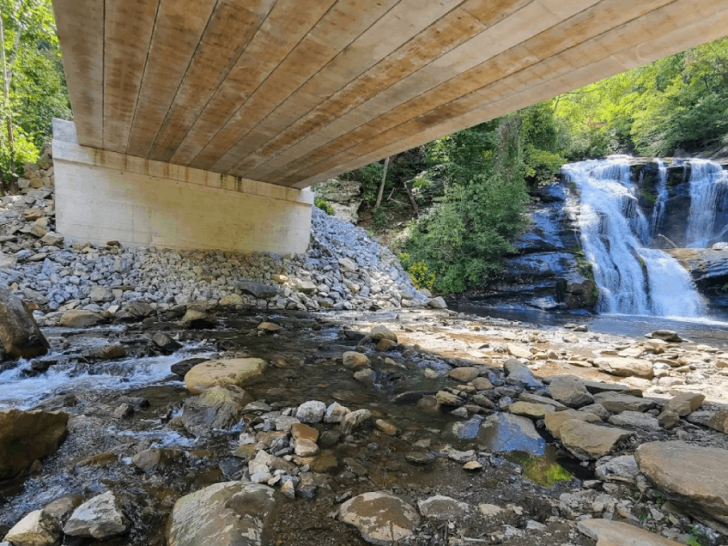
Not every Tennessee waterfall requires a strenuous hike through rugged terrain. Some of the state’s most stunning cascades are right next to parking areas, making them perfect for families with young children, visitors with mobility challenges, or anyone who just wants to experience natural beauty without breaking a sweat.
From the dramatic plunges in state parks to quiet roadside gems along scenic byways, these waterfalls prove that accessibility doesn’t mean sacrificing wow factor.
1. Cane Creek Falls — Fall Creek Falls State Park
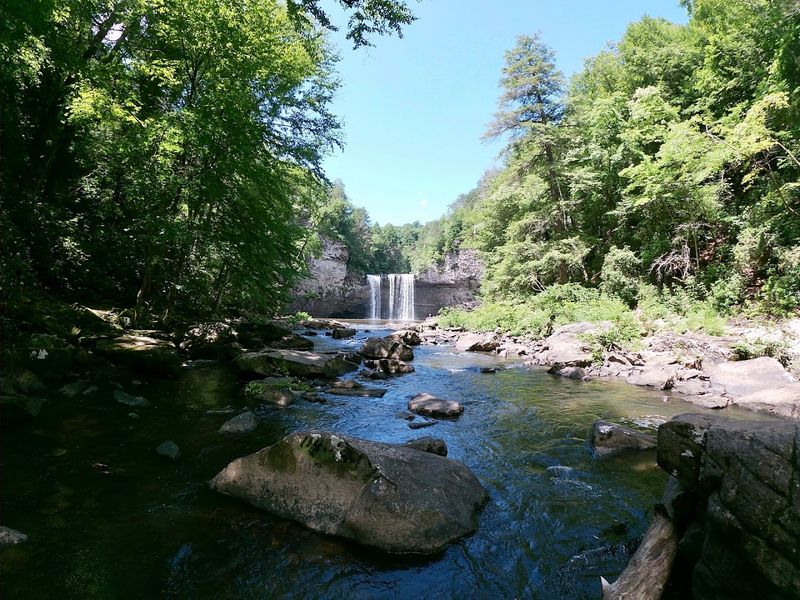
Cane Creek Falls drops 85 feet into a beautiful gorge, and you can witness this spectacle without much effort at all. The falls sit within Fall Creek Falls State Park, which happens to be one of Tennessee’s largest and most visited state parks.
You’ll find the viewing area just a short stroll from where you park your car. The path is well-maintained and suitable for most visitors.
Springtime brings the heaviest water flow, turning Cane Creek Falls into a thundering curtain of whitewater. Even during drier summer months, though, the falls maintain enough volume to impress.
The surrounding forest provides plenty of shade, making this a comfortable stop even on warm afternoons. Benches near the overlook let you sit and soak in the view without rushing.
2. Bald River Falls — Tellico Plains
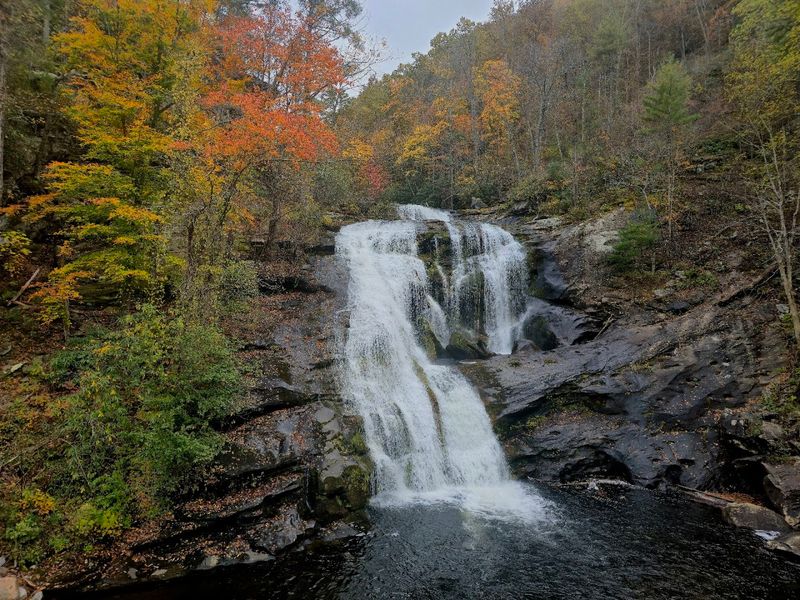
Bald River Falls spreads about 90 feet wide as it slides down a smooth rock face, creating one of the most photogenic waterfalls in eastern Tennessee. Located in the Cherokee National Forest near Tellico Plains, this cascade has a gentle, sheet-like quality that sets it apart from the dramatic plunges you’ll find elsewhere.
The falls sit right alongside the Cherohala Skyway, a scenic byway that connects Tennessee and North Carolina. You can literally pull off the road, walk a few steps, and you’re standing in front of rushing water.
During peak flow periods, usually late winter through early spring, Bald River Falls becomes a wide ribbon of whitewater. The sound alone is worth the stop—a constant, soothing rush that drowns out road noise completely.
There’s a small parking area that fills up quickly on weekends, especially during fall foliage season. Arrive early or visit on weekdays for a more peaceful experience.
3. Baby Falls — Tellico Plains
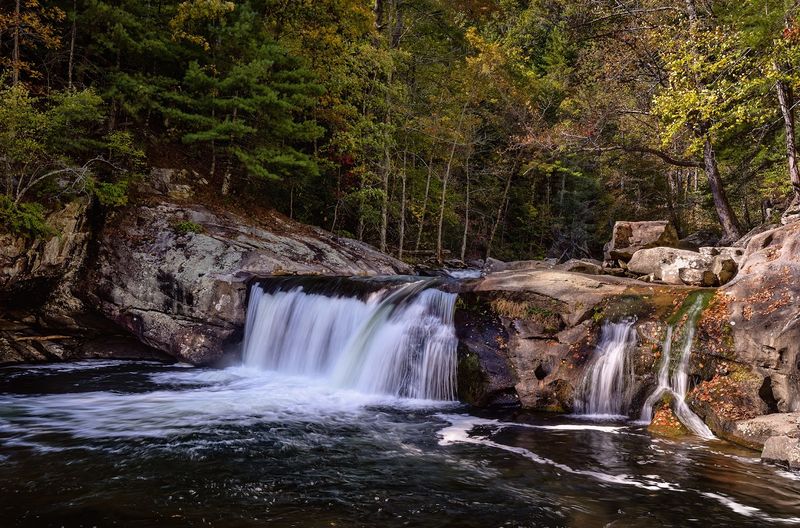
Just down the road from its bigger sibling, Baby Falls offers a completely different waterfall experience. This one tumbles about 15 feet in a series of small cascades and pools, creating a gentler, more intimate scene.
The name fits perfectly—Baby Falls has a delicate, playful character that contrasts sharply with the powerful roar of larger waterfalls. Kids especially love this spot because they can get close to the water without parents worrying too much.
You’ll find Baby Falls along the same Bald River Road that leads to Bald River Falls, making it easy to visit both in one trip. The parking area is small but adequate for a quick stop.
What Baby Falls lacks in height, it makes up for in charm. The water flows over moss-covered rocks, creating little pools that reflect the surrounding trees.
This waterfall maintains consistent flow throughout most of the year, though it can slow to a trickle during extended dry spells. Spring and fall are ideal visiting times when water levels are reliable.
The viewing area requires minimal walking, just a few steps from your vehicle to the falls. It’s an excellent choice for toddlers taking their first waterfall adventure or anyone wanting a quick nature break during a scenic drive.
4. Twin Falls — Rock Island State Park
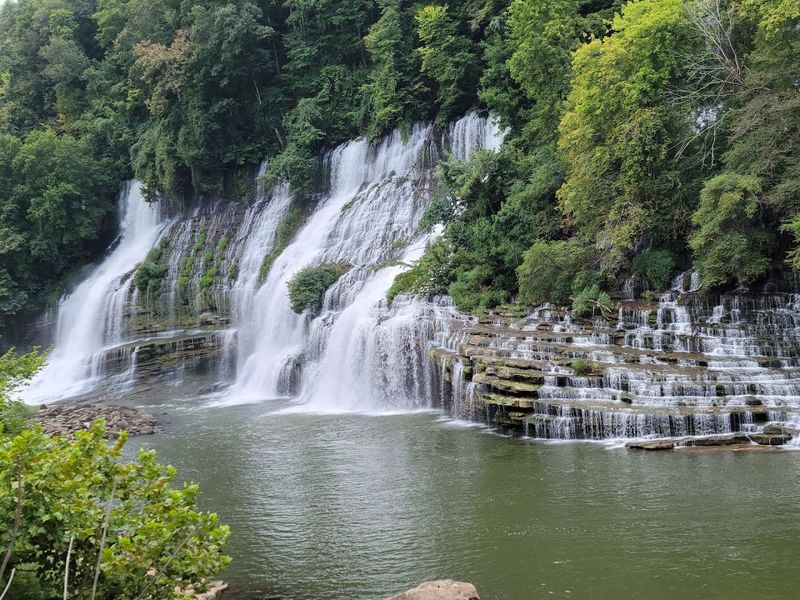
Twin Falls lives up to its name with two distinct streams plunging side by side into the Caney Fork River. According to Tennessee State Parks, you can actually view these falls from the parking lot at the end of Powerhouse Road, which makes this one of the easiest waterfall experiences in the state.
The overlook area comes equipped with parking, benches, and a designated observation platform. You don’t even need to leave the pavement to see the cascades, though most visitors do walk to the platform for better angles.
Both streams drop about 80 feet, creating a symmetrical display that’s especially impressive after heavy rainfall. The falls were created by the same dam and hydroelectric operations that shaped much of Rock Island State Park’s landscape.
During summer, the water flow can diminish depending on power generation schedules upstream. This actually reveals more of the rock formations and gives you a different perspective on the geology.
Sunset visits are particularly rewarding when the light hits the water just right, turning the mist into golden sparkles.
5. Great Falls — Rock Island State Park
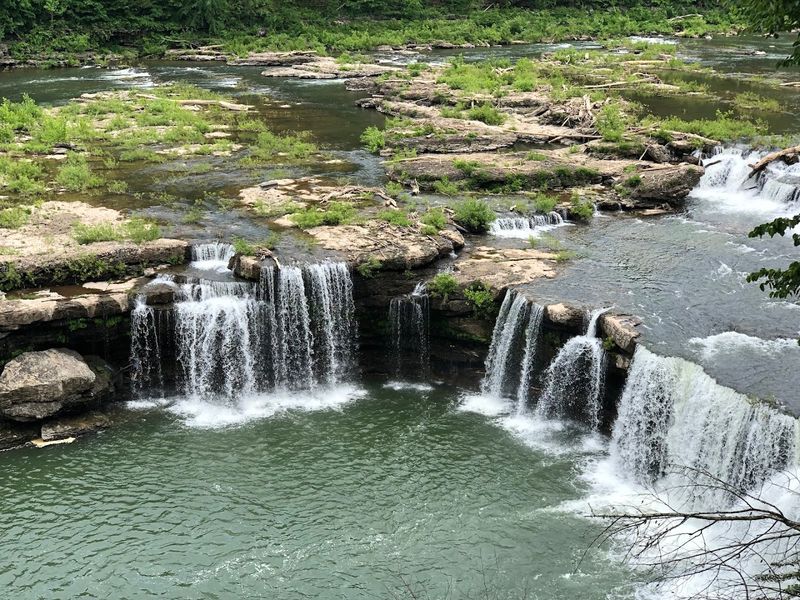
Great Falls roars with the power of the Caney Fork River as it drops 30 feet over a wide ledge. The volume of water moving through this waterfall is substantially greater than most others on this list, creating a constant thunder that you can hear before you see the falls.
The Great Falls overlook sits just a short walk from available parking near the historic cotton mill. This mill, built in the 1800s, adds historical context to your visit and makes for interesting photography alongside the natural beauty.
The path from the parking area to the overlook is paved and well-maintained, though it does involve a slight incline. Most visitors make it comfortably, and the effort is minimal compared to typical waterfall hikes.
What makes Great Falls remarkable is the sheer amount of water constantly flowing over the ledge. Even during drought conditions, this waterfall maintains impressive volume because it’s fed by a major river rather than a seasonal creek.
Rock Island State Park has transformed this former industrial site into a beautiful recreation area, and Great Falls serves as its centerpiece attraction.
6. Fall Hollow Waterfall — Natchez Trace Parkway
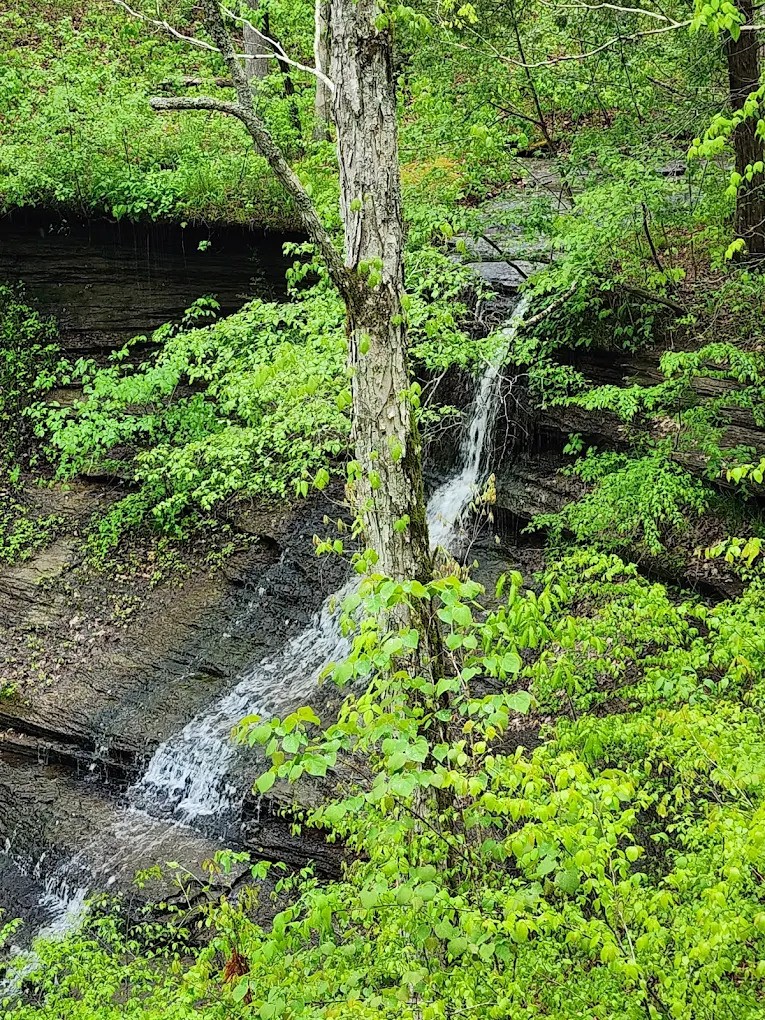
The National Park Service says that almost immediately after leaving your vehicle at Fall Hollow, you can hear the falls beckoning through the trees. A short trail leads to a viewing platform where a 30-foot cascade spills over a limestone cliff.
This waterfall has a vertical drop that creates a steady stream rather than a wide curtain. The water originates from a creek that flows through the surrounding forest before taking its dramatic plunge.
Fall Hollow sits along the Natchez Trace Parkway, a 444-mile scenic road managed by the National Park Service. The parkway prohibits commercial traffic, making it a peaceful drive with numerous natural and historical stops.
The trail to the viewing platform is brief but does include some steps. It’s well-constructed with handrails, making it manageable for most visitors who can handle stairs.
During spring, wildflowers bloom along the trail, adding color to your short walk. The surrounding forest includes oak, hickory, and maple trees that put on a brilliant display during autumn.
The parking area is small, accommodating just a few vehicles at a time.
7. Jackson Falls — Natchez Trace Parkway
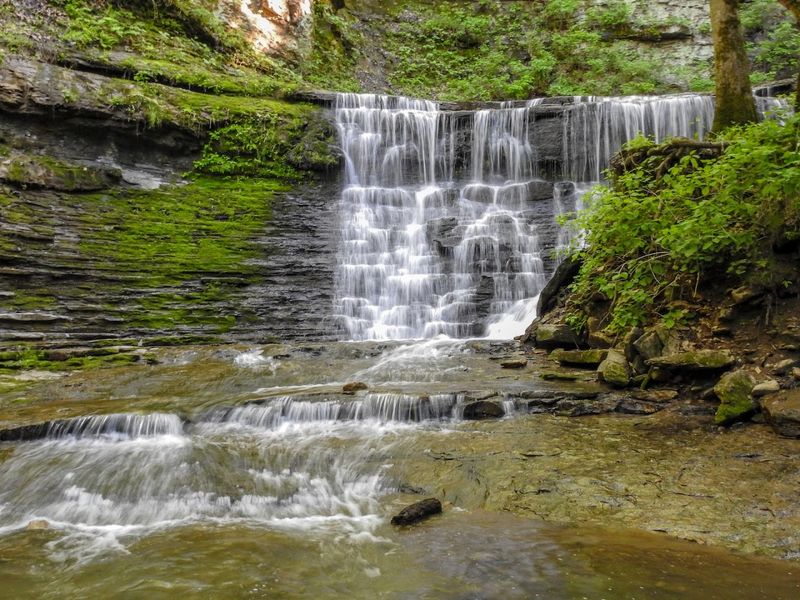
NPS describes Jackson Falls with a detail that matters: it’s accessed via a 900-foot concrete sidewalk down to the falls. By waterfall standards, that’s remarkably close and remarkably easy.
The concrete path makes this waterfall accessible to visitors who might struggle with dirt trails or uneven terrain. It’s wide enough for wheelchairs and has a gentle grade that doesn’t require serious exertion.
Jackson Falls drops about 20 feet over a limestone ledge into a small pool below. The surrounding area features typical Middle Tennessee vegetation, with cedar and hardwood trees providing shade along the walkway.
What’s interesting about this waterfall is its consistency. Because it’s spring-fed, Jackson Falls maintains flow even during dry periods when other waterfalls in the region might disappear entirely.
The concrete sidewalk was built by the Civilian Conservation Corps in the 1930s, part of the infrastructure development that made the Natchez Trace more accessible to travelers. That historical touch adds another layer to your visit.
The viewing area at the base allows you to get quite close to the falling water. On warm days, the mist feels refreshing, and the sound creates a natural white noise that’s genuinely relaxing.
8. Fall Creek Falls — Fall Creek Falls State Park
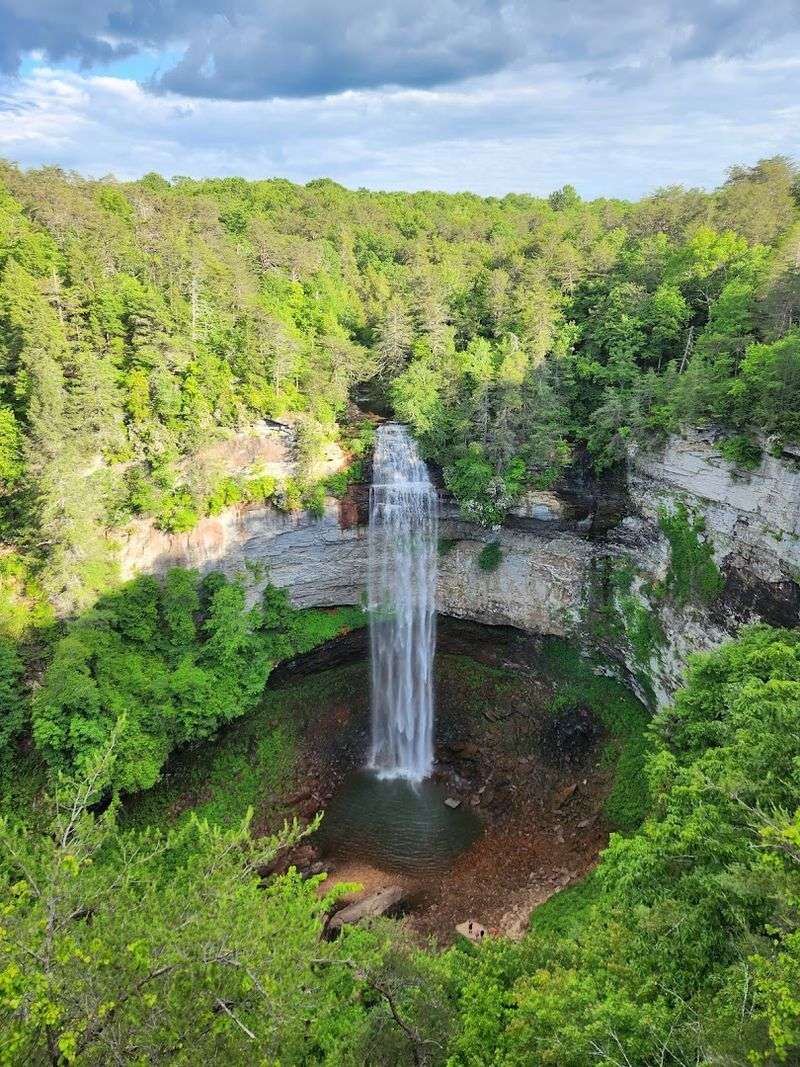
Tennessee State Parks notes the falls are visible from an overlook adjacent to the Fall Creek Falls Overlook parking lot, with a short path from the lot. This is the park’s namesake waterfall and, at 256 feet, one of the tallest waterfalls east of the Mississippi River.
The viewing platform sits on the rim of the gorge, offering a perspective that showcases the full height of this massive cascade.
From the parking area, it’s literally just steps to the overlook. The path is paved and accessible, designed to accommodate visitors of all mobility levels.
What strikes most people first is the sound—a constant roar that grows louder as you approach the rim. The visual impact follows immediately after, as the full scale of the gorge and waterfall comes into view.
The overlook has sturdy railings and interpretive signs explaining the geology and history of the falls. It’s a popular spot for photography, especially in morning light when the sun illuminates the falling water.
This is Tennessee’s most photographed waterfall for good reason.
9. Cummins Falls — Cummins Falls State Park
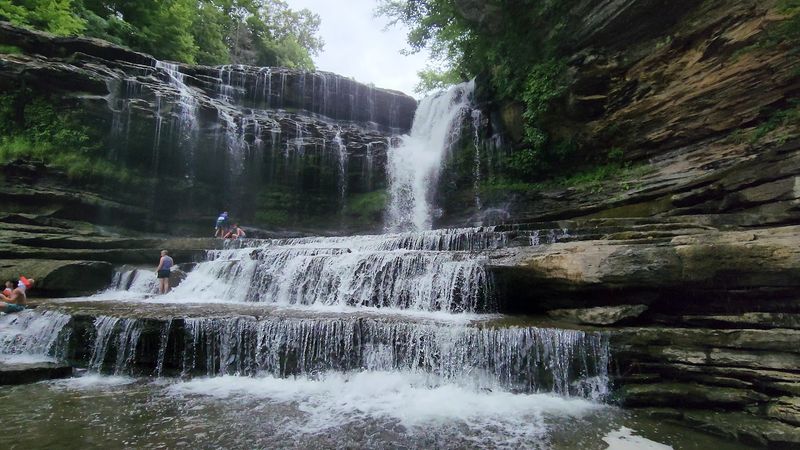
The easiest version of experiencing Cummins Falls is the overlook, not the popular gorge hike that draws crowds in summer. Tennessee State Parks says the waterfall can be viewed from the Falls Overlook Trail, and wheelchair users can park near the overlook and use a concrete trail from the parking space.
This accessibility feature is relatively new, added after the park underwent improvements to accommodate more visitors safely. The concrete trail makes it possible for nearly everyone to witness this 75-foot cascade without navigating the challenging terrain down to the swimming hole.
From the overlook, you’re looking down at Cummins Falls as it drops into the gorge below. The perspective is different from the swimming area view—you see the full context of the waterfall within its surrounding landscape.
Cummins Falls flows over a wide rock ledge, creating a curtain of water that spreads across the cliff face. During high water periods, the entire ledge becomes one massive sheet of whitewater.
The overlook provides a safe vantage point with railings and informational displays. It’s an excellent option for families with small children or anyone who wants to see the falls without the strenuous hike and river crossing required to reach the base.
10. Piney Creek Falls — Fall Creek Falls State Park
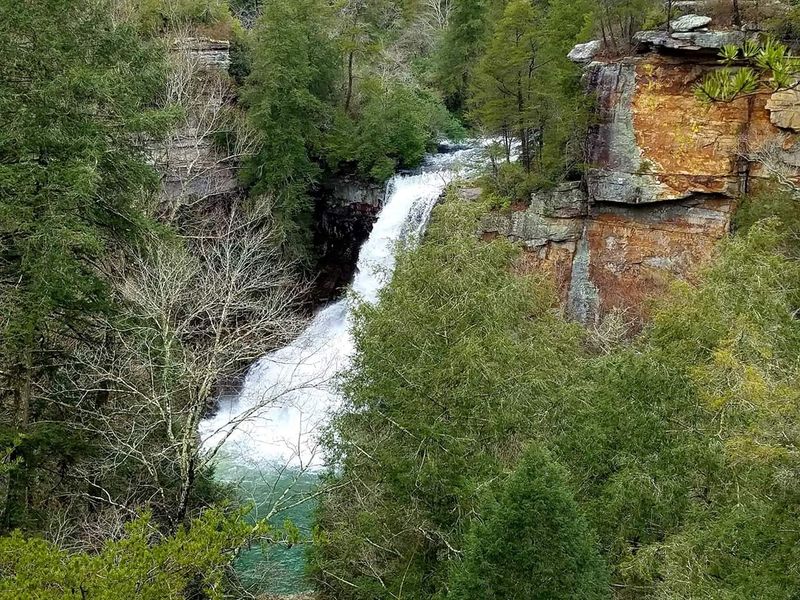
This waterfall drops about 70 feet into a scenic gorge, creating a display that’s impressive despite being overshadowed by its taller neighbor, Fall Creek Falls.
Piney Creek Falls has a different character than the park’s other waterfalls. The water doesn’t freefall as much as slide and bounce down a sloped rock face, creating multiple tiers and cascades along the way.
The trail to the overlook is short enough that most visitors don’t even think of it as a hike. It’s more like a brief walk through the woods that happens to end at a spectacular view.
From the overlook platform, you’re positioned to see the falls from the side, which gives you a better sense of the depth and layers of the gorge. The surrounding forest frames the waterfall beautifully, especially during fall when the leaves turn vibrant colors.
Spring brings the heaviest water flow to Piney Creek Falls, turning it into a powerful cascade. By late summer, the flow can diminish, but the setting remains photogenic.
11. Ozone Falls — Ozone Falls State Natural Area
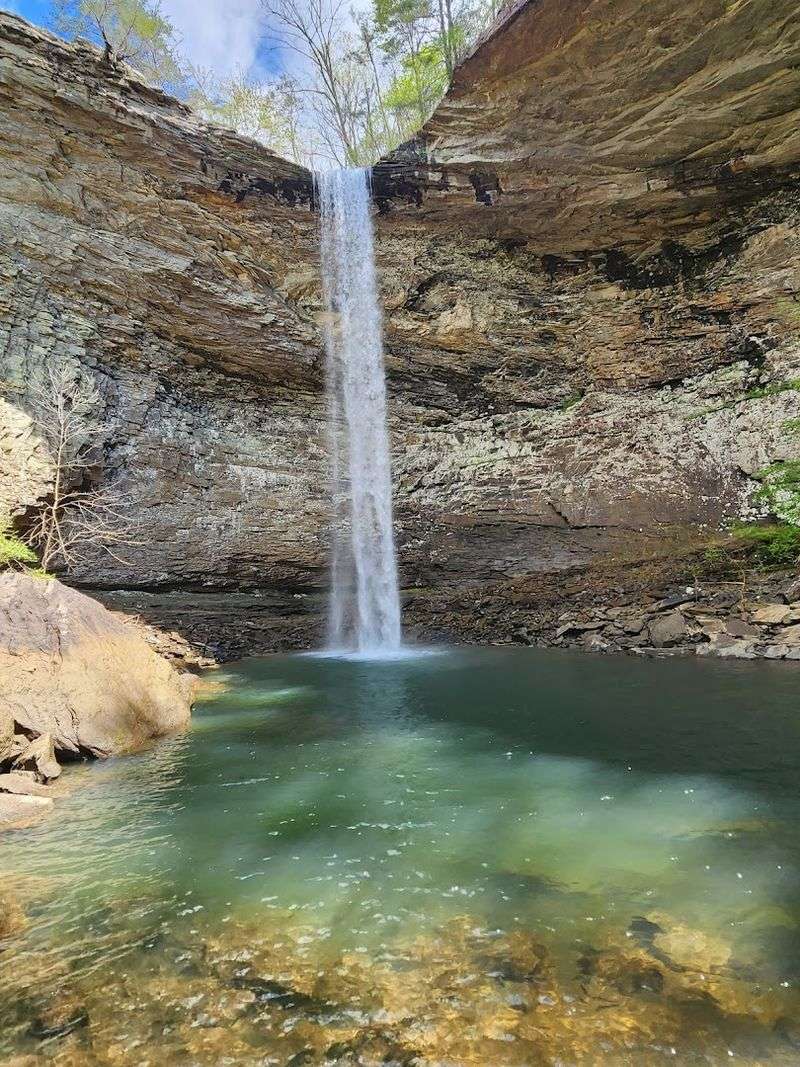
Ozone Falls gets treated like a roadside stop because the falls are right by the bluff area near the parking and trailhead. The 110-foot plunge is visible almost immediately upon arrival, making this one of the most rewarding quick stops in Tennessee.
The waterfall drops straight down into a large pool surrounded by rock walls, creating an amphitheater-like setting. It’s a stunning scene that looks almost too perfect to be natural.
From the parking area, you can walk to the bluff overlook in just a minute or two on a well-worn path. The view from the top shows the full height of the falls and the gorge below.
While there is a three-quarter-mile trail down into the gorge, most visitors are satisfied with the overlook view. The trail to the bottom is rugged and challenging, so it doesn’t fit the easy-access theme, but the overlook certainly does.
Ozone Falls sits along US Highway 70, making it convenient for travelers passing through the area. The small parking lot and primitive facilities reflect the natural area’s undeveloped character.
Water flow depends heavily on recent rainfall. After storms, Ozone Falls becomes a thundering curtain of whitewater. During dry spells, it can slow to a modest stream, though the setting remains impressive regardless.