Texas highways stretch for miles, and sometimes the drive can feel endless. But scattered across the Lone Star State are quirky landmarks that turn a boring road trip into an adventure you’ll actually remember. From giant cowboy boots to a fake Stonehenge, these roadside stops prove that getting there can be just as fun as the destination.
1. Cadillac Ranch (Amarillo)
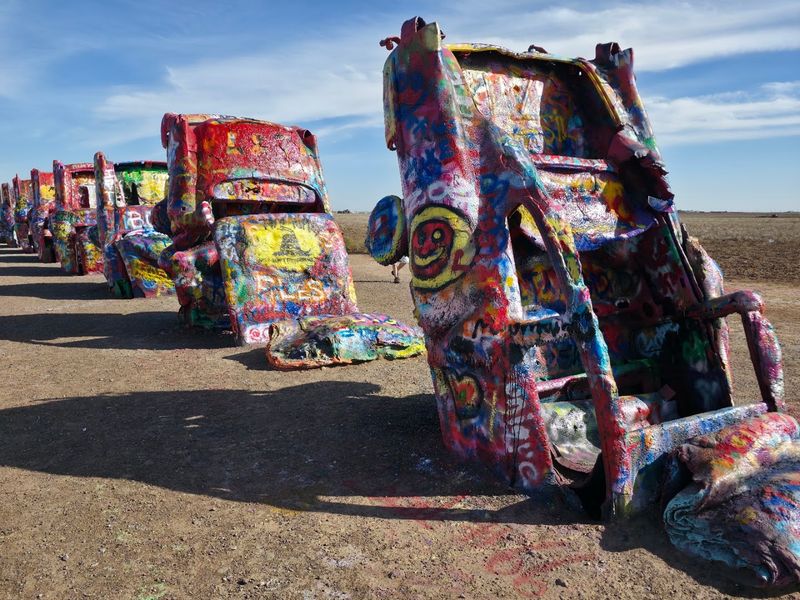
Just west of Amarillo, ten vintage Cadillacs stand nose-down in a wheat field like a colorful, graffiti-covered monument to American car culture. Created in 1974 by an art group called Ant Farm, this installation has become one of the most photographed spots along old Route 66. Visitors are encouraged to bring spray paint and add their own artistic touch to the cars, which get repainted thousands of times each year.
The best part? It’s completely free and open 24/7, so you can stop by whenever the mood strikes. Bring a can of spray paint from a nearby hardware store and leave your mark on automotive history.
The constantly changing artwork means no two visits are ever the same, and you’ll see everything from heartfelt messages to wild abstract designs.
Park in the dirt lot off the frontage road and walk across the field to reach the cars. The site sits on private land, but the owners welcome visitors and even move the installation occasionally to keep it from being swallowed by Amarillo’s expansion. Sunset creates perfect lighting for photos, with the Texas sky painting dramatic backdrops behind the tilted Caddies.
Kids love running between the cars and choosing their favorite colors, while adults appreciate the quirky Americana vibe. Don’t wear your best shoes since the field can be muddy after rain, and definitely don’t forget your camera. This isn’t just a roadside attraction; it’s a living art project where you become part of Texas history with every spray of paint.
2. Prada Marfa (Valentine)
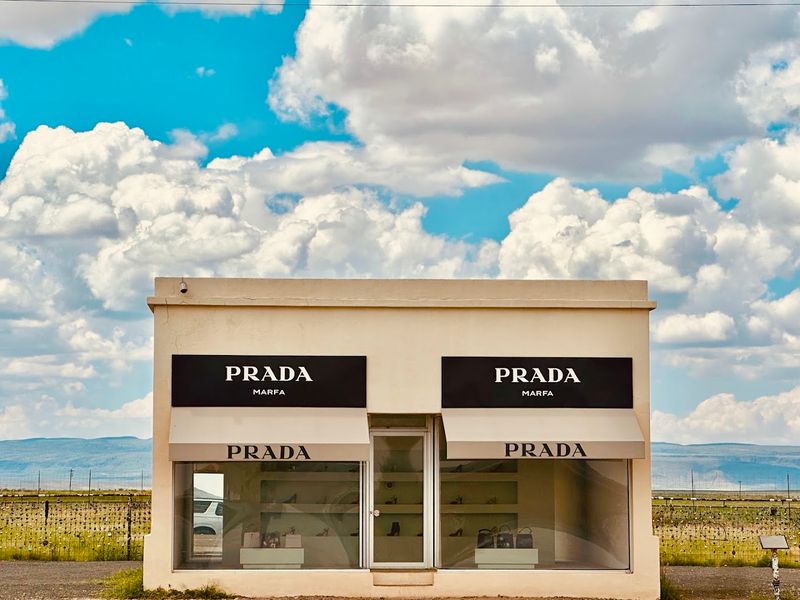
Out in the middle of nowhere between Marfa and Valentine sits what looks like a high-end Prada boutique, except it’s completely fake and you can’t actually shop there. This art installation by artists Elmgreen and Dragset opened in 2005 as a permanent sculpture, complete with real Prada handbags and shoes displayed in the windows. The contrast between luxury fashion and desolate West Texas desert creates an almost surreal experience that’s pure Instagram gold.
The structure is biodegradable and was meant to never be repaired, slowly deteriorating as a statement about consumerism. However, locals loved it so much that when vandals broke in shortly after opening, the community rallied to restore it. Now it’s been adopted as an official Texas landmark, though the door remains permanently sealed and the goods inside are from past seasons.
Getting there requires a drive along U.S. Highway 90, about 37 miles northwest of Marfa. There’s no official parking lot, just a spot to pull off the highway where dozens of visitors stop daily.
The building is small, maybe the size of a garden shed, but its pristine white exterior against the brown desert scrub makes it impossible to miss.
Bring water because there’s zero shade and temperatures soar in summer. The isolation is part of the charm; standing beside this bizarre luxury outpost while tumbleweeds blow past creates a uniquely Texan moment. It’s art, it’s commentary, and it’s absolutely worth the detour through some of Texas’s most beautiful empty landscape.
3. Eiffel Tower With the Red Cowboy Hat (Paris)
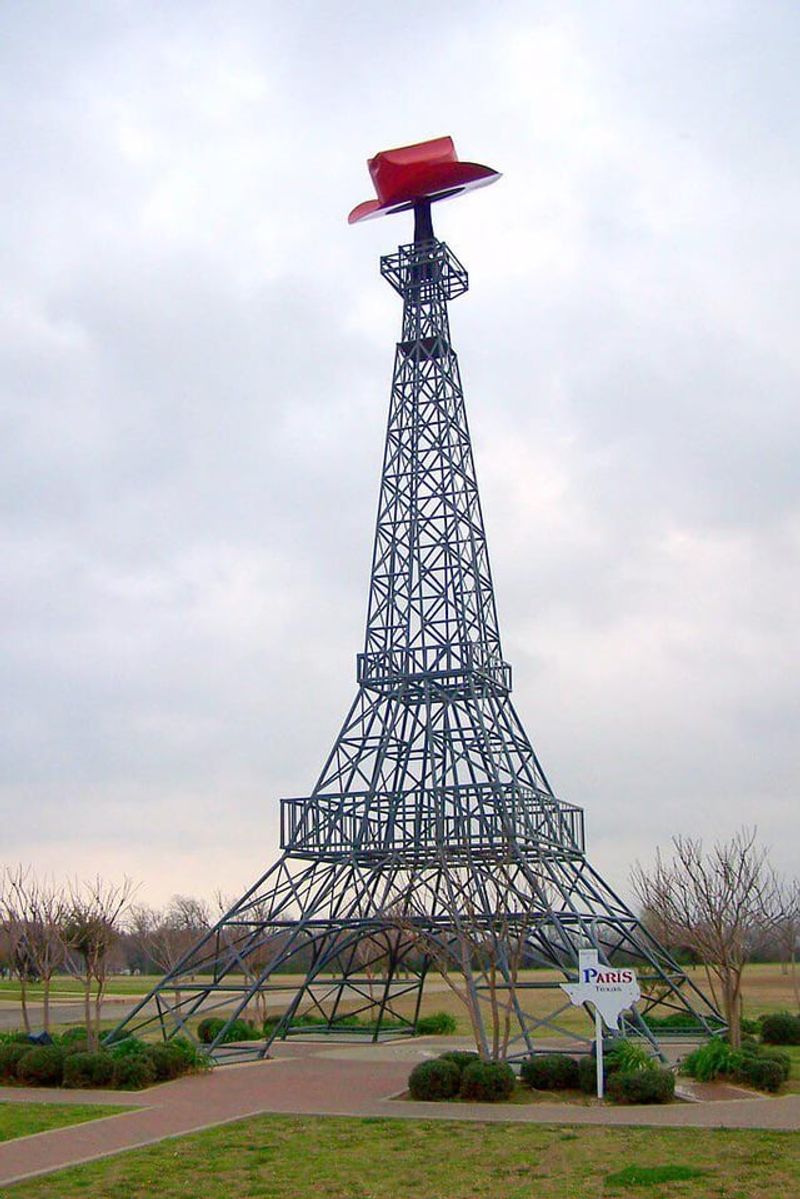
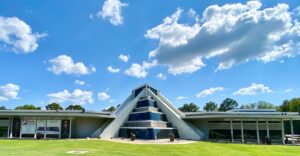
Paris, Texas decided they needed their own Eiffel Tower, and being Texans, they couldn’t just copy France without adding some local flavor. Built in 1993, this 65-foot replica stands proudly in front of the Love Civic Center, but what makes it truly Texan is the giant red cowboy hat perched on top. The hat was added in 1998 after the town learned that Paris, Tennessee also had an Eiffel Tower, and Texas wasn’t about to be outdone without making a statement.
The tower itself is constructed from structural steel and painted a matching red color that makes it visible from several blocks away. While it’s not quite as tall as the 1,083-foot original in France, it captures the spirit perfectly and has become the town’s most beloved landmark. Locals fought hard to keep it when officials considered removing it years ago, proving that sometimes the quirkiest attractions hold the deepest community pride.
Located at 2025 South Collegiate Drive, the tower sits in a plaza area where you can park easily and walk right up to it. Plaques around the base tell the story of Paris, Texas, and why residents felt connected enough to France to build their own tower. The surrounding area includes benches and green space, making it a nice spot for a picnic lunch during your road trip.
Kids enjoy running around the base while parents snap photos, and the scale is perfect for getting creative shots. Visit during the evening when lights illuminate the structure, creating a romantic glow that rivals its French inspiration. It’s wonderfully weird, unmistakably Texan, and exactly the kind of civic pride that makes small-town America so charming.
4. Stonehenge II (Ingram)
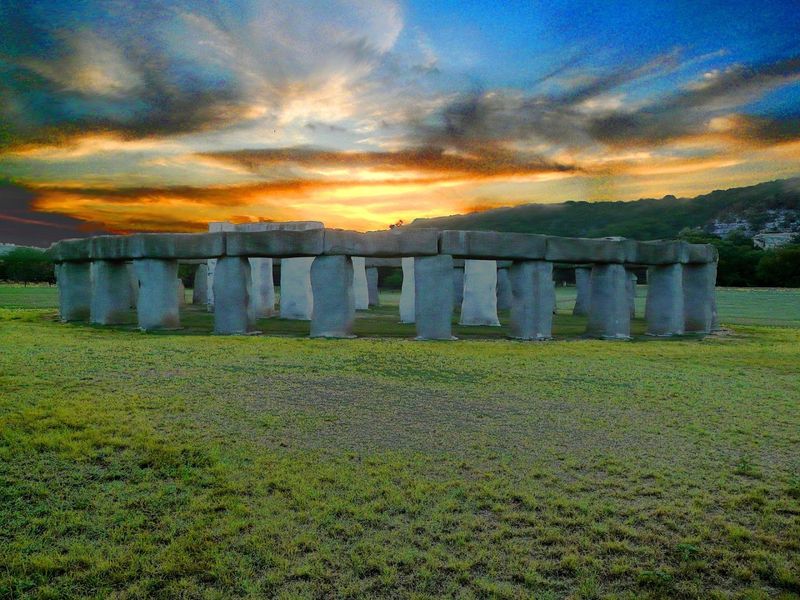
Someone looked at the ancient mysteries of Stonehenge and thought, “Texas needs one of those,” so they built a full-scale replica complete with Easter Island moai statues for good measure. Originally constructed in 1989 on private ranch land, this plaster and steel recreation stood for years before being donated to the Hill Country Arts Foundation in Ingram. The addition of the moai heads makes absolutely no historical sense, but that’s exactly what makes it perfect.
The stones are arranged in the same circular pattern as the original Stonehenge in England, measuring about 90% of the actual size. Unlike the real thing, you’re allowed to walk right up to the stones, touch them, and pose for photos without any ropes or restrictions. The plaster construction means they’re much lighter than authentic megaliths, but the visual effect is surprisingly convincing, especially against the backdrop of Texas Hill Country.
Find it at the Hill Country Arts Foundation at 120 Point Theatre Road South in Ingram, just a few miles from Kerrville. The site is free to visit during daylight hours, though donations to the arts foundation are appreciated. Surrounding the replica are open fields where deer often graze, adding to the pastoral setting that somehow makes ancient Britain feel at home in Texas.
The moai statues stand nearby, their solemn faces watching over the stone circle in a collision of world cultures that could only happen at a roadside attraction. Bring a picnic and enjoy the absurdity of it all while kids climb on the stones. It’s educational, photogenic, and refreshingly honest about being a replica rather than trying to pass itself off as something it’s not.
5. Tower Station and U-Drop Inn Café (Shamrock)
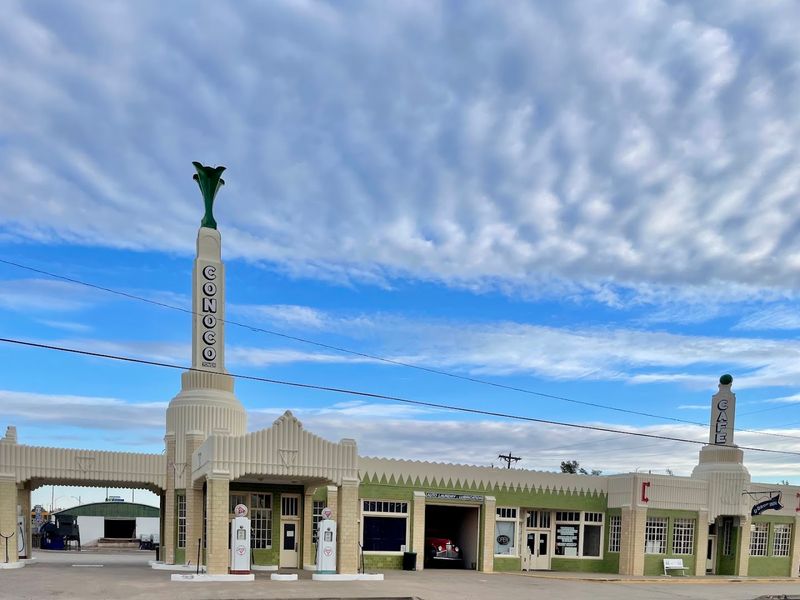
This art deco masterpiece from 1936 looks like it drove straight out of a time machine, with gleaming chrome details and a distinctive tower that once guided Route 66 travelers to fuel and food. Designed by J.C. Berry, the building combined a gas station and café under one stunning roof, featuring geometric patterns and streamlined curves that represented the height of modern design for its era.
After decades of decline, the structure was beautifully restored in 2003 and now serves as Shamrock’s visitor center and museum.
The tower rises from the corner of the building like a beacon, topped with decorative elements that catch the light beautifully. Inside, you’ll find vintage photographs showing the U-Drop Inn during its heyday when it was the fanciest stop between Oklahoma City and Amarillo. The restoration preserved original details like terrazzo floors and chrome fixtures, giving visitors an authentic glimpse into mid-century roadside architecture.
Located at the intersection of Historic Route 66 and U.S. Highway 83 in Shamrock, the building is hard to miss with its cream and green color scheme. Park in the adjacent lot and step inside to browse Route 66 memorabilia, pick up travel information, and chat with volunteers who love sharing local history.
The gift shop sells everything from postcards to Route 66 souvenirs.
Photography enthusiasts camp out here during golden hour when the setting sun makes the building glow. The structure reportedly inspired the design of Ramone’s body shop in the Pixar movie “Cars,” giving it pop culture relevance beyond its historical significance. Whether you’re a Route 66 enthusiast or just appreciate beautiful buildings, this stop delivers architectural eye candy worth every minute of your time.
6. World’s Largest Cowboy Boots (San Antonio)
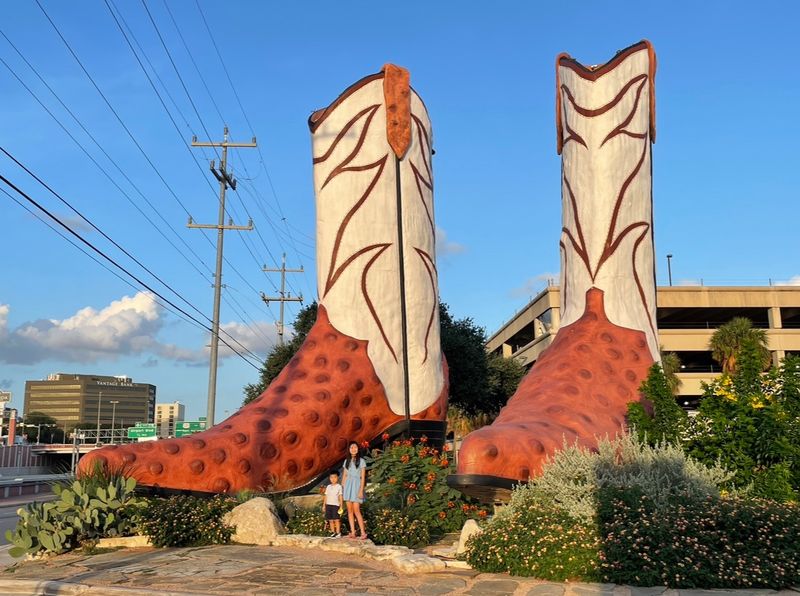
Standing guard outside the North Star Mall, a pair of 35-foot-tall cowboy boots proves that everything really is bigger in Texas. These aren’t subtle; they’re fire-engine red with white and yellow decorative stitching, impossible to miss from the highway. Originally created for the State Fair of Texas in 1979, the boots traveled around before finding their permanent home in San Antonio, where they’ve become one of the city’s most photographed landmarks.
The boots weigh about 8,000 pounds each and stand taller than a three-story building. They’re constructed from a steel frame covered in fiberglass, designed to withstand Texas weather and the millions of photos taken in front of them each year. The detail work is impressive, with realistic stitching patterns and even worn-looking soles that add character to these giant footwear sculptures.
You’ll find them at the North Star Mall at 7400 San Pedro Avenue, right near the entrance where they serve as the world’s most Texan welcome sign. The mall parking lot provides easy access, and there’s always space to pull over for photos. Kids love standing next to them for scale, and the boots have become a traditional photo stop for tourists visiting the Alamo City.
The boots look especially dramatic at night when they’re illuminated, casting long shadows across the parking lot. They’ve appeared in countless family vacation photos, wedding pictures, and social media posts, cementing their status as a San Antonio icon. Some people drive past without a second glance, but those in the know understand that posing with giant cowboy boots is a Texas rite of passage that shouldn’t be skipped.
7. Route 66 Midpoint Sign (Adrian)
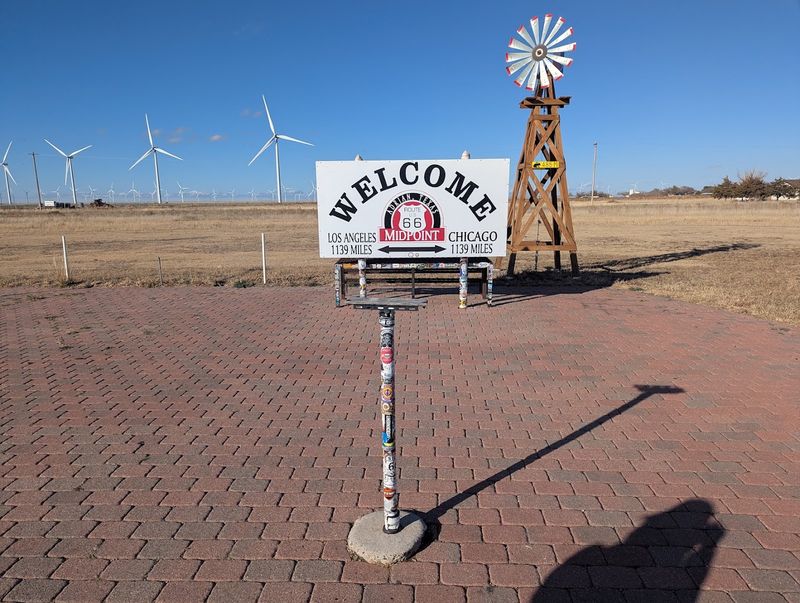
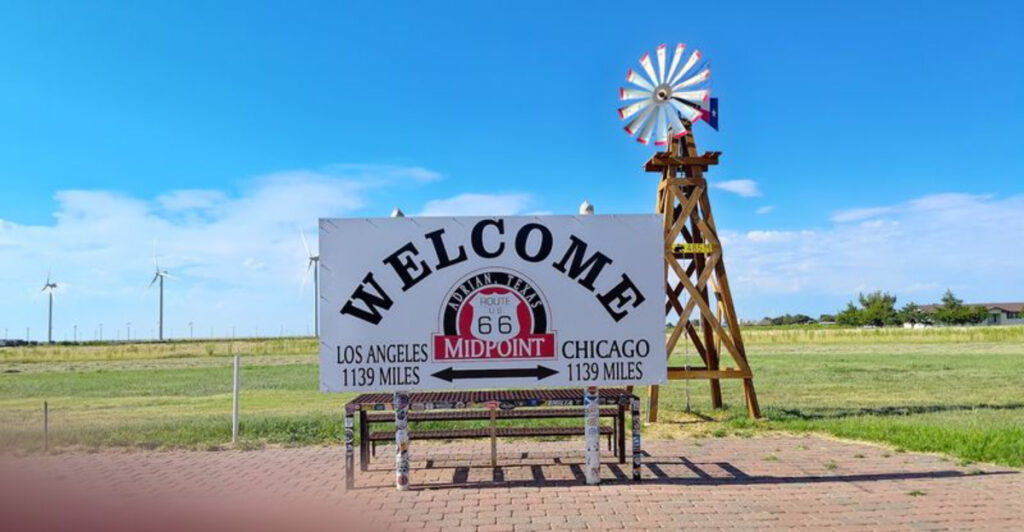
Right smack in the middle of Route 66’s 2,448-mile journey from Chicago to Los Angeles sits the tiny town of Adrian, and they’ve got the sign to prove it. The midpoint marker stands as a pilgrimage site for Route 66 enthusiasts who want to say they’ve stood at the exact center of America’s Mother Road. At 1,139 miles from either end, this spot represents the heart of a highway that shaped American culture and connected the country like nothing before it.
The sign itself is simple but meaningful, marking the geographical midpoint with painted letters that have been refreshed over the years. Adrian embraces its unique position with pride, and the nearby Midpoint Café serves up “Ugly Crust Pies” that have become legendary among road trippers. The whole town has fewer than 200 residents, but they’ve turned their midpoint status into a charming attraction that gives travelers a reason to stop and stretch.
Find the sign along the old Route 66 alignment that runs through Adrian’s main street. Parking is easy since traffic is light, and the friendly locals are used to visitors snapping photos and asking for directions. The surrounding landscape is pure Texas Panhandle: flat, wide-open, and stretching to horizons that seem impossibly far away.
Visiting during a cross-country Route 66 road trip makes the stop especially meaningful, but even if you’re just exploring Texas, the midpoint marker represents an important piece of American history. The Midpoint Café is right there if you need refreshments or want to stamp your Route 66 passport. It’s a quick stop, but standing at the halfway point of this legendary highway creates a connection to the millions of travelers who’ve passed through before you.
8. World’s Littlest Skyscraper (Wichita Falls)
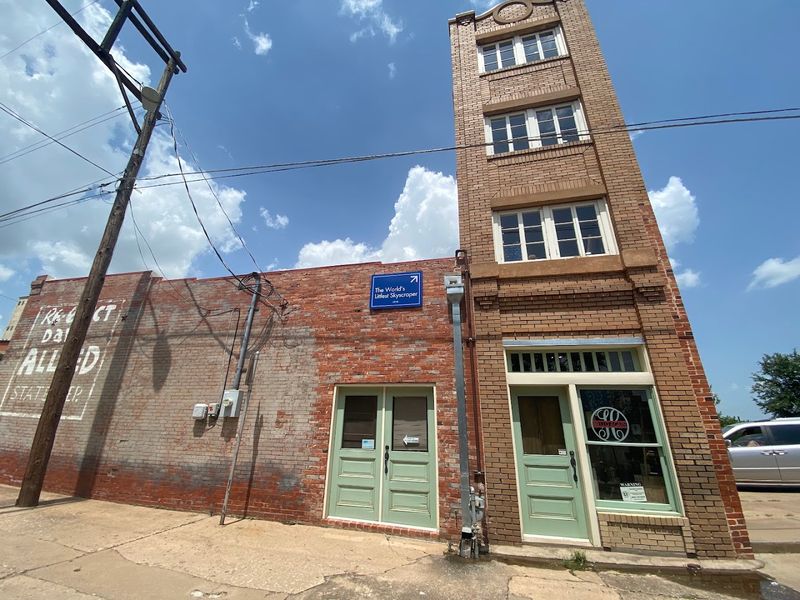
Back in 1919, a con artist named J.D. McMahon pulled off one of Texas’s greatest swindles by convincing investors to fund a skyscraper, then building a structure only 40 feet tall. The trick was in the blueprints, which showed measurements in inches rather than feet, and by the time investors realized they’d funded a four-story building instead of a proper skyscraper, McMahon had disappeared with their money.
The building still stands today at 701 La Salle Street, a monument to both human gullibility and one man’s audacious scam.
The Newby-McMahon Building measures just 40 feet tall and 10 feet wide, making it look more like a chimney than a skyscraper. Inside, a narrow staircase connects the floors, which are so small they can barely fit office furniture. The building actually served various business purposes over the years despite its impractical dimensions, proving that even a scam can find a use in the right hands.
Located in downtown Wichita Falls, the little skyscraper is easy to spot among its normal-sized neighbors. The red brick exterior has been maintained over the decades, and historical markers explain the colorful story behind its construction. While you can’t tour the inside regularly, the exterior viewing is free and the surrounding downtown area has other historic buildings worth exploring.
The story gets better the more you learn about it, with details about how McMahon convinced oil boom investors that Wichita Falls needed a proper skyscraper. When they sued him after construction, the court sided with McMahon because the blueprints were technically accurate, even if deliberately misleading. It’s a delightfully weird piece of Texas history that proves sometimes the best attractions come with the best stories attached.
9. Giant Dalmatian Fire Hydrant (Beaumont)
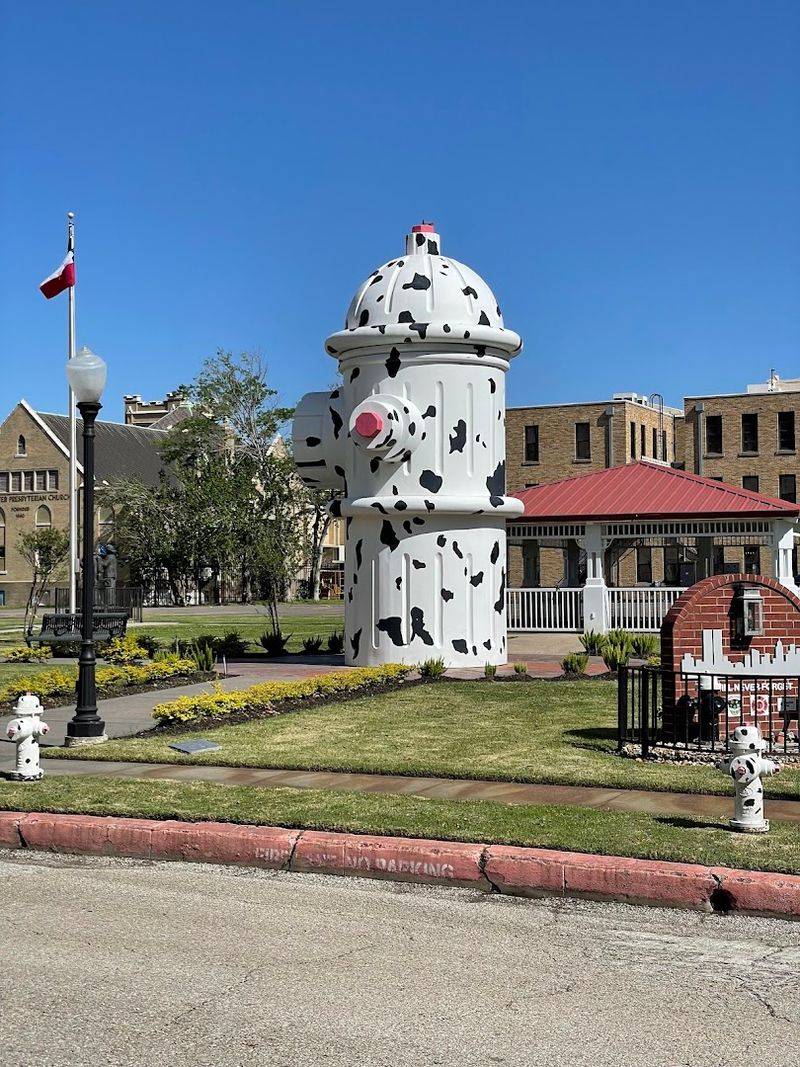
Beaumont’s Fire Museum of Texas guards its entrance with a 24-foot-tall fire hydrant painted in classic Dalmatian spots, because subtlety has never been Texas’s strong suit. Officially recognized by Guinness World Records as the world’s largest fire hydrant, this cheerful monument weighs about 4,500 pounds and could theoretically pump water if connected to a seriously oversized water main. The spots reference the traditional association between Dalmatians and firehouses, a connection that dates back to when the dogs ran alongside horse-drawn fire engines.
The hydrant stands on a concrete base outside the Texas Fire Museum at 400 Walnut Street, greeting visitors with its bold black and white pattern. Created by local artists and installed in the late 1990s, it serves as both roadside attraction and functional advertisement for the museum inside. The museum itself houses vintage fire trucks, equipment, and exhibits about firefighting history, making the whole stop worthwhile if you have time beyond just photographing the hydrant.
Kids absolutely love this thing, running up to touch the giant hydrant and posing for pictures beside it. The scale is perfect for funny perspective photos where people pretend to be tiny firefighters or dogs marking their territory. The museum grounds are well-maintained, and parking is convenient right off the street.
Beaumont doesn’t get as much tourist attention as other Texas cities, but this hydrant puts it on the roadside attraction map in a big way. The cheerful Dalmatian pattern makes it feel friendly rather than intimidating despite its massive size. Whether you’re a firefighting enthusiast, a Dalmatian lover, or just someone who appreciates oversized objects, this hydrant delivers exactly what you’d expect from a Texas-sized tribute to fire safety and man’s spotted best friend.
10. Paisano Pete (Fort Stockton)
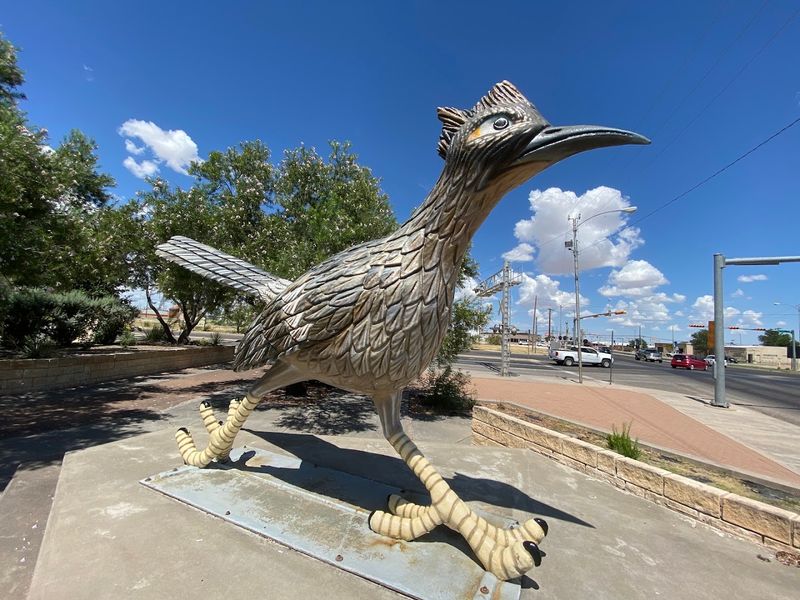
Fort Stockton’s claim to fame is an 11-foot-tall roadrunner statue that weighs three tons and has been watching over the town since 1979. Named Paisano Pete after the Spanish word for roadrunner, this giant bird stands near the intersection of I-10 and U.S. Highway 285, impossible to miss with his brown and cream plumage and permanently surprised expression.
The roadrunner is appropriate for this part of West Texas, where the real birds actually live and dart across highways with their distinctive running style.
Pete was created by local artist John Guiterrez using concrete, steel, and fiberglass, then painted in realistic roadrunner colors. Standing 22 feet long from beak to tail, he’s been a photo opportunity for travelers crossing Texas on I-10 for over four decades. The statue sits in a small park area with informational signs about roadrunners and the history of Fort Stockton, a town that serves as an important rest stop in the long stretch between San Antonio and El Paso.
You’ll find Paisano Pete at 1000 Main Street, right downtown where he’s become the unofficial mascot of Fort Stockton. The park around him is clean and maintained, with benches where you can rest after hours of highway driving. Nearby, the town offers restaurants and gas stations, making this a practical stop beyond just the photo opportunity.
Roadrunners hold a special place in Southwest culture, representing speed, survival, and the desert landscape. Pete captures that spirit in concrete form, giving travelers a fun reason to exit the interstate and explore a small Texas town. The statue has been featured in roadside attraction guides and social media posts for years, earning his place among Texas’s most beloved oversized animals.
He’s quirky, he’s photogenic, and he represents the kind of community pride that turns a simple statue into a landmark.
11. Tex Randall (Canyon)
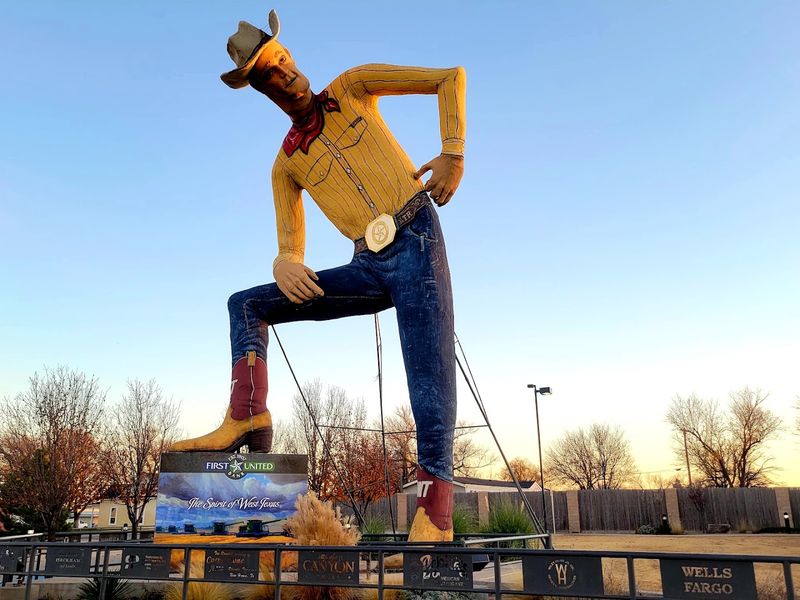
Towering 47 feet above the Texas Panhandle, Tex Randall is a fiberglass cowboy who’s been greeting travelers along I-27 since 1959. Originally built to advertise a now-defunct Western-themed restaurant, Tex has outlasted his commercial purpose to become a beloved local landmark that represents everything Texan: big, bold, and wearing a cowboy hat. He stands with one hand on his hip in a relaxed pose, like he’s got all the time in the world to watch traffic pass by.
The statue weighs about seven tons and has survived numerous West Texas storms, though he’s required restoration work over the decades. In the 1990s, when the restaurant closed and Tex’s future seemed uncertain, the community rallied to save him, moving the statue to his current location near the Palo Duro Canyon visitor center. The rescue effort proved that Tex had transcended advertising to become part of the town’s identity, a symbol of Canyon that residents refused to lose.
Located just off I-27 near the Palo Duro Canyon exit, Tex is easy to access with a small parking area at his base. The surrounding area offers stunning views of the Panhandle landscape, and you’re just minutes from Palo Duro Canyon State Park if you want to extend your stop into a longer adventure. Information plaques tell Tex’s history and explain his significance to the community.
Standing beneath this giant cowboy, you can’t help but smile at the sheer audacity of building something this big just to sell hamburgers. Tex represents a era of roadside Americana when bigger was always better and attractions competed for attention along busy highways. He’s been photographed millions of times, appeared in countless road trip albums, and continues to make people happy decades after his original purpose faded.
That’s the mark of a true roadside attraction: outlasting its intent to become something more meaningful to everyone who stops to look up at a 47-foot cowboy watching over the plains.
Share this story