Arkansas is packed with rugged landscapes that many travelers still overlook, making it one of the most surprising destinations for outdoor adventure. From towering waterfalls and scenic river bluffs to ancient rock formations and sweeping canyon views, the Natural State delivers unforgettable scenery at every turn.
Whether you’re an experienced hiker or just planning a relaxed weekend walk, there’s a trail here that fits your pace. It’s the kind of place where every path leads to something memorable. Here are 12 of the most beautiful hiking trails to add to your 2026 travel list.
1. Whitaker Point (Hawksbill Crag) Trail
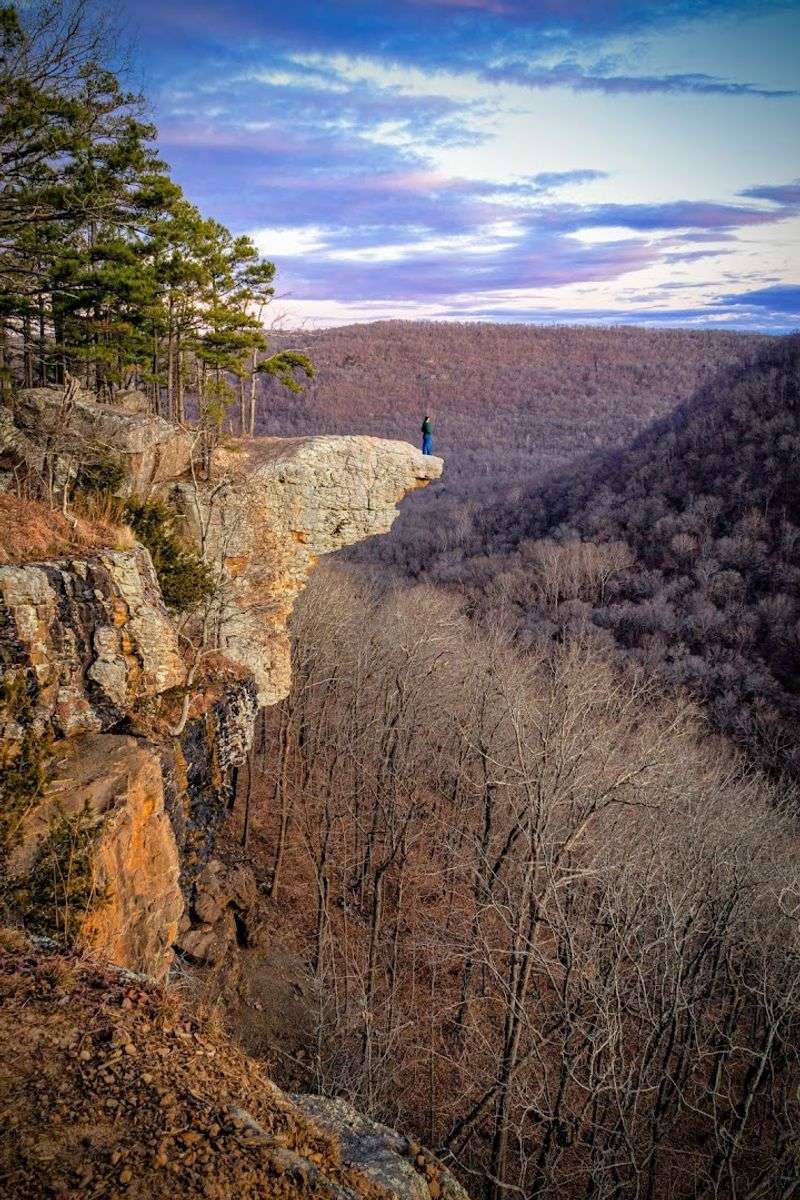
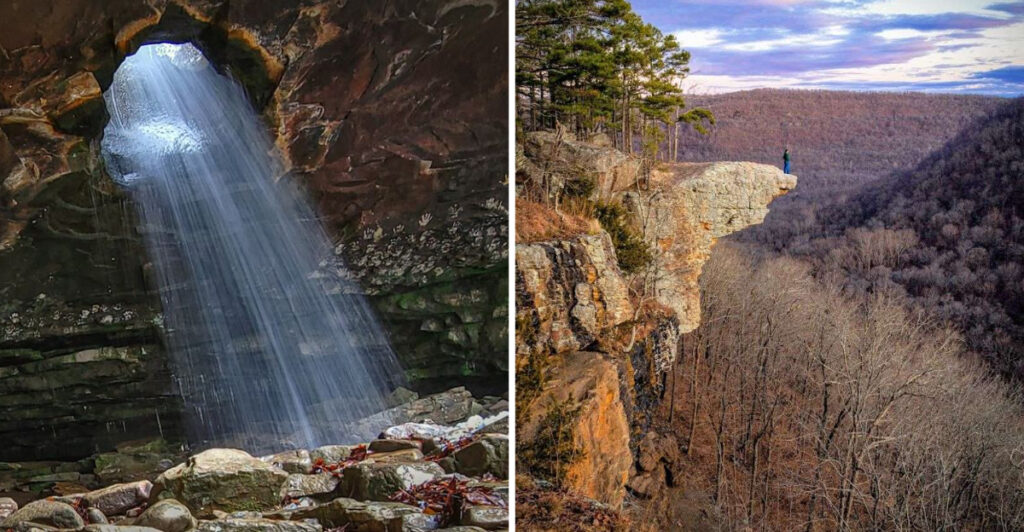
Few hikes in the entire South deliver a payoff quite like Whitaker Point, also known as Hawksbill Crag. The moment you step onto that narrow rock shelf jutting straight out over the valley, your stomach drops and your jaw follows right behind it. It is one of those places that looks almost too good to be real, like someone photoshopped a mountain into Arkansas.
The trail itself is relatively short, clocking in around three miles round trip through a shaded forest that smells like cedar and damp earth after rain. The path is not overly difficult, but some sections are rocky and uneven, so solid footwear is a smart call. Most hikers of moderate fitness can handle it without much trouble.
Morning light hits Hawksbill Crag in a way that photographers absolutely lose their minds over. The fog rolling through the Ozark valleys below creates this cinematic, dreamy effect that is honestly hard to describe without sounding dramatic. Arrive early if you want the crag to yourself before the crowds roll in, especially on weekends.
Located near Ponca in the Ozark National Forest, this trail sits within the Upper Buffalo Wilderness Area, which means no motorized vehicles and a genuine sense of backcountry solitude. Parking is limited, so carpooling is encouraged. The trailhead fills up fast on popular weekends, particularly in fall when the foliage turns the entire valley into a patchwork of orange, red, and gold.
Bring water, a snack, and a fully charged phone for photos you will be sharing for years. This hike earns its reputation as one of Arkansas’ most iconic outdoor experiences, and once you see it in person, you will understand exactly why everyone keeps talking about it.
2. Lost Valley Trail
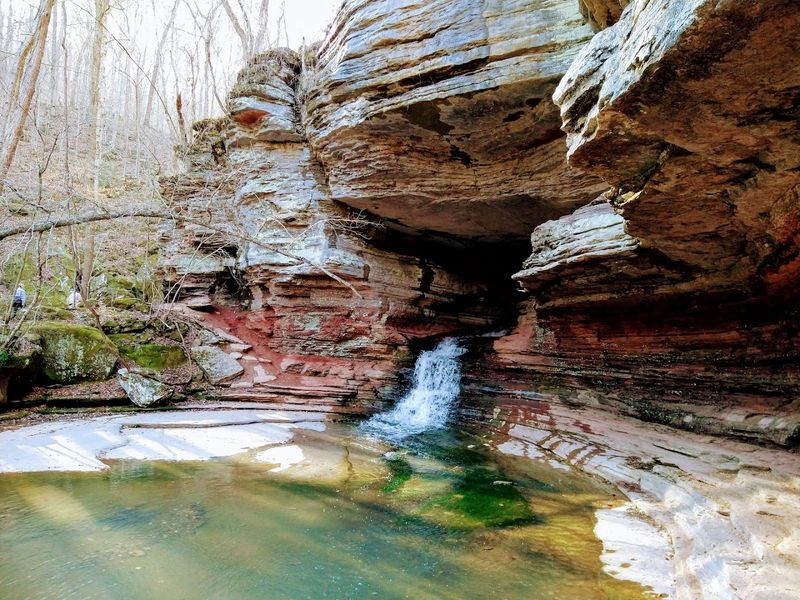
Tucked into a narrow, green-walled canyon near Ponca, Lost Valley Trail is the kind of hike that makes you feel like you stumbled into a secret world. The trail follows Clark Creek through a corridor of towering bluffs, mossy boulders, and dripping fern-covered walls that feel almost prehistoric. Kids especially go wild for this one.
The main attraction is Eden Falls, a beautiful waterfall hidden at the end of the valley inside a cave alcove. Getting there requires a short scramble through a tight passage, which adds a genuine sense of adventure without being dangerous. Families with young children tackle this trail regularly, and most find it manageable and incredibly rewarding.
Running about two miles round trip, the trail is one of the more accessible options along the Buffalo National River corridor. The elevation gain is gentle, and the path stays interesting the whole way with bluffs, a natural bridge, and cave shelters breaking up the scenery at regular intervals. You are never walking through boring terrain here.
Spring is arguably the best time to visit when the waterfall is running strong and wildflowers line the trailside. Summer keeps the canyon cool thanks to the tree canopy and the creek’s natural air conditioning effect. Fall brings brilliant color to the surrounding forest, and even winter offers a moody, quiet version of the trail worth experiencing.
Pack a headlamp if you plan to explore the cave near Eden Falls, since the interior gets dark quickly. Waterproof shoes or sandals you do not mind getting wet are a smart choice during wetter months when the creek crossing is unavoidable. Lost Valley is genuinely one of those trails that earns a permanent spot on every Arkansas hiking list.
3. Hemmed-In Hollow Trail
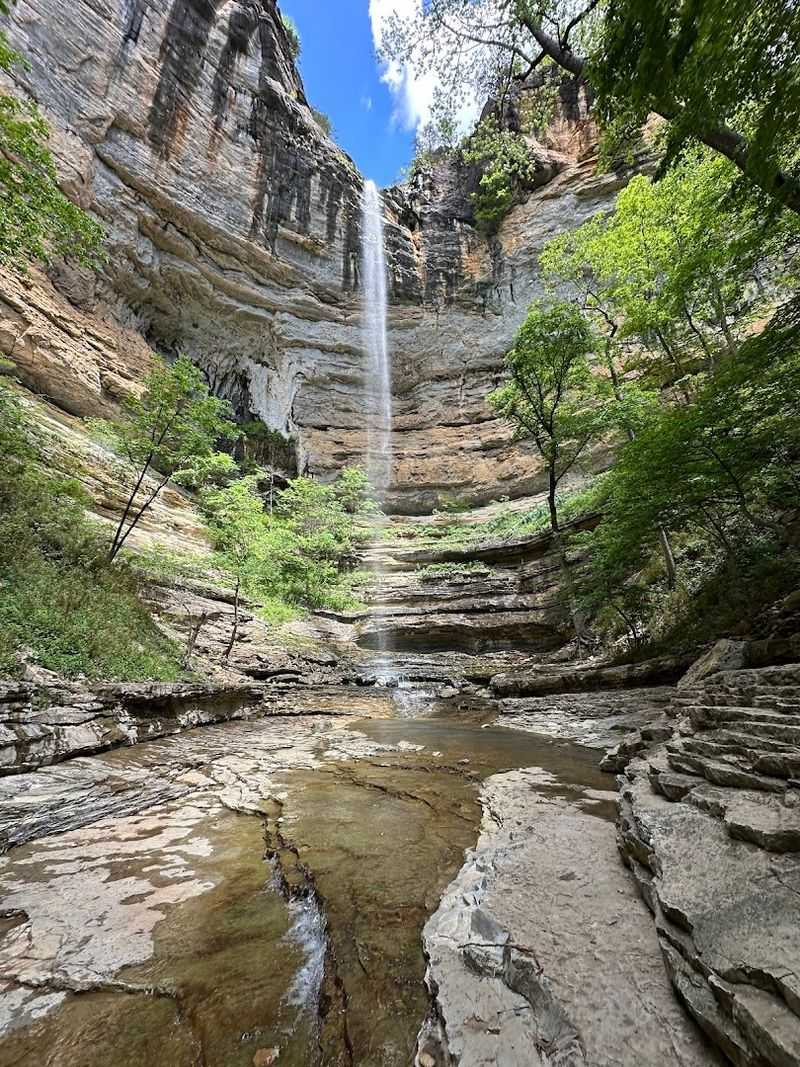
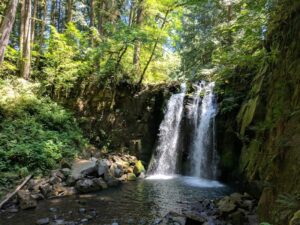
Standing at the base of Hemmed-In Hollow feels like standing inside a cathedral carved by nature itself. The waterfall drops 209 feet straight down into a bowl of sheer sandstone cliffs, and the sound of the water echoes off every surface in a way that genuinely gives you chills.
This is the tallest waterfall between the Rocky Mountains and the Appalachians, and it earns that title every single time you see it. The hike to reach it is no casual stroll. Depending on your chosen route, you are looking at anywhere from six to ten miles round trip with serious elevation changes.
The trail demands attention, proper footwear, and enough water to keep you going through the challenging descent and climb back out. That said, the difficulty is a huge part of what makes arriving feel so earned.
Located in the Buffalo National River area near Compton, the trailhead can be accessed from multiple points including the Compton Trailhead. Many hikers combine this with other nearby trails to make a full day or overnight adventure out of the area. Camping options nearby make it easy to spread the experience across two days.
The waterfall flows strongest in late winter and spring when snowmelt and rain keep the water volume high. Summer visits are still worthwhile, though the falls may slow to a trickle during dry stretches. The hollow stays noticeably cooler than the surrounding terrain even on hot days, making the destination feel like a natural reward for the effort.
Wildlife sightings along this trail are common, including deer, wild turkey, and the occasional black bear moving through the forest. Stay aware of your surroundings, pack your essentials, and give yourself plenty of daylight. Hemmed-In Hollow is not just a hike; it is a full-on Arkansas experience.
4. Big Bluff / Goat Trail
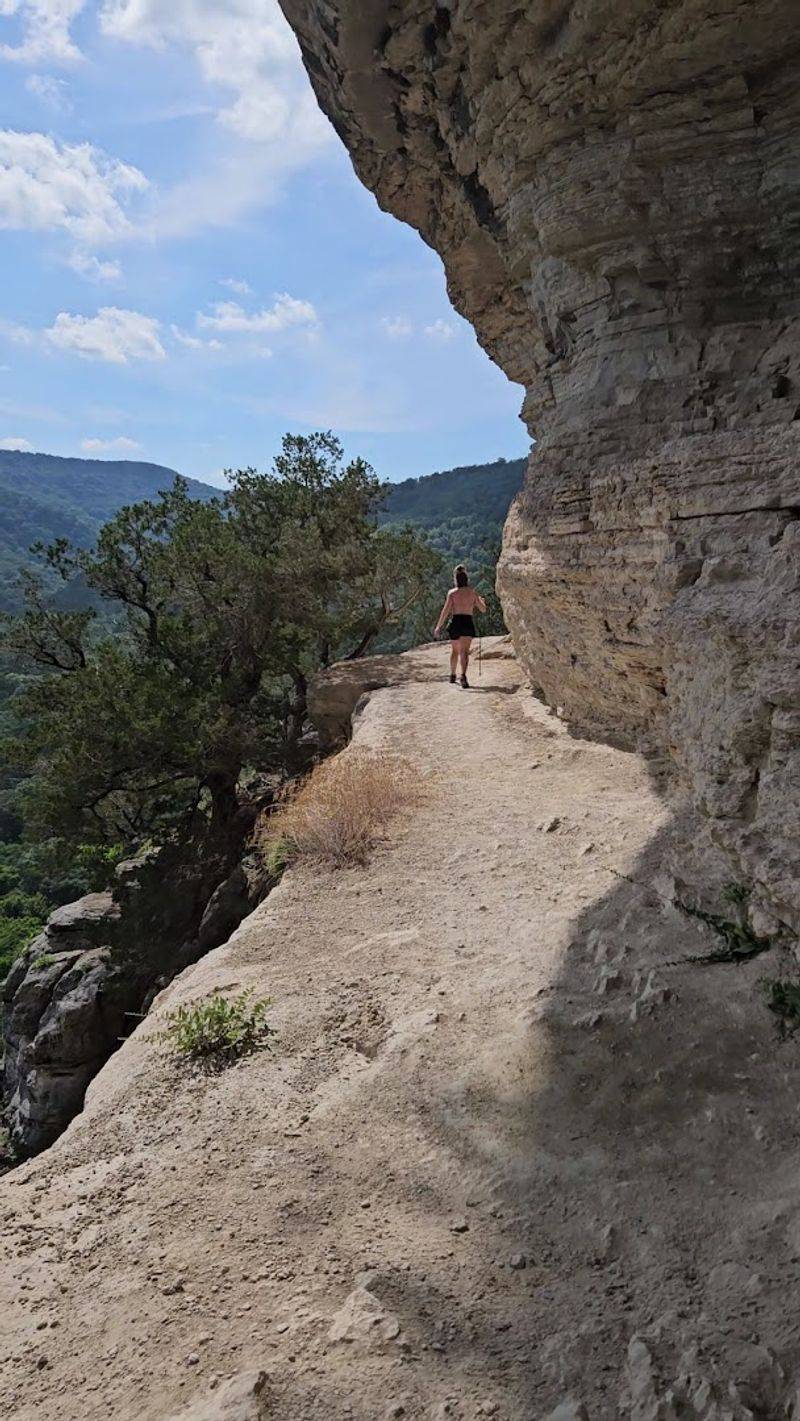
There is a moment on the Goat Trail when you realize just how narrow the path actually is, and the drop below is not something you want to think about for too long. Big Bluff stands over 500 feet above the Buffalo River, and the trail that wraps around its face is one of the most exhilarating stretches of hiking anywhere in Arkansas. Your heart rate will confirm that.
Accessed from the Centerpoint Trailhead near Ponca, this section of the Buffalo River Trail takes you through dense forest before revealing the bluff face in dramatic fashion. The exposed traverse along the cliff offers unobstructed views of the river snaking through the valley far below, framed by green ridgelines on every side. On a clear day, the visibility seems almost endless.
The trail is moderately challenging overall, though the exposed section of the Goat Trail deserves serious respect. Anyone with a fear of heights should think carefully before committing to that stretch. Children and less experienced hikers should be accompanied by someone comfortable with exposed terrain and should stay away from the edge at all times.
Fall is peak season here for obvious reasons. The foliage turns the valley into a masterpiece of color, and the cooler temperatures make the physical effort far more comfortable. Spring brings lush greenery and rushing creeks, while summer mornings offer a quieter experience before the afternoon heat sets in.
The overall loop connecting Big Bluff and the Goat Trail can be customized based on your fitness level and how far you want to push the day. Water sources are limited on this route, so carry more than you think you will need. This trail delivers the kind of views that end up framed on living room walls. Bring your best camera.
5. Eagle Rock Loop
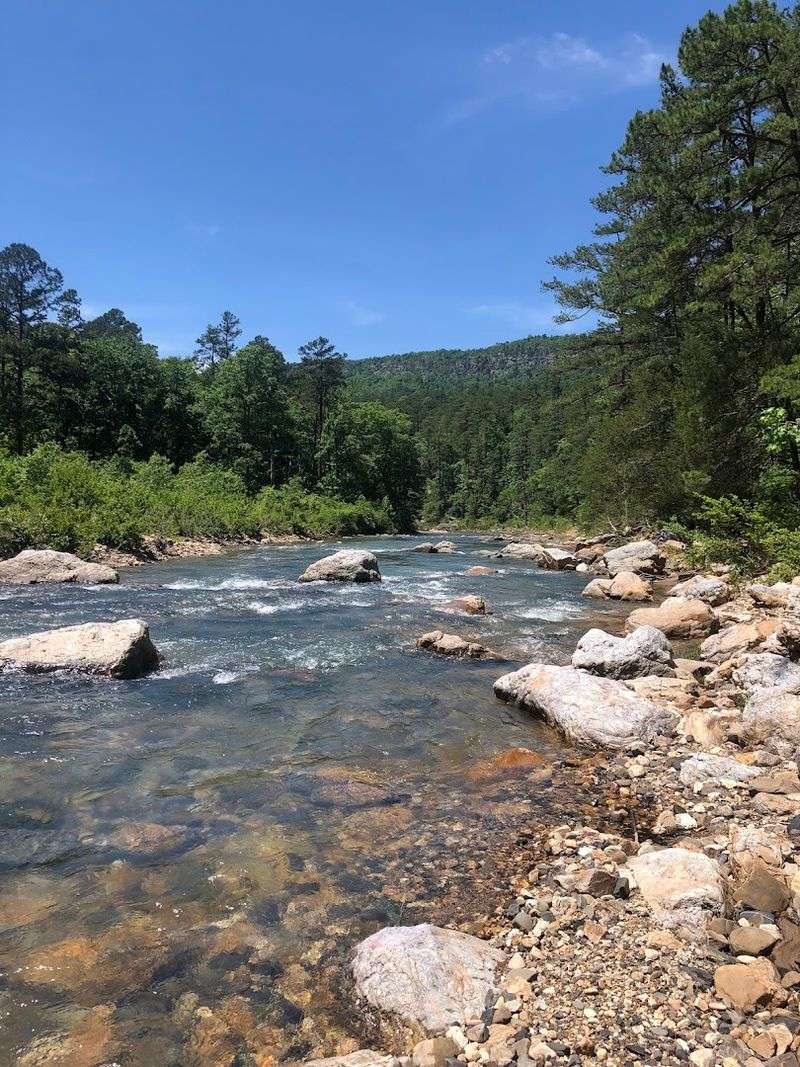
Eagle Rock Loop has a reputation among Arkansas backpackers that borders on legendary. This 26-mile circuit through the Ouachita National Forest near Langley is the kind of trail that serious hikers put on their bucket list and then talk about for years after completing it. Rugged, remote, and stunningly beautiful, it checks every box for a proper backcountry adventure.
The loop crosses the Little Missouri River multiple times, which can be a casual wade in dry conditions or a genuine challenge during high water. Checking river levels before your trip is not optional here, it is essential. The crossings add an element of unpredictability that keeps the experience feeling wild and real rather than polished and predictable.
Terrain varies dramatically throughout the loop, shifting from dense pine and hardwood forest to exposed ridgelines with sweeping mountain views. The elevation changes are consistent and demanding, making physical preparation important before you commit to the full circuit. Most hikers split the loop into two to three days, setting up camp at designated backcountry sites along the route.
Fall is widely considered the best season for Eagle Rock Loop, when cooler temperatures make the sustained climbs more manageable and the forest blazes with color. Spring offers wildflowers and full river crossings, though wet conditions can make some sections slippery and demanding. Regardless of season, the solitude out here is remarkable.
Navigation skills matter on this trail since some sections are not heavily trafficked and trail markers can be easy to miss. A good map, a compass, and a downloaded offline GPS route are smart additions to your pack. Eagle Rock Loop rewards those who come prepared with an experience that genuinely feels like disappearing into the Arkansas wilderness for a few days.
6. Seven Hollows Trail
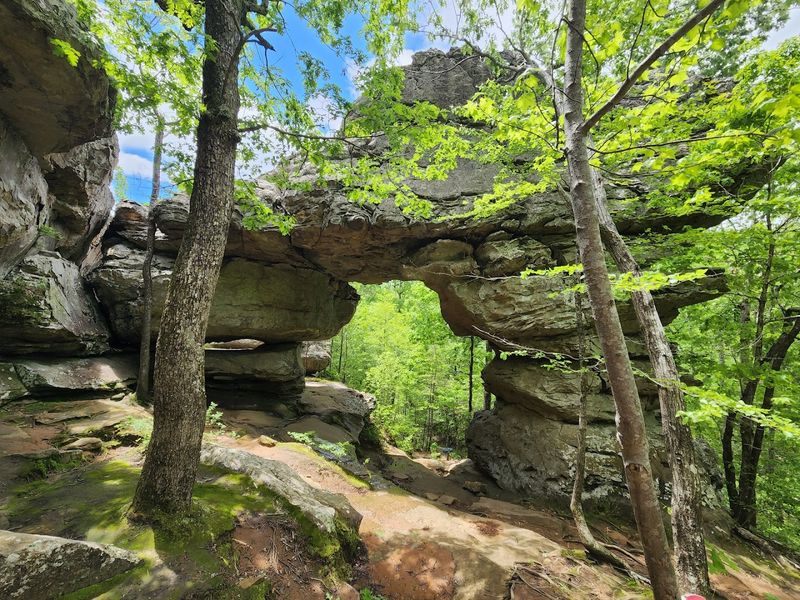
Petit Jean State Park has been drawing visitors since the 1920s, and Seven Hollows Trail is a big reason why people keep returning. This loop trail packs an almost absurd amount of geological variety into a single hike, moving through natural bridges, grottoes, sandstone formations, and shaded hollows that feel like they belong in a fantasy novel. It is genuinely one of the most diverse trails in the state.
Running approximately five miles, the trail is rated moderate and involves some climbing and uneven footing through rocky terrain. The payoff for the effort comes in waves, with each new hollow revealing something different from the last. Natural bridges arch overhead, cave-like shelters invite exploration, and the sandstone walls display layers of color that speak to millions of years of geological history.
The trail is located near Morrilton in central Arkansas, making it one of the more accessible options on this list for visitors coming from Little Rock or the surrounding region. Petit Jean State Park itself offers camping, a lodge, and other trails, making it easy to turn the visit into a full weekend adventure rather than a single afternoon outing.
Wildflowers bloom along the hollows in spring, adding bursts of color to an already visually rich environment. Summer keeps the shaded sections cool and comfortable even when temperatures climb outside the canyon walls. Autumn brings a different kind of beauty as the hardwoods surrounding the trail shift into warm seasonal tones.
Wear shoes with solid ankle support since the rocky hollows can be tricky underfoot, especially after rain. Bring enough water for the full loop since there are no reliable water sources along the trail. Seven Hollows rewards curious hikers who enjoy stopping to look closely at the world around them rather than just rushing to the end.
7. Cedar Falls Trail
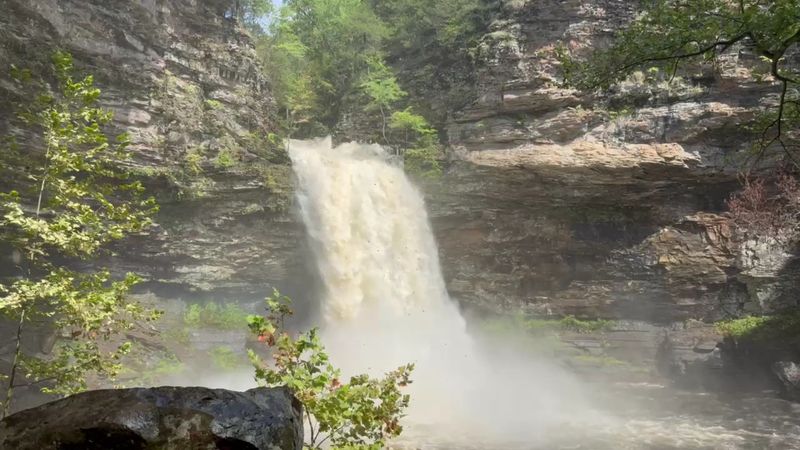
Cedar Falls might just be the most beloved waterfall in all of Arkansas, and the hike to reach it sets the mood perfectly. The trail drops steeply into a rugged canyon, wrapping around sandstone walls and through a forest that grows increasingly dramatic as you descend toward the sound of falling water.
When the falls finally come into view, the reaction is almost always the same. Pure, unfiltered awe. The waterfall stands 95 feet tall and crashes into a wide pool at the base of the canyon, sending mist into the air that you can feel on your skin long before you actually see the falls.
The canyon walls surrounding the drop zone rise up on both sides, creating an enclosed, almost amphitheater-like setting that amplifies the sound and the visual impact. It is one of those places that photographs beautifully but still looks better in person.
Located within Petit Jean State Park near Morrilton, the Cedar Falls Trail runs about 1.5 miles round trip from the main trailhead. The descent is steep and requires careful footing on slick, rocky sections, particularly after rainfall. Going down feels manageable, but the climb back out will remind your legs that they did some work today.
Spring and early summer offer the highest water volume, when snowmelt and seasonal rain push the falls to full power. The roar of the water during peak flow is something else entirely, filling the canyon with a constant, deep rumble that you feel as much as hear. Even during drier months, the falls maintain enough flow to remain impressive and photogenic.
Arrive early on weekends to beat the crowds, since Cedar Falls is one of the most visited spots in the park. The trail is short enough for most fitness levels to handle, making it a genuinely accessible Arkansas waterfall experience that delivers every single time.
8. Signal Hill Trail
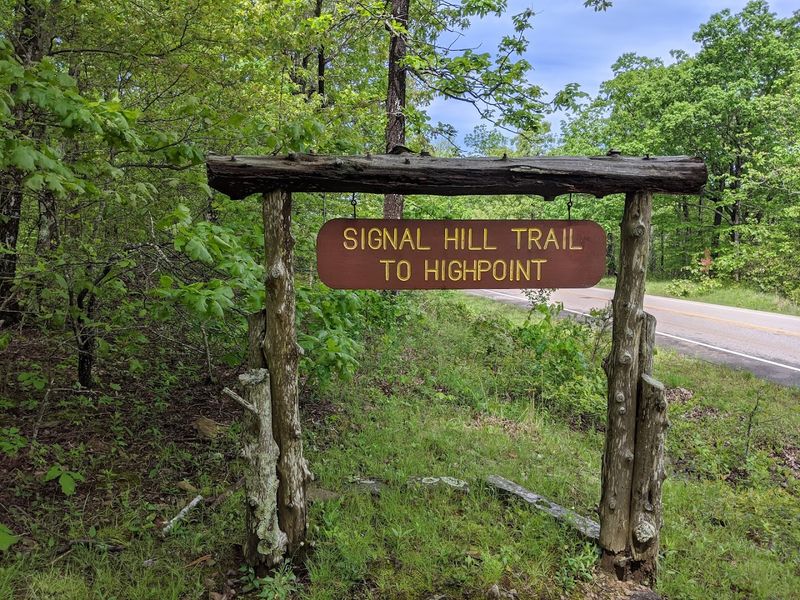
Standing on the highest point in Arkansas has a certain quiet satisfaction to it, even if the summit itself is more forested clearing than dramatic rocky peak. Signal Hill on Mount Magazine reaches 2,753 feet above sea level, and the short trail that leads to the summit marker is one of the most understated yet meaningful hikes in the state.
It is the kind of place that makes you feel genuinely accomplished without destroying your knees. Wait, this one belongs with the Sunset Trail section. Signal Hill is actually located in the Ouachita National Forest near Mena, not on Mount Magazine.
The trail is a short, peaceful walk through dense forest to a summit marker that designates the high point of the Ouachita Mountains in that region. The surrounding forest provides shade and a sense of solitude that feels earned even on a relatively easy hike.
The trail near Mena attracts hikers who want to tick off a meaningful summit without committing to a full-day adventure. It is accessible to most fitness levels and works well as a standalone outing or as part of a larger exploration of the Ouachita National Forest. The forest itself is quietly stunning, full of tall pines and hardwoods that filter the light in beautiful ways.
Wildlife is common in this part of the Ouachitas, and the quieter pace of the trail gives you a better chance of spotting deer, songbirds, or other forest residents without startling them. Early morning visits offer the best wildlife viewing and the softest light filtering through the tree canopy overhead.
Pack light for this one since the hike is short, but bring water and take your time soaking in the atmosphere. Signal Hill may not offer sweeping panoramic views, but the peaceful forest energy and the satisfaction of standing at a genuine summit make it a worthy stop on any Arkansas hiking itinerary.
9. Yellow Rock Trail
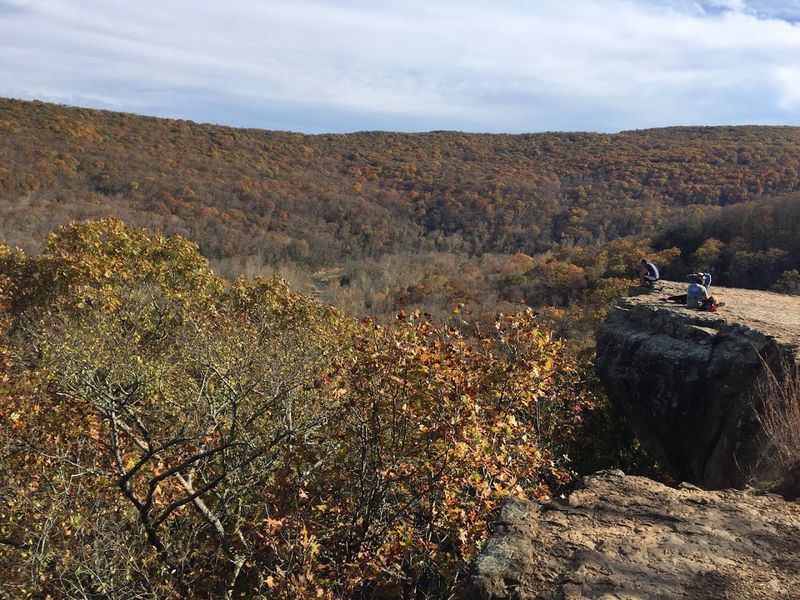
Yellow Rock earns its name the moment you arrive at the overlook. The exposed sandstone summit glows in shades of amber, rust, and gold, especially during the golden hour when low-angled sunlight turns the entire rock face into something that looks almost lit from within.
Sunrise and sunset visits here are not just recommended, they are practically mandatory for anyone who appreciates dramatic natural lighting. Located within Devil’s Den State Park near West Fork, this trail climbs through a mixed forest of cedar and hardwood before emerging onto the open rock face with views stretching across the Lee Creek Valley.
The climb is moderately challenging, with some steep sections and loose rock that demand attention. Total round trip distance is roughly two miles, making it a solid half-morning commitment that pays off well above average.
Devil’s Den State Park itself is one of Arkansas’ most beloved state parks, known for its sandstone crevices, caves, and CCC-era stone buildings that date back to the 1930s. Yellow Rock Trail adds an elevated perspective to all of that, giving you a bird’s-eye view of the park’s forested landscape. Combining Yellow Rock with some of the park’s lower trails makes for a full and deeply satisfying day outside.
The trailhead is well-marked and the path is maintained, though some sections can be muddy after heavy rain. Trekking poles are a nice addition for the steeper sections, particularly on the descent when tired legs are more prone to slipping. The exposed summit can be windy, so an extra layer in spring or fall is worth tossing into your pack.
Photographers and casual hikers alike consistently rate Yellow Rock among the most rewarding short hikes in Arkansas. The combination of accessible distance, striking geology, and spectacular light makes this trail a repeat-visit kind of place that reveals something new each season.
10. Sunset Trail
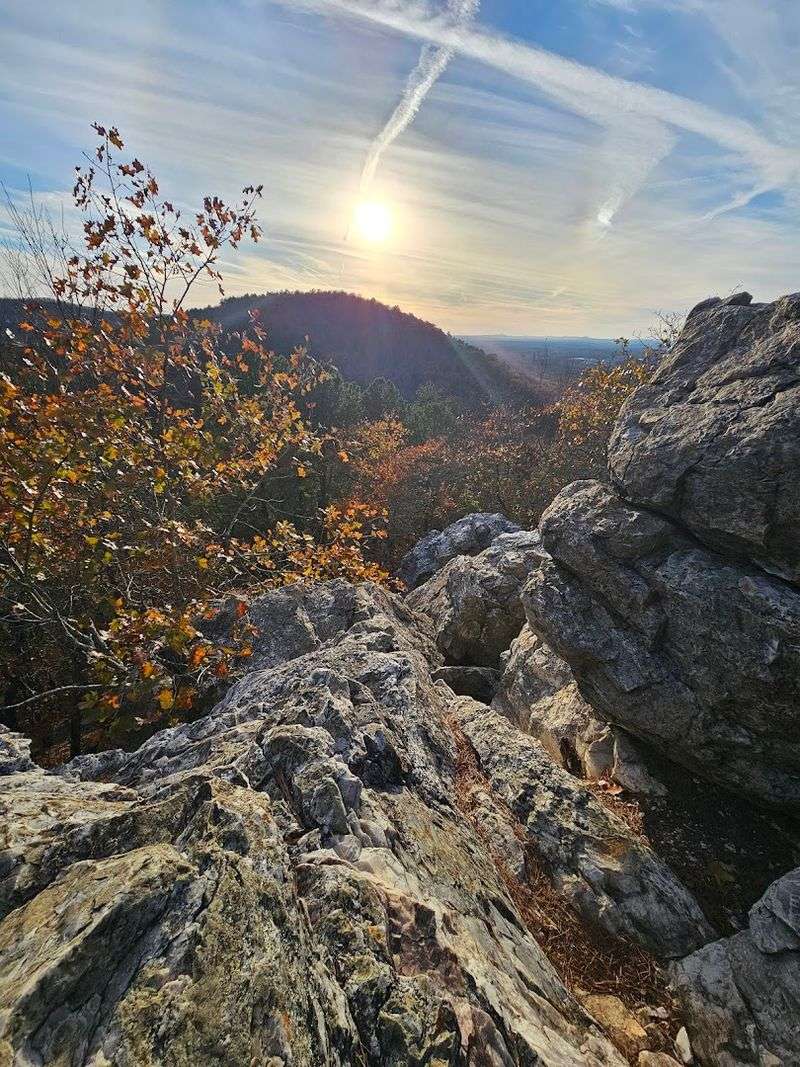
Mount Magazine is the tallest mountain in Arkansas, topping out at 2,753 feet, and the Sunset Trail that winds across its summit plateau lives up to its name in spectacular fashion. Watching the sun drop behind the western ridgelines from up here is one of those experiences that reminds you why you bother lacing up your boots in the first place.
The views go on forever in every direction. The full Sunset Trail runs around 13 miles along the mountain’s summit ridge, connecting various overlooks, forest sections, and rocky outcroppings. Most hikers do not tackle the entire length in one go, instead choosing shorter out-and-back sections to specific viewpoints.
The trail is accessible from Mount Magazine State Park near Paris, which also offers lodge accommodations and camping for those who want to stay and catch both sunset and sunrise. The terrain shifts between open meadow-like clearings and shaded forest corridors, keeping the scenery varied and engaging throughout.
Several designated overlooks along the route provide benches and cleared sightlines for taking in the surrounding landscape without having to scramble for a good vantage point. The infrastructure is thoughtful without feeling overdeveloped or touristy.
Spring brings wildflowers to the summit plateau, including species that thrive in the unique microclimate created by the mountain’s elevation. Fall color at this height tends to peak slightly earlier than in the valleys below, giving you a head start on the best foliage viewing in the region. Summer evenings up here are noticeably cooler than in surrounding lowlands, making it a welcome escape from Arkansas heat.
Binoculars are a worthwhile addition to your pack since the visibility from Magazine’s summit can be extraordinary on clear days. The mountain also sits along a major raptor migration corridor, making spring and fall visits especially exciting for bird enthusiasts looking to spot hawks, falcons, and eagles riding thermal currents overhead.
11. Alum Cove Natural Bridge Trail
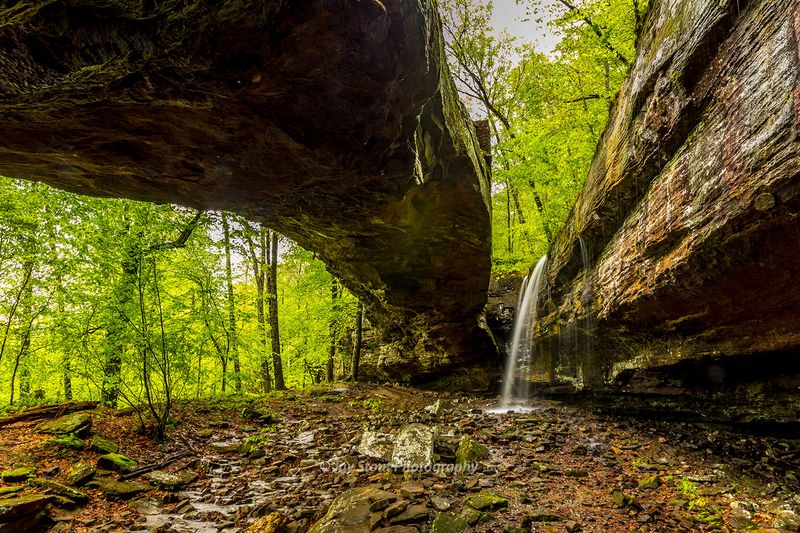
Not every great hike requires suffering. Alum Cove Natural Bridge Trail makes a strong case for the short-and-sweet school of outdoor adventure, delivering genuine geological wonder on a path that just about anyone can handle. The star of the show is a natural sandstone bridge stretching roughly 130 feet in length, one of the largest natural bridges in the mid-South, and it sits in a shaded hollow that feels like a living museum of Ozark geology.
Located in the Ozark National Forest near Jasper, the trail loop runs about a mile in total length and stays relatively flat throughout. The path winds past bluff shelters, cave alcoves, and moss-covered rock formations before arriving at the bridge itself, which arches overhead in a way that genuinely impresses even hikers who have seen a lot. The scale of the thing only hits you fully once you are standing directly beneath it.
This trail is a fantastic option for families with young children, older hikers looking for a less physically demanding outing, or anyone short on time but unwilling to skip the outdoors entirely. The easy terrain does not mean the experience is watered down, the scenery is legitimately beautiful and the geological features are fascinating regardless of your hiking experience level.
The surrounding forest canopy keeps the trail shaded and cool even during warmer months, which makes summer visits far more comfortable here than on exposed ridgeline trails. Wildflowers appear in the understory during spring, and the damp, mossy environment around the bluff shelters stays green and lush throughout most of the year.
Parking at the trailhead is limited, so arriving early during peak season prevents frustration. The short length means you can easily combine this hike with a visit to nearby Boxley Valley or other Jasper-area attractions in the same day. Alum Cove rewards every single visitor, no matter their fitness level or hiking background.
12. Glory Hole Falls Trail
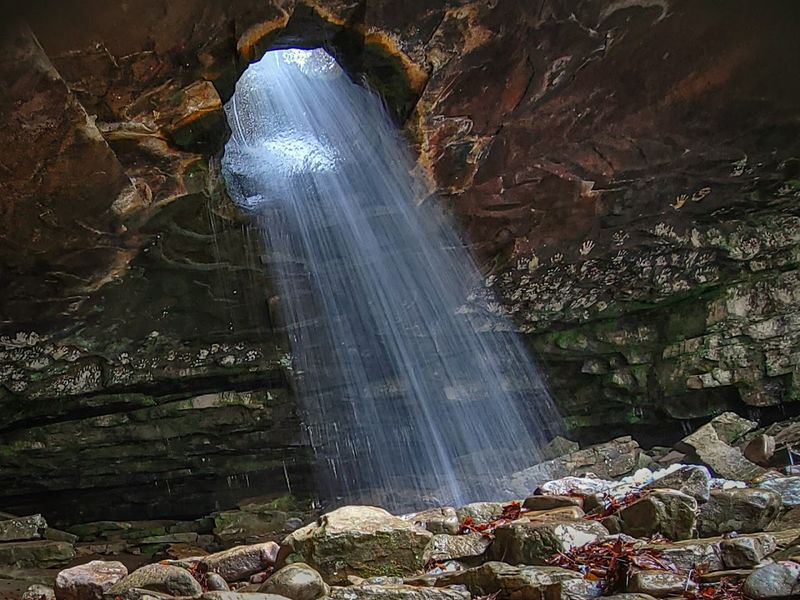
Glory Hole Falls might be the most unusual waterfall in the entire state, and that is saying something in a place with as many dramatic water features as Arkansas. Water flows across the top of a rock formation and then drops straight through a natural hole in the ceiling into a cave chamber below, creating a curtain of falling water inside an enclosed stone room.
The effect is genuinely surreal, like something out of a nature documentary rather than a day hike in the Ozarks. Getting there takes some effort. The trail in the Ozark National Forest near Deer runs roughly four miles round trip and involves a creek crossing that can range from ankle-deep to thigh-deep depending on recent rainfall.
The path is not heavily developed, which means roots, rocks, and uneven terrain are part of the deal. Waterproof boots or shoes you do not mind soaking are essentially required equipment. The cave chamber surrounding the falls is accessible and safe to walk into, which means you can position yourself directly beneath the falling water for a perspective that very few waterfalls in the country can offer.
The acoustics inside the cave amplify the sound of the water into something immersive and almost meditative. It is a genuinely one-of-a-kind sensory experience. Spring is the undisputed best time to visit when water volume is at its highest and the falls put on their most dramatic display.
The surrounding forest is also at its most vibrant in late spring, with new growth covering every surface in shades of electric green that contrast beautifully with the grey stone of the cave. Photography here in those conditions is extraordinary.
Crowds at Glory Hole have grown in recent years as word has spread about this hidden gem, so weekday visits are strongly recommended. Arrive prepared with layers, snacks, and a dry bag for your phone and camera. Glory Hole Falls delivers the kind of experience that stays with you long after the drive home.
Share this story