A stainless-steel vat of corned beef in Newark, a brick pizza oven glowing in Paterson, and a hand-cranked lemon ice recipe born during a sweltering Elizabeth summer all tell the same delicious truth: New Jersey’s best food stories rarely begin in a corporate test kitchen.
They start with immigrants, roadside stands, neighborhood markets, fishing families, and recipes refined through repetition rather than reinvention.
At these family-owned spots, history is not framed on the wall and forgotten. It is folded into bread dough before sunrise, ladled into chowder, stretched into mozzarella, and passed from one generation to the next.
Some have occupied the same address for decades; others have grown beyond their humble beginnings without losing the flavors that built their following. Together, they prove that a memorable meal can offer more than something good to eat.
It can carry a family’s journey, a community’s traditions, and a little piece of New Jersey history straight to the table.
1. Hobby’s Delicatessen & Restaurant – Newark
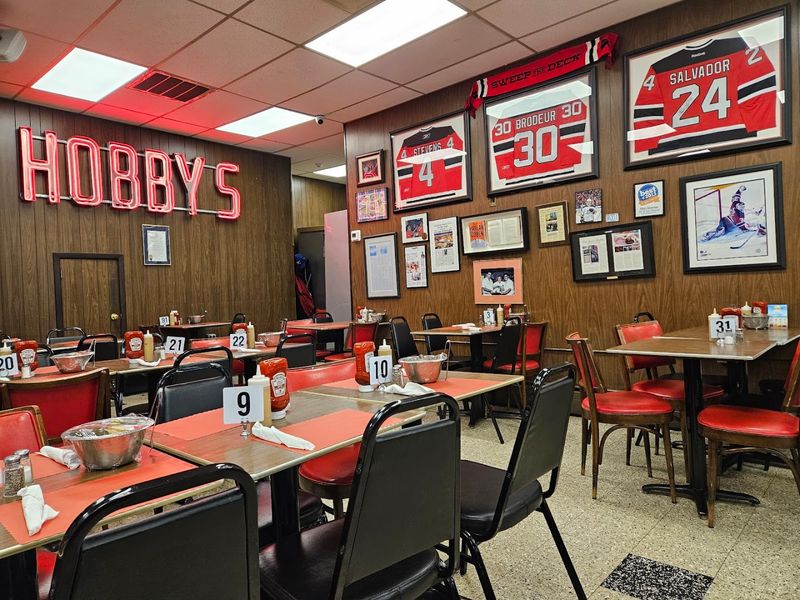
The corned beef at this downtown Newark institution does not arrive precooked in a plastic package. It is pickled on the premises in 50-gallon stainless-steel vats, an old-school commitment that explains why the sandwiches taste so deeply seasoned and tender.
The Brummer family has run Hobby’s since 1962, although the delicatessen itself has occupied Newark for more than a century. Brothers Marc and Michael continue the operation their father, Sam, helped establish, keeping the traditions of a classic Jewish deli alive without turning the place into a nostalgia exhibit.
Start with the Number Five, a formidable stack of corned beef, pastrami, coleslaw, and Russian dressing that requires two hands and perhaps a few extra napkins. Potato pancakes arrive crisp at the edges, the soups are made in-house, and the onion rings have their own loyal following.
The menu also makes room for salads, meatless dishes, and newer daily specials, but cured meats remain the main attraction. Photographs, local memorabilia, and the steady traffic of downtown workers reinforce the sense that Hobby’s belongs to Newark rather than merely operating there.
The city even named the intersection outside Hobby’s Plaza in recognition of the restaurant’s community ties. It is primarily a daytime destination, so check the current schedule and come early for lunch rather than assuming the griddle will still be going at dinner.
2. Tops Diner – East Newark
A plate can travel from mile-high pancakes to lobster mac and cheese without leaving the same menu at Tops, which has spent more than 80 years defending New Jersey’s reputation as diner country.
Opened in 1942, this East Newark landmark is now run by brothers Dimitrios, Jimmy, and John Golemis, whose family transformed a traditional roadside diner into a sprawling operation while preserving its round-the-clock spirit.
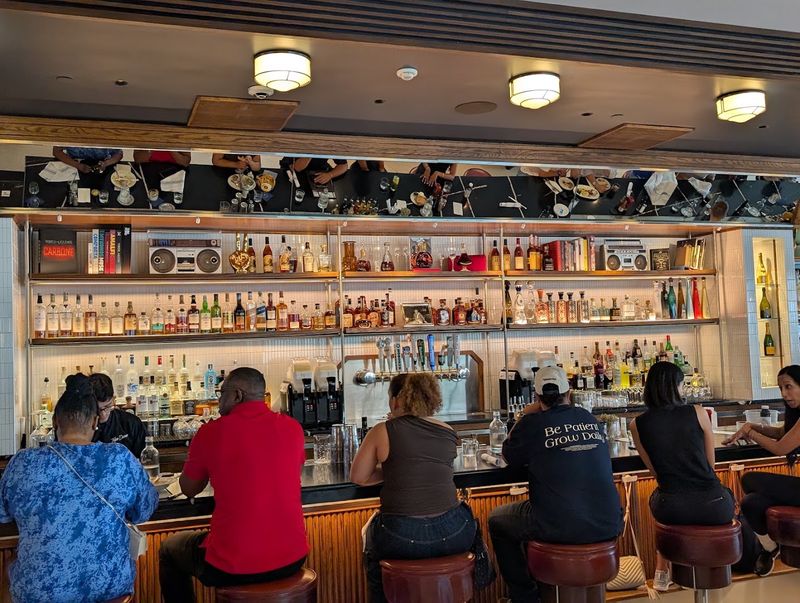
The polished renovation is far more glamorous than the old chrome-clad building, but the kitchen still speaks fluent comfort food.
Breakfast devotees can tackle thick pancakes, challah French toast, or eggs paired with Taylor ham, while later arrivals gravitate toward the meatloaf, burgers, chicken and waffles, and oversized seafood dishes.
Portions tend to arrive with the confidence of a place that does not believe anyone should leave hungry. What makes Tops especially useful is its range: one table may be splitting pancakes after a late night while the next orders cocktails and short ribs for a full dinner.
Despite the broad menu, the family connection keeps the operation from feeling like a generic high-volume restaurant. Servers weave through a dining room that stays busy well beyond conventional meal times, and the open kitchen adds extra motion to the scene.
Expect a wait during weekend brunch and prime dinner hours. Parking is available, but arriving outside the rush makes it easier to appreciate how much work goes into keeping this New Jersey institution moving.
3. Fiore’s House of Quality – Hoboken
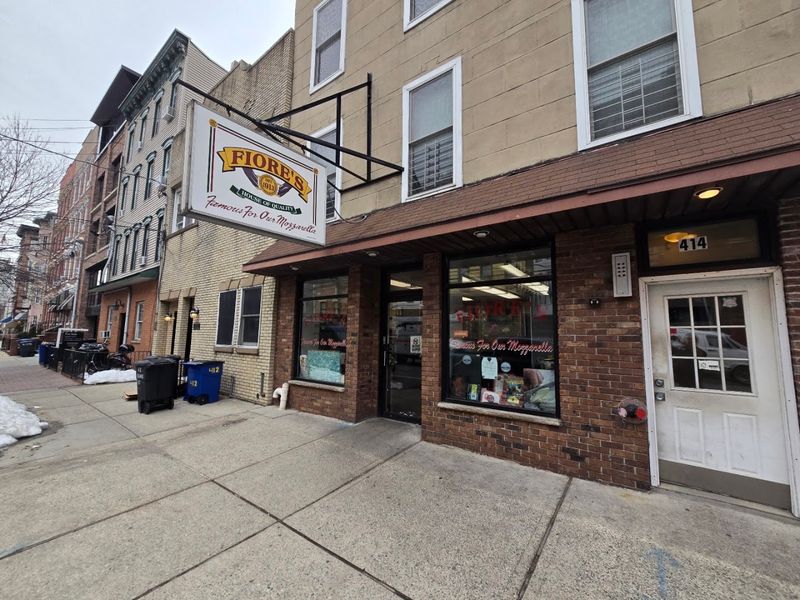
Thursday has its own ritual in Hoboken: roast beef, gravy, fresh mozzarella, and bread strong enough to hold the whole glorious arrangement together. That special has become the most famous order at Fiore’s, but the shop’s story began with cheese rather than sandwiches.
Italian immigrant Alphonso Fiore opened it in 1913, and the Amato family later took over, preserving the tradition of making mozzarella by hand in small batches. Hot water softens the curd before it is stretched and shaped, producing cheese with a milky flavor and tender texture that supermarket versions cannot imitate.
The roast beef special deserves its reputation, particularly when the bread is dipped in gravy, but it is not the only reason to visit.
Daily specials may include sausage, meatballs, eggplant Parmesan, or Italian tuna, while the deli counter supplies prosciutto, peppers, and other essentials for building a simpler sandwich around that mozzarella.
The space is narrow, unfussy, and focused squarely on food; customers order at the counter, shuffle aside, and try not to reconsider everything when they see someone else’s lunch being wrapped.
There is little need for decorative storytelling because the old equipment, family photographs, and practiced movements behind the counter do the work.
Street parking in this residential part of Hoboken can require patience, and popular specials may sell out. Arrive early, bring an appetite, and remember that each day’s sandwich lineup carries its own following.
4. Patsy’s Tavern & Restaurant – Paterson
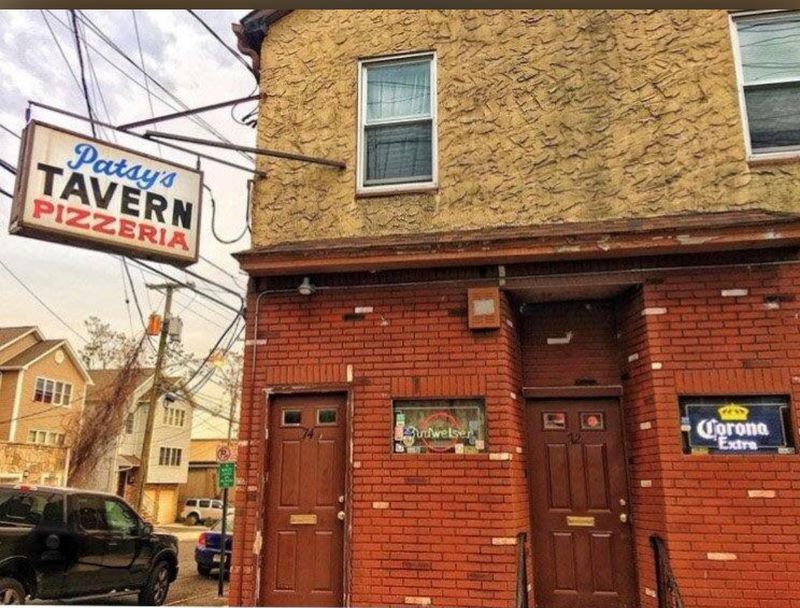
The brick ovens have been working since Franklin D. Roosevelt was still governor of New York.
Pasquale “Patsy” Barbarulo and his wife, Mary, opened this Paterson tavern in 1931, and their grandson Steve Barbarulo now runs it with his wife, Jill.
Those original ovens remain central to the restaurant’s identity, turning out thin pizzas with crisp bottoms, lightly charred edges, and enough structure to hold their toppings without folding.
A plain mozzarella pie offers the clearest introduction, though the Garbage Pie makes a persuasive argument for excess with pepperoni, sausage, mushrooms, onions, and garlic.
Whole-milk mozzarella gives the top a rich, browned finish, while the old brick heat provides a character that cannot be reproduced by simply buying fashionable equipment.
The rest of the menu stays close to Italian-American comfort: homemade meatballs, eggplant rollatini, mussels marinara, chicken Parmigiana, ravioli, and broccoli rabe with sausage. Inside, antique fixtures and tightly arranged tables create a room that feels genuinely inherited rather than designed to look vintage.
The restaurant has resisted sweeping updates because the slightly timeworn setting is part of what generations of customers return to find. Patsy’s is cash only, does not deliver, and keeps a limited weekly schedule.
Reservations are smart, especially for weekend dinner, while Thursday and Friday lunches offer a narrower opportunity to see the ovens working in daylight.
5. Hot Dog Johnny’s – Belvidere
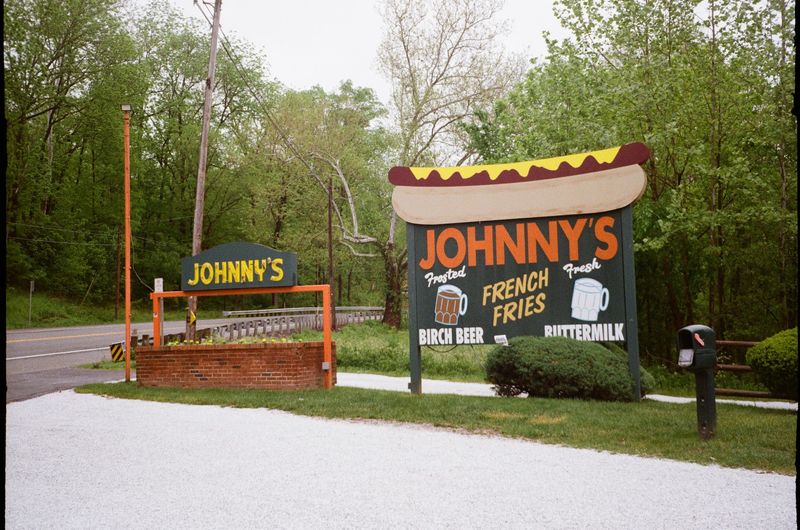
Few New Jersey meals come with a riverbank, picnic tables, and a vintage roadside sign, but this Route 46 landmark has never needed much beyond those ingredients.
John Kovalsky and his wife, Louise, opened the original stand on Palm Sunday in 1944, sharing space with a gas station before moving the business beside the Pequest River.
John worked in the Dover mines during the day and at the stand at night, while Louise helped turn his demanding schedule into a lasting family enterprise. Their daughter Patricia began working there as a child, standing on crates to hand customers sodas, and later carried the operation forward.
The menu remains wonderfully brief. Hot dogs are fried until their casings develop a satisfying snap, then tucked into soft buns and dressed with mustard, chopped onion, and pickle.
French fries, birch beer, and cold mugs of buttermilk complete an order that feels virtually untouched by modern menu engineering. The buttermilk may sound like the wildcard, but its cool tang works surprisingly well against the salty richness of the dog.
Families claim picnic tables beside the water, children head for the swings, and motorcyclists, road-trippers, and longtime regulars mingle beneath the old sign. The original stand is still displayed on the property, offering a tangible link to the business’s modest beginning.
This is an easygoing, inexpensive stop rather than a lengthy dining event, although eating beside the river tends to make people linger.
6. Papa’s Tomato Pies – Robbinsville
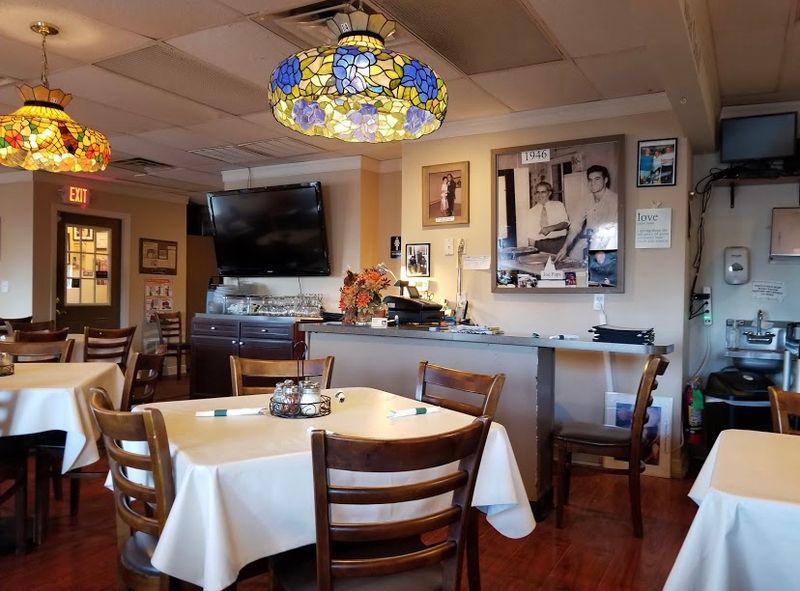
America’s oldest continuously family-owned pizza restaurant did not begin in Brooklyn, New Haven, or Chicago. Giuseppe “Joe” Papa opened it in Trenton in 1912, establishing a family line that has kept the tomato pies coming for well over a century.
The restaurant eventually moved to Robbinsville, but its defining technique followed: cheese goes onto the dough before the tomato, allowing the bright, slightly sweet sauce to remain the dominant flavor. The crust is thin and generally cooked well done, picking up a light char that balances the tomato and cheese.
A plain pie tells the story beautifully, yet the mustard pie is the order that separates curious first-timers from future evangelists. A thin layer of spicy brown mustard is spread directly on the dough beneath the cheese and tomato.
It sounds confrontational on paper, but baking softens the mustard’s sharp edge and leaves a savory tang running underneath each slice. Sausage, garlic, hot peppers, and other toppings can be added, though restraint helps the unusual combination shine.
Papa’s also serves Italian-American appetizers, pasta, seafood, sandwiches, and cannoli, making it workable for groups that want more than pizza. The Robbinsville dining room is casual and family-friendly, with easier parking than the restaurant’s former Trenton locations.
It operates seven days a week and offers takeout and delivery, but dining in lets the pie reach the table at its crispest.
7. Donkey’s Place – Camden
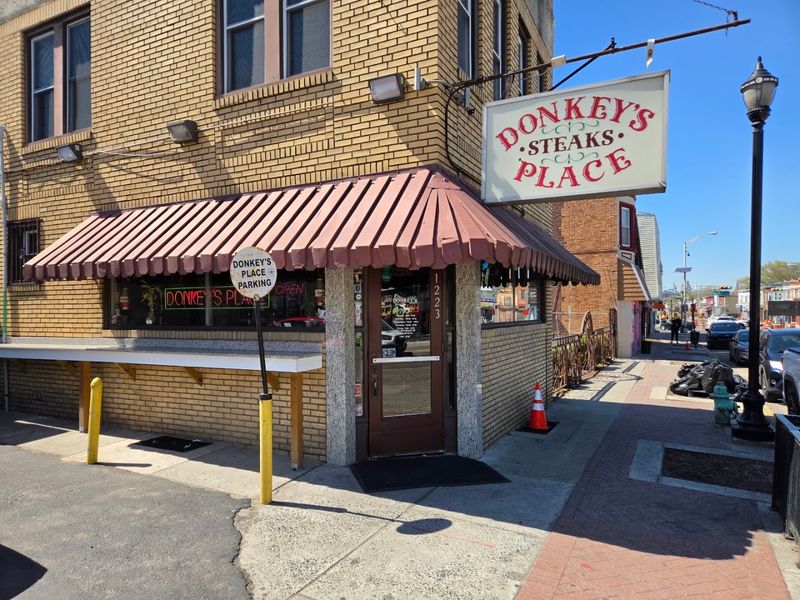
Forget the long roll. Camden’s most distinctive cheesesteak arrives on a round poppy-seed Kaiser, and after one bite, the shape stops feeling rebellious and starts feeling inevitable.
Leon “Donkey” Lucas, a heavyweight boxer whose powerful punch inspired his nickname, founded the bar in 1943 with his wife. Three generations of the Lucas family have since protected a menu built around focus rather than variety.
Steak and onions cook together on the griddle until their juices mingle, then the mixture is loaded onto the soft, sturdy roll with American cheese. The bread absorbs the savory drippings without immediately collapsing, while the onions bring enough sweetness to balance the beef.
House pepper oil, hot relish, or pickled peppers can add a sharper finish. Fries and a cold drink complete the experience, but the sandwich is unquestionably the reason to make the trip.
Inside, the bar retains the straightforward character of a neighborhood tavern: stools, closely spaced tables, sports chatter, and the smell of onions hitting hot metal. There is no carefully staged cheesesteak ceremony, just a kitchen repeating the same winning move at a brisk pace.
The original Haddon Avenue location is the essential stop for the full family history, even though related outposts have extended the name elsewhere in South Jersey. Hours can be shorter than newcomers expect, and the lunch rush is real, so confirm the schedule before driving over.
Takeout works, but eating the sandwich immediately keeps the roll and steak at their best.
8. Aversa’s Italian Bakery – Turnersville
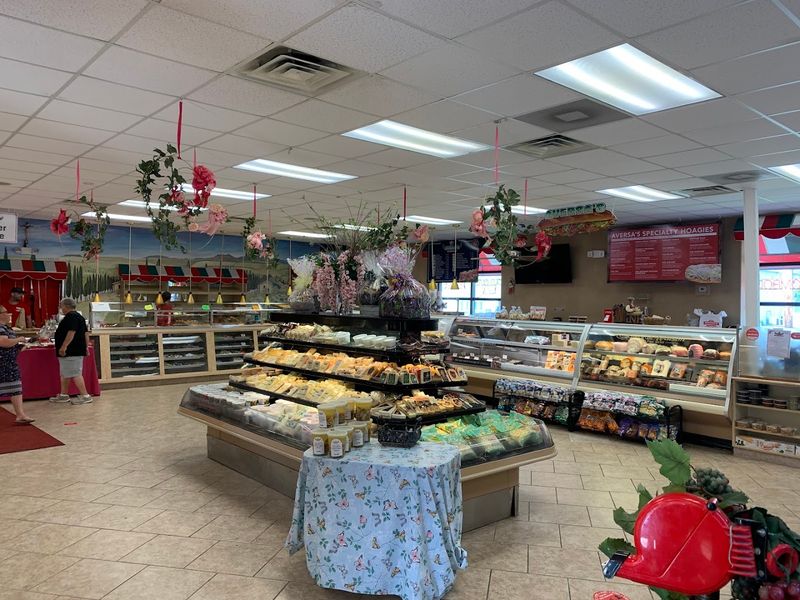
Long before Ralph Aversa put his name above a New Jersey bakery, he was a boy in Calabria watching dough rise in his uncle’s shop and shaping bread after school.
He immigrated to the United States at 14, found work at Cacia’s Bakery in South Philadelphia, married into the Cacia family, and eventually moved his growing family to South Jersey to open a bakery of his own.
The Turnersville business began as a one-room operation with one employee selling bread, pizza, and stromboli. It has since grown into an Italian specialty market, but its best reason for existing still announces itself through the smell of fresh bread.
Pick up a crusty loaf, tomato pie, or stromboli for later, then inspect the cases of cannoli, sfogliatelle, cookies, cakes, and sticky buns. The latter have earned a serious morning following and can disappear early.
Savory options include hoagies, prepared meals, fresh mozzarella, and imported pantry goods, making Aversa’s useful whether the plan is lunch now or Sunday dinner at home. Despite the scale of the modern shop, the family’s story remains tied to Ralph’s belief that bread is alive and must be handled with attention.
The Turnersville location sits along the Black Horse Pike and has parking, so stocking up is considerably easier than navigating a tiny city bakery. Come in the morning for the widest pastry selection and expect to leave with more bags than intended.
9. Mulberry Street Italian Food Center – Brick
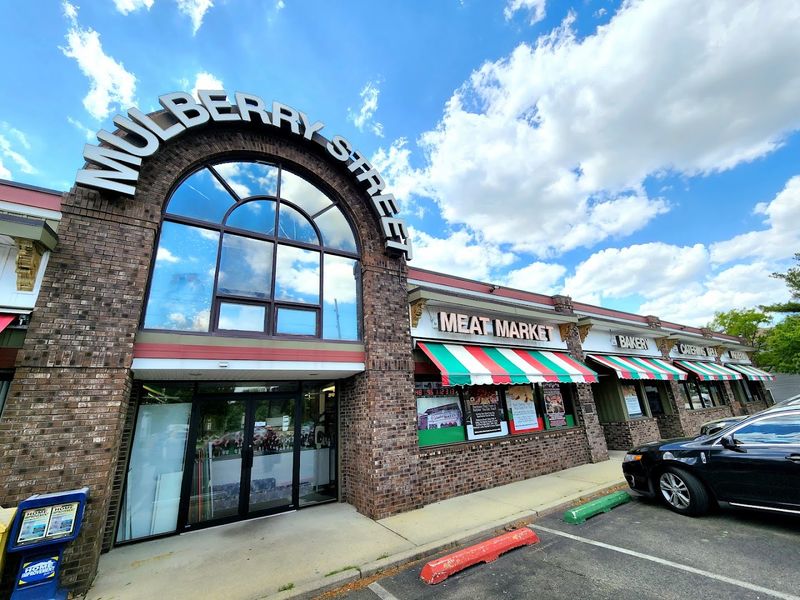
Some families preserve recipes in notebooks; the Colasurdos built an entire market around theirs. Michael Colasurdo Sr. started A&M Meat Market in Jersey City in 1973 before establishing what became Mulberry Street in Brick.
His sons, Michael Jr. and Ralph, joined the operation, helping expand it into a deli, prepared-food counter, butcher shop, bakery, catering kitchen, and Italian grocery under one roof.
The experience begins with sensory overload in the best possible way: trays of chicken Parmigiana, pasta, sausage, meatballs, and vegetables compete with hanging meats, cheeses, sauces, breads, and imported goods.
For lunch, the namesake sandwich combines prosciutto, wet mozzarella, roasted peppers, arugula, and balsamic glaze. The Milano layers a breaded chicken cutlet with mozzarella, lettuce, tomato, and pesto or balsamic, while the classic Italian sub keeps things firmly traditional.
Prepared dishes such as penne vodka and pork neck bones show how the market moves comfortably between quick lunches and slow-cooked family meals. That flexibility is the secret to its staying power.
Customers can eat something immediately, collect ingredients for their own recipe, or carry home a complete dinner that tastes far removed from supermarket convenience food. The Brick Boulevard location offers dine-in, takeout, delivery, and catering, with on-site parking and daytime hours.
Sundays close earlier, so afternoon shoppers should not leave the visit too late.
10. Bahrs Landing – Highlands
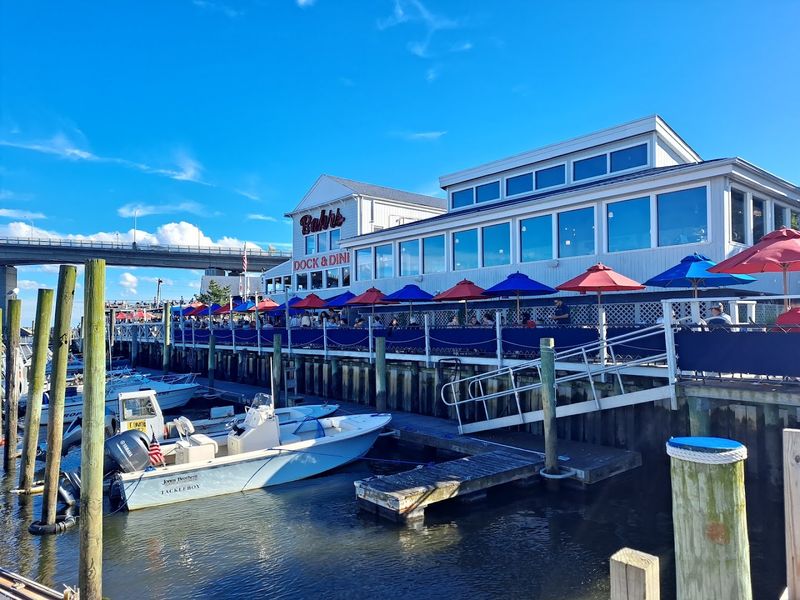
Before Bahrs served lobster dinners overlooking Sandy Hook Bay, its kitchen occupied a beached houseboat with a potbelly stove. John “Jack” Bahrs and his wife, Florence, bought the vessel in 1917 after moving their family’s seasonal boat-rental operation to Highlands.
They sold bait, rented rowboats, cooked chowder, and fed fishing parties who arrived by train. More than a century later, part of that original structure remains incorporated into the restaurant, now led by Ray Cosgrove and his son Jay, a fourth-generation descendant of the founders.
Seafood naturally drives the menu. Creamy clam chowder makes a fitting first order, followed by fried flounder, oysters, lobster, or the hot lobster roll, which places butter-poached meat inside a toasted bun.
The preparations lean traditional, letting the family history and waterfront setting provide the drama. Nautical artifacts and an extensive collection of model ships fill the dining room, while windows frame boats crossing the bay and the Highlands bridge rising nearby.
Warmer weather adds an outdoor deck and lobster-pound energy, but the main restaurant remains a year-round destination. Reservations are worthwhile for weekend dinners and summer evenings, especially if a window table matters.
Visitors arriving by boat can use the marina, while drivers have on-site parking. Bahrs has survived storms, changing shore traffic, and more than a century of dining trends by remembering what brought people through the door in the first place: chowder, seafood, and a family welcome beside the water.
11. Calandra’s Bakery – Newark
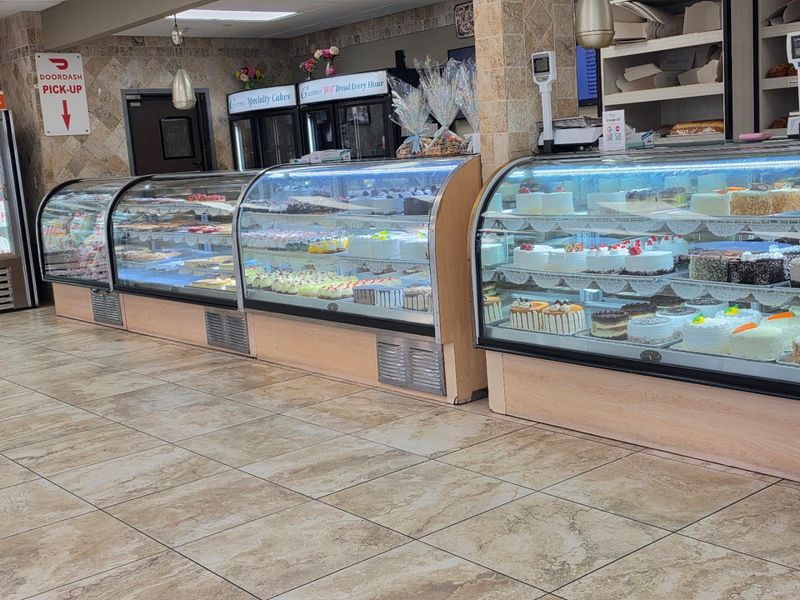
At six in the morning, the racks are already filling with the loaves that built the Calandra family business. Luciano Calandra Sr. had been in the United States for only five years when he and his wife, Ortenza, opened a small Italian and French bakery in Newark in 1962.
Their sons, Anthony and Luciano Jr., later joined them, helping turn a neighborhood bread shop into a broader family enterprise without abandoning its original craft. The semolina bastone remains a fine place to start.
Made from a short list of basic ingredients, it has a crisp, seeded exterior and a soft interior ready for butter, sauce, or an overloaded sandwich.
The pastry cases offer a different kind of temptation: flaky sfogliatelle filled with sweet ricotta and citrus, cannoli, lobster tails, Italian rainbow cookies, tiramisu cake, and celebration cakes substantial enough to become family traditions of their own.
Calandra’s balances everyday usefulness with special-occasion excess. Someone can stop in for a morning roll and coffee, collect bread for dinner, or leave carrying a carefully boxed cake.
The original Newark bakery on First Avenue opens early and operates every day, including holidays, a schedule that reflects the relentless work ethic behind its founding. Parking in the neighborhood can become busy, but the long hours make it easy to avoid peak periods.
For the fullest selection, morning is best, when the bread is fresh, the pastry case is stocked, and choosing only one thing feels especially impossible.
12. DiCosmo’s Italian Ice – Elizabeth
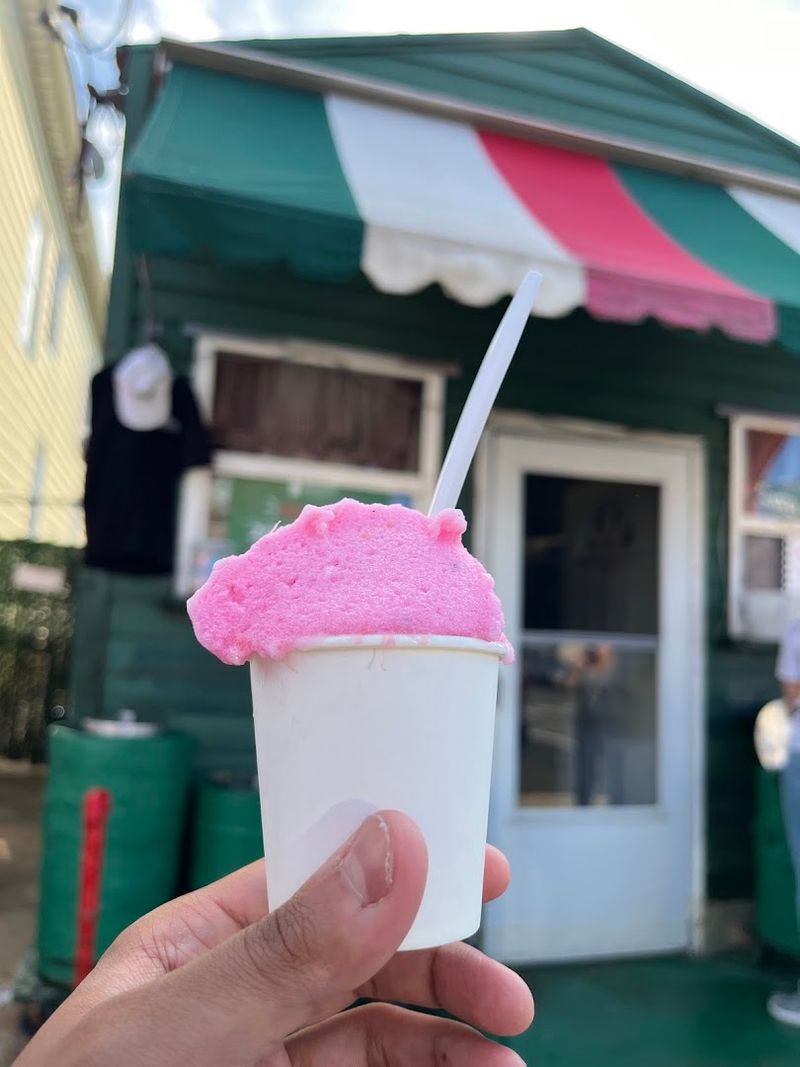
One hot Elizabeth summer turned three simple ingredients into a family legacy. After immigrating from Vallata, Italy, Giovanni and Caterina DiCosmo opened a neighborhood market in the early 1900s.
Remembering the granita she had enjoyed back home, Caterina combined fresh-squeezed lemon juice, sugar, and water, then churned the mixture in an ice cream maker instead of scraping frozen crystals by hand.
Customers embraced the resulting lemon ice, and what began as seasonal refreshment grew into a business passed through four generations.
Caterina resisted adding flavors, but her daughter-in-law Agnes later introduced orange and pineapple. Alfred DiCosmo mechanized the hand-crank machines, while later generations expanded production and developed additional recipes.
Lemon remains the essential first cup: bright, tart, finely textured, and refreshing without the heaviness of ice cream. Traditional fruit flavors share the board with newer additions, but the family’s churning method still gives the ice its distinctive smoothness.
DiCosmo’s story belongs to Elizabeth, where the recipe and reputation began, though the family’s active storefront is now operated by descendant Eileen and her husband, Mike, on New Street in Metuchen. That distinction matters when planning a visit; travelers looking for the current scoop shop should head to Metuchen rather than the original Elizabeth address.
Hours are seasonal, so check before making the trip. More than a century after Caterina improvised her first batch, the simplest order still provides the clearest taste of the family’s journey.
Share this story