The Delaware River looks harmless from the bank in Titusville, especially on a bright summer afternoon. Now picture that same water choked with ice, a winter storm throwing sleet sideways, and thousands of exhausted soldiers ferrying horses and artillery through the darkness.
That contrast explains why New Jersey is such a fitting place to mark America’s 250th year. The Revolution here was not confined to one celebrated battlefield.
It spilled across farmhouses, bridges, city streets, military hospitals, winter camps, river forts, and family homes suddenly commandeered as headquarters. Some of these places offer museums filled with artifacts and uniformed interpreters.
Others ask you to stand in an open field, follow a wooded trail, or look across a modern neighborhood and reconstruct the scene yourself. Together, these 12 sites reveal a state where independence was repeatedly tested—and where a promising rebellion began to resemble a nation capable of surviving.
1. Washington Crossing State Park – Titusville
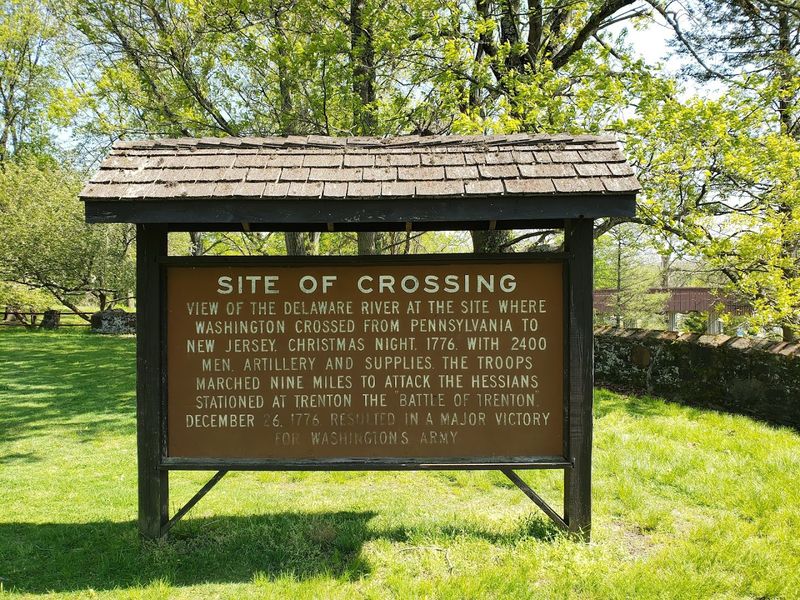
Long before Washington reached the Hessian garrison at Trenton, he had to solve the considerably less glamorous problem of moving an army across an icy river in terrible weather.
This sprawling park preserves the New Jersey landing area where boats and ferries carried Continental soldiers, horses, cannons, and supplies through Christmas night in 1776.
The operation continued for nearly ten hours, followed by a punishing nine-mile march toward Trenton through sleet, snow, and hail. Begin near the visitor center, where exhibits explain the strategy and enormous logistical risk behind the crossing.
Then seek out the Johnson Ferry House, a gambrel-roofed farmhouse dating to around 1740 that stood near the ferry operation and may have been used by Washington’s officers. The surrounding trails are equally valuable because they restore a sense of distance that paintings and textbook maps tend to flatten.
Walk part of Continental Lane and the famous maneuver becomes less like a single heroic pose and more like what it was: a cold, slow, uncertain military gamble. Admission to the park is free, and there is enough open space, woodland, and riverside scenery to make this more than a quick monument stop.
Anniversary improvements have been taking place around the visitor facilities, so check current access before heading out.
2. Old Barracks Museum – Trenton
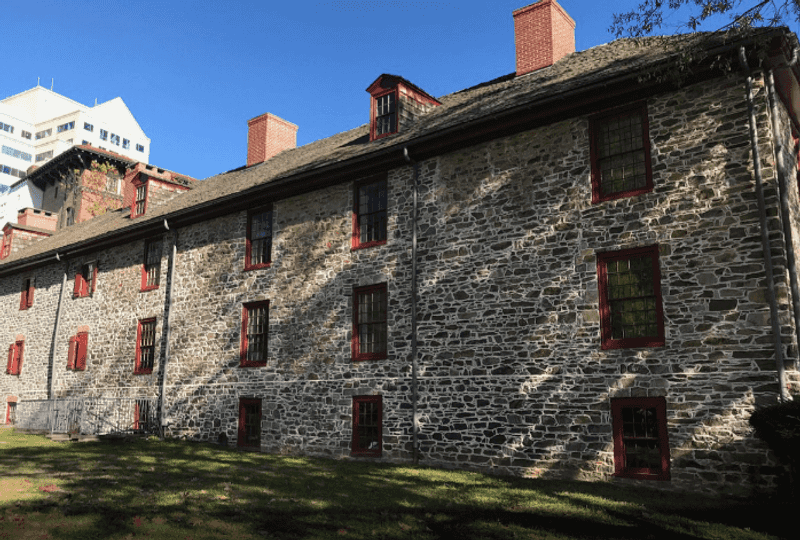
A musket demonstration may grab everyone’s attention, but the most surprising story inside this sturdy stone building involves medicine rather than gunfire.
Constructed in 1758 to house soldiers during the French and Indian War, the barracks later served British troops, American forces, prisoners, recruits, and patients during the Revolution.
In 1777, it became a Continental Army hospital where Dr. Bodo Otto supervised smallpox inoculations—part of a mass medical effort against a disease that posed a greater threat to the army than enemy weapons. That layered history makes the museum much richer than a simple Battle of Trenton attraction.
Visitors move through galleries, period rooms, a short film, and living-history interpretation that explains what military life required when armies depended on crowded quarters, unreliable supply lines, and medical treatments that could sound nearly as frightening as the illnesses.
The building also stood close to the action when Washington’s forces swept into Trenton on December 26, 1776, giving the rooms a direct connection to the victory that revived American morale.
Located near the State House, it pairs naturally with the Trenton Battle Monument for a fuller day of city history. The museum is currently open Wednesday through Saturday from 10 a.m. to 5 p.m.; adult admission is $15, with reduced rates for students and seniors.
3. Trenton Battle Monument – Trenton
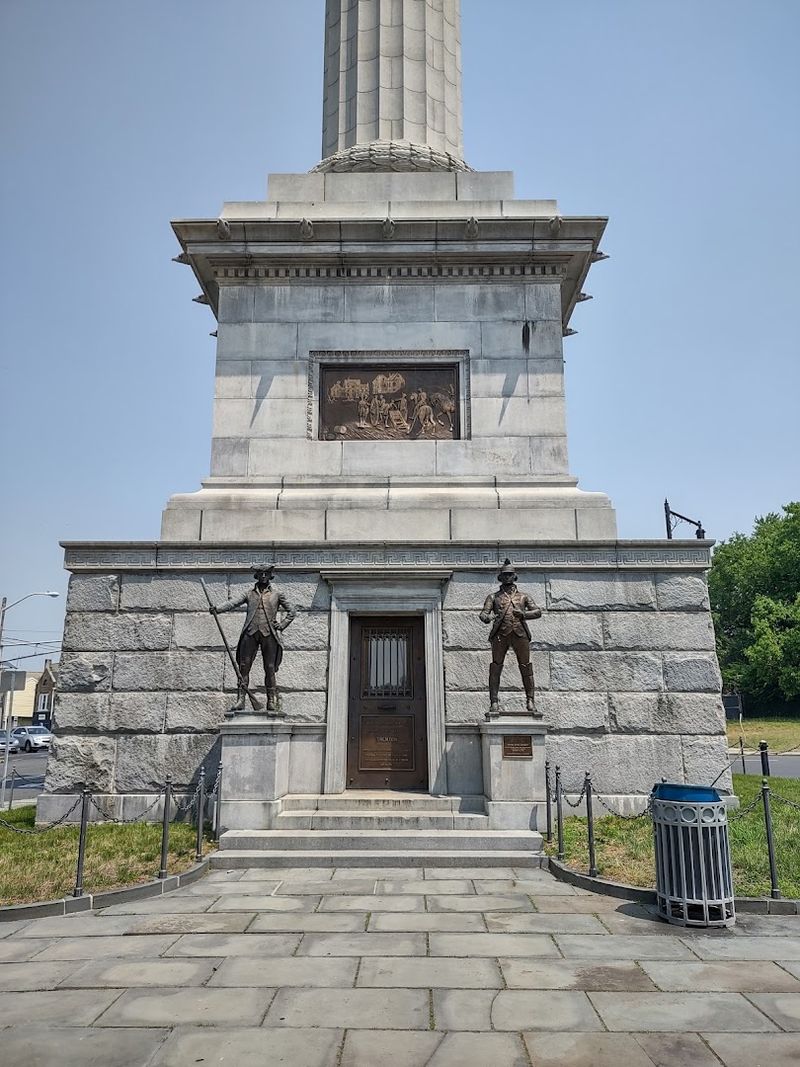
Look up from the intersection of Warren and Broad streets and George Washington is still directing traffic—just with considerably more authority than the average crossing guard. The 148-foot granite column marks the American artillery position at the head of two major streets during the Battle of Trenton.
From here, cannons commanded the routes through town while Washington’s forces closed in on the Hessian garrison on December 26, 1776. The monument’s scale suits the importance later generations attached to the victory.
Designed in the Roman-Doric style by John H. Duncan, the architect associated with Grant’s Tomb, it is topped by a statue of Washington pointing toward the battlefield action below.
Decorative bronze reliefs and military details reward anyone willing to walk around the base instead of snapping one photograph and leaving.
This is primarily an outdoor stop, and current state planning has focused on evaluating future public access to the monument’s upper level rather than treating the observation area as regularly available.
The grounds are free and open from sunrise to sunset. Street parking may take patience, but the site is close enough to the Old Barracks Museum that visiting both makes sense.
Together, they turn downtown Trenton into a readable battlefield map rather than a collection of unrelated historic markers.
4. Princeton Battlefield State Park – Princeton
The quiet lawn gives very little warning that one of the Revolution’s fiercest clashes unfolded across it. On January 3, 1777, Washington’s army fought British troops here after slipping away from a dangerous position near Trenton, extending the momentum created by the victories at Trenton into another stunning result.
Walking the field is essential because the terrain helps explain how the fighting moved, where troops formed, and why the battle became so confused and brutal. The Thomas Clarke House provides the human center of the visit.
Built in 1772, the farmhouse became a hospital for wounded men from both armies, and General Hugh Mercer was carried there after receiving mortal wounds nearby. He died nine days later.
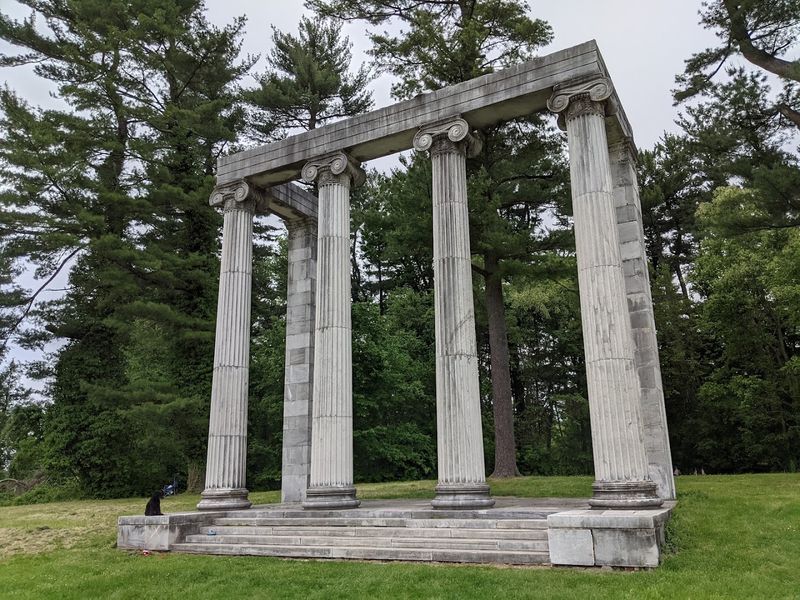
Elsewhere in the park, the Ionic Colonnade marks the common grave of American and British soldiers, a sobering reminder that victory and loss occupied the same ground.
Interpretive displays help visitors reconstruct the action without overwhelming the landscape, while open fields and shaded paths make it easy to spend an hour or two exploring at an unhurried pace.
The park is free, with parking near the Clarke House. House access and guided programs vary, so time the visit around a scheduled tour or reenactment when possible.
Princeton’s restaurants and walkable downtown are only a short drive away, making the battlefield an easy anchor for a full day.
5. Monmouth Battlefield State Park – Manalapan
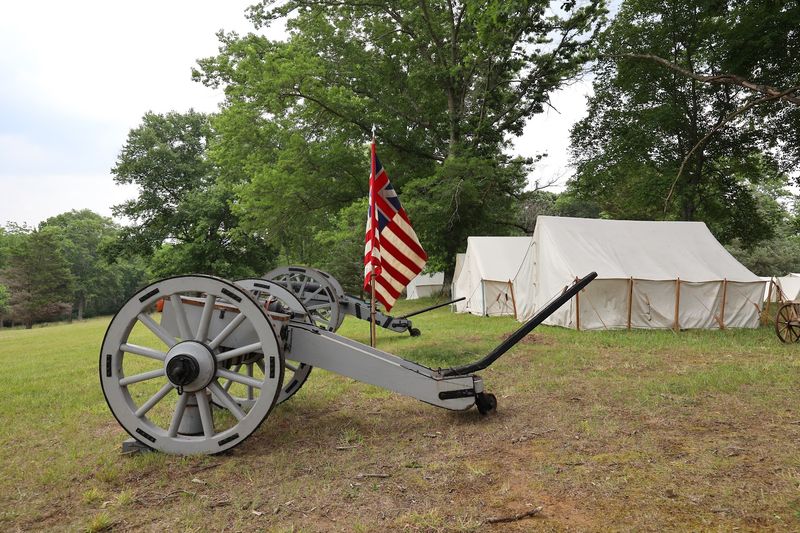
Heat is part of the story at Monmouth. The battle was fought on June 28, 1778, during punishing summer conditions that exhausted soldiers almost as thoroughly as the hours of marching, artillery fire, and close combat.
One of the Revolution’s largest and longest battles spread across the rolling farmland preserved by the park, where Washington’s newly trained Continental Army faced the British main force after its departure from Philadelphia. The visitor center is the smartest starting point.
Its terrain model, fiber-optic battle presentation, maps, letters, artifacts, and audiovisual displays make sense of an engagement that otherwise feels impossibly scattered across fields, hills, hedgerows, and woods.
Exhibits also examine the woman remembered as Molly Pitcher and the archaeological evidence used to separate a complicated historical figure from the tidy legend learned in school.
Outside, several walking routes lead into the battlefield landscape, including shorter loops and longer farm trails. Comfortable shoes and water are not optional on a warm day; the open ground offers limited shade and a useful hint of the conditions soldiers endured.
The restored Craig House adds a civilian perspective, showing how quickly a family farm could be swallowed by an army’s movement. For the biggest dose of living history, visit during the annual battle reenactment, when encampments, artillery, demonstrations, and uniformed troops fill the park.
6. Morristown National Historical Park – Morristown
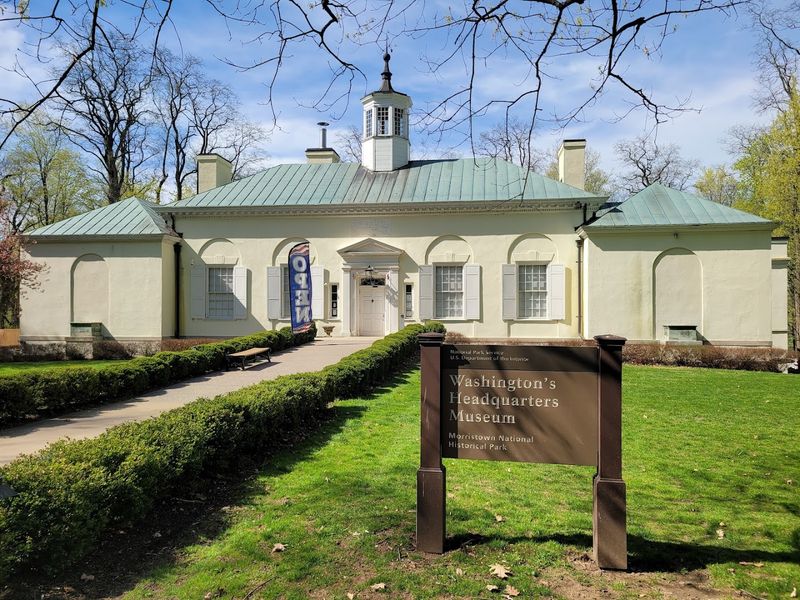
This is the rare historic destination where a quick visit does not really work. The park is divided among several locations, and each tells a different part of the Continental Army’s experience during the brutal winter encampment of 1779–1780.
At Jockey Hollow, roughly 10,000 soldiers built a “log house city” of about 1,200 huts while dealing with severe cold, hunger, shortages, and collapsing morale. Reconstructed soldier huts show just how cramped those shelters were, while the visitor center’s full-size cabin model, mural, and film provide useful context before you explore.
A paved three-mile tour road connects major points, and more than 20 miles of trails cross the wooded hills for anyone who wants a longer outing. Across town, the Ford Mansion offers an entirely different view of the same winter.
Washington used the home as his headquarters, sharing the property with the widowed Theodosia Ford and her family while officers, aides, guards, servants, and visitors moved through the household. Mansion entry is by guided tour, with free passes generally distributed at the Washington’s Headquarters Museum on a first-come basis.
Current museum and visitor-center hours are Thursday through Monday, 9:30 a.m. to 4:30 p.m., though tour schedules can change. Give Morristown at least half a day; it rewards anyone willing to connect command decisions with the difficult daily life of ordinary soldiers.
7. Fort Lee Historic Park – Fort Lee
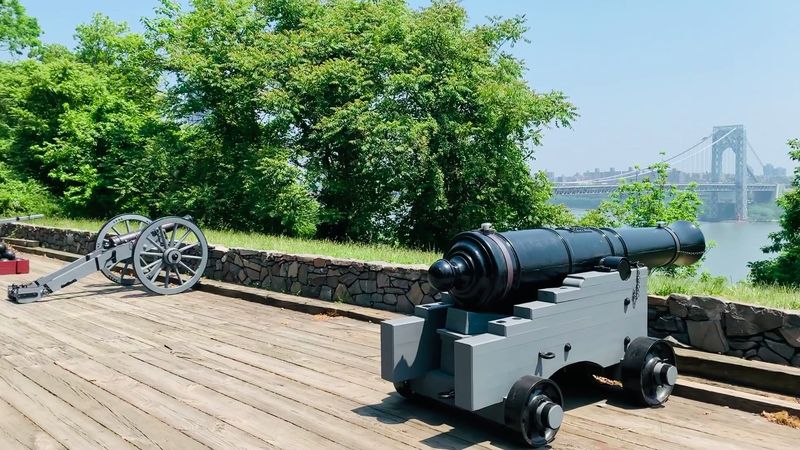
Few Revolutionary War sites deliver a view this dramatic before the history lesson even begins. From the Palisades cliffs, the Hudson River and George Washington Bridge dominate the horizon, making it easy to understand why both armies cared so much about controlling this high ground.
Fort Lee formed part of the American defense of the Hudson in 1776, paired with Fort Washington across the river. The position became untenable after British and Hessian forces crossed into New Jersey in November, forcing the American garrison into a hurried withdrawal.
That retreat launched the exhausting movement across the state that would eventually lead Washington to the Delaware—and then back toward Trenton. The park’s visitor center explains this less-celebrated chapter with exhibits, military objects, maps, and reconstructed artillery.
Outside, a recreated encampment, earthwork areas, paths, and overlooks give the site a useful mix of history and scenery. Families can cover the main attractions without a strenuous hike, while longer paths invite a slower exploration of the cliff-top setting.
The signature time to visit is Retreat Weekend, held near the anniversary of the November 1776 evacuation, when cooking, music, military demonstrations, reenactors, and artillery turn the grounds into something much more vivid than a static memorial. Parking arrangements and visitor-center hours can vary, especially during events, so check ahead.
8. Historic New Bridge Landing – River Edge
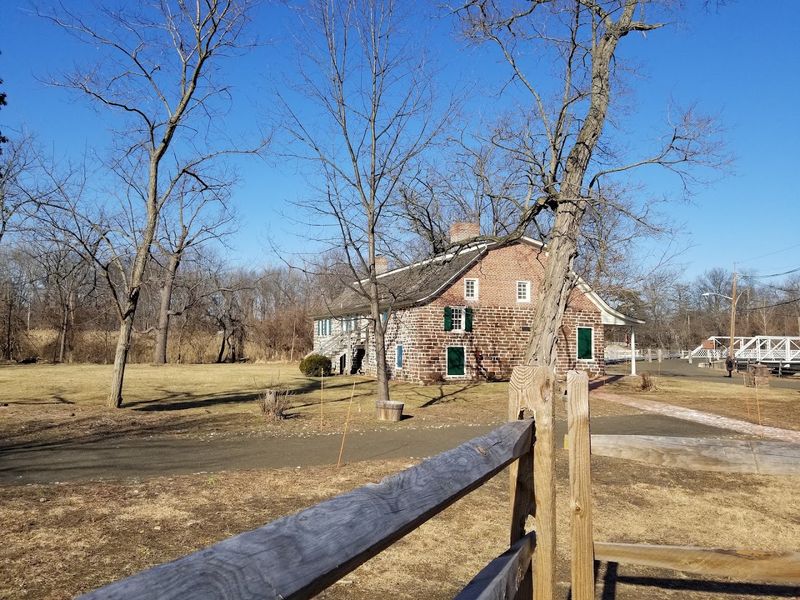
A narrow crossing over the Hackensack River helped prevent an American disaster in November 1776. As British forces threatened Fort Lee, retreating Continental troops moved across the bridge at New Bridge and escaped possible entrapment on the peninsula between the Hudson and Hackensack rivers.
That episode earned the area its enduring nickname, “The Bridge That Saved a Nation,” but it was hardly the site’s only Revolutionary moment. New Bridge served as a battleground, encampment, military headquarters, fort, and intelligence post at various points throughout the war.
The centerpiece is the Zabriskie-Steuben House, an elegant stone house that Washington used as a headquarters in 1780 while approximately 14,000 soldiers camped nearby. Its Dutch-influenced architecture, period furnishings, and riverfront setting make it one of the most distinctive historic houses on this list.
Visitors can also stroll across the 1889 swing bridge, follow interpretive panels, and explore the connected grounds along an accessible gravel path. The outdoor site is generally open from dawn to dusk, but the historic buildings operate mainly during scheduled tours and special events.
That makes timing important: on an ordinary day, the landscape and signs carry the experience; during a living-history program, the houses open and the entire complex becomes far more immersive. It is a surprisingly peaceful place for ground that saw military activity during every year of the Revolution.
9. Dey Mansion Washington’s Headquarters – Wayne
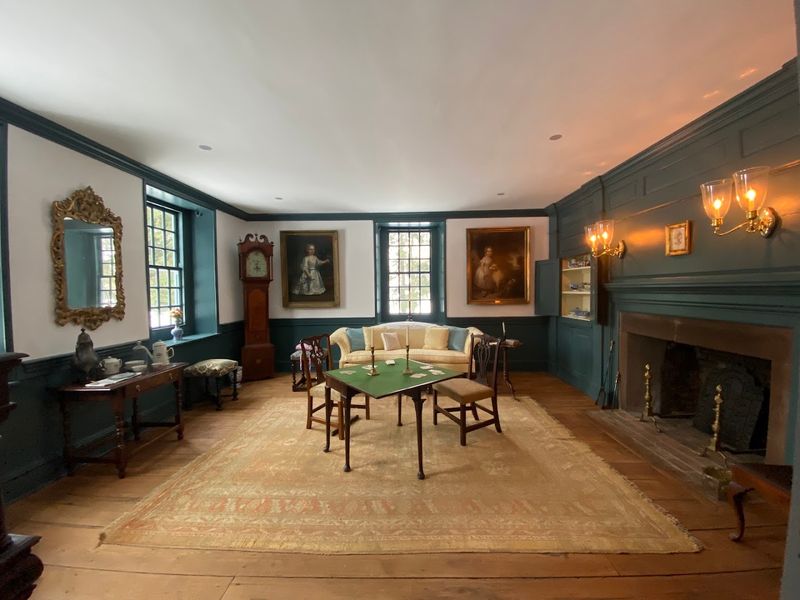
From the road, the formal lawn and symmetrical mansion look more suited to a country wedding than a military command post. In the summer and fall of 1780, however, Washington used the Dey family home as his headquarters during a tense stage of the war.
Battles in New Jersey had grown less frequent, but the region remained strategically important, and Washington still had to coordinate troops, intelligence, supplies, and possible operations against British-held New York. The domestic scale of the mansion is what makes the visit compelling.
Rather than looking across a vast battlefield, visitors move through rooms where military planning collided with the routines of an established household.
Period furnishings, exhibitions, gardens, and interpretive programs explore both Washington’s stay and the larger world of the family whose property became temporarily central to the Continental command.
Dey Mansion is especially good at using events to animate the grounds. Revolutionary encampments, holiday programs, military demonstrations, craft activities, and presentations examining both Patriot and Loyalist perspectives have all expanded the story beyond a single famous occupant.
The county has also used the site for anniversary programming connected to Washington’s wartime tent and mobile headquarters. Regular access can shift around exhibitions and special events, so check the current calendar before driving over.
Parking is available on-site, and the open grounds give families room to explore without the visit feeling overly formal.
10. Wallace House & Old Dutch Parsonage – Somerville
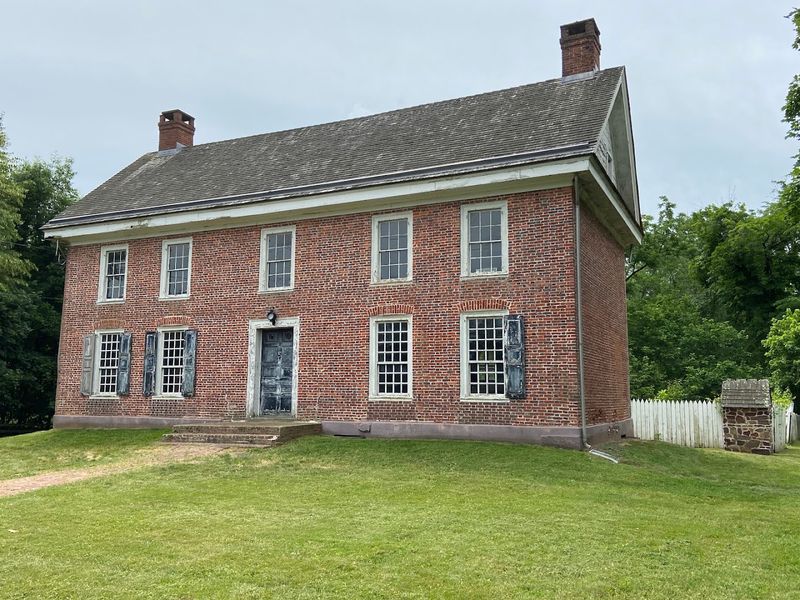
Two neighboring houses open the door to two different sides of Revolutionary New Jersey. Wallace House was the country home of merchant John Wallace before Washington selected it as his headquarters during the Middlebrook encampment of 1778–1779.
From there, the commander in chief managed an army spread through central New Jersey while keeping watch on British forces in New York. The building’s refined rooms are a sharp contrast to the huts and tents occupied by most soldiers, yet a headquarters was hardly tranquil.
Officers, couriers, guards, servants, visitors, and military paperwork would have transformed the house into a busy workplace. Next door, the Old Dutch Parsonage broadens the story beyond battlefield strategy.
It was associated with ministers of the Dutch Reformed Church and with the founding of Queen’s College, now Rutgers University, connecting religion, education, and political thought in colonial New Jersey. Together, the properties show how the Revolution moved through institutions and private homes as well as armies.
The site frequently hosts guided walks, lectures, holiday programs, and events tied to nearby Middlebrook locations, making it worth planning around the calendar rather than arriving at random. Admission is free, but rehabilitation and revitalization work has affected portions of the historic complex during the anniversary period.
Confirm which interiors and programs are available before visiting, then leave time for a walk into downtown Somerville.
11. Hancock House State Historic Site – Hancocks Bridge
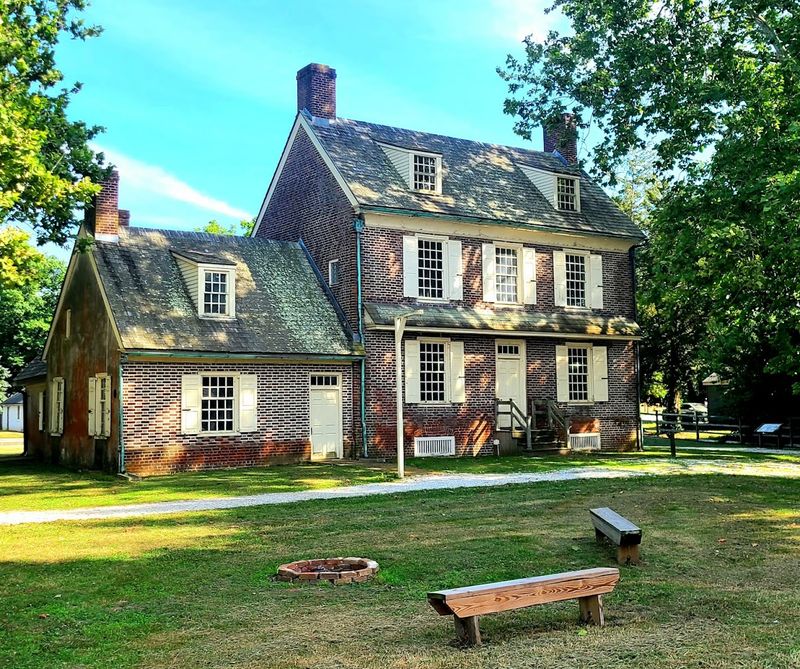
The patterned brickwork is beautiful enough to distract you from what happened inside. Built in 1734 for William and Sarah Hancock, this Salem County house is one of the region’s finest surviving examples of an English Quaker patterned-end brick residence.
Its quiet rural setting reflects the prosperous farming community that grew along the lower Delaware, while its architecture alone would make it worth preserving. The Revolutionary history is much darker.
In March 1778, Major John Graves Simcoe and his Queen’s Rangers launched a surprise attack against American militia members staying in and around the house. The assault ended in killings that became remembered as the Hancock House Massacre, leaving the building permanently tied to the war’s vicious local raids and retaliatory violence.
That story adds an important dimension to a Revolutionary itinerary. There was no tidy separation between military ground and civilian shelter; homes could become quarters, targets, hospitals, or scenes of sudden bloodshed.
The site’s compact size encourages close attention to the brick patterns, fireplaces, rooms, and landscape rather than a long march between monuments. Its out-of-the-way location in Hancocks Bridge also gives it a stillness that larger parks cannot reproduce.
Hours and tours are limited and may vary, so call before making the trip rather than assuming the house will be open. Admission is free, and the visit pairs well with other historic stops around Salem County and the Delaware Bayshore.
12. Red Bank Battlefield Park – National Park
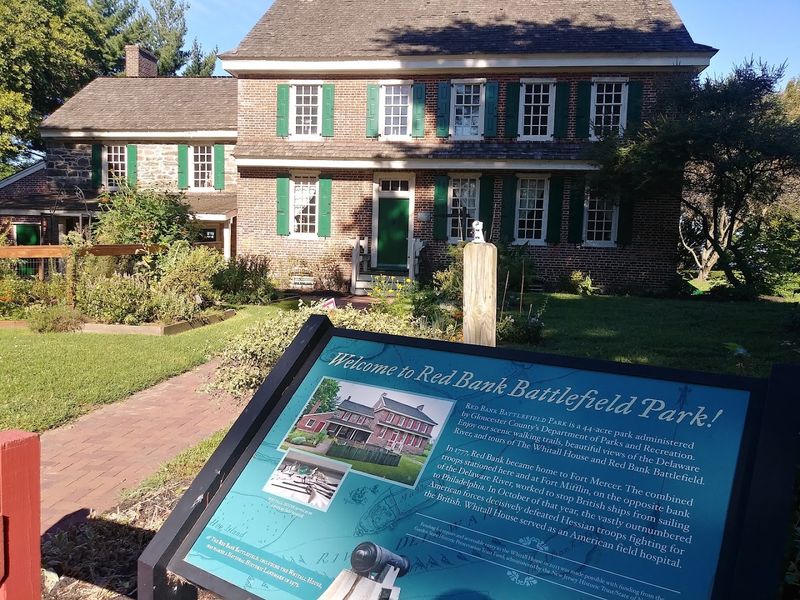
Cannons, river views, old trees, and picnic lawns make this Gloucester County park appear almost too relaxed for a place shaped by such violent fighting. In October 1777, American troops defended Fort Mercer against a much larger attacking Hessian force attempting to weaken the Delaware River defenses protecting Philadelphia.
The assault failed, producing a costly American victory and leaving the surrounding property filled with casualties. The James and Ann Whitall House, built in 1748, became a field hospital after the battle.
Visiting its rooms gives the park an emotional weight that the surviving earthworks and monuments cannot provide on their own. The Whitall family’s experience also complicates any simple victory story: their farm was occupied, damaged, and transformed by military needs they did not welcome.
Outside, visitors can follow walking paths along the remains of Fort Mercer, study monuments and cannons, tour eighteenth-century gardens, and look across the Delaware toward the Philadelphia skyline. Archaeological work has continued to uncover evidence that refines what historians know about the battle and those who fought there.
The park is free and open from sunrise to sunset throughout most of the year. Whitall House tours are offered from April through October, Thursday through Sunday from 11 a.m. to 3 p.m.
Free guided battlefield walks are also scheduled on selected dates and require registration, making advance planning worthwhile.
Share this story