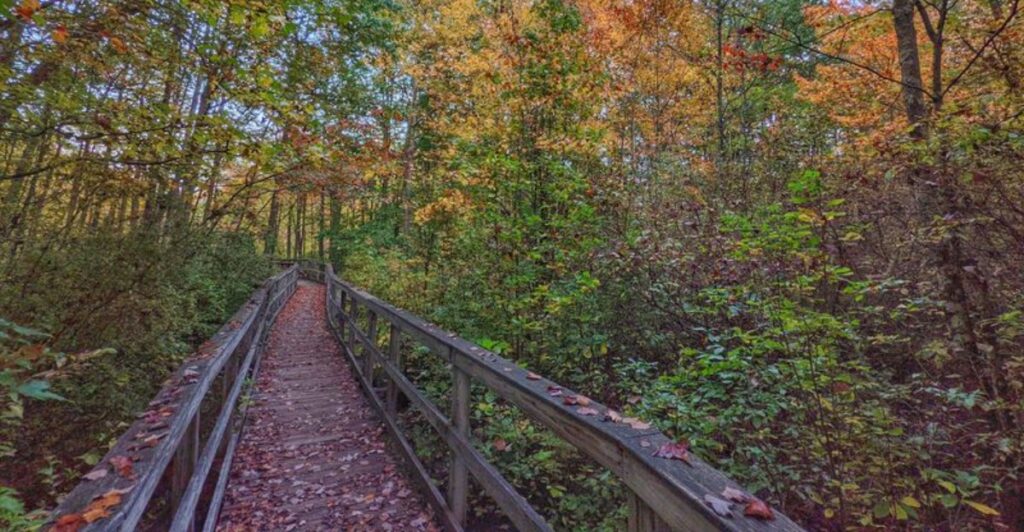
A narrow ribbon of wood stretches across a cattail marsh, dragonflies hovering beside the rail while a heron stands perfectly still in the distance. It feels wonderfully remote—until you remember the car is only a few minutes behind you.
That is the beauty of New Jersey’s nature boardwalks. They slip into places where ordinary trails would sink, flood, or disturb fragile habitats, giving walkers a front-row look at cedar swamps, tidal wetlands, maritime forests, and windswept dunes.
Better yet, enjoying them rarely requires an all-day expedition or a heroic climb. Some are quick loops suited to families and casual bird-watchers; others can be shortened into easy out-and-back walks.
A few even turn notoriously soggy sections of famous trails into relaxed strolls. Bring binoculars, bug spray, and shoes with decent traction—the boards can become slippery after rain.
From Sussex County farm country to the tip of Cape May, these 12 trails prove that a short walk can still lead somewhere wild.
1. Pochuck Boardwalk – Vernon
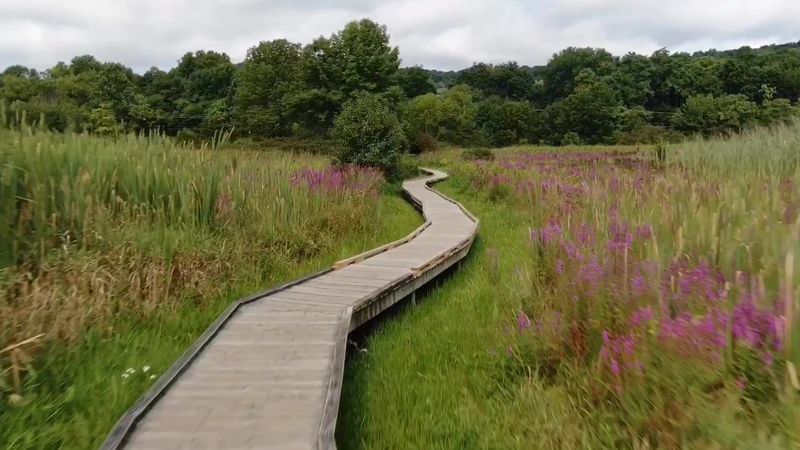
More than a mile of elevated planks carries the Appalachian Trail across the open wetlands of Vernon Valley, making this one of the most memorable easy walks in northern New Jersey.
Instead of climbing over rocks or squeezing through mountain laurel, hikers glide above reeds, muddy pools, and slow-moving water with the Kittatinny Mountains framing the horizon.
The full out-and-back route is about two miles, though turning around early is easy. Watch the marsh closely for painted turtles, frogs, snakes, and water-loving birds.
The route briefly enters a wooded area before returning to the open wetland, and its showpiece arrives roughly seven-tenths of a mile from Route 517: a 144-foot suspension bridge over Pochuck Creek.
Eighteen steps lead up to the bridge, so the entire route is not step-free despite the boardwalk’s mostly level surface.
The scenery is especially sharp in fall, when surrounding hills turn red and gold, but that popularity creates a practical challenge. Parking near the Route 517 crossing is limited and tightly regulated, and nearby residential streets should not be treated as overflow lots.
An earlier start is the smart move on weekends. Come for a laid-back marsh walk, stay for the gentle bounce of the suspension bridge, and resist the temptation to continue toward the much steeper Stairway to Heaven unless your legs have signed off on the idea.
2. Marsh Discovery Trail – Richard W. DeKorte Park, Lyndhurst
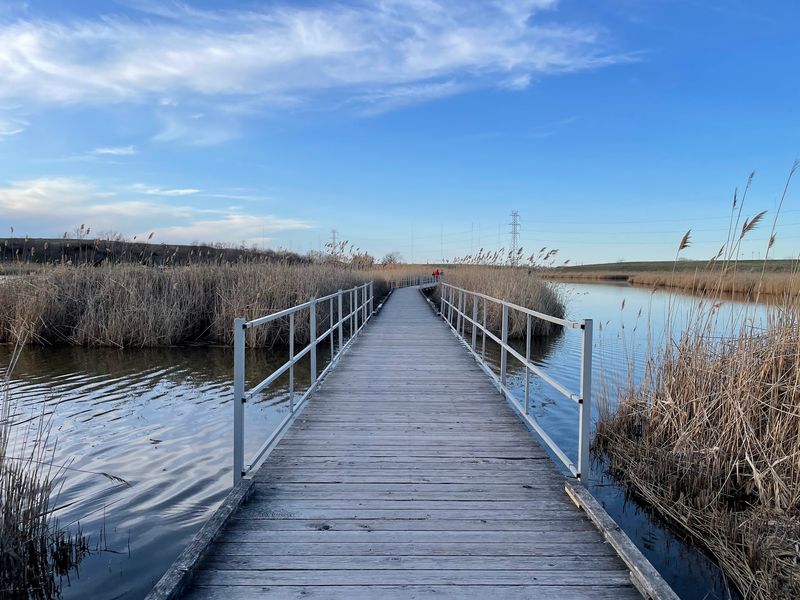
Here is a classic Meadowlands surprise: Manhattan rises on the horizon while fiddler crabs, egrets, and shorebirds carry on in a tidal marsh below. The Marsh Discovery Trail at Richard W.
DeKorte Park in Lyndhurst is a half-mile boardwalk loop extending directly over the wetlands. Newly renovated, it includes observation decks, seating areas, and bird blinds that encourage visitors to stop instead of rushing through.
That is good advice, because the changing tide can make two walks here feel completely different. At low tide, exposed mudflats draw feeding birds and reveal the busy life beneath the grasses.
Higher water creates a broad, reflective landscape interrupted by narrow islands and old pilings. The level route works well for families, beginning birders, and anyone who wants plenty of scenery without much mileage.
Bring binoculars if you have them, but you will often spot great egrets, herons, ducks, and red-winged blackbirds without any equipment.
DeKorte Park contains roughly 3.5 miles of trails altogether, so the boardwalk can be combined with the Lyndhurst Nature Reserve Trail or the gently rising Anthony Scardino Jr. Overlook Trail.
Parking at the park makes access simple, and the urban backdrop means this outing never feels like a conventional wilderness hike. That contrast is exactly the point: nature has reclaimed center stage in one of New Jersey’s most developed corners.
3. Wildlife Observation Center Boardwalk – Great Swamp National Wildlife Refuge, Harding Township
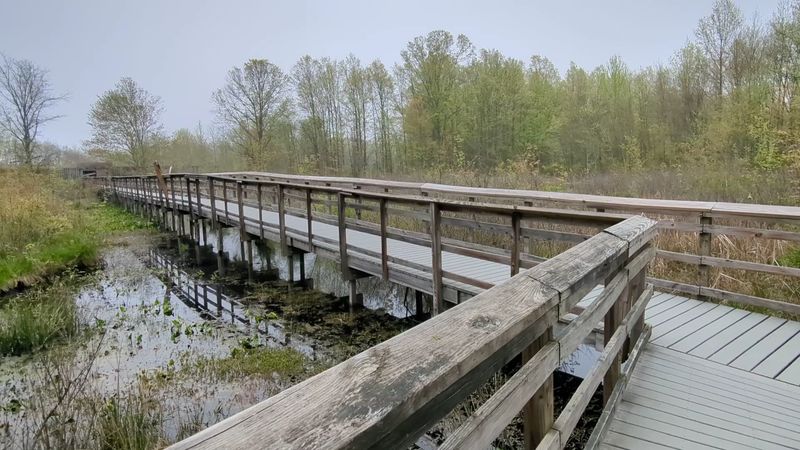
On this walk, standing quietly is often more rewarding than covering ground. The Wildlife Observation Center at Great Swamp National Wildlife Refuge has two easy trails—one north and one south—threading across wetlands on an extensive system of boardwalks.
Each route is under a mile, and both lead toward observation blinds where visitors can scan pools, forest edges, and marsh vegetation without putting wildlife on alert. Wood ducks may slip through shaded water, turtles gather on half-submerged logs, and frogs disappear with a plop just as you lean over for a closer look.
The refuge specifically recommends this boardwalk area for spotting reptiles and amphibians, though patient walkers may also encounter herons, songbirds, deer, and other wetland residents. With no steep grades to tackle, the outing suits a wide range of ages and can be as short or unhurried as the day requires.
Leave pets at home, since they are not permitted on refuge trails or the observation boardwalks. Bicycles and roller blades are also prohibited, preserving the quiet pace that makes the area so productive for wildlife watching.
The refuge is open from sunrise to sunset, and early morning or late afternoon generally offers the best activity. After rain, the swamp seems to turn up the volume: frogs call, leaves drip, and every patch of water looks capable of producing a surprise.
4. Swamp Trail Boardwalk – Estell Manor Park, Mays Landing
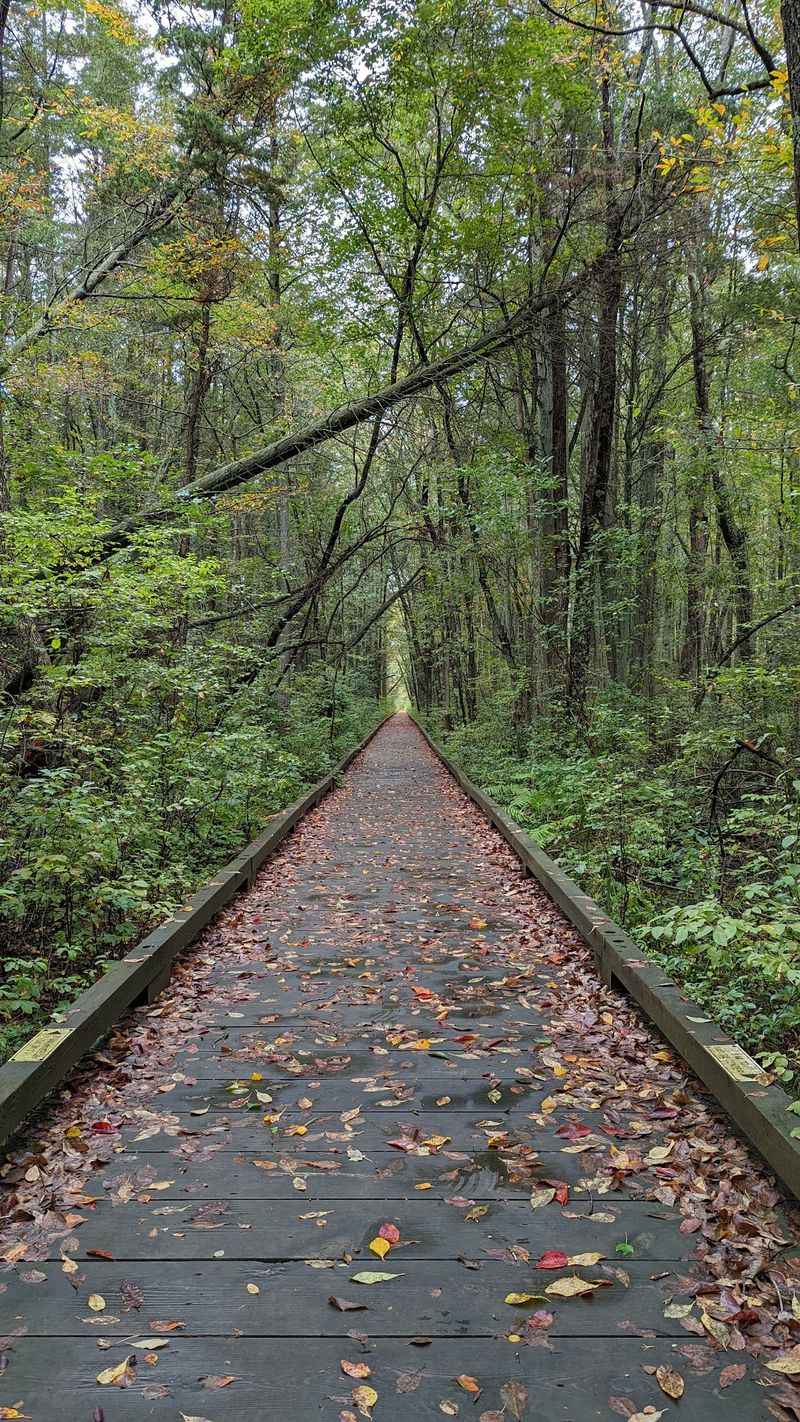
A wooden walkway nearly 1.8 miles long runs from the nature center to Artesian Well Road at Estell Manor Park, crossing streams, coastal forest, and a shadowy cedar swamp along the way.
It is fully accessible and elevated above the wet ground, creating an easy passage through terrain that would otherwise be a muddy wrestling match.
The route’s natural beauty would be enough, but remnants of the Bethlehem Loading Company give it another layer. During World War I, this land held a sprawling munitions plant.
The forest has since reclaimed the property, leaving scattered ruins amid cedars, ferns, and wetlands. Interpretive elements help walkers understand what they are seeing without turning the trip into a history lecture.
Two boardwalk bump-outs reach toward broad views of the South River, excellent places to pause for bald eagles, waterfowl, or the occasional otter. An extension also connects with the Oak Ridge Trail for anyone who wants additional mileage.
Bikes and horses are not allowed on the boardwalk, keeping the experience focused on walkers and wildlife. Begin behind the Warren E.
Fox Nature Center, where maps, exhibits, and restrooms make preparation easy. Although walking the full boardwalk out and back adds up, visitors looking for a shorter outing can simply choose a turnaround point.
Few New Jersey trails combine cedar-swamp scenery and mysterious industrial ruins this neatly—or with so little mud on your shoes.
5. ADA Boardwalk Trail – Cattus Island County Park, Toms River
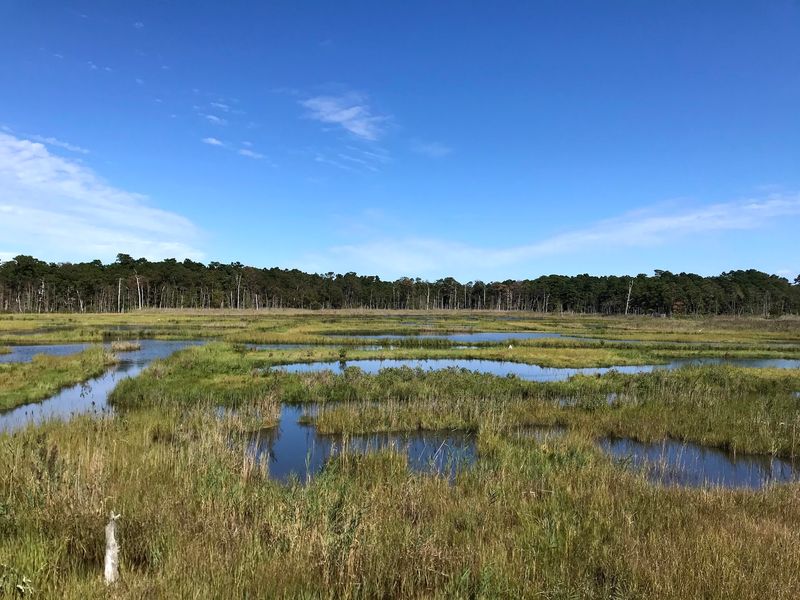
Salt air begins sneaking through the trees before Barnegat Bay comes fully into view. At Cattus Island County Park in Toms River, a 1,000-foot accessible boardwalk offers a gentle introduction to a 530-acre coastal preserve filled with maritime forest, wetlands, and bayfront habitat.
The route is short enough for young children and relaxed walkers, yet it quickly leaves the developed area behind. Pines and oaks frame the path, while small openings provide places to look for songbirds, turtles, and movement in the marsh.
Ospreys are local celebrities here, and the Cooper Environmental Center features a live osprey camera along with displays on the wildlife and ecology of Barnegat Bay.
That makes the boardwalk especially useful for families: meet the park’s reptiles and fish inside, then head outdoors to search for their wild neighbors.
The wider park holds seven miles of trails, scenic overlooks, and paths leading toward the beach, so visitors can easily extend the walk if everyone still has energy.
Photographers should allow more time than the distance suggests, particularly when sunlight filters through the forest or the marsh grasses catch an afternoon breeze.
The park opens at 7 a.m., while seasonal closing times change throughout the year. Check the posted schedule before a late-day visit.
For the quietest experience, arrive early, when the paths are calm and Barnegat Bay’s resident birds are busy finding breakfast.
6. Green Trail – Cheesequake State Park, Old Bridge
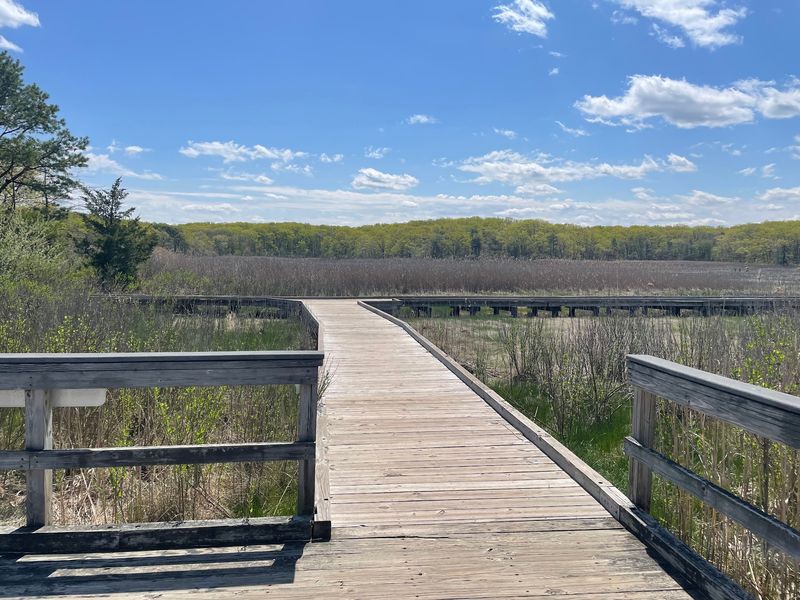
The name sounds playful, but the landscape at Cheesequake State Park is seriously unusual. Sitting between northern and southern New Jersey’s natural regions, the park protects a mix of hardwood forest, open fields, salt marsh, and Atlantic white cedar swamp.
The Green Trail showcases that variety on a roughly three-mile loop, using wooden boardwalks to cross its wettest sections. Although this is one of the longer outings on the list, the terrain is manageable, and visitors can enjoy a shorter taste by walking to the boardwalk and retracing their steps.
The best moments come when the path drops from leafy uplands into the cooler, dimmer swamp. Cedars rise from dark water, skunk cabbage spreads across the wet ground, and the raised walkway lets hikers pass through without damaging delicate plants.
Expect roots and uneven natural surfaces away from the boards, so this is a woodland hike rather than a completely accessible promenade. Spring brings frogs and fresh greenery, while autumn adds strong color to the hardwood portions.
Summer is lush but buggy, making repellent a very sensible companion. Cheesequake lies conveniently near the Garden State Parkway in Old Bridge, yet traffic noise fades surprisingly quickly among the trees.
Pick up a trail map before setting out because several colored routes share portions of the park. The Green Trail is ideal when you want more than a quick stroll but have no interest in spending the whole day climbing hills.
7. Red Trail – Cape May Point State Park, Cape May Point
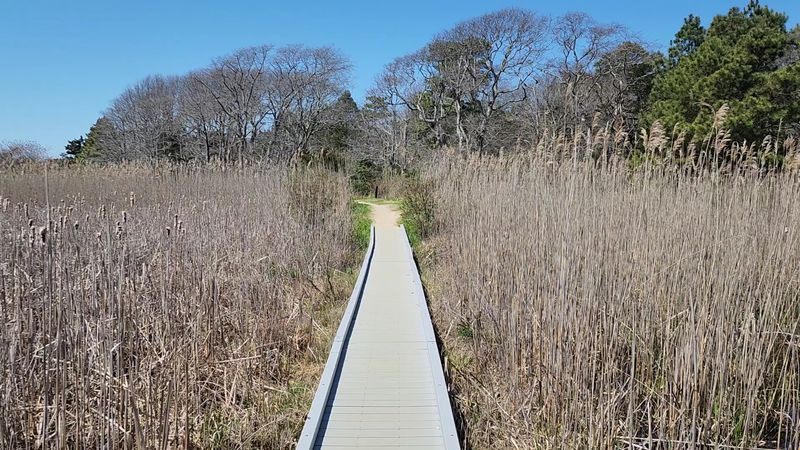
A lighthouse, freshwater ponds, coastal dunes, and one of the country’s busiest bird-migration corridors all fit into this compact loop.
The Red Trail at Cape May Point State Park is the shortest of the park’s three marked nature trails, running about half a mile over a combination of boardwalk and firm natural surfaces.
It begins near the visitor area and circles through low coastal habitat where changing seasons constantly shuffle the cast of wildlife.
Spring and fall bring migrating warblers and raptors, summer produces butterflies and dragonflies, and almost any quiet morning can reveal swans, ducks, or wading birds around the ponds.
Observation platforms create natural stopping points, while the Cape May Lighthouse supplies a ready-made landmark above the trees. Because the route is short and mostly gentle, it works particularly well for families or anyone fitting a nature walk between other Cape May plans.
Do not mistake its small size for a lack of action, though. Cape May’s position at the end of a peninsula funnels migrating birds into a relatively tight area, so even beginners can have productive sightings.
Binoculars help, but patience matters more. The state park has parking, restrooms, and additional trails if half a mile passes too quickly.
Walking shortly after sunrise avoids the busiest periods and increases the odds of wildlife activity. Just stay on designated paths around the dunes, where seemingly empty patches of sand and grass form valuable habitat.
8. Boardwalk Trail – South Cape May Meadows Preserve, Cape May
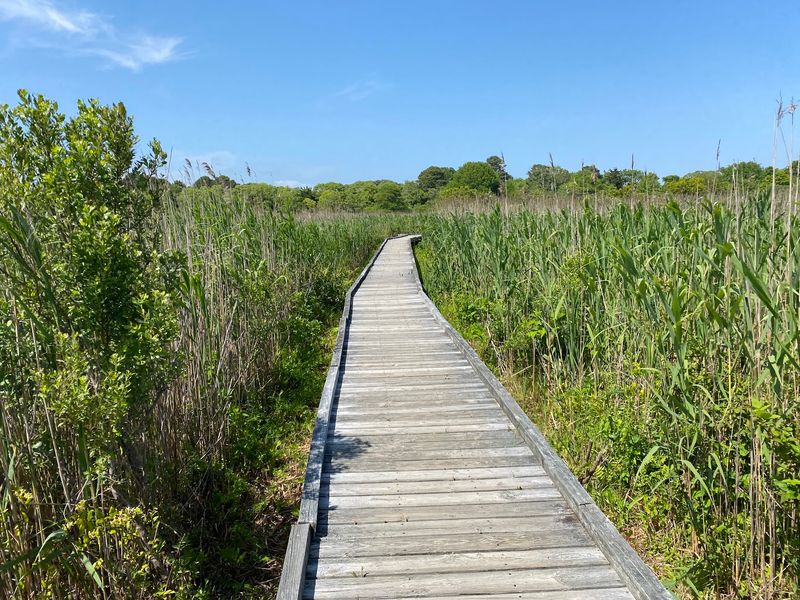
Freshwater wetlands sit just behind the dunes at South Cape May Meadows, creating a rare meeting place for pond life, shorebirds, and coastal vegetation.
The preserve’s Boardwalk Trail travels about six-tenths of a mile one way on a broad recycled-plastic surface, passing ponds and wetland habitat before connecting toward Cape May Point State Park.
Walk it out and back for roughly 1.2 miles, or use the surrounding trail network to build a longer loop.
The flat, six-foot-wide boardwalk was designed for accessible travel, with benches, pullout spaces, interpretive features, and a viewing area where pausing feels like part of the route rather than an interruption.
This is prime birding country, especially during migration, but no expertise is required. Look for ducks dabbling in the ponds, egrets working the shallows, and raptors moving overhead.
The landscape changes dramatically with weather: bright days sharpen the contrast between pale dunes and blue water, while mist gives the meadow a wonderfully hushed quality. Bikes and ordinary pets are prohibited, helping protect wildlife and preserve the quiet; trained service dogs are permitted.
The Sunset Boulevard parking area provides the main approach. Because the preserve links with neighboring state park trails, it is easy to pair this walk with the Cape May Lighthouse or a beach visit.
Still, do not hurry through. The benches exist for good reason, and the most interesting bird often appears five minutes after everyone else moves on.
9. Marsh Boardwalk Trail – Cape May National Wildlife Refuge, Wildwood Crest
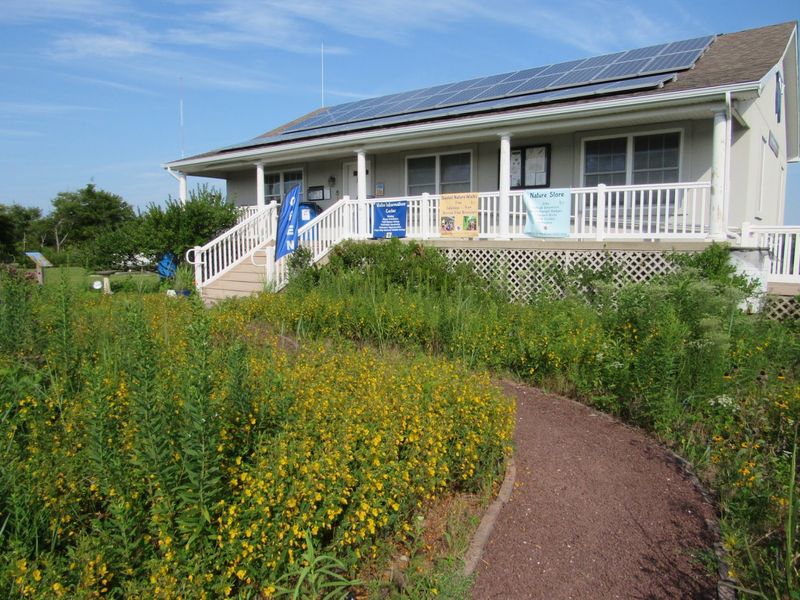
Five hundred feet may not sound like much, but this short boardwalk at the refuge’s Two Mile Beach Unit delivers a concentrated dose of salt-marsh scenery.
The accessible path extends over wetland vegetation to an observation platform, where the view opens across shimmering water, tall grasses, and the edges of maritime forest.
Wading birds are the main attraction. Great egrets and herons stalk the shallows, while the distinctive clacking call of a clapper rail may emerge from vegetation thick enough to hide the bird completely.
That element of mystery makes the stop more interesting than its modest length suggests. Walk slowly, scan along muddy edges, and listen before assuming nothing is there.
The boardwalk is particularly appealing for visitors who want a genuine wildlife experience without committing to a longer hike or dealing with loose sand. Its level construction also makes it one of the more approachable outdoor routes near the Wildwoods.
Pair it with the nearby dune trails if you want to compare salt marsh, maritime forest, and beach habitat in one visit.
Seasonal protections apply to the beachfront at Two Mile Beach: beach access is closed from April 1 through September 30 to safeguard nesting wildlife, although designated refuge trails remain available.
Bring insect repellent in warm weather and a wind layer during the cooler months. Out here, the breeze can turn brisk long before nearby streets give any warning.
10. Reed’s Road Trail – Island Beach State Park, Berkeley Township
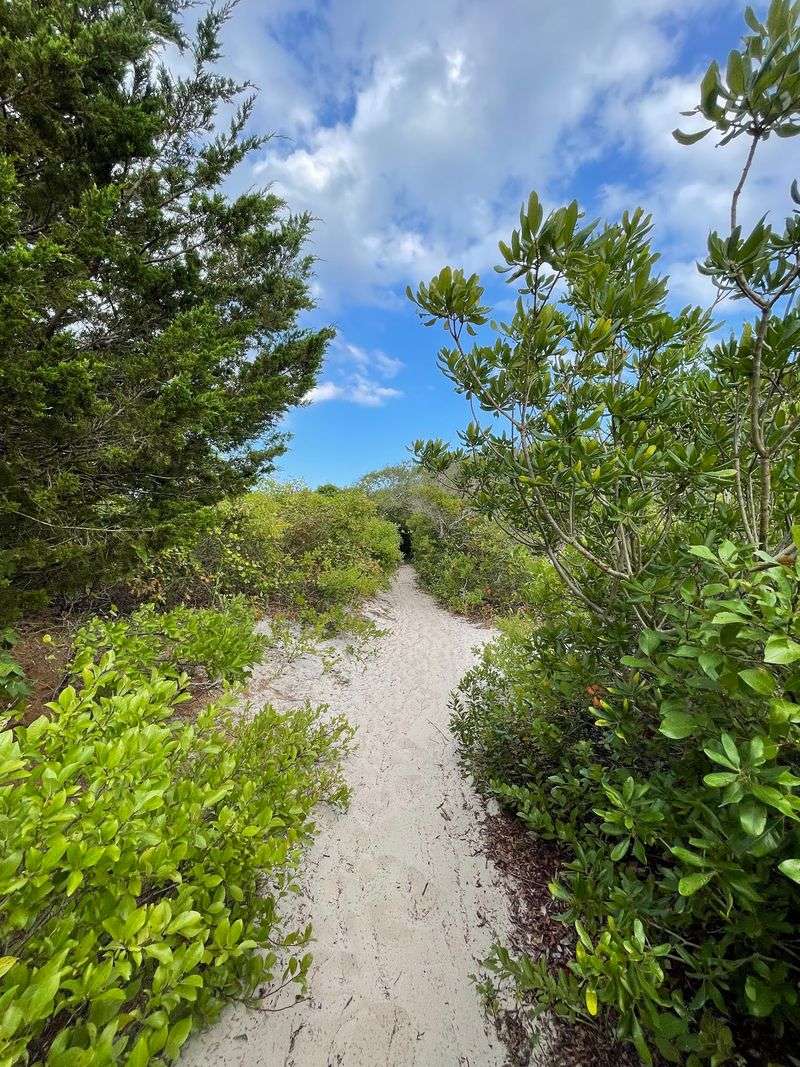
Wind-shaped eastern red cedars and American holly trees form a low green tunnel along Reed’s Road Trail, one of the brief nature walks tucked inside Island Beach State Park.
The route runs just over half a mile round trip and leads from the bayside toward Barnegat Bay, using a combination of sandy trail and boardwalk to pass through fragile maritime habitat.
This is not the broad, commercial boardwalk associated with Jersey Shore towns. It is quieter, narrower, and surrounded by plants tough enough to survive salt spray, shifting sand, and coastal storms.
Interpretive signs identify features of the forest and help explain why the trees often look twisted or sculpted. Near the bay, the habitat opens and bird-watching improves.
Ospreys, gulls, herons, and seasonal migrants all use this long barrier island, while smaller birds shelter among the shrubs. The short distance makes Reed’s Road an easy addition to a beach day, especially when midday crowds or strong surf call for a change of scenery.
Parking areas are located along the park’s main road, but note the numbered access point before setting out so finding the trail does not become the day’s real hike. Summer admission fees and occasional capacity closures can affect entry to Island Beach State Park, so arriving early is wise.
In cooler months, the same little path feels almost private, with bay wind rustling through the cedars and barely another footstep nearby.
11. Spizzle Creek Trail – Island Beach State Park, Berkeley Township
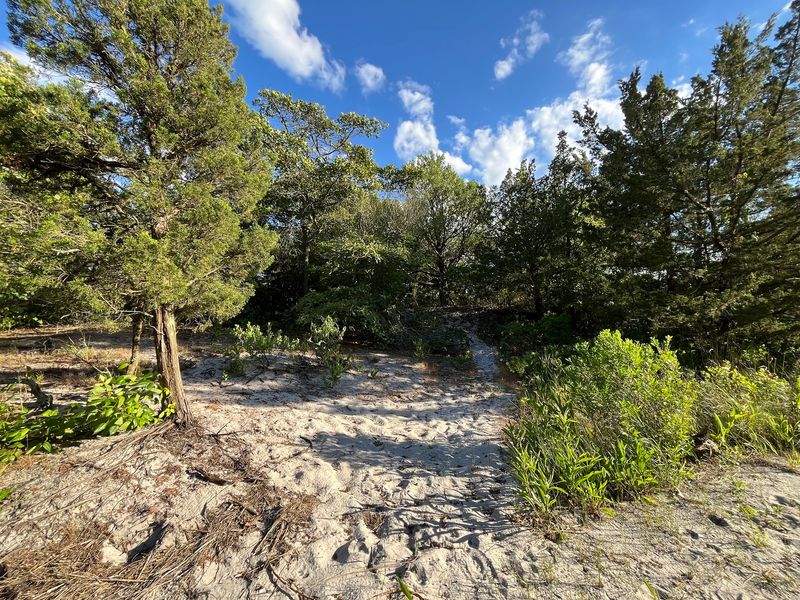
A name like Spizzle Creek practically demands investigation. This roughly half-mile loop explores the bayside of Island Beach State Park, where salt marsh, maritime shrubs, and shallow water create a productive feeding ground for coastal wildlife.
Boardwalk sections lift walkers over damp terrain and lead toward views of Barnegat Bay, with observation points that invite a slow scan of the reeds. Diamondback terrapins may appear near the marsh during warmer months, while egrets, herons, ospreys, and ducks provide much of the overhead action.
The vegetation is part of the experience, too. Bayberry, cedar, holly, and other salt-tolerant plants crowd the path, demonstrating just how different the sheltered side of a barrier island is from the open beach a short distance away.
Despite the trail’s compact dimensions, it feels varied because the route shifts repeatedly between enclosed greenery and broad marsh views. Families can finish it without turning the outing into an endurance test, and bird-watchers can linger at the observation areas for as long as the group permits.
Mosquitoes and biting flies can be enthusiastic in summer, particularly when the air is still, so use repellent and consider visiting in the morning. Like the other nature trails within the state park, access may depend on seasonal entrance fees and available parking.
The payoff is a close look at the quieter side of Island Beach—the one without waves, umbrellas, or sand in absolutely everything.
12. Johnny Allen’s Cove Trail – Island Beach State Park, Berkeley Township

The bay appears gradually on Johnny Allen’s Cove Trail, first as flashes of light through shrubs and then as a wide sweep of water beyond the marsh.
This short Island Beach State Park route is roughly half a mile round trip, combining sandy ground and wooden boardwalk as it crosses from dense maritime vegetation toward a peaceful cove on Barnegat Bay.
Its sheltered setting makes it a strong place to look for egrets, herons, ducks, and ospreys, especially early or late in the day. Along the way, coastal plants grow close to the path, their shapes molded by wind, salt, and sandy soil.
The setting feels intimate rather than dramatic, which is exactly why it works. There is no major summit or crowded attraction waiting at the end—just water, marsh grass, birds, and room to breathe.
Because the route is short, it pairs naturally with nearby Spizzle Creek or Reed’s Road, allowing visitors to sample several habitats without covering serious mileage. Wear shoes that can handle sand and damp boards, and use caution after rain when wooden surfaces may become slick.
Warm-weather insect repellent is also a fine idea. As with any visit to Island Beach State Park, summer weekends reward an early arrival because parking can fill and vehicle entry may be restricted once capacity is reached.
In the quieter seasons, Johnny Allen’s Cove becomes an easy little escape within an escape, showing off the barrier island’s calm bayside personality.