Tennessee hides some of the most incredible underground worlds and rushing waterfalls you’ll find anywhere in the country. From massive caverns lit up like something out of a fantasy movie to boat rides across mysterious underground lakes, these attractions offer adventures that feel worlds away from everyday life.
Whether you’re exploring towering underground chambers or standing at the base of a thundering waterfall, Tennessee’s natural wonders deliver experiences that stick with you long after you’ve headed home. Get ready to discover twelve spots where nature shows off in the most spectacular ways possible.
1. The Lost Sea Adventure — Sweetwater
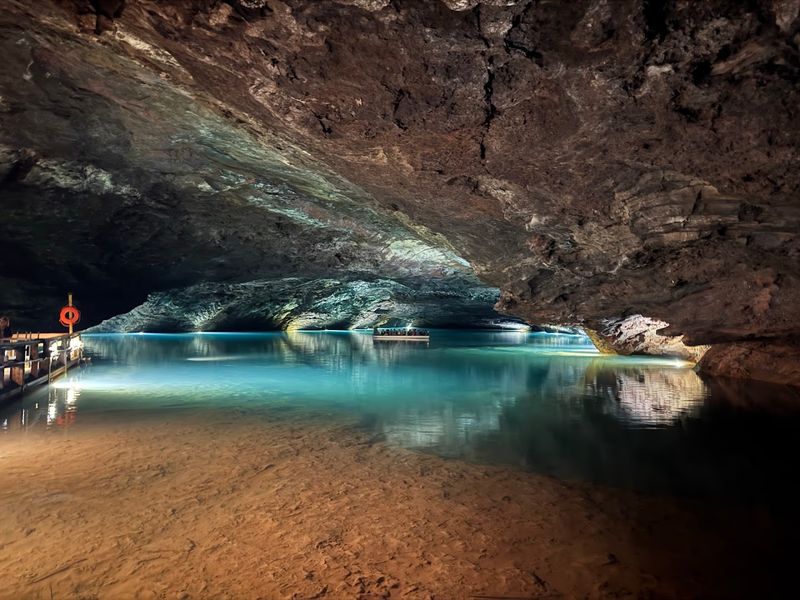
America’s largest underground lake waits beneath the hills of East Tennessee, and getting there involves walking through passages carved by water over millions of years. Craighead Caverns opens up into chambers where Confederate soldiers once mined for saltpeter, and where moonshiners later hid their operations during Prohibition.
The temperature stays around 58 degrees year-round, so bringing a light jacket makes sense even on sweltering summer days.
Your guide leads you down well-lit pathways past formations that look like frozen waterfalls made of stone. Some passages narrow while others open into rooms big enough to hold a small house.
The real showstopper appears when you reach the lake itself, stretching out into darkness beyond what any light can reach.
Climbing aboard a glass-bottom boat feels like stepping into another dimension. The water is so clear you can see rainbow trout swimming below, descendants of fish stocked decades ago that somehow thrived in this sunless environment.
Divers have explored over thirteen acres of the lake, but nobody knows exactly how far it extends into the mountain.
The boat glides silently across the surface while your guide points out rock formations rising from the depths. Some look like underwater castles, others like strange sculptures created by nature’s patient hand.
The entire experience takes about an hour and a half, combining geological education with genuine wonder. Unlike some tourist caves that feel cramped or commercialized, this one maintains an authentic sense of discovery.
You’re walking and floating through spaces that existed long before humans arrived, and that will continue long after we’re gone.
2. Ruby Falls — Chattanooga
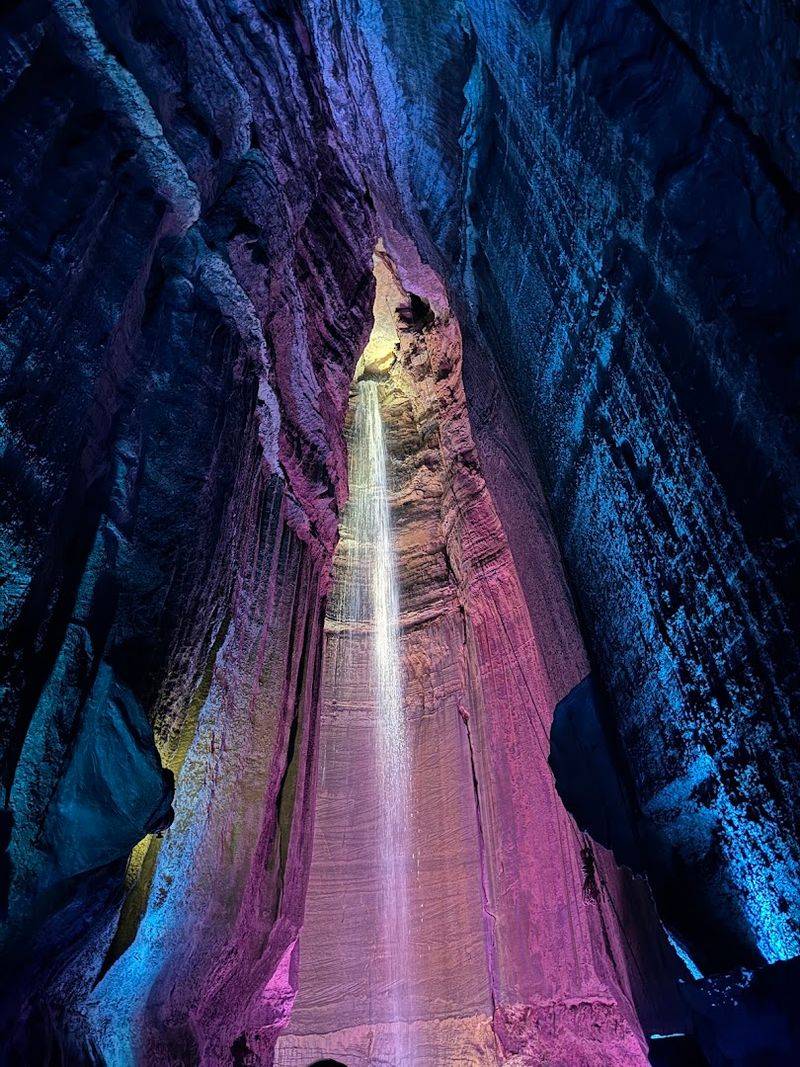
Descending 260 feet into Lookout Mountain via elevator sets the stage for something extraordinary. The journey takes you through passages discovered almost by accident in 1928 when Leo Lambert was drilling an elevator shaft for a different cave tour.
What he found instead became one of Tennessee’s most visited underground attractions.
Walking through the cavern feels like exploring an alien planet. Formations with names like Dragon’s Foot and Elephant’s Foot actually resemble what they’re called, which doesn’t always happen in show caves.
The path winds through tight squeezes and open rooms, each section revealing different types of stalactites, stalagmites, and flowstone.
Then you hear it before you see it—the sound of falling water echoing through stone chambers. Rounding a final corner brings you face to face with a 145-foot waterfall plunging from the cavern ceiling into a pool below.
The falls flow year-round, fed by rainwater and natural springs filtering through limestone layers above. During heavy rain periods, the volume increases noticeably, turning the gentle cascade into a more powerful display.
The cavern stays at 60 degrees regardless of surface weather, making it a perfect escape from summer heat or winter cold.
Tours run throughout the day with guides sharing geological facts mixed with local history. The entire underground portion takes about an hour, though many visitors spend additional time at the observation deck on top of Lookout Mountain.
From there, you can see seven states on clear days, adding a sky-high perspective to complement your underground adventure.
3. Tuckaleechee Caverns — Townsend
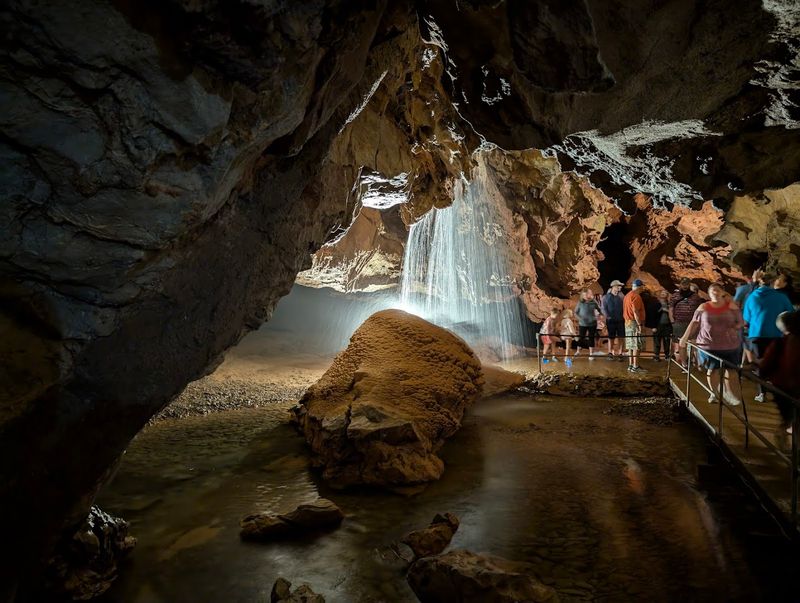
Local Cherokee people knew about these caverns long before European settlers arrived, using them for shelter and considering them sacred spaces. The name itself comes from a Cherokee word, and the caverns remained relatively unknown to outsiders until the early 1900s.
What makes this cave system special isn’t just its size but the variety of formations packed into accessible touring areas.
Entering through the natural opening feels like walking into a mountain’s belly. The main room stretches so wide that early explorers needed multiple torches just to see across it.
Modern lighting reveals columns that took millions of years to form, created when stalactites growing down eventually met stalagmites growing up.
Underground streams flow through several passages, their constant movement continuing the slow work of carving new features. You’ll cross bridges over these streams while guides explain how water containing dissolved limestone creates the fantastic shapes surrounding you.
Some formations look like curtains, others like elaborate chandeliers hanging from the ceiling.
Silver Falls steals the show as one of the tallest underground waterfalls you’ll find anywhere. At 210 feet, it dwarfs most surface waterfalls in the region, plunging from an opening high above into a pool that feeds the streams below.
The roar of falling water fills the chamber, and mist rises from where it impacts the rocks.
Tours last about an hour and cover roughly a mile of walking on paved paths with some stairs. The temperature hovers around 58 degrees, and humidity stays high, so glasses tend to fog up initially.
Townsend’s location near Great Smoky Mountains National Park makes this an easy addition to any mountain vacation, offering a completely different perspective on the region’s natural beauty.
4. Raccoon Mountain Caverns — Chattanooga
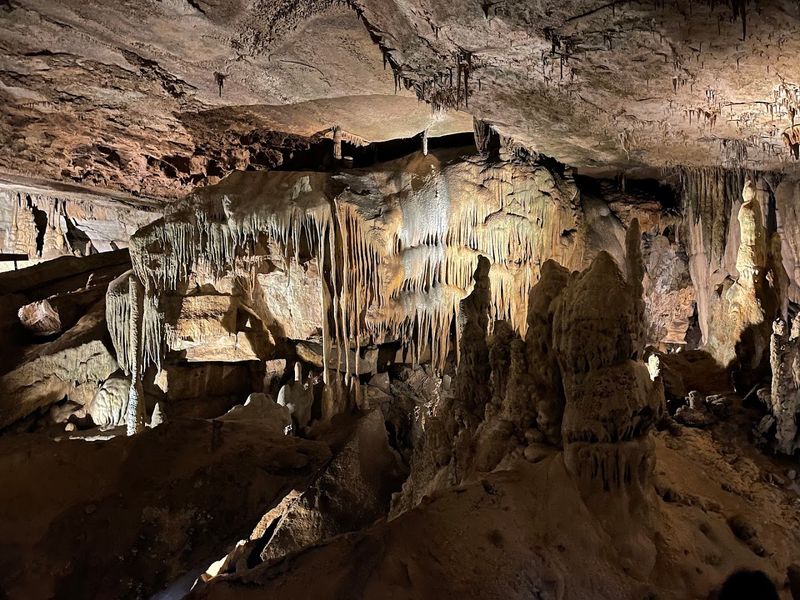
Perched on Raccoon Mountain just outside Chattanooga, these caverns offer both wild and developed touring options depending on your adventure appetite. The mountain itself serves as a natural reservoir for TVA’s pumped-storage hydroelectric plant, but deep inside, the caverns remain untouched by modern engineering.
Formation development here happened over 250 million years, creating one of the most geologically diverse cave systems in the Southeast.
Standard walking tours follow well-maintained paths past incredible examples of cave decoration. Stalactites hang like stone icicles in various colors—white, orange, brown—each hue indicating different mineral content in the water that formed them.
Stalagmites rise from the floor to meet them, and in some places, they’ve joined to create massive columns.
Flowstone sections look like frozen waterfalls made of rock, their surfaces rippled as if caught mid-motion. These formations result from thin sheets of water depositing minerals as they flow over cave walls and floors.
Some areas feature cave bacon—thin, translucent formations striped with different colors that really do resemble strips of bacon hanging from the ceiling.
The caverns maintain a consistent 60-degree temperature and high humidity, creating perfect conditions for ongoing formation growth. Active dripping continues in many areas, meaning these decorations are still developing at a rate of about one cubic inch per century.
Guides point out both ancient and relatively young formations, helping visitors understand the incredibly slow pace of geological change.
Beyond the standard tour, the caverns offer wild caving expeditions for those willing to crawl, climb, and squeeze through undeveloped passages. These adventures require reservations and appropriate clothing, but they provide an authentic caving experience far removed from the tourist-friendly main routes.
Either way, you’re exploring spaces that few people ever see.
5. Cumberland Caverns — McMinnville
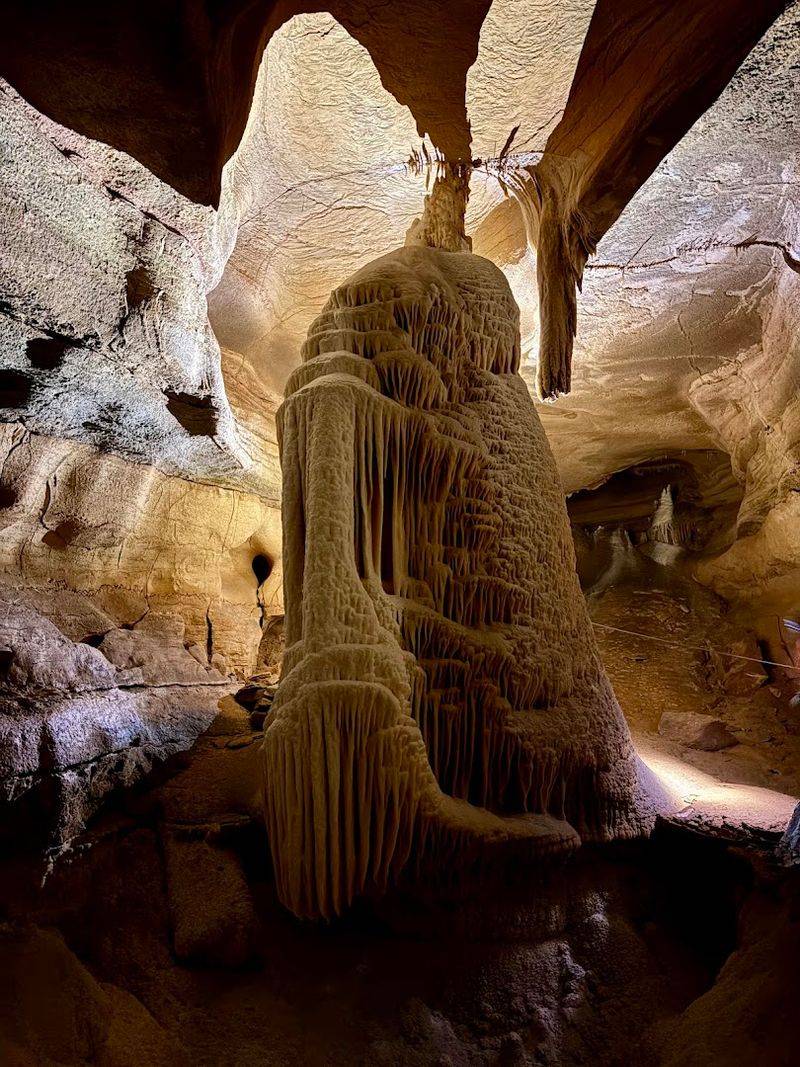
Stretching beneath the Cumberland Plateau for miles, this cave system ranks among Tennessee’s most extensive. The main touring route covers just a fraction of the total mapped passages, but what you see represents some of the most impressive underground real estate in the state.
Early settlers discovered the entrance in 1810, and subsequent exploration revealed a seemingly endless network of rooms and tunnels.
Walking into the first chamber immediately communicates the scale of this place. Ceilings soar overhead, disappearing into shadows beyond the reach of installed lighting.
The Hall of the Mountain King—named after the famous musical piece—features formations so large they dwarf human visitors. Some columns measure several feet in diameter and stretch from floor to ceiling.
Different sections of the cave showcase different types of formations. In some areas, delicate soda straws hang from the ceiling like hollow tubes of stone, still growing as water drips through their centers.
Other rooms feature massive flowstone cascades that look like frozen waterfalls, their surfaces smooth and rippled. The variety keeps the tour visually interesting as you move from chamber to chamber.
The caverns occasionally host underground concerts in a section called the Volcano Room, where natural acoustics create an incredible sound environment. Imagine listening to live music 333 feet underground, surrounded by rock formations millions of years old.
These special events require separate tickets and sell out quickly, but they offer a truly unique experience.
Standard tours last about an hour and a half, covering easy walking paths suitable for most fitness levels. Longer adventure tours venture deeper into less-developed sections, sometimes lasting several hours.
The temperature stays around 56 degrees year-round, so bringing layers makes sense regardless of surface weather. McMinnville’s central location makes this an accessible stop whether you’re exploring Middle Tennessee or passing through on your way elsewhere.
6. Forbidden Caverns — Sevierville
Just minutes from Sevierville’s tourist corridor, these caverns offer a refreshingly non-commercialized experience despite their proximity to Dollywood and other major attractions. The entrance sits in a wooded area that feels far removed from the busy parkway, and once you descend into the cave, you could be anywhere.
Native Americans used these caverns for thousands of years, leaving behind artifacts that archaeologists still study.
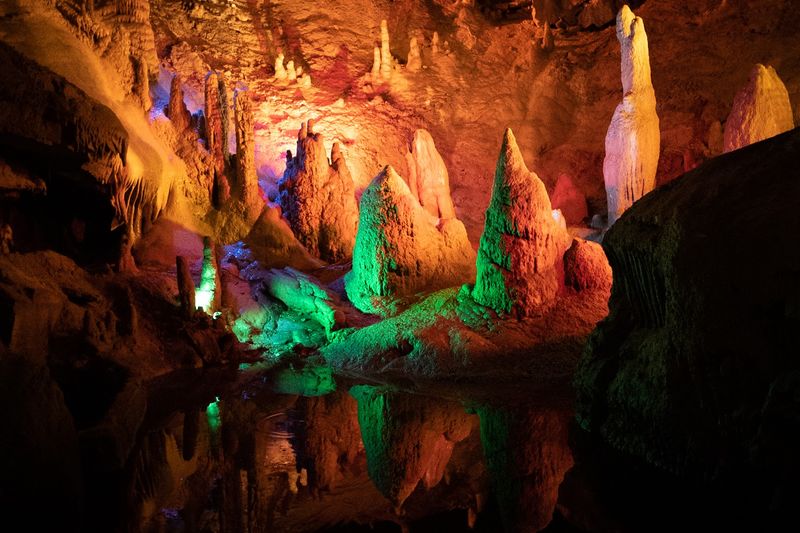
What immediately sets Forbidden Caverns apart is the lighting scheme. Instead of stark white lights that wash out natural colors, the caverns use colored illumination that highlights the natural hues present in different formations.
Orange lights enhance iron-rich sections, blue lights make calcite formations glow, and green lights emphasize areas with copper minerals.
An underground stream flows through multiple sections of the tour route, its clear water revealing smooth bedrock beneath. The stream creates a constant soundtrack of flowing water that adds to the cave’s peaceful atmosphere.
In some areas, the stream has carved narrow channels through the rock, while in others it spreads into shallow pools.
Formations here include all the usual suspects—stalactites, stalagmites, columns, flowstone—but also some unusual features like cave grapes, which are small, round clusters of calcite that really do resemble bunches of grapes. Guides point out formations that resemble everything from frozen waterfalls to organ pipes, and while some require imagination to see the resemblance, others are strikingly accurate.
The tour covers about a mile of walking and takes roughly an hour. Paths are paved and relatively level, making this one of the more accessible cave tours in the region.
The 58-degree temperature provides welcome relief during summer visits, though it feels chilly after hot surface weather. Families appreciate the manageable length and the fact that kids stay engaged throughout thanks to the colorful lighting and active stream features.
7. Fall Creek Falls State Park — Spencer
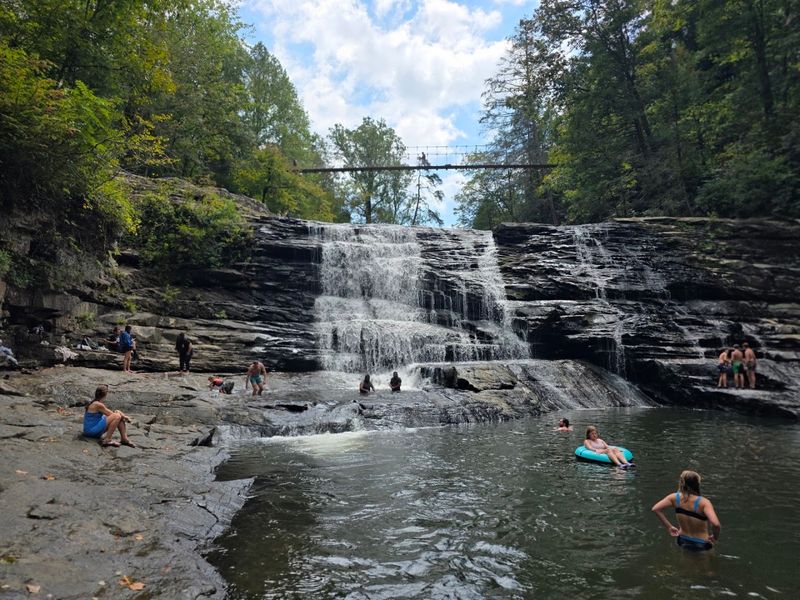
At 256 feet, Fall Creek Falls claims the title of highest waterfall east of the Mississippi River, and standing at the base makes those numbers feel very real. Water plunges from the cliff edge in a free fall that builds speed before crashing into the pool below, creating a constant mist that rainbows often dance through on sunny afternoons.
The gorge surrounding the falls adds to the drama, with sheer rock walls rising on multiple sides.
Multiple overlooks provide different perspectives on the main attraction. The upper overlook sits near the parking area, offering an easy view from the top of the falls.
A steeper trail descends to the base, where the true scale becomes apparent and the roar of falling water drowns out conversation. During high water periods following heavy rain, the volume increases dramatically, transforming the falls into a thundering curtain of water.
The park contains several other significant waterfalls beyond the namesake attraction. Cane Creek Falls drops 85 feet in a thin stream that often blows sideways in the wind.
Piney Falls features a different character entirely, with water sliding down a sloped rock face rather than free-falling. Cane Creek Cascades offers a gentler scene where water tumbles over a series of ledges.
Beyond waterfalls, the park provides extensive hiking trails, mountain biking routes, and a lake suitable for paddling. Camping facilities range from primitive sites to cabins with modern amenities.
The gorge system that contains the waterfalls also creates habitat for unique plant species that thrive in the constant moisture and shade.
Spring brings peak water flow when winter precipitation fills streams to capacity, while fall offers spectacular color as surrounding forests transition. Summer crowds can be significant on weekends, but the park’s size spreads visitors across enough area that it rarely feels overcrowded.
Winter visits provide solitude and sometimes feature partially frozen falls, though trail conditions require caution.
8. Burgess Falls State Park — Sparta
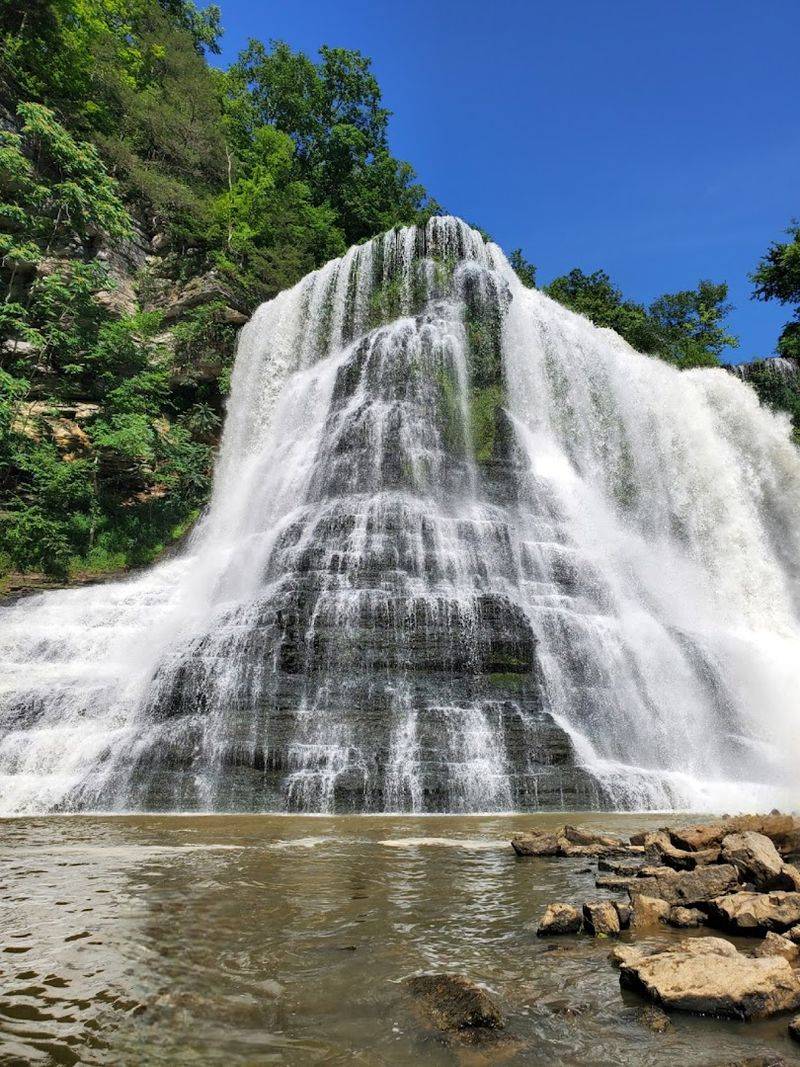
Falling Spring Creek built this landscape over millennia, carving a gorge that contains four distinct waterfalls in less than two miles. The riverside trail connecting them starts gently before becoming more challenging as you progress downstream, with each waterfall more impressive than the last.
What begins as a pleasant nature walk transforms into a legitimate adventure by the time you reach the final drop.
The first cascade appears quickly after leaving the trailhead, a modest but pretty drop that sets expectations. The second waterfall increases the drama, with water sliding down a sloped rock face into a churning pool.
By the third falls, the gorge has deepened noticeably, and the sound of rushing water grows louder.
Then you round a bend and see the main event. Burgess Falls drops 136 feet in a powerful plunge that kicks up spray visible from the viewing platform.
The gorge here feels almost canyon-like, with steep walls rising on both sides and the river continuing through rapids below the falls. During high water, the volume is genuinely impressive, with thousands of gallons per minute thundering over the edge.
The trail to the base overlook involves stairs and uneven terrain, but the effort pays off with up-close views of the falls from multiple angles. Some visitors wade in the pool below during summer, though the current can be deceptively strong.
The surrounding gorge creates a microclimate that stays cooler than the surrounding plateau, with moisture-loving plants thriving in the spray zone.
The park sees moderate visitation compared to more famous Tennessee waterfalls, making it a good choice when you want natural beauty without massive crowds. Spring offers peak flow, while fall provides colorful foliage framing the cascades.
The round-trip hike covers about three miles with some elevation change, manageable for most people but challenging enough to feel like genuine exercise. Sparta’s location makes this an easy stop when traveling between Nashville and Knoxville.
9. Rock Island State Park — Rock Island
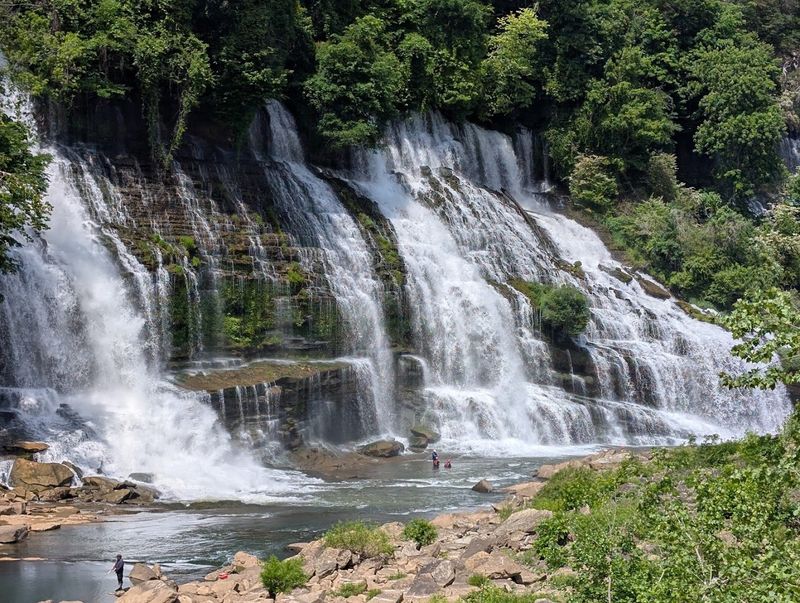
Where the Caney Fork River drops through a series of ledges and gorges, Rock Island State Park preserves some of Middle Tennessee’s most dramatic water features. Great Falls serves as the centerpiece, but calling it a single waterfall oversimplifies the reality.
Water crashes through a complex series of drops, slides, and pools, creating a dynamic display that changes character depending on river flow.
Twin Falls adds another dimension to the park’s water attractions, with two separate streams plunging side by side into a deep pool surrounded by rock walls. The turquoise color of the water comes from limestone in the bedrock, giving pools an almost tropical appearance that seems out of place in Tennessee.
On summer weekends, you’ll find kayakers and paddleboarders playing in the rapids and pools below the falls.
The gorge system throughout the park creates habitat for species that need cool, moist conditions. Hemlocks cling to rocky slopes, and ferns carpet areas near constant spray.
The elevation drop as rivers cut through the Cumberland Plateau creates the energy that powers these impressive water features, and the exposed rock layers tell a geological story spanning millions of years.
Hiking trails connect different viewpoints, ranging from easy overlook walks to more strenuous routes that descend into the gorge. The cotton mill ruins near the park entrance add historical context, remnants of industry that once harnessed this water power for textile production.
The mill operated from the early 1900s until the 1950s, and interpretive signs explain how the river’s energy was converted to mechanical power.
Center Hill Lake, created by a downstream dam, backs up into the lower portions of the park, creating opportunities for fishing and boating. The combination of waterfalls, gorges, lake access, and historical features makes Rock Island more diverse than many single-attraction parks.
Spring brings wildflowers and high water, while fall offers color and more moderate temperatures for hiking.
10. Reelfoot Lake State Park — Tiptonville
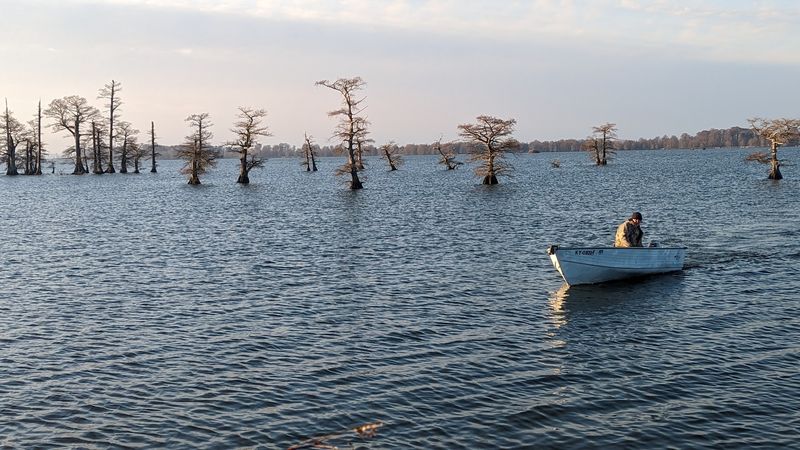
Earthquakes created this lake when the New Madrid seismic zone unleashed a series of massive tremors in 1811-1812, causing the Mississippi River to temporarily flow backward and flooding a large forested area. The result is a shallow lake filled with standing cypress trees, their trunks rising from the water and creating an otherworldly landscape unlike anything else in Tennessee.
Pontoon boat tours operate seasonally, carrying visitors through channels between cypress trees where wildlife thrives. Bald eagles nest here in significant numbers, particularly during winter months when the population swells with migrating birds.
Seeing these massive raptors perched in cypress trees or soaring overhead never gets old, and naturalist guides help spot and identify various species.
Great blue herons stalk the shallows on impossibly long legs, freezing motionless before striking at fish with lightning speed. Egrets, cormorants, and various duck species populate different areas of the lake depending on season and water conditions.
The flooded forest provides ideal habitat for these water birds, offering both feeding opportunities and protected nesting sites.
Beyond birds, the lake supports populations of beavers, otters, and numerous fish species. The unique ecosystem functions differently than typical Tennessee lakes, with the shallow water and abundant vegetation creating rich food chains.
Water levels fluctuate seasonally, exposing mudflats during lower periods and flooding additional areas when high.
The park offers hiking trails through cypress-tupelo swamps where boardwalks keep your feet dry while you explore. An observation deck provides views across open water toward distant treelines.
The visitor center explains the lake’s earthquake origins and showcases the natural history of this unusual ecosystem. Winter eagle tours are especially popular, but summer visits offer their own appeal with warm weather, active wildlife, and lush vegetation.
Tiptonville’s location in Tennessee’s northwestern corner makes this a destination that requires intentional travel, but the unique landscape rewards the effort.
11. Cummins Falls State Park — Cookeville
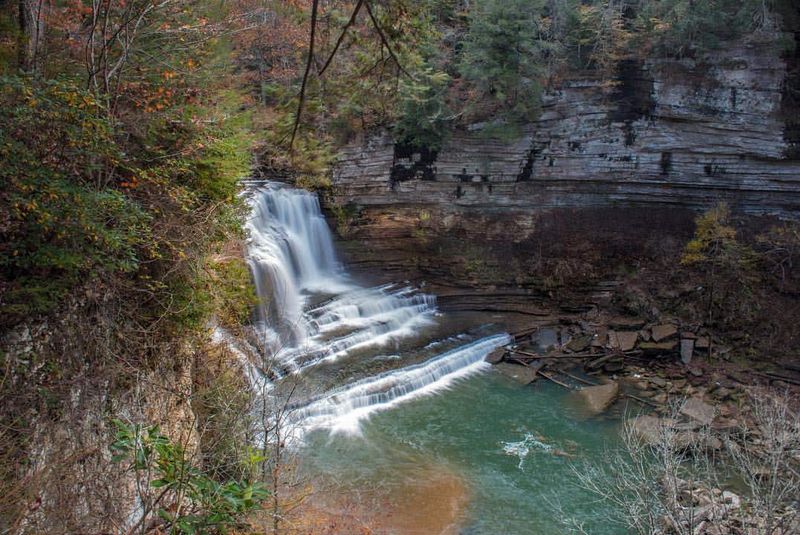
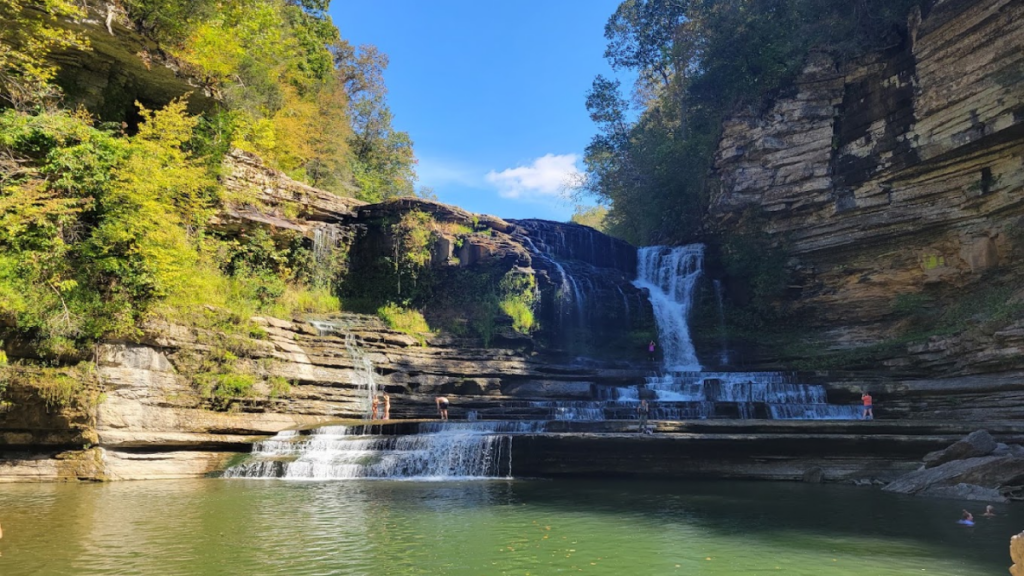
Wading up the creek to reach this waterfall makes Cummins Falls more interactive than most Tennessee cascades. The trail descends into the gorge where the Blackburn Fork River flows, and from there, you’re walking in the water itself.
Rock-hopping and splashing through shallow sections leads upstream to where the river suddenly drops 75 feet over a wide ledge.
The falls spread across the full width of the gorge, creating a curtain of water that crashes into a large pool popular for swimming. On summer weekends, dozens of visitors wade, swim, and sun themselves on rocks surrounding the pool.
The scene feels more like a natural water park than a traditional state park, with people of all ages enjoying the combination of hiking and aquatic recreation.
Getting there requires effort and preparation. The creek walk involves uneven footing on slippery rocks, and water depth varies from ankle-deep to potentially waist-deep depending on recent rainfall.
The park requires online reservations during peak season to manage crowd sizes, and rangers enforce capacity limits to protect both visitors and the natural environment.
The gorge walls rise steeply on both sides, creating a sense of seclusion despite the number of people present on busy days. Rock layers visible in the gorge walls show the geological history of the area, with different strata representing different time periods.
The constant erosion from flowing water continues to shape the landscape, gradually deepening the gorge and changing the character of the falls.
Spring brings high water that makes the falls more impressive but the creek walk more challenging and potentially dangerous. Summer offers the best combination of manageable water levels and warm weather perfect for swimming.
Fall reduces crowds while still providing pleasant temperatures for the hike. Winter visits are possible but require caution on wet rocks and in cold water.
Cookeville’s location makes this accessible from Nashville, Knoxville, or Chattanooga, and the hands-on nature of reaching the falls creates memories that passive viewpoint visits can’t match.
12. Ozone Falls State Natural Area — Ozone
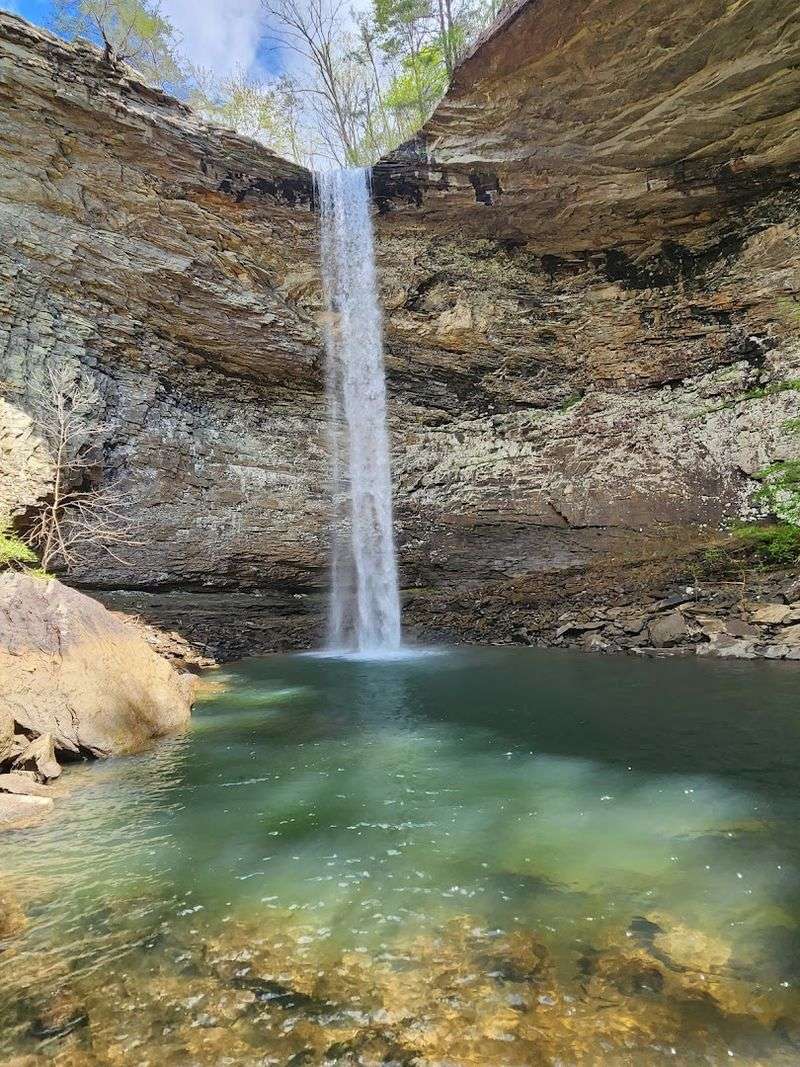
Tucked away on the Cumberland Plateau, this 110-foot waterfall drops through a natural amphitheater of rock walls that seem designed to showcase the cascade. Fall Creek takes a dramatic plunge over a sandstone ledge, free-falling most of the distance before crashing into a deep pool at the base.
The surrounding gorge creates acoustics that amplify the sound of falling water, and the relatively small drainage area means the falls maintain flow even during dry periods.
Two trails provide different perspectives. The short upper trail leads to an overlook at the top of the falls, where you can peer over the edge and watch water disappear into space.
This viewpoint requires only a brief walk from the parking area, making it accessible for visitors with limited mobility or time. The view captures the full height of the drop with the gorge spreading below.
A steeper trail descends to the base, switchbacking down the gorge wall through hemlocks and hardwoods. The base view is entirely different, looking up at the falls framed by rock walls that curve around like an amphitheater.
Mist drifts through the air, and the pool reflects the waterfall in its dark surface. During lower flow periods, you can wade near the base, though the depth increases quickly.
Share this story