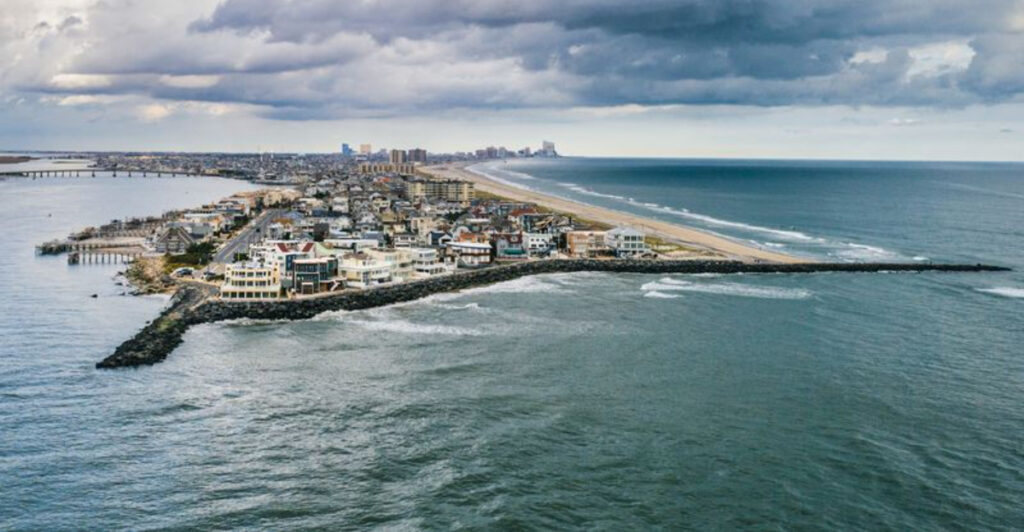
A ferry horn sounds across the harbor, bicycles roll past weathered cottages, and somewhere behind the dunes, a beach path opens onto a nearly empty stretch of sand. This is the quieter side of the New Jersey coast—the one that does not require flashing rides, packed boardwalks, or an hour-long hunt for parking.
Scattered from the Bayshore to Cape May County are small towns where weekends revolve around harbor walks, seafood dinners, lighthouse climbs, and mornings slow enough to justify a second cup of coffee. Some sit directly on the Atlantic, while others overlook sheltered bays filled with sailboats and fishing vessels.
A few are only minutes from the Shore’s busiest destinations, yet they feel refreshingly removed from the commotion. Whether the goal is a peaceful beach day, a scenic bike ride, or two nights somewhere that actually feels like a break, these 13 coastal towns make it easy to disappear without going very far.
1. Atlantic Highlands
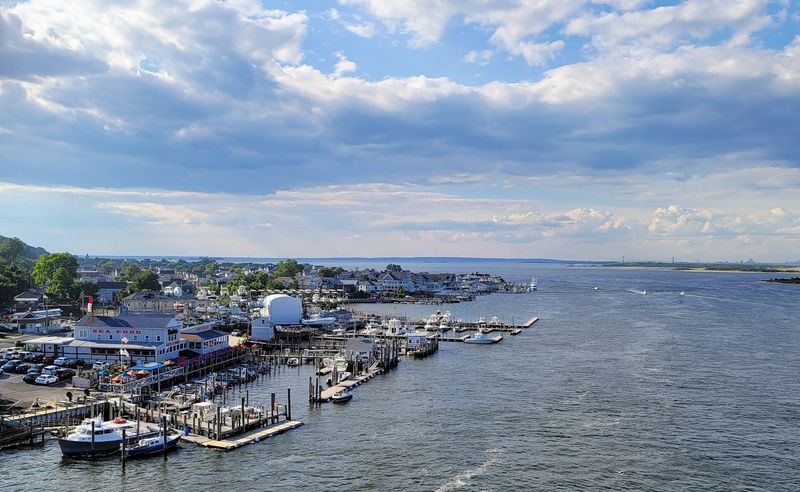
The Manhattan skyline appears across the water like a distant backdrop, but the mood around the Atlantic Highlands harbor could not be further from the city. Fishing boats, sailboats, and commuter ferries share the marina, giving the waterfront a slightly unusual mix of working harbor and weekend getaway.
It is one of the few Shore towns where watching a ferry pull away can be part of the entertainment rather than simply transportation. Start with a stroll around the municipal harbor, then follow First Avenue uphill for cafés, small restaurants, boutiques, and the town’s independent cinema.
The compact downtown is easy to explore without a strict plan, which is exactly how a relaxing weekend should work. Grab breakfast, browse for a while, and return to the water when the afternoon light begins to soften.
For the best view, drive or hike up to Mount Mitchill Scenic Overlook. Sitting on one of the highest natural elevations along the Atlantic seaboard south of Maine, the overlook provides broad views of Sandy Hook Bay, the New York skyline, and passing boats.
Nearby Hartshorne Woods Park adds wooded trails for visitors who want more movement than a harbor walk. Atlantic Highlands does not have an ocean beach of its own, but Sandy Hook and Sea Bright are close enough for an easy daytime outing.
Staying here gives you waterfront scenery, dining, hiking, and beach access without committing the entire weekend to the sand.
2. Highlands
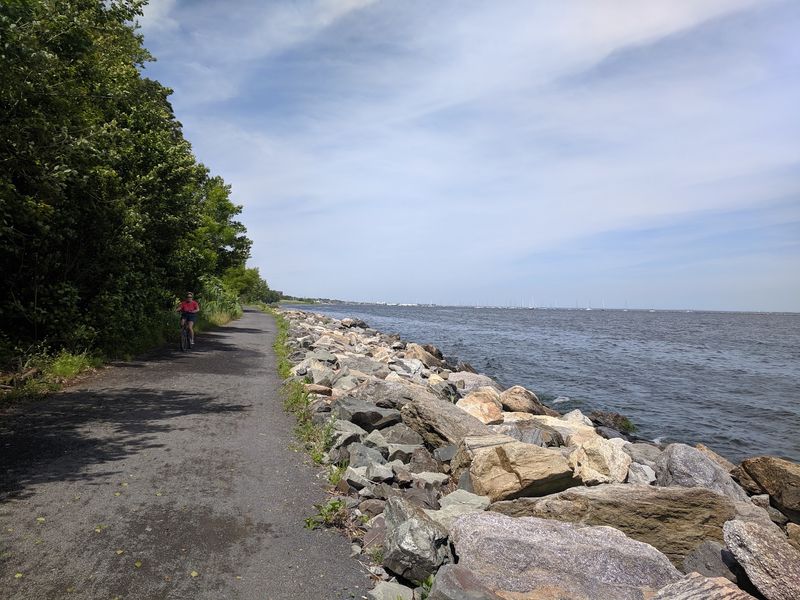
A plate of seafood tastes better when fishing boats are tied up within view, and Highlands has built much of its personality around that fact.
This compact Bayshore town sits where the Shrewsbury River, Sandy Hook Bay, and the Atlantic nearly meet, creating a waterfront packed with marinas, casual restaurants, and reminders of its fishing-town roots.
Bay Avenue is the main route through town, but the most memorable stops sit near the water. Order local seafood at a dockside restaurant, watch boats move through the harbor, or follow one of the public walkways for breezy views across the bay.
The dining scene is pleasantly unfussy: shorts are expected, sandy shoes rarely attract attention, and sunset is often the unofficial dinner reservation. The Twin Lights Historic Site rises above town on the Navesink Highlands.
The distinctive pair of lighthouse towers dates to the 19th century and occupies a hill with commanding coastal views. Highlands also borders Hartshorne Woods Park, where forested trails climb toward overlooks rather than running along flat beachfront terrain.
That combination of water and elevation gives the area a character unlike most Jersey Shore destinations. Sandy Hook is just across the bridge, making Highlands a useful base for beach trips, cycling, fishing, and lighthouse exploring.
Parking around the restaurant district can tighten up during summer evenings, so arriving before the dinner rush is smart. Once the day-trippers leave, the harbor settles into the kind of quiet that makes staying overnight worthwhile.
3. Sea Bright
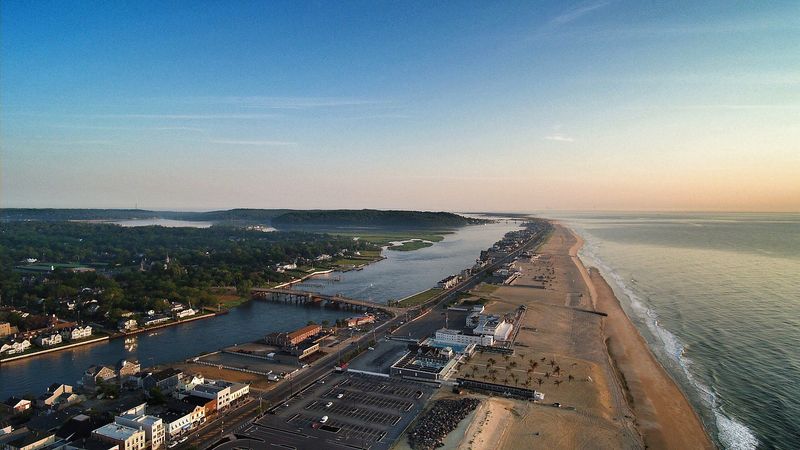
Ocean waves break on one side of town while the calm Shrewsbury River glints on the other. Sea Bright occupies such a narrow strip of land that you can move between two completely different waterfronts in minutes, sometimes without even getting back into the car.
The municipal beach sits near the center of town and provides lifeguards, restrooms, parking, and easy access to the restaurants and shops along Ocean Avenue. Daily badges are required for the municipal facilities during the summer season, while several additional public access points are located along the beachfront.
Arrive early on warm weekends because the town’s geography leaves little room for endless parking lots. Once the beach bag is packed away, cross town for a meal overlooking the river.
Sea Bright is especially good for casual seafood, cocktails, and sunset dinners where boats replace traffic as the main distraction. The downtown is small enough to walk, and the absence of a giant commercial boardwalk keeps the experience focused on the water rather than attractions.
Visitors who need a little activity can rent a paddleboard or kayak, cycle toward Sandy Hook, or walk the beach when the crowds begin thinning in late afternoon. Sea Bright works best for travelers who want the essentials—sand, food, and waterfront views—without a long checklist.
It can feel energetic during peak summer hours, but mornings and evenings reveal a calmer little town squeezed beautifully between river and sea.
4. Avon-by-the-Sea
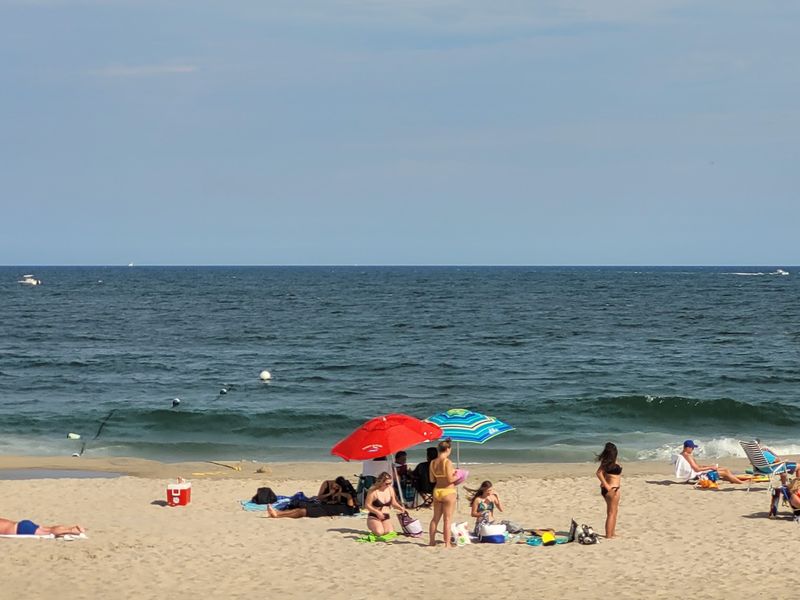
The boardwalk here does not flash, beep, or smell like fried dough. It simply follows the ocean past benches, beach entrances, and old-fashioned street lamps, leaving the waves to provide most of the entertainment.
That restraint is a major part of Avon-by-the-Sea’s appeal. Begin the morning with a walk along the beachfront before settling onto the wide sand.
The town sells daily beach badges during the guarded summer season, and its relatively compact size makes it easy to move between the beach, rental homes, and Main Street. There are no amusement rides competing for attention, so the day naturally falls into a gentler rhythm: swim, read, walk, repeat.
Near the southern edge of town, the Shark River Inlet offers another place to watch fishing boats and seabirds. The Avon Pavilion, positioned directly along the beachfront, is a popular stop for breakfast or lunch with a view.
A stack of pancakes or a seafood sandwich tastes particularly satisfying after a windy boardwalk walk. Main Street adds cafés and neighborhood businesses without turning the town into a shopping destination.
For more restaurants and evening activity, Belmar and Bradley Beach sit close by, but returning to Avon afterward feels like lowering the volume. Street parking is usually the practical option, and spaces nearest the beach fill quickly during summer weekends.
Staying within walking distance of the ocean removes that problem and allows you to enjoy the town at its best—early in the morning, when bicycles outnumber cars and the boardwalk is nearly silent.
5. Sea Girt

A red brick lighthouse, clipped lawns, and a wooden boardwalk give Sea Girt the composed appearance of a Shore town that has never felt pressure to reinvent itself. Everything looks tidy, but not staged, and the pace remains noticeably slower than in many neighboring beach communities.
The beachfront is the centerpiece. Sea Girt’s boardwalk is open throughout the year and is designed for walking rather than commercial activity.
There are no arcades or souvenir stands, only ocean views, benches, dunes, and access to clean stretches of sand. During the summer season, beach badges are required when lifeguards and badge checkers are on duty.
At the northern end, the Sea Girt Lighthouse adds a strong sense of place. Built in the 1890s, the red brick structure stands close to the shoreline and occasionally opens for tours and community events.
Even when it is closed, it makes a memorable turnaround point for a waterfront walk. The Parker House, a historic Victorian property near the beach, is the town’s best-known gathering spot and can become lively on summer evenings.
The rest of Sea Girt remains largely residential, so dining choices are limited compared with larger Shore towns. That is part of the bargain: visitors come for space, quiet, and an uncluttered shoreline rather than nonstop entertainment.
Parking near the beach becomes competitive on sunny weekends. Book a nearby inn or rental, leave the car alone, and spend the weekend moving between the sand, boardwalk, and neighboring towns by bicycle.
6. Bay Head
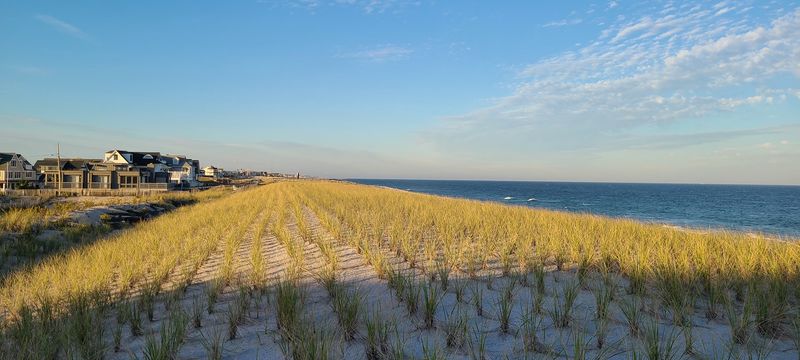
Morning in Bay Head often begins with the sound of screen doors, bicycle bells, and waves breaking behind the dunes. The town’s shingle-style homes and tree-lined streets feel more like a long-established seaside neighborhood than a typical resort district, making it especially well suited to an unhurried weekend.
The beach is broad, clean, and notably free of commercial distractions. Access is open to the public, although beach badges are generally required during the summer season and the beaches are maintained by the Bay Head Improvement Association rather than the borough.
Pack what you need before crossing the dunes because there are no snack bars or boardwalk shops waiting on the other side. Bridge Avenue provides the town’s modest commercial center, with boutiques, cafés, bakeries, and places to pick up lunch before heading to the sand.
The Grenville Hotel and the historic Bay Head Yacht Club contribute to the town’s polished, old-Shore character, while Twilight Lake offers a quieter setting for walks, paddling, and birdwatching.
Bay Head is also the final stop on NJ Transit’s North Jersey Coast Line, which makes a car-free escape possible from northern New Jersey or New York City.
Once you arrive, most of the town can be covered on foot or by bicycle. The nightlife is minimal, and that should be considered a feature.
Dinner tends to end with a walk rather than a bar crawl. By late evening, the streets grow quiet enough to hear the ocean several blocks away.
7. Lavallette
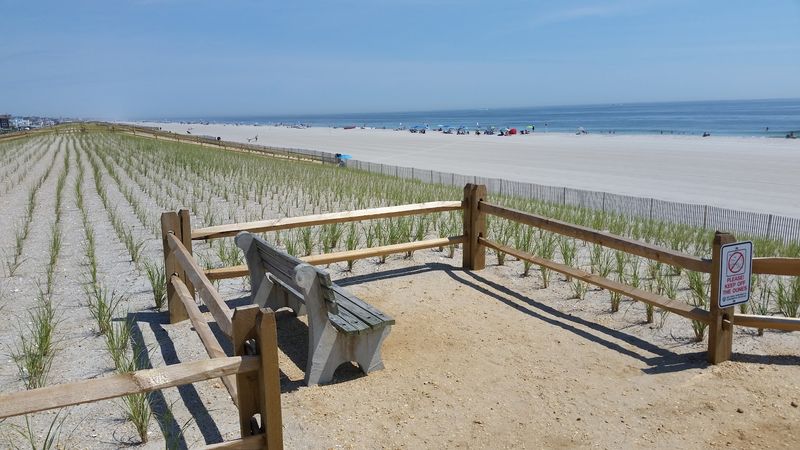
Bare feet, beach cruisers, and fishing rods are the unofficial dress code in Lavallette. The town sits between the Atlantic Ocean and Barnegat Bay, yet it avoids the oversized attractions found just a short drive away.
What remains is a straightforward Shore weekend built around water in both directions. On the ocean side, a mile-long boardwalk runs behind the dunes.
It is a non-commercial walkway, so expect joggers, families, and evening strollers rather than rides or arcades. Streets throughout town lead toward beach entrances, making access convenient from most rentals.
Badges are checked during guarded summer hours. The bayside changes the scenery completely.
Lavallette maintains two swimming beaches along Barnegat Bay, where the water is typically calmer and especially appealing to families with younger children. The bay is also a popular setting for kayaking, paddleboarding, crabbing, and watching the sunset.
Grand Central Avenue supplies pizza shops, ice cream counters, casual restaurants, and small stores. Nothing is very far away, and many visitors park once before using bicycles for the rest of the weekend.
That strategy is wise because summer traffic along Route 35 can test even the most relaxed traveler. Lavallette is not deserted or unknown, but it feels restrained compared with nearby Seaside Heights.
You can still get your boardwalk food fix with a short drive, then retreat to quieter streets where the evening activity consists mainly of deciding whether there is room for another scoop of ice cream.
8. Harvey Cedars
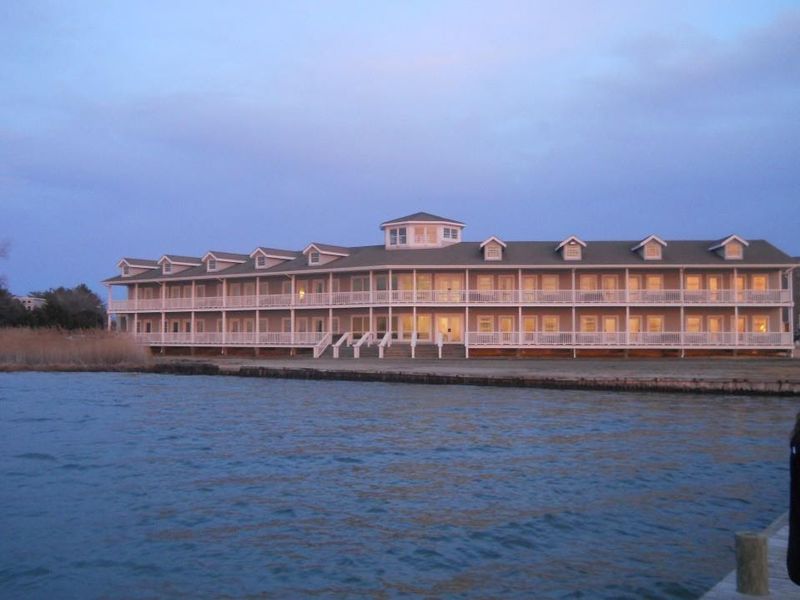
At certain points, Harvey Cedars is only a few blocks wide, allowing ocean breezes and bay views to share the same narrow piece of Long Beach Island. The small scale creates an immediate sense of escape, especially once the heavier traffic and commercial strips farther south are left behind.
Days here usually center on the beach. The oceanfront is peaceful and residential, with access points tucked between homes rather than attached to a busy boardwalk.
On the opposite side of town, Sunset Park provides open bay views, recreational space, and one of the island’s best spots for watching the sky change color at the end of the day. The town is also a natural base for kayaking, sailing, fishing, and paddleboarding.
Harvey Cedars’ location near the northern half of Long Beach Island makes it convenient for exploring Barnegat Light without staying in the busier southern communities. Restaurants are limited but worthwhile, ranging from seafood spots to polished neighborhood dining rooms.
Reservations are sensible during the summer because a small town means a small number of tables. There is little traditional nightlife, and shopping is not the point.
Bring books, beach equipment, and groceries, then settle into the slower routine. Bicycles are useful for short trips, although riders should remain alert along Long Beach Boulevard.
Harvey Cedars suits travelers who consider an early seafood dinner, a bayfront sunset, and a quiet porch sufficient evening plans. After dark, the absence of heavy commercial lighting makes the island sky feel wider than expected.
9. Barnegat Light
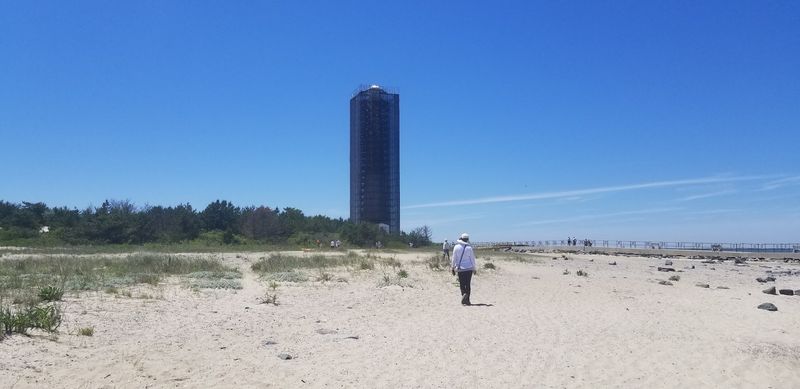
The red-and-white tower of Old Barney appears above the trees long before you reach the northern end of Long Beach Island. It functions as both landmark and compass in Barnegat Light, a former fishing village where the island finally runs out of road.
Barnegat Lighthouse State Park deserves the first stop. Visitors can explore the interpretive center, walk the short Maritime Forest Trail, fish along the inlet, or climb the lighthouse when access is available.
The view from the top stretches across Barnegat Bay, Island Beach State Park, and the length of Long Beach Island. Even without the climb, the jetty walk provides expansive water views and a close look at boats navigating the inlet.
The town’s commercial fishing heritage remains visible around Viking Village, where working vessels unload catches near shops and casual food stops. Order seafood locally—scallops, flounder, clams, or whatever has recently come in—then browse the small stores around the docks.
Beaches in Barnegat Light are spacious, and the distance from the mainland bridge helps reduce casual day-trip traffic. Reaching the water can involve crossing wide dunes, so a beach cart is useful when carrying chairs and coolers.
Evenings are wonderfully uncomplicated. Pick up dinner, watch the sunset from the bay side, and listen for boats returning through the inlet.
The town feels removed without being isolated, and the lighthouse gives every walk or bicycle ride a clear focal point.
10. Brigantine
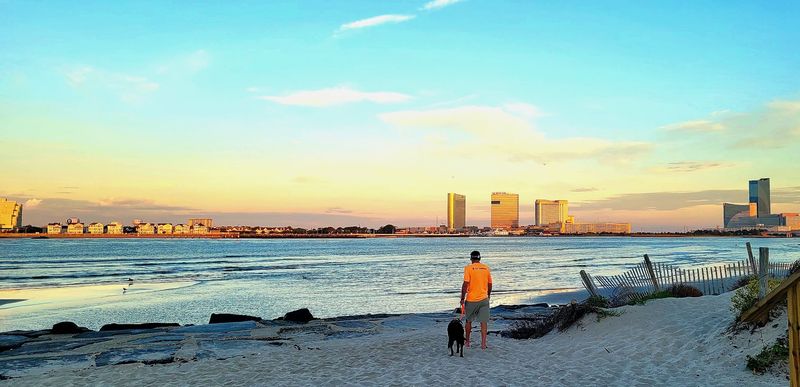
Atlantic City’s casino towers are visible across the inlet, yet Brigantine feels like a different category of coastal destination. Cross the bridge onto the island and the scenery quickly shifts to low-rise homes, long beaches, fishing spots, and streets where golf carts and bicycles are common summer traffic.
The beach stretches for miles, leaving plenty of room beyond the most popular access points. Swimming is permitted at designated guarded beaches during the summer season, and beach tags are required.
Brigantine also has areas where properly permitted four-wheel-drive vehicles can access the sand, a major draw for surf anglers and visitors carrying enough equipment to establish a small beachfront headquarters. Nature plays a larger role here than many first-time visitors expect.
The Cove at the island’s southern end offers inlet views and a broad area popular with boaters. The North Brigantine Natural Area protects dunes, beach habitat, and nesting areas for coastal birds.
Kayaking, sailing, and birdwatching provide easy alternatives when a full day of sun feels ambitious. The center of town includes seafood restaurants, breakfast spots, mini golf, and practical shops, but development remains fairly low-key.
For louder entertainment, Atlantic City is minutes away. The better move may be enjoying dinner there and sleeping in Brigantine, where the nighttime soundtrack is more likely to be surf than traffic.
Check parking and beach-access rules before arriving, particularly if bringing a vehicle onto the sand. Otherwise, the island rewards a simple plan and a willingness to slow down.
11. Longport
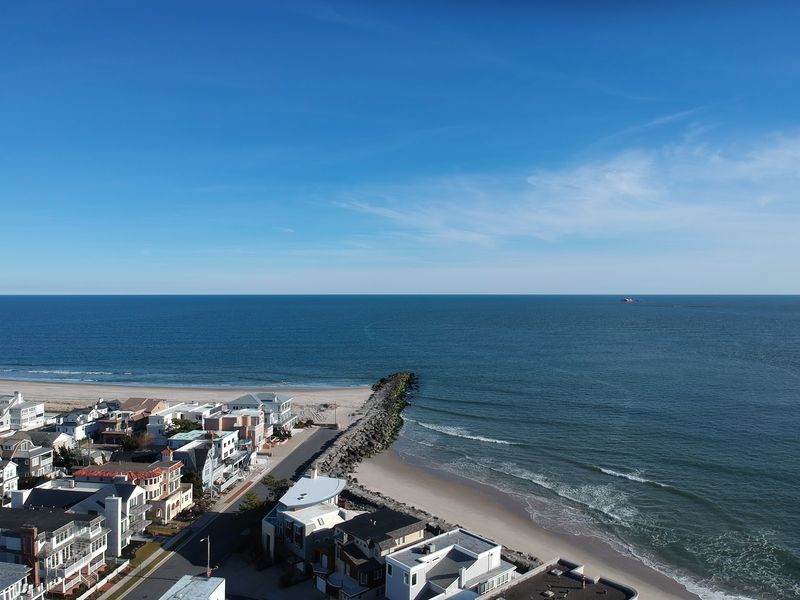
There is no bustling downtown waiting in Longport, no carnival soundtrack, and very little reason to rush anywhere. Occupying the quiet southern tip of Absecon Island, the borough is primarily residential, with broad beaches on one side and calm bay water on the other.
That limited development is exactly why it works as an escape. Beach entrances appear at the ends of peaceful streets lined with well-kept coastal homes.
The sand generally feels less hectic than the beaches farther north in Margate and Ventnor, particularly early in the day. Bring drinks and lunch because concessions are not part of the experience.
At the southern end, the seawall and jetty near the Great Egg Harbor Inlet provide a scenic place to walk, fish, and watch boats travel between the ocean and bay. Sunsets over the back bays can be excellent, especially from the western side of town.
Kayakers and paddleboarders also benefit from the comparatively sheltered water. Restaurants and shops are scarce within Longport itself.
Margate is immediately next door, providing groceries, cafés, dinner options, and the famous Lucy the Elephant without disturbing Longport’s residential character. This makes it easy to dip into activity and retreat when you have had enough.
Rental availability can be limited, and many properties book well ahead for summer. Travelers who secure a place should plan to walk or cycle whenever possible.
Longport is best appreciated not as a destination packed with things to do, but as a place where doing very little feels completely reasonable.
12. Cape May Point
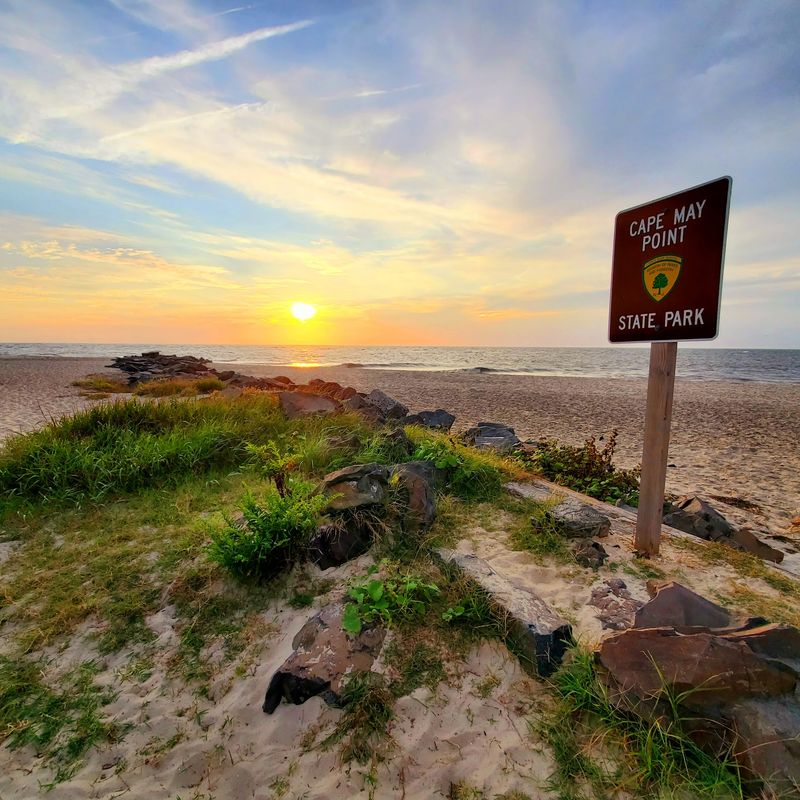
More birds than people can pass through Cape May Point during peak migration, which tells you almost everything about this tiny community at the southern end of the peninsula. Nature gets top billing here, while shops, nightlife, and traffic remain largely offstage.
Cape May Point State Park covers 244 acres of beach, dunes, forest, freshwater meadows, and ponds. Three relatively short trails lead through different habitats, with observation platforms and bird blinds positioned along the way.
In autumn, hawks, falcons, songbirds, and monarch butterflies turn the area into one of the East Coast’s great migration viewing spots. The Cape May Lighthouse rises 157 feet above the park.
Climbing its 199 steps provides a panoramic view across the peninsula, Delaware Bay, and Atlantic Ocean. Nearby, the remains of World War II Battery 223 sit directly on the beach, creating an unusual contrast between military concrete and shifting coastal sand.
The borough’s beaches are quiet and scenic, though swimming conditions and guarded areas should be checked carefully. Beachcombers search for smooth quartz pebbles known as Cape May diamonds, particularly near the bay.
Dining and lodging options inside Cape May Point are limited, so many visitors stay in Cape May and make the short drive or bicycle ride over. Staying closer to the Point, however, brings peaceful mornings and immediate access to the park.
The trade-off is fewer conveniences, but the reward is a weekend that feels governed by tides, migration patterns, and lighthouse beams.
13. Strathmere

Drive south from Ocean City, pass through Sea Isle City, and you may realize only afterward that you crossed Strathmere. The narrow coastal community has no flashy entrance, commercial boardwalk, or dense strip of hotels.
It is simply a small collection of homes, beaches, and neighborhood businesses positioned between Corson Inlet and the Atlantic. The beaches are the main attraction, and they have historically stood out for not requiring beach tags.
Access points lead across dunes to a shoreline that often feels far less crowded than larger resorts nearby. Visitors should still confirm current swimming areas and lifeguard coverage, as guarded beaches are limited and conditions near the inlet can be dangerous.
Corson’s Inlet State Park borders the community to the north. Its dunes, marshes, and waterways support fishing, boating, hiking, and birdwatching, while trails and sandy paths reveal a wilder version of the Cape May County coast.
Kayaking through the back bays is an especially good way to escape summer road traffic. Strathmere has only a handful of places to eat and drink, including long-established spots where seafood and sunset views carry more importance than polished presentation.
For groceries, extensive shopping, or amusement rides, Sea Isle City and Ocean City are close enough for an easy trip. Parking is mostly along residential streets and can become limited near popular beach entrances.
Arrive early, pack thoughtfully, and do not expect a constant schedule of entertainment. Strathmere’s charm comes from how little it tries to provide beyond sand, water, and room to breathe.
Share this story