The best Korean nights in North Jersey often begin with the hiss of meat hitting a tabletop grill and end much later than anyone planned, usually with an empty soju bottle, a bowl of cold noodles, or somebody volunteering for karaoke. Fort Lee and Palisades Park make that progression especially easy.
Within a few miles, you can go from polished barbecue with premium beef to a seafood grill built for sharing, then slide into a pocha where fried chicken, spicy rice cakes, and late-night drinks take over. The restaurants below are not interchangeable.
Some are destination dinners; others are casual, smoky, noisy group spots where the table gets crowded fast. A few specialize in gopchang, grilled clams, or old-school comfort food rather than the usual short-rib-and-pork-belly routine.
Together, they offer one of New Jersey’s best ways to recreate the pace of a Seoul night without crossing the Hudson—or booking a flight.
1. Gayeon – Fort Lee
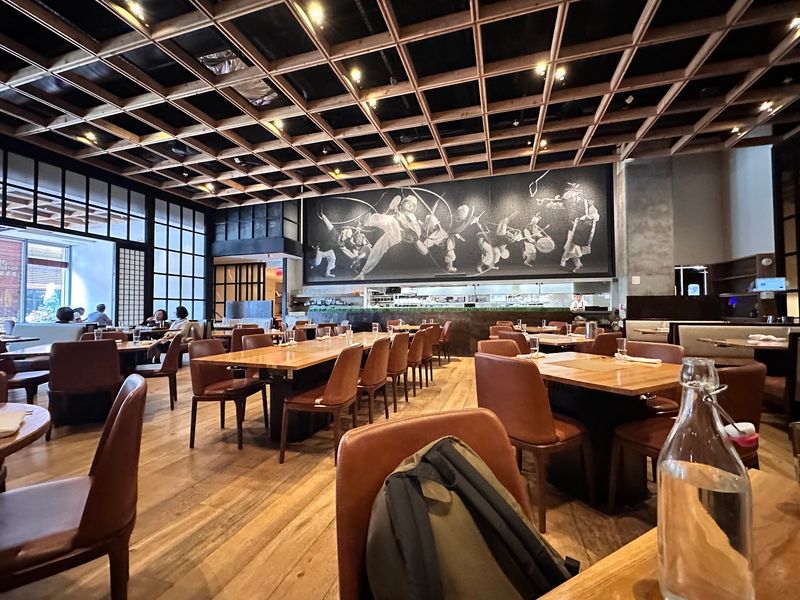
There are Korean barbecue dinners, and then there are Korean barbecue dinners where A5 wagyu kimchi fried rice enters the conversation. Gayeon belongs to the second category.
The Fort Lee restaurant takes a more polished approach to the grill, making it a smart pick for a date, birthday, business dinner, or any evening when paper plates and fluorescent lighting are not the plan.
Start with yukhoe, the Korean-style beef tartare seasoned with sesame oil and pear, or the seafood pajeon before moving into the meat.
Galbi is an easy crowd-pleaser, but the menu reaches beyond the standard barbecue lineup with premium cuts and dishes such as galbi-jjim, king galbitang, spicy cod stew, and naengmyeon.
The cocktail list adds another reason to linger: Korean pear margaritas, lychee drinks, soju cocktails, wine, and imported beer make this feel more like a full night out than a quick grill session.
Prices run higher than at many neighborhood Korean spots, especially if wagyu gets involved, so this is better approached as an occasion restaurant than a bargain feast. Gayeon is on Hudson Street in Fort Lee, and reservations are a sensible move for prime dinner hours.
Come hungry, order for the table, and save the cold noodles for the finish.
2. Wooga – Fort Lee
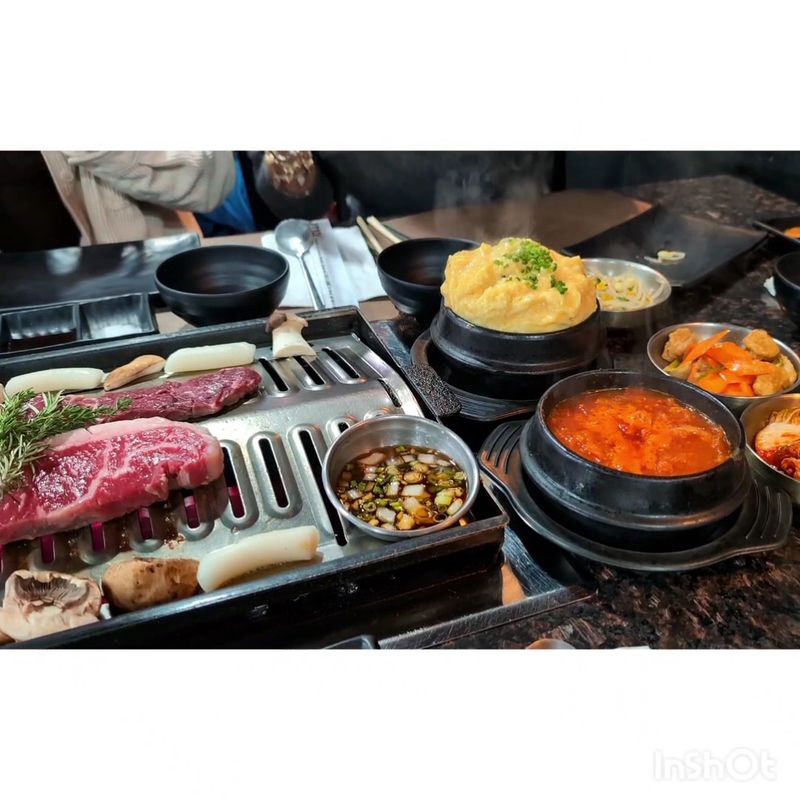
A platter of dry-aged rib-eye is not exactly the first thing most people picture when someone says Korean barbecue, which is part of what makes Wooga interesting.
This Fort Lee spot leans hard into premium grilling, with options that can include 45-day-plus dry-aged rib-eye, Japanese A5 Miyazaki wagyu, Iberico pork belly, and even duck.
It is a splurge-friendly menu, but you do not have to order the most expensive cuts to have a good night. The supporting cast is strong: beef tartare with Asian pear, seafood pancake, spicy octopus with udon, grilled gopchang, cold buckwheat noodles, and hot stone bibimbap all give a group plenty to work with.
There is also a long drinks list built for the classic KBBQ rhythm of grill, pour, wrap, repeat, including soju and makgeolli. Wooga works best with several people because the table can move through different cuts and shared dishes instead of committing to one giant plate.
If you want Seoul-style barbecue energy with a steakhouse streak, this is the move. Just keep an eye on the premium section if you are trying to stay within a budget; wagyu and dry-aged beef can turn an ordinary Tuesday dinner into a special-occasion bill very quickly.
3. Obaltan – Fort Lee
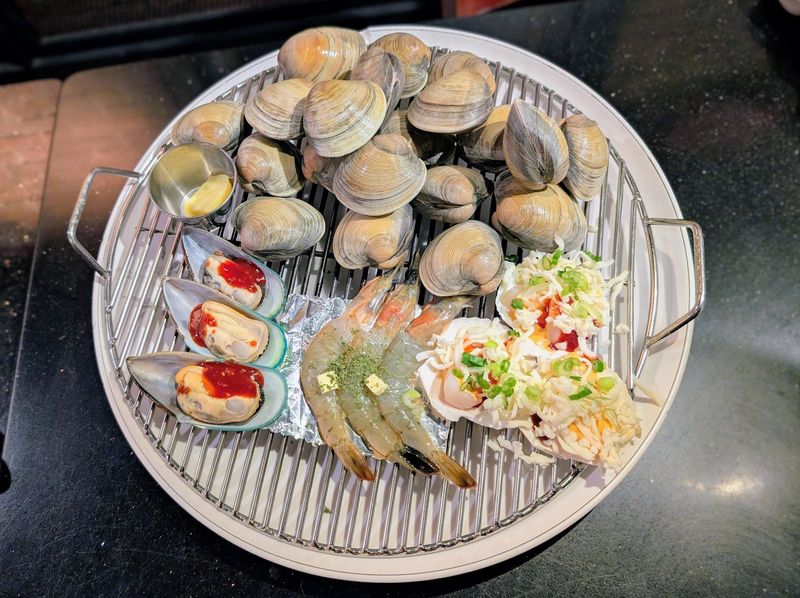
The grill at Obaltan is just as likely to be covered with scallops and clams as beef and pork, and that seafood-first twist gives the place its own lane.
Located on Abbott Boulevard in Fort Lee, Obaltan bills itself as a Korean seafood and barbecue grill, with tabletop assortments designed for people who would rather share everything than order individual entrées.
The clam grill is the obvious place to start, but the menu also includes gopchang, prime beef, pork, head-on shrimp, scallops, oysters, and surf-and-turf combinations. From there, build the table outward with corn cheese, haemul pajeon, yukhoe, or one of the bubbling stews.
The gopchang jeongol and spicy seafood soup are especially good choices when the weather turns cold. Obaltan also understands the late-night part of Korean dining: on most weekdays it stays open until 2:30 a.m., which makes it one of the better options on this list when dinner starts suspiciously close to midnight.
That schedule, plus the combination of tabletop grilling and shareable seafood, pushes the experience closer to a night in Seoul than a standard suburban restaurant outing. For a group, order one of the combination platters first and add noodles or fried rice later, once everyone has stopped pretending they are full.
4. Daehan Gopchang – Fort Lee
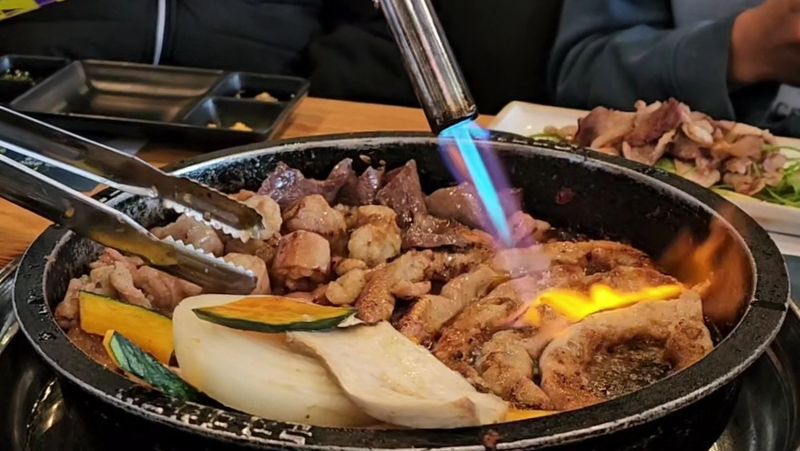
Flames licking over a cast-iron pan are not a kitchen accident at Daehan Gopchang; they are part of the show. The Fort Lee outpost of the Korean gopchang brand specializes in beef intestines, and the restaurant makes the cooking process unusually theatrical, with staff grilling the meat and finishing it with a brief fire show.
First-timers should order the assorted combo, which brings together small intestine, large intestine, heart, and other cuts with rice cakes, chives, kimchi, onion, and the house sauce.
The payoff is texture: properly cooked gopchang lands somewhere between crisp, chewy, fatty, and deeply savory, especially when wrapped with kimchi or dipped into one of the sauces at the table.
If offal is new territory, go with friends and treat the combo as a shared experiment rather than ordering a giant portion for yourself.
The restaurant’s retro-Korean styling adds to the effect, but the strongest Seoul connection is cultural: Daehan Gopchang became a major name in Korea after MAMAMOO’s Hwasa famously ate gopchang on television, helping spark a nationwide craze.
Do not leave once the grill is cleared. Radish kimchi fried rice is the proper second act, picking up all that rich, smoky flavor and turning the end of dinner into one last round.
5. Yea Jip BBQ – Fort Lee
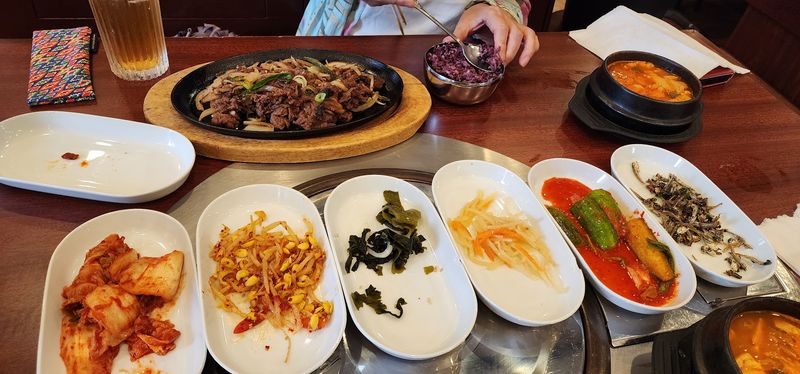
Some nights call for novelty; others call for galbi, a bubbling stew, and a table full of banchan that makes everyone stop talking for a minute. Yea Jip BBQ is built for the second kind.
This Fort Lee mainstay sticks close to classic Korean comfort food, which makes it a useful counterweight to the more specialized gopchang and seafood spots on this list.
Barbecue choices include marinated short ribs, bulgogi, pork belly, spicy pork, chicken, duck, and shrimp, while the rest of the menu reads like a greatest-hits collection of dishes people actually crave: seafood pajeon, japchae, handmade dumplings, gamjatang, sundubu, galbitang, naengmyeon, and hot stone rice bowls.
If you are bringing someone to Korean food for the first time, Yea Jip is an easy place to build a table without overthinking it. Order galbi, a pancake, a stew, and cold noodles for the end, then add whatever looks good once the banchan lands.
The restaurant sits on Main Street and is open seven days a week, which helps when a group chat suddenly turns into dinner plans. It is less about spectacle than abundance and familiarity—the kind of meal where everyone keeps reaching across the table for one more bite until the grill is finally empty.
6. DOL Korean BBQ – Fort Lee
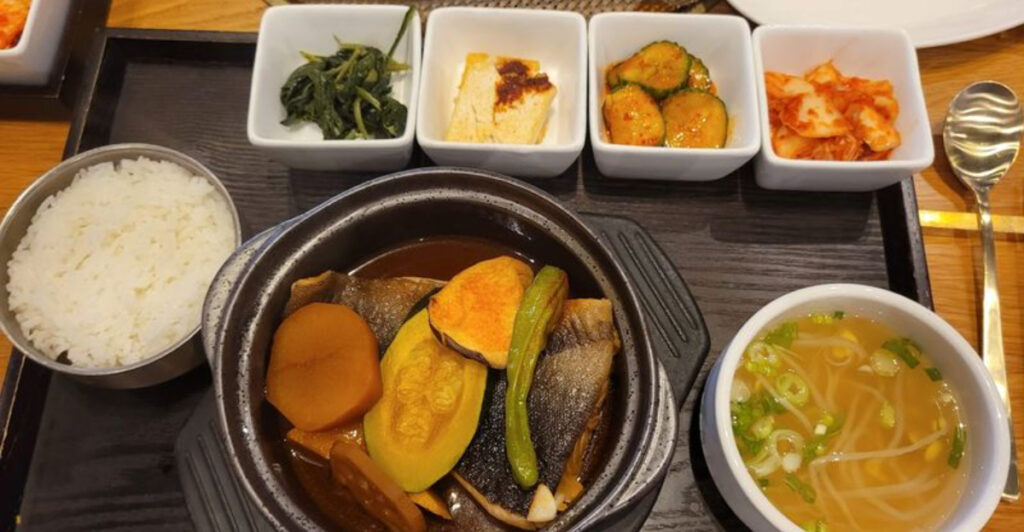
Skip the reflex to order another plate of short ribs and look toward the fish. DOL Korean BBQ in Fort Lee is especially useful when your idea of a Korean dinner includes grilled mackerel, braised monkfish, spicy cod soup, raw marinated crab, and seafood hot pots alongside the usual meatier options.
The grilled fish sets are a strong entry point, particularly mackerel or Spanish mackerel with rice and side dishes, while adventurous tables can move toward ganjang gejang, sea squirt, conch, oysters, or a bubbling haemul jeongol.
There is plenty of comfort food too: sundubu jjigae, yukgaejang, hot stone bibimbap, galbitang, and cheonggukjang, the assertive fermented soybean stew that announces itself before the spoon ever reaches your mouth.
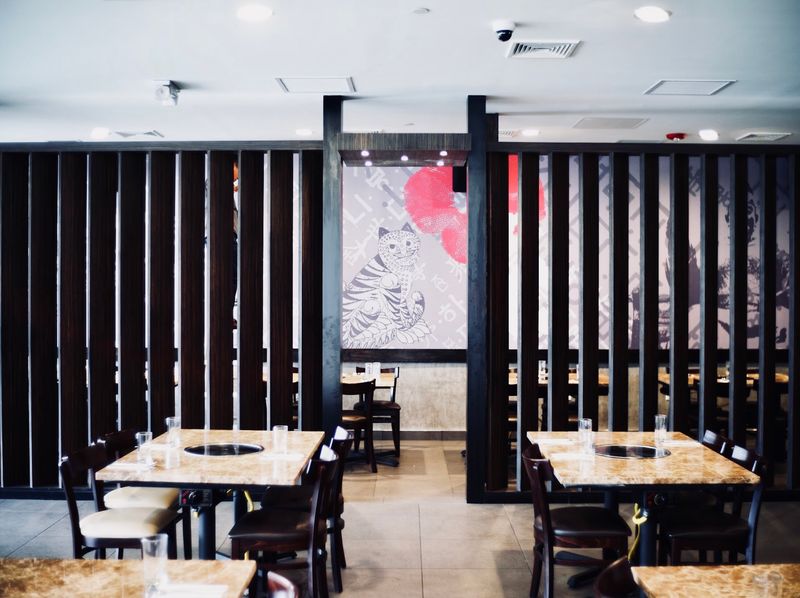
That range makes DOL a good choice for a mixed group where one person wants barbecue, another wants seafood, and somebody else only cares about soup. It is on Bergen Boulevard, and the experience is more about menu depth than dressing up for a dramatic dining room.
A seafood-heavy spread, a hot stew in the middle, and several bowls of rice can make the table feel much closer to a neighborhood meal in Korea than a polished special-occasion dinner.
7. So Moon Nan Jip – Palisades Park
A name that translates roughly to “famous house” creates expectations, and So Moon Nan Jip answers them with the sort of enormous, all-purpose menu that feels familiar to anyone who has eaten in Korea with a group that cannot agree on one thing.
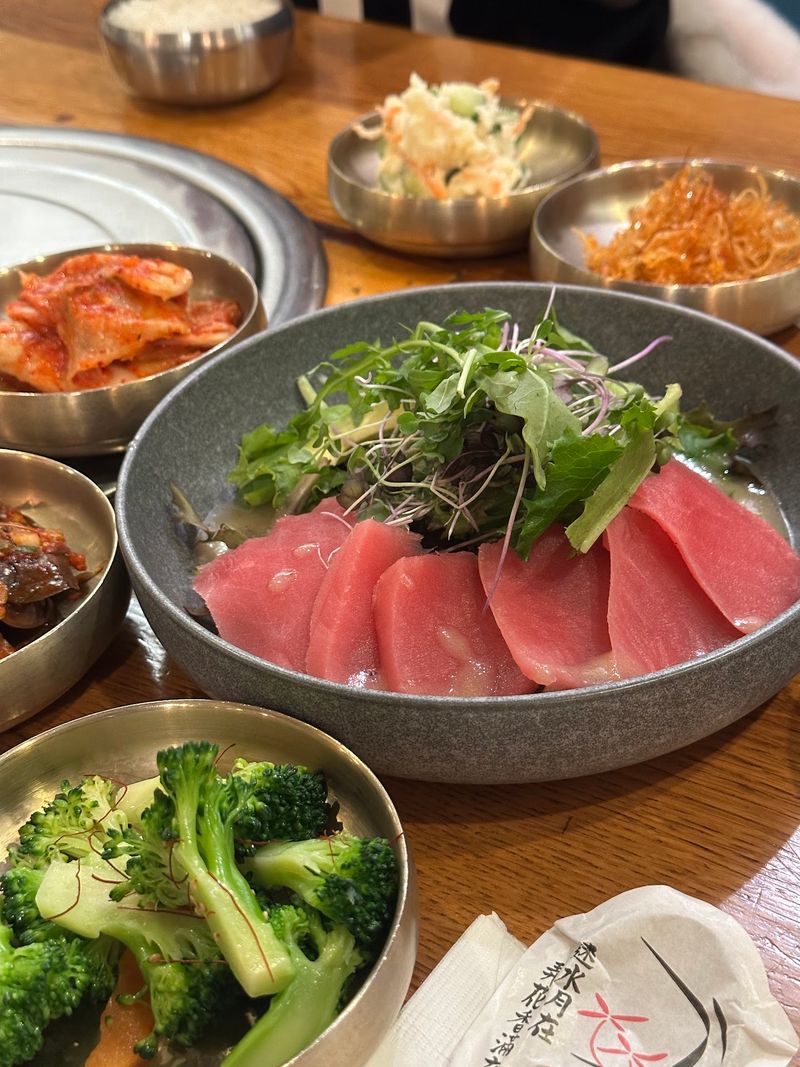
On Broad Avenue in Palisades Park, the restaurant covers barbecue, soups, stews, stir-fries, stone-pot rice, cold noodles, grilled fish, and even sushi and sashimi.
That breadth is the point. One table can have marinated galbi sizzling beside spicy octopus, while another goes straight for galbitang, sundubu, or a bowl of mul naengmyeon.
For a cold-weather dinner, look toward the soups and stews; for summer, the chilled buckwheat noodles are the move.
The menu also includes more old-school dishes such as dried pollack soup, spicy cod soup, braised fish, and seafood earthenware pots, which makes this a particularly good stop when you want Korean food beyond the barbecue basics.
Do not expect a tightly edited menu designed to guide you toward a single signature dish. This is more of a choose-your-own-adventure operation, and it rewards repeat visits.
Bring enough people to order across categories, put a stew in the center, add one grilled or stir-fried dish, and let the banchan fill the gaps. Broad Avenue handles the rest of the Seoul-night illusion.
8. Hanam BBQ House – Palisades Park
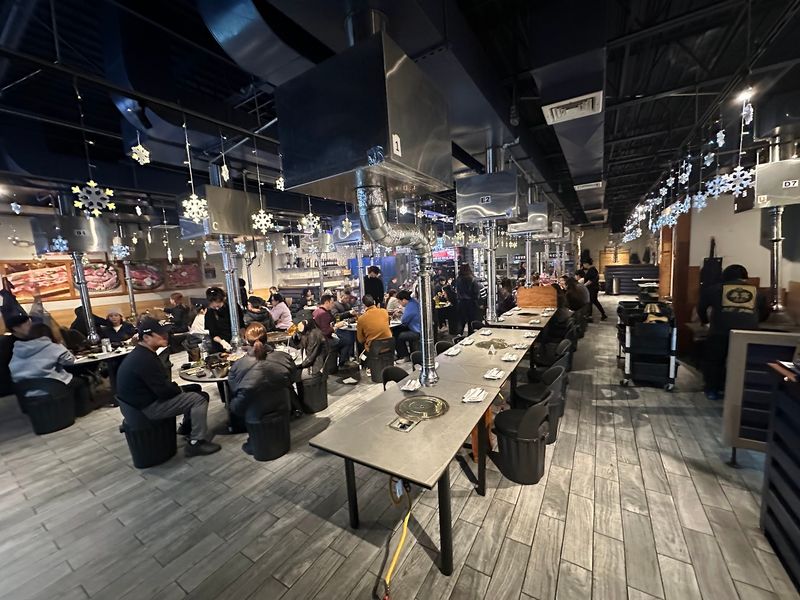
Charcoal changes the conversation. At Hanam BBQ in Palisades Park, the grill menu centers on meats cooked over charcoal, giving pork belly, jowl, shoulder, beef, and even eel the smoky edge that makes Korean barbecue so hard to stop eating.
The pork combo is a smart order for two or four because it lets the table compare several cuts without playing menu roulette, and it comes with classic companions such as soybean paste stew and steamed egg.
Beef fans can look toward the premium cuts, while adventurous diners have gopchang, makchang, and daechang to choose from.
Hanam is also unusually strong when the grill is not the main event. Its menu includes naengmyeon, sundubu, galbitang, blood sausage soup, grilled mackerel, braised cutlassfish, aged-kimchi pork ribs, and several sizzling stone-pot rice dishes.
The result is a restaurant that works equally well for a big barbecue night or a lunch centered on soup and rice. Weekday lunch specials can offer better value than dinner, but the evening is when the charcoal grill earns its keep.
If the table is ordering rich pork, finish with cold noodles—the clean, sharp broth is exactly what you want after one too many perfect bites of belly.
9. Soosanghan Pocha – Palisades Park
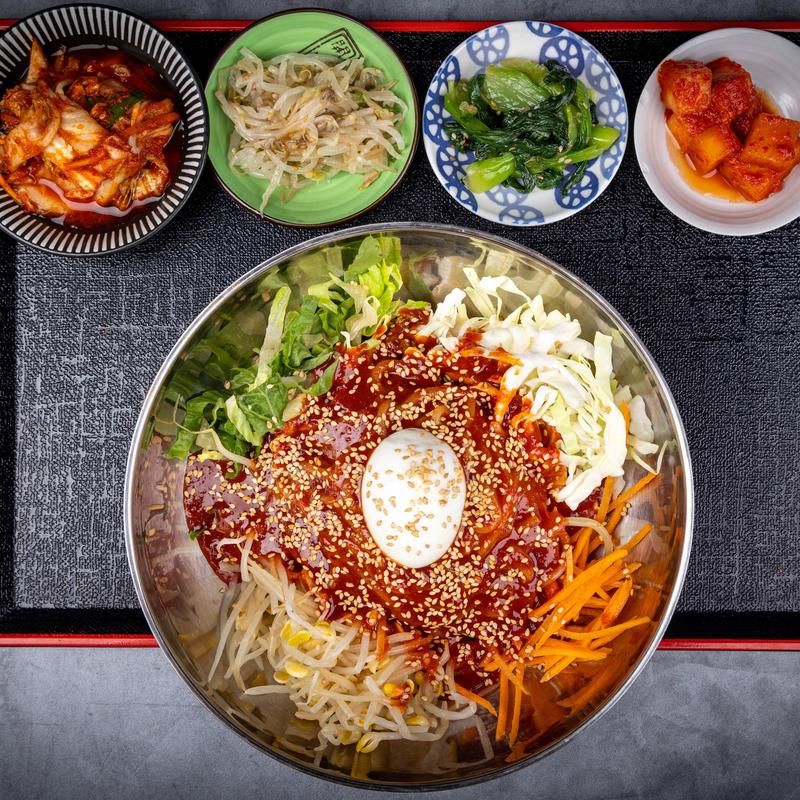
By the time the old-style whole chicken hits the table, nobody should still be pretending this is a quiet dinner. Soosanghan Pocha is built around anju—the salty, spicy, fried, grilled, and bubbling foods meant to accompany alcohol—and that makes it one of the clearest Seoul-night picks in New Jersey.
The Palisades Park menu jumps from charcoal BBQ bossam and spicy octopus to chicken feet, tteokbokki, seafood stew, pajeon, fried chicken, pork cutlet, and fish cake soup.
In other words, it is designed for a table that keeps ordering “one more thing.” Drinks are not an afterthought, either: the restaurant serves Korean alcohol and mixed drinks, and private karaoke rooms turn dinner into a longer commitment.
The night service runs from late afternoon past midnight, so this is a natural second stop after an earlier meal—or the place to skip the formal dinner entirely and settle in with friends. Start with something soupy for the center of the table, add one fried dish, then bring in a spicy plate once the first bottle is open.
The egg-roll omelet is another house favorite if the table needs a softer landing between chilies. Soosanghan is not the place for a restrained date-night tasting menu.
It is for birthdays, coworkers, friend groups, and anyone willing to admit that karaoke sounds better after soju.
10. Third Floor – Palisades Park
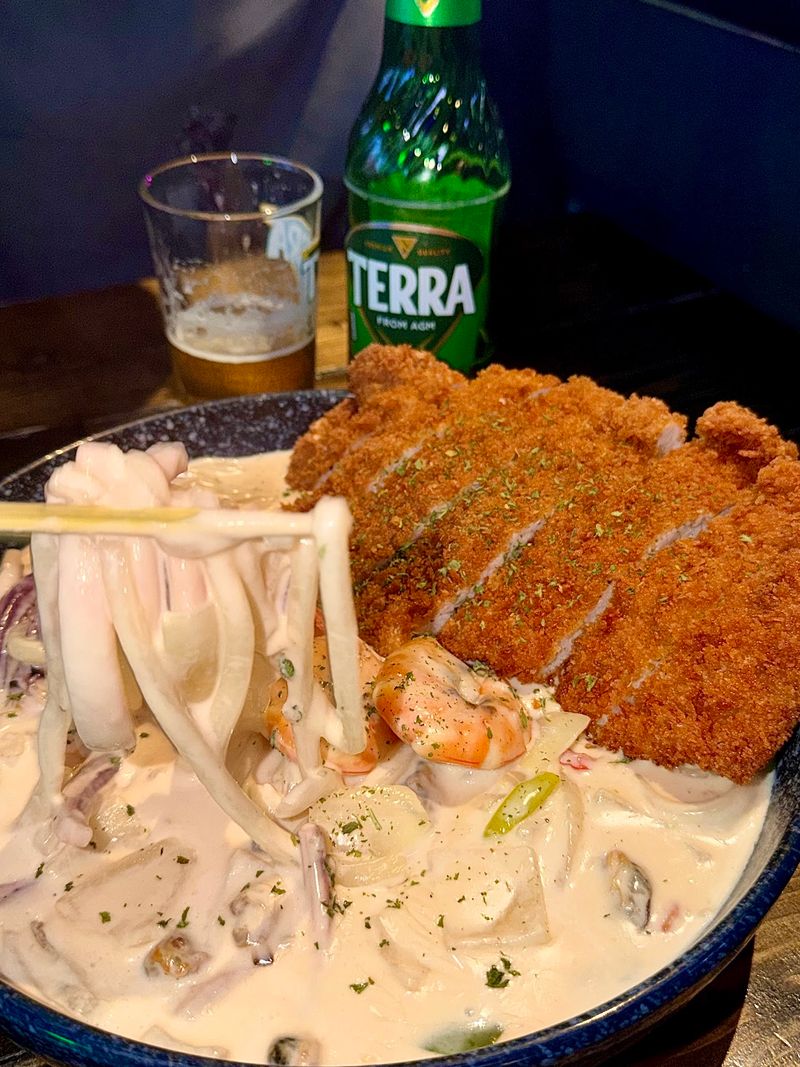
Take the stairs up to the third floor and the evening gets less restaurant-like in the best possible way. Third Floor Pocha in Palisades Park combines Korean drinking food with karaoke, staying open until 2 a.m. every day and leaning into the after-dinner hours when a normal restaurant would already be stacking chairs.
The menu is exactly what you want at that point: grilled beef intestines, tteokbokki, cheese-covered spicy chicken, budae jjigae, gopchang hot pot, clam kalguksu, tofu kimchi, jokbal, fried chicken, seafood pancakes, corn cheese, and other plates meant to be passed around rather than guarded.
There are cocktails, soju, makgeolli, beer, and premium Korean spirits, which gives a group plenty of ways to make questionable singing decisions later.
Third Floor works especially well when food is only part one of the plan. Eat first, then move into karaoke without having to relocate the entire group or argue about the next destination.
If you are hungry enough for a full meal, order a hot pot or stew as the anchor and surround it with fried chicken and a pancake. If this is stop number two, keep it simpler with anju and drinks.
Either way, the combination of late hours, communal plates, and noraebang makes this one of the most convincing Seoul-after-dark experiences in North Jersey.
11. Dumok BBQ – Palisades Park
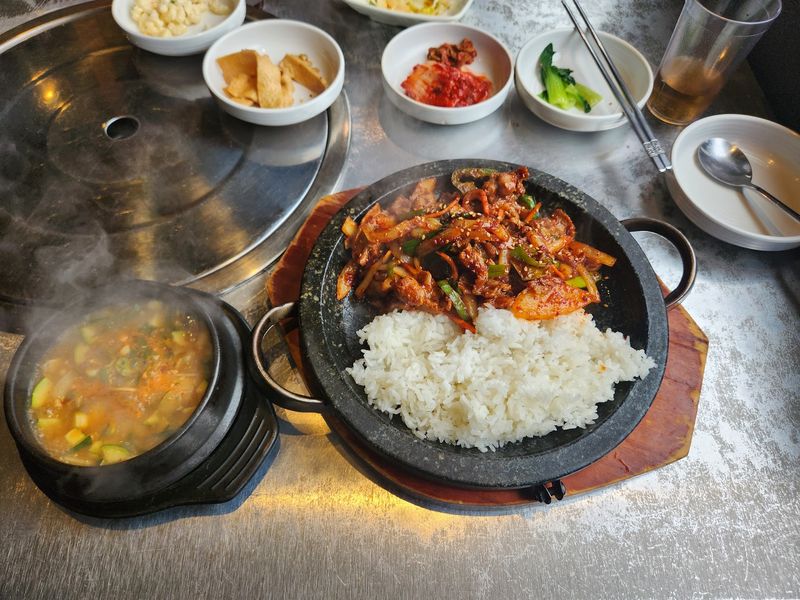
Applewood-smoked pork belly gives Dumok BBQ an immediate advantage in the battle for your attention. The Palisades Park restaurant takes familiar Korean barbecue cuts and adds its own smoked approach, then backs them up with the kind of hearty dishes that keep a group planted at the table.
The pork barbecue combo brings together belly, jowl, shoulder, and marinated pork rib, while another platter combines small intestine, large intestine, and tripe. If you want something even more communal, order nakgopsae: a spicy stew of octopus, intestines, shrimp, and noodles served in a large pan.
It is rich, spicy, messy, and exactly the sort of dish that encourages everyone to keep reaching into the middle. Dumok also has a quieter side.
Galbitang, kimchi stew, braised cutlassfish, grilled mackerel, and cold noodles make it possible to have a satisfying meal without turning on the tabletop grill. Still, this place is best with at least one other hungry person, because the most interesting dishes are designed around sharing.
Add a Dumok rice ball with seaweed and roe, then let the stew or barbecue do the heavy lifting. Compared with the pocha entries on this list, Dumok is more dinner than after-party—but the big pans, smoky pork, and family-style ordering capture the same social rhythm.
12. KARDEN – Ridgefield
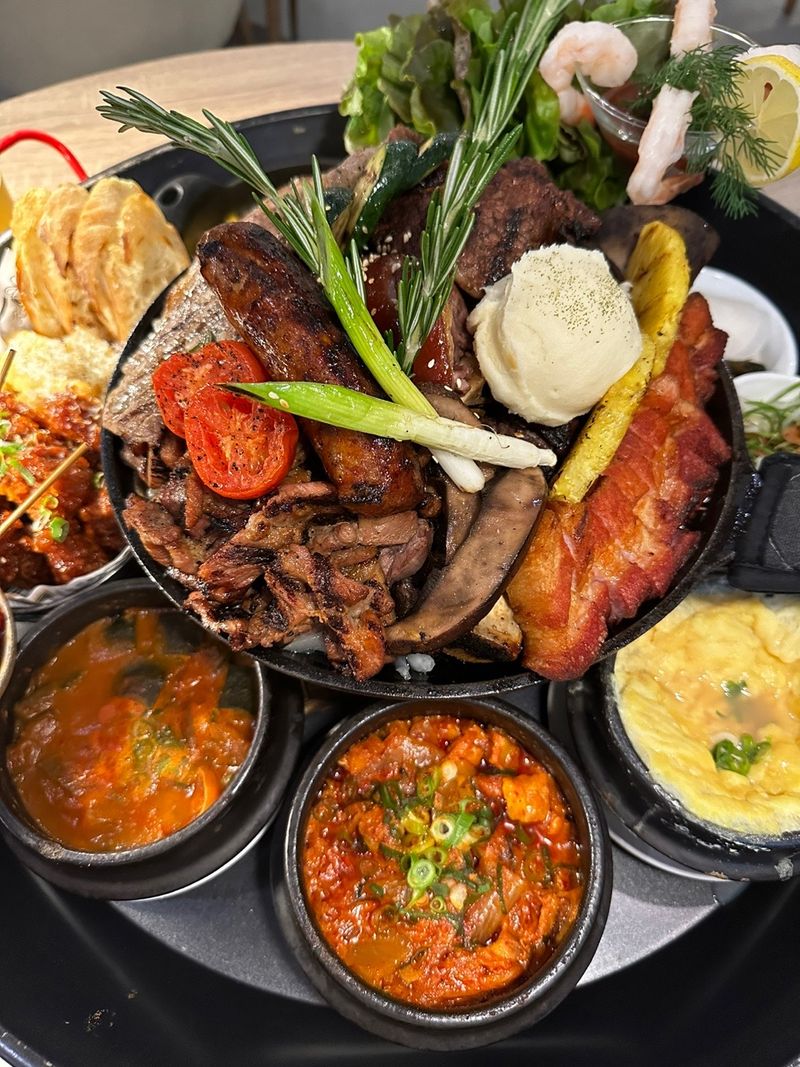
Korean food gets a sharper suit at KARDEN. The Ridgefield restaurant takes familiar flavors and pushes them into a more modern, composed direction, making it a good choice when you want the energy of a Korean night out without spending the whole evening leaning over a smoky grill.
The menu starts playing with expectations immediately: grilled artichoke with gochujang-perilla hummus, striploin tartare, fried galbi mandu, truffle potato jeon, mushroom tangsuyuk, and crispy gopchang all sit comfortably beside more recognizable dishes.
For the main event, there are fire-grilled meats, hot pots, bibimbap, naengmyeon, Korean stews, and a few pasta dishes that borrow ingredients such as kimchi, perilla, seaweed, and pollock roe.
The striploin tartare bibimbap is an especially good bridge between classic and contemporary, while the bori gulbi set—dry-aged yellow croaker served with green tea and soybean paste stew—leans in the opposite direction, toward traditional Korean dining.
Prices are more special-occasion than everyday lunch, and the room has the polished feel to match.
KARDEN also takes reservations, which is worth considering on a weekend or for a celebration. Bring someone who thinks Korean dining begins and ends with tabletop barbecue.
This is the place on the list most likely to change their mind before the appetizers are gone.
13. Cast Iron Pot – Fairview
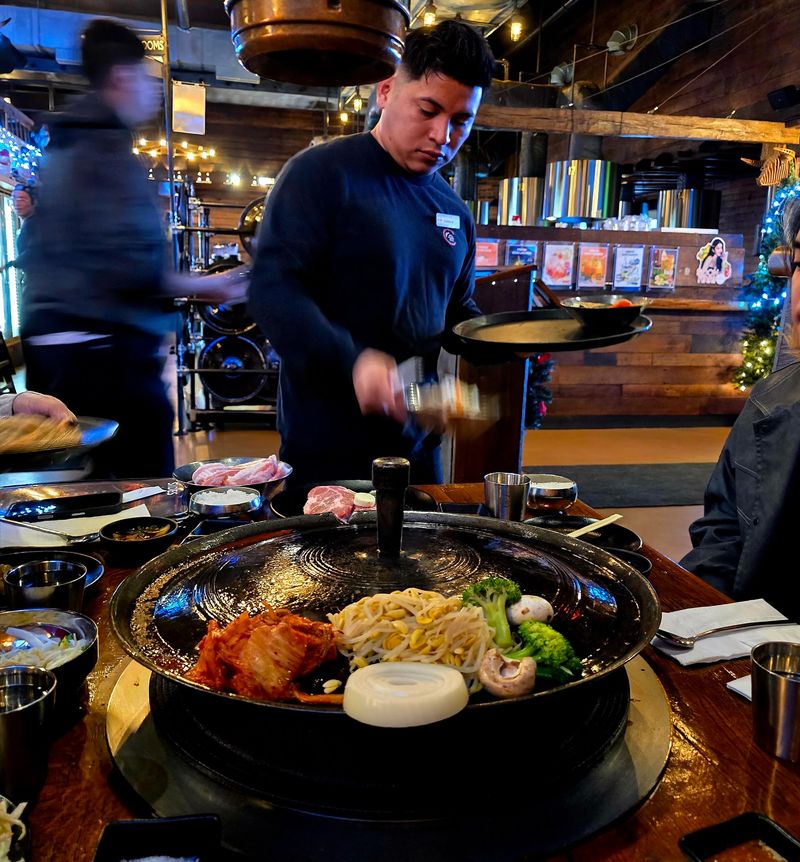
There is no delicate way to do all-you-can-eat Korean barbecue, and Cast Iron Pot understands that perfectly.
The Fairview original is the sort of place where the grill becomes the center of the table and the meal quickly turns into a group project: somebody watches the brisket, somebody manages the pork belly, and somebody keeps stealing the best browned pieces before anyone else notices.
Beef brisket, galbi, steak cuts, bulgogi, spicy pork, chicken, and other grill-friendly options cover the familiar bases, while dumplings, rice cakes, japchae, and soup give you something to eat between rounds. The appeal here is not refinement; it is momentum.
You come with an appetite, keep the grill moving, and figure out your favorite combination of meat, kimchi, sauce, and lettuce by trial and error. That makes Cast Iron Pot especially good for a casual birthday, double date, or friend-group dinner where nobody wants to spend twenty minutes studying a menu.
It is on Bergen Boulevard in Fairview, just south of the Fort Lee and Palisades Park cluster, and the restaurant offers free parking—a small luxury on a Korean-food crawl in Bergen County. Friday and Saturday hours run as late as 2 a.m., too.
Wear something that can survive a little grill aroma and treat the evening as dinner plus entertainment.
Share this story